Oceanside Neighborhoods

Our City is made up of many different neighborhoods, often with their own unique characteristics, history and even architecture. As Oceanside’s population grew, its borders expanded with various subdivisions and new housing developments. From the exclusive enclave of St. Malo to Potter homes in South Oceanside and Francine Villa in North Oceanside, Oceanside neighborhoods are as diverse as the people who live here. Here are a few neighborhoods, some forgotten and others well remembered.

Guidottiville

Guidottiville was named by and after Amerigo Edwardo Guidotti. The area was near what is referred to as Lawrence Canyon just south of present Highway 76.  Guidotti built his residence there along with several rentals and lived there for many years. The homes were removed by the 1980s to make way for the Highway construction.
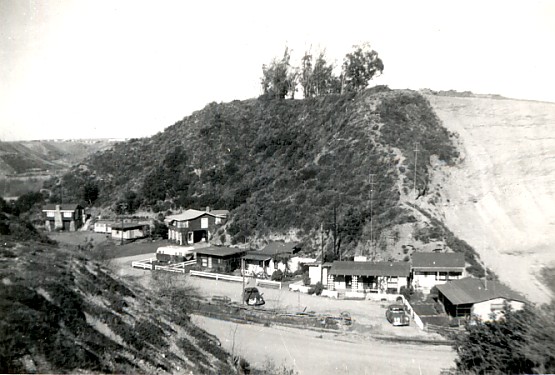
Guidottiville in Lawrence Canyon, south of present day Highway 76

Pine Heights

Pine Heights was a rather remote area of Oceanside, accessible only via Eighth Street, now called Neptune Way. Pine Heights provided expansive view of Oceanside and panoramic view of the Pacific Ocean.  Niels Hansen, a local grocer, built a large Craftsman style home designed by noted architects the Quale Brothers in 1908.  Also that year, Attorney John Johnston hired prominent Chicago and San Diego architect Henry Lord Gay, to design his $10,000 home in Pine Heights.  The Hansen house was later moved to North Clementine Street but the Johnston home was demolished. Pine Heights is now the location of a 15-acre condo development by Evening Star Development.
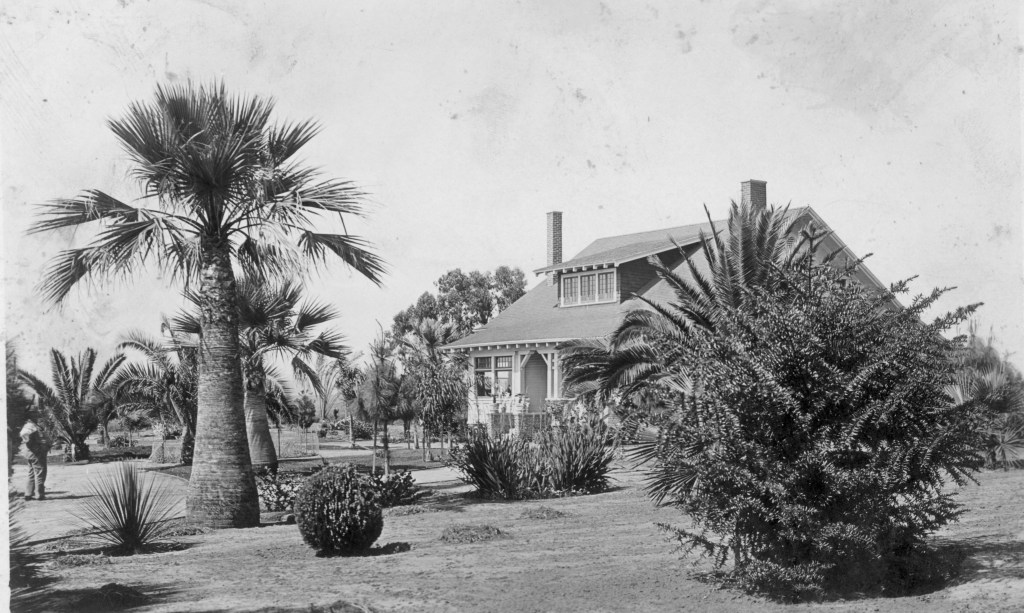
The Hansen Home in Pine Heights.

North Oceanside Terrace

A new subdivision established in the late 1940s was situated along the northern most border of Oceanside along Camp Pendleton. North Oceanside Terrace includes Capistrano Drive, San Luis Rey Drive, Monterey and Sunset and other streets. Many of the homes built there were built in the early to mid 1950s and purchased by the military families that were stationed at Camp Pendleton. In 1953 the City approved Francine Villas to the east, adding over 300 homes. These homes were introduced as rentals to military and civilians with a two bedroom home renting for $72.75 and a three bedroom for $82.75. Because of the growing density and traffic, an additional entry into the neighborhood was provided, initially called “River Road”. Later Loretta Street from the Eastside neighborhood would be built across the San Luis Rey River to provide residents access. In 1955, construction of North Terrace Elementary School began, opening the following year. Today the area is more commonly referred to as Capistrano because of the area park.

1974 aerial of a portion of North Terrace neighborhood, school and Loretta Street crossing.

South Oceanside

John Chauncey Hayes established South Oceanside, a small township just south of the City of Oceanside in the 1880s.  In the earliest days it had its own bank, a school building, cemetery, several brick residences and a newspaper, the South Oceanside Diamond.  This largely rural area included the Spaulding Dairy (established about 1913) and was home to acres of flower fields owned by the Frazee family and others. It turned residential when Walter H. Potter, “the man who built South Oceanside” began building dozens of small homes in 1947 that stretched from Morse Street to Vista Way.
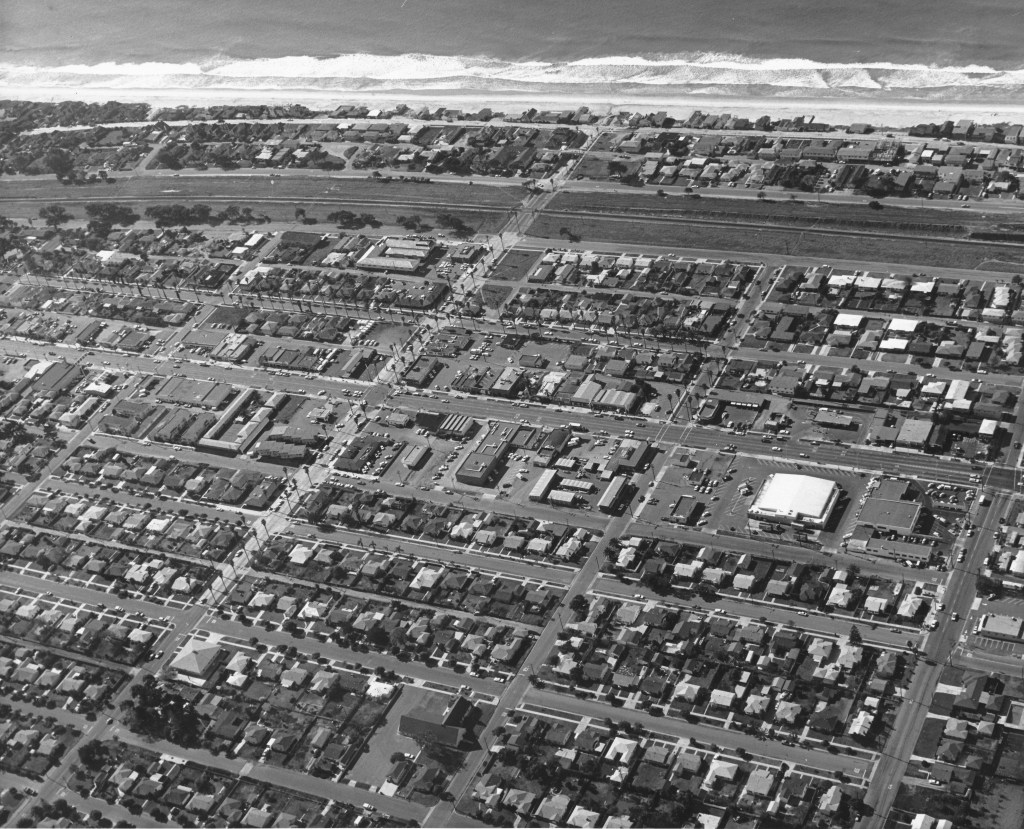
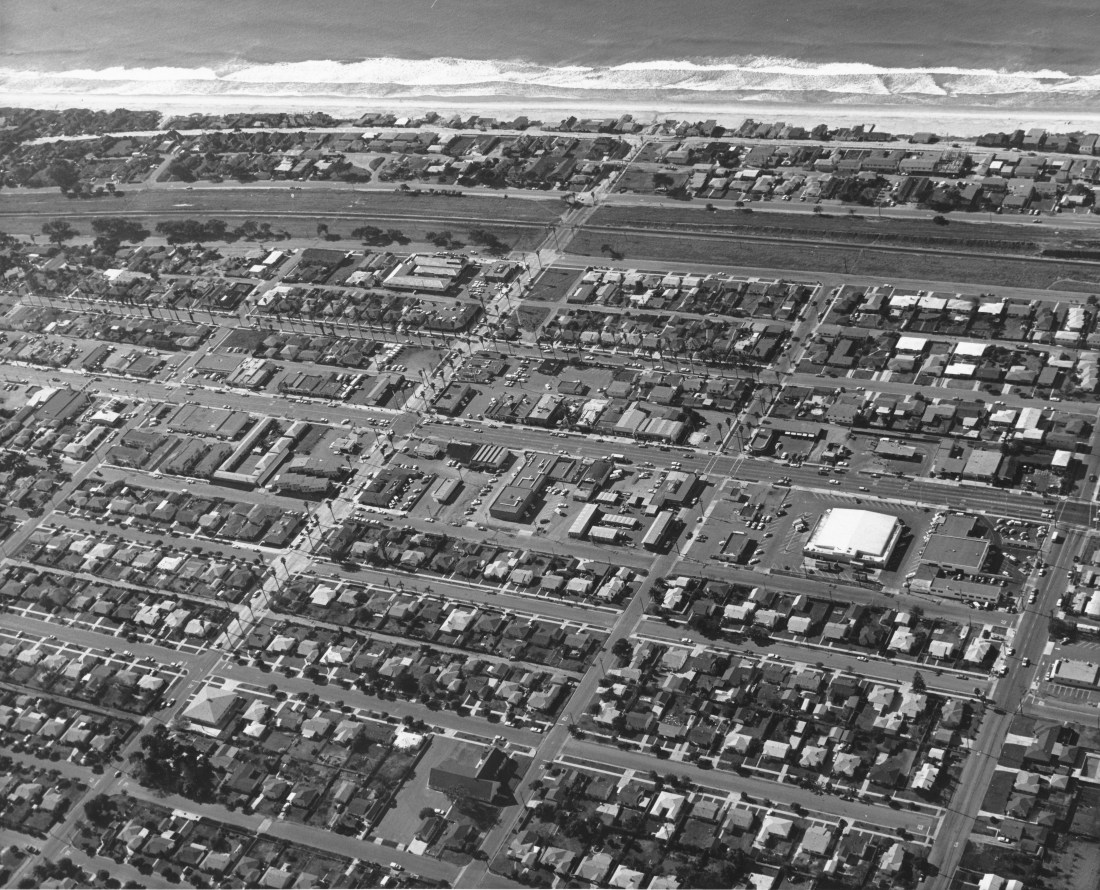
Aerial view of South Oceanside looking west, circa 1970

Eastside

The Eastside neighborhood is just east of Interstate 5 and north of Mission Avenue, with entrance by Bush or San Diego Streets. The subdivisions of Mingus & Overman, Reece, Spencer, Higgins & Puls, which encompass the area, were mostly farmland when families from Mexico began settling there in the 1910s and 1920s.  Most of the early residents were laborers who worked in the fields of the San Luis Rey Valley and the Rancho Santa Margarita (now Camp Pendleton). Many of the homes were built between 1920 and 1940 by the hardworking fathers and grandfathers of the families that still call Eastside their home. This neighborhood was referred to as “Mexican Village” by local officials but residents called it Posole. It was last neighborhood to have paved streets and a sewer system, which were not added until the late 1940s! Eastside was also the home of Oceanside’s first growing Black population in the 1940s and 1950s, along with Samoan and Filipino families.

Higgins and Santa Barbara Streets in Eastside shows dirt streets and houses on blocks because of the lack of sewer system.

Mesa Margarita

As Oceanside’s population grew at steady pace in the 1950s and 1960s, its borders continued to extend eastward. New housing was always in demand. Sproul Homes developed many new neighborhoods including Mesa Margarita, which is often referred as the “Back Gate” area because of its proximity to northeast entrance to Camp Pendleton.   In 1965, 62 acres along North River Road were purchased by Fred C. Sproul Homes, Inc., a residential development firm, from Harold Stokes and Joe Higley.  The Stokes and Higley families were long time dairy farmers in the San Luis Rey Valley. With the plan to build 275 new homes on the property it was one of several developments that changed the landscape of rural to suburban.

Sproul Homes ad in 1963

Oceana

One of the first adult only communities built in Southern California was that of Oceana. Situated east of El Camino Real and south of Mission Avenue, this planned community was built in 1964 at a cost of $25 million.  It was touted as being “a city within a city” built on 180 acres with 1,500 lanai cottages and 300 apartments.  At the time it was built it required that at least one adult be age 40 or over. A two bedroom, two bath model was listed at $16,995 and the community offered a variety of amenities which included a pool, golfing, library and restaurant.

Oceana development in 1960s

Henie Hills

Henie Hills was owned by figure-skater Sonja Henie. Sonja and her brother Lief purchased 1,600 acres of ranch land in about 1941 which included the present day El Camino Country Club. In the early 1950’s the Henies began subdividing part of the land near El Camino Real at which time some of the first custom homes were built. A portion of this land was sold to Tri-City Hospital and eventually acquired by MiraCosta College. Miss Henie built a large house on Oceanview Drive, which she used during her visits here from her native Norway.  She continued ownership of 350 acres until 1968.  In the 1974 Henie Hills opened as one of the nation’s first planned residential estates community, offering homes on estate-size lots averaging one-half acre with views of the sea, mountains and golf fairways in the valley below. Home prices ranged from $54,000 to $81,000.

Driving Range at golf course, Henie Hills sign in background

Fire Mountain

Fire Mountain was at one time called “North Carlsbad”.  It was a largely rural area planted with avocado and citrus groves, consisting of approximately 338 acres. While the town of Carlsbad eventually grew and incorporated, North Carlsbad remained an unincorporated area of San Diego County, an island surrounded by the city limits of Oceanside. The City of Oceanside annexed the area in the 1960s. It has developed into a desirable neighborhood simply named after the road traveling through it, consisting of middle-class homes, tract and custom homes, many of which sit on large lots, some offering views of the Pacific Ocean.
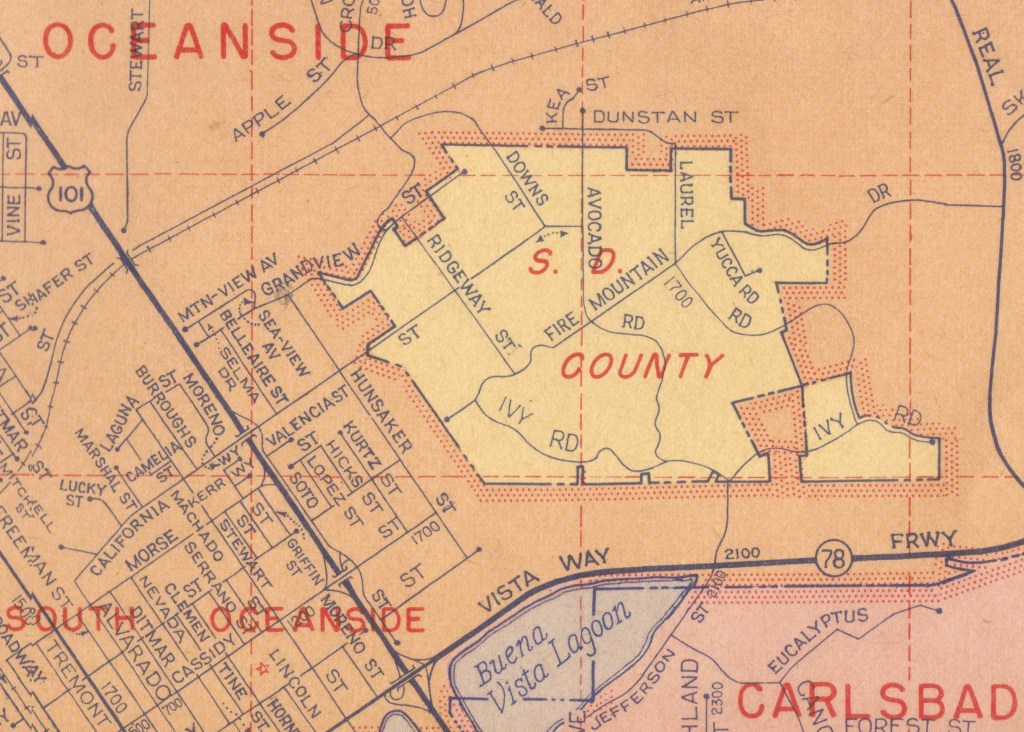
1956 Thomas Guide of Fire Mountain area before annexed to Oceanside.

St. Malo

A group of twelve homes was built by 1934 in an exclusive enclave in South Oceanside at the end of Pacific Street. Pasadena resident Kenyon A. Keith purchased 28 acres of oceanfront property and contained homes resembling a French fishing village that was known as St. Malo. Well-to-do property owners used St. Malo for vacation and summer homes.  Early film director Jason S. Joy’s home was identified as “La Garde Joyeuse” and included an outdoor bowling alley and volley ball court.  Author Ben Hecht was another resident, as well as Frank Butler, who co-wrote “Going My Way”.  The beautiful community of St. Malo remains one of Oceanside’s best kept secret and continues to serve as summer homes and getaways for the rich and famous. 

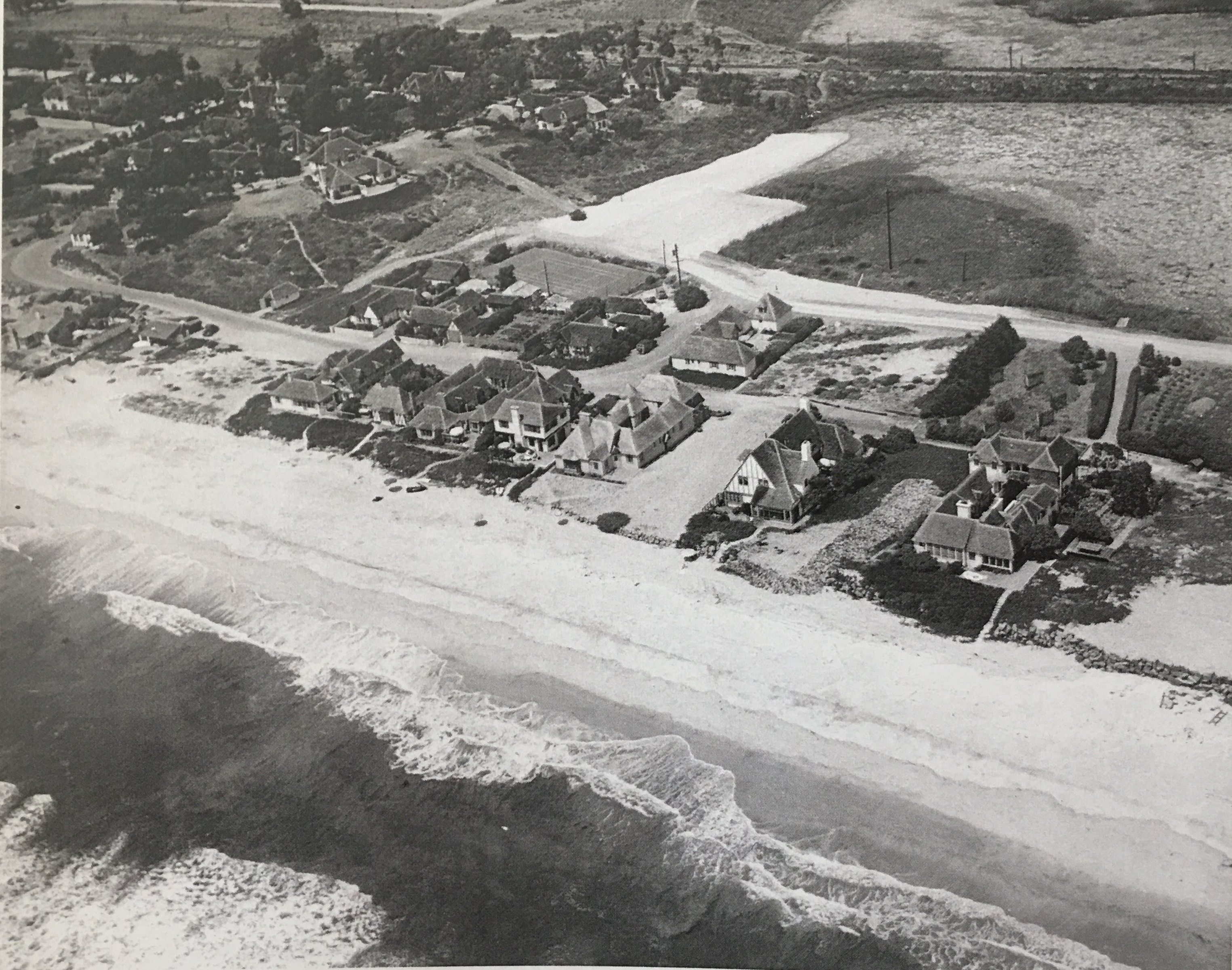
St. Malo homes fronting the Pacific Oceanside. Jason Joy house far right.

Plumosa Heights

Banker B.C. Beers established a new subdivision in the 1920s called Plumosa Heights, named for the plumosa palms lining the streets.  This once exclusive neighborhood includes West and Shafer Streets, two of the street names are named for his children, Alberta and Leonard.  The Plumosa Subdivision required at least a $4000 structure on the property to be set back at least twenty feet from the street.  Plumosa Heights continues to be a desirable neighborhood with concrete streets and original cement light posts.  Although it was the home of many affluent Oceanside residents, it was also inhabited by Oceanside’s middle class.
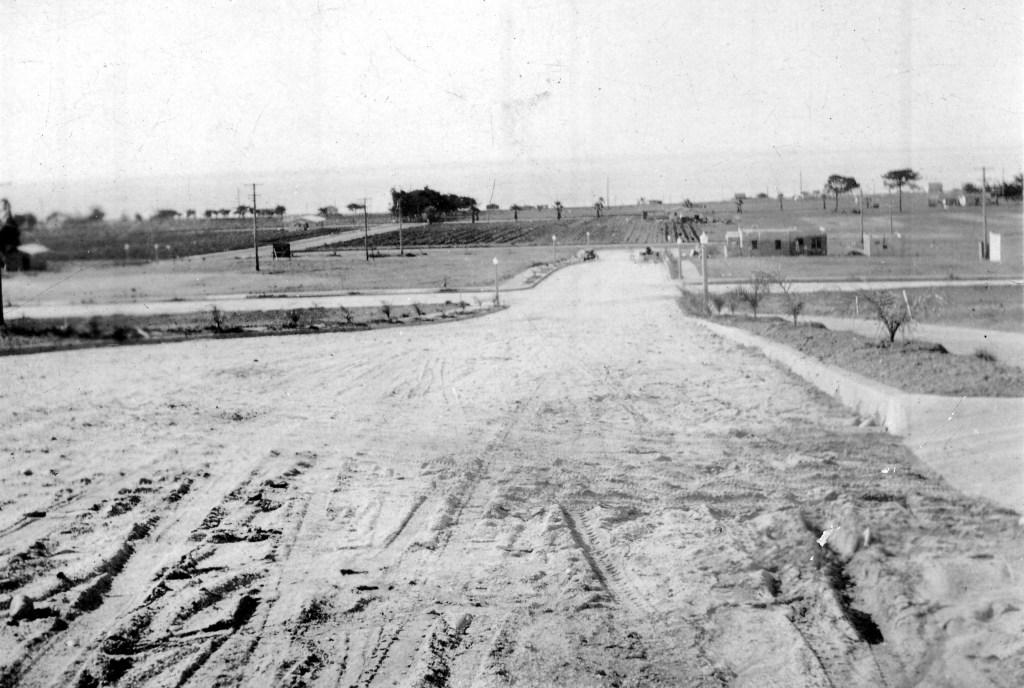
Leonard Street looking west at South Clementine and South Ditmar Streets, circa 1925

Cold Case – The Murder of Ray Davis – Shades of the Zodiac

Featured

One quiet night in Oceanside, California a senseless murder was committed with no apparent motive or suspects. Days after the murder, someone claiming to be the killer called local police with an ominous threat that resulted in armed gunmen protecting city busses for several nights in anticipation of another death. But as shocking as it was, the incident slowly faded into obscurity and the murder went unsolved. The case was in fact forgotten about altogether until in 2017 when I stumbled upon a newspaper article while doing research on an unrelated subject. As I continued research on the murder I collected dozens of newspaper articles and discovered that the case had never been solved. I then contacted the Oceanside Police Department who directed me to their Cold Case Detective.

The Murder of Ray Davis

On the evening of April 9, 1962, the Oceanside Police Department received an anonymous telephone call. The unidentified caller stated cryptically: “I am going to pull something here in Oceanside and you will never be able to figure it out.” The call was likely dismissed…until two nights later on April 11th, when a body was discovered and the caller contacted the police again.

Patrolman Terry Stephens discovered the lifeless body of Ray Davis in an alley in the upscale beachside neighborhood of St. Malo at 1:45 am.  The night of the murder, Stephens had not yet turned 28 years old, but was already a seasoned police officer. Born in 1934 in Escondido Stephens was raised in Oceanside where he lived nearly all of his life. At the age of 21 he joined the Oceanside Police Department and served on the force for 31 years before he retired.

The victim, Ray Davis was just 29 years old, a native of Michigan, born in 1933 to Glen and Virginia Davis. His parents separated when he was a young boy. In 1950 his mother was working as a dispatcher for a taxi company and at age 17 Ray was working as a waiter in a local restaurant.

Home at 616 E. Mason Street in Owosso, Michigan, where Ray Davis lived with his mother in 1950. They lived in the rear unit.

Ray married Marion Lois Solomon in 1953 in Owosso, Michigan. It was Marion’s second marriage and she had two children with her first husband, Julius Poullion.

Ray and his brother older brother Jack had moved to Oceanside in January of 1962. Oceanside had a population of less than 25,000. Jack got a job working at Marine Corps Base Camp Pendleton and Ray as a cabdriver for the Checker Cab Company. The brothers were renting a house at 525 South Tremont Street. Ray and his wife were living separately, with Marion residing in Pomona, California.

Ray Davis was working an evening shift, his cab parked on Mission Avenue in downtown. At 11:10 pm he reported to his dispatcher Lowell Sikes that he was driving a fare to South Oceanside. He never returned or responded to subsequent radio calls.

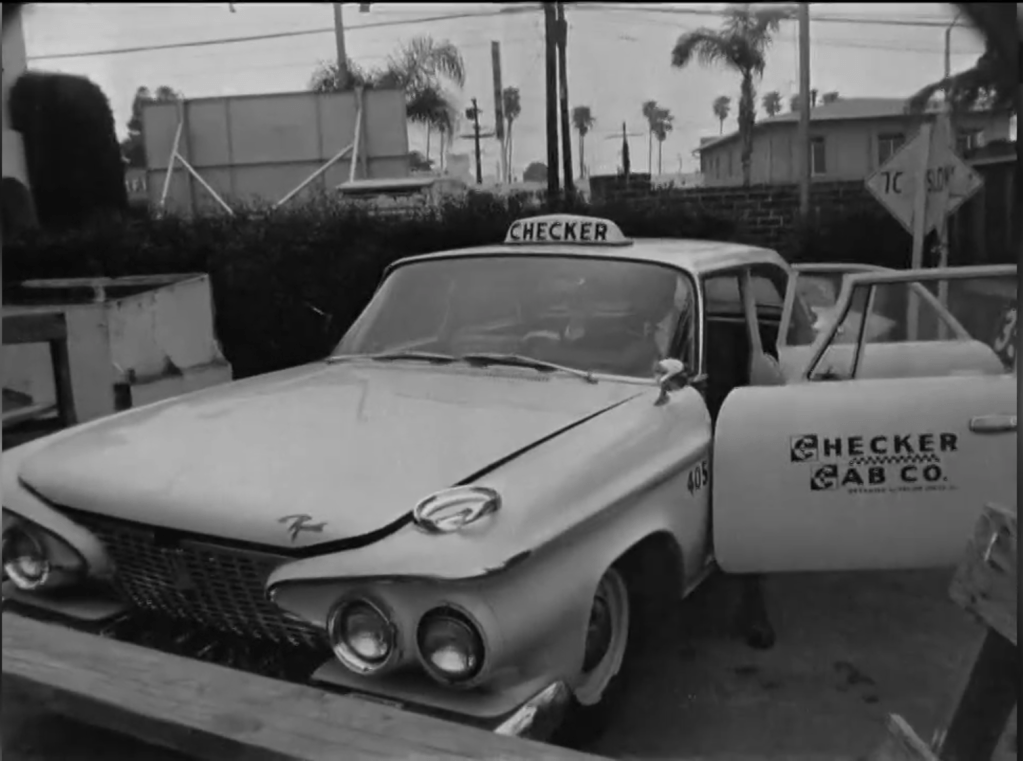
Police inspect the cab in which Ray Davis was murdered

Ray’s body had been dumped in the alley behind 1926 South Pacific Street, the home of Oceanside’s former Mayor Joe MacDonald. Across the street was the home of Oceanside’s current Mayor Erwin Sklar. This was not a neighborhood familiar with violent crime, let alone murder. (Note: Few people realize that St. Malo does not begin behind its iconic gated archway, but also includes the 1900 block of South Pacific Street.)

Davis had been shot once in the back, through the driver’s seat, and once in the back of the head. His assailant unceremoniously pulled him out of the cab and drove away. Robbery did not appear to be a motive as Davis had a modest amount of cash in both his wallet and shirt pocket.

The bloodied cab was discovered at 6:30 am, left in the alley of the 400 block of South Pacific Street with its meter showing a $2.20 fare. On scene Detective Don Brown found a third shot had been fired through the windshield of the taxi.

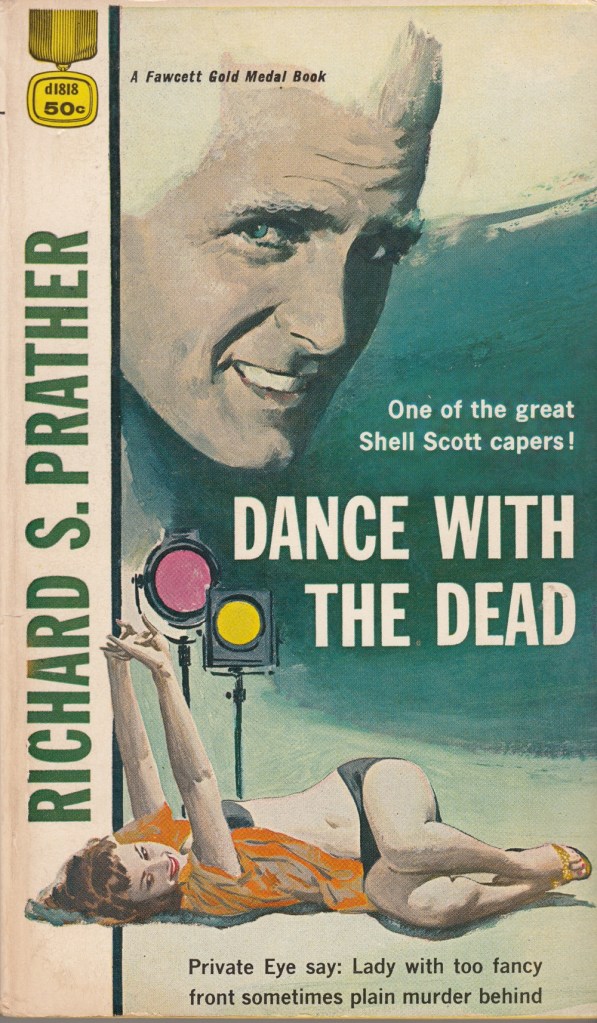
On the front seat of the abandoned cab was a paperback novel, “Dance With the Dead.” Written in 1960 by Richard S. Prather, it featured a private detective who solved crimes, all the while encountering scantily clad women…very campy stuff.

Davis was taken to the Seaside Mortuary at 802 South Pacific Street where an autopsy was performed by L. H. Fairchild of the San Diego County Coroner’s Office. Two .22 caliber bullets were removed and given to Oceanside Police Detective Floyd R. Flowers.

The following day, April 12th, both the Oceanside Blade Tribune and San Diego Union Tribune newspapers reported the murder along with the fact that police had no motive or suspect. The story of Ray’s murder was also published in several Southern California newspapers, including the Los Angeles Times. In Ray’s home state of Michigan, at least three newspapers reported the murder of Ray Davis. No mention was made of the mysterious phone call of April 9 as the Oceanside Police Department had not released that information.

Funeral services for Ray Davis were held at the Oceanside Church of God on April 13th. He was buried in a plot located in the “Sunset Slope” at Eternal Hills Memorial Park. Virginia Davis, his bereaved mother, flew from Michigan to Oceanside for the services.

Headstone of Ray Davis in Eternal Hills Memorial Park, Oceanside, California

On April 16th the Oceanside Police Department disclosed to the public that an unknown person had called them on April 9th with a veiled threat that they now linked to the murder of Ray Davis. The second phone call came with a frightening warning.

Police Chief William H. Wingard described the caller as a possible “deranged killer” and released the contents of the call:  “Do you remember me calling you last week and telling you that I was going to pull a real baffling crime? I killed the cab driver and I am going to get me a bus driver next.”

Who, but the original caller, would have known about the initial message? Who would taunt the police in such a way?

This threat was not taken lightly, considering the unknown caller seemed to have made good on his last one. Chief Wingard stated: “We have no reason to disbelieve the calls.”

In response to the threat, the Oceanside Police Department took measures to protect all city busses and armed military police were put on each bus going aboard Marine Corps Base Camp Pendleton. The newspaper reported that Frank Lilly, Oceanside’s City Manager gave Oscar Hatle, Bus Superintendent “blanket authority to take whatever steps necessary.” The unusual aspects of the murder and the unprecedented response of armed guards were big news. The story was widely distributed by the Associated Press and United Press International.

Three days passed without incident. Guards were removed from the busses, but on so-called “lonely routes” the bus company assigned two drivers. Oscar Hatle commented: “The situation still exists. We are taking no unnecessary chances.”

The police had no motive and scant evidence. They were desperate to solve the murder. Several people were questioned and released. One reported suspect was a fellow cabdriver, Charles Schofield, but the accusation had no foundation.

On May of 1962 an arrest was made of four Marines for armed robbery, but neither their prints nor ballistics matched.  Another armed robbery suspect was arrested in November but again, the fingerprints were not a match.

The murder was all but forgotten about except for the Davis family. Years passed, then decades. Ray’s brother Jack died in 1990. Ray’s mother died in 1995 and was buried at Eternal Hills Memorial Park. Ray had no biological children. After the death of his brother and mother there was no one left to remember.

Headstones of Ray and Jack Davis with their mother Virginia Davis at Eternal Hills Memorial Park

Work of the Zodiac?

It is only speculative, but it is still worth noting that seven years after Ray Davis’s murder, a killer known as the Zodiac would mimic the same deadly scenario. In 1969 he shot and killed a taxi driver in San Francisco, contacted police taking credit for it and then threatened to target a bus, in this instance one full of children.

The Zodiac killed his victims in a variety of ways and weapons, including a .22 caliber gun (as in the murder of Ray Davis). It is believed that the Zodiac may have been in the military. It is now surmised that one of his first victims may have been Cheri Jo Bates, who was murdered in Riverside, California in 1966. While there are several theories surrounding Zodiac, is it too far-fetched to believe that perhaps he started his killing spree in Oceanside?

Many serial killers are known to taunt or toy with police and certainly this was the case with Ray’s murderer. Serial killers taunt because they crave the attention, they want the notoriety and many times they are convinced of their own superiority over law enforcement.

Theories and conjecture aside, to this day the murder of Ray Davis remains unsolved. It is likely the killer is dead … even if he was just 25 years of age in 1962, he would be 83 years old in 2020.  Many of the police officers and detectives who worked so diligently to try to solve the case and protect the residents of Oceanside have passed. However, Roy K. Smith, a retired police captain, remembers the case as he was working the morning watch the night of the murder.

I first brought this case to the attention of Tom Heritage, a semi-retired law enforcement officer working part time in the Oceanside Police Department’s Cold Case files. Soon after his brief review of the file, Heritage permanently retired and moved out of the area. Detective Sylvia Guzman O’Brien then headed the department and she took a more thorough look into the unsolved murder.

In December of 2019 Detective O’Brien sent the latent fingerprint cards collected at the scene for entry into the Automated Fingerprint Identification System (AFIS). The Oceanside Police Department has kept silent about those results.

There may be DNA evidence. The murderer pulled Davis’ lifeless body out of the front seat of the cab by his belt loop but it is unknown if the evidence is sufficient to create a profile.

Detective O’Brien retired in 2021 and it is unclear if anyone is actively working this murder which is now 62 years old. The Oceanside Police Department solved a 27-year-old case in February of 2022, the stabbing death of Dolores Rabaya in 1994.

Regardless if there is a tie or link to the Zodiac killings, Ray Davis still deserves justice. Even if the killer has since died, perhaps this case could be solved through ancestral DNA forensics.

View local news reports on the links below:

https://www.10news.com/news/local-news/did-the-zodiac-kill-in-oceanside-police-re-test-evidence-in-cold-case

https://www.cbs8.com/article/news/crime/police-looking-into-claims-by-historian-that-zodiac-killer-may-be-responsible-for-1962-oceanside-murder/509-06453d97-3244-478f-9160-3cd499ce2ec0

Listen to this “Vanished” podcast about the infamous Zodiac Killer: https://audioboom.com/posts/8266146-vanished-zodiac-sick-of-living-unwilling-to-die

https://podcasts.apple.com/us/podcast/kristi-hawthorne-the-zodiac-killer-the-unsolved/id1572325461?i=1000532770818

Kristi S. Hawthorne, historiesandmysteries.blog “The Murder of Ray Davis”, 2020. Unauthorized use and/or duplication of this material without express consent and written permission from the author and owner is strictly prohibited. Links may be used, provided that full and clear credit is given to the author Kristi S. Hawthorne and historiesandmysteries.blog “The Murder of Ray Davis”, with appropriate and specific direction to the original content.

St. Malo, Oceanside’s Secret Hideaway for the Rich and Famous

Over several decades many residents and visitors alike have often wondered who lived beyond the gate at the end of Oceanside’s South Pacific Street. An impressive entrance allowed but a sneak peek into beautiful homes with unique architectural features.

Kenyon A. Keith, a wealthy resident of Pasadena, purchased 28 acres of oceanfront property in 1928. The following year he began developing a colony with custom built homes that were designed to resemble a French fishing village, St. Malo.  Residency was by invitation only and limited to family and hand selected friends. 

The St. Malo Subdivision begins at Eaton and South Pacific Streets. However, the St. Malo community, also extends on either side of the 2000 block of South Pacific Street. As homes were constructed, and continue to be built, they are kept to a strict standard of architectural style and materials, built and weathered to appear as if they have been there for decades.

The entry way or St. Malo Gate, was designed by architect William McCay. Keith wanted an imposing entrance to the St. Malo Beach community and built it to represent “a sense of place.”

St. Malo Gate at the end of South Pacific Street, circa 1930
Courtesy of “The History of St. Malo” by Nancy Keith Tenaglia

St. Malo homes weren’t just weekend hideaways for the wealthy, wanting to escape from the city, they often “summered” there. Owners brought a full staff, with maids and cooks as most homes were built with “servants’ quarters.”

Homes were fondly described by owners as “story book cottages” or “chalets.”  Nicknamed “Pasadena on the Rocks”, St. Malo offered a private beach, playground, 3 tennis courts, a volleyball court and a clubhouse cabana.  Activities included exclusive cocktail parties, barbeques and trips to the Delmar Races.  Close friends of the owners were allowed to rent or even borrow houses for social gatherings and vacations.

Courtesy of “The History of St. Malo” by Nancy Keith Tenaglia

Although Oceanside residents were not likely privy to the comings and goings of colonists, their activities were posted in the society pages of the Los Angeles Times that featured headlines such as:  “St. Malo is Favorite for Pasadena Folk”; “St. Malo Beckons Social Set”; “St. Malo Beach Hums with Activity.” The social columnists promoted the exclusivity of St. Malo, but provided the names of the socialites and families that were staying there, along with their activities and other gossip.  They boasted that St. Malo parties were better than any in Hollywood.

View of St. Malo, Jason Joy’s palatial residence far right
Courtesy of “The History of St. Malo” by Nancy Keith Tenaglia

While newspaper articles attributed the location of St. Malo as in or near Oceanside, some attempted to place the community nearer tonier locales such La Jolla or Delmar. However, in 1950 the City of Oceanside annexed the St. Malo subdivision, at the owners’ request, which at the time had grown to 24 homes.  

The heyday of St. Malo was from the 1930s and 1960s.  Owners included Desaix Myers, a mining engineer; Dr. John Dunlop, pioneer orthopedic surgeon; Karl G. Von Platen, lumber magnate; Attorney Steve Halsted; Lamar Trotti, writer and film producer; W. John Kenney, Asst. Secretary of Navy; Frank Butler, screenwriter; songwriter Nacio Herb Brown; Hugh Darling, mayor of Beverly Hills; painter Marge Wilman.  Another wealthy “colonist” was Alice Pillsbury Forsman, daughter of the co-founder of the Pillsbury Mills.  St. Malo was such a way of life for most, even when they passed away their obituaries mentioned their affection of their St. Malo home away from home.

Other notable residents were film director Jason S. Joy and author Ben Hecht.  Joy’s St. Malo home was referred to as “La Garde Joyeuse” and included an outdoor bowling alley and volleyball court.  Hecht, whose prolific works include “Scarface”, purchased his St. Malo home in 1950. While living in Oceanside, he wrote a children’s book about a cat who roamed the streets of Oceanside. He said in an interview that he often wrote from his den overlooking the Pacific Ocean.

Cover of the children’s book Ben Hecht wrote about a cat that lived in Oceanside, 1947

Homes within the colony sold for $57,000 (and up) in the 1940s, however, ownership was contingent upon “membership” and the approval of Kenyon Keith.

Over the years visitors have included Harpo Marx and James Maytag, (Maytag appliances). The most famous and royal visitors were none other than England’s Prince Phillip and Princess Anne, who stayed at St. Malo while attending events during the Los Angeles Olympics in 1984.

No longer quite as exclusive, new families mingle with the more “established” residents. While St. Malo is no longer a secret, it still remains private and the homes behind the gated entrance and those who live there, still evoke a bit of mystery.