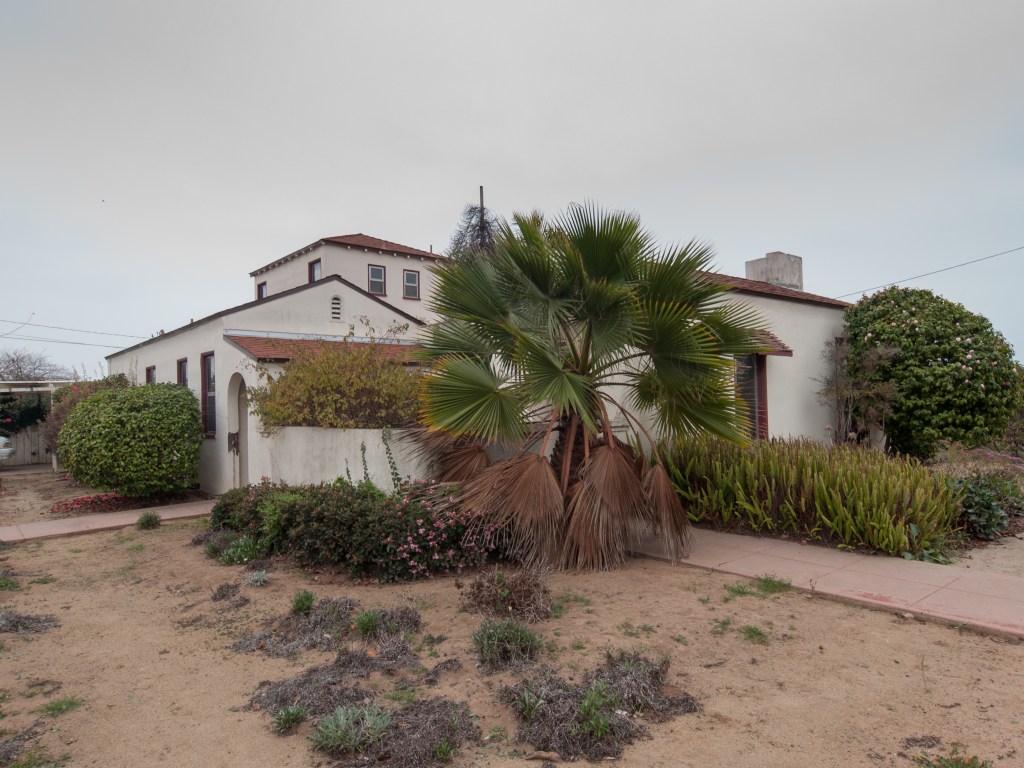
Many neighbors are lamenting the loss of a historic home on the southwest corner of Eucalyptus and South Ditmar Streets next to the former Ditmar Elementary School, now Surfside Educational Academy. The house was recently demolished to make way for improvements and expansion at the school site.
1111 South Ditmar Street, circa 1990
Before a house was built on the site, the area was one large undeveloped 10 acre tract that was bordered by Eucalyptus to the north, South Ditmar to the east, Short Street (Oceanside Blvd) to the south and Hill Street (Coast Highway) to the west. In the early 1910’s the tract was entirely laid out in carnations and in the 1920s it was used for growing vegetables.
Barnard Home at 1111 South Ditmar, upper left hand corner, 1932
Fred Gardner Barnard, Sr. purchased the property in 1927 from Dr. Robert S. Reid. F. G. Barnard “pioneered the planting of lima beans in San Diego County” and made lima beans a staple crop in Oceanside and surrounding area.
Barnard’s bean thresher on the Rancho Santa Margarita
A native of Ventura, California, born April 5, 1872, Barnard came to Las Flores on the Santa Margarita rancho in 1907. Prior to his arrival, he married Neta Bonita Lamb in 1899 and the couple had three children: Fred Gardner Barnard, Jr., Harriett and Maryline.
Fred Gardner Barnard, Sr.
Barnard was said to be the first farmer to plant a vegetable crop on the Rancho Santa Margarita. His lima bean crops even inspired an Oceanside festival in 1913, Bean Day, which was celebrated at the Oceanside Pier band shell. Barnard is also credited with having “pioneered irrigation” on the Santa Margarita, having drilled many of the first wells on the ranch.
Bean Day at the Oceanside Pier in 1913
According to an interview with a family member, Barnard built the house in 1929. The house was the only structure on the entire ten-acre property for twenty years and the remaining land was farmed. The house was originally a one-story structure with an additional level being added in the 1940s.
The Barnard’s owned the acreage until a large portion of the tract was sold to the school district for Ditmar Elementary School, built in 1949. Fred and his wife, Neta lived at the home until he died in 1953 and she passed 8 years later in 1961.
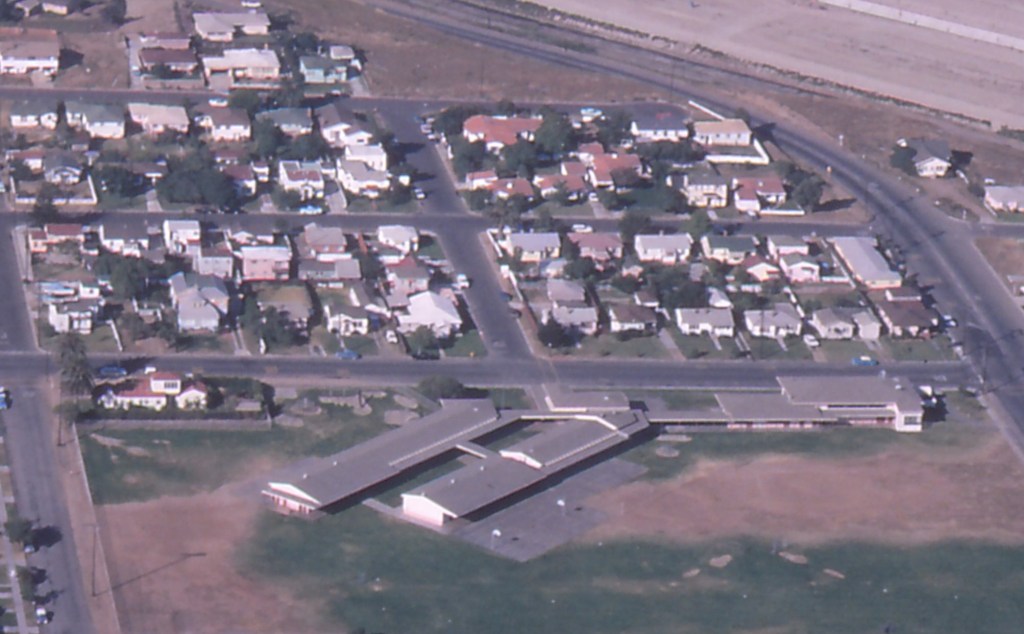
House at 1111 South Ditmar and Ditmar Elementary School in 1965
After Barnard Sr.’s death his daughters Harriett and Maryline were deeded the property and in 1962 it was sold to J. Maxey Witman and Lillian E. Witman.
Jackson Maxey Witman was the son of Harry Witman and Ruth Maxey. His father Harry Witman was the foreman at the historic Rancho Santa Margarita. After the rancho was purchased by the Navy Department to establish Marine Corps Base Camp Joseph H. Pendleton, Witman received a commission as a captain and served with the Marines throughout World War II. J. Maxey Witman worked in real estate for decades.
In 1964 the property was purchased by H. Glen and Jean Guyer. Glen Guyer worked at US Silica in the early 1960s and later went into partnership with Irby Mandrell in the Oceanside Music Company. Irby Mandrell was the father of Barbara Mandrell who would later become a well-known country western singer. The Mandrell’s performed in Oceanside at the Normandy Bar and the 101 Club and even recorded a single with O-side Records.
Jean Guyer, seated left, along with school board members, 1981
Jean Guyer was a registered dental hygienist and worked part time for well known dentist Dr. Tom Melbourne. Jean Guyer was later elected to the Oceanside School Board where she served several years.
The Guyer’s raised their children at 1111 South Ditmar Street and in an interview Jean remembered some of the unique circumstances of living in a home in close proximity to an elementary school as children would sometimes crawl through the hedge and hide in their backyard.
She noted that there had been no heat in the house except for the gas fireplace and remarked that the second story addition was “poorly planned” but it afforded the family a view of the fireworks on the 4th of July. The original entrance was on the north end at Eucalyptus but had been changed.
In 2001 the house was acquired by the Oceanside Unified School District.
Barnard Drive in Oceanside that leads to the MiraCosta College Campus is named in memory of Fred Gardner Barnard, Jr. Active in the community, Barnard, Jr. was committed to education. He served on the Oceanside-Carlsbad High School board of trustees for 30 years, from 1934 to 1964 and over the years the Barnard family has contributed over $200,000 to the college.
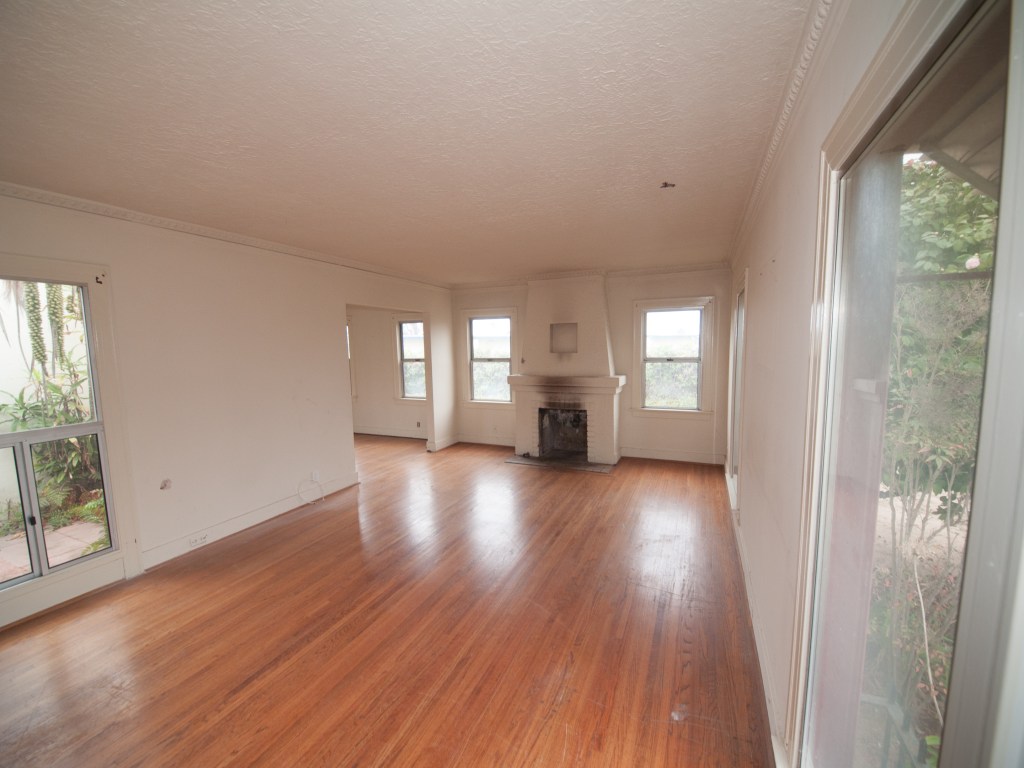
The house was photographed in 2013. Below are some interior scenes after the house had been vacant. The house had been remodeled over the years but there were still original features.
Front room, first floor
Fireplace, first floor
Staircase
First floor bathroom
Portion of second floor bedroom (addition) and view of en suite
There’s a lot of buzz on social media about the Oceanside Pier. If you don’t already know, the current pier is Oceanside’s 6th pier, built in 1987 with a “life expectancy” of 50 years.
However, the concrete approach (steps and ramp that lead to the pier and beach) is nearing 100 years old and was built when Oceanside’s 4th pier was built in 1927.
The history of Oceanside’s fourth pier starts years before it was built. The third pier, built in 1903) had been damaged extensively by storms in April of 1915. The once 1,400 foot pier was now down to a little more than 800 feet. Public sentiment for the pier was one of concern for the city’s beloved landmark and its importance in drawing tourists: “If the pier goes, with it goes all hope of the town having summer visitors.”
1913 view of Oceanside from Oceanside’s 3rd pier, built in 1903
Later that year the Oceanside Blade reported that “Eighteen cedar pilings and six eucalyptus piles and other material arrived Wednesday for the repair of the wharf. As soon as a suitable low tide arrives the piling will be put down to strengthen the places where the old rails are rusted through.” These repairs may have reinforced what was left of the Oceanside pier, but a new one was needed.
But before action could be taken, just months later in late January 1916, a devastating flood hit San Diego County, wiping out roads, railroads and bridges and killing several people countywide. Oceanside’s pier was the only way to get much needed food and supplies to residents and those in the surrounding area. Coal for the Santa Fe railroad was shipped in; The Swift Packing Co. sent several tons of meats for Oceanside and neighboring towns and the Pacific Coast Biscuit Co. landed about two tons of miscellaneous groceries and meats.
Unloading freight and needed supplies after the 1916 Flood, (3rd Pier)
While the pier was a valuable resource during the flood and its aftermath, heavy equipment and cranes bringing the supplies to the pier caused damage, even making the pier lean to one side, forcing the closure of the pier for additional repairs after the emergency.
Talk of a new pier was everywhere; letters to the editor; proposals and calls to action at city council meetings. With no consensus and no funding, no new pier.
However, a new pier was just within reach when George W. Houk, president of the chamber of commerce of Northern San Diego County, stated that he would donate up to $100,000 in matching funds for a new pier at Oceanside. Houk had made his fortune as a wheel manufacturer, and considered “the father of the wire wheel in America”. He even included this donation in his will which was written as follows:
My said trustee shall, subject to the conditions hereinafter mentioned, pay to the city of Oceanside, county of San Diego, state of California, such sum that may be necessary, up to, but not in excess of, the sum of one hundred thousand, ($100,000.) providing said city of Oceanside donates a like sum, and providing further that the said city builds within three years after my death with said money, a pleasure pier, the site to be selected by my trustee. Upon the failure of the said city to perform said conditions, then the said sum shall be distributed with the residue of the trust property.
After Houk’s death on October 6, 1917 in Los Angeles, all of Oceanside was appropriately solemn but excited by the prospect of having a new pier. In anticipation, the Oceanside band was renamed the George Houk band in honor of the deceased benefactor.
Oceanside’s George Houk Band, 1917
Houk’s daughter, Mrs. Margaret Moody, promptly contested the will on the grounds that her father was not mentally competent at the time the will was written. She stated that in addition to the Oceanside bequest, her husband was to receive $100,000 on the condition he re-enter the army and attain the rank of captain within a good time!
Oceanside, although somewhat discouraged, still made plans to go ahead and even invited Mrs. Moody and her husband to a concert on the pier given by the band that was named in honor of her father. The bequest was lost, however, in a decision handed down by the California Supreme Court in 1921. Oceanside would have to wait before its fourth pier was built.
Finally, in 1925 several designs for a new pier were proposed and the building of an all-concrete pier was considered. An election was to be held to vote for pier and beach improvements, but, the city council failed to pass the bond election ordinance. Trustees E. W. Fairchild, Robert S. Reid and Ed Walsh voted for the ordinance that would allow a $100,000 bond issue for pier and beach improvements as well as fire equipment and water improvement. Trustees George Dickson and Jesse Newton refused, saying that $100,000 was too much and that $75,000 was adequate.
Voters angry that they were denied the opportunity to vote for the bond issue took measures to undertake a recall of Dickson and Newton. Still irritated, that when a $75,000 bond issue came to vote in September, residents rejected it with a vote of 330 to 207.
The following May, a petition with 726 names calling for an election to sell “not less than $100,000 in bonds” was filed and granted by the city council. Voters would get their chance at an election to be held in June, 1926.
The Oceanside Blade published an editorial in favor of the pier bonds and a plea to unite:
MAKE IT UNANIMOUS
For nearly two years Oceanside has been torn into factions and has been suffering daily injury because of a difference of opinion over the personalities of three or four of her citizens, and concerning the spending of $25,000. The three or four citizens were all good men, and the $25,000 was but a comparatively small increase of a sum which practically everyone agreed must be spent for the replacement of the present pier and necessary improvements on the beach.
The stormy petrels in office are now gone since the election of trustees, and by the voluntary withdrawal of two of them in the interests of harmony. A majority of the people have decided at an election, that in their judgment $75,000 is not enough for the needed pier and beach improvements. We now are asked to vote for the proposed $100,000, a sum which is but $25,000 more than the amount that even the minority agreed was minimum.
It resolves itself into a question of whether or not the voters are prepared to defeat a very necessary improvement because of a mere difference of opinion over $25,000, a sum, which, when reflected in the taxes of a growing town like Oceanside will never be noticed, and by so doing keep alive the present controversy.
The Blade feels sure that to do so would be calamity, and so we say vote for the bond issue for a pier and beach improvements and MAKE IT UNANIMOUS.
On June 19, 1927, residents made their voices heard with a resounding decision: 685 to 94 in favor of the pier and beach improvements.
Plans began immediately, with Oceanside’s City Engineer, Ruel Leonard Loucks, designing a new pier which was presented to the city.
Oceanside City Engineer Ruel Leonard Loucks, who designed the Oceanside Pier and The Strand
During the council discussion of the plans, Trustee Crandall asked about the “feasibility of supplying gasoline from the pier for pleasure boats.” Engineer Loucks replied that the proposed pier was not a commercial pier and it could not “withstand such use.”
“The new pier is to be a pleasure pier pure and simple. There is provided at the outer end a wider portion with a landing stage that may be let down to allow of receiving passengers from small boats when the condition of the sea will permit it, but as to any direct cargo or other commercial use such is out of the question.”
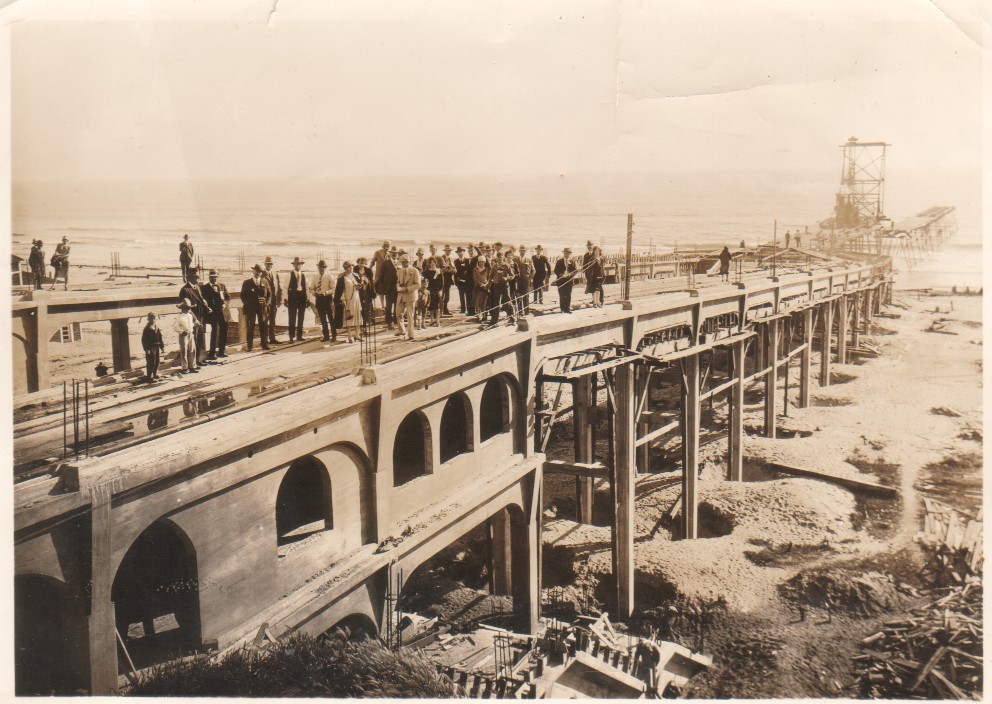
Sidney Smith of Los Angeles was the sole bidder in December of 1926, in the amount of $93,900. The bid was accepted and work began the same month. Compromises were made as to the construction of the pier by building a concrete approach 340 feet long with the remaining 1,300 feet made from wood.
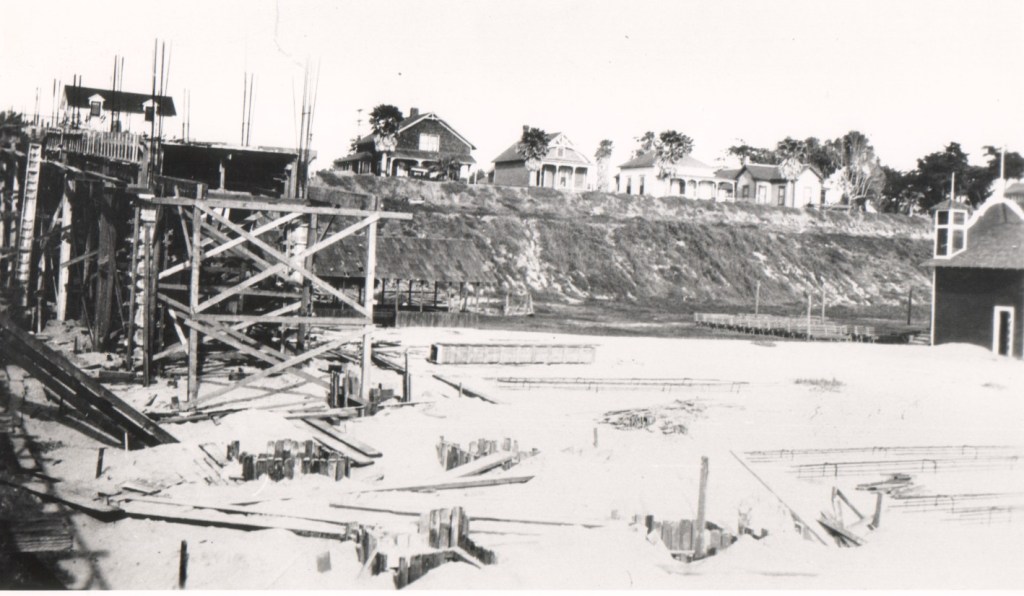
Construction of the 4th Pier, 1927
The building of the new pier prompted other improvements including the paving of “The Strand”, also designed by Engineer Loucks. On January 12, 1927, it was reported that the city council approved the plans for the construction of a “concrete paving and driveway along the beach from Wisconsin street to Ninth street, a distance of nearly a mile. This will have on the seaward side a concrete curb and will be lighted for the entire length, the plans calling for the installation of ornamental lighting posts for the entire distance.”
Officials gather on the cement approach as construction of the pier continues, 1927
Progress on Oceanside’s new pier went quickly. In April of 1927 it was reported that the pier would be finished in time to celebrate Independence Day.
Just two months before the pier would be complete the Oceanside City Council published the following announcement: announced:
“To the people of Oceanside, who, for the last five months have critically watched all the details of construction of the new pier it is not necessary to point out the completeness of the finished structure. This pier will stand for years to come, a monument of classic beauty, utility and permanence and be the pride and honor of the city.”
Crowds gather at the opening of the 4th pier, July 4, 1928
Over the Fourth of July weekend in 1927 Oceanside’s fourth pier was dedicated. The celebration brought thousands of people from all over Southern California with the pier being the focal point of the festivities. Newspapers reported that 25,000 people came to Oceanside to celebrate those Independence Day festivities, at the time when the city’s population was just 3,500 residents.
Crowds line the Oceanside pier’s concrete approach or “bridge”
Oceanside’s fourth pier lasted nearly 20 years. However, in 1943 it was badly damaged due to storms. In addition, the weight of a Navy Observation Tower built as a lookout during World War II, was blamed for the weakening of the pier. By the mid-1940s it was undermined to a point where its safety was questioned, prompting the need for yet another new pier. Oceanside’s fifth pier would be built in 1947.
Today, plans have been approved to rebuild the concrete portion (now called a “bridge”) keeping to Engineer Loucks’ original 1926 design. The current bridge or approach is coated with decades of paint which has changed its appearance from its original “art deco” look and its smooth gray concrete finish.
This photo captures the original beauty of Loucks’ design, 1927
So what is old becomes new again.
And as a reminder: As we “critically watch” (and sometimes complain on social media) “The pier has stood” and when rebuilt, “will stand for years to come, a monument of classic beauty” and may it ever be “the pride and honor of the city.”










 Histories and Mysteries