Hidden Beauty, The History of the Mason Building (301 North Hill Street aka Coast Hwy)

On the northwest corner of Third and Hill Streets (Pier View Way and North Coast Highway) sits an empty building that has seen better days, with its exterior scraped away, windows broken and metal awning left to rust. No one can remember the building in its glory days but many will remember the H&M Military store owned by Harry and Mary Cathey, a popular destination for Marines needing essential gear. It was the largest of the many military stores that once filled Oceanside’s downtown business district.

Mason building, aka H&M Military Store at 301 North Hill Street/Coast Highway. (Photo taken March 8, 2024)

But the building pre-dates Oceanside’s relationship with Camp Pendleton and its Marines. Nine decades ago this was once a beautiful art deco style building. Modernization may hide its original exterior but perhaps one day it will be restored.

Prior to the present building, Charles D. Merrill and his brother William owned the property. They were the first licensed Ford dealership in Oceanside and in 1920 built a new building on the prominent corner in downtown Oceanside and further expanded it after 1925.

Merrill’s Garage was a Ford dealership, located at Third and Hill Streets in the 1920s. Note the historic Schuyler building to the left. Oceanside Historical Society

Paul Beck, co-owner of the Oceanside Blade Tribune newspaper recalled the Merrill’s dealership when he arrived in Oceanside in 1927: “Across the street to the West was the Merrill Brothers Ford Agency.  Having no transportation upon arrival in Oceanside, one of the first deals that the young Becks made was for a Model A Ford.  As I recall, the total price was $475, and we talked the Merrill’s into a “due bill”, which meant $400 cash and $75 in advertising.”

The Merrill building included a storefront that was situated on Third Street (Pier View Way). In 1929 Ed Wolmer leased that space, at 410 Third Street, to open a music store.

The February 5, 1929 Oceanside Blade reported:  Rebuilding of the lower floor of the building at 410 Third Street to be occupied by the Ed Wolmer Music House is well along and Mr. Wolmer states that he is expecting to be in his store by the last of the month.  The front has been modernized and the interior handsomely refinished and when completed the store will be a most attractive salesroom for the display of the extensive line of pianos, radios, panatropes, and musical merchandise which will be carried.

Two years later the Merrill Bros. moved their Ford dealership just to the north, near the center of the block, and sold the property to B. A. and Marian Mason in 1931.  Despite the fact that a Depression was gripping the country, the Masons began construction of a two-story brick building on the property.

The November 19, 1931 Oceanside Blade Tribune reported the following: Operations on the new Mason building, being erected at Third and Hill Streets, will be resumed tomorrow, according to a statement from Omer Nelson, superintendent in charge. Delay in the erection of the building was brought about by negotiations regarding the expansion of the building to take in another story. “We are resuming operations,” said Nelson, “while the parties continue their negotiations toward the expansion of the building.  We are holding things open so that if necessary, we can make a third story to the build.” Work on the building has been at a standstill for the last few days, with part of the brick walls erected.  Nelson is on the job today, preparatory to getting the full construction crew back on the job again tomorrow.

The third story was not added and the building was completed in early 1932. The lessee was Wolmer’s Music House who moved from their former location fronting Third Street into the new Mason building fronting Hill Street.

Ed Wolmer’s Music House on the northwest corner of Third and Hill Streets, 1932. Oceanside Historical Society

Oceanside resident Ernest Carpenter remembered in an interview: “It was a music store, sheet music and all that kind of stuff. They had a big statute and I can’t remember, a dog, a big statue of a Dalmatian in the front. When I was a little kid I didn’t want to walk on that side of the street because I was afraid of that dog!” 

Mason building to the right, looking west on Third Street (Pier View Way). Note the dog statute. Oceanside Historical Society

Wolmer’s Music Store, remained at 301 North Hill Street for several years, and also sold appliances. In 1946 Bob Shaffer and Gordon Duff purchased the appliance business and moved it to Third and Freeman Streets.
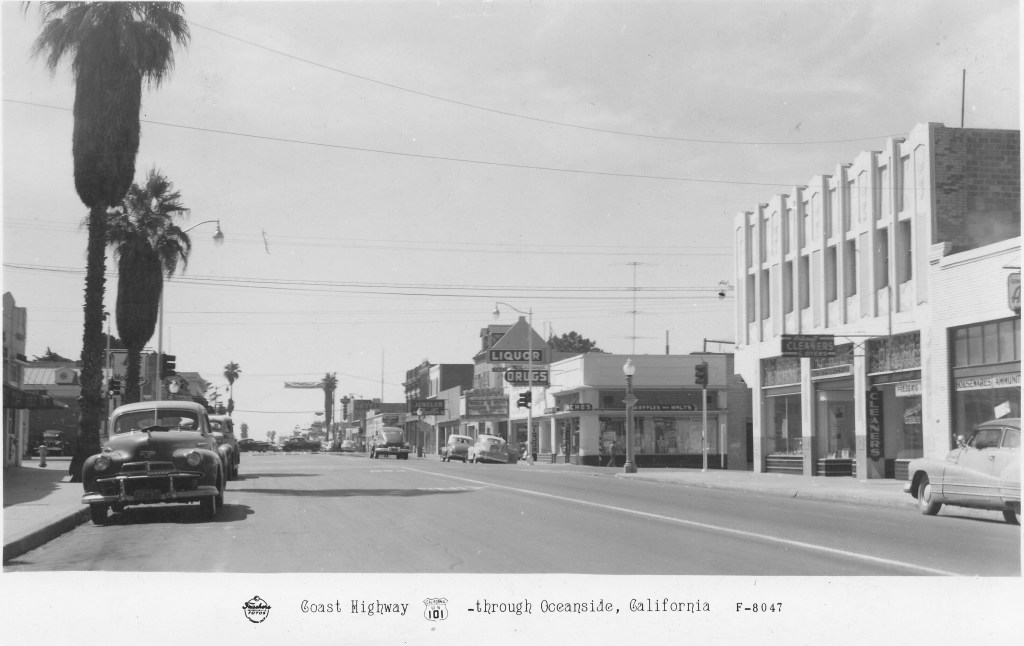
In 1940, Henry and Lina Howe bought the Mason building at 301 North Hill Street and owned it for several years, later deeding the property to their son and his wife, Tracy and Ethel Howe. The Howe’s owned a hardware store on Mission Avenue in downtown Oceanside.

Motorcycle office Guy Woodward stands on the center line of the 300 block North Hill Street (Coast Highway) in 1949. Mason building is to the center right, with a portion of the original brick exposed. Oceanside Historical Society

Harold C. Cross, attorney rented an office upstairs in the 1940s, along with a variety of other businesses in the 1950s, including the Merchants Credit Association, and attorneys Daubney & Stevens.
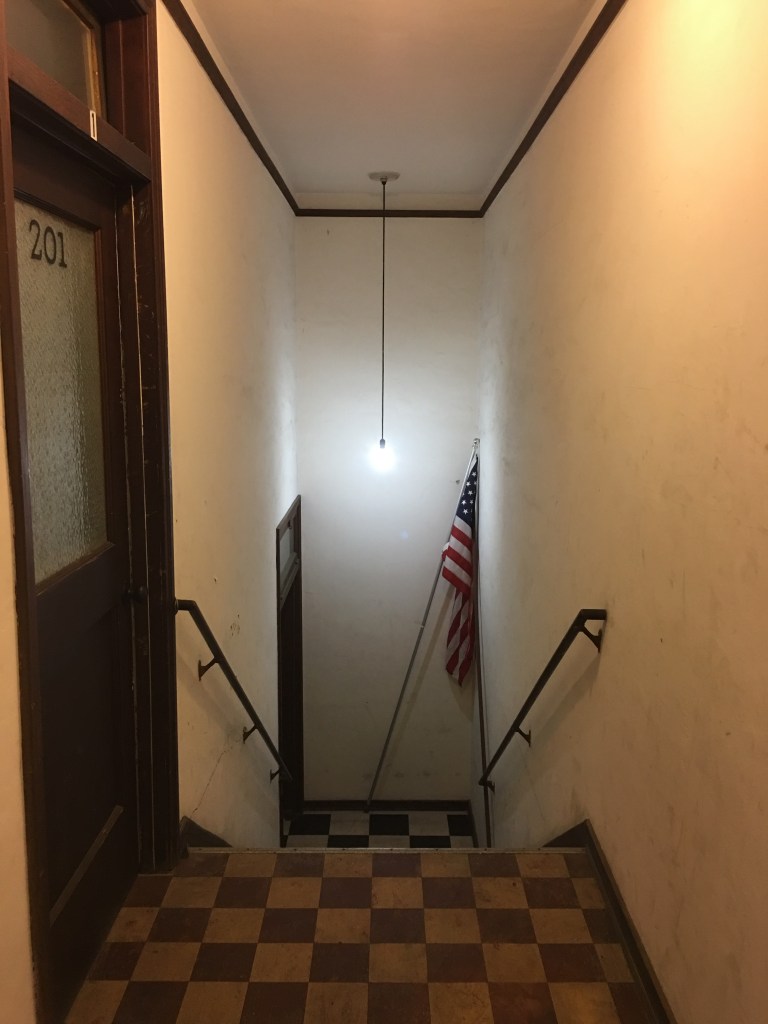
View of stairway leading from first floor to the second level (photo taken in 2017)

By the mid to late 1940’s the building was divided into three suites fronting Hill Street or Coast Highway, to include 301, 303 and 305. The Fun Shop, a novelty store occupied one suite at 301 North Hill from 1948 to at least 1963, which was operated by T. L. O’Farrell and L. K. Broadman. Swanson’s Service Studio occupied the storefront at 303 North Hill Street from about 1948 to 1959, which was later occupied by Marine Tailors in the 1970s and 1980s. Artcraft Cleaners occupied the third suite at 305 North Hill from the mid 1940’s to about 1981.   

300 block of North Hill Street/Coast Highway circa 1948. To the right is the Mason Building with Swanson’s Studio and Artcraft Cleaners signage. Oceanside Historical Society

Years before Room 204 was used for polygraph exams (curiously), the office suite was used for a tailor’s shop in the mid 1940s, then rented out to Lorraine Nelson, a public stenographer.

One of the upstairs suites used for at one for polygraph exams (photo taken in 2017)

In or about 1965, the owners “modernized” the exterior of the building, placing the metal screening along the upper portion and adding the large awning which changed the whole look of the building. Ceramic tiling was added to the exterior and the beautiful grating above the windows was either removed or covered as well.

Mason Building/H&M Military Store, 1979 Oceanside Historical Society

In 1973 Harry and Mary Cathey purchased the building at 301 North Hill/Coast Highway. Prior to that they had been tenants operating H&M Military Store which became a very successful business for decades. The Cathey’s and their store were fixtures in downtown Oceanside, supporting the military and their community. They sponsoring the local parades for many years.
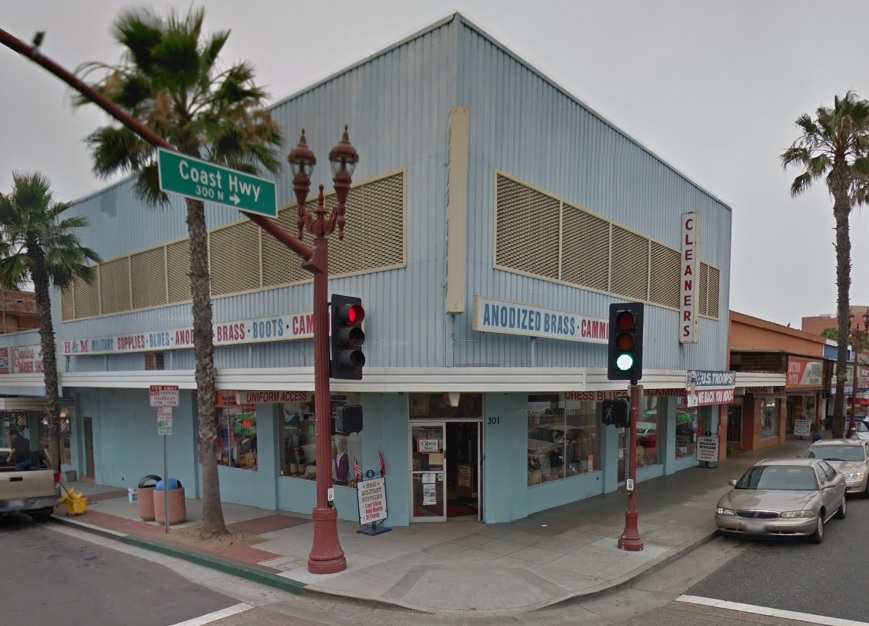
301 North Hill aka Coast Highway (google view 2017)

Harry Eugene Cathey was born in Arkansas in 1928. He served in the United States Marine Corps and was stationed at Camp Pendleton. After he got out of the service, he and his wife Mary made their home in Oceanside. Harry operated Harry’s Shoe Repair store at 304 Third Street in 1954, and later moved into the Mason Building at 410 Third Street (Pier View Way) opening the Square Deal Shoe Repair store.

John Gomez with patron in the Esquire Barber Shop, 412 Third Street/Pier View Way, circa 1970s. Oceanside Historical Society

In 1954 Jack Noble operated Noble’s Barber Shop at 412 Third Street which later became the Esquire Barber Shop by 1959 and still operates under the same name today and owned by John Gomez.

410 and 412 Pier View Way (photo taken in 2019)

While the barber shop and another storefront continues to operate at 410 and 412 Pier View, the majority of the building sits empty. Its exterior has been marred by the removal of ceramic tiling (not original to the building) with boarded windows.
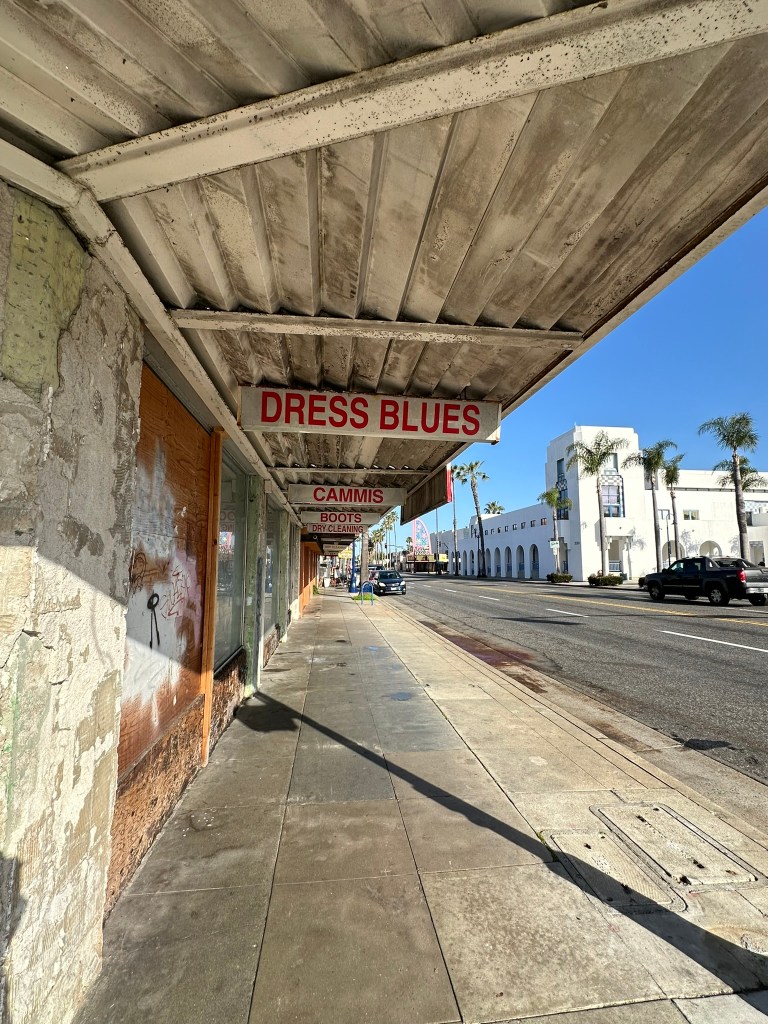
Damage to exterior with the removal of the ceramic tile. (photo taken March 8, 2024)

There is hope for the building. The large, corrugated metal façade which wraps around the upper portion of the building could be removed and the original exterior on the second story appears largely, if not completely, intact and would reveal its original cement finish in art deco style.
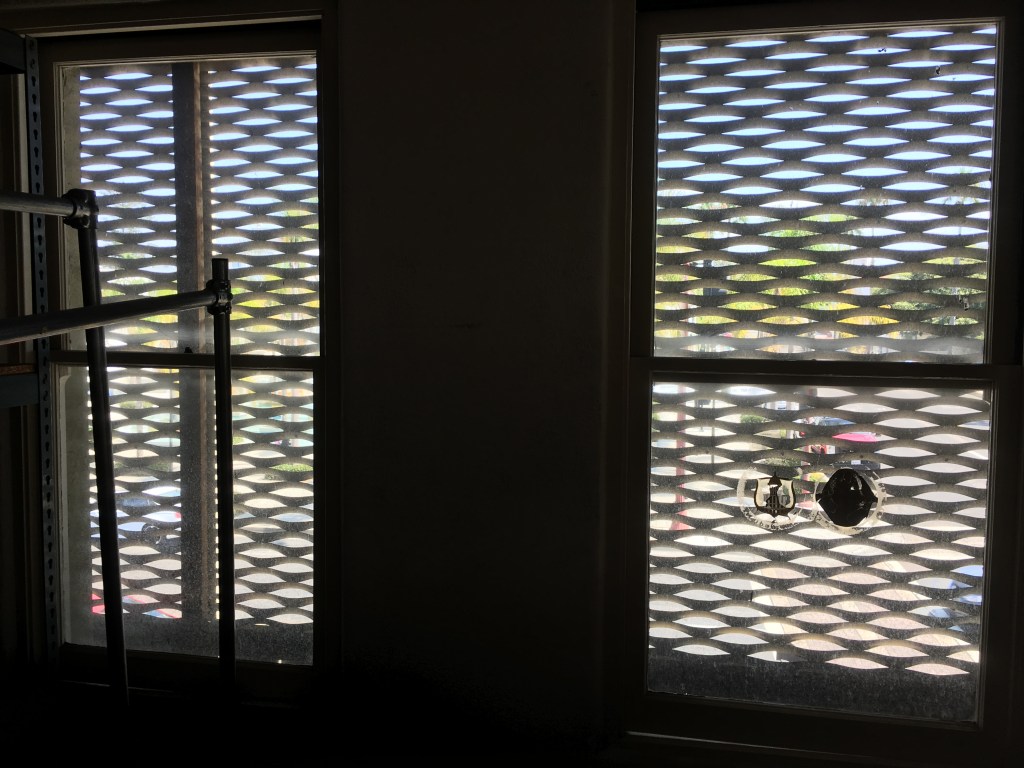
View of metal façade from interior second floor (photo taken in 2017)

Just what will become of the building is unknown but certainly its history is worth knowing and the building worth preserving. The potential for exposing the beautiful Art Deco façade and beautifying this downtown corner is just waiting to happen.

Historic homes and buildings provide character and a sense of place. “How will we know it’s us without our past?” – John Steinbeck, Grapes of Wrath

The Blade Tribune Building in South Oceanside

The large brick building at 1722 South Coast Highway is going over extensive changes and a “new transformation” but here’s a brief history of the building and some of the newspaper’s owners and publishers.

The building was built to house the Oceanside Blade-Tribune newspaper, which originated as the Oceanside Blade in 1892. It was a small but important weekly newspaper which provided world and local news to the residents of Oceanside.

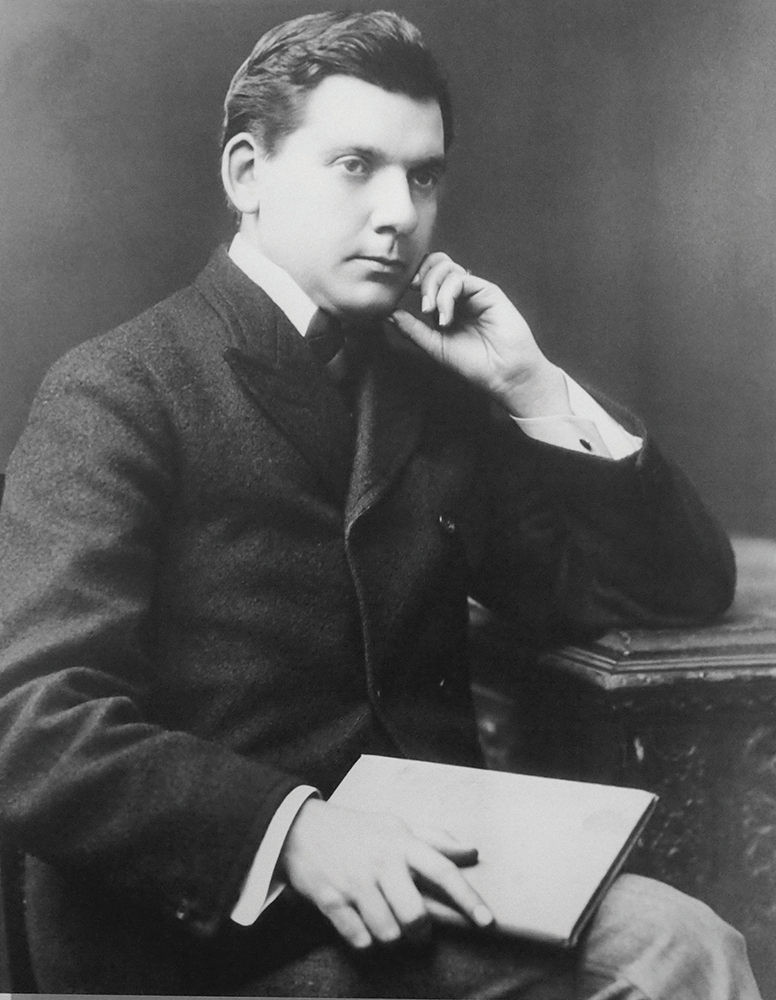
Paul Beck, co-owner of the Oceanside Blade Tribune

Brothers Paul and Harold Beck, brothers who hailed from Iowa arrived in Oceanside in the late 1920s. They purchased the Oceanside Blade along with with another newspaper, the Oceanside News, and created the Oceanside Daily Blade Tribune and the paper went from a weekly publication to a daily one.

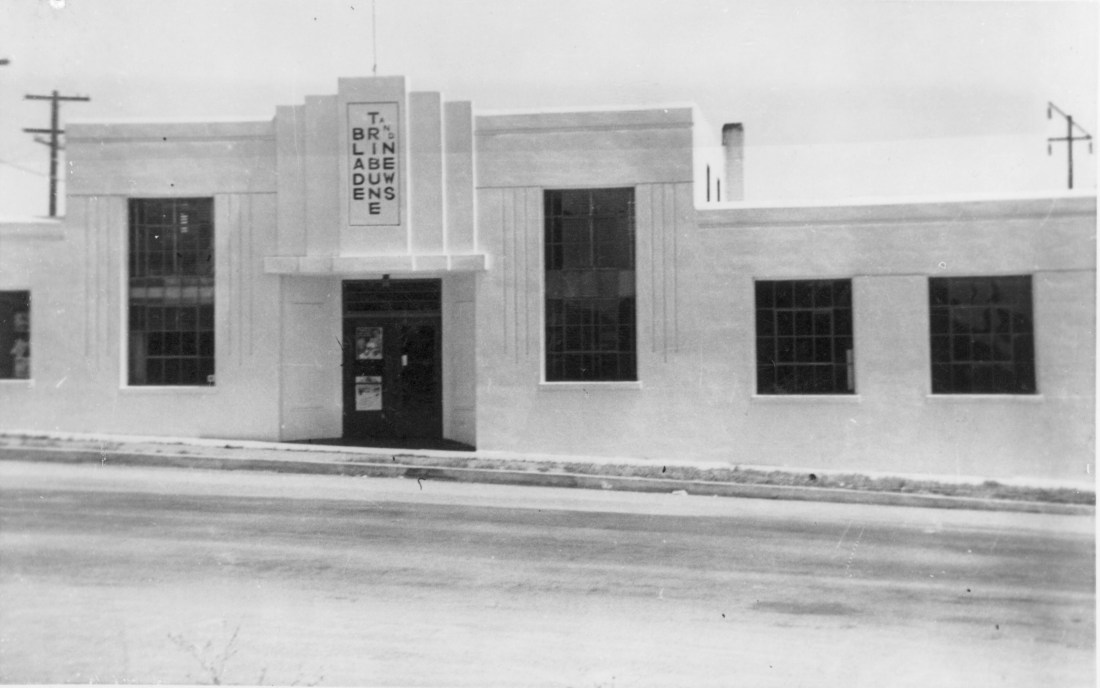
The Blade Tribune building at 401 First Street (Seagaze Drive) in 1936

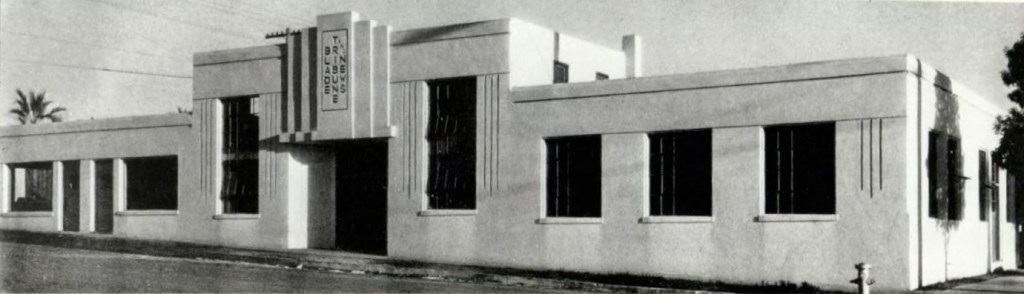
In 1936 the Becks hired architect Irving Gill to design a new building for their growing business. Located at 401 First Street (now Seagaze Drive) it was Gill’s last design, which was restored in 2019.

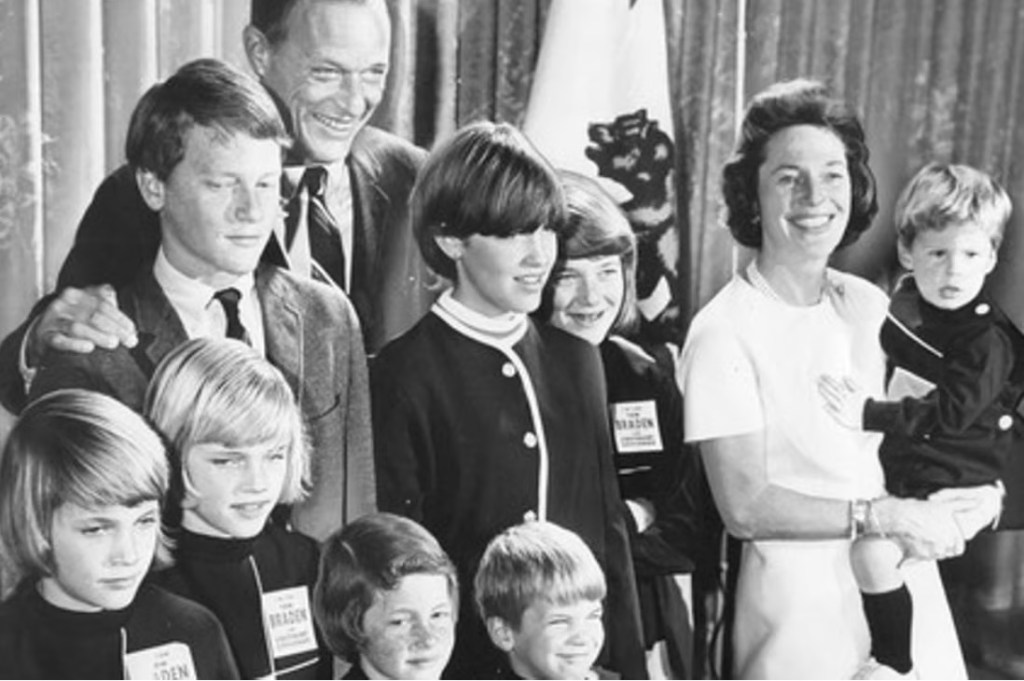
Tom Braden with wife Joan and their 8 children.

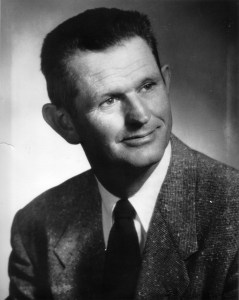
The Becks sold the Blade-Tribune newspaper in 1954, to Thomas W. Braden. Braden was at one time an official at the Central Intelligence Agency, and his wife Joan worked for Nelson Rockefeller. Rockefeller loaned Braden the money to purchase the Oceanside Blade-Tribune.

The Bradens were connected in both political and social circles. Joan was a close friend of Jacqueline Kennedy. Tom Braden was a regular on “Meet the Press” and was appointed president of the California State Board of Education.

In 1975 Braden authored a book about his family which became a popular television series under the same name: “Eight is Enough.” The Braden family lived on South Pacific Street near the gated entrance of St. Malo.

Braden’s book inspired a television series in the 1980s.

Braden sold the newspaper to Robert S. Howard of Naples, Florida in 1967. Howard founded Howard Publications in 1961 which eventually included 19 newspapers from around the country.

Howard was the son of a small weekly newspaper publisher in Wheaton, Minnesota. Born October 23, 1924, he was the third of three children. During World War II Howard left the University of Minnesota to join the military. As a Second Lieutenant in the Army Air Corp he was a navigator and nose gunner in bombers over the South Pacific. He served valiantly, earning a Purple Heart after being shot down in the Battle of Leyte in 1944.

After his return to Wheaton, he took over the family newspaper and over his lifetime amassed 18 newspapers as Howard Publications, with over 2,000 employees and nearly a half million circulation.

The Blade Tribune Building, 1722 South Hill Street (Coast Highway) circa 1980s.

In August of 1967 construction began of 11,500 square foot “modern printing plant” at 1722 South Hill Street (Coast Highway) at an estimated cost of $700,000. That same year, Thomas Missett became the general manager and publisher. The new publishing plant was built by local contractors, Richardson Brothers, and completed in 1968.

Tom Missett, publisher of the Oceanside Blade Tribune

A large two-story addition was made years later. In 1989 the Blade-Tribune was changed to The Blade-Citizen and then again in 1995, renamed the North County Times, which ceased publication by 2013. After 120 years of a hometown newspaper, the Oceanside Blade was no more.

The building has had several tenants over the years, including a vintage market. While Oceanside’s newspaper days may have ended, the two buildings built by the publishers are still standing, one repurposed as a restaurant, the Blade 1936, and the other in South O, in the process of being reinvented.

History of the Blade Tribune Building, Irving Gill’s Last Design

Brothers Paul and Harold Beck arrived in Oceanside in 1929 from Iowa. Their father had arranged to purchase the local newspaper and eventually merged it with a weekly publication, the Oceanside News, creating the Oceanside Daily Blade Tribune. With this purchase, they became the youngest newspaper publishers in the State of California.  Paul Beck was just 24 years old, Harold 26.

Harold Beck

Paul wrote about himself: “[I] as a young man, with a degree in Journalism from Stanford University, barely three months experience as a cub reporter on the “San Jose News,” and with an ardent desire to make a success of my first business venture. It had long been my desire to become a newspaper publisher.  A desire that had been instilled in me by my Dad, who published the “Centerville, Iowa Daily Iowegian” since 1903, and by my Mother, from a famous Iowa newspaper family with all four of her brothers publishers of different newspapers in that state.”

Paul Beck

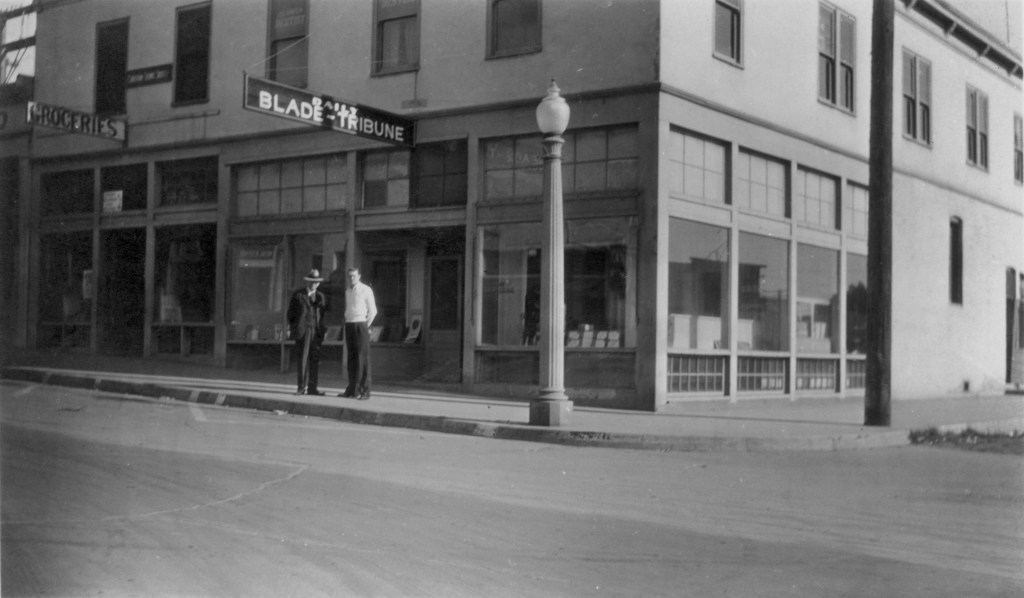
Their newspaper office was located on Second Street (Mission Avenue) and Tremont Street in a building that used to house the Ladies Emporium.  In a 1977 article Paul wrote: “The staff of the “Blade-Tribune” consisted of Harold as editor, myself as business-advertising manager, Stuart Langford, shop foreman, Ken Stanley, linotype operator, Ora Magee, society editor, Betty Maxwell, office clerk, Bill Spencer, who formerly published the “Blade,” office manager, a part time high school boy as press room helper and about 12 carrier boys.  High schooler, Lionel Van Deerlin, now a U. S. Congressman, sports editor was a “stringer,” which means he was paid 5c a column inch for published material.”

Oceanside Daily Blade Tribune newspaper office at Mission and Tremont Streets in 1931

Both Harold and Paul were actively involved in the community. Harold served as President of Oceanside Chamber of Commerce in 1931 and Paul in 1934.

As Oceanside grew, so did the newspaper and soon the building they occupied was too small to accommodate a growing operation. In 1936 the brothers hired architect Irving Gill to design a new building for their newspaper plant at Tremont and First Street (now Seagaze).

Irving Gill was born in New York in 1871. He came to San Diego in 1893 where he practiced his field. He designed homes and buildings in San Diego as well as Los Angeles, where he later relocated. Gill’s architectural style evolved to eliminate ornamentation, with a decidedly modern style. In fact he was considered “one of the first of the moderns” and combined modern with Spanish architecture. Gill biographer Thomas S. Hines wrote: “In his own lifetime, Gill saw himself and was seen by others as a maverick, an innovator, and a modernist.”

Architect Irving Gill

His modern and simple designs fell out of favor in the 1920s when the Spanish Revivalist style became popular. Under appreciated and with little work, Gill left Los Angeles and resided in Carlsbad by 1930. However, Los Angeles’ loss was Oceanside’s gain, as Gill would go on to design a total of five buildings in Oceanside.

The first Gill designed was Oceanside’s Fire and Police Station in 1929. Originally, plans were for a larger civic center complex. But due to lack of funding, only a portion of it was built. Located on the corner of Pier View Way and Nevada Street, the Fire Station is still in use today, but the building has been modified several times to accommodate the growing Fire Department and to house larger equipment and engines .

Gill’s second work in Oceanside was the Americanization School on Division Street, completed in 1931. The school was built at a cost of $4,400 and featured a domed rotunda. Gill took advantage of the southeast exposure giving the building large windows providing natural light. The building was saved from the wrecking ball and restored. It is presently used as a neighborhood community center. Also built that year and designed by Gill was the Nevada Street School, located on the 500 block of South Nevada Street. It was dismantled in the 1970s.

The Americanization School designed by Irving Gill

Gill’s fourth project in Oceanside was in 1934, that of a new city hall building. While Oceanside Councilman Charles Hoegerman prepared preliminary plans for an addition to the civic center, (which comprised the fire and police station), they apparently were similar to Gill’s earlier design from 1929. Gill then changed and revised them to conform to earthquake standards. The new city hall was located at 704 Third Street (Pier View Way) and dedicated December 19, 1934.  This building is now the home of the Oceanside Museum of Art.

Gill’s last project was the Blade-Tribune Building at 401 First Street Street (Seagaze Drive). Designed in 1936, the building is a mix of Modern and Art Deco. Designed to look both modern and glamorous, Art Deco architecture features rectangular, or block forms often arranged in geometric fashion with curved ornamental elements. Building materials include smooth exteriors made of stucco, concrete or stone, with flat roofs adorned with parapets or spires. Gill died just one month before the building’s grand opening. 

Construction of new building in 1936

Louis Gill wrote of his uncle: “To my mind Irving Gill was much more than a pioneer architect in California. He was an innovator, constantly devising new ideas, not only in exterior design, but in hundreds of details, always considering such fundamental things as cost and materials and methods of construction, and always abhorring anything done for show. An indefatigable worker, never satisfied and quite willing to sacrifice anything to his art. In fact, to me, he seemed obsessed with the idea.”

Congratulatory flowers filled the newspaper building for its grand opening. Note view of second floor offices.

Built at a cost of $10,000, when the Blade-Tribune building was formally opened on November 24, 1936, it was flooded with telegrams and congratulatory flower arrangements which lined the counters, stairway and desks.  Among the many dignitaries and public officials which sent their regards, none was higher than President Roosevelt who sent a message to the Beck Brothers: “I am glad to learn that the Daily Blade-Tribune and the weekly Oceanside News have shared in the return of prosperity as evidenced in your acquisition of a new building.  Please accept my hearty congratulations and extend to all of your readers my hearty felicitations.

Completed building in December 1936

The San Diego Union Tribune newspaper described the building:  “The new building is situated at the corner of First and Tremont Streets. It is of reinforced concrete and fire and quake proof.  The editorial, news, business and circulation offices are on the main floor. The second floor contains an auditorium suitable for civic gatherings. The composing room, metal and stereotyping room are so situated as to make them easily accessible to the news room.”

The building was expanded in 1953 and the Becks sold the Oceanside Blade-Tribune newspaper in 1954 to Tom Braden, due to Harold Beck’s failing health.  However, Paul and Harold maintained ownership of the building.  Harold Beck retired to Palm Springs and later died at the age of 58 in 1963. 

Paul remained active in civic and business affairs as a member of the Oceanside Elks Lodge, supporter and benefactor of the Oceanside Boys Club and chairman of the board of the Oceanside Federal Savings and Loan.  In a 1986 interview Paul said, “I would like to think I helped make the city what it is.” He died in 1991 at the age 84.

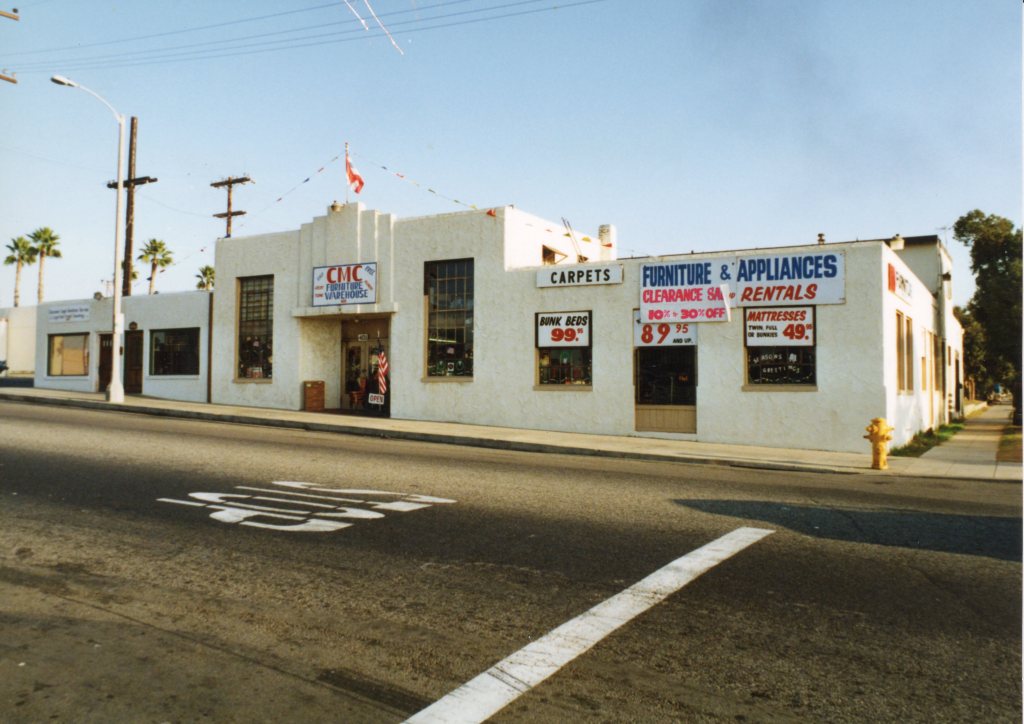
In 1978 the building was purchased by Roosevelt Campbell, Jr. and Oscar and Ruth Culp. They together, with George Mitchell, formed CMC Furniture and for over three decades the former newspaper building was used as a furniture store and warehouse. In addition, a portion of the upstairs was made or converted into apartments.

Building at 401 Seagaze Dr (formerly First Street) when it was CMC Furniture in 1991

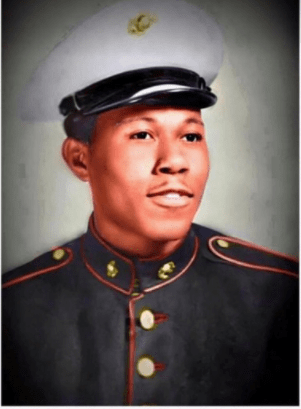
It is worth noting that both George Mitchell and Oscar Culp, upon joining the United States Marine Corps in 1943, were assigned to the Montford Point Marines, an all-Black division of the Marine Corps. Both men were recognized for their service when Congress bestowed our nation’s highest civilian award, the Congressional Gold Medal, along with more than three hundred other Montford Point Marines. 

Master Sergeant Oscar Culp
George Mitchell, USMC

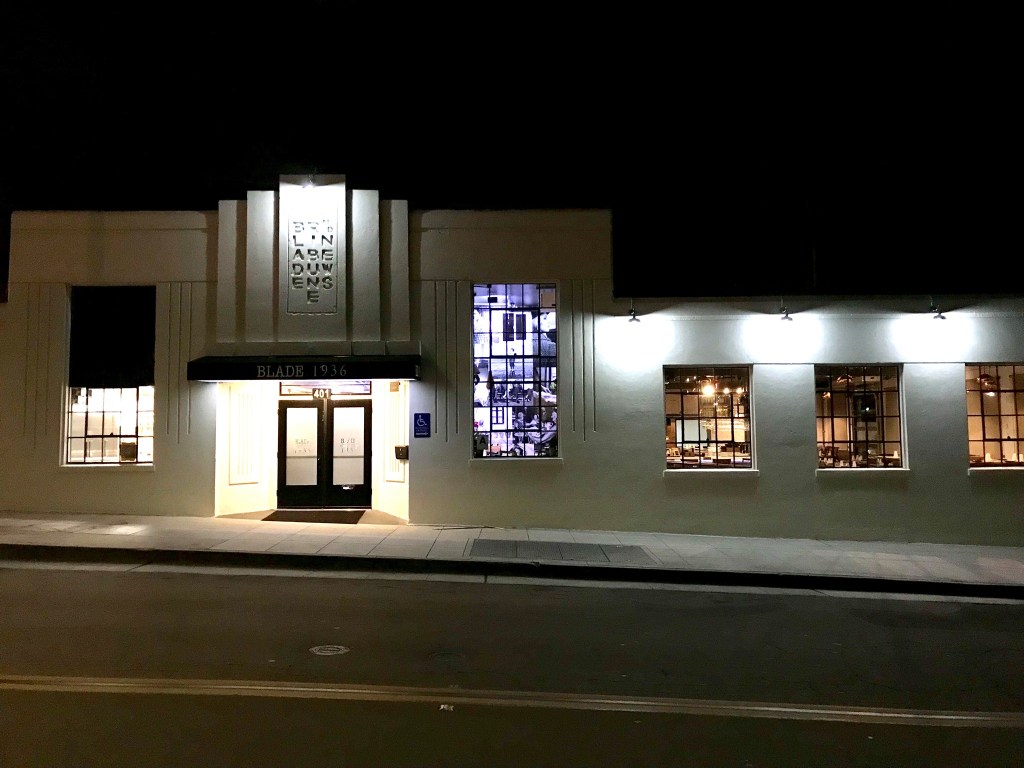
One of the most notable features of this historic building is a stepped motif parapet upon which is “engraved” the name of the two newspapers owned by the Beck Brothers in the smooth cement finish. This, however, had been covered for decades in a blocky (or even splotchy) stucco pattern. When the building was being remodeled and restored just a few years ago, that stucco finished was removed revealing Gill’s original design and the name of Oceanside’s longest published newspaper, the Blade Tribune.

Today the building is the home of the Blade 1936 restaurant, a name given as an ode to its history.

Blade 1936 Restaurant, January 2020