A small cemetery sits on a knoll in the San Luis Rey Valley. From its vantage point it provides panoramic views and a direct view of the Mission San Luis Rey and grounds. It may go largely unnoticed by busy commuters driving past it while traveling on State Route 76 or Mission Avenue. Some of the earliest pioneer residents of the San Luis Rey Valley and Oceanside are buried there.
Decades before Oceanside was established, a small township was settled near the historic Mission San Luis Rey. The San Luis Rey Township was a vital, busy place with a post office, hotel, general store, and a newspaper called the “San Luis Rey Star. The township was also a stopping place for most travelers going to and from San Diego and Los Angeles before the railroad was built in 1881.
Simon Goldbaum’s store in San Luis Rey Township
Many families from various parts of the country (and even from abroad) came to settle in the area; families that included the Goldbaums, Lanphers, Libbys, Bordens, Hubberts, and Freemans. They raised cattle, sheep and engaged in farming.
At that time there was only one cemetery in the area, that belonging to the Mission San Luis Rey, but it was in ruins. At some point in the late 1860’s land was designated for a cemetery, just south of the Mission. The first known interment in this burial ground was that of one-year-old Catherine Foss, who died in 1869. A few years later David and Rebecca Foss would lost another child, a boy who lived just three days.
Residents gather around the creamery building located in the San Luis Rey Valley.
Perhaps because of this initial burial of baby Catherine, and the imminent need of a proper cemetery, Isaac Kolb donated the land in 1875 to “reserve for public burying ground or cemetery where the same is now used for that purpose”. The following year the cemetery was deeded to the San Luis Rey School District “to hold in trust for a public burying ground”.
Marker of Catherine Foss, along with her brother, father and mother. This headstone originally had an ornamental top which was likely stolen.
Among the arrivals to the valley were Andrew Jackson Myers and his wife Sophia, who settled there around 1875. In 1881, Maggie Myers, their infant daughter died and was buried at the cemetery.
In 1883 Myers received a land grant that would become the new town of Oceanside and Myers has his place in local history as the founder. But in 1886, tragedy struck the family again when another child died, his namesake, Andrew Jackson Myers, Jr.
The mortality rate for children in 1870 and 1880 was over 316 per thousand births, meaning over a third of children did not make it to their fifth birthday. Years later the Myers would lose two more older children to sickness, who also were laid to rest in the cemetery known simply as San Luis Rey.
When Sophia Myers died in 1906, she was buried near her children. A year later, in 1907, Andrew Jackson Myers, died and was buried there as well. However, only two markers remained, that of little Maggie and Andrew, Jr.
The list of those buried in the modest country graveyard continued to grow, but was not chronicled. Life without modern medical care and antibiotics was a difficult one and even the most common ailments could turn deadly.
Susan Elizabeth Latimer Libby died at the age of 32 in 1900. She was the wife of Charles S. Libby and the mother of four children. The newspaper reported that “A few weeks before her death she contracted a cold which resulted in pneumonia and a sudden turn for the worse caused her death.”
Death often comes suddenly and unexpectedly in tragic ways. In 1891 Dave Kitching was killed at the age of 22 in a farm accident. The Diamond newspaper reported that the details, “The hay press guillotine had crushed his leg three days previous, and the shock was more than his constitution could stand. The young man had developed into a most promising worker and citizen, although his pathway was not strewn with flowers by any means. A dependent mother and several disconsolate sisters have lost their mainstay and support; San Luis Rey is deprived of its most exemplary young man. Words cannot express the sorrow and grief of the community. The Diamond sheds tears with the mourners who are legion and stand askance at the sad havoc cruel death has wrought of a sudden like a flash of lightening from a clear sky.” The paper further noted that the “untimely death of Dave Kitching has cast a gloom over the whole community” and that Ida Rooker, his fiancée was “prostated with grief.”
Marker of David Kitching, photo taken in 1989
In 1898 Antonio Subish, a resident of Bonsall, accidentally shot and killed himself. It was reported that he had placed his gun, “a short-barreled breech loader, against a log and as he picked it up by the muzzle and drew it toward him the weapon was discharged, the load entering the unfortunate man’s right breast causing death almost instantly.” Subish was 47 years of age, leaving behind a wife and several children. He was buried in the San Luis Rey Cemetery.
Henry Lusardi, Jr. was buried in the hilltop cemetery, carried by his classmates after drowning in 1930. Henry drowned after swimming in what was described as a deep pool three miles below Lake Hodges dam. His lifeless body was submerged more than 24 hours while his family and friends waited frantically for crews to locate him. The Oceanside Blade reported that “efforts of officers to raise the body had been futile because Lusardi had taken off all of his clothes before stepping into the water, and grappling hooks failed to attach.” Finally, Lt. A. H. Brown, equipped in a diving suit, descended into the water and brought up the lifeless body. Thirty-three years later, his father Henry Lusardi, Sr. would be buried near his son.
Lucia Nares, who died in 1932 and Ramona Heredia, who died in 1934, were both buried in the San Luis Rey Cemetery after bouts will illnesses. The two young girls were buried next to each other as the families were very close.
Alford (Alfred) A. Freeman, the patriarch of the Freeman family who came to San Luis Rey from Texas in 1870, was buried there with his wife Permelia. Their graves are marked by two unusual handmade markers, fashioned by their son Almarine. Members of the Freeman family were buried in the southwest corner of the cemetery. At one time a row of wooden crosses (now since removed or eroded by weather and time) signified the burials of several individuals. Others have more traditional headstones and in recent years concrete crosses have been erected.
While no official list was kept, it seems that most families were given a specific row or area in the cemetery. Walking the cemetery, one can see a distinct row for the Lanpher, Woodruff, Libby, Hubbert, and other families like the Abilez (aka Avilez) were buried in groupings.
One notorious burial was that of John W. Murray, who gunned down Oceanside’s Marshal Charles C. Wilson in July of 1889. Wilson was in the process of arresting John W. Murray for disturbing the peace. Murray who, with another man by the name of Chavez, had consumed more than his share of alcohol at a nearby saloon, was still wanting “to paint the town” after the saloons closed. Marshal Wilson instructed Murray and Chavez to go home and behave themselves, according to newspaper accounts, but this only incited Murray. Wilson managed to arrest Murray’s cohort Chavez, and in the process, without warning, Murray rode up to Wilson and shot him in cold blood. J. Keno Wilson, a constable, watched in horror as his brother collapsed. He then fired after Murray, hitting his horse, but Murray escaped in the night. Charles Wilson died in his brother’s arms as Oceanside’s Dr. Stroud was called, but it was too late.
Murray fled to his uncle’s house, that of Benjamin F. Hubbert, a rancher in the San Luis Rey Valley. Unaware of the murder, Hubbert obliged his nephew breakfast and Murray went on his way. A reward for Murray “dead or alive” of $1300 was posted and he later surrendered to John Griffin, who with others, took him by wagon to the court in San Diego.
The twenty-three old Murray went to trial for murder and was found guilty. His conviction was appealed but his sentence of hanging upheld. Murray fell ill while awaiting both his appeal and pending death sentence and died April 13, 1892 in the county jail. He is buried at the cemetery along with his Uncle Ben Hubbert and other family members.
Murray’s death certificate
In 1947 Maria Susan Salgado died and was laid to rest in the cemetery. Her obituary stated that she was born on the Rancho Guajome and that “she could recount that her father worked in the San Luis Rey mission in the early days, and she could also recount many of the interesting early days of California, which was built around the old California ranchos.”
Marker of Maria Salgado, great granddaughter of Tomasa Huisch
Salgado was a direct descendant of Tomasa Huisch, a Native American woman born as early as 1796. Tomasa was the mother of Josephine Silvas, the grandmother of Gertrude Salgado and the great grandmother of Maria Salgado.
As one of four Luiseno Indian women who lived near the Mission San Luis Rey, Tomasa told visitors stories of how as children they helped to build the Mission. The Oceanside Blade featured three of the women in a story in 1895 and said of Tomasa, [She] “is known to be more than a hundred years old and is put by some above 130. She claims that she packed “dobes” when the mission was built, and, as its construction was begun the first decade of the present century, there is little ground for doubting that she is, at least, in her second century teens. She was the mother of a large progeny, some of whom lived to be very old, she surviving them all.”
Photo of three of the Luiseno Women, Rosaria, Tomasa and Vaselia circa 1892
Tomasa Huisch died on June 8, 1899, and was buried on June 10th in the Mission San Luis Rey Cemetery, her burial recorded on page 9, paragraph 38 in the cemetery records. The Oceanside Blade reported her death: “Tomasa the ancient Indian woman, one of the landmarks of San Luis Rey died Thursday night. She was said to be over one hundred years of age and as a little girl helped at the completion of the old Mission.”
There are several other Native Americans buried at this historic cemetery including Nick L. Beyota, Andrea O’Campo and Lee Duro.
It is not known if an actual burial map or even a burial list of the cemetery ever existed, but it seems unlikely, and none has ever been found. The San Luis Rey School District, although the legal owners of the cemetery, seem to have kept no official record of any kind. The San Luis Rey Township and surrounding ranches formed a tight-knit community, and the valley residents knew where their loved ones were placed (with or without a permanent marker) rested and must have assumed that someone would always know and remember. They likely never planned for what lay in store for the cemetery in later years, which came to be called the San Luis Rey Pioneer Cemetery.
View of the Mission San Luis Rey in about 1908. This rare image provides the only historic view of the Pioneer Cemetery.
Cropped view of previous image highlighting the cemetery. The two “white” headstones right of the center are that of Stephen Lanpher and the Foss family.
San Luis Rey School Trustee and valley resident Shirley Anson Woodruff was responsible for pointing out available burial sites to families looking to bury their dead. For years he was the cemetery’s only “caretaker” but apparently kept no record of burials or placements of graves. He filed the yearly tax exemptions for the cemetery with the county.
Shirley Anson Woodruff
Over the years attempts were made to document persons buried there and one list contained an estimated 84 burials. There were at least two partial lists done between 1960 and 1980, decades after most of the earliest burials. The persons collecting the information likely counted and chronicled existing headstones. A realistic number based on death certificates and obituaries place that number above 120.
When the Oceanside school district took over the San Luis Rey School District, it unknowingly acquired the cemetery as its trustee. Shirley Woodruff continued to file the annual tax forms for the cemetery until his death in 1989. He was buried in a plot reserved for him several decades ago, alongside family members.
As the population grew and construction increased in the valley, the San Luis Rey Cemetery seemed all but forgotten except for the descendants of those early citizens. By 1989 the entrance, which was originally located off the south side of Mission Avenue, was changed to Rancho Del Oro a newer road between Mission Avenue and the Expressway. The cemetery had long been enclosed by a simple barbed wire fence, which was replaced by a chain link one. Grass and vegetation grew around the cemetery making it nearly invisible. Vandals frequented the cemetery, leaving beer cans and litter strewn about. Weathered wooden crosses were taken out of the ground and tossed and headstones were pushed off their bases. By the late 1980s the cemetery was overgrown, grass was nearly waist high.
Volunteers at 1991 cleanup
The Oceanside Historical Society, which was organized in 1985, began researching and documenting the cemetery in 1989. In 1991 the Society formed a cleanup, calling on their members, descendants of the pioneers, and interested residents to help. A group of Marines from Camp Pendleton volunteered and after much effort many bags of trash were removed, including a mattress, along with an entire dumpster of brush and weeds. Several headstones which could be lifted by simple “manpower” were placed back on their bases.
Photo of Leovi Cerda’s original headstone. Photo was provided by Cerda family and taken in about 1968.
Shortly after, it was discovered that headstones had been stolen. The markers of Leovi Cerda, Benjamin Neff, as well a “double” headstone for William E. and Catherine Libby. A handmade marker for Frank Meza was destroyed. In addition, an attempt had been made to dig into three gravesites but did not get far due to the fact that the ground is hard clay.
Handmade marker of Frank Meza, who died in 1937. Photo taken in 1989 before it was destroyed by vandals.
Also stolen was one of the oldest and most unique headstones, that of Steven D. Lanpher, who died in 1891. His granddaughter Betty Lanpher Kopcso filed a police report in January of 1996 after she had visited the cemetery and discovered his headstone was no longer there.
Unusual “tree stump” headstone of S. D. Lanpher, photo taken in 1989 before it was stolen and damaged.
This unusual theft was reported in the newspaper and one month later the Oceanside Historical Society was contacted by the Oceanside Police Department on December 2, 1996 informing us that the headstone had been dropped off at their station. An unidentified woman in Fallbrook had read about the missing Lanpher headstone and realized that it was the very one she had sitting in her front yard. She had the heavy granite stone loaded into a van, drove to the Police Station and told an officer that she wanted to turn it in. She did not want to give any details, only that she had purchased the headstone for $100. It took five police officers to remove the 400-pound marker from her van and place the headstone into “evidence”.
The headstone was then returned to its rightful place and although somewhat damaged, stands once again at the grave site of Steven Lanpher. The other headstones still remain missing, prompting the family of Leovi Cerda who died in 1934, to replace her headstone with a similar one.
In 1997 the unsightly chain link fence was removed and replaced with a barbed wire fence supported by wooden posts, which was more in keeping with the cemetery’s authenticity. Rancher Dave Jones donated a strand of barbed wire that had been saved from the original fence.
Near southwest corner of the cemetery in 1989, chain link fence in view. These wooden crosses were removed by vandals.
With a grant from the San Diego County Board of Supervisors, a sizeable donation from the Oceanside-Pacific Kiwanis Club, and generous donations from members and descendants, an archway and gate were erected providing a sense of dignity and history to the cemetery.
The Oceanside Historical Society placed a memorial headstone for both Sophia and Andrew Jackson Myers, founders of Oceanside, near where their two small children were buried, Maggie and Andrew, Jr.
On December 20, 2006 Oceanside Police Officer Daniel Bessant was killed while responding to a routine traffic stop. His family requested that a memorial marker be erected in his memory near the southeast corner of the cemetery so that his fellow officers would see it while driving on the 76 Expressway.
Permission was given to erect this memoriam marker for fallen OPD officer Daniel Bessant
On April 27, 2013 a group of more than 100 people from the Carlsbad California Church Stake of the Church of Jesus Christ pf Latter Day Saints spent hours to clean headstones, trim, mow and upright fallen markers. The group also provided historical genealogies of many of the people buried there.
Volunteer cleaning headstone in 2013.
There are many who visit the cemetery and at times are alarmed at its appearance. In the summer there is little or no vegetation. During the rainy season the grass grows tall. It is important to note and remember that this cycle is the same as it has always been for over 150 years. It is not suitable to change this cemetery into a memorial park with a green lawn and landscaped shrubbery.
Looking northeast toward Ivey Ranch circa 1991
Currently the cemetery is being maintained by two dedicated volunteers who keep it mowed (after the rainy season), pick up trash and place flags on graves of veterans, most of which are from the Civil War and World War I.
In 2021 the Oceanside Unified School District transferred “ownership” to the Oceanside Historical Society as official trustees of the cemetery.
We encourage descendants and concerned citizens to donate to the Oceanside Society Historical, helping us maintain this precious historical cemetery and preserve the history of the people buried there.
The story of Sally McNeil and the murder of her husband Ray McNeil (sometimes spelled McNeill) has generated a lot of buzz. “Killer Sally” was in the top 10 of Netflix shows, both globally and in the US.
While watching and then re-watching the three part series, something didn’t sit well with me. There’s always more to the story and I always want to know more. I want to share a different perspective about the murder of Ray.
Ray and Sally McNeil (Netflix)
Sally repeatedly claimed in the series that her body building husband was an abuser and that she was a battered wife – and was left with no choice but to shoot her husband in self defense.
However, Sally’s testimony to the Parole Board in 2019 and 2020 refutes her own statements in the Netflix series. It offers a completely different version of events that led up to the shooting of her unarmed husband.
I’ve also obtained court documents from the trial, which included written statements and police reports that documented Sally’s long list of violence against teenagers, her husbands, neighbors, women and police officers.
Ira Kelly (USMC, Ret.) Sally’s Staff Sgt. in 1986-87
Both Ray and Sally were in the Marine Corps stationed at Marine Corps Base Camp Pendleton. When Sally started bodybuilding she said her Staff Sergeant Ira Kelly, told her “You know, the bodybuilding contest isn’t just a bikini contest.” She ended up placing 4th in the Armed Forces Bodybuilding Championship in 1987.
Ray and Sally lived in a home on South Freeman Street, in Oceanside, California, after they were married. They would eventually move to an apartment at 1802 South Tremont Street in South Oceanside. The couple both belonged to Gold’s Gym, which was located on South Hill Street (Coast Highway) and both pursued bodybuilding. Sally also wrestled various “clients” across the country, many of which were filmed.
1802 South Tremont Street, Oceanside, California. Google view 2009
Sally presented herself as an abused and battered wife. And I believe she was. But Sally also abused and battered. The list of violence perpetrated by Sally includes:
Hitting her first husband, John Anthony Lowden, in the head with a lead pipe, requiring 8 stitches.
Assaulting numerous officers in two different police departments.
The assault of two teenage female babysitters and two unrelated adults.
Dropping weights on Ray’s car, while he was in it.
Arrested for willful cruelty to a child in 1990.
Despite her history of violence, she has garnered the sympathy of many and headlines echo Sally’s claims of self defense. The Guardian is one example with a headline that reads: “This is still happening today: the story of an abused wife accused of murder.” The byline opens by saying “A sensitive new docuseries considers the case of Sally McNeil, a woman who killed her violent husband in self-defense.”
In the Netflix series Sally recounts the terrifying moments leading up to the shooting of Ray while her two children were home.
Ray Fitzgerald McNeill, Dunn High School, Dunn, North Carolina, 1983
“First, he hit me. ‘Cause I told him, I said, “Well, you look like sh–.” “You’re not gonna place at all.” “You’re not striated in the contest.”
“So then he hit me. And then he started choking me. I got scared, and I thought, “He’s gonna kill me, and I’m not gonna make it through this night.” I scrambled away. I ran to the bedroom and retrieved the weapon. I grabbed two, um… two rоսnds, and, um, walked out to the living room, and loaded the weapon as I was walking out to the living room. I didn’t know what he was capable of doing. He had five different steroids in him. He was superhuman. He was super strong and he was super fast in a small apartment.
“So I tell him to get out, and he says, “No,” so I shot him.. He’s on the ground, so I go out and I grab the blanket, and I came in and brought it and covered him, to prevent shock.”
Transcript of 911 Call
Sally called 911 and said: “I just shot my husband because he just bеɑt me up.” She would repeat this at least two more times to the operator.
Operator: You shot your husband?
Sally: Yes. I’m at 1802 South Tremont Street.
Operator: Who’s crying?
Sally: My daughter.
Operator: Okay, is he dead?
Sally: He’s shot.
Operator: Okay. What’s your name?
Sally: My name is Sally McNeil. Don’t touch the door, Shantina!
Operator: How old is he?
Sally: He might bеɑt me up!
Sally: Ma’am! I just got bеɑt up.
Sally’s daughter describes how she heard her mother choking before Ray was shot. Sally told police the scratches on her neck were from Ray choking her.
Parole Hearing
But at her parole hearing she revealed the real origin of those marks:
PRESIDING COMMISSIONER THORNTON: I was looking back over my notes and I wanted to ask you, this is kind of jumping back a bit, but back at the life crime, you did have some marks on your neck? And I wanted to ask you where those marks came from? Did you hear my question?
INMATE MCNEIL: No. Ma’am. Can you repeat it.
PRESIDING COMMISSIONER THORNTON: At the time of the life crime the record it’s showed something about you having marks on your neck. So, where did those marks come from?
INMATE MCNEIL: I was wrestling the day before. I had a client and it probably came from there. There were scratches on the back of my neck too. They noticed them, I let them believe what they wanted to believe.
PRESIDING COMMISSIONER THORNTON: So, you said the marks were on your neck from wrestling the day before?
INMATE MCNEIL: Yes, ma’am.
PRESIDING COMMISSIONER THORNTON: And you said you let them believe what they want to believe. Who is them? And they?
INMATE MCNEIL: The police noticed, they noted that I had marks on my neck.
PRESIDING COMMISSIONER THORNTON: Okay. Did you say anything to the police about where you got those marks?
INMATE MCNEIL: I said he was choking me and that’s probably how it happened. And I probably scratched myself when I tried to stop him from choking me. That’s what I told them.
PRESIDING COMMISSIONER THORNTON: So, you told the police, the victim was choking you and that you had scratched your neck?
INMATE MCNEIL: Yes, ma’am.
PRESIDING COMMISSIONER THORNTON: Was that true?
INMATE MCNEIL: No.
In another portion of the hearing Sally McNeil concedes that she shot her husband in anger, not self defense.
INMATE MCNEIL: I admit what the DA said, I don’t have any arguments with him. I accept responsibility.
PRESIDING COMMISSIONER THORNTON: Today, do you say that the victim abused you at all?
INMATE MCNEIL: No. The victim did not — the victim did not abuse me that day.
PRESIDING COMMISSIONER THORNTON: And was there any element of self-defense that day?
INMATE MCNEIL: No, ma’am.
This testimony to the Parole Board belies the story Sally now tells on the popular Netflix series.
Prior Marriage
Sally Marie Dempsey was born September 30, 1960 in Allentown Pennsylvania. After a brief time in college, she joined the Marine Corps in 1981. She was stationed at Quantico, Virginia, working as a food specialist. She met a fellow Marine, John Anthony Lowden, and they married on September 3, 1982. Their first child, Shantina, was born 8 months later. Another child, John, followed in 1985.
The couple moved to California, presumably a duty transfer to Camp Pendleton. The marriage lasted less than four years. During the marriage Sally gave birth to a third child in 1986, but the baby was not fathered by John Lowden. The home was so tumultuous that the children were in the custody of Juvenile Court when the infant was just 4 months old. The baby was given up for adoption and never mentioned in the Netflix series, although the adoptive mother was featured as a supporter of Sally’s.
Sally filed for divorce in January of 1987 and married Ray Fitzgerald McNeil that same year.
John Lowden stayed in the area and fought for custody of the children. It was a contentious situation between John and Sally, as well as Ray and Sally.
Child Neglect
In statement given to police, neighbors who lived in the same apartment building recalled their experience. “We started hearing physical fighting between Ray and Sally during late December 18, 1989. The second or third time that we knew of something such as the fighting going on, my wife was so afraid that we had to leave the house. Our other neighbor, former apartment assistant manager, had already called the police.
“My main concern during this period was the welfare of the kids. They were never dressed properly for the weather and always appeared dirty, primarily because of dirty clothing. Shortly thereafter, my wife started driving Shantina to the bus stop. She was never dressed for the weather, and could easily catch colds or worse.
“During the afternoons, Shantina would usually be alone and unsupervised. Her brother would be supervised by a babysitter. Shantina complained and cried a lot about her mother not being home. Sally and Ray worked out daily bodybuilding and kept late hours.
“On one instance, we had a power outage and Shantina asked if she could come into my house, because it was dark, and she was all by herself. She said she and her brother were left alone quite often.
“The police came to their apartment on more than one occasion primarily for the purpose of spouse abuse. Sally gives the impression of hostility and I believe that’s because of the environment that she has created for her family.
“During late June, Ray had not been at home for a while, maybe a week or two. Ray came home early one afternoon for the purpose of moving out. I did not witness the upcoming events but a police report was filed. Sally attacked Ray as he tried to move out. She ran out of the apartment and jumped on a guy’s truck that Ray was in. The guy was helping him move. Sally ran back up to the second floor apartment and threw an entire weight set over the balcony. She displayed no regard to safety of any individuals below her. Thank God no one was hurt. It was early afternoon and the only car that was hit by the flying weights was her husband’s.
“Sally was handed an eviction notice that day. The police and the social services department came by a couple of times after that last incident. The kids were placed in a home while Sally moved out on her own.“
A Call for Help
The Oceanside Police Department filed a Juvenile Contact Report on dated July 30, 1990 which is similar to the neighbor’s statement. In the report the office notes that a “child calling on 911, left home by Mother.” OPD arrived at the apartment of Sally McNeil at 3871 San Ramon in Oceanside.
Officer D. Cox wrote his “observations and actions” in the following narrative:
“Officer Young and I went to the door where we contacted Shantina Lowden, 7, and John Lowdon, 5. Their mother, Sally McNeil had just returned home. I noticed the apartment was dirty, unkempt with clothing and trash thrown all over in every room. There was no fresh food in the kitchen. I noticed that cookies and ice cream were out on the table and appeared to be the only food available.
“I explained to McNeil that we were there to investigate why her kids were left alone. She immediately became a defensive, grabbing both kids and attempting to take them down the hallway. I tried to explain to her that we were mandated by law to investigate any allegations of child abuse, or neglect. She begins screaming that we needed a search warrant. I asked her several times to calm down, that I wanted to talk with the kids alone. She screamed that I was not going to talk to them, then told the kids not to talk with me.
“I asked Shantina if she had been left alone tonight. She nodded her head yes, while looking at her mother. McNeil screamed at Shantina, “What are you saying again?”
“I explained to McNeil that we needed to talk to the kids. She refused by grabbing the kids and walking toward the bathroom. I told McNeil that if she didn’t allow me to talk with the kids, I would arrest her. She still continued toward the bathroom with the kids.
“I told McNeil that she was under arrest as she was delaying me in the performance of my duties. I attempted to handcuff her right arm. She began to violently resist or attempts to handcuff her. McNeil is a bodybuilder and is very strong. She violently turned towards me as officer Young attempted a carotid restraint hold on her neck. He could not apply the hold, and she violently bent over, attempting to throw Young over her shoulder. I could not overcome McNeil’s strength with wrist holds/twists. I applied chemical mace to McNeil‘s face which caused her to lose her balance. All three of us went to the floor. I was able to cuff one wrist as the mace took affect.
“McNeil was able to turn over with both Young and I on top of her. I applied mace again to McNeil’s face. She quit fighting and I was able to handcuff both wrists. McNeil was taken to OPD for booking. She was cited released to PMO.”
OPD included the Victim Statement: Shantina Lowdon told me that her mother frequently leaves her and her brother home alone. Tonight her mother left them both alone for about an hour. She said she phoned 911 because she was afraid to be alone. She also said she and her brother were placed in a foster home about a year ago when they lived on Camp Pendleton.
Sally McNeil’s statement: McNeil denied leaving her kids alone tonight. She said she was just out in the parking lot changing the tire on her truck. She denies leaving the kids alone frequently.
The report concluded: Shantina and John were taken into protective, custody and placed into Hillcrest Home.
Injuries: Officer Young sustained injury to his left wrist during the altercation. (Not treated.)
Apartments on San Ramon Drive where Sally and children were living in July 1990
OPD Responds Again
Just weeks later, at a new address, Oceanside Police were called by Sally’s ex-husband John A. Lowden to 1802 South Tremont Street. On August 12, 1990 the responding officer wrote his observations in a report:
“Upon arrival I met the victim, John Lowden and took his statements. The rear window and two side windows of his Honda Accord were smashed in. It appeared as if a heavy object was used to smash them as the window frame above the right rear window was dented in.
“I also met the suspect, Sally McNeil, and took her statements. Lowden and McNeil are divorced, but have two children who reside with McNeil at 1802 S. Tremont Street, apartment No. 5.
“After obtaining statements, Lowden signed a citizen arrest form against McNeil. I advised McNeil she was under arrest, but did not take her into custody. I issued her a citation number for 316914PC594 and PC242. Officer Schultz responded and took photos of the damage to Lowden’s car.“
Victim statement: Lowden essentially stated the following: At about 13:45 hrs. he arrived at McNeil‘s to visit his children. He and McNeil started arguing about the children’s welfare. Lowden went down to his car to leave. McNeil followed him. As he got in his car, McNeil hit him in the face with her closed fist. She then grabbed his necklace and ripped it from his neck. Lowden hit her back in defense and pushed her back. McNeil went to her truck and retrieved a long metal bar. She started smashing in Lowden‘s car windows. Lowden told her that he would call the police. McNeil retrieved a small handgun from her truck. Lowden saw the gun and ran away to call the police. Lowden stated that McNeil has a history of being violent and he desires prosecution for battery and vandalism.
Both parties were issued mutual restraining orders but Sally was required to be drug tested with results being sent to Family Court Services.
Roommate Witnesses Sally’s Jealous Rage
Court documents in Sally’s murder trial included the testimony of Lloyd Jenkins, who met Ray McNeil in 1986 while in the Marine Corps and met Sally one year later. The narrative from the Statement of Facts is as follows:
“Mr. Jenkins had lived with the couple at various times during their relationship. Mr. Jenkins has personally witnessed over 25 episodes of violence committed by the defendant against the victim. The witness has seen the defendant punch the victim numerous times, destroy property, and throw tantrums like a spoiled child. He describes the defendant as hostile jealous, and her moods cyclical.
“In 1988 while the couple lived on base at Camp Pendleton, the defendant, in a jealous rage, threw a video camera, VCR and CD player out a second story window at the victim as he attempted to leave their apartment.
“In 1990, Mr. Jenkins and the victim were leaving the couple’s apartment to go to a bar. As the victim told the defendant, the defendant started yelling and screaming at the victim. The defendant grabbed the victim around the legs and yelled at him to stay. The defendant yelled at Mr. Jenkins to make the victim stay.
“The defendant then went into the kitchen and swept all the dishes from the counter onto the floor. The victim went to see what it happened, and the defendant slapped him in the face. The victim slapped her back. Both the victim and Mr. Jenkins ran out of the apartment and got into the witness’s car. The defendant ran to Mr. Jenkins’ car and dove through the open driver side window into the car. The defendant was screaming, ‘Please don’t leave, make him stop.’ The victim exited the car and ran up the stairs. The defendant followed. The victim ran back to the car, where he was able to leave with the witness.
“The next morning, the defendant accused the victim of ‘screwing’ some girls. The defendant became violent and aggressive. The victim [Ray] and Mr. Jenkins went downstairs where the victim got into his car and attempted to leave. The defendant threw a 70 pound barbell from the second floor onto the victim’s car, nearly striking the victim. The victim was in the driver seat. The defendant then threw two 20 pound dumbbells onto the victim’s car. The Oceanside Police Department responded. Mr. Jenkins heard the defendant tell the police that the victim had hit her.
“Between 1990 and 1993, Mr. Jenkins saw the defendant hit the victim under the eye with a picture frame, lacerating the skin. Mr. Jenkins states the victim punched the defendant in the nose causing injury.
“Mr. Jenkins states during one incident in 1992, the defendant, angry because the victim was leaving to go to the gym, threw a TV set out of a window. The witness asked the defendant why she was doing that. The defendant replied the victim, had ‘screwed’ some girl. Mr. Jenkins asked how she knew, to which the defendant stated she just knows.
“In late December 1994 or early 1995, the defendant stopped at Mr. Jenkin’s house in Orange County to call home. After the call, the defendant [Sally] slammed down the phone. The defendant yelled at Mr. Jenkins, ‘I’m gonna make sure he doesn’t see her tonight.’ As she left, she knocked down Mr. Jenkin’s chairs.
“In late December 1994, Mr. Jenkins went to the victim’s home to take him to the gym. When [he] arrived at the couple’s apartment, defendant was in a rage. The defendant yelled at the victim and threw a glass at him. Defendant yelled at the victim not to go. The defendant jumped on the victim’s back and scratched his chest.
Wrestling Men
Sally could clearly hold her own with men, demonstrated by taking on police officers (more than once) and her two husbands. As featured in the Netflix series, Sally also wrestled men for money. One of her clients wrote a letter to the judge in support of Sally after her trial. He described Sally as easygoing and sweet and the experience of wrestling women as a sensual experience. While her clients supported her, Sally said the experience of wrestling them “disgusted” her.
September 26, 1996
To Honorable Laura Hamms, Superior Court, San Diego County
Your Honor,
I am a friend and wrestler wrestling client of Sally McNeil and I understand she is appealing her case, I would like to share some thoughts with you about Sally and her work. These dual relationships of friend and client did not begin until last year, while Sally was awaiting trial. I cannot speak about her from personal experience before the death of her husband. But I have known her since that time, and I think her my observations may be important to her case.
I met Sally last year when she came here to wrestle. She was in dire need of money. I remember thinking about, as I drove to the airport to pick her up, all I heard about her domestic life. In all honesty I was not sure what to expect. Because prior commitments prevented me from picking her up upon time, I had told her she would have to wait three hours at the airport. So I figured she would be in a nasty mood. I was not enthusiastic about meeting her.
I was surprised. The smallest woman, with the radiant face, sitting patiently on her luggage at the curb, and not the slightest complaint about the long wait. She appeared to me, in fact, to be one of the shyest, most undemanding innocent people I’ve ever met in bodybuilding, or anywhere else for that matter. And that impression was reinforced during the several days she was stayed with me by a disposition that was agreeable, easy-going, good humored, and downright sweet. Frankly, I was amazed!
Granted, I was providing an atmosphere for her that was stress-free more, vacation than work. And it is probable that given all that had happened, she was feeling chastened. And, I would have also expected that she would have been frightened at the prospect of going to prison. But at no time in her stay, or my conversation with her, did she ever express much concern for herself. She did, however, speak at length about her children. She seems to love them very deeply, and she worries about the effects of her absence on them. Most of the volume of very touching poetry that Sally has written is for her children. Whatever else you may find her, she is certainly a doting mother.
Then there is a matter of Sally’s wrestling. I hear a great deal about the activity being used to support the idea that she is a violent person outside her home life as well. One of the bodybuilding magazines did a short story recently on Sally and showed brochure marketing her with names like ‘Killer.’ Anyone who has watched professional wrestling on TV shows know that names like ‘Killer,’ ‘Strangler,’ ‘Destroyer,’ etc. are part of the trade. I understand some of the people who wrestle under those names are some of the most gentle people around. The names do not necessarily have anything to do with their nature.
But, perhaps it is the idea of a woman wrestling men for money that is least understood. As one of those men, I have some insights into what it is all about. And, I think the insights are important and understanding what Sally is, and is not about.
First, let me tell you why most of us wrestle women. Am I qualified to do so? I have had perhaps two dozen women stay with me through the years to wrestle me and other men in the area. I’ve come to count a few of these women among my close friends. I am also in regular contact with many of the video makers, who work professionally with the women. One of these videographers, a very bright articulate, and insightful man has been involved in the activity, since it began, and may have had more to do with its inception than anyone else. I have had extensive conversations with most of these people, including the clients about their own involvement. Their observations concerned my own.
In a word, we wrestle these women because most of them are very attractive. That is, we find their combination of physical beauty, athleticism and strength extremely compelling. There are many who would not agree with us. There are many more who I think would agree if they dared buck prevailing public sentiment. In truth, our tastes are no less, and no more valid than anyone else’s. Be that as it may, we truly appreciate these women, and know that, because most of us are not great looking athletes, the only contact we may ever have with them is through wrestling. It is a way to experience them.
‘So,’ you might well ask. ‘isn’t that a sex substitute?’ Absolutely. And a safe, legal, and healthy one at that. And we could probably think of several others in our society that are perfectly acceptable in most quarters. Do these women, then offer sex with wrestling used as a cover? Except in rare cases, no! There are always exceptions. But the women I have work with, and most of the others that I know of established very clear boundaries with their clients in terms of the physical contact that is to take place. And that physical contact is wrestling. Is there fantasy involved? Yes. Can it be sensual? Yes. Is there full body contact? Sure. And the prevailing atmosphere at many of these matches is of pure fun, laughter and mutual appreciation.
Yes, I said ‘mutual.’ These women have put on a staggering amount of time and discipline into their sport, in large part because they like the attention and admiration it can bring them. Wrestling achieves that in a very personal and satisfying way. It does so because, again, for most men the goal is not to win or lose necessarily but to experience and appreciate a person and a physique that are truly extraordinary. When the match is over, the woman often leaves with her need to be recognized, and appreciated met as well. And, this all happens in a way that is entirely within the law.
I know that this is very hard to accept for most of the American public. I would say an answer to that in a society where there are precious few acceptable ways to touch one another physically or emotionally (and given the establish view of the psychological community that touching is an important human need), this form of wrestling and is an innocent, playful and very healthy way to meet the legitimate needs of both men and women who enjoy it. There are enormous pressures acting on most of us. I wish more people would find their own way to releasing them. And, I hope these those ways are as healthy, satisfying and downright fun as the one we have found.
So, am I making Sally into a virtuous practitioner of some noble art? Heck no. She wrestled, I think, because it was fun, satisfying, and earned her badly needed money. And that is the point. Those who say she wrestled because she is vicious and violent tell me they know little of the sport, it’s practices it’s intent or its outcomes. Truth is, anyone who is violent is going to be very frustrated with the sport; it’s much too much fun. And, they will be weeded out very quickly; we all talk to each other. If Sally were taking out whatever violent tendencies she might have on her clients, she would’ve been gone from the scene long ago. Instead, she’s been around for years and has been one of the most respected, and sought after of any of the women.
Your Honor, it all comes down to this. I cannot tell you everything about Sally McNeil; I don’t know it all. If she is violent, maybe that violence died with the man who was beating her. Maybe not. She has certainly told me of her determination to get whatever therapy it takes to help her make better decisions about men. But, I cannot speak to any of this. What I can speak to you from my own experience with her, and that others, who I know, is very simple. She IS capable of controlling herself. She did it every time she wrestled us. If she had not, there would be a lot of a walking wounded out here and she would have been shunned by us years ago.
I look forward to a society that takes appropriate action with those who break its law. There are those that, at this point in our understanding of them anyway, are beyond our power to heal or alter them. They need to be away from those who would hurt. There are others who need and will respond to our benevolence, rather than our punishments. Punishment may leave us satisfied, but will make them worse instead of better. I believe Sally McNeil is one of those people. And I vote for better over worse any day.
Thank you for your attention your honor.
Sincerely,
[Name omitted for privacy]
The Murder of John Lowden, Jr.
Sadly, Sally’s son John Lowden, Jr. was murdered February 28, 2024 in Augusta, GA. He was 38 years old. Lowden was a special forces weapons sergeant in the Army and did six tours in Afghanistan. Robert Ward was arrested in Lowden’s death. He was charged with murder and possession of a firearm during the commission of a crime.
Incredibly Sally has started a GoFundMe to raise money for her son’s burial, although a burial and service with full military honors is supplied by the Army at no charge. While she remarried after she was released from prison, it is odd that she is going by Ray’s last name, the one who she said abused her and that she killed with two shotgun blasts.
She wrote: “Hi my name is Sally McNeil and I am trying to raise money to bury my American War Hero Son John Lowden Jr. with dignity and Honor he deserves just like in the Song The Green Beret. This was unexpected, he was shot down unarmed in the streets of Augusta, GA. He deserves a Viking funeral. I want to send him off with the full Honors he deserves. Semper Fidelis”
George Parker McKay, a native of Oakland, California, and born in 1860, came to Oceanside in 1892 with his wife Mary Catherine. She was born in Germany, and was the daughter of Bernard Mebach, another early pioneer of Oceanside. The McKay, Mebach and Pieper families of Oceanside were intertwined in marriage and their German heritage kept them a tight-knit family.
In 1893 the George and Mary McKay opened a store on the corner of Cleveland and Second Street (Mission Avenue) which they operated for nearly 15 years. Along with selling a variety of goods and sporting equipment, they offered cigars, tobacco and ice cream.
Mary and George McKay (center) stand at their original store located on the northeast corner of Cleveland and Second Streets (Mission Avenue) in 1904
George was an avid hunter and sportsman and was appointed “Official Weigher for the Southern California Rod and Reel Club.”
George P. McKay, third from left, with others in a local shooting competition.
Active in the community, George McKay was a charter member of the Oceanside Chamber of Commerce which formed in 1896. Both he and his wife helped to promote and raise funds for Oceanside’s second pier. Mary McKay sold tickets to charity events at the Oceanside Opera House, the proceeds of which were donated to the pier fund.
The couple purchased a lot on the northeast corner of Cleveland and Third Streets (renamed Pier View Way) in 1907. Frederick W. Rieke, a local contractor, was hired to begin construction of a two-story new building.
The September 7, 1907 OCEANSIDE BLADE reported: The foundation was laid this week for a store building which is to be built for Geo. P. McKay, on his property on the corner of Third and Cleveland streets. The building will be of two stories with a frontage of 60 feet on Third and 34 on Cleveland. The lower floor will consist of a large storeroom and a smaller room for a soda and ice cream parlor. Above will be living apartments comprising four rooms and a bath. The building will be a combination of frame and brick of solid construction and with an attractive front. F. W. Rieke has the contract for the construction.
The George P. McKay building, opened in 1908, northeast corner of Cleveland and Third Streets (Pier View Way)
The following year George and Catherine McKay moved into their new building which they occupied for the next eleven years. They sold everything from firearms to cameras, candies, phonographs, dry goods and souvenirs. George P. McKay was also a photographer and took several images of Oceanside and the San Luis Rey Valley which were published as popular postcards.
Interior of the McKay Store, George and Mary to the right.
In 1919, the McKays sold their building and its stock to Grove S. and Catherine DeLine of Los Angeles. The couple planned to vacation in the mountains “for the benefit of Mrs. McKay’s health” but she died just a few months later and was buried at the Mission San Luis Rey cemetery. George McKay died in 1937 and was buried in Oceanview Cemetery and his gravemarker denotes that he was a “Native Son of the Golden West.”
The McKay building was renamed DeLine’s Variety Store which sold household items including dishes, stationery, notions and small appliances and a portion of the building rented out as a shoe repair.
Ad for Deline’s Variety Store in 1923, Oceanside Blade
In 1925 Thomas M. Johnson of Pasadena purchased the Deline’s business, stock and fixtures and entered into “a long lease on the building.” Johnson announced that he would specialize in “fishing tackle, sporting goods and stationery lines.”
Grove DeLine and his family returned to Los Angeles in 1928 and sold the building in to Ernest J. Van Vleet. Van Vleet (sometimes misspelled as Van Fleet) had settled in Fresno, California where he made a living as a farmer. He and his wife Ione had four children.
The Van Vleet family moved to Oceanside and for a brief time lived on the second floor. While the VanVleet’s maintained ownership of the building, they rented it out and in 1932 and the building became the new location for the Oceanside Radio Service. In the mid 1930’s the building occupied a restaurant and later a dress shop.
Madame Marie, a fortune teller, rented a room or suite in the building and did readings every day, advertising in the local paper that she answered “all questions.”
The building was used as a café in the 1930s.
In 1945 the Van Vleet’s transferred title to their daughter Georgia B. Recek. Recek maintained ownership of the building for five decades. Georgia was a member of the First Christian Church of Oceanside and lived on Mission Avenue. She was known for her generosity and opened her home to several people over the 35 years she lived in Oceanside.
By 1948 the building was occupied by City Cleaners, a dry-cleaning business, operated by Alonzo Adams. This long-running business continued through the 1980s. But by then the beauty and of George McKay’s building had long faded and along with many buildings in downtown Oceanside had become an eyesore.
The McKay building in about 1991.
However, the McKay building was purchased by a new owner and in 1994 underwent a renovation and restoration. For about a year it was occupied by the Waterman Surf Art Gallery co-owned by Tom Glenn and Marcie Hintz.
In about 1999 the building was used as a beauty shop called “Talk of the Town” which leased the building in the early 2000’s.
Pier View Coffee in 2019
For the past several years it has been a favorite spot for coffee lovers known as Pier View Coffee. The George P. McKay building has weathered a lot of change over its 114+ year history. Its in the heart of downtown Oceanside, surround by both old and new architecture, and has kept its historic look and feel.
For many years Oceanside’s early school system was a modest one, serving a population of just 3,500. In a ten year period the population increased by just 30 percent to 4,600 in 1940. But with the establishment of a large military training base to the north in 1942, Oceanside would face a population explosion that would take years to catch up in order to provide adequate housing and services.
With an estimated 5,000 civilians arriving to construct barracks, a hospital, and training facilities, and soon after 20,000 Marines to train at Camp Pendleton, Oceanside was inundated with people looking for housing. While most military personnel were being trained for war and being shipped off, many still came with their families. Oceanside was not prepared to meet such a large influx of people and with such an expansive military base to develop even after World War II, the population growth did not level off, but continued to increase.
In 1940 there was just over 600 students enrolled in Oceanside elementary schools, that number nearly doubled by 1946 and classrooms were bursting at the seams. By 1952, in six years time, the enrollment had grown nearly 200 percent with 3,602 students. The average annual increase was about 238 children per year.
Sterling Homes opened in 1945 on Mission Avenue, east of Archer Street.
Federal housing units, which opened in 1945 within city limits known as Sterling Homes, provided 668 housing units to military families. Schools classes had double sessions to accommodate children. That year the school district entered into an agreement to use buildings on Mission Avenue east of present day Canyon Drive, from a wartime Guayule project. For several years, this makeshift school known as Mission Road School was utilized for children living in Sterling Homes and the Eastside neighborhood.
A new school in South Oceanside and one on South Ditmar Street were built but more were needed. The district did not have the financial means to acquire land, hire architects and contracts for building.
In June of 1949 the school district received tentative approval of $253,614 for a building program, which was just a fraction of its $800,000 request to the State.
Portion of 1956 map, showing location of North Oceanside School off of North Ditmar Street.
That September planned construction of a new North Oceanside elementary school was announced. Land was located in the Clements Addition of Oceanside, at the 900 block of North Ditmar Street. The new school would have a kindergarten and six rooms and would serve the downtown population north of Mission Avenue, families living in North Oceanside Terrace, and the Homojo housing project near Camp Pendleton’s main gate.
By January of 1950 the plans for the North Oceanside School were in the state architect’s office for approval. The City council closed parts of 9th street, 10th street, Ditmar and alleys “in order to make the site of the future North Oceanside School into one contiguous property.”
Kindergarten class at North Oceanside school, June 1951
Grading and construction took a little under a year and in March of 1951 an open house was held at the new school. Described as “airy” and the “best in modern schoolhouse planning” the North Oceanside School featured “large window areas and a rambling design” which took “fullest advantage of California’s sunny climate and give the students a feeling of going to school outdoors rather than in the confines of a classroom.”
This aerial in 1965 captures just a glimpse of North Oceanside School in upper left hand corner.
“This new building in some ways is the finest of the group [of new schools],” Superintendent Stewart White stated in a letter to parents. One “innovation” was the classroom seating, “by grouping around tables rather than lining up in the traditional straight rows.”
Even though the school year was nearly over, the need for additional classroom space was immediate. Students attending the overcrowded South Oceanside and Ditmar schools were sent to the North Oceanside School.
Delia Ernest, Principal of North Oceanside School from 1951 to 1957.
The principal of Oceanside’s newest school was Delia E. Ernst. Teachers were: Mrs. Gladys Schrock, kindergarten; Miss Ernst, first grade; Mrs. Gladys Edwards, second grade; Mrs. Nancy McGlynn, third grade; Miss Catherine Cloyd, fourth grade; Mrs. Frances Houts, fifth grade, and Mrs. Irene Hill, sixth grade.
North Oceanside School’s 1st grade class in 1964
Just one month later the newly opened school was at capacity. Additional classrooms were to be added but funding was again the issue.
Due to the fact that so many of the students were from military families, the school district qualified for federal aid. In 1953 the then Oceanside-Libby School District received a whopping “7 percent of all federal funds allocated within the United States for school construction.’’
North Oceanside Kindergarten Classroom in 1959
By 1954 the North Oceanside School was so full that 6th graders were sent to the old Horne Street School near the high school. In June the district received funds needed to add another kindergarten, four classrooms and a multipurpose room to North Oceanside.
Expansion begun in September 1954 with the addition of four classrooms, one kindergarten room and a multipurpose room, which allowed for cafeteria service and “extra activities, indoor ‘rainy day’ playroom, assemblies and community functions after school hours.”
After completion, the North Oceanside School had a total of 10 classrooms and two kindergartens, which was reported to be “the maximum teaching space allowed for the 4.41 acre site.” Superintendent Ben F. Fugate said the expansion provided a capacity “of around 400 students, although the facilities could handle 450 if the need were urgent.”
That school year the district announced the school zones and bus schedules. The boundaries of each were listed as follows in the Oceanside Blade Tribune:
South Oceanside School area includes all children south of the lagoon and of the Atchison, Topeka and Santa Fe Escondido Spur of the railroad (same as last fall).
All children living north of Second street; west of the freeway and south of the San Luis Rey River will attend North Oceanside School, except those in the new housing areas named above.
Mission Elementary School area will include all children living east of the freeway; north of the AT&SF Escondido Spur, and south of the San Luis Rey River.
Attending Horne Street School will be all children living south of Second Street; north of Elm, Washington and Minnesota (east of Grant Street) and west of the freeway.
Ditmar children will be all those living north of the lagoon and the AT&SF Escondido Spur; south of Elm, Washington and Minnesota (east of Grant Street) and west of the freeway.
The new Jefferson Junior High area will include all seventh and eighth graders of the district. Jefferson Junior High School is located at the corner of Acacia and Poplar Streets north of Mission Elementary School.
Children living in the Oceanside portion of Camp Joseph H. Pendleton should enroll at the Horne Street School, except seventh and eighth graders who will go to Jefferson Junior High.
In less than four years three additional schools had been built, but three older ones had been deemed unfit and were abandoned as instructional sites. Funds and resources were continually stretched to the limit and the Superintendent shared that “throughout the construction program the school district has been living on a hand-to-mouth, day-to-day basis” in order to serve the student population. Rising enrollment resulted in the need for one new school each year. “We continue to hope for a leveling off in our rate of growth” the superintendent declared “but so far it hasn’t come.”
North Oceanside School Kindergarten Classroom 2, in 1963
Despite its additional classroom space, in 1955 the North Oceanside School had to send 38 6th graders to the Ditmar School. In addition, North Oceanside had 94 kindergartners divided between just two rooms; three 1st grade classes of 27 students; three 2nd grade classes of 30 students; and two 3rd grades with 36 students. One 4th grade class had 38 students and a 4th/5th combination of 36; lastly, the 5th grade class had a total of 38 students.
In 1957 Joseph M. Trotter, Jr. was named the new principal for North Oceanside School, replacing Delia (Ernst) Larson. Trotter was a graduate of Oceanside-Carlsbad High School, studied at UCLA and San Diego State College, and had been a teacher in the Horne Street School.
Aerial view of the North Oceanside School in 1962
School capacity was somewhat stabilizing with the continued building of new schools including what was then called the Laurel Street School, a new Mission Elementary and the North Terrace School. Homojo housing, which contained nearly 300 units near the Main Gate and relied heavily on the North Oceanside School, was removed altogether.
North Oceanside 3rd Grade class in 1966
But the school’s days were numbered. In 1965 it was announced that the property upon which the North Oceanside stood would soon be part of a “main interchange” connecting the I-5 with Hill Street (Coast Highway). The school district mourned the loss of the needed classrooms but remained hopeful that they could use the school through June of 1968.
From the Oceanside Blade Tribune in 1965
In 1966 a bleak outlook on the school was published, in contrast to just 15 years prior when the school was lauded. Larry Layton, North Oceanside’s last school principal, described his students as often neglected and that “they come to us with scratches” which was the startling headline in the Oceanside Blade Tribune.
The school of 422 students was a diverse one. “We have every color and race under the sun at our school and it is our source of strength, as well as a good lesson in democracy,” Layton said. But the turnover rate was unprecedented. “In one year there were only two of the original 33 left at the end of the semester in one class,” he remarked.
North Oceanside School, 5th Grade in 1967
Layton went on to list the challenges facing the students: “Eighty of the fathers of our children are in Vietnam. Four fathers have been killed. Many of the children come from broken homes. For one out of every four students at North Oceanside there is no father in the house. They come to us with scratches you can’t even see and we put bandages on them.”
1969 aerial shows beginning of demolition of the school buildings
By 1968 the North Oceanside School was vacated and the following year the original building was removed. Freeway construction crews used a portion of the school that remained as offices.
In 1971 the State Division of Highways put the former school site up for auction. The minimum opening bid was $40,000 for the 41,818 square foot parcel. The Oceanside Blade Tribune reported that “the surplus land and several buildings are all that remain of the old school site after redesign and construction of the interchange at Hill Street and Interstate Five.”
Aerial photos reveal what was left of the school was gone by the mid 1970s.
The North Oceanside School was in use for just seventeen years, compared to several schools in the district which have been in use for 5 to 7 decades. With such a short lifespan, it is no wonder some are unaware of its existence but for those who attended North Oceanside, it is an indelible part of their childhood memories.
South Oceanside is a popular neighborhood referred by locals as “South O”, but more than just a neighborhood, it was once a township, separate from Oceanside. Annexed by the City of Oceanside in 1890, the boundaries are near Morse Street to the north and to the lagoon to the south, and goes as far east as Hunsaker Street. In 1949 two of the original street names were changed: Osuna to Nevada, and Estudillo to Clementine. Vista Way was originally named Wall Street which was changed in 1927.
Map of South Oceanside, 1887
In the 1880’s the unincorporated area was largely owned by John Chauncey Hayes. Born in Los Angeles in 1852, Hayes was the son of Benjamin R. Hayes, an attorney and noted California historian. J. Chauncey Hayes graduated from Santa Clara College, then studied law with his father, and was admitted to the bar in 1877. He settled in the San Luis Rey Valley and served as justice of the peace.
John Chauncey Hayes
In 1887 Hayes established South Oceanside which at one time had its own bank, depot, school, cemetery, and several buildings made of bricks at a brickyard near Kelly and Ditmar Streets. He also published his own newspaper, the South Oceanside Diamond.
Hayes petitioned the County Board of Supervisors in 1888 to form the South Oceanside School District, which was granted. The following year the district voted and approved a new $3,000 school building.
The South Oceanside School House, 1889
In August of 1889 the contract to build the school house was given to W. E. Damron to build a two story brick building at a cost of $1,600. The wood work and painting was given to R. C. Mills for $1,070. The South Oceanside Diamond reported that the work had already begun and that work would be completed in sixty day. The school was located on Block 41 near the southeast corner of Whaley and Ditmar Streets.
A census taken in 1891 reported that 43 children were living in the South Oceanside School District which would have included a portion of Carlsbad. One of the earliest teachers was a Mrs. Roberts, who resided in Los Angeles but would come down for the school year. Students were taught up to the 8th grade and then went on to high school in Oceanside.
T. V. Dodd, an educator at South Oceanside
Thomas V. Dodd, also taught at South Oceanside in the 1890s. He was a superintendent of schools in Madison, Indiana for many years. After coming to Oceanside he taught at several schools in San Diego County and later taught science at the Oceanside high school.
Lillie V. Deering was then hired to teach at the South Oceanside School. But the school was open and closed during the school year at various times, likely due to lack of attendance. South Oceanside was not heavily populated and it is likely that families sent their children to the Oceanside grammar school on Horne Street. In September of 1900 it was announced that the school would close for a few months, with no explanation.
In 1901 Mrs. Clewett was announced as the new teacher, but was replaced by Miss Alice Martin two months later. In 1902 the Ocanside Blade reported the school had a “daily attendance of 18.” In 1904 the school reported 14 students.
Isabel S. Kennedy of Del Mar was hired as teacher of the school in 1906. At the time there were just 9 pupils. The following year Mary E. Clark was employed as teacher of the South Oceanside School.
In 1909 Joseph George Martin of Fallbrook was hired to teach at South Oceanside. A native of Ireland, Martin came to San Diego County in 1877 and had taught for nearly 30 years in and around Fallbrook. In June of that year one student, Nora Marron, graduated from the Eighth grade. The Blade reported that “Prof. Martin, who has had charge of the South Oceanside School, is a faithful and experienced teacher and the pupils do good work under his guidance.”
Martin continued to teach another four years at South Oceanside. In 1913 three students graduated from 8th grade: McKinley Hayes, May A. Birchley and Emma Billick.
However, the following school year the school was “suspended”. It seems there were just a handful of students and many area residents thought students should attend larger schools in Oceanside or Carlsbad. It is unknown if school resumed that year but it was opened again in 1914 with Josefa Elena Jascen as teacher. In February of 1915 the school was closed for one month due to a lack of funds.
Jascen retuned the following school year and the local paper reported “a good attendance” of pupils which included Teresa and Cecilia Marron, Victoria Murrietta, Margarita, Harvey and Herminia Jascen, Morea Foster, Edgar and Irma Spaulding, Thomas Warson, Barbara Libby, Clifford Cole and Madalera Foussat.
The South Oceanside School after it had been dismantled and rebuilt in 1916. Windows and appear to be the same as original schoolhouse. Students pose with teachers, one of whom is Josefa Elena Jacsen.
Irma Spaulding attended the school between 1915 and 1920. Her family moved to South Oceanside in 1912 and operated a dairy farm. Irma’s father, Warren E. Spaulding, along with Earl Frazee, were Trustees of the school at the time.
In 1916 the school needed repairs, and a tax was approved in which to raise $249 for repairs. By August of that year it was reported by the Oceanside Register that “the work of improvements on the South Oceanside school building has been completed and school will be opened by Miss Josephine Jascen in a few days.”
Irma Spaulding said in an interview decades later that her father had dismantled the second story of the school. So it was likely then the school went from a large two story building to a smaller single story one.
Students pose on steps of the South Oceanside School, circa 1919
The school was probably permanently closed by 1924 and what remained of the school building was either sold and moved, or dismantled altogether.
Today the only South Oceanside School anyone remembers is the one located at Horne and Cassidy Streets. Construction began in 1947 and it opened the following year, initially only offering classes for kindergarten through the 3rd grade.
The corner lot where the original school sat at Ditmar and Whaley Streets remained vacant for years until 1949, when the South Oceanside Community Methodist Church began construction for their new church building. As work commenced the brick foundation for this historic school was discovered.
In 1942 a 14-year-old girl made national entertainment news when she was discovered by actress Judy Garland during a performance at the Wilshire Ebell Club in Los Angeles.
According to the Los Angeles Times, Dariel Jean was performing in a production called “Cavalcade of Youth” when she caught the eye of Garland, who urged studio executives to sign her. In 8th grade, attending Bret Harte Junior High School in Los Angeles, Dariel’s seven year contract was approved on her 14th birthday by Judge Emmet H. Wilson.
From the Los Angeles Times Wed., November 11,1942
Dariel Jean Johnson was born November 10, 1928 in Minneapolis, Minnesota. She was the youngest child of Lee and Mabel Johnson. Lee Johnson worked as an accountant and by the late 1930s moved his family to Los Angeles.
Vivian Blaine’s column “Star Dust” noted Dariel Jean Johnson in newspapers around the country. February 19, 1943
She was signed with Metro-Goldwyn-Mayer, earning $75 a week, and it was reported that she was taking acting and ballet lessons to prepare for “important roles in forth coming pictures.” The “discovery” of Dariel Jean was featured in newspapers across the country in Virginia Vale’s column “Star Dust” regaling her contract with MGM. Then in December of that year it was reported that she would appear in “Girl Crazy” staring Garland and Mickey Rooney. However, she did not appear in the film, or at least is not credited with any role.
Dariel Jean, age 16, poses while performing “Fellow on a Furlough”, 1944. Universal Pictures
In 1944 Dariel Jean did perform in “Fellow on a Furlough” directed by Vernon Keays and produced by Will Cowan of Universal Pictures. The musical short featured Bob Chester and His Orchestra and starred Hal Derwin and Rose Anne Stevens; other performers included the Les Paul Trio and the Nillson Sisters. It was released on March 1st in theaters and included as a bonus reel along with feature films.
Movie ad, with bonus feature, “Fellow on a Furlough”
It is unknown if Dariel was included in any other studio productions but she did attend a “legislative attaches’ dinner” in Sacramento in 1945 along with other performers including Vivian Blaine, Dorothy Lamour and Leo Carillo. The group of fourteen actors, singers and dancers then entertained patients in several hospitals, including military hospitals in the San Francisco area.
Nothing else is known of her contract with studios MGM or Universal, but it is likely they did not resign her. At the age of 18, with her short career as a starlet seemingly behind her, Dariel Jean married Alvin Thomas Budd on September 23, 1947. Budd was a California native, born in 1925, a veteran of World War II, and employed with the telephone company. One year after they were married Dariel gave birth to a baby girl.
In 1950 the family of three had settled down to a domesticated life in Orange County and although Hollywood was less than 60 miles away, they were worlds apart. On the surface, all must have seemed well for Dariel Jean, who had lived a semi-charmed life, transitioning from a brief time in the limelight into the routine of family life. But there was something amiss; something troubling.
Dariel Jean Budd with daughter. This photo may have been taken on the back lot of one of the movie studios. USC DIGITAL LIBRARY, LOS ANGELES EXAMINER NEGATIVES COLLECTION, 1950-1961
Alvin Budd left for a job in Hawaii as a radio operator, but Dariel and her young daughter stayed behind, living in Newport Beach with a roommate identified only as Mrs. Robert Shand. Mother and child were to eventually meet Alvin in Hawaii, but on Monday, August 13, 1951 Dariel Jean drove south on Highway 101 through the Marine Corps Base Camp Pendleton and pulled off near Aliso Canyon, on a beach area five miles north of Oceanside. She was presumably there to meet a “friend.”
Whether she met that friend or not is unknown, but on August 16, 1951 a group of Camp Pendleton Marines would discover a grisly scene. Dariel Jean’s life had come to a sudden end.
The Oceanside Blade Tribune published the tragic story on August 17, 1951 with the headline “Discover Body Young Lady Aliso Canyon” with the sad details that Marines on maneuvers had “discovered the body of a 23-year-old woman in a car parked in Aliso Canyon, seven miles north of Oceanside on the Camp Pendleton reservation. The woman identified as Dariel Jean Budd, of Newport Beach, had apparently been dead for several days. She was found slumped across the front seat of the car, a .32 caliber pistol clutched in her right hand. Upon examination it was found that a bullet had entered the right side of her head just above the ear and emerged a little higher above the left ear, lodging in the car top. The slug will be extracted from the automobile for examination. The young woman was clad in slacks and a blouse. She gripped the steering wheel of the car with her left hand.”
The FBI was called to investigate, likely because the death occurred on federal property. Investigators found the car doors locked and made entry by forcing a window open. An automatic pistol of “foreign make” was found lying on the seat. A small wicker purse was on the floor containing a makeup kit, along with a green wallet which revealed an identification card from the Pacific Telephone and Telegraph Company, and a driver’s license, identifying the lifeless body as Dariel Jean Budd. Authorities contacted her husband Alvin Budd, who made arrangements to quickly return to California.
The body of his wife was taken to Davis Mortuary in Oceanside and an autopsy performed. San Diego County Coroner A. E. Gallagher said “evidence indicated a suicide.” He reported that “the barrel of the gun had been placed close against the right side of the head, as there were powder burns at the entrance of the bullet wound.” He added there were “no other marks on or about the body to indicate that there had been any violence in connection with the death.”
Despite the finding of suicide, her roommate was interviewed and said that Dariel Jean did not know how to load or fire a gun and that she had planned to leave on August 30th to join her husband in Hawaii. One additional detail she provided was that Dariel had left Monday afternoon to meet a Camp Pendleton Marine by the name of Ernie. The two had met at a dance just four days prior on August 10th, but Mrs. Shand described the relationship as “casual.”
What led Dariel Jean to end her life? Was it an overwhelming disappointment of a failed movie contract? Did an unhappy marriage lead to a brief affair? From whom and when did she acquire a gun?
As Dariel Jean viewed the waves of the Pacific Ocean crashing on the shoreline from her car window, was she waiting for a friend or a lover? It is unknown if investigators tried to determine the identity of Ernie. Did Dariel Jean ever meet up with him that day? If he existed, he never stepped forward.
In the scrapbooks of Captain Harold Davis of the Oceanside Police Department was a torn photograph of Dariel Jean. In the photo she is gripping the steering wheel with her left hand and a gun is resting in the crook of her right hand. It seems an odd position of each. But with the coroner’s ruling as suicide, the death of Dariel Jean no longer warranted further investigation.
Photo from the Captain Harold Davis Collection. Note Dariel’s hand gripping the steering wheel.
It was a sad ending for a young woman who appeared to have fame and stardom within reach, but it had slipped through her fingers. She was discovered by one of the biggest stars in Hollywood. Garland herself would die a lonely death years later despite the fame she had gained. She is quoted as saying, “If I am a legend, then why am I so lonely?”
Dariel Jean died alone in her car, either by her own hand or that of someone else. It wasn’t the “Hollywood ending” anyone expected.
Oceanside has several notable landmarks including the Pier and the historic Mission San Luis Rey. However, one of the most notable and beloved landmarks is what we know as the “Top Gun” House. It has been newly restored, in all its Victorian-detailed glory, nestled within a new oceanfront resort on North Pacific Street.
Sarah and Henry Graves pose in front of their newly built cottage in 1888. Note the train depot to the left and the small house located behind the property to the right. (photo courtesy Save Our Heritage Organization)
To tell the story of the “Top Gun” house, we need to go back to the earliest days of Oceanside. Andrew Jackson Myers, a rancher in the San Luis Rey Valley, noted that a railroad line had just been completed Los Angeles to San Diego (by way of Riverside) along the Pacific coastline. Myers then applied for and received a land grant of 160 acres in 1883. The trains would travel directly over Myers’ new land grant making his property very valuable.
That year, a town was surveyed, laid out and streets were named. Myers began advertising his new town in newspapers all over Southern California. This new town of Oceanside was touted as a new “resort city” and excursion trains brought prospective land buyers from the inland valleys.
The train stopped at a simple wooden platform to unload passengers. There wasn’t much to see in those very early years, but one of the first commercial blocks contained the Hayes Land Office, the Louis Billiard Hall and Mayroffer’s Saloon.
One of the earliest photos of Oceanside. Louis Billiard Hall and Hayes Land Office at Cleveland and Second Streets (present day Mission Avenue) circa 1885/86.
Visitors wishing to wade in the Pacific Oceanside could use the bathhouse built by Andrew Jackson Myers, just below the bluff on the beach (located where the current Beach Community Center now stands) which afforded beach goers the opportunity to change into their bathing attire.
Andrew Jackson Myers’ bathhouse located on the beach north of the present day pier, 1880s
Described as a “seaside resort” in brochures and pamphlets, interest in the new town was great. With a name like “Oceanside” there was truth in advertising. In August of 1886 the San Diego Union published a story about our development, “The location is a most desirable one, combining a magnificent beach, high and level ground for a town site, magnificent climate and charming scenery.
The trains came from Los Angeles to Oceanside via Colton and passengers came to Oceanside as early as 1883 and 1884 to inspect the burgeoning town and invest in ocean and beach front real estate. Many residents of Riverside, Redlands and San Bernardino purchased property in Oceanside and built vacation homes here.
View of Oceanside, looking east. Circa 1889
In 1886 Dr. Henry Graves of Riverside came to Oceanside and while here bought a portion of a lot on North Pacific Street for just $1.00. The following year Graves purchased two more lots, one of which was on the northwest corner of Pacific and First Streets (now Seagaze Drive). Lot 7 on Block 16 was purchased for $1050.00 and would be the site of new summer home for himself and his wife Sarah.
Henry Graves was born in Coshocton, Ohio on February 10, 1827. He attended medical school in Iowa, and later moved to Middleport, Illinois where he opened a practice in 1857. By 1860 Henry had married his wife Sarah, who was born in 1833, and was also a native of Ohio. The two were living in Hiawatha, Kansas and lived in house on Kickapoo Street. In 1868, Sarah Graves gave birth to a son, Henry E. Graves.
Graves was Post Surgeon at the Whetsone Indian Agency in 1871 as well as the Spotted Tail Agency in Sheridan County, Nebraska in 1871. The latter agency was the first to be constructed within the Great Sioux Reservation established by a treaty in 1868 and was named for Brule Sioux Chief Spotted Tail.
Returning to Hiawatha, Graves was appointed postmaster in1875 and operated a drugstore. In 1879 Henry Graves was elected to the city council there and was appointed chairman of the Republicans of Brown County committee. In 1883, Henry and Sarah Graves left Hiawatha, Kansas, and moved to Riverside, California where they purchased a ranch on Brockton Avenue. He continued his medical practice there but also engaged in citrus farming.
The Graves house was built in 1888. From the South Oceanside Diamond, November 2, 1888
Dr. Graves undoubtedly read of Oceanside in the local papers where the excursion trips were posted and after making a trip of his own, was sold on the newly established town. Several months after purchasing his oceanfront lot atop Pacific Street, Graves had a home built. The South Oceanside Diamond reported on November 2, 1888: “Dr. Grave’s house, under the skillful management of Ed. Durgan is nearing completion.” (Note: It has been erroneously reported for a number of years that the house was built in 1887.)
The ornate Victorian cottage was built as a vacation home, Dr. and Mrs. Graves would “summer” in Oceanside and return to Riverside. The local paper described it is “their annual vacation by the seaside.” The couple continued to visit Oceanside each year. In 1904 they had an extended stay as the Oceanside Blade reported on May 21, 1904: “Dr. and Mrs. Henry Graves [are] down from Riverside and will remain in their cottage by the seaside until October.”
The Graves’ cottage in about 1892
The Graves sold their Oceanside home in March of 1905 for $1800, to Charles H. and Lillian Burlock. Dr. Henry Graves died on October 20, 1905, in Riverside at the age of 78.
Charles Burlock was appointed deputy constable in 1897 by Benjamin Franklin Hubbert. Burlock married Lilian Wilcox in 1899 and moved to San Diego where he was the manager of the San Diego Gold Mining and Milling Company. The Burlocks sold the house to J. F. Anderson, and it was then transferred to Southwestern Realty in 1910. But even as late as 1914, locals continued to refer to the house at the “Graves’ cottage” because of its longtime association with Dr. and Mrs. Graves.
In 1921 the home was purchased by F. C. Janssen who was active in Oceanside real estate. The cottage was sold in 1926 to B. C. and Margaret Beers, the former being the President of the First National Bank of Oceanside and the developer of the Plumosa Heights subdivision on Alberta, Leonard and West Streets.
The Graves house with enclosed side porch. Circa 1940s.
The cottage was sold again to Edward and Edith Deggendorf in 1928, who promptly sold it to Angeline G. Morgan who also purchased a house and lot behind the Graves house on Lot 6. Born Angeline Elizabeth Gregory in 1889, she was a native of Topeka Kansas. She moved to San Bernardino, California in about 1904 with her parents Merritt and Ruth Gregory. In 1917 Angelina was married to Alfred Powell Morgan of New York City, but the marriage was short-lived, although the union produced a son, William Merritt.
Angeline Morgan enlarged the former Graves cottage in 1929. She rented out the house until 1936 when she came to live there herself for a period of about five or six years until returning to San Bernardino to be nearer to her son. She relocated again by 1950 and her son, William M. Morgan, rented the house to the rear (112 First Street) for he and his family.
The house located at 112 First Street (Seagaze Drive) was enlarged by Angeline Morgan. She used it as a rental for years. It was used for many of the Oceanside scenes in the “Top Gun” movie. Photo taken in 1992.
By 1966 Morgan had moved to Encinitas and the cottage was purchased by the owner of the beach amusement park, Pacific Holidayland. That year, Oceanside’s only oceanfront hotel, the Colonial Inn, was torn down. It had been built as the El San Luis Rey in 1904. Plans were to build a new resort hotel which never came to fruition. For six decades Oceanside went without a resort property, although in 2007 the Wyndham (which is a timeshare) and in 2013 the Springhill Marriot were built. What is a resort city without a resort hotel?
The Graves house reverted again to a rental property and over the years became dilapidated. Lynn and William Rego of West Covina, however, saw a diamond in the rough, and purchased the house in December of 1975 for $75,000. Much like Dr. and Mrs. Graves, they spent their summers in Oceanside looking over the blue waters of the Pacific Ocean and renting it out the remainder of the year.
Top Gun house, 1992
For over 90 years the house had been painted in dark hues, which is discernible even when viewing the house in black and white photos. Years ago, the original brown color was revealed in paint scrapings. It was the Regos who painted the house its signature blue color that most remember. Little did they know that Hollywood would notice their little blue Victorian cottage by the sea.
Actress Kelly McGillis far left, with Don Simpson, Jerry Bruckheimer and Tony Scott during filming of Top Gun June 27, 1985.
In 1985 the Regos were contacted by Paramount Pictures looking for a beach cottage for a film location. Paramount rented the house (including the property at 112 First Street) in June for two weeks. The crew prepped the perimeter of the property by removing parking and street signs and covering the curbs with sand. The movie being filmed was “Top Gun”, which became a blockbuster upon its release in 1986.
A candid scene with Kelly McGillis and Tom Cruise, June 27, 1985 while filming at the Top Gun House
The movie made Tom Cruise a household name and the iconic scene of Maverick riding his motorcycle on palm-lined Pacific Street in Oceanside is every local’s favorite. Certainly, for Oceansiders some of the most memorable scenes of the movie “Top Gun” were filmed at the Victorian cottage, which was the featured as the home of Cruise’s love interest, flight instructor Charlie, played by Kelly McGillis.
The house at 112 First Street (Seagaze Drive) behind the Top Gun house being prepped for filming, June 1985.
Thereafter, it would forever be Oceanside’s “Top Gun” house. Fans of the movie from all over the world flocked to have their photo taken in front of the iconic house and stand on the porch.
In 1992 the Graves house was included in a Cultural Resource Survey prepared by S. Kathleen Flanigan along with Susan and Richard Carrico. This survey is an extensive list of homes and buildings eligible for historic register. It was noted that the house at 102 North Pacific Street was “one of the few 1880s beach cottages remaining in near-pristine condition.”
Tom Cruise poses on motorcycle with member of the film crew, June 27, 1985
In 2001 the City of Oceanside acquired the Graves house through eminent domain to control future development of the oceanfront block in hopes of securing a resort project. Save Our Heritage Organization (SOHO) recognized the significance of the Graves house in 2001 and included it on their Most Endangered List of Historic Resources, saying: “This sweet Victorian era seaside cottage was built for Doctor Graves from Riverside. It is the oldest and last best beachfront cottage in Oceanside. Featured in the movie Top Gun, it has consequently been known as the Top Gun Cottage. The site is threatened by the huge hotel development proposed by Manchester Resort Hotels and the City of Oceanside. The cottage is on a corner of the property and could easily be integrated into the development and used as an adjunct facility to the hotel. Right now, it appears it will be moved off site, out of context, with its use yet to be determined.”
Top Gun House side view. Note addition to the house made by Angeline Morgan years ago. Photo taken 1998
The Manchester project, a twelve-story, 475 room hotel failed, leaving Oceanside without its desired resort hotel overlooking the Oceanside Pier. However, two blocks fronting Pacific Street were cleared in anticipation of a new hotel project. Block 16 on which the Top Gun house was located, had four other historic homes. The house known as the Pishon house, located on the southwest corner of Mission and Pacific Streets was moved to a location on Maxson Street. Three other historic houses were demolished, including the house behind the Graves house, at 112 First Street (now Seagaze) which was used in the “Top Gun” movie.
Original fireplace and mantel in the Graves’ cottage
By 2010 the “Top Gun” house was the only structure remaining on the block and seemed to be in the “Danger Zone.” With the house vacant, members of the Oceanside Historical Society kept an eye on it for several years, reporting break-ins and other issues. Twice the organization helped to hoist the sagging porches, had it painted and erected a large sign to inform passersby about the historical significance of the house and to assure those concerned that the house would be restored. In 2009 a fence was put up around the property, which was necessary to protect the house from further intentional damage.
John Daley, left, works to help level side porch of the house in December 2013.
In 2018 S. D. Malkin Properties, Inc. announced two new resort projects by developer Jeremy Cohen. Many wondered what would become of the “Top Gun” house. With the support and influence of Save Our Heritage Organization and the Oceanside Historical Society, the Graves house aka “Top Gun” house would be restored by S. D. Malkin and used as the “centerpiece of Oceanside’s much anticipated new oceanfront resort.”
Groundbreaking ceremonies for the new hotels were held in February of 2019. The cottage was relocated one block away for structural restoration. Curious residents peeked through fencing to view its progress.
Top Gun House under reconstruction, April 2020
Afterward much of the work had been completed, it was moved one block north of its original location in front of the beautiful new Mission Pacific Hotel. The cottage is still situated on North Pacific Street, facing the ocean, which was important in preserving its historical integrity and setting. There was still work to be down to the cottage at its new location, but brief glimpses made way to a “full reveal” as it reemerged to its adoring fans. Architectural Digest reported: “Among the projects were restoring the wood cladding and front windows, dismantling the original chimney, and rebuilding it with the same historic bricks, and bringing back gingerbread details. Both porches had also been damaged and were restored.” Beautifully painted the cottage has been reborn and to borrow from the movie’s famous love song, it’s sure to take your “breath away.”
The beautifully restored Victorian Cottage known as the Top Gun house in 2022. (photo by Visit Oceanside)
The beloved “Top Gun” House celebrated its much-anticipated grand opening on May 20, 2022, as the home of the High-Pie Shop, which is filled with memorabilia from the hit movie. Just days later was the release of the long-awaited sequel “Top Gun: Maverick” starring Tom Cruise. To the delight of movie fans, a replica motorcycle like the one Maverick rode on his iconic scene in Oceanside, was placed in front of the house Lines now form around the house to view the interior and purchase a pie. People pose on the front porch for selfies and group shots and pretend to be Maverick on his bike.
With two new beautiful hotels, Oceanside has regained or fulfilled its resort status, envisioned so many years ago by our founder Andrew Jackson Myers. The careful restoration of the historic Graves House, aka the “Top Gun” house is a crowning jewel on the oceanfront. It is sure to hold a place in the hearts of locals as well as movie fans for many years to come.
Captain Harold Davis of the Oceanside Police Department was a collector of many things, including three large scrapbooks in which he placed various photos of crime and accident scenes, along with a variety of newspaper articles dating from the 1930s to the 1950s.
Captain Harold Davis of the Oceanside Police Department
One scrapbook contained a human-interest story of John M. Caves, a retired sea captain who was hospitalized in the Oceanside Community Hospital. This was not Caves’ first visit to Oceanside, and it wouldn’t be his last. Curious, about Mr. Caves and his peculiar claims, I did a bit of research and uncovered two different hoaxes perpetuated by Caves for over four decades. In between he would murder a traveling companion and serve time in prison.
John Murile Caves was born January 4, 1882, in Oakmont, Pennsylvania, a small borough of less than 2,000 person in Allegheny County. He was the second of four children born to Samuel T. and Martha Caves, who lived in a rather stately home at 713 Pennsylvania Street in the town of Oakmont. His siblings were Samuel Meredith, Henry Adams and Mary Caves. Their father Samuel Caves worked as a blacksmith with Verona Tool Works.
713 Pennsylvania Avenue, Oakmont, Pennsylvania, the home of Samuel and Martha Caves
At the age of 18 John Murile Caves was still living with his parents but held no occupation, nor was he attending school, in an era where this would have been atypical. His brothers, one older and one younger were both employed at Verona Tool Works with their father.
In 1907, at the age of 25, John was arrested along with two other men for breaking into a train car. In the newspaper account, John Caves was described as a “cripple who walked with a crutch” and “peddled shoestrings.” This may have been the first of John Caves’ personas as he was not at all crippled, at least not permanently. T. B. Shaffer, the railroad detective, reported that Caves’ two companions seemed distraught about their arrest, but in contrast John Caves was “cheerful” about the encounter. Regardless of his hapless attitude, the arrest landed Caves in jail, awaiting trial for several months after which he was found not guilty and released.
Walking Career Begins
John Caves would begin an “illustrious walking career” two years later in 1909. No official record was found of the starting point or date but in September 7, 1909, the Quincy Journal announced that Caves had arrived in Macomb, Illinois.
Going by the moniker of “Happy Jack” the Journal reported that Caves had started his walk on April 6th of that year, starting from Boston. He claimed he ran away from home at the age of 9 and (incredulously) had already completed two walking trips across the continent. Now he was determined to travel around the world against a wager of $2,000 from “Bryan’s Commoner and Munsey’s Magazine”, which purportedly provided the route that he should travel.
According to Caves, he was not to ask for a cent from anyone along the way but could accept gifts. Apparently and supposedly people were very generous as he claimed to have eaten no less than three meals a day and stayed at the finest of hotels while on his journey.
Caves further claimed he had a year in which to complete his trip across the United States, but four years to travel the world. Caves announced his intention to make his way to Lincoln, Nebraska and from there to San Francisco where he would eat a Christmas Dinner. The article ended that “Happy Jack” was 28 years old and walked at an “easy gait of 5 miles an hour.”
On September 21, 1909, Caves had walked to, or at least arrived in, Burlington, Iowa by way of Fort Madison. The Burlington Hawk Eye reported that Caves had now walked 10,090 miles and that he was on his way to Des Moines to Omaha, then to San Francisco “by Christmas.” From there Caves said he would get “free passage to Japan and Australia, from Australia to London and from there home again.” Caves next stopping place on his route would be Mt. Pleasant, Iowa, the newspaper informed readers.
For the next several years John Caves would convince or at least amuse folks with variations of this tale, and it would be perpetuated from town to town, newspaper to newspaper. But the good residents of Ottumwa, Iowa saw through the tall tales and when Caves stopped through their town they were not taken in by his charm or his story. The Burlington Evening Gazette in Burlington, Iowa (where he been just days before) disclosed: “Happy Jack, the big bum alleged globetrotter, who is trying to fool the people throughout the country, was arrested for drunkenness in Ottumwa.”
The Ottumwa Courtier shared this news in September of 1909: “John M. Caves, who claims to be a globetrotter, has clasped to his belt of claims another item. Yesterday he proceeded to tank up as much of the brew down his throat, but before he covered as much distance in this direction as he claims he has covered over the country, he fell into the hands of Office L. Lightner. ‘Happy Jack’ was jugged, and in police court he acknowledged he was drunk. Judge Morrissey gave him three days to repent.”
From the Burlington Evening Gazette, September 27, 1909
After this encounter and 3-day jail stay, on September 27th Caves had reached Albia, Iowa, stating, “I’m still going. Roads are good. I’m making 50 miles a day. I will be out of the state, Saturday, October 2.”
Oh, but “Happy Jack” was still in the state of Iowa on October 5th where he was giving a lecture of his travels in Glenwood at the Opera House.
Did Caves ever make it to Omaha or San Francisco? It is hard to say. Perhaps he was detoured.
In Trouble
Eight years later John Caves was in the news again when in August of 1917, he was arrested for assaulting a railroad conductor with a knife while working as a restaurant cook. He pled guilty and was put on parole.
WWI registration card with John Murile Caves. Note date of birth
In September of 1918 Caves was working as a “blacksmith helper” at Verona Tool Works where his father was employed in Oakmont, Pennsylvania (his hometown), according to his World War I registration card. He seemed to have settled down for a very brief time, but he would soon be on the move again for another walking trip “around the world.”
But before that Caves found himself again in trouble with authorities when on May 22, 1921, he was arrested in Bellwood, Pennsylvania. After an altercation with members of a train crew, he was ejected and in retaliation threw a rock that subsequently hit the brakeman. Caves spent over two weeks in jail until his day in court. The Altoona Mirror reported: “Happy Jack Caves, an individual of tall stature who assured the court that he was ‘a sailor from the high seas’ who had come to this section of the country to visit some friend and became intoxicated, pled guilty to through a stone through a passenger car window near Bellwood.”
Bellwood Train Station, Bellwood Pennsylvania where Caves was arrested
It is worth noting that Caves would again claim to be a sailor decades later. However, before that reinvention, he began another worldwide trek.
A Trip “Around the World” Begins
On April 1, 1919, (notably April Fool’s Day), Caves purportedly began a journey from Boston that would take him to every continent in the world, and every state in the U.S. Supposedly a total of 16 men began this trek, that would take them 99,986 miles in a period of three years. The winner of this race of sorts would allegedly win $30,000, which is equivalent to $500,000 today. The contest was supposedly sponsored by Johns Hopkins University and was the starting point.
Nothing was found about this race or contest until June 25, 1921 (two years later from its supposed start date) when the Times Herald in Olean, New York ran a story with the headline: “Happy Jack Is Ahead On His Hike Schedule.” The story stated that he had arrived in Olean, New York at 5:35 am from Eldred, Pennsylvania (a distance of about 13 miles). At that time Caves had claimed to have visited 42 of the then 48 states and that he 28 days ahead of schedule. He was due to return to Boston April 1, 1922.
The following details were included in the Times Herald article, and it is worth noting that similar details, which varied from time to time, would run in more than 50 articles from just as many newspapers around the eastern part of the country:
In every state and county which he enters he has to go to the capital and county seat. When he returns to Boston, he must have a dollar for every county seat and $5 for every capital.”
Additionally, he was to receive a signature from every town or city official that he passed through and dutifully mail these signatures to the “committee in charge.”
He was not allowed to “ask for rides or money” but he was allowed to accept “gifts of money.” The prohibition of rides included a reward of $500 to anyone who witnessed him riding rather than walking.
Happy Jack Caves walked an amazing 40 miles a day, at least according to the Herald piece, and at the time the article was written, he simply carried a knapsack weighing 65 pounds.
On July 12, 1921 the Hudson Columbia Republican newspaper reported that “Happy Jack” arrived in Hudson, New York from Albany. He had purportedly completed 70,182 miles, 23,000 of which were on foot. Caves claimed to have 20,804 miles to complete before April 1, 1922. From Hudson he was on his way to New York City, to Fall River, Massachusetts, then back to New York to Niagara Falls and then on to Canada and Montreal. Countries claimed already visited were: Norway, Sweden, Denmark, Holland, Italy, Greece, France, Russian, England, Germany, Australia, Japan, China, as well as “every country in South and Central America.”
Caves arrived in Uniontown, Pennsylvania on August 15th. The newspaper there reported that Caves was walking to settle a $30,000 wager between the Boston Pedestrian Club and the Pedestrian Club of John Hopkins University. He was on his way to Greensburg next, but the newspaper also added the unbelievable detail that Caves had “circumnavigated a wheelbarrow around the globe during the years 1893-97.” (He would have been 11 years old based on Caves’ ACTUAL age.)
On October 7, 1921 Caves passed through Massillon, Ohio “enroute to New England and Canada.” The stories kept coming as Caves went from town to town. The journey expanded, he turned his 65 pound knapsack and instead began pushing a wheelbarrow and the wager or bet became prize money instead, which grew. Caves followed no particular route but seemingly meandered back and forth, retracing his steps while approaching “the last leg,” while the finish line seemed elusive.
On or about November 2, 1921 Caves arrived in Bucyrus, Ohio and then made his way to Marion, Ohio, where he stayed at the Royal Hotel on Main Street. In just five months his story had changed significantly. According to the Marion Star, Caves had traveled 91,000 miles, visiting every country in the world, but had eight of the U.S. states left to visit (not six) but he was now 38 days ahead of schedule. During this tremendous journey Caves claimed to have worn out 90 pairs of shoes covering 43,000 miles on foot. At this point, the traveler was accepting gifts as the article stated he “‘passed the hat” while giving lectures on his adventures.
The following day the Richwood Gazette in Richwood, Ohio informed its readers that Caves arrived in town. This time Caves was to walk 99,986 miles and had 5,000 to go but was still a full 38 days ahead of schedule. The Gazette reported that Caves could ask for nothing except water and the use of a telephone.
Caves made it to Newport, Kentucky (population 316) the following day – traveling over 140 miles to do so. Even at 40 miles a day it would take him over three days nearly a week to travel that distance, so it is safe to say that he hitched a ride or hopped a train. At Newport Caves claimed to have 2500 miles to go, adding that the money he collected from county seats and state capitols was sent directly to the “Pedestrian Club of Boston” who co-sponsored the trek with Johns Hopkins Hospital.
It was more likely that he simply pocketed any money he received from gullible officials who believed his elaborate stories.
Later that month Caves made his way 400 miles south to Huntsville, Alabama. He claimed to have been 38 days ahead of schedule of his deadline of April 1, 1922. In Huntsville Caves claimed that he was native of Norway and this “fact” would often be included in many subsequent stories.
Caves trip from Richwood, Ohio to Huntsville, Alabama, a distance of 493 miles
There was no telling how much farther south he traveled and then supposedly headed north towards the finish line. Little is known of Caves and his travels until June of 1922, well after the supposed deadline.
The Wheelbarrow
The Baltimore Sun announced the arrival of “Happy Jack Caves” on June 26, 1922 with the headline “World Pedestrian Here.” Caves was on the “last lap of his journey” and now it seems he had four months (rather than three) to complete his trek. More new details were that he now pushed a wheelbarrow containing a tent and cooking utensils and a Great Dane dog was his companion.
Now he added a detail to his ever evolving story that 17 other contestants had begun with him, but they had all dropped out. In addition, out of the 99,986 miles required he had just 700 to go, although it was reported he had visited every “state in the Union” and in “every foreign country.” But if Caves was now in Baltimore, Maryland, the finish line (Boston) was just 400 miles away.
Three weeks later, on July 11, 1922 Caves was in Harrisburg, Pennsylvania a mere 80 mile trip, but it seems Caves was no longer keeping his 40 mile a day pace. The Evening News of that city reported that he had “traversed every country, continent, ocean and sea, and river in the world” along with just 45 states (versus all 48). Although these details varied, Caves still had no less than 700 miles to go, despite the fact that he had traveled 80 since his last encounter.
Rather than traveling northeast to Boston to the “finish line”, Caves instead went west to Carlisle, Pennsylvania, a distance of 24 miles, arriving July 24th. He then continued on a southwesterly direction to Shippensburg, (population 4300) a distance of just 20 miles, arriving July 26th.
From Baltimore, Maryland to Indiana Pennsylvania in June/July 1922
A representative of the town’s newspaper interviewed “Happy Jack” who now claimed to have been born in 1861, coming to America in 1881 from Norway. Still on his “last stretch” but traveling in the opposite direction, Caves added to his tall tale saying that he had been in 4 wars. His story evolved again saying he had visited “all the principle countries” — Europe, Asia and Africa and had been to 47 states. To keep track from his last count of 45, what two states did he visit in two weeks as he had only been in Pennsylvania during that time frame?
If that wasn’t enough, Caves’ wheelbarrow was said to have weighed 165 pounds and he claimed to have worn out 5 wheels, 12 axles and exactly 284 bearings, along with 46 pairs of shoes. The article went on to say that Caves expected to arrive in Boston by August 18 or 20 (even though he wasn’t headed that way) and that he was going to beat the world record by 8 months. It concluded by saying that Caves was on his way next to Hagerstown.
It was noted by one newspaper that Caves offered proof of his travels by newspaper clippings that he collected about himself. It was also pointed out that while his wheelbarrow was plastered with photos, clippings and postcards of places he claimed to have visited, none of them were outside of the United States.
On August 30, 1922, Caves meandered his way northwest (away from Boston) to Saltsburg, to Blairsville and then traveled east to Indiana, Pennsylvania. The local newspaper there said that Caves eight months away now (probably because he wasn’t going in the right direction)! It went on to say that he was a happy looking man and that at age 61 (he was really 40) “looks good for at least that many more.” After his stay Caves was on his way to Punxsutawney.
Several months seem to pass without a “Happy Jack” sighting until December 9, 1922 when Caves traveled to Snow Hill, Maryland. This 300 mile route traveling southeast was nowhere nearer Boston and he most certainly did not complete his journey by August. Nonetheless the paper dutifully reported that Caves was on his “last leg” of his journey. Notably, Caves talents and skills expounded as now he spoke 17 languages, all of which he was “more proficient in than English.”
But Caves could top even that, by saying that in 1888 he had pushed a “hogshead” (a 63-gallon barrel) from Boston to San Francisco. By completing this fete he won $16,000. If that claim wasn’t wild enough, he added that next he had SKIPPED across the entire continent and out of 24 contestants he was the only one to finish and was awarded $12,000. (Caves also claimed to have roller skated from coast to coast.)
Did anyone question these claims? The newspapers seemed very happy to take him at his word or at least print them.
Finally, it seemed that Caves’ journey was over when the Boston Globe announced on December 19, 1922, that John Muriel Caves had finished his endurance walk around the globe after reaching Wilmington, Delaware. (Eight months later than one of his supposed deadlines).
The Journey Continues
But “Happy Jack” was not finished. It seems he started over OR more likely just kept his ruse going, traveling to towns he had not yet visited with the same story. No doubt this was a continuation of the “original contest” or journey, but no one seemed to know or realize.
On January 9, 1923 he arrived in Reading, Pennsylvania. Caves was on his “last lap” of a “hike” around the world. They happily put him up at the local YMCA, noting that Caves had “obtained the seal and signature of every burgess, mayor and county clerk, or prothonotary of every borough, city or county through which he passed.”
Martha Meredith Caves, John’s mother, died on June 14, 1923 at her home in Oakmont, Pennsylvania at the age of 71. It is possible that John was there for her funeral, but he did not stay long. Just about two weeks later he arrived in Lancaster, Pennsylvania on June 27, 1923.
His arrival was regaled with a large photo in the newspaper with the headline that read: “Pedestrian Here is Near End of Journey Around the World.” Some of the “facts” remained the same: 1. The race started April 1, 1919; 2. Seventeen contestants began the race but only he continued; 3. Caves had to obtain signatures from every clerk, mayor (or king). Compared to his “previous race”, he had now worn out 47 pairs of shoes, 7 wheels, 28 axles and 284 ball bearings.
“Happy Jack” John Caves with his wheelbarrow, July, 1923 (Library of Congress)
On July 5th the Chronicle Newspaper of Shippensburg, PA noted that Caves had passed through Lancaster and noted that he had traveled through Shippensburg a year prior. They did not question why he was back in the area, seemingly traveling in circles.
In May of 1924 the Edwardsville Journal, Edwardsville, Illinois announced that Caves was nearing the end of his “long walk.” He had until September 29 to arrive in Chicago, but since he was well ahead of time, he was “not rushing.” It was revealed he had been in a St. Louis Hospital for two weeks and that his dog had to be kenneled for sore feet. Caves had now worn out 52 pairs of shoes and 28 axles on his wheelbarrow. This time the newer added detail was that out of 17 contestants, Caves was the only one left, but the others had simply not quit, as previously reported, Caves now said that 5 died while walking and 2 were killed in accidents.
Happy Jack made his way to Columbus, Indiana on January 8, 1925. Embellishments of his travels continued, including that he was given 39 dogs by the Boston Kennel Club over the course of his trip as traveling companions. He spoke all of 21 languages and was an interpreter during wartime. It was also noted that he had worn out 83 pair of specially made boots, 9 wheels and 286 ball bearings. Caves purportedly was on his way to Indianapolis to obtain the signature of the governor and that after doing so his list of signatures would be complete. He then had until January 25th to reach Boston to finish. But he never made it to Boston because he was still on his “last lap” when he reached Greenfield, Indiana on January 27th.
Close up view of “Happy Jack’s” wheelbarrow with photos and names of states he allegedly visited.
He then made his way to Dayton, Ohio and from there to Marion, Ohio on February 25, 1925. The local paper noted that Caves was on his “return trip” and that he had passed through 3 1/2 years earlier. No one seemed to notice that he was meandering from town to town.
Caves visited Crestline, Ohio one month later on March 21st. The newspaper shared that Caves had just ten days to complete his walk and claim a $10,000 prize (considerably less than $30,000 to $50,000 claimed a few years ago). It was astutely noted that he would have to travel 100 miles a day to make that happen. Days later Caves “was found ill” and brought to the Monnette hospital to recover from an undisclosed malady.
Route from Seymour Indiana to Bucyrus, Ohio in 1925
On November 3, 1925 Caves was hospitalized again, for gall stones. He was still on the “last leg” of his journey, of course. This time it was disclosed he would receive $26,000. The following month he was in Kingsport, Tennessee. In April of 1926 Caves arrived in Wythville, Virginia where he declared he had just 930 miles to go.
Then finally, on April 22, 1926 it was announced that he had arrived at the Potomac Park Tourist Camp in Washington, D.C., which apparently was the new finish line or the completion of his 99,986 “required” mileage. The accomplishment took 8 years, 3 months, 21 days and 5 hours, according to Caves, but if he started April 1, 1919, it really took 7 years and just 21 days. (But who’s counting?) Caves claimed he continued without “a day’s interruption” which wasn’t true because of recorded hospitalizations.
Caves gave his usual statistics to the newspaper: he had worn through 90 shoes, 30 wheelbarrows, 28 axels and 30 dogs, which had all died according to Cave. He also kept track of his lectures which totaled 321.
Caves revealed that he was on his way next to Annapolis, and then headed north to meet up with his wife and 5 children! At least once he claimed he had 4 children and years later he would repeat a story that his one and only wife had died from scarlet fever while traveling around the Horn.
Whiskey and Bay Rum
Despite the completion of his required 99,986 miles, John Caves continued to travel and on May 27, 1927 he was in Plymouth, North Carolina where he was scheduled for a lecture at Darden’s Christian Church to talk about his travels. The lecture was well attended but it came to abrupt halt when church leaders determined Caves was under the influence of whiskey.
On January 15, 1928 Caves was a patient in the Allegheny Hospital after a “general breakdown” although doctors could not decide the cause of his illness. He had visited his sister who was a nurse at Pittsburg Tuberculosis Hospital and had fallen while on the road near the town of Creighton. Curiously, it was revealed that Caves had been unable to talk or hear for a period of two years and communicated by writing with paper and pencil. This, of course, was untrue because of his willingness and ability to give lectures from town to town.
The Pittsburg Press, who announced Caves’ hospitalization, also reported that “during his long walk, the best time Caves made was 8 miles an hour” and that he once walked 71.5 miles in 21 hours.
In early March of 1929 his travels came to another halt in Akron, Ohio after he was “picked up” by police after drinking too much Bay Rum, which was used as cologne and aftershave lotion. The newspaper reported that the 50-year-old (closer to his actual age than most reports) had been wandering for 10 years. Caves told authorities he was the only one left in the race and he had to do now was to walk to Boston. “No more bay rum for me,” as he allegedly continued on to the fictional finish line.
Caves drank Bay Rum intended to be used as an after shave
However, later that year, Caves was found by police in Lancaster, Pennsylvania after drinking nearly a half bottle of Bay Rum (which was 58% grain alcohol). Caves claimed that he was cold and in an effort to warm up he drank the highly toxic alcohol mixture that was used as astringent.
It seems as Caves continued drinking, the public began to question some of his claims. The Intelligencer Journal printed Caves’ claim that he had traveled 99,000 miles in 12 years (with a starting year of 1917 rather than 1919) and figured that Happy Jack would have to average 22 miles a day, each and every day including “Sundays and holidays.”
Lancaster police noted that Happy Jack was neither happy nor congenial and he was sentenced to 30 days in jail.
But things would get worse for “Happy Jack” when on February 20, 1930 the Morning Post of Camden, New Jersey revealed that Caves was penniless, his dog was dead and his wheelbarrow wrecked. The newspaper cited that Caves had started his “endurance trip” 11 years ago and noted that he passed through Camden in 1926, obtaining the signatures of the County Clerk. But now he hobbled into the police station on crutches, looking for food and a place to sleep.
Caves claimed to have been struck by an automobile at Kennett Square, PA a month earlier, suffering a broken ankle. As a result of the accident he was hospitalized nearly three weeks at the Chester Hospital. The hospital gave Caves enough money to reach Philadelphia and from there he had made his way to Camden. He was sent to the Salvation Army barracks but instead went to the police department located next door because the former institute was “too crowded.” Caves informed the newspaper that he had completed 99,286 miles (still 700 shy, even years later, of the required 99,986).
Murder in Macungie
Six weeks later “Happy Jack Caves” was arrested and charged with murder on March 30, 1930. The Berwick Enterprise of Berwick, Pennsylvania said that it was the same Caves “who gained fame” by pushing a wheelbarrow “from New York to Los Angeles.” Caves was arrested for the stabbing death of John Barrett during an argument at a “hobo camp” near Swabia Creek on the outskirts of Macungie, a small town near Allentown. He confessed to the stabbing but claimed self-defense.
A subsequent newspaper reported that Caves was “well known in police circles” because of his frequent arrests for drunkenness and disorderly conduct. No longer referred to as an adventurer, he was now simply a “wanderer,” an “itinerant” or even a “hobo,” and his walking expedition called a “stunt”.
Published accounts detailed that Caves stabbed Barrett after a dispute over milk and the killing was witnessed by four young boys. He was placed in the Lehigh County jail awaiting trial. Despite previous newspaper accounts that he was 62 years old, the jail records list his correct age at 48.
The Lehigh County Jail where Caves awaited trial.
During his trial in June of 1930, Caves testified in his own defense including the fact that he was a “consort of wayfarers and hoboes” with colorful nicknames such as “Baltimore Whitie”, “Old Man Morrissey” and “Barrett the Barber”, whom he killed.
Barrett was given his nickname because he carried a razor around his neck. He was portrayed by others as ferocious and vicious.
Caves voice was described as thin and high pitched as he recounted how the two men had met in “The Jungles”, an Allentown hobo camp. Caves would beg for food for Barrett and himself, since he was a more sympathetic figure on crutches. After an argument over milk in the coffee, apparently Barrett was too liberal with the pour, Caves said Barrett struck him with a pocketknife and he in turn simply grabbed a butcher knife in self defense. The knife hit Barrett in the heart, killing him instantly.
The prosecution called four young boys to contradict Caves’ version of what happened. John Ritter, 12, Edwin Bortz, 13, Harold Rhoads, 10 and Donald Rhoads, 12 spent the entire afternoon with the two men and each testified that Caves “quarreled and grumbled” throughout the day about various things, including about a piece of liver.
The boys also testified that Caves had begged for and acquired turnips, potatoes, onions, and coffee. The two men, and apparently the boys as well, stole two kettles, two knives and “a big piece of suet” (animal fat). Caves had managed to collect $2.85 after panhandling which he used to buy bread, cigarettes and four containers of “canned heat” (Sterno). Perhaps the intention was to warm a meal with the aforementioned ingredients, Caves instead made an alcoholic mixture to drink with the liquid contents after squeezing it through a handkerchief and diluting it with water. This was not an uncommon practice during Prohibition, particularly in hobo camps.
Caves drank “canned heat” after filtering it and diluting it with water.
While at their encampment, Barrett complained that Caves put too much water in the coffee and Caves in turn complained that Barrett put in too much milk. Angry, Caves lunged at Barrett with his crutches, hitting him in the mouth and cutting his lip. The incident resulted in the soup that would be the group’s meal being spilled.
Caves reportedly said to Barrett, “Are you sorry for what you did?” to which his companion replied, “Do you want some more?” Caves then responded angrily, “I’ll give you some more!” and suddenly drew a knife, stabbing Barrett.
Afterwards, Caves placed a pocketknife in the hands of the lifeless Barrett and went through his pockets. He found two coins but said in disgust, “Two lousy cents” and then kicked Barrett’s dead body. As he walked or hobbled away, Caves said to the boys, “This is the second time he tried to kill himself.” To which Donald Rhoads replied, “You killed him, you skunk!”
John M. Caves was found guilty of 2nd degree murder after the jury deliberated over 29 hours. The only relative that showed support by attending the trial was his sister Mary Caves, who took the verdict much harder than her brother. It was revealed that he showed no sign of emotion except what was termed “a sigh of relief.”
Eastern State Penitentiary (from easternstate.org)
Caves was sentenced 6 to 12 years and sent to Eastern State Penitentiary in Philadelphia, Pennsylvania. Noted for its innovative wagon wheel design, the imposing prison once housed notorious gangster Al Capone. Caves was given the prisoner number of C-6262.
Records provided by Eastern State Penitentiary and the Pennsylvania State Archives indicate that Caves’ stay there was not without problems. He was sent to solitary confinement more than once for fighting.
The prison was visited by Dr. Doncaster G. Humm of Los Angeles, who specialized in “industrial psychology”, visited and interviewed several prisoners, including Caves, to “secure material for research.” He would later publish his findings and identified seven different temperaments defined as “normal, hysteroid, manic, depressive, autistic, paranoid and epileptoid.” Humm was of the opinion that “the marriage of those with a poor hereditary background should be discouraged. Sterilization and marriage education were suggested as eugenic ideals.”
Doncaster George Humm, Bucknell University, 1909
Records show that on June 5, 1934 Caves was transferred to Graterford Prison, a newer facility, but he was returned on January 3, 1935. Nine days later he was transferred to the Lehigh County Jail, then released on parole June 26, 1936. In December 16, 1936 he was once again returned to Eastern State Penitentiary for violation of parole.
Cave was released again on parole on June 16, 1937, perhaps because his father died, but the Pittsburgh Press reported in October that Caves had nowhere to go and asked to go back to prison. He was returned on November 7th.
John M. Caves’ World War II Registration Card
By 1940 Caves was paroled again, because in April of 1942 Caves filled out a World War II registration card (for men born on or after April 28, 1877 or before February 16, 1897). At that time he listed his address as 428 Fourth Street in his hometown of Oakmont, Pennsylvania. He was officially discharged from the penal system on January 3, 1943, which was nearly 12 years from his sentencing.
A New Life – A New Story
One year after his official release, John Murile Caves began a tour of the country with a new life story of adventure which again brought him notoriety and attention — that of an elderly seafaring captain.
On April 10, 1944, the Cumberland News of Cumberland, Maryland said that the “80-year-old former merchant marine captain, John M. Caves, Baltimore, was taken to Memorial hospital at 7:15 pm yesterday by Officer John G. Powers after being stricken with a heart attack near Central Y.M.C.A. His condition was reported to be fair.”
Seven months later Cave had made his way to the west coast to Southern California. In January 1945, he reportedly collapsed in Descanso, about 40 miles east of San Diego. He was picked up by the Highway Patrol and brought to San Diego and was described as “penniless and ill.” However, Caves’ story was filled with heroic yet fantastical details, saying that he was a merchant marine for 65 years, “shipping supplies in five major wars, six historical rebellions, captaining the lead ship in the first convoy to Guadalcanal, and losing his own ship January 16, 1942, off the coast of Newfoundland.”
He told Patrolman George Dowdy that he was hitch-hiking home to Philadelphia so that he could get medical attention and “get back into service again.” The San Diego Union promulgated this “fantastic story” but didn’t seem to question any detail. Caves, who claimed again to be from Norway, said that at age 10 he was a mess boy “on an old Norwegian sailing vessel” and that he had traveled no less than 208 trips around Cape Horn. When asked about a wife, he said he married a daughter of another sea captain many years ago, but she had died of scarlet fever while rounding the Horn.
Additionally, Caves claimed to have continued his career “through World War II and until, he left a ship at Richmond, California in December 14, 1943, his career was halted by a hit-and-run auto driver.”
He gave his date of birth as January 4, 1861 (21 years earlier than his actual birth year) and his birthplace as Upland, Norway. The newspaper article concluded with a story that Caves was the captain of the Jenny P. Higy (or Hickey in other accounts), which sunk off the coast of Newfoundland in 1942, “carrying 250 Polish refugees and a crew of 85.” All lives were saved but Caves lost his life savings. (Editor’s Note: No record could be found a ship by this name being sunk or a similar event.)
Rather than head to Philadelphia as planned, one month later “Captain” Caves was in Shreveport, Louisiana waiting for transportation to his “hometown” of Baltimore. It was a very familiar story published in the Shreveport Journal in February 1945, but with the added embellishment that he was the captain of the Paul Revere which brought needed supplies to Marines in Guadalcanal. His ship was torpedoed three times during 1941 and 1942. Caves shared the same story of losing a wife to scarlet fever.
The following month Caves arrived by train in Indianapolis, Indiana sickly and penniless. His age was given as 84 when he was really 63, but he happily told his yarns of his “long and colorful maritime career.” He was, he said, headed to Baltimore.
However, three months later he was in Ogden, Utah. Seemingly in much better health he was entertaining folks with his stories at a local canteen. The Ogden Standard-Examiner reported on June 23, 1945 that Caves was the “oldest seafaring maritime captain still on active duty” who had “a store of sea tales as long as his years of service.” These talks, of course, included the sinking of the Jenny P. Hickey, and leading a convoy to Guadalcanal. Caves however, was not trying to get back home (to either his hometown in Philadelphia or Baltimore) but “to pick up another ship and another cargo of supplies to carry somewhere across the sea.”
Across the country and back in 1945
The following month, in July, Caves had not traveled east but west, and was in Tulare, California where he had collapsed from another heart attack. Information was provided that he was a retired sea captain but still “in service of the government at Port Hueneme.” His age was listed as 70 years old, which was a bit closer to his actual.
Just as when he claimed to have walked around the world, his only evidence of his seafaring career was saved newspaper clippings about himself from various towns he had visited.
In August of 1946, Caves was in a Bethsaida hospital in Maryland, after suffering yet another heart attack. Caves said he was “visiting” in Baltimore, but on his way to San Diego when he stricken.
One month later John M. Caves was in an Albuquerque jail for being in “a dazed condition.” It was assumed he was drunk (and likely he was) but because he claimed he was 87 years old, the police had pity on him and took him to the hospital. However, it was his second visit to the same hospital in as many days and the hospital said they could not handle him, so he was taken to the county jail. When taken to jail he “relapsed into a coma” and could not speak “from the effects of a medicine found in his possession.”
The police found previously published newspaper articles that Caves had collected about himself, one published out of Kansas stating that he was born in Superland, Norway and was a sea captain for 32 years. It seems while in Chapman, Kansas he stayed at a hospital there and officials discovered several receipts or bills for various hospitals around the country. Caves was crisscrossing the country, having “heart attacks”, telling his stories, collecting newspaper articles about himself, along with the bills, and going on to the next town.
He reportedly made his way to Newark, New Jersey in January of 1947 only to travel back west to California.
Oceanside, California
In February of 1947 he was found “writhing in pain” on a sidewalk in downtown Oceanside. It seems he had suffered another heart attack, but Captain Harold Davis took him to the local hospital where he made a quick recovery after taking “a heart pill.” Caves said he was on his way to Corona by bus but didn’t have any money. Davis bought the stranger some food, who claimed now to be 87 years old, listened to his stories of the sea and purchased him a bus ticket so he could go on to his next destination.
Months later, in October, Caves was in Redding, California where he suffered another one of his trademark heart attacks. However, the next month while in Sacramento it was determined he was “just drunk” and not ill and was booked in the county jail. In 1948 he was in El Paso, Texas where he was hospitalized for, (you guessed it) a heart attack.
John Muriel Caves with his nurse at Oceanside in 1951
In March of 1951 John Caves was back in Oceanside, California. The Oceanside-Blade Tribune reported the following:
“Police were called the other night to a modest room in a local hotel—an elderly man, a heart attack, not much if any money—and thereby hangs a tale. It’s a tale of the sea, of iron men and wooden ships, dating back to the middle of the last century. As it turns out, the tale has been told before, and Capt. Harold Davis of the local police department, along with a few other people, are wondering about it.”
Well, at least there was some skepticism but that didn’t keep the paper from sharing his stories, including how he was born in an igloo in Norway!
The account continued: “Further checking by Capt. Davis showed that the man suffered heart attacks in this city in January [1947], and again in April, and there is evidence to show that his heart has put him in hospitals in other communities in California and Arizona at least. These circumstances, plus the fact that hospital nurses and Capt. Davis don’t think the man looks as old as the 92 years he claims to be, make observers somewhat doubtful. After all, a policeman of 20 years becomes so accustomed to hearing stories that he is inclined to believe nothing which can’t be documented. Still, it is a good story and the grizzled old gentleman tells is simply and well. He can’t prove it with papers, except for news clippings he has collected from other interviews, but on the other hand, his listeners can’t disprove it either. As far as we know, it may just be the best yarn since Edgar Allen Poe’s fabulous trans Atlantic balloon race.”
The Oceanside Blade Tribune then printed Caves’ “biography”, which was slightly similar in detail to other previous versions, but included mostly a new and different story of his early sea-faring career:
“Capt. John Murile Caves, a Norseman, was born in 1859 in the Land of the Midnight Sun in an igloo. One of several children, he went to sea as a cabin boy when he was 10 years old, aboard a barkentine bound for San Francisco, around Cape Horn. From there the ship loaded with wheat and barley bound for England, and then back to Norway.
Later he shipped again aboard a three-masted, full-rigged ship to Boston with a load of matches. When they docked, he tried to run away, but was caught and taken back aboard ship.
Young Caves made a number of voyages, spending 11 years on Norwegian ships. On one cruise in 1881 his ship had docked in Baltimore, and was ready to set sail for San Francisco, when Caves met a man who agreed to help him get off the ship just before it sailed. He put his bags and seat chest in the forecastle, and that night a small boat came alongside and took Caves ashore.
He lay low for three months, living in the attic of a large hotel outside Baltimore, and then went to the US commissioner to get his first papers. He became naturalized in 1886, went to sea again aboard a ship to San Francisco, and on that particular trip the vessel sprang a leak out on the Atlantic. The crew had to pump her by hand all the way around Cape Horn to Frisco to keep her afloat, Caves recalls.
After that trip Caves decided to become a steward, but one trip and went back to being an able-bodied seaman. He said the crews, who were often shanghaied in those days, complained too much about the food.
By hard work and the good fortune of having captains over him who could teach him, Caves eventually worked his way up. On Caves’ second cruise the captain of the ship had his family aboard, including, two daughters who were school teachers and who helped young Caves with his education.
In 1890 he joined the US navy to increase his seafaring knowledge, signing on for four years, but stayed in for 10 and took part in the Spanish-American war. When he was discharged at Norfolk, he took the examination and received his captain’s license.
All told, Capt. Caves has been in five wars, serving in the merchant marine in all but the Spanish-American. The others are the Boxer war, the Boer war and World Wars 1 and 11. In the last one, in 1943, he says his ship was bombed on a return trip from the Marshall Islands. For 32 years he sailed the seven seas as ship’s captain.
Since the war his health has not been good, and when he was taken ill here Tuesday night he had come from a US merchant marine hospital in Fort Stanton, N.M. He was en route to Santa Ana, where a government pension check awaits him, and then he planned to go to Port Chicago to see a nephew who is about to ship out on his first deep-sea voyage as ship’s captain.”
The article ended with this curious and telling notation: “Thursday afternoon, disappointed because the newspaper story had not appeared yet, Capt. Caves boarded a bus to Santa Ana.”
Just days later Caves was back in Oceanside. The Blade-Tribune said he had been in the hospital at Santa Ana for a heart attack. This return visit to Oceanside was not quite as welcoming as he landed in jail for vagrancy charges after panhandling.
After leaving Oceanside Caves traveled to Modesto three weeks later, had his requisite heart trouble but was jailed for vagrancy.
Two years later, in March of 1953, he stopped in Tucson, Arizona but was arrested for being drunk in public. Three weeks later Caves was in a Las Cruces, New Mexico hospital.
In June of 1953, Caves was on his fourth visit to Oceanside. This time he was given a Greyhound Bus Ticket by the “Oceanside Community Chest”, a local charity, for a one way trip to Los Angeles. The voucher was signed by Captain Harold Davis of the Oceanside Police Department.
Conclusion
From 1956 to 1957 Caves traveled back and forth to Baltimore only to come back to San Diego, then on to Denver, Kansas City, Missouri, to Indianapolis, Indiana to Claymont, Pennsylvania and then to New York.
His brother Samuel Meredith Caves died in May of 1956. His sister Mary Caves, who faithfully attended his murder trial in support of her brother, died November 28, 1956 at the age of 77. On January 2, 1958 his last surviving sibling, Henry Adams Caves, died of a self-inflicted gunshot.
One of the last mentions of John Murile Caves was found on May 15, 1958 in the Evening Sun, Baltimore, Maryland. Isaac Berman, a real estate agent had been receiving bills from hospital and ambulance services all over the west coast addressed to “Capt. John M. Caves. Berman was quoted as saying, “Who is this man and why did he give my address?”
The Evening Sun announced that Caves was receiving welfare and had given the 228 South Broadway address as his home, and supplied it to the police as well.
Caves had been in the Maryland hospital in 1956, claiming to be 99 years old. He told the staff he came from New Mexico with money given to him by a minister. His next trip, he said, was to Washington, D. C. to see about his military pension. This was a story repeated in many of the articles, but he never received a pension because of the fact that he was never in the military or merchant marines.
He stayed for a full two weeks at the Maryland hospital and then just walked out one day. Although Caves claimed chest pains, the hospital had found nothing wrong with him, noting he ate “like a horse.” His two week stay in Room 528 was $400 which like dozens others went unpaid. Other bills were left unpaid as well. Exasperated Berman said, “I guess I’ll be sending mail back to the Post Office for him as long as I live.”
It seems that soon after this unwanted publicity, Caves was sent to stay at Delaware State Hospital Cemetery in New Castle. Many of the patients there were diagnosed with mental illness and a variety of disorders.
Delaware State Hospital aka Farnsworth
John Murile Caves died January 23, 1961, at the age of 79. He was buried in the Delaware State Hospital Cemetery and was given just a number to mark his burial spot.
The cube marking the gravesite of John Murile Caves (from findagrave.com)
According to Cris Barrish of WHYY, the cemetery “has 776 such cubes that are arranged in concentric circles in what’s now known as the Spiral Cemetery. A small and weathered stone angel with her hands clasped in prayer serves as a lone sentinel over the lost souls. Patients without families who would or could afford to bury them were instead laid to rest on site.”
View of square markers in the Delaware State Hospital cemetery (Cris Barrish, WHYY)
With all the attention and publicity he had received for four decades, his nameless resting place belies the colorful, if not fabricated, and sometimes troubled life of an infamous wanderer.
Boxing fans may be interested to learn about the history of the sport and the stories of two early boxers in Oceanside.
Fighters in the early 20th century like Jim Jeffries, Gene Tunney and Jack Dempsey ignited interest around the country and filled arenas for both amateur and professional bouts. But shortly after organized matches were brought to Oceanside, boxing was banned here for two decades.
John L. Sullivan, a bareknuckle fighter who became the first American heavyweight champion in 1882, may have been the inspiration for Oceanside’s founder Andrew Jackson Myers. Myers, who was known to race a horse or two, was once featured in a local bout. The South Oceanside Diamond announced on August 10, 1888, that Myers would face the “Great Unknown” in a “grand slugging exhibition at the old Pavilion.” Spectators had to pay 50 cents to view the event, which also featured Myers’ son Joseph Myers and Charles Kolb in a bare-knuckle contest.
Andrew Jackson Myers, Oceanside’s Founder
Local boxing enthusiasts were likely pleased when in 1908 the Oceanside Blade reported that the “Blake brothers have fitted up a gymnasium at the Mira Mar hotel for the free use of the young men of the town. The outfit is composed of a turning pole, swinging rings and trapeze. Some of the citizens intend adding a punching bag, boxing gloves, etc., which will make it very complete. The hall room is used for the purpose.”
Aloysius Cloud Thill, known as “Allie”, was one of the first local boxers to box professionally. He was the son of Andrew and Clara Thill who relocated to Southern California, along with younger son Francis around 1910.
Born October 29, 1898, in Buffalo, Minnesota, Allie Thill was both studious and athletic. He was the Vice President of the Freshmen Society at the Oceanside-Carlsbad High School and played on the school baseball team.
The elder Thill owned a popular barber shop for years and both he and his son Allie shared the occupation. The Oceanside Blade commented on Thill’s barbershop in 1914: “A. Thill recently placed in front of his tonsorial parlor on Cleveland Street one of the niftiest barber poles ever seen in these parts, it is of the rotary kind and when lighted up at night makes a fellow want to get shaved whether he needs it or not.”
Andrew Thill, father of Aloysius Thill, at his barber shop. Edwin W. Everett seated.
In 1914 a group of Oceanside businessmen formed the California Social Club. Founding members included Hale Backensto and Andrew Thill. The club was formed for “educational and amusement purposes”. The source of amusement it seems was found in alcohol, which would find the club embroiled in controversy. But one other purpose of the organization was to hold boxing matches in Oceanside.
Hale Backensto, president of the Social Club, was in trouble for operating a “blind pig” or selling liquor without a license. He was arrested three times, and twice acquitted. He filed a $5,000 lawsuit against L. W. Stump, justice of the peace, and G. D. Love, constable for damages. Backensto’s arrests and subsequent lawsuit did not make him friends with the Oceanside City Council and Andrew Thill resigned from the social club.
Just before his 18th birthday, Allie Thill stepped into the boxing ring. He went by the name of Al Barber. The Oceanside Register shared some of the highlights of Al’s first fight against Fred Fadley on September 29, 1915: “Al Thill Wednesday night won an honor for himself and for Oceanside when be fought Fred Fadley in a four round go at the Field rink in San Diego. Although the fight was a draw Thill did splendid work and had fearful odds, his opponent being a trained fighter. Thill was supported by a score of local fans, whose voices were heard above the other 800 members of the audience. He won the favor of the whole crowd when he started the bout with an aggressive campaign against his opponent, giving him three punches for every one he received in the first round. In the second. Thill easily doubled the points over Fadley, but owing to lack of training, he tired out before the finish. With remarkable cleverness the local champ held off the well figured out blows of the San Diego fighter, but at two or three occasions failed to grasp opportunities to lay his opponent on his back. Had it not been for this, he would doubtlessly have been given the decision.”
Thill certainly made an impression, especially since he had started boxing only a week prior to his first match! Given direction by W. A. Roche, a member of the notorious California Social Club, Al Thill quickly became a local favorite, known for his heavy punch.
The excitement of Thill’s prowess and future success brought boxing to Oceanside when the following month several bouts were held at Mildred Hall on North Tremont Street. The Oceanside Blade reported that “Frank Fields of San Diego, outboxed Charlie Tapsico, an Oceanside product, for three rounds of what was to have been a four-round bout.” (Charles Tapsico was an amateur boxer only and a mechanic by trade.)
Oceanside resident Charles Tapsico was featured in a local bout
Summaries of the other bouts were as follows: “Red Gardner stopped Blacky Sandow in two rounds while Billy Howard performed the same service for Billy Patton in the third. Al Barber secured the decision over Shano Rodriguez of Tia Juana, the contest going four rounds in one of the bouts.” The article concluded with the sensationalized detail that “there was a satisfactory amount of gore visible to satisfy the fans and the crowd seemed to have obtained the worth of the fifty and seventy-five cents charged for the seats.”
Despite the previous lawsuits and scandals, in November of 1915 the California Social Club held a subsequent boxing match in Oceanside promoted by Frank Fields, former boxing champion and promotor of San Diego.
Mildred Hall (arrow) where early boxing matches were held
In March of 1916 Allie Thill began training with Frank Fields. Thill and Fred Fadley fought again the following month at Oceanside’s Mildred Hall but once again the bout ended in a draw. The fight drew over 100 attendees who also saw other matches, one with locals Frank Mebach and William Patton, followed by Joe Lopez who outboxed the Oklahoma Kid, and then another draw between Windy Briley and Shining Oscar.
Al Thill would finally get his first winning decision on April 29th in a four-round match against “Young Sandy.”
Al Barber vs Joe Berry ad, courtesy of John Thill
On June 10, 1916 Thill as “Al Barber” faced Joe Berry, known as the “Italian Crackerjack” in Oceanside. The Oceanside Register announced the bout touting both fighters: “Berry has a knock-out punch that has set many other fighters to flee and young Barber’s courage in taking him on will win still higher praise among his many local admirers.”
At the height of enthusiasm and growing excitement of boxing matches, sanctioned or hosted by members of the now defunct California Social Club, the Oceanside City Council put an end to any and all future bouts. In July of 1916 they passed Ordinance No. 226 “Prohibiting the Holding of Sparring or Boxing Exhibition for Profit.” The ordinance read “Any person, who, within the corporate limits of the City of Oceanside, California, engages in or instigates, aids, abets or does any act to further any contest, sparring or boxing exhibition between two or more persons, with or without gloves, for prizes, reward or compensation, directly or indirectly, or who charges, receives, accepts, gives or takes any ticket, token, prize money, or thing of value from any person or persons for the purpose of seeing or witnessing any such contest, sparring or boxing exhibition —- shall be guilty of a misdemeanor, and upon conviction thereof, shall be fined not more than $300.00 and be imprisoned for a period not to exceed three months or both such fine and imprisonment.”
Nonetheless, the Oceanside Register announced on October 20, 1916, that “Thill the Barber here, is soon to return to the boxing game. He is known as Al Barber and will meet Sandy from ‘Frisco. They are both said to be in first class condition and are about equally matched, so it ought to be a good fight.” Due to the ban, this fight was likely not held in Oceanside.
Thill’s professional boxing career was interrupted in 1917 when he entered the Navy during world War I. Stationed in San Francisco, he met and married Cecilia Goodwin of Napa. (This marriage ended in divorce, but Allie married again in 1926 to Ethel T. Vesely by whom he had two children.)
Oceanside’s early bandshell and arena where Al Barber boxed Kid Dillon
Although it appears his boxing career was well behind him, in July of 1919, Thill took to the ring again to entertain spectators in an exhibition held at the Oceanside Beach. The Oceanside Blade reported: “Saturday’s amusements under the supervision of W. H. Trotter were enjoyed by a crowd almost as large as that of the day before and consisted of music, dancing, sparring matches, rodeo, ball game and other sports.The boxing took place at the new band stand on the beach. Al Barber, the “Pride of Oceanside,” sparred four rounds to a draw with Kid Dillon of San Diego. Frank Fields and Battling Clark went four fast rounds, also to a draw.”
In 1924 Thill took over his father’s barbershop which had relocated to the basement of the Palace Hotel on North Hill Street (which his father built). He and his wife Ethel raised their two children, LaGloria and John (known to friends as Gloria and Jack), in a home located at 801 Alberta Street. Thill remained a sports enthusiast, hunting, golfing, playing billiards, and was one of the founders of Oceanside’s annual rough water swim. Active in a variety of local organizations, he served as commander of the Disabled American Veterans.
Al Thill died in 1962 and was laid to rest in Eternal Hills Memorial Park. His son Jack was proud of the fact that his dad never lost a professional fight.
Another Oceanside resident who stepped in the ring and went professional was George Webler, better known to boxing fans as “Battling Doty.”
Battling Doty’s “calling card”
The son of Thomas and Mary Webler, George Napoleon Webler, born in Kankakee, Illinois in 1903, was one of six children, and the oldest of three sons. George was named after his paternal grandfather, George A. Webler, who arrived in Oceanside in 1904 and operated a restaurant in downtown Oceanside.
Thomas Webler supported his large family by working at the Oceanside-Carlsbad High School as a custodian and groundskeeper. The Webler children all attended Oceanside schools, both grammar and high school. The boys were athletic and known for the prowess in foot racing and particularly baseball.
Although George Webler was skilled with a bat, he was just as well known for his fists. William Reid Couts remembered him all too well. “I remember George Webler; [he] was two grades ahead of me. He used to beat me up pretty nearly every day. I always had a girl, you know, and Doty would want to take her away from me. I remember one time he was on top of me, beating the hell out of me, one of the teachers took him off of me.
“Doty was just a nickname they gave him; George was his first name. If you looked up his records for his fight, it was Battling Doty. He was a middleweight, I think he was a welterweight to start, but he wound up a middleweight.”
George Webler did not graduate high school but instead, at the age of 17, joined the Navy. The Oceanside Blade reported on July 24, 1920, that, “George Webler has signed up as a jacktar in Uncle Sam’s Navy.” A jack tar was a term used to refer to seamen of Britain’s Merchant or Royal Navy, but by World War I it was also used for those in the U.S. Navy. The following week Webler left for training at Goat Island, San Francisco.
Webler’s time in the Navy was short because by 1921 he was back on the local Oceanside baseball team, where he played off and on for three more years.
By 1922 Webler went from a street fighter to a professional one, using the name of “Battling Doty”. In November of that year the Santa Ana newspaper reported that Battling Doty of Wintersburg was scheduled to fight Joe Riley. (Wintersburg is a small area or neighborhood near Huntington Beach, established largely by Japanese. It is unknown how or why Webler became associated with Wintersburg, he possibly lived there for a brief time.) In Oceanside he was a local favorite and by all accounts he was a powerful puncher.
Battling Doty in boxing pose
Webler lost his debut match with Riley on a technical knockout on November 15th but came back two weeks later in a rematch and won. A bout with Kid Tex ended in a win for Webler but he lost to Babe Orton in San Bernardino on March 1, 1923. Webler’s boxing career seesawed, with 28 wins, 26 losses and 7 draws. (Stats from boxerlist.com)
William Reid Couts, who spoke at length with his run-ins with Webler recounted vividly: “Man, that guy was ornery, even when he grew up he was ornery. Mean! I went to Escondido to see him fight one time, that’s when he was on his way down –when booze and women got him. He was a good fighter, Doty was. I seen him fight a couple of times. He fought everything in the west coast, the middle west. He was big time. But you just can’t battle that booze.
William Reid Couts in 1996.
Webler was in Escondido for a scheduled fight in 1924. Couts recalled an encounter with Doty before the match: “I went over to Escondido and I walked in his dressing room, before Doty had this fight and he shook hands, ‘How are you?’ and all that and all of a sudden, WHAM, took me in the kidney, just WHAM. No reason, absolutely no reason at all. A professional fighter whacking you in the kidneys, they know where to hit, you know. So I picked up something, I think it was a chair. ‘I’m going to brain you, you son of a bitch.’ He said, ‘Come on, can’t you take anymore?’ ‘You watch your step,’ I said. I always told him, ‘Someday I’m going to kill ya.’
From January to April of 1925 Doty dominated in the ring. He won seven consecutive bouts, two by knock out.
In March of that year Webler married Ruth Chambers of San Diego. The marriage however was short-lived. Ruth filed for annulment on the grounds that she was underage when the two married. She was just 16 ½ years old at the time of their nuptials. A judge granted the annulment in June 1925.
That year Doty fought seventeen matches professional matches, winning eleven, five of them consecutively; two ended in a draw. He fought three opponents in just as many days in exhibition fights, which were just as long and grueling. In 1926 his win record was eight out of fifteen, with two draws. In 1927 Webler won just three out of eleven matches and was knocked out twice. His boxing career ended just after five years but his sixty-one professional fights, and numerous exhibitions took a toll.
Webler was working as a taxi driver in San Diego in 1928 and 1929. Perhaps his hard drinking caught up with him, along with the many hard punches his embattled body would have taken. Local newspapers circulated the sad story that he attempted to take his life by “inhaling gas in his room at 1334 Front Street.” He was taken by police ambulance and transported to the “psychopathic ward.”
He recovered and was released from the hospital but his life continued in a downward spiral. In 1930 he was arrested and found guilty of first-degree burglary while in Los Angeles. He was sentenced to 1 to 5 years and sent to San Quentin Prison on November 22nd. Paroled in 1934 and discharged from supervision in 1936, Webler stayed in Northern California after his release. He worked as a shoe shiner along the Embarcadero in the 1940s.
George Webler’s mugshot, San Quentin
Unaware from his fall from grace, William Reid Couts, who had been the target of Webler as a young man, was still confounded by his assaults. “The last time I ever saw Doty I told him, ‘The day will come when I’m going to knock you from here to yesterday.’ Last I heard he was a merchant sailor.”
Then perhaps thinking of George’s probable age in 1987 (the year of his interview) added: “But he’d be 82, so I might not do it! But believe me, I might think about it if I see him!”
Couts was unaware of Battling Doty’s fall from grace, and his death which had occurred two decades previous. George Webler died May 31, 1966 in his hotel room at the Lincoln Hotel at 115 Market Street in San Francisco. Records indicate his cause of death was fatty degeneration of the liver, perhaps due to long term drinking. His sister Lillian Webler Newton paid his funeral and cremation expenses.
The City of Oceanside repealed the ban on boxing in June of 1938. The small town of Encinitas was featuring boxing every Thursday night and proved to be quite popular. Subsequently Councilmember Ted Holden stated at meeting that he had been approached by a “responsible party” about holding boxing matches of a “professional character”.
City Clerk John Landes informed him of the 1916 ordinance and an additional 1930 ordinance banning matches except those under the auspices of the American Amateur Union. Rather than amend the previous ordinance it was suggested a new one altogether and to update others as it was pointed out that there was an ordinance forbidding “a speed of more than 8 miles an hour for motor vehicles.”
Later that summer Jim “Dynamite” Dawson and Herb ‘‘Dangerous” Dunham faced each other in a three-round boxing bout at the beach.
In 1941 Oceanside’s Recreation Park hosted exhibition boxing. On August 29th the main event featured a three-round battle between locals Johnnie Dominic “The Vegetable King” and “Hit ’Um” Eddie Hubbard.
Amateur boxing matches were featured at the Oceanside Athletic Club shortly after it opened in 1949. (Wrestling, however, proved much more popular.)
Joe Louis and Lee Ramage match up before match in 1934.
Lee Ramage, a native of San Diego, moved to Oceanside in 1950. In 1931 he was the Light Heavyweight Champion of California and fought 105 fights over his nine-year profession career. At the peak of his career, he was ranked in the top five of heavyweight boxers. Most notably he fought Joe Louis, the Brown Bomber, TWICE. In his first meeting with Louis in Chicago in 1934, Ramage held his own for seven rounds, but Louis won by TKO. Three months later they fought again in Los Angeles with the same result. Ramage operated a gas station/grocery store and trailer camp at 1624 South Hill Street (Coast Highway) in the 1950s.
Lee Ramage
Oceanside was thrilled to host Heavyweight Champion Floyd Patterson in 1958. Patterson stayed at a local hotel and trained at the Beach Community Center for his title bout against Roy Harris. Patterson was accompanied by his trainer and manager, the legendary Cus D’Amato who would train boxer Mike Tyson years later.
Ham Ging Lung was born in Canton, China in about 1855 and was known by the more “Americanized” name of Sam Wing. He came to this country with his cousin Ah Quin sometime between 1874 and 1879. According to newspaper reports both Ham Ging Lung (“Sam”) and his cousin “performed manual labor for many years before getting ahead in this world.”
Photo of Ham Ging Lung (name listed incorrectly here) aka Sam Wing in 1914
It wasn’t an easy road to success. There was a real anger and hatred of Chinese, particularly in California. Even though the Chinese played an enormous role in building the Transcontinental Railroad, they were considered “undesirable” and viewed with disdain. Although useful for hard labor, working arduous hours for little pay, Chinese immigrants were seen as a threat. Because they were paid lower wages than their white counterparts (through no fault of their own) they were accused of taking jobs from whites. In response to what was perceived as a growing problem, President Chester A. Arthur signed into law the Chinese Exclusion Act of 1882. It halted Chinese immigration for a ten-year period and prohibited Chinese immigrants to apply for naturalization.
Then in 1892, California Congressman Thomas Geary introduced The Geary Act which extended the Chinese Exclusion Act for an additional ten years. In addition, it required Chinese residents to carry documentation, “certificates of residence”. If caught without this documentation, Chinese immigrants could be sentenced to hard labor and/or deportation.
Because of these laws, Chinese had to be smuggled into the country. (Chinese women had been banned in 1874). The Chinese were looking for work and their counterparts were looking for cheap labor.
Despite the unfavorable social climate, Ham Ging Lung (sometimes misspelled as Hong Gim Lung) immigrated to the United States, but nothing is known of his early years or his journey here. He first “settled” in San Diego and eventually made his way to the new town of Oceanside, which was established in 1883. In 1885 Wing purchased four lots on North Myers Street from Oceanside founder Andrew Jackson Myers. He eventually purchased a “truck garden” and sold his produce to locals. Wing also operated a laundry business on North Cleveland Street and offered Chinese merchandise including children’s toys.
Sam did well enough to regularly advertise in the local paper. An ad from 1888 in the South Oceanside Diamond contained the following text: “Help of all kinds constantly on hand. Officeof Employment and Information Bureau. Will contract to furnish any number of men, for all kinds of work.“
Intelligent and industrious, Wing was so successful that he was included on a list of the top taxpayers in the city. He was also one of the stockholders of Oceanside’s first pier (called a wharf). In December of 1888 Wing purchased a $400 lot near the Oceanside wharf and from there continued to buy other lots. He owned a home on the 700 block of North Tremont Street. Wing expanded his real estate holdings in 1907 by leasing 100 acres with a well from the South Coast Land Co. The Oceanside Blade reported that Wing would install a 24-horse power gasoline engine “and the land planted to potatoes and cabbages.”
Sam Wing owned lots on Block 26 on the 700 block of North Tremont Street.
However successful Sam Wing appeared to be, it was clear to many that he made more money smuggling men and opium. He was on the radar of local law enforcement and was suspected of running an “opium den”. In March of 1888 Marshal Charles C. Wilson raided Wing’s establishment and “arrested three Chinamen in a stupid condition.” Ironically, two white men were said to have “escaped in the darkness.”
Someone allegedly tried to murder the wealthy “Laundry Magnate” by poisoning him with strychnine in 1906. According to the Blade newspaper, after smoking his pipe one evening, Sam “took a few swallows from a bottle of Chinese gin” which he kept on a table by his bed. He noticed the intensely bitter taste and beginning to feel badly sent for Dr. Wall.” According to the doctor, the bottle contained enough strychnine crystals to kill 150 people. Wing was treated and made a full recovery, but he was robbed of $8.50, and his watch was stolen.
Wing attended a meeting of the city trustees in March of 1909 wherein he petitioned a reduction in his water bill, asking for the same courtesy extended to another resident, and none other than a city trustee. Sam’s appearance before the council was newsworthy and used as an opportunity to mock his English, with the headline “Pidgin English in Copious Flow, Trustees Addressed by Sam Wing, Eloquent Grower of Vegetables.”
Then the newspaper recounted the story in detail, taking the opportunity to hold Wing in esteem and ridicule him at the same time.
“Sam was paying more taxes than any man in Oceanside and the board could not refuse him a hearing. Sam paid his taxes regularly, never being delinquent a cent, but he learned that in several instances water taxes had been rebated to favorites of the council. An Englishman had induced the council to return to him half the water taxes he had put up. A trio of citizens who didn’t like the way the council was running things, took Sam in hand and rehearsed him for the part he was to play.
“On the night of the meeting, for the first time in his life, Sam wore a white, stiff collar and necktie. He was attired in a long black coat and his shoes were polished. The Chinaman, abashed for a few minutes, soon recovered himself and the criticism he hurled at that council made the ears of the members uncomfortably warm.
“Big high-tone Englishman,” shouted the Oriental, “he come to see ’bout water tax. He give you nodding an’ you give him half back! My same as cooley me pay eve’y cent. You dam’ fools you fool you-se’f.”
“One member suggested that Sam be ejected, whereupon Sam pointed an accusing finger at him. “How much you pay?” Sam demanded. “How much watah tax you pay? Let me see in book how much you pay.”
It is unknown if the council relented to Sam Wing’s passioned appeal.
Likely due to his notable wealth, Wing was robbed again in November of 1909 when Albert Page, a fisherman working for the McGarvin brothers, entered his house and stole two tourmaline gemstones or crystals, and an “opium smoking outfit.” When arrested and charged, Page confessed to the theft. They recovered one of the stones and Wing’s opium pipe along with two bowls which were turned over to the constable.
That same week Oceanside resident A. M. Matthews complained to the city the Wing’s dogs were a menace to public safety and the Marshal was ordered to have the dogs chained or destroyed.
Then in 1911 the Oceanside Blade reported that “Ham Ging Lung, locally known as Sam Wing, is being sought by the officers in connection with the seizure of ten cans of opium in Los Angeles Thursday of last week. The opium was concealed in a box of clams shipped to Yee Sing & Co., Chinese merchants of the Angel City and a letter captured by the officers with the box is said to have connected Sam Wing with the shipment.”
Headline from the Los Angeles Herald in 1911
Newspapers in Los Angeles later announced charges of smuggling opium against Wing, and of his arraignment in the United States District Court. The Herald also noted that Wing conducted a “laundry at Oceanside” and that the “goods which he is alleged to have handled was seized at the Yee Sing company, 322 Marchessault Street (which was in Los Angeles’ Chinatown).
Sam was sentenced to a four-month jail term and given the notorious title of “King of Opium Smugglers” in the Los Angeles Herald. The article went on to say that Wing had confessed to officials and implicated others in the smuggling ring.
After Wing’s release from jail in February of 1912, another smuggling arrest was made and this time the newspapers reported that an unnamed law enforcement officer was involved in smuggling of “coolies”, saying the “possibility that more than one of the San Diego officials may be mixed up in the business is strongly hinted at by the local Immigration inspectors, who intimate that arrests may be expected at any time.”
Despite his arrests, Sam Wing was still highly thought of by many and in some regards well respected.
Chinese immigrants were sometimes buried in temporary graves due in part because they had intended one day to return to China and reunite with family members. However, if they died in the States (and abroad) many wanted their remains returned and buried in their homeland China. Even after several years, the remains would be exhumed, the bones cleaned and packaged, and then shipped to China. Because of his renown and status in the county, in 1913 Sam Wing supervised this careful and solemn ritual, tasked with the disinterment of three of his fellow countrymen who had been buried in an Escondido cemetery.
In January of 1914 Wing, who was well known throughout San Diego County by friends, customers and law enforcement, was featured in the San Diego Union along with his likeness. The inclusion of a photograph was not a common one, and this rare image was proof of Sam’s renown. However, while regaling his accomplishments and his net worth of $250,000 (touting him as the richest man in Oceanside), the article included derogatory slurs and made fun of his broken English. When the article was published in the Oceanside Blade, the headline read: “Alle Same Sam Wing Rich Man”.
The article provided Wing’s Chinese name of Hong Gim Lung, and noted his status as “pioneer Chinaman of Oceanside.” It went on to say that after arriving in San Diego forty years ago, Wing was “the owner of lands and ranches, town lots and other property, besides being heavily interested in Chinese mercantile houses in various coast cities.” And then, “He is nearly 70 years of age and still is a hustler.” It is assumed this is meant as a compliment. The article goes on to say, “He ascribes his financial success to his accumulation of land, together with his abstinence from the use of opium. His first savings went to buy an interest in a truck garden and he has been purchasing lands ever since. He has a fine sense of humor and likes to be in the company of white men. Of his deeds of charity hundreds of stories have been told, and it has been said that no person in need ever left Sam’s house without being given relief.”
The short-lived newspaper the Oceanside Record published what they touted as Sam Wing’s “orphic sayings” which included the following:
“Me just Chink, that’s all —all same coolie, but pay my debt to ev’ybody. Some high tone people no pay ’em’ up debt.’’ “When I live in China I got no shoe on foot —poor all time. Come to Oceanside an’ make ’em money. I no go back to China.”
Just days after the articles on Sam Wing appeared in the local papers, he reported to City Marshal Love “that a man on a white horse (another account said it was gray) shot and killed his favorite dog.” Included in the brief article was the following statement: “The Blade considers this a shame. It is known who the man is, but it is difficult to convict without more absolute proof.” Was this in retaliation of some sorts? Out of resentment? Was it A. M. Mathews who had complained just a few years earlier?
Ah Quin, Wing’s beloved cousin, died in February of 1914. Quin’s obituary stated that he was a “wealthy pioneer merchant of San Diego’s Chinese quarter.” The San Diego Union reported that Sam Wing brought a car load of carnations and other flowers from Oceanside for the funeral.
Then in March of 1914 Sam Wing was arrested by Immigration and Government officers and taken to Los Angeles by train after a prisoner turned state’s evidence against Sam. The Blade reported “unauthenticated rumors of a rancher, while carrying a lantern at night, being fired at by a boat at sea” and “a number of Chinamen being landed near here on Monday night.”
A month later Sam Wing along with Oceanside residents Clinton Culver and William E. Freeman, were indicted by a Federal grand jury. Culver and Freeman were accused of being in charge of the Chinese during the smuggling operation and Sam Wing was described as “the Oceanside Chinese who has been a thorn in the flesh of the immigration authorities for years.” While awaiting trial in Los Angeles, it was reported that Sam was doing laundry in jail and making $48 a month.
McNeil Island Prison in 1909
Both Sam Wing and Clinton Culver, a former deputy constable, were convicted of smuggling and sentenced to 18 months at McNeil’s Island in Washington. It was known as the Alcatraz of Puget Sound. Due to Wing’s then failing health, a petition for pardon signed by numerous residents of Oceanside was sent to President Woodrow Wilson but never acted upon. The harsh conditions of prison life took its toll and Sam Wing died in prison on May 30, 1915. His accomplice Clinton Culver had been paroled just 15 days earlier.
Sam willed his Oceanside property consisting of eights lots and his house on Tremont Street to his cousin Hom Ging Choy. His laundry business was sold.
One wonders if the remains of Ham Ging Lung aka Sam Wing were sent back to his homeland by his countrymen where he could be buried there and reunited with his family members.


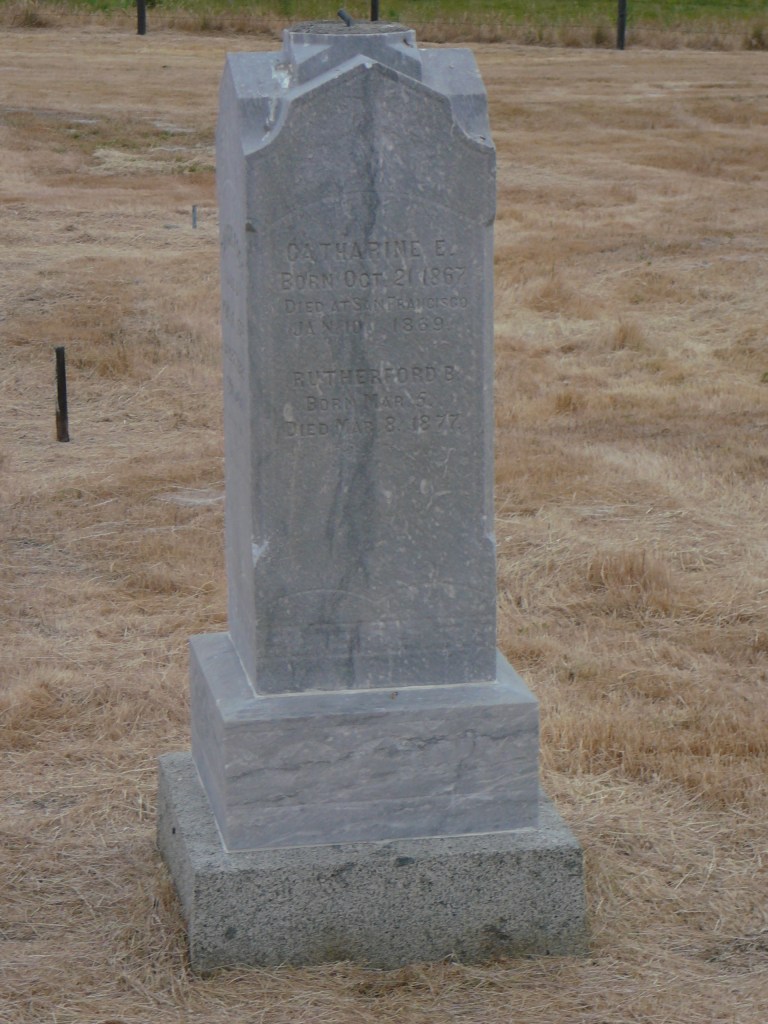


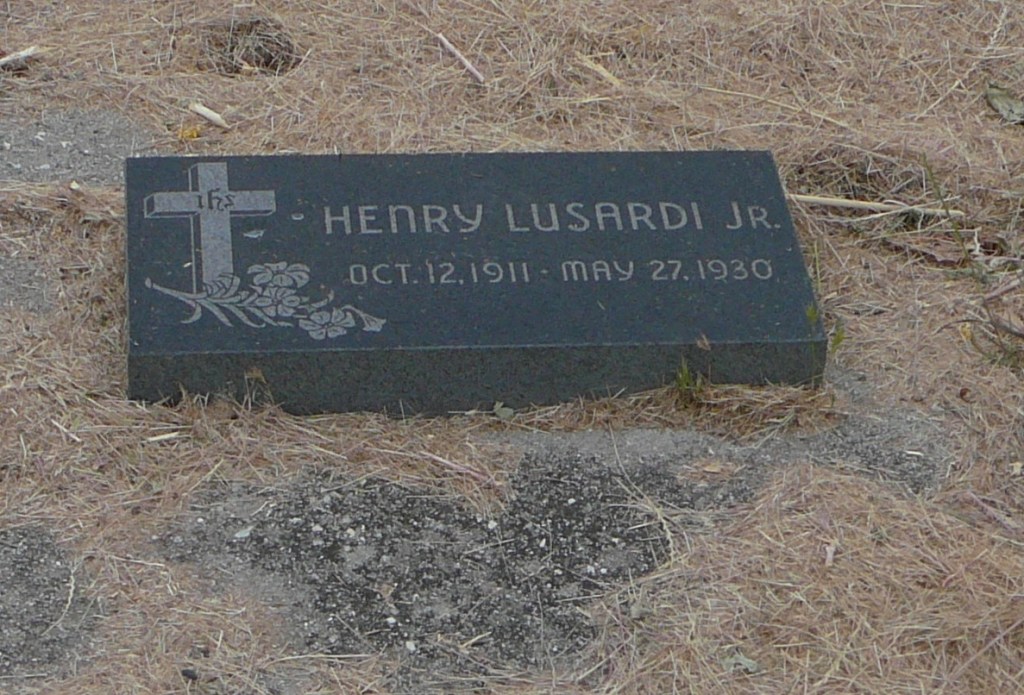
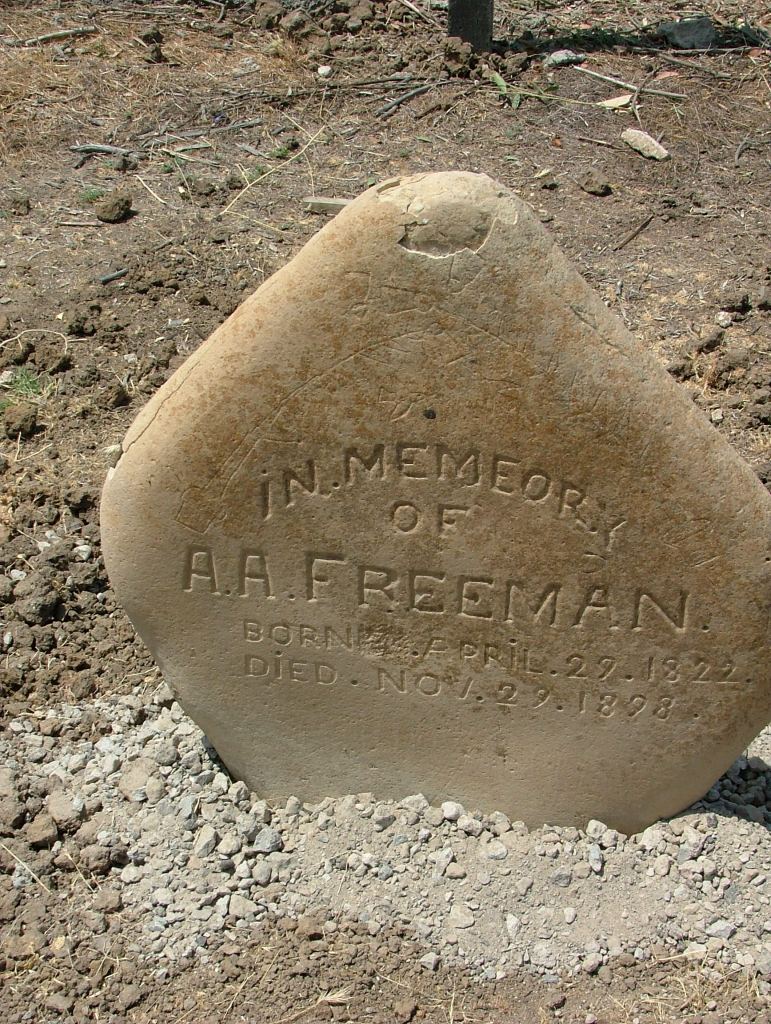

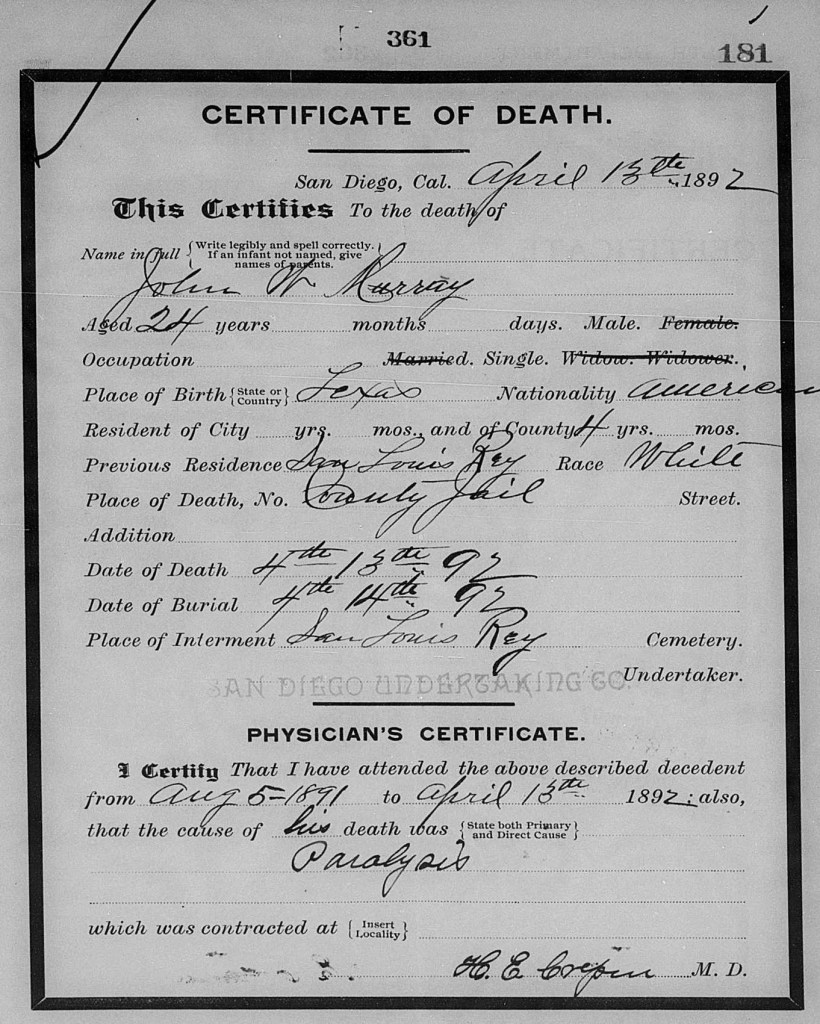
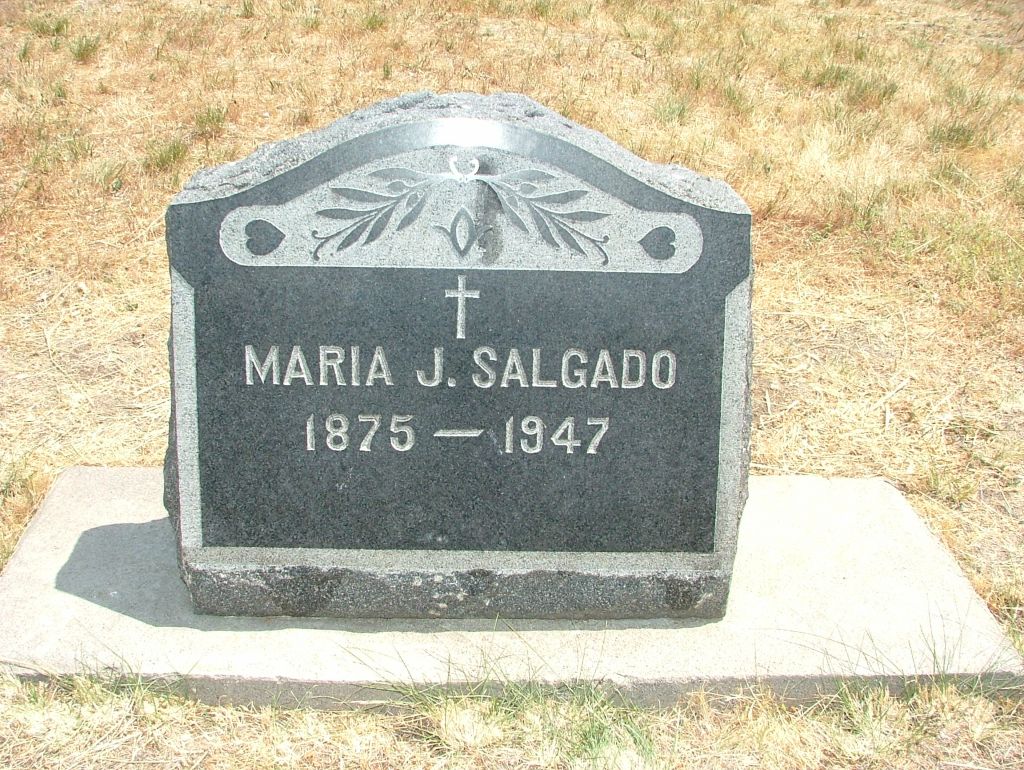


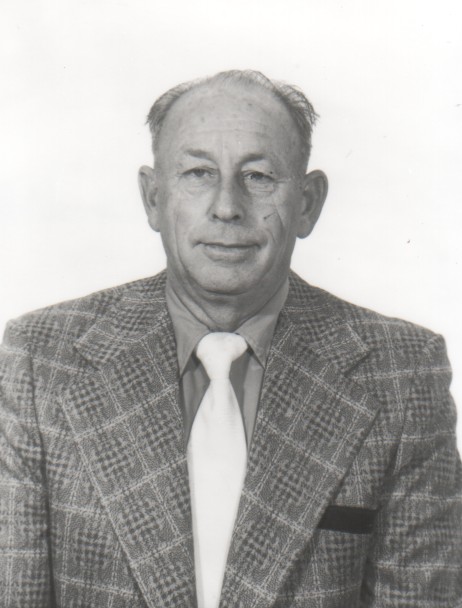

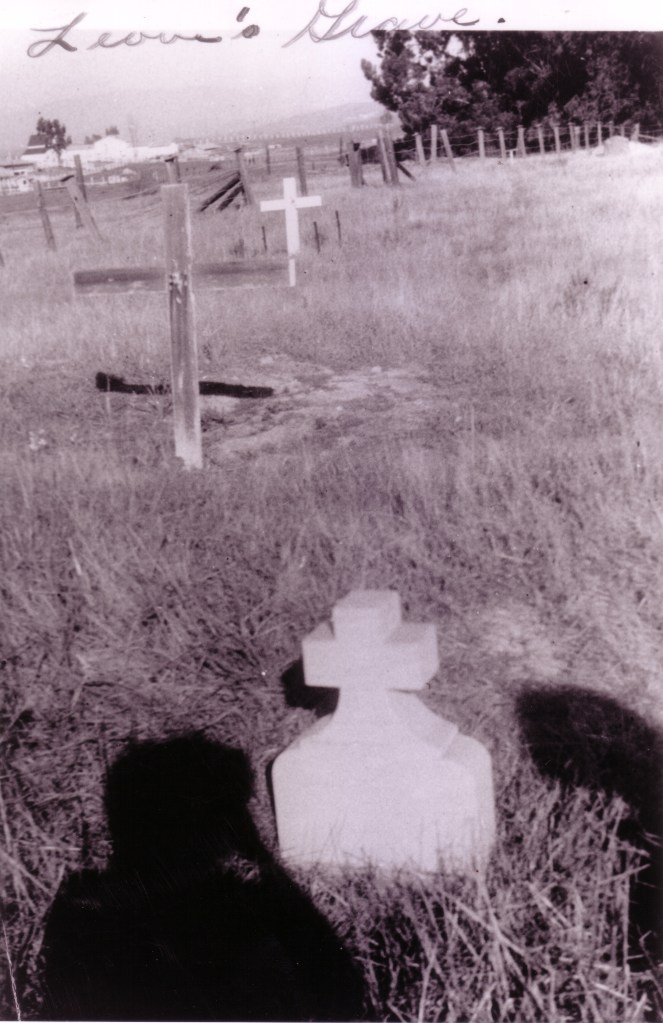


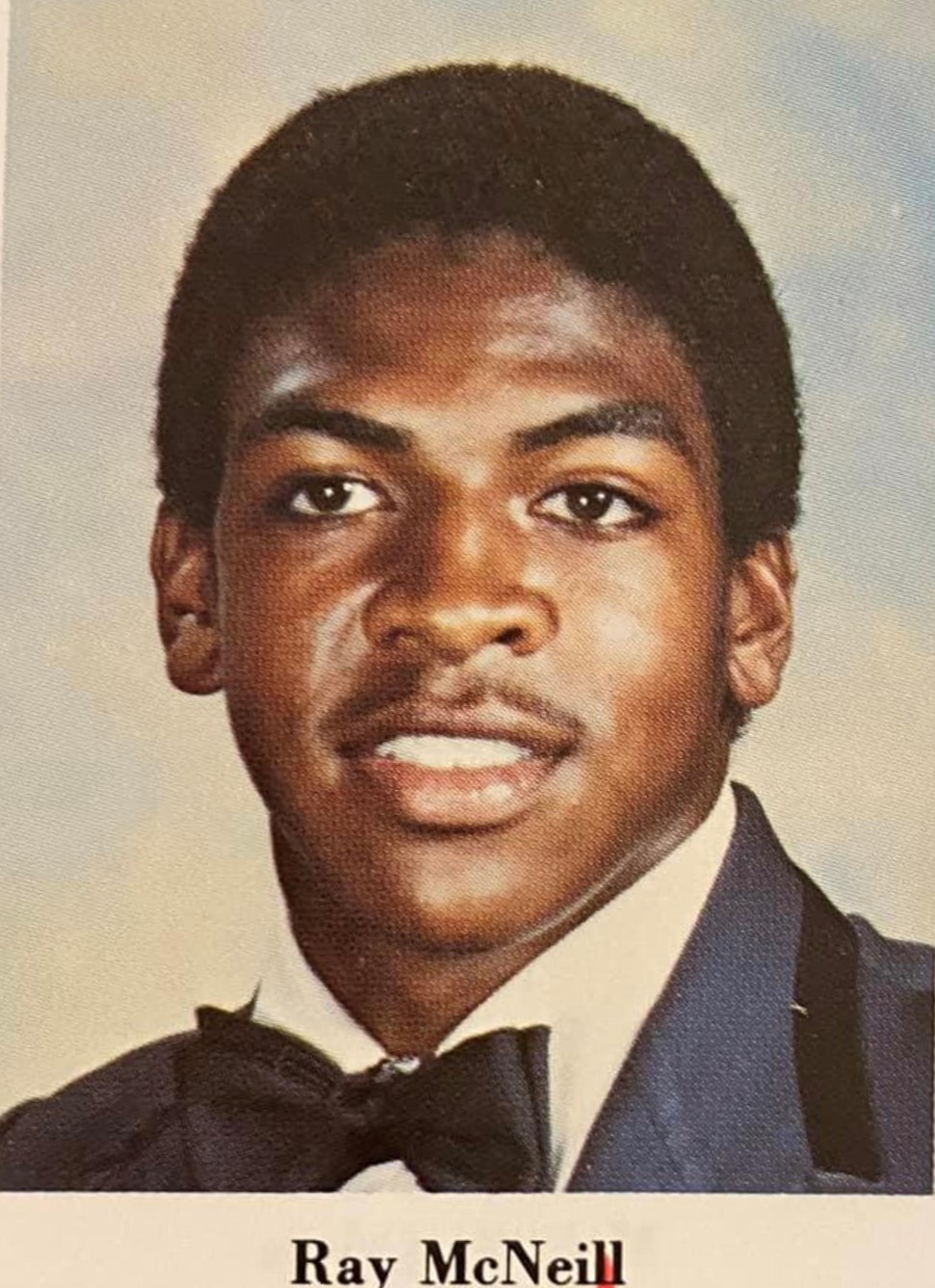


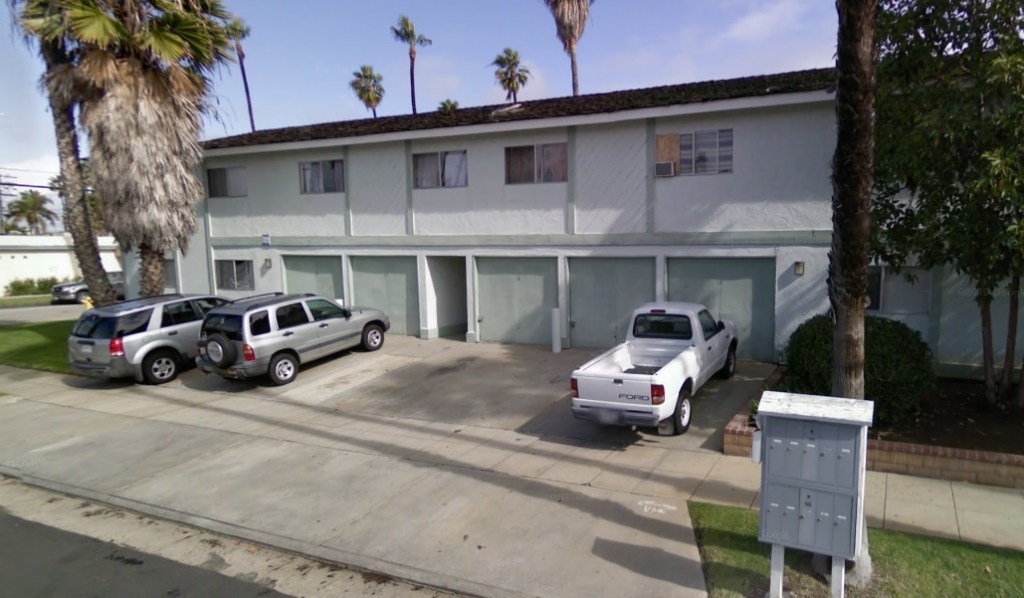



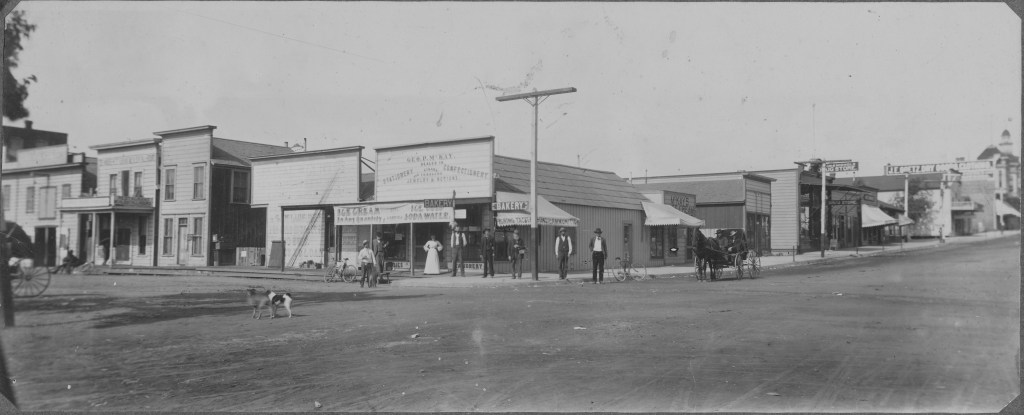
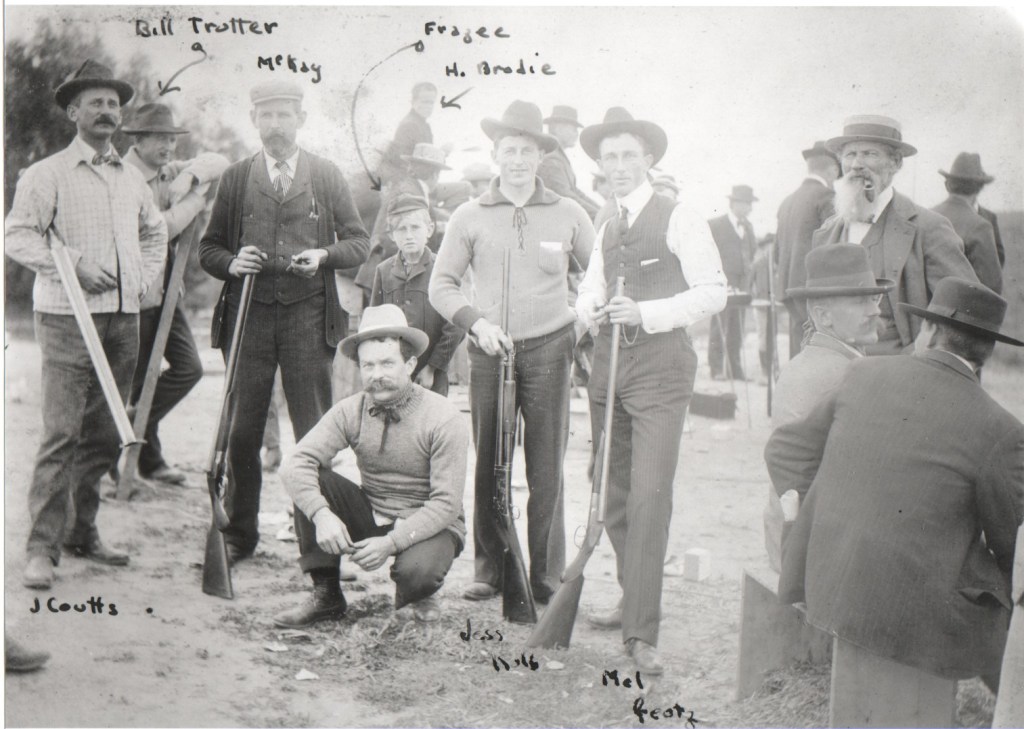
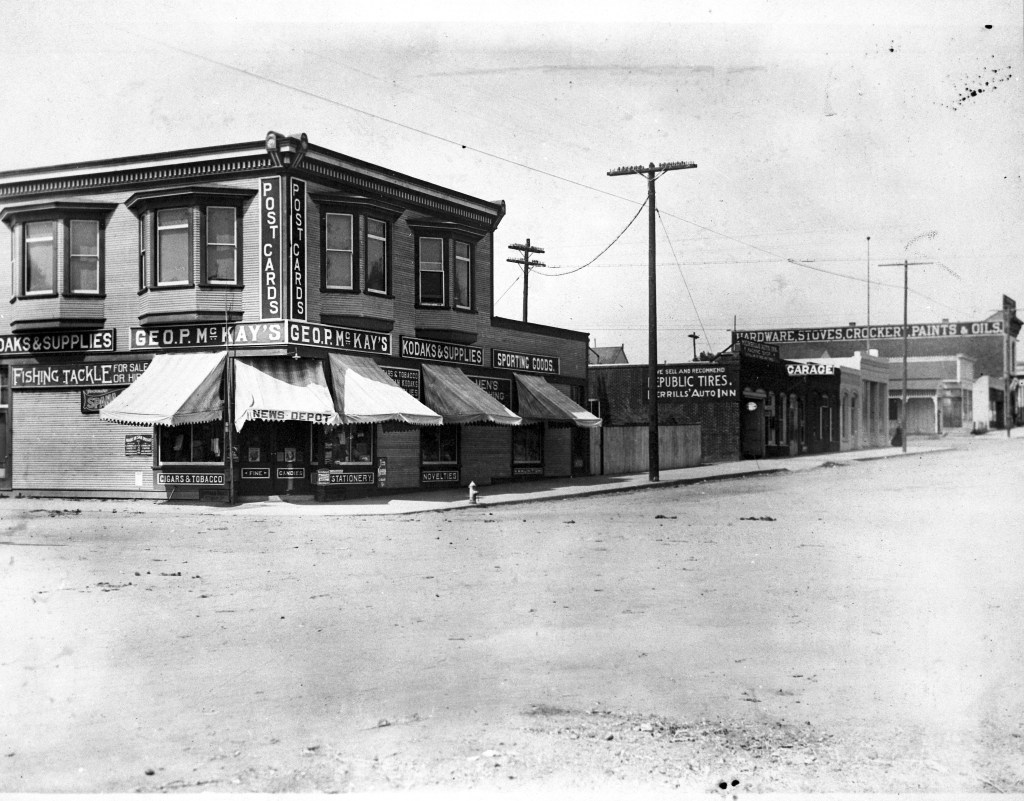


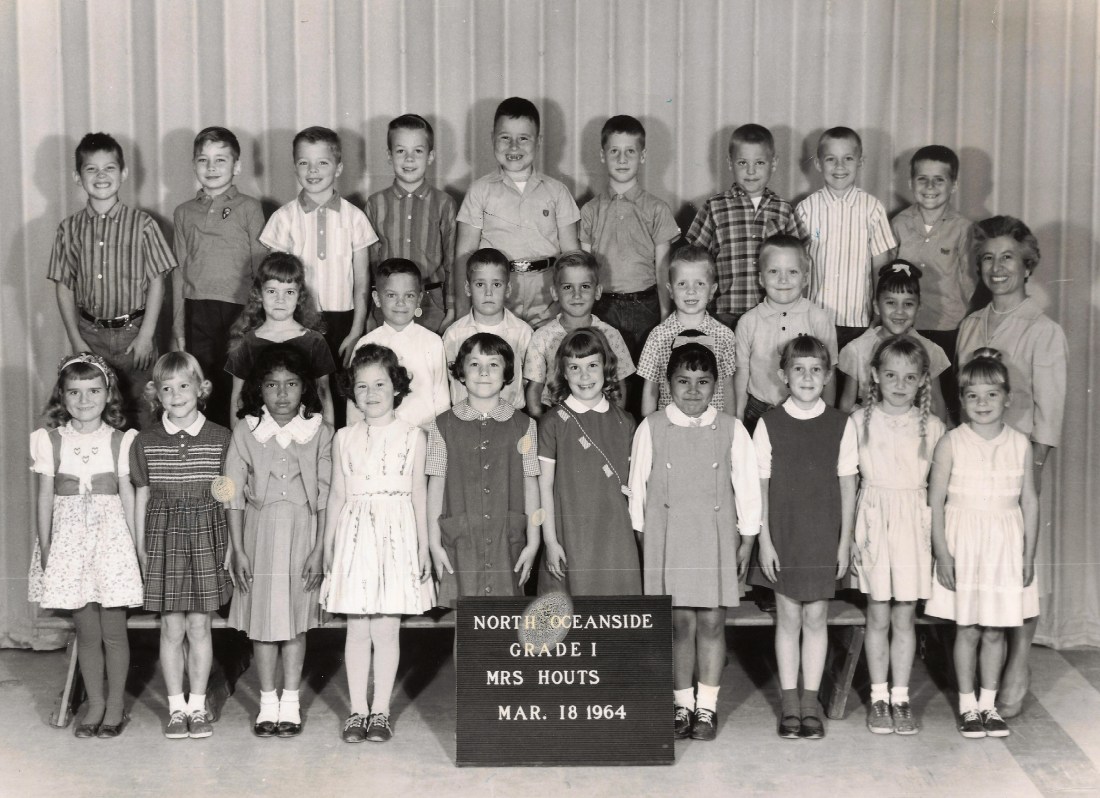


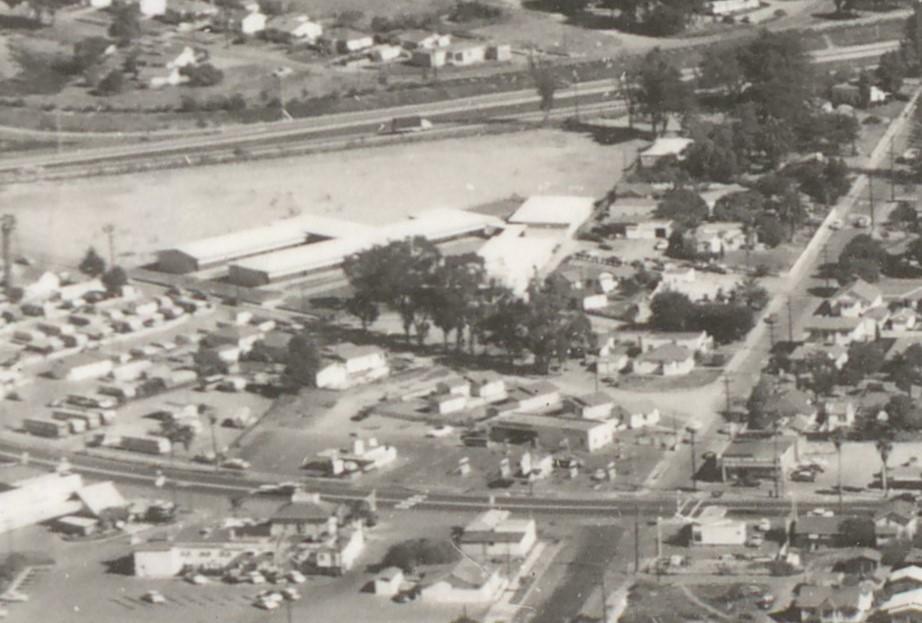
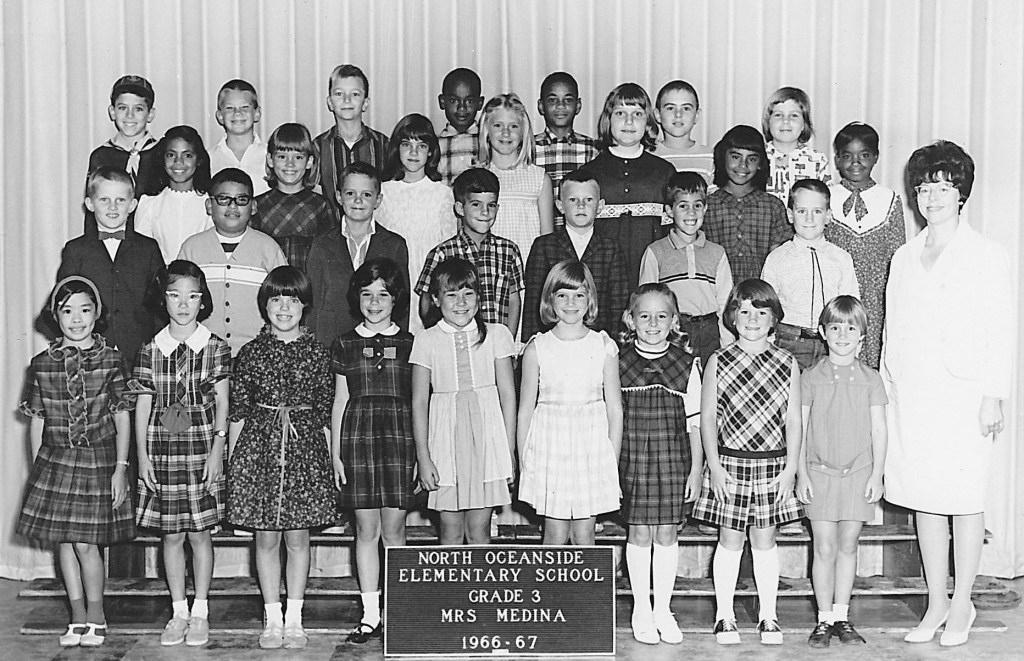


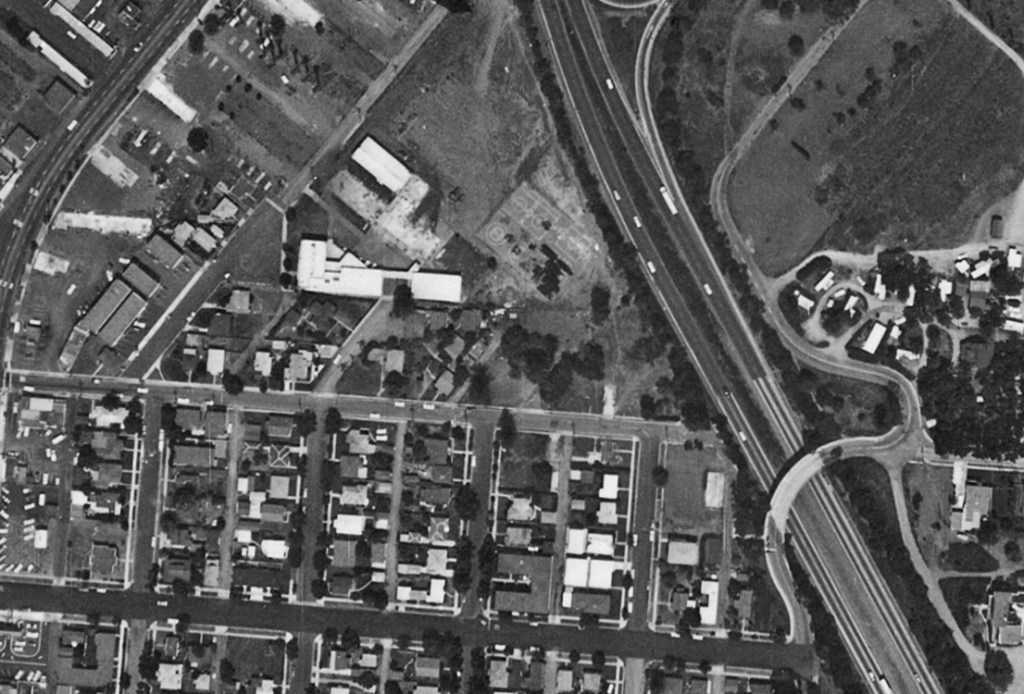
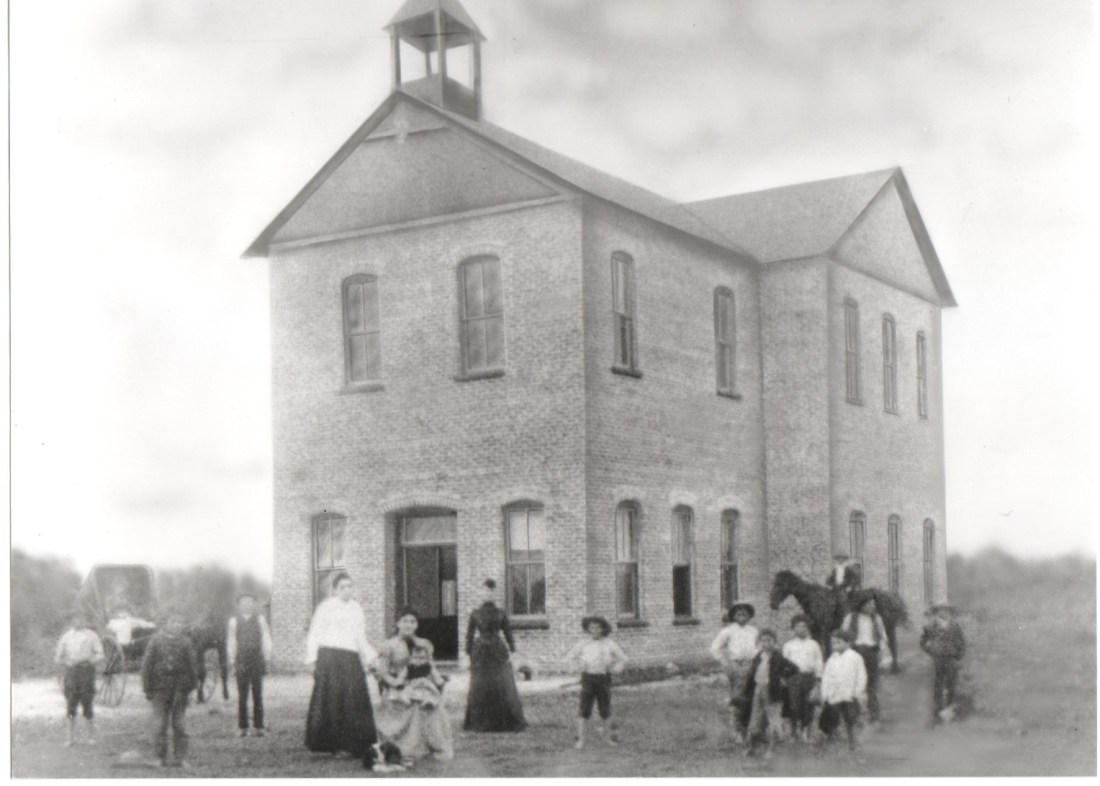


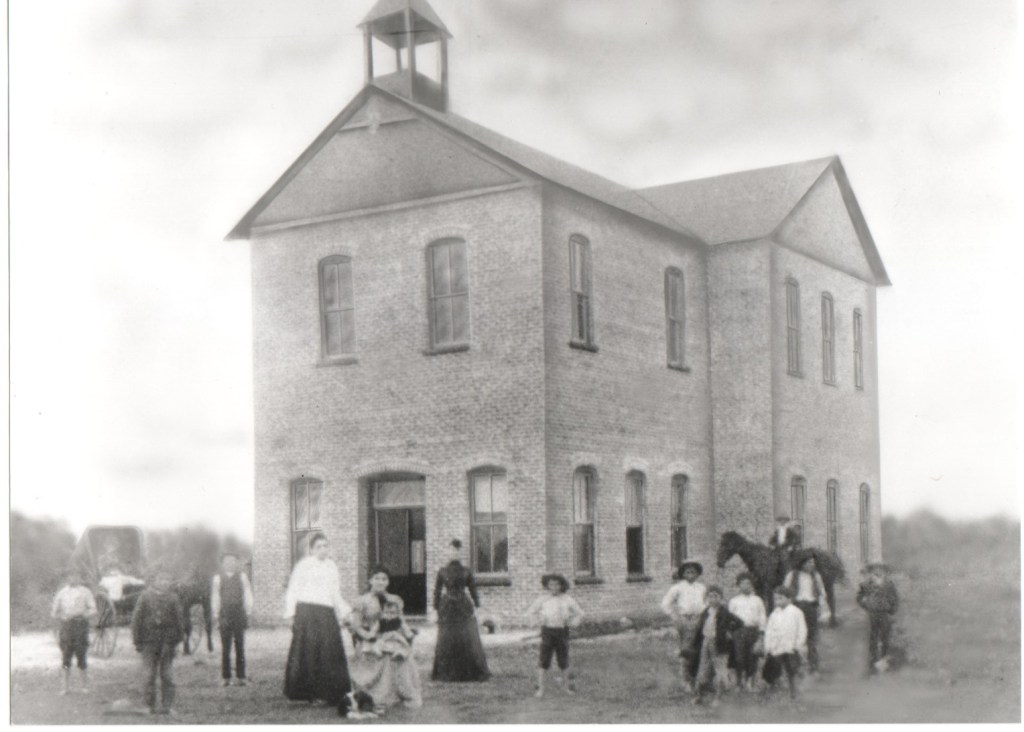


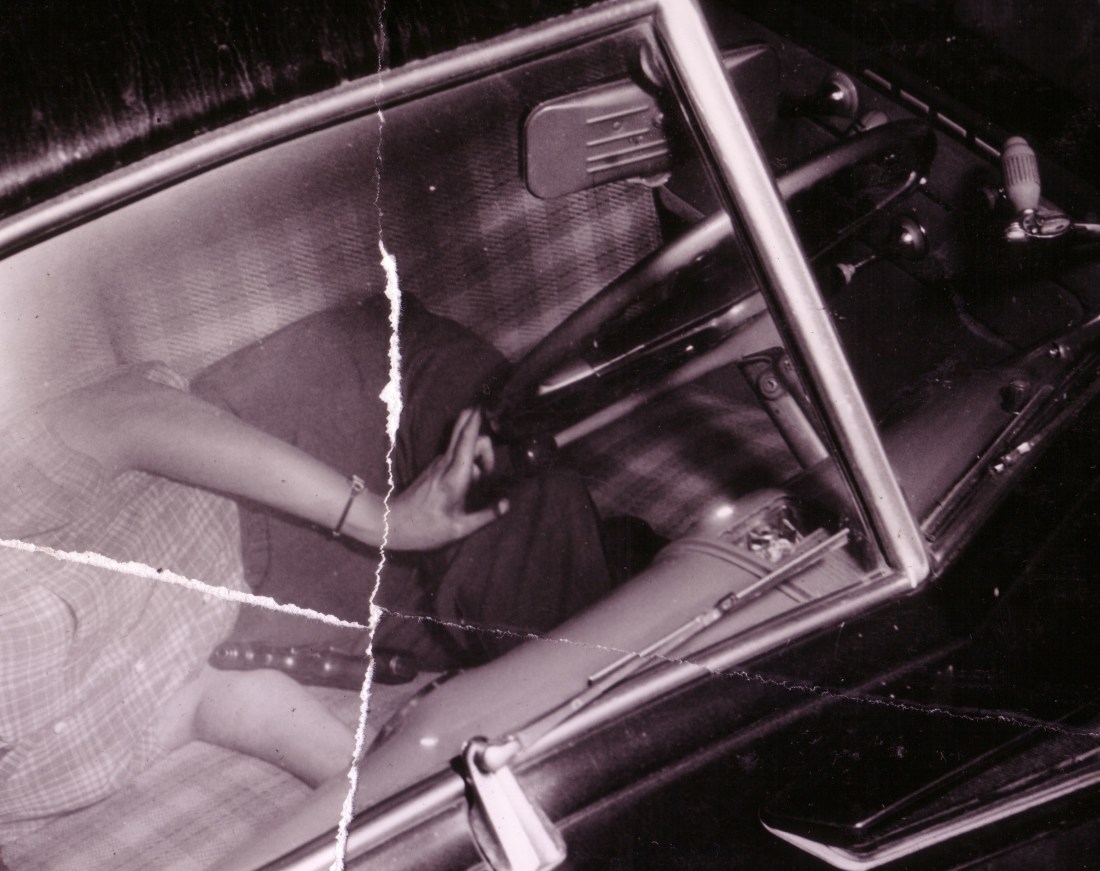


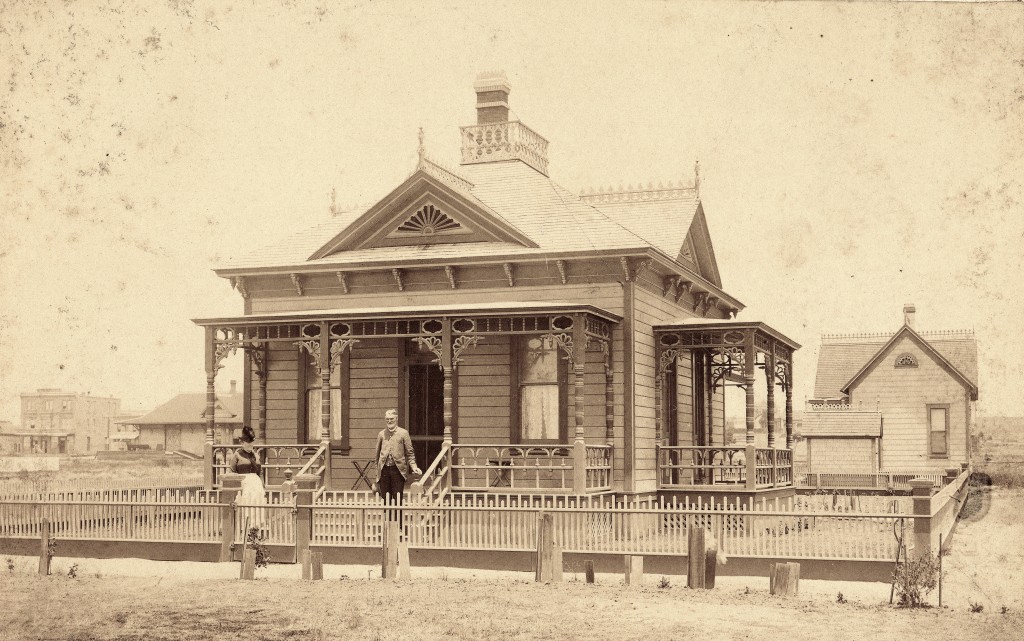
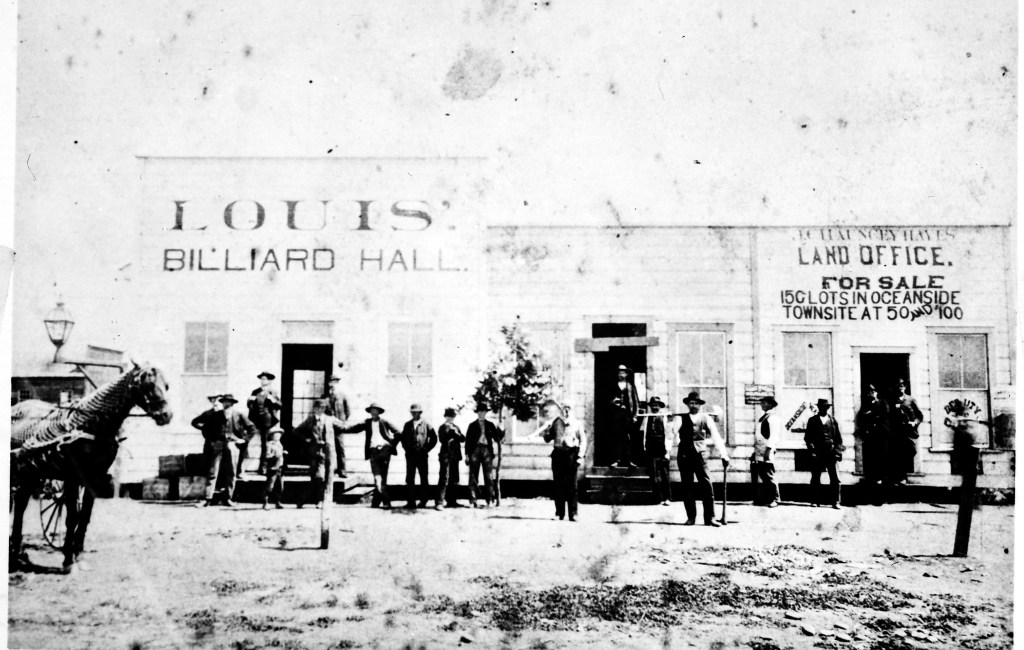
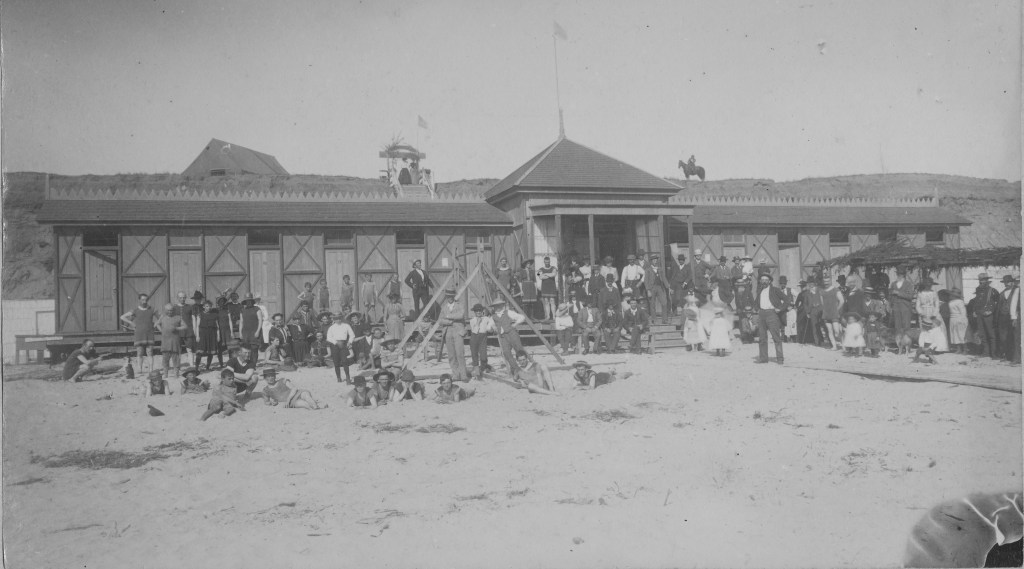


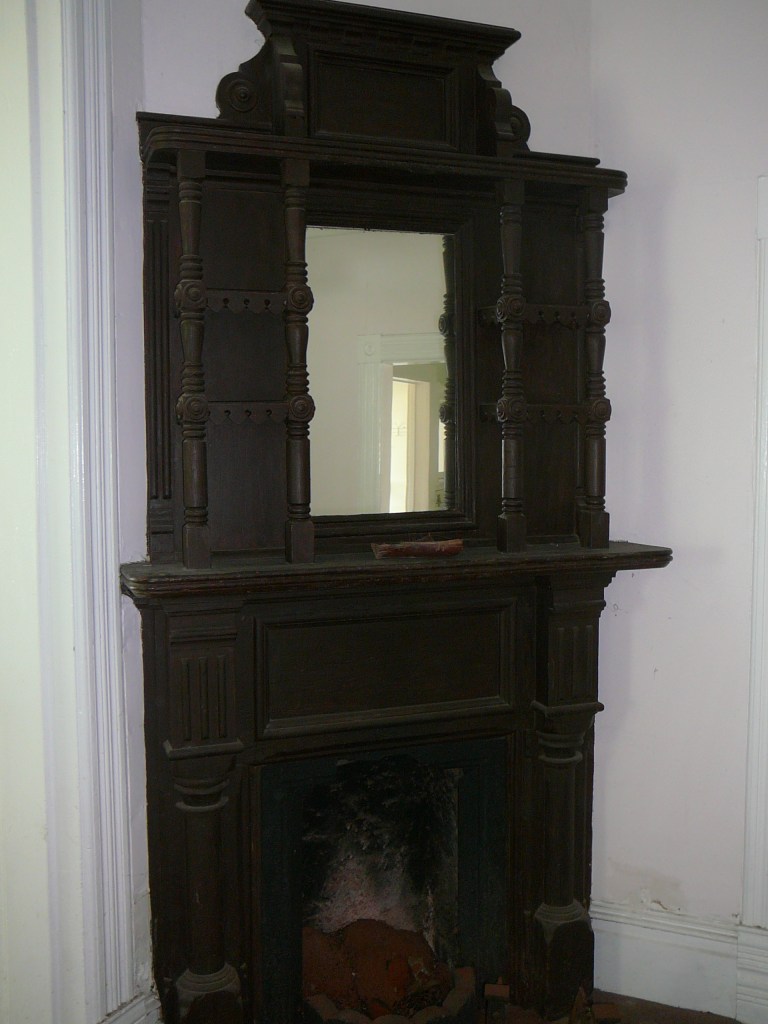

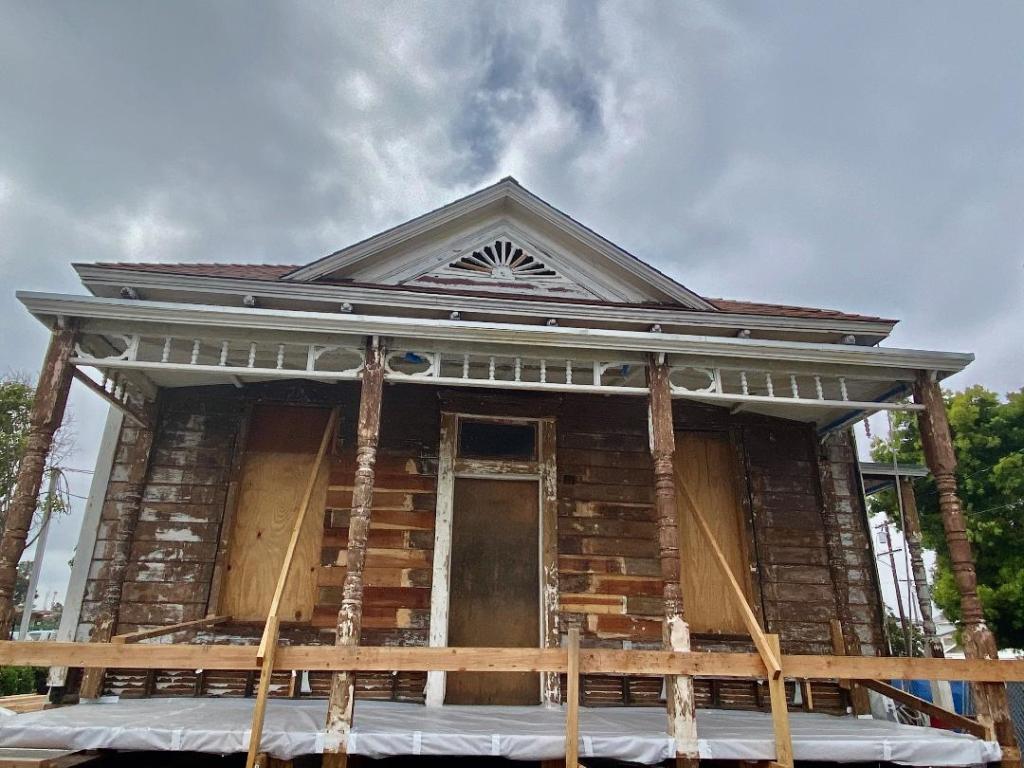





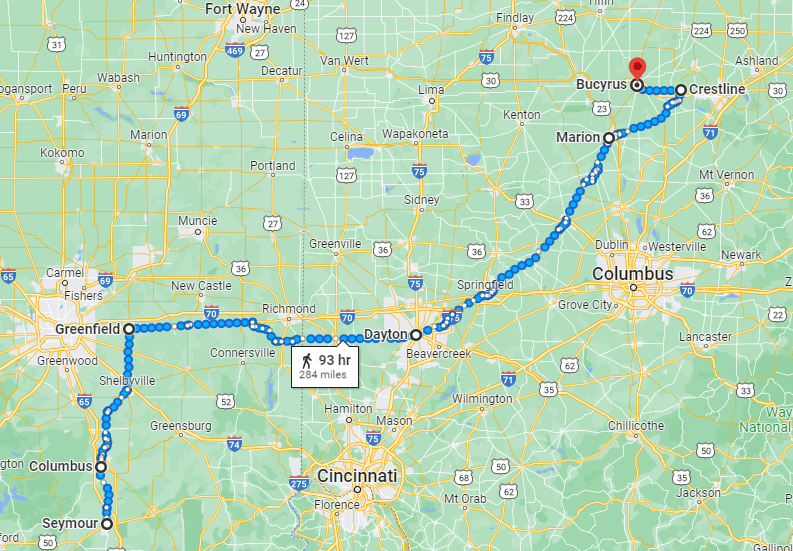


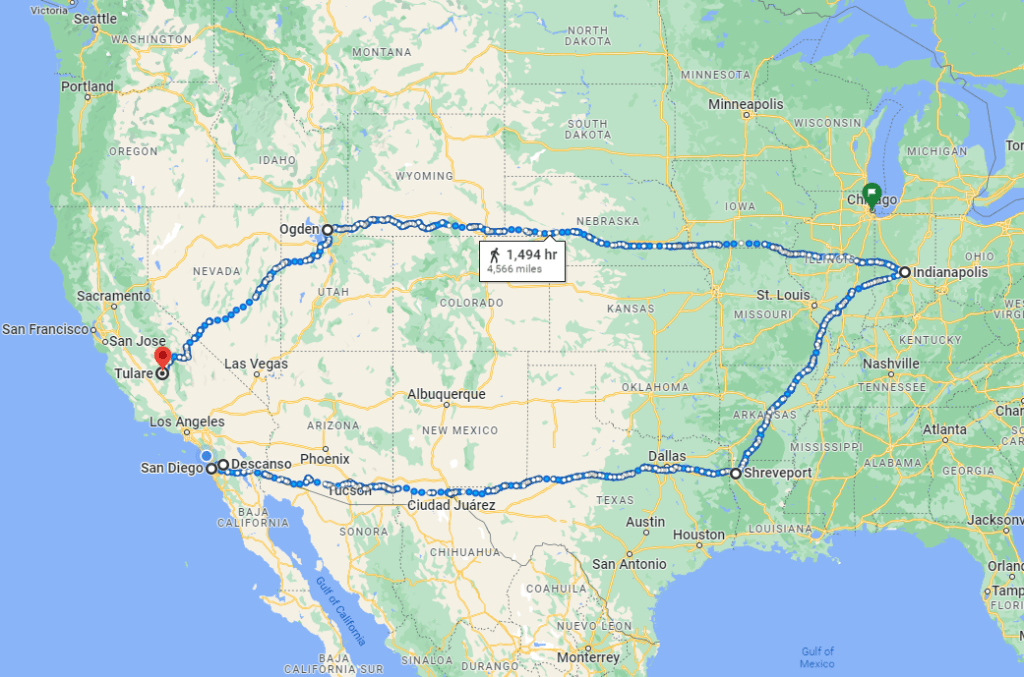
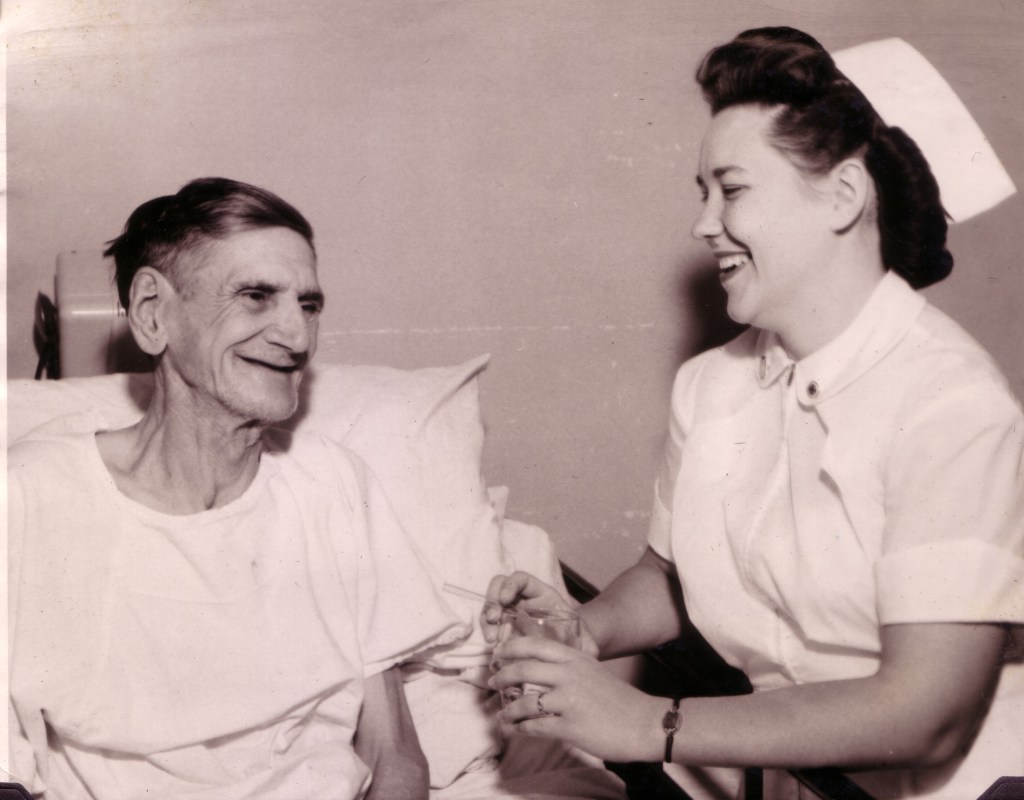
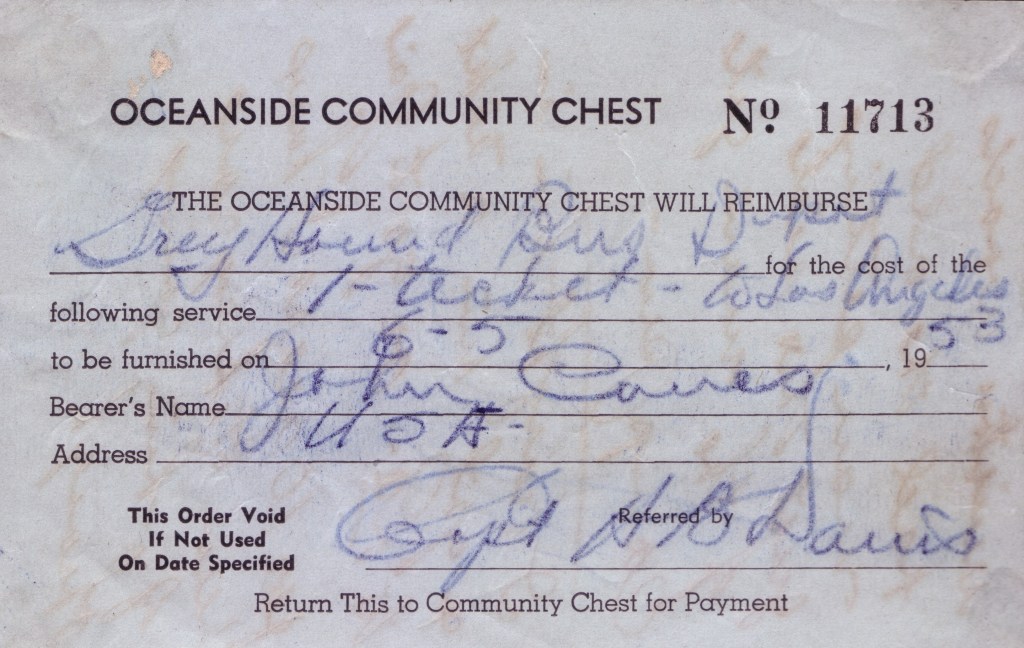


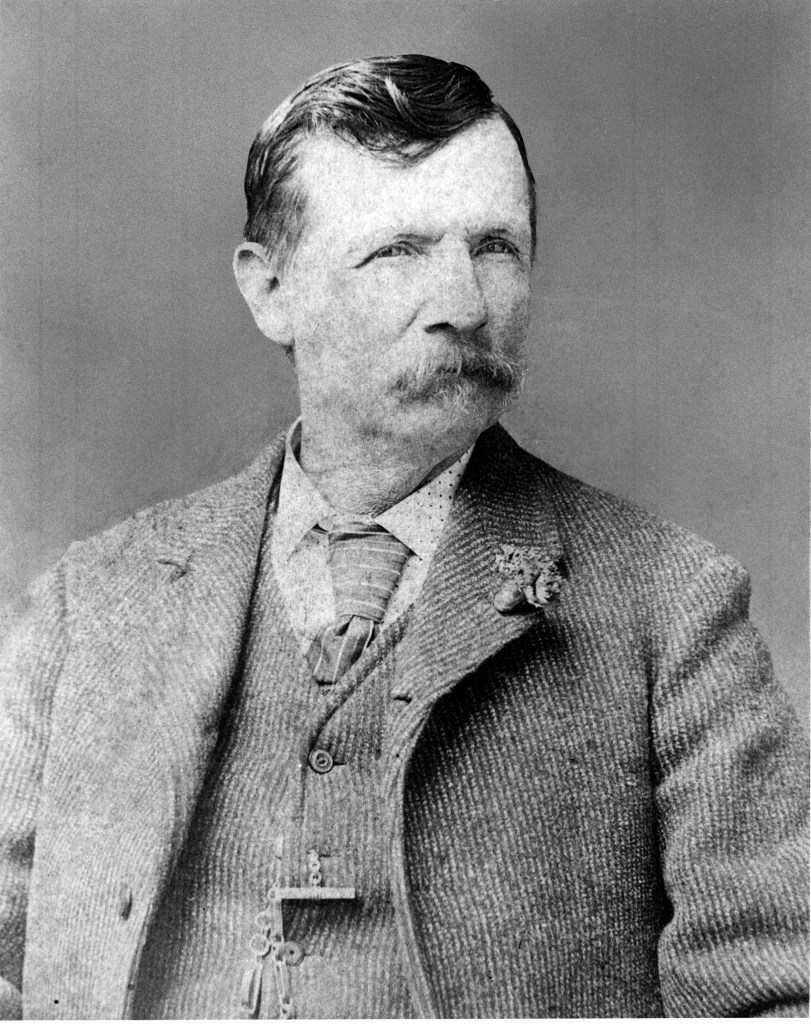


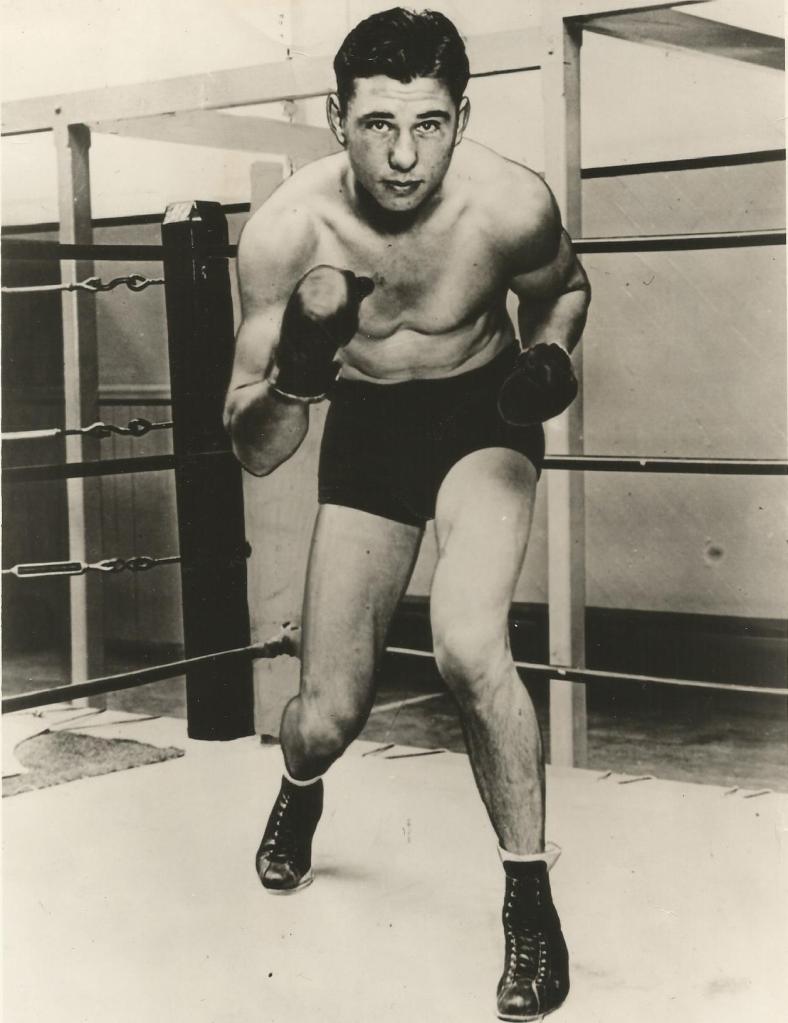


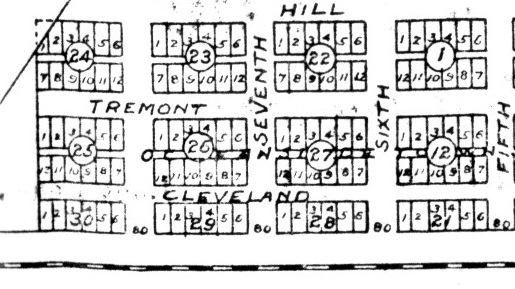

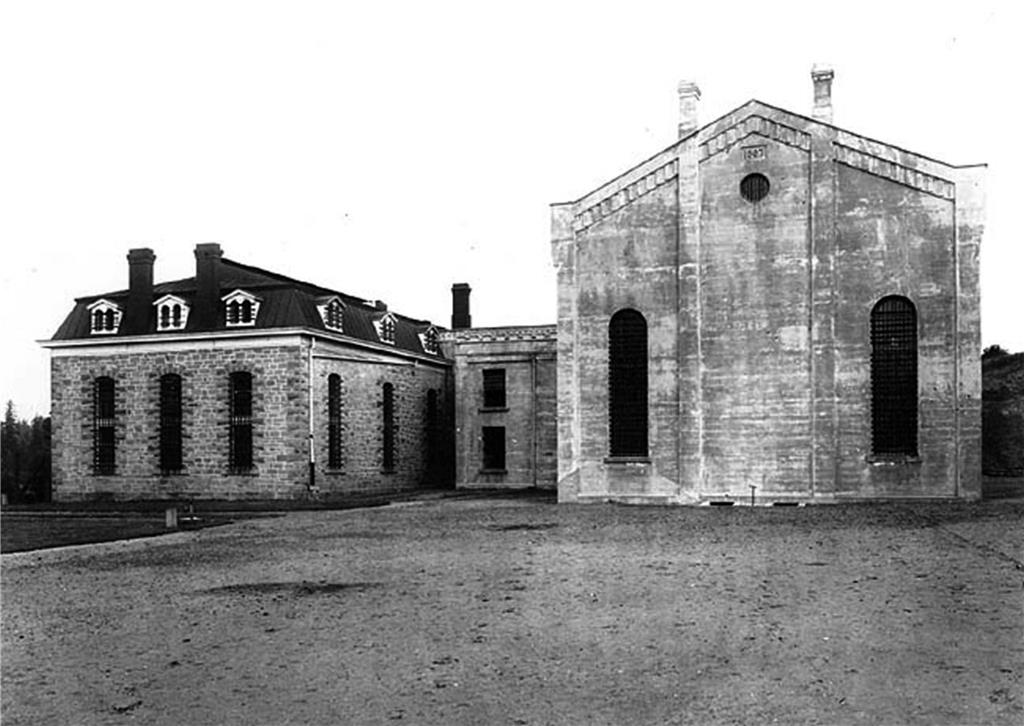
 Histories and Mysteries