Many longtime residents of Oceanside will fondly remember Huckabay’s Department Store at 501 Mission Avenue. This building, located on the southeast corner of Mission Avenue and Coast Highway, is 109 years old and was originally the J. E. Jones Hardware Store.
The J. E. Jones Hardware Store building, 501 Second Street (Mission Avenue)
Joseph E. Jones was born in 1873, and came to California with his parents in 1888. They family settled in the San Luis Rey Valley where they lived on a ranch. Jones attended the Santa Barbara Business College and in 1893 became a clerk for the firm of Irwin & Co., dealers in dry-goods and general merchandise at Oceanside, located on Second Street (now Mission Avenue) and Freeman Street. Jones was industrious and worked “his way upward through diligent attention to every detail connected with the business.” After clerking for Isaac Irwin for several years, Jones purchased a portion of Irwin’s business, as it pertained to hardware and farm implements in 1906.
Joseph E. Jones
Jones acquired the vacant lot on the southeast corner of Second and Hill Streets (Mission and Coast Highway) in 1911 with plans to build a new home for his growing hardware business. Excavation began in 1912. This two-story structure included a basement and was a decidedly modern addition to downtown Oceanside.
The Oceanside Blade newspaper reported on June 7, 1913:
J. E. Jones this week began the transfer of his hardware business from his quarters on the north side of Second Street to his new building on the corner of Second and Hill. The final touches were put on the new building the first of the week and the last of the work marks the completion of one of the best if not the best business block in San Diego county outside the city of San Diego.
The building, 85 x 100 feet in size, is of reinforced concrete construction throughout, walls and floors being of this enduring material strengthened with steel ribs. There are two stories and a basement, the latter being the entire size of the building and prepared and fitted especially for its use in the display and storage of hardware and implements. The first floor is the main store and here the finish and fittings are the very finest and most substantial to be had, everything being arranged for the convenient transaction of business. There are three entrances to the store besides the main doorway on Second Street, two on Hill Street and one from the alley in the rear. Access to the basement is gained by stairs in the rear of the first floor and by a freight elevator which is operated from the sidewalk in front.
The second floor has been left partly unfinished and will be finished up later, either for offices or apartments, as necessity may demand. The windows are plate and prism glass, affording ample light to all portions of the building. Scores of electric lights make provision for the lighting at night, there being fifty tungsten lamps in the main store alone, so that when the building is lighted up it is the brightest spot in town with a metropolitan appearance that would do credit to a large city. A nobby gold sign, the letters fastened in relief on the front and sides of the building, puts the finishing touch to Oceanside’s finest business block.
In addition to his business interests, Jones was active in civic life, serving as a city trustee (councilmember), later as city treasurer, and served two terms as mayor. He was also president of the Oceanside Federal Savings and Loan Association. Joseph Eli Jones died at his home at 904 Second Street (Mission Avenue) in 1944.
In 1928 Henry A. and Tracy B. Howe occupied the building and operated Howe Hardware until they moved into a new location just up the street at 517 Second Street (Mission Avenue).
Ike Glasser purchased the building in 1934. Glasser was a native of Austria and came to the United States as an apprentice tailor. He and his wife Lena came to Oceanside in 1929 and operated a mercantile store in downtown Oceanside.
Huckabay’s Department Store, 1940s
In 1939 Hiram and Walter Huckabay bought the building. Hiram Huckabay came to Oceanside from Colton in 1934 and previously operated the Ben Franklin Variety Store at 201 North Hill Street (aka Coast Highway). The Huckabay’s opened their department store, which was a popular retail store in downtown for many years.
The upstairs of the building served as offices and storage. In June of 1945 Ray Goodman leased the upstairs and opened a dance hall and snack bar called the Silver Slipper Ballroom. Entrance to the upper floor was made via an entrance on North Hill Street aka Coast Highway. Longtime resident and Oceanside native Ernie Carpenter remembered in an interview: “When I was in high school, they had a dance hall on the top. Saturday night dances for the kids, it was really great. Now that was in the ’40s; that was the Silver Slipper.” When renovation of this building took place in the late 1980’s, an upper floor window was discovered with the name of the ballroom painted on it.
This photo shows the entrance to the upstairs ballroom on Hill Street (Coast Highway)
In 1951 Huckabay hired Richardson Brothers, local contractors, to build an addition to the building at a cost of $25,000. It was likely at this time that the building was “modernized” to include a large metal awning that wrapped around the front of the building.
Huckabay’s Department Store with awning and newer facade
In 1954 the local newspaper Oceanside Blade Tribune, featured the Huckabay’s:
The growth of Huckabay’s, well-known Oceanside department store, leads back to a period of 55 years ago when H.C. Huckabay as a youth went into the general store business in Marmaduke, Arkansas. This line of business he followed for a good many years, first in the Oklahoma town and then for a period in Foraker, Oklahoma, and Claremore, Oklahoma.In 1928 Huckabay retired and moved with his family to Colton, California where inactivity soon began to pall on him and he operated a broom factory in that city, an unusual but successful enterprise which continued until 1934 when he bought the G.A. Wisdom business in Oceanside. This latter business was operated in a Ben Franklin variety store in the location where Gilbert’s 5 & 10 now operates.
In 1938 he purchased a half-interest in the variety store business which less than 12 months later gained its present identity when father and son purchased their present department store at Hill and Second street from Ike Glasser.During the period from 1948 to 1951 Huckabay’s business underwent a considerable expansion program which saw the remodeling of the store exterior and the construction of a new addition to the building which doubled its floor space and made it possible for much larger stocks of merchandise display.
With the advent of shopping malls and shopping centers in the 1960s, retailers in downtowns across the country were negatively impacted, and Oceanside was not immune. Many downtown retails shops vacated the business district and relocated to the newer shopping centers that afforded free and ample parking along with convenience.
The Huckabay family continued to operate their department store even as the business landscape of downtown Oceanside was changing. Although they retained ownership of the building, they sold the business in 1977 to Edward R. and Gabrielle Meyers. The Meyers operated the store under the name Huckabay’s and Bargain Circus until 1981 when they filed bankruptcy.
The building in 1990 before renovations
When Harley Hartman purchased the building in 1989, it had been vacant and left in a neglected state. Hartman renovated the building at a cost of $1.4 million dollars and opened Fullerton Mortgage and Escrow Co. Among the changes made were the removal of the wrap around awning and elimination of a portion of the stucco façade that had covered the second tier of windows. Hartman did extensive interior improvements including the restoration of the decorative tin ceiling that was original to the J. E. Jones Hardware store.
Many of our buildings in downtown Oceanside have an interesting history. While its façade has changed along with its use, here is a history of the building which is now home to Swami’s Café in Oceanside.
Before the present day building was constructed, the property was owned by local businessman Jesse Newton and occupied by the Squirrel Inn, a small roadside stand and café that served not only locals but the traveling public. From 1918 to 1923, the Squirrel Inn had various owners including Mary Ulrich, Nina Foss, and Jack Taylor. It operated 24 hours a day for the “patronage of the large amount of night traffic” that traveled through Oceanside via Hill Street which was part of the original Highway 101.
Early aerial of downtown Oceanside in about 1923. Arrow indicates location of the Squirrel Inn.
In 1923 the Squirrel Inn was moved to a location north on Hill Street (Coast Highway) to make way for the construction of a new service station. The corner was leased by the Shell Oil Company from Newton and a new service station was built on the location later that year.
Then in 1927 Jesse Newton sold the property to the Bank of Italy National Trust and Savings Association. The service station was removed and a new bank building added to Oceanside’s growing “business district.” The establishment of a major bank in downtown Oceanside was an important and significant development for the City. Oceanside’s commercial district served not only the general population but the smaller nearby towns including Carlsbad, Vista and Fallbrook.
The new building was designed by the architectural firm of Morgan, Walls, and Clements, a renowned firm established by Julia Morgan. Arthur Nelson and George Willett, of Nelson and Willett, were the local contractors who built the bank in 1928. A portion of the new bank building, built to serve as a storefront, was leased out to Charles A. Turner, a local realtor. In 1934 this storefront was leased to Clay Jolliff, a local jeweler.
The new Bank of Italy building courtesy the Bank of America archives.
The Bank of Italy was renamed Bank of America in 1930. During the Depression years, many banks closed and families lost their savings, but Bank of America managed to stay solvent.
After the establishment of the military base Camp Joseph H. Pendleton, the population of Oceanside nearly tripled in ten years. This growth brought the necessity of new schools, more housing and increased commercial development. In response, Bank of America wanted a larger and more modern building to serve its growing clientele. In 1950 they built a new bank building on the northeast corner of Second (now Mission Avenue) and Ditmar streets.
Bank of America built its new branch on the northeast corner of Mission and Ditmar Streets in 1950 (since torn down)
In September of 1950 the original building, which stood vacant, was sold to Isadore A. Teacher. Teacher was a native of Lithuania who came to Southern California in the 1920s. He owned a chain of jewelry stores and considerable property in San Diego County. Shortly after the bank building was purchased by Teacher, it was completely remodeled. The interior largely stripped and the outer façade modified and the exterior awning added. The Oceanside Blade Tribune reported that it was now “one of the most modern structures in Oceanside.”
The bank building (right) as the Oceanside Pharmacy
The former bank building was then leased to Joseph B. Schwartz, a pharmacist who opened the Oceanside Pharmacy in December of 1950. John Graham operated the pharmacy’s lunch and soda counter. “Bushy” Graham would later own several popular drive-in restaurants, including the present day 101 Cafe. Roger’s Clothiers occupied the storefront in the north section of the building soon after.
Claude V. and Ouida “Ruth” Johnson acquired the property in 1964. Johnson had opened a sporting goods store at 210 North Hill Street (Coast Highway) and continued to lease the building to the Oceanside Pharmacy which remained in operation.
A&W Root Beer at 202 North Hill in the 1970s
In the 1970s Dutch Jewelers occupied the smaller storefront, while A&W Root Beer occupied the former bank building. In 1979 the Johnson’s moved their sporting goods business into the building. Tragically Claude Johnson was murdered in his store on February 21, 1979, just one month after he moved into the building. His widow Ruth Johnson and son Greg continued to run the sporting goods store for over 20 years.
Greg and Ruth Johnson, Johnson Sporting Goods, 1982
In 2014 the building was sold to restaurateurs Jaime and Rosa Osuna. A number of renovations were made, including exposing the interior brick and original roof truss and rafters. The building has been repurposed once again and is a popular downtown restaurant, Swami’s Café.
On a quiet summer night off a dirt road in northeast Oceanside, California laid the body of Marine Staff Sergeant Carlo G. Troiani. He had been shot twice, once in the back and once in the neck. As he lay dead or dying, tire marks on his lower legs suggest he had been run over by a vehicle.
Troiani, who served his country in Vietnam, was killed, not by a foreign enemy but by one he would have considered a brother, a fellow Marine. The Marine Corps motto is Semper Fidelis or Semper Fi for short, Latin for “always faithful”. But unfaithfulness would result in Carlo Troiani’s death. His murder was orchestrated by his wife of five years.
On August 10, 1984, Laura Troiani had lured her husband to a remote area under the pretense of car trouble. When her husband dutifully came to her aid in the middle of the night, she waited for her plan to unfold. As Carlo pulled off North River Road to help his wife, Laura tapped her brake lights. This was a prompt that signaled two Marines who were in hiding to step out and to ambush Carlo. One of the Marines, later identified as Mark J. Schulz, shot the defenseless man in the back.
After being shot Carlo cried out to his wife, “Laura, I’ve been hit!” Laura watched impassively from her car as the scene played out. There was no attempt to save her husband, no attempt to help or abort the mission. She watched the Marines grab Carlo as he instinctively tried to find cover and crawl under the vehicle. They pulled him by his legs and shot Carlo again, this time in the neck with the bullet exiting his face as he collapsed. Laura watched it all. Her husband, the father of her children, was dead.
Turn off North River Road where Carlo Troiani was murdered
Laura and the two Marines, Russell Harrison and Mark Schulz then drove to a 7-11 convenience store on Vandegrift Boulevard where three other Marines, Russell Sanders, Kevin Watkins and Jeffrey Mizner, were waiting with Laura’s two small children. This woman who had coldly masterminded the murder of her own husband and watched him die, had left her two young children, ages 5 and 2, in the care of two men who had helped plan the murder of their father. Two little ones any caring mother would have safely tucked in bed hours ago, were instead left with strangers at midnight standing in front of a convenience store. The children, too young to know what was happening, had no idea they would never see their daddy again.
After her murderous plot was accomplished Laura took her children to a friend’s house to spend the night — instead of taking them home where they belonged. It was just before 1 am in the morning. She told Annabelle Thompson that she was coming home from a Tupperware party and had a flat tire. This story is simply inconceivable — what was she doing at a Tupperware party in the middle of the night with her children? But lies came easy to Laura Troiani. It did not matter to her that the story made no sense. It only mattered to her that she was free to do as she pleased. By dropping her children off, she was free of her children, and free of Carlo forever.
Annabelle watched as Laura hopped on the back of a motorcycle driven by a “Marine-type.” They took the same dark and winding route on North River Road where the murder occurred. On the way to Vista they passed by the lifeless body of Carlo Troiani. Another route could have been taken but the two callously drove past the murder scene, perhaps satisfied with their deed.
After Laura returned to her apartment she picked up the phone and called police, feigning concern for her husband who she claimed did not come home as expected. She would call the police department twice more. Then Laura called her husband’s friend, Marty Gunter, saying that she had a premonition that Carlo was in danger. She called him three additional times in less than an hour.
Meanwhile, the Oceanside Police Department had been alerted by a passerby who had discovered the body of Carlo Troiani. John Brohamer, Jr. was the first Oceanside Police Officer to arrive at the murder scene at 3 am. He found Carlo Troiani face down in the dirt in a pool of blood. The engine of his Ford Mustang was still running with the headlights on, piercing through the darkness. Detective Ed Jacobs was notified and upon arrival he initiated the criminal investigation.
Detective Jacobs said in an interview that it was a “good crime scene” because it was done in a remote area and had therefore been left in pristine condition. As they waited for the sun to rise, nothing had been disturbed. Shoe prints left in the dirt, along with tire tracks were noted. These matched Laura’s 1968 Ford Galaxy which had been found by police. It had a flat tire after being hit by a bullet from the same gun that killed Carlo.
It did not take long for Laura to be visited by Detectives Jacobs and Bob George. They went to her Vista apartment at 8 am. When advised of Carlo’s death, Laura did not seem at all surprised, nor did she exhibit any grief or sadness. She was taken to the police station for questioning and she would never leave their custody.
After a lengthy interrogation and numerous false stories, Laura Troiani would eventually confess and name her co-conspirators.
The Detectives also conducted interviews of the neighbors in the apartment complex where the Troiani’s lived, who confirmed Laura’s plan was to have her husband killed. They reported to police that she had solicited a number of men in recent weeks to accomplish the deadly task and that there were at least two failed prior attempts.
Oceanside Police Sergeant Ron Call drove to Camp Margarita aboard the military base. The Marines were in formation, then identified one by one, and eventually taken into police custody.
Police apprehended and arrested five young Marines, all under the age of 21, for the murder of Staff Sergeant Carlo Troiani. They were with H&S Company, 1st Battalion, 5th Marines, Camp Pendleton: Russell E. Sanders, 20, Kevin W. Watkins, 18, Mark J. Schulz, 19, Jeffrey T. Mizner, 20, and Russell A. Harrison, 19.
These Marines called themselves “The Gremlins,” after the movie Gremlins, which had just been released that summer, two months before the murder, about creatures that “transform into small, destructive, evil monsters.”
Laura
Laura Ann Cox was born in Los Angeles, California in the summer of 1961. By all accounts hers was not a happy childhood. She was a neglected child, raised by a mother who was described as self-involved and slovenly, spending hours watching daytime television and reading romance novels rather than tending to her three children. Without the love and proper care of a mother, the children were left to themselves, and as a result, were poorly dressed, disheveled and dirty. Due to a lack of proper personal hygiene, Laura and her siblings were seen as outcasts at both school and church.
The family moved to Washington State where Laura would grow up. Laura’s parents separated when she was seven years old and divorced about three years later. She remembered it as a turning point in her life. Just two years after the divorce, Laura’s mother Catherine remarried in 1973. The marriage offered little stability in Laura’s life. Her mother was inattentive and labeled as a hypochondriac, caring more for herself than her family.
If her mother was a poor example of a parental figure, Laura’s biological father was no better. Lawrence J. Cox was described as angry and had a drinking problem. He was sent to prison for attempted murder after he shot at a neighbor.
Laura had a brief relationship with an unnamed man and became pregnant at the age of 17. Apparently the biological father was quickly out of the picture and Laura found herself alone. She met and married Carlo Troiani who told her he was willing to raise her unborn baby as his own. In Carlo, Laura found the security she never had.
Laura and Carlo Troiani with son Chris (photo courtesy of Chris Cox)
Carlo
Carlo Grant Troiani was 15 years older than Laura, born in 1947 in Seattle, Washington. His marriage to Laura was his third, and he had two children, one from each of his previous marriages.
Carlo was in the Navy, serving in Viet Nam in the late 1960s. He was released from the Navy and joined the Marine Reserves and later enlisted in the Marine Corps. Carlo was a Marine Recruiter in Tacoma, Washington from 1976 to 1979. His supervisor recalled that he was one of the “proudest individuals in the Marine Corps” he had ever met, he loved being a Marine and worked “aggressively” as a recruiter to meet his quota and prove his worth.
Only published photo of Carlo Troiani
Carlo and Laura were married August 3, 1979 in Pierce, Washington. It was a Marine Corps “full dress” wedding with Marines in their dress blues. After the ceremony, Laura and Carlo walked underneath an arch of swords, where a group of six to eight Marines stand on either side to create an arch as if to “shelter the bride” as she and the groom walk out.
Laura gave birth to a son and shortly thereafter, Carlo Troiani was sent to Orange County, California as a Marine Corps Recruiter. In 1982 Laura gave birth to another child, a daughter.
Eventually Carlo Troiani was stationed at Marine Corps Base Camp Pendleton. Assigned to H&S Battalion, 1st Force Service Support Group (1st FSSG), he was a military police or “MP”. The couple got an apartment in Vista on Foothill Drive.
Foothill Apartment Complex where the Troiani’s lived
Infidelity and Murder Plots
Laura Troiani may have found security in her marriage to Carlo but she did not find happiness. She was continually unfaithful. It was even reported that she had slept with her husband’s best man (before or after) their wedding. Carlo knew of her infidelities and was angry. However, he sought to salvage his marriage and the two attended marriage counseling in the spring and summer of 1984.
James Bondell, family and marriage counselor, would later describe Laura Troiani as a manipulator and a “hard person” who “tormented” her husband. The Troiani’s attended 20 sessions from April through July, wherein Bondell also noted that “Laura Troiani teased her husband by withholding sex from him, was the dominant force in their relationship and was otherwise ‘ambivalent’ about marital problems the couple was experiencing.” He also noted that Laura complained that Carlo wanted her to “stay home and be with him.” This statement would suggest that Carlo was aware, at least to some extent, of Laura’s extracurricular activities.
Despite Carlo’s attempts to save his marriage, Laura’s presence at the sessions seemed disingenuous at best.
Carlo was sent to Korea and while gone, Laura threw a party over Memorial Day weekend. There she met Darryl Nelson and was intimate with him that very day. During the two month affair, she asked Nelson if he knew anyone that could “do a hit” on her husband. When he asked Laura about simply getting a divorce instead, she replied in the negative, complaining that she would then have to get a job and take care of her children, which was apparently out of the question.
Jessie Montgomery, a Gunnery Sergeant in the Marine Corps, attended a party thrown by Laura and noticed that Laura Troiani and a man emerged from her bedroom. Montgomery was then informed that Laura only married Carlo for security and that “the marriage was one of convenience.” Laura spoke to Montgomery about getting rid of Carlo and even stated that she knew someone who would “put a contract out on him.”
Over this same weekend Laura talked to Kevin Manwarren and Bill Fenley, unambiguously telling them she wanted her husband dead. Manwarren, who would later claim to be joking, offered to kill Carlo Troiani for $5,000, to which Laura quickly offered: “Well, I can take care of it out of the insurance proceeds.” (Carlo had two policies that totaled $95,000.)
Laura then followed up their conversation with several phone calls to Manwarren, anxious to devise a plan to have her husband killed. He demurred.
Annabelle Thompson recalled that Laura had also told her that she knew a person in Tustin, California who would “take care” of Carlo and that he was “worth more dead.”
It appears that many of the men Laura encountered thought that she was joking and did not take her seriously, but she continued searching and sleeping with potential would-be assassins. None seemed willing to commit murder for her.
In July of 1984, Kim Hartmann moved into the apartment complex in which the Troiani’s lived. The two women met and Laura wasted no time by complaining to Hartmann about Carlo and that she wanted him killed. Hartmann said Laura talked about it constantly. Laura also told Hartmann that Carlo, keenly aware of her unhappiness, offered Laura a divorce, a way out, and said that he would pay her rent and child support. But Laura would not be dissuaded. She wanted Carlo’s insurance money and for that he had to die.
On July 19th Hartmann went with Laura to an E-club (Enlisted club) on Camp Pendleton. There Laura met Jeffrey Mizner for the first time and was introduced to the other Marines who eventually would be the accomplices to Carlo’s murder, including the triggerman Mark Schulz. Hartmann would later testify that Laura kept bringing up the subject of having her husband killed, even though she had just met them. Laura was unapologetically, unabashedly, out to have Carlo murdered and she apparently did care about first impressions.
It is significant to point out that in conversations with Kim Hartmann, someone she felt close enough to tell about wanting her husband murdered, Laura Troiani did not allege or assert to her that she was being abused by Carlo. Hate and money were her given motives. In marriage counseling, even when she attended one-on-one sessions without Carlo, she never complained of abuse of any kind, only that Carlo had a “yelling problem.”
Laura, was not one to be weighed down by marriage vows or motherhood. Her own son related his memories about their relationship: “I do remember a lot of her, actually, even at a young age. I remember she had Carlo crying one night in the bedroom. I remember she would just take off with whoever the boyfriend was at the time.”
When asked if he remembered any abuse between his mother and stepfather, Chris replied: “As far as the abuse, no, none, not that I can remember. Honestly, seemed like they were never together, very rarely.” He added, “The abuse was more about neglect, [leaving] a 5 year-old to fend for himself. She was at the clubs doing it up. In no way was she a mother.”
The Marines began to plot with Laura Troiani, as the ringleader, the killing of Carlo Troiani. Mark Schulz told other Marines in his company that he had been “hired to waste someone” and was recruiting anyone else that might be interested in helping with the deed, adding their cut would be $500 to $600. Schulz along with Russell Harrison, Jeff Mizner, and Russell Sanders began to solicit information on how to kill someone, which including poison, making a bomb and using a firearm.
For several days in a row, Laura would take her two children and drive 35 miles each way to the remote base camp to visit with the Marines at Camp Margarita so that they could discuss their “options.”
August 3, 1984 was the occasion of the Troiani’s fifth wedding anniversary. Carlo, oblivious to the fact that his bride was planning to have him killed, toasted his wife that evening.
The First Attempt
On the night of August 6, 1984, Laura and Kim Hartmann went to the E-Club at Camp Margarita aboard the military base. There Laura again plotted with the Marines to kill Carlo (This group included Kevin Watkins). All were excited and eager to carry out the plot.
Harrison and Schulz had weapons, a knife and a gun, which they put into Laura’s car. They then traveled to the Del Mar Club, located near the beach of Camp Pendleton. At the club the conversation of killing Carlo continued. This was no fantasy talk or mere joking. The group planned to carry out the plot that night. Harrison suggested that the Marines “jump” Carlo at his car, attack and kill him with a knife, rather than attract attention with a gunshot.
Laura and Kim Hartmann were dropped off at a market in order to call Carlo and tell him that Laura’s car had broken down. She told Carlo that she was stranded in Carlsbad with their children. But exactly where were the children on a Monday evening, if not with her or Carlo? Like her own mother, it seemed she had no instinctual love and care for her children.
Hartmann claims that she tried to keep Laura from going through with her plans, saying it wasn’t too late and that she could still call Carlo back to keep him from being murdered by the Marines who were lying in wait. Laura’s reply was, “Nope, I got to get it over with.”
The Marines then hid in an area near Carlo’s vehicle, waiting for him to come out of his apartment. However, because his car was nearly out of gas, Carlo had called his friend Corporal Marty Gunter, to come and take him to look for Laura. Ambushing Carlo alone was not feasible and the group was unable to fulfill their deadly plan.
Carlo and Marty diligently searched for Laura and the children for four hours, to no avail. (This was before the convenience of cell phones.) Unsuccessful in their search, Marty dropped Carlo back at his apartment building.
When Laura discovered the plan to kill her husband did not go through, she was furious. She told the Marines that she “couldn’t stand it” and that it had to be done that night. Russell Harrison then volunteered to go up to the Troiani apartment and slit Carlo’s throat. Laura gave him the key.
However sinister and bloody this particular scenario would have been, it is believed it was abandoned altogether as the group was spotted, likely by an apartment resident.
The Second Attempt
While the group did not want to be seen that night by outsiders, it was an open secret that Laura and the Marines were seeking to murder Carlo as they spoke about it openly to several people.
The following day, Jeffrey Mizner told Robert Guerrero, a fellow Marine, about his “girlfriend Laura”, and that she was trying to get someone to kill her husband. Mizner asked his roommate “how to blow up a car by running a wire from the sparkplug to the carburetor.”
Apparently, this was now the chosen method of murder. Russell Sanders shared a story with yet another Marine how they had “practiced” by attaching a wire to the sparkplug of Kevin Watkin’s motorcycle and hooked the other to a mouse to electrocute it. They watched it die.
Satisfied that a similar technique would also kill Carlo, his vehicle was rigged with the wire from the sparkplug placed into the gas tank of his truck. The attempt failed and did not detonate. In fact, Carlo found the device and removed it. Marines in his unit remembered him laughing about it, thinking it was a harmless prank by one of them.
Jeff Mizner then complained to Marine Joseph Hickman that the sparkplug scheme did not work. Mizner even said that he had lost sleep over the failure and the plan was now just to shoot Carlo Troiani.
Mission Accomplished
After at least two thwarted murder attempts, on August 9, 1984, Laura Troiani would not be denied. Mark Schulz borrowed a .357 pistol from David Schenne on the pretense of doing some target practice. That same day Laura went to the local Kmart (at the time located next to the Oceanside Police Station) to purchase bullets for the weapon and the group laid out their final lethal plan.
That evening between 8 and 9 pm, Laura went to the apartment of Diane and Randy Gray with her two children. Soon after Mizner, Harrison, Sanders, Schulz and Watkins arrived. The group huddled together, whispering their plots and because the Gray’s were concerned about the secretive behavior, asked what was going on. Sanders replied, “Never mind, we don’t want you to get involved further.”
The group left the apartment with Jeffrey Mizner riding on the back of Watkins’ motorcycle and Laura, Schulz, Harrison and Sanders, along with Laura’s two children, drove away in her car. The group pulled up to a 7-11 on Vandegrift Boulevard (which leads to the rear gate of Camp Pendleton).
Sanders and Watkins called Carlo Troiani, presumably as “good Samaritans”, to tell him that his wife’s car was broken down and they directed Carlo to a remote location on North River Road.
Meanwhile, Carlo had called Stephanie Howard, a friend of Laura’s, to ask if she knew where Laura and the children were. He was genuinely concerned for his wife, while she was getting ready to have him killed.
Laura, along with Russell Harrison and Mark Schulz, drove to the location they had chosen for their ambush to wait for Carlo, a dirt turnoff on North River Road, three miles east of Vandegrift Boulevard.
A clerk back at the 7-11 would later report seeing two small children with at least one Marine (Jeffrey Mizner) standing outside near the ice machine. They were there for 45 minutes. Waiting … in the middle of the night …. while Laura completed her plan to have her husband killed.
Laura Troiani would later describe herself as helpless to stop the murder of her husband, an event she had longed for, recruited for, and set in motion. As he was shot by Mark Schulz with bullets purchased by Laura, Carlo’s last words were to her, a cry for help. But rather than help him, she left her husband for dead by the side of that dark road.
After the murder, the trio drove west on North River Road back to the 7-11. The clerk reported seeing a vehicle drive up with a flat tire. One of the men came into the store to buy a can of tire inflator and once the tire was sufficiently inflated the group departed.
7-11 on Vandegrift Boulevard where Laura’s children waited while their father was being murdered.
The Arrest
The murder of Carlo Troiani was the last case Detective Ed Jacobs worked on before he retired from the Oceanside Police Department. After investigating the murder scene, he and his partner Bob George went to the Troiani apartment to speak with Laura the morning that Carlo’s body was discovered.
Detective George went through Laura’s car which had been impounded. He found evidence that Laura had purchased bullets at Kmart and interviewed the store clerk, who specifically remembered Laura because he had given her wad-cutter bullets, commonly used for target shooting, and she had insisted on lead caliber bullets.
Laura Troiani was taken to the police station for “routine questioning.” During the interview Jacobs said that Laura remained calm and was not visibly upset when told about her husband’s murder.
One of the first stories Laura Troiani told investigators was that she and her two children were abducted by three men who forced her to call her husband to lure him out to North River Road. She said she was separated from her children, and after Carlo was murdered, was taken to be reunited with them and warned not to tell anyone or that she would be killed.
Detective Jacobs and George listened as Laura then changed her story and said that she was at Kmart when five men on two motorcycles abducted her. When detectives questioned the veracity of that story and asked how five men were on just two motorcycles, Laura simply said, “I don’t know.”
Detective Ed Jacobs, Oceanside Police Department
Yet another story that Laura offered was that she and the children were driving around all day after Carlo said he wanted a divorce. She then ran out of gas and then discovered she had a flat tire. Two strangers on motorcycles came to her rescue, one drove her and the children to the babysitter’s house (Anna Thompson), and then one took her to her Vista apartment. When asked by detectives if she was worried at all by these strangers giving her a ride in the middle of the night, Laura replied, “No”, because she was “a good judge of character.”
Laura’s next defense strategy was her unfaithfulness. “Why would I want to have my husband shot? Sure, we had marital problems. Sure, I was having affairs on the side,” Laura told investigators. “I was having a ball, being married and fooling around.”
Detective Jacobs said that Laura Troiani never mentioned any abuse by her husband in the lengthy interrogation that spanned over nearly 12 hours. She eventually confessed and gave up the names of the Marines, who were all stationed in the same unit.
During a phone call while Laura was being held in jail, she told Marty Gunter that her husband had “suffered not more than two to three minutes” the night he was murdered. She thought her comments would come across as reassuring and compassionate but they only served to further expose her lack of remorse and coldness.
Meanwhile Laura’s co-conspirators were bragging about Carlo’s murder to their fellow Marines on base. After taken into custody at the Vista Detention Center, Mark Schulz told a fellow cellmate about the murder, including that Carlo Troiani had begged for his life before being fatally shot.
The Trial
Three years after Carlo’s murder, the murder trial of Laura Troiani began in the San Diego Superior Court, North County, located in Vista. She was the first woman in San Diego County to face the death penalty in California in 25 years.
Laura Troiani at her trial Bob Ivins San Diego UT photo
Laura not only succeeded in having her husband murdered, her attorneys now went about destroying his character. Her defense team would portray Carlo Troiani as controlling, angry, having a drinking problem and being physically abusive.
But before the defense had its turn, District Attorney Paul Pfingst would send a myriad of witnesses to the stand, including the Troiani’s marriage counselor, who would testify that it was Laura, not Carlo, who controlled the family.
Far from being fearful of an abusive husband, it was Carlo who “was in fear of [Laura’s] moods.” The counselor added, that Carlo “walked on eggshells most of the time, not wanting to upset her [because] she would become very mean to him.” While Laura gave her affections away to numerous men, Carlo was ignored. “He had a wonderful day if he got a kiss or she put her arm around him,” the counselor testified.
When asked if Laura Troiani was a “fragile” woman desperate for her husband’s approval for her self-worth, the counselor replied, “No. She didn’t need it because she was pretty much in control of the relationship.”
Stephanie Howard, who knew Laura since 1981, testified that Carlo Troiani loved his wife and was trying to improve his marriage. She went on to testify that Laura had Carlo “wrapped around her little finger. She’d be a cold fish one minute, and then when she wanted something (from him), she’d warm up.”
Howard also told the jury that Laura openly admitted to her that she “had more than one boyfriend.” More damningly, Laura told her “she wanted to hire someone to kill” Carlo and that “she wanted to make sure he was not in her life again.” In response, Howard said she tried to talk Laura out of it and suggested a divorce, but Laura would hear none of it.
Leeca Smardon, manager of the Foothills apartment complex, testified that Laura expressed to her that was not happy about Carlo returning from Korea. She reported that Laura told her, “I wish he’d never come back. That would make me happier.” Smardon added, “When Carlo was home, I never heard any screaming, shouting or disputes from their apartment. When he went to Korea, there was a lot of traffic into the apartment, and it was mainly males.”
Kmart employee Richard Deem testified to the fact that it was Laura, accompanied by a male, who purchased the bullets that killed Carlo. He remembered the event because there was a “price mix-up” and particularly noted Laura’s demeanor that day. “She was forceful and rude.” He said, “I was behind the counter, and the male asked for ammo, I believe for a .38 special. I was uncertain about what they wanted because there are different types of ammo.” Laura told the young clerk, “I want 158 grain (the weight of the bullets).”
The Kmart store on Mission Avenue where Laura Troiani purchased ammunition to kill her husband was next to the Oceanside Police Department.
“She was very specific about it,” Deem testified. “She knew what she wanted. I felt it wasn’t good to make her wait. I thought she was in a hurry and didn’t want to waste time.” The bullets that Laura demanded were high-powered ammunition, rather than something typically used for target practice.
Despite the testimony of others to the contrary, Laura’s defense attorney, Geraldine Russell described her as an “impressionable, simple young girl who was used by others looking for thrills.” She contended Laura was being abused by Carlo and had no way of escape. The defense portrayed Carlo Troiani as an “overbearing and obnoxious husband who cowed his wife into submission.”
Catherine Lewtas, Laura’s mother, testified for the defense and stated that while she witnessed Carlo being verbally abusive to Laura, she did not witness any physical abuse.
But even when interrogated for hours by police, Laura did not claim Carlo abused her. Instead Laura said she was perfectly happy being married to Carlo, all the while being unfaithful to him. She gave several scenarios as to how she was a kidnapping victim, but none on how she was the victim of domestic abuse.
Sergeant Ron Call was the supervisor on the Troiani case and he said that at no time during questioning did Laura Troaini bring up spousal abuse. He also said that Laura was neither upset nor emotional over the death of her husband.
A psychiatrist hired by the defense said that Laura was not capable of being manipulative and that rather than being a neglectful mother, Laura was so depressed that she had “trouble getting up and getting dressed and caring for her children.” Another expert witness dismissed the idea that Laura was a so-called “black widow” and put all the blame on the men, arguing that “organized violence is virtually a male monopoly.”
Anna Thompson, Laura’s friend who often watched her children, testified that she witnessed Carlo kick Laura when she did not change one of the children’s diapers. But she also said she had seen Laura hit her husband, and said that Laura would refuse to cook or clean and gave Carlo the “silent treatment” when she didn’t get her way. “Laura had control,” Thompson insisted.
The prosecution called over 45 witnesses, most of whom testified that Laura Troiani did not want to be married and that she “openly plotted” in the “company of others” to have her husband killed.
While presenting their defense, and closing arguments, the defense team claimed that Carlo’s murder was not orchestrated by Laura, but the Marines themselves. Laura was depicted as abused, vulnerable and helpless and that Laura’s codefendants alone were responsible for killing Carlo Troiani.
One of the last things presented to the jury by the prosecutor was the recording made by the Oceanside Police Department. The jury listened intently to the recording, as Laura concocted story after story, variations of different scenarios. And then finally, after hours of interrogation, Laura told detectives that she had in fact plotted, planned and agreed to pay at least two of the Marines to kill Carlo. As the courtroom listened to the recording, Laura Troiani sat emotionless at her own word as she described the murder of her husband, “half crawling, half staggering” before he was shot a second time, in the back of the head.
On August 26, 1987 Laura Troiani was found guilty of first degree murder after the jury deliberated over a two day period. Her trial was one of the longest and most expensive court cases in San Diego County history. She would now face the death penalty.
At her sentencing hearing, Laura’s father testified on her behalf. Lawrence Cox said that Laura was raised in a filthy home by a neglectful mother who had “the mentality of a six year old.” In some respects he could have been describing Laura, who reflected many of the same character flaws, especially when it came to motherhood. Cox said that while he was in the military he always worried that his children were not getting fed or clothed properly and that his wife “couldn’t cope with responsibility.”
After he and his wife separated he helped to move them into a new apartment. He said he had to hose out the refrigerator that it stunk so bad. He added that the apartment was filled with both human and animal waste.
Others took the stand to testify to the fact that Laura’s childhood was horrible, as if that were the cause or justification for Carlo’s murder. Laura cried for herself as she listened to their testimony, but she did not shed tears for Carlo.
In the end Laura Troiani was spared the death penalty and sentenced to life without parole. She was sent to the California Institute for Women in Chino, California.
The Marines
On December 17, 1987 Jeffrey Thomas Mizner pled guilty to first-degree murder. In doing so he avoided the possibility of a death sentence or life in prison without parole.
Twenty year old Jeffrey Mizner knew Laura Troiani just three weeks, and yet he was willing to plot to have her husband killed. Laura told him that Carlo was molesting their two children. There was never any evidence to suggest such a thing and likely Laura made the statement solely to gain sympathy and then outrage, hoping to garner Mizner’s support and cause him to act on her behalf. When asked why he or Laura did not simply report the alleged abuse to authorities, Mizner answered, “She wanted him dead, and we went with it.” Laura also told Jeffrey that her two children were not Carlo’s biologically. Was her second child a result of an affair, or was Laura lying? It is anyone’s guess because she did both prolifically.
Jeffrey Mizner would later tell the parole board in his case that he never slept with Laura Troiani, and that his sole motive in the killing of Carlo was to protect the children from his alleged abuse. Shortly before the murder, Mizner found out that Laura had turned her affections to Russell Harrison, and was sleeping with him instead.
Russell Sanders pled guilty to murder in 1988 and was sentenced to 25 years.
Russell Harrison pled guilty to first degree murder and conspiracy to commit murder in 1988 and was sentenced to 26 years. He was paroled in 2011.
Kevin Watkins, whose trial was moved to Ventura County, was acquitted.
Mark James Schulz (sometimes spelled Schultz) was sentenced to life without the possibility of parole. He was in Folsom Prison before being transferred out of state.
A Second Chance
In December of 2018, California Governor Jerry Brown commuted Laura Troiani’s life sentence, saying that she had been rehabilitated. While this commutation did not release her, it gave her the chance for parole.
During a hearing held on June 21, 2019, Laura was asked what exactly she did that landed her in prison. Her response: “Prior to the actual brutal murder of Carlo Troiani, my spouse, I had put into motion several incidences leading up to Carlo being murdered. I was the mastermind. I was the one who utilized by codefendants as a tool and a means to, um, to, um, to murder Carlo.”
While she was willing to admit to being the mastermind of her husband’s murder, Laura seemed to shirk responsibility as her hearing continued. When asked about details and organizing discussions of Carlo murder, she started to backtrack and minimize her role as “mastermind” saying, “I did not organize [them], sir. They were — they — we were at a club or in a parking lot and discussion would — would come about. We’d go from normal discussion and that — and that would come about. Did I bring that up? I did not always bring it up. No sir.”
When asked about purchasing bullets at Kmart, she referred to the shooting of Carlo as “target practice” saying, “Initially it was to — to use the bullets for target practice, but in essence it was to use Carlo as the target. In other words, to murder him.”
In describing the murder, she placed responsibility on the Marines rather than her role: “They, uh, form — a plan was formulated that we would — we ended up leaving the children and three of the codefendants down at a 7-11, the car — three of us went up on a deserted rural road where a phone call from below had been made letting Carlo know that I was in distress and that I would be found in this area.“
Presiding Commissioner Castro: And did you drive up to that area?
Inmate Troiani: I did not drive. No sir. Nor did I drive leaving. I was not the one driving that night.
Presiding Commissioner Castro: Did you go voluntarily?
Inmate Troiani: Yes, sir, I did.
Presiding Commissioner Castro: And did you remain in the car?
Inmate Troiani: Yes, sir, I did.
Presiding Commissioner Castro: How long did you remain there until Carlo got there?
Inmate Troiani: I honestly don’t know how long it was while I sat in the —
Presiding Commissioner Castro: Can you give me an estimate?
Inmate Troiani: Um, no more than twenty minutes.
Presiding Commissioner Castro: What happened when Carlo got there?
Inmate Troiani: Carlo left his car running. He walked over to where I was sitting in the passenger’s side, tapped on the window, and asked me if I was okay and then the bullets started flying.
When asked what happened next, Laura describes the shooter as a stranger in hiding, rather than a person she planned the murder with and drove her to the scene: “I witnessed what looked like a very large man running out of a bush toward Carlo firing a gun. Carlo went down and within 20 seconds we were leaving the — you know, we were leaving where Carlo was.” (She couldn’t bring herself to say the crime or murder scene.)
Laura was asked if she did anything else to accomplish the murder and only stated, “I was physically there.”
The parole commissioner continued to press her: “Okay. How did you convince them? You said you hit upon their training, but usually they’re trained to kill other combatants. This is very different than what they’re trained for. How did you convince them to participate in a murder?”
Inmate Troiani: “I was seen as a damsel in distress,” Laura answered, “And I played upon — I played upon that.”
Presiding Commissioner Castro: That’s why you think they got involved?
Inmate Troiani: I’m not sure why they got involved. I only know that they did.
Presiding Commissioner Castro: Just helping you out?
Inmate Troiani: Yes, sir.
Presiding Commissioner Castro: So what’s in it for them? Anything?
Inmate Troiani: I didn’t recall this at the time, but I know it happened that they had hopes of receiving insurance money?
Presiding Commissioner Castro: How would they know about insurance money?
Inmate Troiani: Being in the military, you automatically sign up for a policy.
When asked why the Marines would think they were entitled to Carlo’s life insurance proceeds, Laura denied she offered insurance proceeds, but only agreed to pay them when they asked, saying, “Because I was asked to give them some money from the insurance policy.“
Laura then went on to deflect responsibility of Carlo’s murder by saying that she was in a disassociated state.
The Mayo Clinic describe this disorder: Dissociative disorders are mental disorders that involve experiencing a disconnection and lack of continuity between thoughts, memories, surroundings, actions and identity. People with dissociative disorders escape reality in ways that are involuntary and unhealthy and cause problems with functioning in everyday life. Dissociative disorders usually develop as a reaction to trauma and help keep difficult memories at bay. Symptoms — ranging from amnesia to alternate identities — depend in part on the type of dissociative disorder you have. Times of stress can temporarily worsen symptoms, making them more obvious.
Inmate Troiani: I continue to remove myself by going into my head when the consequences were too great. I had distorted thinking and then there was the childhood abuse, which brought about the distorted thinking and the disassociation.
Presiding Commissioner Castro asked, “What do you mean by disassociation?
Inmate Troiani: I would go into my head and come up with a different fantasy type scenario.
Presiding Commissioner Castro: What was the role in your — in your crime specifically?
Inmate Troiani: In the crime itself?
Presiding Commissioner Castro: Yeah.
Inmate Troiani: While I was sitting there waiting in the car for Carlo, that’s exactly what I did. I put myself in a whole different scenario.
Presiding Commissioner Castro: Okay, when you’re having the conversations, planning these different plans, were you in a disa — dissociative state at this point?
Inmate Troiani: At times, yes, sir.
Presiding Commissioner Castro: When you called Carlo asking him to come help you, so that he would leave the apartment, when you made that call, where you in a disassociated state?
Inmate Troiani: No until after I made the phone call, sir.
Presiding Commissioner Castro: Report says that you gave keys to Mr. Harrison.
Inmate Troiani: Yes, sir. I did.
Presiding Commissioner Castro: Were you in a disassociated state when you gave him the keys?
Inmate Troiani: No, sir. I was not.
Presiding Commissioner Castro: You made admissions to the police, correct?
Inmate Troiani: I do not recall exactly what I said because I said so many different stories.
Presiding Commissioner Castro: There were different versions and they said that you had made some admissions about being involved in the murder. Were you in a dissociative state when you talked to the police after the crime?
Inmate Troiani: Yes, I was.
Presiding Commissioner Castro: When you’re buying the bullets are you in a dissociative state?
Inmate Troiani: I was in denial.
Presiding Commissioner Castro: When you’re being driven up to the location where he was killed, were you in a disassociated state?
Inmate Troiani: No, sir. I was not thinking about what was going on. I was actually not thinking at all.
Presiding Commissioner Castro: Okay. So you said the abuse, domestic violence, hopelessness, disassociation, distorted thinking, your childhood trauma. Any other reason why you decided to kill Carlo?
Inmate Troiani: I wanted the abuse to stop.
Presiding Commissioner Castro: Okay. Was the insurance money part of your motivation?
Inmate Troiani: Initially, no.
When questioned by Deputy Commissioner Lam, he asked why she didn’t try to stop the Marines from murdering her husband.
Laura answered, “When Carlo tapped on the window, before I could have even said anything, the bullets began to fly. There was not any time to say anything, think or anything else. So had the opportunity been there, I would’ve said something.”
Of course, Laura had time to say something. On the way to Kmart she could have aborted the plan and not purchased the bullets used to kill Carlo. She was the only one old enough to purchase them. On the way to 7-11 to drop off her children, she could have turned around. While on the five minute drive to the scene of the ambush she could have called it off.
For the twenty minutes it took Carlo to arrive, she could have stopped it. Even if the two Marines who were with her were hell-bent on executing their plan, when they exited her vehicle, she could have driven away, leaving them there. Carlo, looking for Laura’s car, would have driven by instead of being ambushed.
Certainly, she might have even been able to warn Carlo before he opened his car door. Lastly, she could have called the police to report the murder of her husband, if in fact she was a pawn in a murder scheme.
But she did none of those things.
Incredulous to her answers, Deputy Commissioner Lam asked, “May I ask why your version of what happened to the clinician only two months ago was so vastly different from the version today?”
Laura answered, “At the time I spoke with the psychologist, I was still in denial. I was not seeing my — how my actions were the — what led — what was — what was feeding this. How — how I was the one who was the mastermind and I was unable to say that and acknowledge to myself. Therefore I wasn’t able to even speak about it at that time. Since then I have been looking within myself and in my denial management class I am able to see that I — I was in complete denial. I rationalized, I minimized and I blamed.“
Then, just moments later, Laura again denied any knowledge about the murder plot saying, “I may have been the one that initiated it. I do not recall.“
The panel was not swayed by her insincerity and empty words. After listening to Laura fail to take responsibility for her role in Carlo Troiani’s death, the Parole Board denied her release.
However, on July 10, 2020, the prison’s Administrative Review Board approved an advancement of Troiani’s next parole suitability hearing date (at her request). Rather than having to wait three years, her next hearing is scheduled for January 22, 2021.
Rehabilitated?
While Laura sits in prison, Jeffrey Mizner was released in 2013 at the age of 50. Russell Sanders and Russell Harrison have presumably been released as well as there is no record of them in the California Department of Corrections. Mark Schulz, who shot Carlo Troiani, is currently serving life in a private prison in Arizona.
Some may question why Laura Troiani would serve life without parole when she did not even pull the trigger. But it should be remembered that while these Marines helped plan, plot and carry out the murder of Carlo Troiani, it was Laura Ann Troiani who went looking for an assassin. It was she who solicited a number of men to kill her husband even before she met Jeffrey Mizner and his friends.
It was Laura Troiani who brought up the killing of her husband to the group — they were not looking for someone to murder — it was Laura who was looking for a killer.
It was Laura Troiani who gave an apartment key to Russell Harrison so that he could enter the apartment with the intent to kill Carlo.
It was Laura Troiani who purchased the bullets used to kill her husband. She even demanded the type of bullets with which he would be killed.
It was Laura Troiani who tapped the brake lights when Carlo pulled up on the place of his execution. Tragically it was for Laura her husband called out to when he was shot.
It was Laura Troiani who pretended concern for her husband and called police but who could not conjure up grief or remorse when told he was dead.
Laura Troiani, who only cried for herself, now presents herself as an abused wife and has fully embraced that role. While there was no testimony or evidence presented to suggest that she was ever abused by Carlo Troiani, she has continued to assassinate his character even while he has been dead for over 35 years.
And just like the Marines who she was able to persuade and manipulate, she successfully convinced the Governor of California that she was “a damsel in distress” (her words) and to commute her life sentence, declaring her “rehabilitated.”
In January of 2021 Laura Troiani faced the parole board but she again skirted responsibility for Carlo’s murder and continued the alleged abuse stories by her husband, as if to say Carlo deserved to be killed on that dark desolate road.
The panel was not persuaded and manipulated, as were her co-conspirators. She was denied parole based on her lack of insight, minimization of her role in the crime, and denial of certain aspects of the crime. She would not be eligible for parole for another three years, although she petitioned the parole board for advancement of hearing.
Laura Troiani never truly accepted responsibility for the brutal, cold and calculating murder of Carlo Troiani. Presenting herself as the victim of abuse finally won her release.
The gravesite of Carlo G. Troiani, the true victim.
Kristi S. Hawthorne, historiesandmysteries.blog “Unfaithful, The Murder of Staff Sergeant Carlo Troiani”, 2020. Unauthorized use and/or duplication of this material without express consent and written permission from the author and owner is strictly prohibited. Links may be used, provided that full and clear credit is given to the author Kristi S. Hawthorne and historiesandmysteries.blog “Unfaithful, The Murder of Staff Sergeant Carlo Troiani”, with appropriate and specific direction to the original content.
Oceanside’s oceanfront bandshell and beach stadium are unique to San Diego County. Throughout Southern California there are no other similar beachside facilities like it. The Junior Seau Pier Amphitheater provides a one-of-a-kind venue and it has become an integral part of the City’s recreational and cultural amenities.
Just over 100 years ago, plans for a “band stand” on the beach south of the pier were presented to the City Council. The band stand would “be covered over and a regulation shell formed at the back, ceiled with matched lumber so as to constitute a sounding board or a reflector as an aid when the stand is used for music or public speaking.” Local building contractor Frederick W. Rieke was awarded the contract to build a 24×26 structure in a “Mission style” with cupula and the structure was completed in the Summer of 1919.
Oceanside’s first beach bandshell built in 1919.
After its completion, it quickly became the focal point for activity and was used for concerts and events. (The beach band stand would later became known and referred to as a bandshell, due to its shape.)
On July 4, 1927, Oceanside celebrated its 4th pier. The three day celebration brought thousands of people, triple that of the City’s population. Several improvements were added to enhance the area surrounding the pier: The Strand was paved from Wisconsin to Ninth Street (Neptune Way); a dancing pavilion placed under the pier approach and other amenities including a small cafe built just south of the pier.
To modernize the look of the bandshell, (which was just 8 years old) the cupula was removed. The June 16, 1927 Oceanside Blade newspaper reported: The remodeling of the band stand with the enlarging of the front platform and the cutting off of a portion of the high top to remove some of the Queen Anne effect and modernize it is being done this week.
The bandshell was resituated at an angle facing a northeast position. Rows of wooden benches were built to accommodate those attending beach concerts or other festivities held at the bandshell, just below the bluff at Pacific Street. While convenient and necessary, the benches were not enough to seat the hundreds of spectators events would attract and many were left to stand.
Seating on the bluff, before the stadium seating was put in in 1937. Note bandshell placed at an angle. Circa 1930
In 1936, as part of a Works Project Administration (WPA) project, the inadequate seating on the bluff was replaced a beach stadium. The Oceanside News newspaper reported: Preliminary work was started Monday on a new city project under WPA auspices, the stadium to be constructed on the face of the bank to the south of the pier and overlooking the broad recreation space and band shell. A crew of 14 men now is engaged in clearing off grass and other growth in readiness for construction of a rubble wall, the first stage of the cement stand. Fragments of old concrete will be used in this phase of the building. J.C. Rouse and C.O. Rowe are in charge of the new project, the former for the WPA and the latter for the city. Both officiated in similar capacities on the new water line and building works. The stadium will provide seating for around 800 persons and greatly improve the facilities and appearance of the section adjoining the pier. The government has allocated $5200 with which to pay the cost of labor and also as a share of the cost of the constructed materials.
In June of 1937 the Oceanside newspaper reported that the stadium seating would accommodate around 2,000 persons. However, the following day that San Diego Union estimated that nearly 3,000 persons jammed the stadium when it was formally dedicated as part of the Southern California Beauty Contest.
Newly completed stadium seating, 1937
After nearly two decades of service, Oceanside’s first bandshell was dismantled in 1948 due to termite infestation. For two years a temporary stage was built to accommodate the annual Beach Opening and beauty contests.
While beauty contests were held at the bandshell in the 1920s, the Miss Southern California Beauty Contest officially began in 1931. It grew in popularity each year and drew thousands of people all over San Diego County and contestants from all of Southern California. Initially the female contestants were sponsored by local merchants. By the 1940s the contest became very popular with starlets looking to be discovered by movie studios.
In 1947 the Oceanside Chamber of Commerce announced that movie scouts from three major motion picture studios would be in the audience. “Girls parading across the flower decked ramp will be judged not only on their beauty, but for poise and personality, by the movie star makers. The girls selected as possible movie material will not necessarily be contest winners, and it is understood that the judges’ decisions will have no bearing on selections made for screen tests.”
According to Lil Jackson, who was a freelance writer for the local paper, this was actually a “planted” story. Her husband, Louis Jackson, was chairman of the Beauty Contest for the Chamber of Commerce and was having difficulty in getting “quality girls” to enter the contest and getting them sponsored by merchants. Lil came up with the idea to write the column indicating that Hollywood movie scouts would be at the event in the hopes to draw more girls and sponsors. One particular year the ploy worked even better than hoped. It just so happened that a movie starring John Wayne was being filmed at Camp Pendleton, “Sands of Iwo Jima”. Many of the cast were staying at the Carlsbad Hotel and agreed to be judges and made this competition one of Oceanside’s most successful and publicized beauty contests.
In 1956, a star was born – or at least made her debut on the Oceanside’s beach stage. Raquel Tejada was the second of three finalists of the famed beauty contest. She would go on to win the title of Miss Fairest of the Fair at the San Diego County Fair. Later she changed her name and became an actress and 1960s sex symbol Raquel Welch.
After two years without a proper event venue, in April of 1950 bids were opened for the construction of a new beach bandshell. City planners recommended that the bandshell be “relocated directly in front of the beach bleachers and adjoining the Strand.” Plans were drawn by prominent San Diego architect Sam W. Hamill, who also designed several Oceanside schools buildings. Original plans were to include “a Mission flavor, carried out by tile roof and stucco exterior.” However, the April bids were considered too high and Hamill was asked to revise his plans, eliminating the tile roofing.
The local newspaper described Hamill’s design: The shell is to be 58 feet wide and 19 feet deep on the outside, with the concrete stage extending an additional seven feet beyond the face of the overhead structure. There will be steps in front of the stage on both sides, leading up to the platform, and doors to both the back and wings of the stage. Dressing rooms for men and women, complete sanitary facilities, will be included in the backstage portion of the shell, facilitating theater productions, and provisions will be made for the possible installation of curtains along the front of the stage. Storage room backstage will accommodate stage furnishings, props and other equipment for various types of spectacles.
Richardson Brothers constructed the bandshell which was completed in June 1950 for the annual Oceanside Beach Celebration. Saunders Construction Company laid the large 14,000 square concrete slab to be used particularly for square dancing which was popular at the time. The concrete “mat” as it was referred to, was also used for roller skating, volley ball games and shuffleboard.
Crowds gather at the Miss Southern California Beauty Contest in 1955
In 1953 the band shell and “bleachers” received renovations. The inside of the bandshell was painted a light blue, while the backs of the bleacher seats and fencing behind it, a light green. It was common to decorate the bandshell with gladiolas and palm fronds for beauty contests and beach opening celebrations.
In 1960 the Oceanside High School began having graduation ceremonies at the bandstand or beach amphitheater to accommodate families and guests. Although it can no longer adequately accommodate the number of graduates and their many guests, students have long insisted on holding their graduation ceremony at the bandshell because of the longstanding tradition.
During the Vietnam War the bandshell and stadium were used for demonstrations. Black Panther Angela Davis was a speaker at one such protest, drawing thousands.
Vietnam War Protests at the Oceanside Bandshell, 1970
In the 1980s concerts were revived and the bandshell hosted notable entertainers including jazz legend Lionel Hampton and Oceanside’s own Barbara Mandrell. To accommodate such events, risers and wooden platforms were used to hold or provide space for needed equipment such as lighting, speakers and cameras.
In 1991 the bandshell stage was temporarily enlarged to accommodate a military event: “Welcome Home the Troops” parade and celebration. Many servicemen and women were returning from the Middle East having been deployed for Operation Desert Storm. The Fieldstone Corporation along with Orco Block Company and U.S. Silica donated materials for the extension. The stage was extended 12 feet out and 70 feet across.
Oceanside’s iconic bandshell was featured in a movie “Bring It On” filmed in 2000 starring Kierstin Dunst and Gabrielle Union, and can also be spotted in episodes of the current television show “Animal Kingdom”.
On May 16, 2012, the Oceanside City Council voted to rename the Oceanside Pier Amphitheater, as well as the beach community center, in honor of Junior Seau. A native of Oceanside, Seau graduated from Oceanside High School and went on to play professional football in the NFL for the San Diego Chargers and was a beloved local citizen.
The Oceanside bandshell is an historic and cherished landmark, still in use for a variety of community events including cultural celebrations, religious services, outdoor movies and concerts.
Oceanside Pier Amphitheater during Armed Forces Day Operation Appreciation 2016
One quiet night in Oceanside, California a senseless murder was committed with no apparent motive or suspects. Days after the murder, someone claiming to be the killer called local police with an ominous threat that resulted in armed gunmen protecting city busses for several nights in anticipation of another death. But as shocking as it was, the incident slowly faded into obscurity and the murder went unsolved. The case was in fact forgotten about altogether until in 2017 when I stumbled upon a newspaper article while doing research on an unrelated subject. As I continued research on the murder I collected dozens of newspaper articles and discovered that the case had never been solved. I then contacted the Oceanside Police Department who directed me to their Cold Case Detective.
The Murder of Ray Davis
On the evening of April 9, 1962, the Oceanside Police Department received an anonymous telephone call. The unidentified caller stated cryptically: “I am going to pull something here in Oceanside and you will never be able to figure it out.” The call was likely dismissed…until two nights later on April 11th, when a body was discovered and the caller contacted the police again.
Patrolman Terry Stephens discovered the lifeless body of Ray Davis in an alley in the upscale beachside neighborhood of St. Malo at 1:45 am. The night of the murder, Stephens had not yet turned 28 years old, but was already a seasoned police officer. Born in 1934 in Escondido Stephens was raised in Oceanside where he lived nearly all of his life. At the age of 21 he joined the Oceanside Police Department and served on the force for 31 years before he retired.
The victim, Ray Davis was just 29 years old, a native of Michigan, born in 1933 to Glen and Virginia Davis. His parents separated when he was a young boy. In 1950 his mother was working as a dispatcher for a taxi company and at age 17 Ray was working as a waiter in a local restaurant.
Home at 616 E. Mason Street in Owosso, Michigan, where Ray Davis lived with his mother in 1950. They lived in the rear unit.
Ray married Marion Lois Solomon in 1953 in Owosso, Michigan. It was Marion’s second marriage and she had two children with her first husband, Julius Poullion.
Ray and his brother older brother Jack had moved to Oceanside in January of 1962. Oceanside had a population of less than 25,000. Jack got a job working at Marine Corps Base Camp Pendleton and Ray as a cabdriver for the Checker Cab Company. The brothers were renting a house at 525 South Tremont Street. Ray and his wife were living separately, with Marion residing in Pomona, California.
Ray Davis was working an evening shift, his cab parked on Mission Avenue in downtown. At 11:10 pm he reported to his dispatcher Lowell Sikes that he was driving a fare to South Oceanside. He never returned or responded to subsequent radio calls.
Police inspect the cab in which Ray Davis was murdered
Ray’s body had been dumped in the alley behind 1926 South Pacific Street, the home of Oceanside’s former Mayor Joe MacDonald. Across the street was the home of Oceanside’s current Mayor Erwin Sklar. This was not a neighborhood familiar with violent crime, let alone murder. (Note: Few people realize that St. Malo does not begin behind its iconic gated archway, but also includes the 1900 block of South Pacific Street.)
Davis had been shot once in the back, through the driver’s seat, and once in the back of the head. His assailant unceremoniously pulled him out of the cab and drove away. Robbery did not appear to be a motive as Davis had a modest amount of cash in both his wallet and shirt pocket.
The bloodied cab was discovered at 6:30 am, left in the alley of the 400 block of South Pacific Street with its meter showing a $2.20 fare. On scene Detective Don Brown found a third shot had been fired through the windshield of the taxi.
On the front seat of the abandoned cab was a paperback novel, “Dance With the Dead.” Written in 1960 by Richard S. Prather, it featured a private detective who solved crimes, all the while encountering scantily clad women…very campy stuff.
Davis was taken to the Seaside Mortuary at 802 South Pacific Street where an autopsy was performed by L. H. Fairchild of the San Diego County Coroner’s Office. Two .22 caliber bullets were removed and given to Oceanside Police Detective Floyd R. Flowers.
The following day, April 12th, both the Oceanside Blade Tribune and San Diego Union Tribune newspapers reported the murder along with the fact that police had no motive or suspect. The story of Ray’s murder was also published in several Southern California newspapers, including the Los Angeles Times. In Ray’s home state of Michigan, at least three newspapers reported the murder of Ray Davis. No mention was made of the mysterious phone call of April 9 as the Oceanside Police Department had not released that information.
Funeral services for Ray Davis were held at the Oceanside Church of God on April 13th. He was buried in a plot located in the “Sunset Slope” at Eternal Hills Memorial Park. Virginia Davis, his bereaved mother, flew from Michigan to Oceanside for the services.
Headstone of Ray Davis in Eternal Hills Memorial Park, Oceanside, California
On April 16th the Oceanside Police Department disclosed to the public that an unknown person had called them on April 9th with a veiled threat that they now linked to the murder of Ray Davis. The second phone call came with a frightening warning.
Police Chief William H. Wingard described the caller as a possible “deranged killer” and released the contents of the call: “Do you remember me calling you last week and telling you that I was going to pull a real baffling crime? I killed the cab driver and I am going to get me a bus driver next.”
Who, but the original caller, would have known about the initial message? Who would taunt the police in such a way?
This threat was not taken lightly, considering the unknown caller seemed to have made good on his last one. Chief Wingard stated: “We have no reason to disbelieve the calls.”
In response to the threat, the Oceanside Police Department took measures to protect all city busses and armed military police were put on each bus going aboard Marine Corps Base Camp Pendleton. The newspaper reported that Frank Lilly, Oceanside’s City Manager gave Oscar Hatle, Bus Superintendent “blanket authority to take whatever steps necessary.” The unusual aspects of the murder and the unprecedented response of armed guards were big news. The story was widely distributed by the Associated Press and United Press International.
Three days passed without incident. Guards were removed from the busses, but on so-called “lonely routes” the bus company assigned two drivers. Oscar Hatle commented: “The situation still exists. We are taking no unnecessary chances.”
The police had no motive and scant evidence. They were desperate to solve the murder. Several people were questioned and released. One reported suspect was a fellow cabdriver, Charles Schofield, but the accusation had no foundation.
On May of 1962 an arrest was made of four Marines for armed robbery, but neither their prints nor ballistics matched. Another armed robbery suspect was arrested in November but again, the fingerprints were not a match.
The murder was all but forgotten about except for the Davis family. Years passed, then decades. Ray’s brother Jack died in 1990. Ray’s mother died in 1995 and was buried at Eternal Hills Memorial Park. Ray had no biological children. After the death of his brother and mother there was no one left to remember.
Headstones of Ray and Jack Davis with their mother Virginia Davis at Eternal Hills Memorial Park
Work of the Zodiac?
It is only speculative, but it is still worth noting that seven years after Ray Davis’s murder, a killer known as the Zodiac would mimic the same deadly scenario. In 1969 he shot and killed a taxi driver in San Francisco, contacted police taking credit for it and then threatened to target a bus, in this instance one full of children.
The Zodiac killed his victims in a variety of ways and weapons, including a .22 caliber gun (as in the murder of Ray Davis). It is believed that the Zodiac may have been in the military. It is now surmised that one of his first victims may have been Cheri Jo Bates, who was murdered in Riverside, California in 1966. While there are several theories surrounding Zodiac, is it too far-fetched to believe that perhaps he started his killing spree in Oceanside?
Many serial killers are known to taunt or toy with police and certainly this was the case with Ray’s murderer. Serial killers taunt because they crave the attention, they want the notoriety and many times they are convinced of their own superiority over law enforcement.
Theories and conjecture aside, to this day the murder of Ray Davis remains unsolved. It is likely the killer is dead … even if he was just 25 years of age in 1962, he would be 83 years old in 2020. Many of the police officers and detectives who worked so diligently to try to solve the case and protect the residents of Oceanside have passed. However, Roy K. Smith, a retired police captain, remembers the case as he was working the morning watch the night of the murder.
I first brought this case to the attention of Tom Heritage, a semi-retired law enforcement officer working part time in the Oceanside Police Department’s Cold Case files. Soon after his brief review of the file, Heritage permanently retired and moved out of the area. Detective Sylvia Guzman O’Brien then headed the department and she took a more thorough look into the unsolved murder.
In December of 2019 Detective O’Brien sent the latent fingerprint cards collected at the scene for entry into the Automated Fingerprint Identification System (AFIS). The Oceanside Police Department has kept silent about those results.
There may be DNA evidence. The murderer pulled Davis’ lifeless body out of the front seat of the cab by his belt loop but it is unknown if the evidence is sufficient to create a profile.
Detective O’Brien retired in 2021 and it is unclear if anyone is actively working this murder which is now 62 years old. The Oceanside Police Department solved a 27-year-old case in February of 2022, the stabbing death of Dolores Rabaya in 1994.
Regardless if there is a tie or link to the Zodiac killings, Ray Davis still deserves justice. Even if the killer has since died, perhaps this case could be solved through ancestral DNA forensics.
Kristi S. Hawthorne, historiesandmysteries.blog “The Murder of Ray Davis”, 2020. Unauthorized use and/or duplication of this material without express consent and written permission from the author and owner is strictly prohibited. Links may be used, provided that full and clear credit is given to the author Kristi S. Hawthorne and historiesandmysteries.blog “The Murder of Ray Davis”, with appropriate and specific direction to the original content.
The Bunker House located at 322 North Cleveland Street was first owned in 1886 by Theodore C. Bunker. This two-story building is one of the first brick buildings in Oceanside and one of three brick buildings built in the 1880’s which are still standing.
The Bunker Family at their store and boarding house on North Cleveland Street, circa 1888
The
Bunker family arrived from Los Angeles and operated a store on the first floor and
a boarding house on the second. Bunker also owned a single-story wooden
structure next door, which served as a meat market. The Bunker House was used
as a meeting hall as well as for dances and church services.
After
Bunker’s death in 1892, Ysidora Bandini Couts, wife of Col. Cave J. Couts, held
the mortgage on the building and retained ownership. The local newspaper reported that Katherine
Mebach purchased the building in 1896.
Frederick
Rieke bought the brick building in 1904. Rieke was a general contractor and
built many homes and buildings in Oceanside, including the house located on the
same block at 312 North Cleveland Street.
In 1923 the building was sold to by H. J. Crawford and it was subsequently deeded to two other members of his family: Thomas J. Crawford, and then to Samuel J. Crawford, a prominent attorney in Los Angeles who maintained ownership until 1945 when it was sold to George Edmond Haddox of Los Angeles.
The building in the 1940s
Renamed the American Hotel in 1943, the building, which continued to serve as a boarding house, developed a rather “seedy reputation”. Longtime residents recalled as children they were forbidden to visit or linger near the building and its use by prostitutes rampantly rumored.
Those rumors were in fact true. Audrey Wetta, a 36 year old married woman from Louisiana, became the manager of the American Hotel in about 1945. She was arrested in December of 1946 for operating “a house of ill fame, and with prostitution.” During her trial Helen E. Shepherd was called to the stand and testified that she arrived in Oceanside in June of 1946 to visit her husband who was apparently stationed at Marine Corps Base Camp Pendleton. She returned to Oceanside “at the suggestion of Mrs. Wetta in December, where she entertained men for pay at the American Hotel, and part of the pay went to Mrs. Wetta.”
Adeline Vincenzo also testified, stating that she too worked at the hotel “entertaining men” until late December of 1946, when the Oceanside Police Department arrested Audrey Wetta.
Police Captain Harold Davis testified that they had been notified from the Marine MP station in regard to the activities at the hotel. Captain Guy Woodward then submitted reports to the court from the San Diego county health department, “which showed they had on file two reports of VD infection, alleged to have originated from the hotel.”
Harold Davis and Guy Woodward of the Oceanside Police Department (1940)
Audrey Wetta did not deny her role as a Madam or even as a prostitute herself. She testified that “she believed correctly managed ‘houses’ were a service to men, as she had noted when she was employed in a hospital that 84 percent of the girls men picked up for immoral purposes transmitted a social disease to the men, while only four percent of the cases came from girls who were recognized prostitutes.”
Wetta told Judge D. A. Parson, “the first time she allowed her hotel to be used for illegal purposes was when a young Marine returned from a year and a half overseas to find the girl to whom he was engaged was going to marry someone else. In remorse he approached Mrs. Wetta and she arranged for a young wife in the hotel, who was in need of $10, to ‘entertain’ the remorseful Marine.”
She went on to say that after military personnel at Camp Pendleton diminished, so did her income. Wetta was $20 short in her monthly rent, and had “decided to entertain two men at $15 each, $10 of which was to go to a marine bringing the men to her, in order to raise the $20.”
After hearing her testimony, Judge Parsons sentenced Audrey Wetta to a year in the county jail.
Owner George Edward Haddox sold the hotel one week later to Ralph and Ella Rogers who promptly renamed their establishment the Traveler’s Hotel (as listed in phone directories) or Hotel Travelers (painted on building).
Rogers opened Rogers Music Co., also known as Rogers Phonograph Service, on the lower level and maintained the boarding house on the second floor.
1968 Ad for Rogers’ Phonograph Service
In 1959, Ella Rogers operated Gale’s Café near the Oceanside Pier at 300 1/2 North Strand, and in addition to his record store, Ralph Ross Rogers ran the Silver Dollar Tavern located at 312 Third Street (now Pier View Way). Rogers was described as “a goodhearted man who loved his parents dearly and was respected by many.”
Ralph Ross Rogers courtesy Ruby Rogers McCormick
True
to its reputation, in 1962, there was a very public arrest at the Traveler’s, which
made local papers and only solidified its reputation. A young woman from Ohio, who had recently arrived
in Oceanside, brought two 15 year old runaways from San Diego to the boarding
house to exploit for prostitution. The girls told Oceanside Police Detective Floyd
Flowers that they were to work in exchange for lodging, food and clothing.
Ella
Rogers died in 1973, as Ralph continued to operate his music business while living
in his building on Cleveland Street. On September 26, 1976 Ralph Rogers was
found murdered at the Traveler’s Hotel, stabbed multiple times and strangled.
Hotel Travelers in 1981
One
month later an arrest was made. Joseph Shavon Whitaker, age 21, was arrested
for not only Rogers’ murder, but that of William O. Clark’s in a San Diego
hotel. Whitaker went to trial in 1977, was found guilty and sentenced to life
in prison.
After
Rogers’ death the building was vacated and left to deteriorate. It seemed
destined for the wrecking ball until it was purchased by realtor Chris Parsons
in 1982. Parsons saw the potential in the weathered building and began its
restoration.
Chris Parsons on balcony during restorationAfter restoration
While its reputation has been tainted with scandal, the building itself is nearly unchanged from when the Bunkers owned it over 130 years and provides historic charm and character to Downtown Oceanside.
The True Story of the Buena Vista Cemetery in South Oceanside – Adding to the Burial List
Editor’s Note (Oct 10, 2025): With continued research the body count at the Buena Vista Cemetery continues to grow, bringing the total to known burials to 52. As the number of burials rise so does the unsettling feeling that more have been left behind, on the site of the Hunter Steakhouse and the next door business (now a coffee shop).
Two previous unknown persons were Comfort Spencer who died in 1890 in Encinitas and Albert Vail who died in 1893. Both were buried in the South Oceanside Cemetery.
In 2020 death notices of three additional people who were buried in the Buena Vista Cemetery were discovered. Brothers Percy and Albert Laughlin, died in 1888 and 1895, their obituaries published in Kansas newspapers indicate they were buried at South Oceanside. Then, it was In addition, the Escondido newspaper reported that John Goss died in 1908 and was buried at Buena Vista Cemetery (and even at that time reported the sorry state of the cemetery…just 20 years after it was established).
History of the Buena Vista Cemetery
On Saturday, January 24, 1970, workmen began the task of removing graves from the Buena Vista Cemetery in South Oceanside. It took six hours to locate and remove 17 remains of the dead on the 2 acre site. People who had been buried there between 1888 and about 1916. The unidentified remains were removed to El Camino Memorial Park in Sorrento Valley.
The cemetery had been neglected for several decades. It was privately owned, not associated with any church or organization. Thus, there was no “perpetual care”. There was no official burial list or caretaker. Over the years, headstones had been likely stolen, wooden crosses removed, and memories faded as to who was buried there, and the cemetery became an overgrown field with a handful of toppled headstones.
Despite the neglect, most of the people interred at Buena Vista Cemetery had families that attended their funerals, mourned their passing, and placed markers on their final resting place, whether wooden or stone. They were just not nameless, unfortunate souls who died alone. The dead were laid to rest in a peaceful, picturesque cemetery overlooking the Buena Vista Lagoon, which also provided expansive views of the Pacific Ocean. Lanes within the graveyard bore the names of trees and flowers: Fir, Oak,Yucca, Palm, Ivy, Lilac, Pansy, Rose and Violet.
The Buena Vista Cemetery was located in South Oceanside, a separate township of its own between Oceanside and Carlsbad. It was established by John Chauncey Hayes who was also heavily intertwined with the establishment of the City of Oceanside. Hayes became the exclusive real estate agent for Andrew Jackson Myers, Oceanside’s founder, and he also served as Justice of the Peace and postmaster.
John Chauncey Hayes, established the township of South Oceanside and owned the Buena Vista Cemetery in South Oceanside
Hayes began to develop his new township of South Oceanside which included a train depot, hotel and its own newspaper, The South Oceanside Diamond, of which Hayes was the editor.
Hayes hired Edward Dexter, a local engineer, to lay out the cemetery for him, which contained 106 burial plots. The earliest map of the cemetery gives credit to Dexter and is dated February 1888. However the cemetery was not officially recorded until 1893.
The cemetery was located along Wall Street, which is now called Vista Way. At the time Hayes established the cemetery there was no other burial ground for area residents, including Carlsbad, Oceanside and even Vista. The closest cemetery would be that of the Mission San Luis Rey, for Catholics; or a small public graveyard called the San Luis Rey Cemetery (known now as the Pioneer Cemetery). Both of these burial grounds were at least four miles away from downtown Oceanside and were likely considered inconvenient for coastal residents.
It did not take long for the new cemetery to be utilized, as perhaps one or two infants were laid to rest shortly by mid-March 1888. Sarah Perry may have been among the first few known adults to be buried at Buena Vista. She died of dropsy of the heart, an old fashioned term for congestive heart failure, at the age of 50 on March 27, 1888.
In June of that year, a Mr. P. Morton, a railroad laborer, died and was buried there. Ione Layne and her infant daughter Edith died tragically and were buried there in 1888 as well.
George Bronson, who was buried elsewhere, and had died in 1885, was moved to Buena Vista Cemetery by his wife Mary in December of 1888. She had a monument maker from San Diego place a new headstone for her husband.
Headstone of George Bronson, moved from the Buena Vista Cemetery to the Oceanview Cemetery
Charles C. Wilson was also buried at Buena Vista. He was the first Oceanside law officer to die in the line of duty in 1889. Wilson was gunned down on the streets of Oceanside by John Murray, a nephew of San Luis Rey pioneer Benjamin F. Hubbert. The City of Oceanside, set to celebrate the 4th of July, instead gathered to mourn the loss of their marshal.
!888 Advertisement for Charles C. Wilson
Five children all died in 1893 and were buried at the cemetery: Zoe Holman, her sibling, Johnnie Hunting, Lois Hunting and Henry Irwin.
Between 1888 and 1900, at least 38 persons were buried at Buena Vista Cemetery, and it is believed that 51 (or more) people were buried there, evidenced by death certificates, remaining headstones and published obituaries through 1916. Notable pioneers include John Henry Myers, the brother of Oceanside’s founder Andrew Jackson Myers, and members of the Weitzel, Frazee families.
John Henry Myers, brother of Oceanside’s founder, Andrew Jackson Myers, was buried at South Oceanside in 1894
The last known burial was in 1916. Meta Spaulding was just ten days old when she died on December 31, 1916. She had been adopted by the Warren Spaulding family, owners of a dairy in South Oceanside. Irma Spaulding Ratcliff said that she remembered walking to the cemetery as a little girl after the funeral for Meta’s burial.
Burials were probably discontinued due to a new and much closer cemetery in Oceanside, the I.O.O.F. Cemetery (now known as Oceanview Cemetery) that was established in 1894.
In 1929 Wall Street (aka Vista Way) was being widened, which necessitated the removal of several of the buried. It is unknown if there were any protests from family members but the cemetery by that time was considered “abandoned”. Eight remains of the dead were disinterred and removed to the I.O.O.F. Cemetery, (aka the Oceanview Cemetery) on Hill Street (Coast Highway). They included George Bronson (his second reburial), little Meta Spaulding, India D. Goetz, siblings Johnnie and Lois Hunting, Fred T. Walker, and James McCrea. The Weitzel family moved the bodies of their loved ones, Laura and Dr. Martin Weitzel, to Mt. Hope Cemetery in San Diego. Ida Squires was moved to the San Marcos Cemetery.
The Frazee family removed their family member, Don Blair Frazee to the I.O.O.F Cemetery on Hill Street. The Oceanside Blade newspaper reported the unusual circumstances regarding his disinterment with the headline: Body of Early Pioneer in Perfect Condition. It went on to say: In a state of almost perfect preservation, apparently from some mineral component of the soil, the body of Don Frazee, early Oceanside pioneer, has been exhumed after having been interred over 30 years, the casket and the clothing showing almost no signs of decay and a flower held in the hand of the dead man even retaining much of its color. The body was taken from its original resting place in the South Oceanside cemetery which is being abandoned in the course of street improvement work in the Tolle tract, on the east side of which the old cemetery was located, and was the first burial place after the settlement of Oceanside and Carlsbad.
With 51 known burials, and eleven known removals in 1929, that would have left a total of 40 remaining at the Buena Vista Cemetery, an important number to consider.
If the cemetery was abandoned by 1929, it is unknown how long Hayes owned the property. The land on which the cemetery was located was eventually sold to Carlsbad resident Harold Baumgartner. He sold the property in 1958/59 to an Oceanside school teacher, Beth Harris French, who acquired the Buena Vista Cemetery along with another portion of land to “preserve her view” of the lagoon from her home at 2020 Stewart Street.
While French was left wondering who was responsible for the care of the cemetery, she attempted to find an organization to take over the care and upkeep. Perhaps once a year, an occasional youth group or Boy Scout troop would tend to the headstones, at which time totaled twenty. Despite her concern, French asked the city to rezone her property and then sold it to a developer, who then petitioned the City of Oceanside to rezone the property for commercial use.
A clean up of the cemetery in 1968 shows several of the headstones
At the time James Swartz, of Encino, argued that the number of dead remaining in this abandoned cemetery was just nine. When asked by City officials what would happen if there were more than eleven remaining, Swartz said that if there were as many as forty or people buried there, he would abandon the project. (There may have been as many as 42 remaining burials as previously noted.)
A few dozen local residents signed letters of protests, most of which were residents of South Oceanside and not related to the buried. Some attempt was made to find descendants of the dead but it appears none came forward.
A lot of misinformation was floated around. Some people insisted that there just three people buried (despite over a dozen headstones); others suggested that the people buried all died in a plane crash (quite impossible as most people buried there died before the Wright Brothers historic flight in 1903).
Ultimately the decision was made to allow development of the property and to disinter the bodies, the cost of which was borne by the developer.
When excavation began, seventeen remains were discovered, not eleven as Swartz claimed. It turns out that Swartz may have simply counted the existing headstones, and did not consider there were more people than markers. The remaining headstones did not make their way to El Camino Memorial Park with the disinterred remains. They had been moved and no longer coincided with the proper burial location. Instead the grave markers were used as fill and are ‘buried’ under the onramp to Highway 78, just east of the cemetery location. Perhaps one day they will be discovered by a Caltrans crew who will have no idea as to their origin or rightful place.
It is well within reason to assume that as many as 42 set of remains were still buried at the cemetery before the project began. If 17 sets of remains were removed at the developer’s cost, that may have left 25 behind (or more).
Grading began on the property to ready it for development. Soon after which several remains, unceremoniously left behind, were discovered. This was confirmed by two reputable people. One such account was from Manny Mancillas, who worked for North County Soils Testing Laboratory in Escondido in 1969. His company was hired by an oil company, as a service station was to be built on the eastern portion of the former burial site, and the western half a restaurant, The Hungry Hunter.
Mancillas remembered that the gravestones had been gathered in a pile before they were used as fill on the I-5 offramp. He noted that some of headstones were “beautiful” and some were about four feet high.
After a couple of days on the job site, the front loader hit remains of one or two coffins. According to Mancillas, the City was called and an employee from the Engineering Department came out with a burlap bag and took the bones. The crew was told to continue their work. This “transaction” happened at least one other time, when an additional grave was discovered. And as digging continued, outlines of other coffins appeared.
One particular coffin the crew uncovered had a lead glass top, revealing a body of a woman with red hair in almost perfect condition. Her coffin was found near Vista Way towards the entrance of the present day Hunter Restaurant. He said that she was dressed in attire from the late 1800’s; a black buttoned dress with a high white collar. This mirrors the disinterment of Don Frazee in 1929, who was found “preserved.”
Work stopped after the discovery of the woman and the men were unnerved. The men were afraid she would be taken away in a burlap bag and not given a proper burial, so they made the decision to use the front loader to rebury her. Her discovery was kept secret and she was quietly buried down the slope of the lagoon. The construction crew felt that re-interment in the slope was a more decent and dignified burial for the “Lady in Black.”
Aerial of property containing restaurant and current bike shop
Mancillas said that at least six bodies were found during the time he was on site. Bill Hitt, who worked for K L Redfern out of Orange County, did the excavating for the gas station and his memories are similar to that of Mancillas, although Hitt felt more than six remains were found after the official removal; he remembered as many as 12.
Depending upon which numbers are used, that would still leave either 13 or 19 possible remains left at the cemetery.
While some might scoff at the idea that any other bodies or remains were left behind, consider this: In October of 1991, Texaco was on site of the former service station (now a bike shop) perhaps doing soils testing and they discovered an additional five sets of remains. There was no way to identify them, and the company paid to have them removed to Eternal Hills Memorial Park in Oceanside.
Even with the removal of 5 additional remains in 1991, there are likely still remains at the site to this day, perhaps 8 or as many as 14. (Depending on how many remains were actually removed by the two different grading companies).
There are some who believe the Hunter Restaurant is now haunted. Whether you believe in spirits or not, it is still an unsettling situation.
With the removal of Buena Vista Cemetery, Oceanside lost a part of its history. When those early pioneer families laid their loved ones to rest they never could have imagined they would suffer such indignities.
In the 1990’s the Oceanside Historical Society placed a granite marker on the sidewalk on Vista Way in front of the Hunter Restaurant, listing the known persons that were buried there at the time. (The plaque does not include persons found with additional research in recent years). It stands as the only reminder of the Buena Vista Cemetery and the pioneers buried there.
The video below was a live podcast about the Buena Vista Cemetery. There is a introduction into the haunting of the Avo Theatre in Vista and then an in depth talk and discussion about the cemetery under the Hunter Steakhouse!
Kristi S. Hawthorne, historiesandmysteries.blog “Death of a Cemetery”, 2019. Unauthorized use and/or duplication of this material without express consent and written permission from the author and owner is strictly prohibited. Links may be used, provided that full and clear credit is given to the author Kristi S. Hawthorne and historiesandmysteries.blog “Death of a Cemetery”, with appropriate and specific direction to the original content.
“WAS HE INSANE, IS HE INSANE NOW?” That was the actual headline of a print ad for Curran Real Estate in the 1920s. This unconventional advertisement was written by William Edward Curran, a local Oceanside businessman with an uncontrollable temper, who would do the unthinkable: commit murder.
Curran’s curious and odd newspaper ad went on to say: “I was called insane by some of the Oceanside mossbanks when I started to improve the James property. Take a look at it now. A few more green spots like this will make our city. Come one and all, it’s great to be crazy”.
Years
later his attorney would argue in court that Curran was indeed insane.
Curran’s advertisement as it appeared in the Oceanside Blade
William
Edward Curran came to Oceanside from Ohio in 1919. A married man and father of
two sons, he had a junk business. Soon afterwards he ventured into real estate,
which by all appearances was a successful enterprise.
Born
May 26, 1886, in Pocahontas, Virginia, Curran’s parents moved to Cleveland,
Ohio by 1900. William E. Curran’s earliest occupation was that of a decorator
or wall paper hanger. William Edward married Anna Hayer in Cleveland in 1911
and their sons Richard and Frank were both born in Ohio.
Shortly
after the Curran family settled in Oceanside, William purchased three lots near
the corner of Third and Myers Streets (Third is now Pier View Way). He later
acquired a business located at the corner of Third and Pacific Street called
the “Fox Den” which was a lucrative beach concession during the
summer months because of its proximity to the Oceanside Pier.
Curran
joined the local Chamber of Commerce but soon found himself at odds with one of
the directors. In June of 1922 he wrote an editorial calling out Secretary
Thomas Bakewell, saying “I think you are a joke” because Bakewell did not
endorse Curran’s idea of promoting Oceanside as an area rich with oil deposits.
He was later involved in a lawsuit regarding such claims.
Curran’s
unorthodox ideas and self-promotion might have been successful in getting a dig
in at his critics’ expense, it was apparent that his arrogance did not win him
friends or supporters. In July of 1922 Curran unsuccessfully ran for city
constable.
However eccentric Curran appeared to be, he soon proved to be volatile as well. In 1923 he was arrested and placed in jail after being charged with battery against Vere Scheunemann, a 16-year-old local boy. Curran was 37 years old at the time of the assault. He was a large man standing 6 feet tall and weighing 200 pounds, and at one time was an amateur boxer by the name of “Red Kenney”. On the day of the vicious attack, William Curran knocked out three of the young man’s front teeth, but after hiring an attorney was able to get out of jail on bail. His attorney petitioned the court to have the trial moved because Curran said that he couldn’t get a fair trial in Oceanside “owing to a prejudice in the community against him.” One month later Curran was arrested again for disturbing the peace. He again asked for a change of venue because of “prejudice against him.”
Another ad published by Curran in the Oceanside Blade
Despite
his erratic and violent behavior, Curran ran for city council in 1924. Not
surprisingly, he lost the election. He was a regular attendee at council
meetings, at which he voiced his concerns over competition from other beach
concessionaires. He was also a proponent of building a new pier made entirely
of concrete. The city council balked at the suggestion because of the “prohibitive cost.” The newspaper reported that W. E. Curran was
undaunted and “advocated this type of construction regardless of the cost
and addressed the board to that effect, but his suggestion met with no favor.”
Curran’s
unstable behavior continued when in 1925 Curran found himself again in court as
a defendant after he assaulted Frank Graff, in a dispute over a fish business
near the pier.
Even
though his reputation appeared to be ruined, Curran unapologetically ran again for
city council in 1930 stating: “My platform is reduction of taxes and to halt
further improvements for the present. I also am strongly in favor of home
labor. Being a large property owner in Oceanside, and always a staunch booster
for the welfare of the City, my interests are yours.” He was not elected.
Nothing
is known of the outcomes of Curran’s previous run-ins with the law or any
particular consequence he faced except for being ostracized. However, one
encounter with Curran years later would have a deadly outcome.
One
summer evening in 1944, two Marines stationed at Camp Pendleton stopped or
walked through Curran’s property at 107 Third Street (Pier View Way) where
Curran was living in a two-story building, which served both as a storefront as
well as his home.
The two men were on the way to view a side-show of sorts, where a two-headed cow was on display inside a tent, just east of Curran’s home and vacant lot. Curran spotted the Marines and believed that they were going to siphon his gasoline. Fuel was a hot commodity because gasoline and other items were rationed and in short supply during World War II.
Third Street at the corner of Myers. Note the tent which featured the two-headed cow the Marines were on their way to see. To the right, is an empty lot, and then Curran’s home and office.
According
to Curran’s account, he ordered the men off of his property and they became
combative. Curran then went inside his home to retrieve an unloaded gun and
confronted the Marines again. Despite being armed with a gun, the Marines
became more aggressive and came after him, according to Curran. He then ran back
into the home, threw down the gun and grabbed “some object”. That object was a “commando style” knife,
with a brass knuckle handle which Curran took with him to challenge the men. He
ran back to the Marines, “a scuffle ensued” and Corporal Erwin E. Koch was
stabbed three times, including a fatal blow straight to the heart. Koch fell to
the ground, bleeding profusely while his fellow Marine, Corporal August N.
Heveker, tried to render aid.
Before
police arrived, Curran hid the weapon in a pile of boxes and empty bottles
behind his home. He later produced a small knife to the police but it was
apparent that the deadly wound had been made by a much larger knife. The police
on the scene included Police Chief William L. Coyle and Captain Harold B. Davis,
who found the bloodied murder weapon after a 30 minute search, where Curran had
stashed it.
Police Captain Harold B. Davis searched through this pile of junk and bottles to find the murder weapon
Koch
died of his wounds and was taken to the Oceanside Mortuary at 602 South Hill
Street (now Coast Highway). There the police discovered a letter Koch had
written to his wife in Nebraska soaked in blood. Koch was just 29 years old,
and in addition to his grieving wife, left behind two small children. Family
back in his home town of Eustis, Nebraska were stunned and left to wonder of
the circumstances that took the life of their beloved son, husband and brother.
Erwin’s widow, Otalee Elizabeth, would later remarry.
William
Curran was arrested by local police and questioned, when he then claimed that
the Marines had followed him into his home, pushed him down and struck him in
the head. He was taken down to San Diego for an inquest just days later at
which Corporal August Heveker testified to the details leading up to the
murder.
“We had been out on the
Oceanside pier and had come up Third Street preparatory to entering a side show
to see a two-headed cow. Wishing to urinate before entering the show, we went
back along a building about 20 feet. As we did so, a man yelled to us from the
rear doorway, ordering us off. We left the place where we were standing and
went to the sidewalk toward the tent, going back again on the vacant lot just
west of the tent, believing we were off this man’s property. The man came out
again, this time with a gun in his hands. We started off again, and as we
neared the sidewalk, I happened to look back and saw this man coming toward us
with a shining instrument in his hand. I called for Koch to duck, and I ran
forward to the walk. Koch was between the man and me, and did not have time to
even turn around. As he fell, he yelled he had been stabbed.”
Heveker went on to
testify that the two had never followed after Curran, entered his home or
struck him. Police testified at the inquest saying that Curran had no marks or
cuts on him, although he did hold his head as though he were injured. There was
no evidence of a scuffle, as Curran had claimed, only a pool of blood on the
vacant lot where Koch was attacked.
This crime scene photo indicates the location of the stabbing.
The jury at the inquest
found Curran responsible for the death of Koch. The murder trial was held the
following month in July and Curran testified in his own defense. Inexplicably,
Curran left the stand, walked up to August Heveker and shouted: “That man lied
about me. Anyone could look at his face and tell that he was lying. He pushed
Koch towards me and incited him to attack me. He is responsible for Koch being
stabbed. After I struck Koch, he took two steps away from me and sagged to his
knees. After he fell, this man Heveker tried to drag his body off my property.”
Curran was found guilty
of second-degree murder. Defense witnesses included Curran’s brothers Frank and
Clarence, his wife Annie and his sister Mary. Oceanside’s Mayor Ted Holden,
Curran’s attorney James B. Abbey, along with the County Psychiatrist, also
testified that Curran was insane. The witnesses provided a number of incidents
to prove up their allegations that the Curran was “mentally unbalanced.” The
very next day the same jury that found him guilty of murder, determined that
Curran was insane. The newspaper reported that Curran would be sent to a “state
asylum for the criminally insane.”
Erwin Eugene Koch was
laid to rest in the Eustis East Cemetery, in Eustis, Nebraska, a small town of
600, settled by German immigrants. A military headstone marks his grave. When
Koch went in the Marine Corps during wartime, his family might have worried
about the dangers that might befall him. He wasn’t killed in war by a foreign
enemy, but by a fellow countryman.
It is unknown how long William Curran was actually confined and when or if he was deemed “sane”. But by by March of 1950 he was back in Oceanside and still owned the property where the murder occurred. Curran’s son, Frank Earl Curran, was elected as Mayor of San Diego, serving from 1963 and 1971. William Edward Curran died on July 19, 1963. He was interred at Eternal Hills Memorial Park, in Oceanside, along with his wife who later died in 1989.
Thelma Lawrence was born in Oceanside, California in 1911. She was the fifth of ten children born to Tom and Vera Lawrence.
Thelma’s father was born in Texas and came to California around 1898. He met and courted Vera Sanders in Escondido. He would often ride his bicycle 20 miles just to see her. In 1903 they were married in Oceanside where they made their home. Tom made a living painting houses and building boats.
Thelma’s father, Thomas Madison Lawrence
By the time she was ten years old, Thelma had seven brothers and sisters, all living in a small home on South Freeman Street. Two of her siblings died at a young age. Her sister Eleanor died at the age of six weeks and her brother Billie died at the age of 10 from blood poisoning. Her father worked hard to support his family, farming in various areas around town, and even working as a deputy for the Oceanside police department.
Perhaps because her mother was so busy raising children, and her father preoccupied with feeding them, Thelma searched for love and attention outside the home. Family rumors and whispers suggest that Thelma was engaged in “illicit behavior” as a teenager.
In 1925, at the age of 14 she married Adolph James Carpenter, of Carlsbad. The marriage took place in Orange County and was witnessed by her mother-in-law. It is unknown if Thelma’s parents were aware or approved of the marriage. On the marriage application Thelma gave her year of birth as 1906, to appear that she was 18 rather than a minor. One year later she gave birth to a son, Adolph Keno Carpenter, at Fisher’s Hospital, which was located on Mission Road in Oceanside. (Adolph was nicknamed “Jack” which he was called all of his life.)
Thelma moved from Oceanside as early as 1926. She and her young son Jack moved to Los Angeles and were living on West Temple Street. The 1930 Census records indicate that she was married but was obviously separated as her estranged husband was living in Carlsbad with his mother. Later that year they divorced. Census records indicate that Thelma was working as a dance instructor.
According to census records, Thelma was sharing the rent with two Filipino men. One was a “prize fighter”, the other a porter at a grocery store. In the 1930 census Thelma’s place of birth is listed as Kentucky, although she was born in California, (and her mother’s place of birth is listed as France—she was actually born in Kentucky). This could be due to the fact that Thelma was rewriting her personal history for any number of reasons, or more simply because someone other than Thelma provided the information to the census taker.
By 1932 Thelma and Jack moved to San Francisco. Thelma met an Italian immigrant by the name of Alicide “Al” Pezzi. He was a good 30 years older than Thelma and it is unknown whether they were ever married. They were in fact living together at 1178 Hollister Avenue, (and the directory has Thelma listed with the last name of “Pezzi”). Al was a cook on a number of passenger ships that traveled back and forth from San Francisco to Honolulu. Thelma’s niece, Dolly, remembered going to San Francisco to live with Thelma and Al Pezzi when she was 7 years old. She remembers that Al was short in stature, to match his temper. Dolly also vividly remembered that Al made them get rid of their family dog after it chewed his belongings.
Alcide Pezzi
By the 1933 Thelma sent her son Jack back to Oceanside and he was raised by the Lawrence family—notably he was called Jack Pezzi rather than his birth name of Jack Carpenter.
Subsequently, Thelma then moved to Honolulu, Hawaii. Perhaps she went to Hawaii with Al Pezzi on one of his many trips and decided to stay. In 1936 Thelma was living at 1337 Pensacola Street in Honolulu. It was rumored that while she was in Hawaii she making her living as a madam at one of the many brothels in Honolulu. It has been reported that “working” in Honolulu was lucrative – $30,000 or more per year, which would be equivalent to over $500,000 today. When the Naval ships came in, the lines at the brothels would stretch around the block with prostitutes “servicing” as many as 250,000 men per month. The going rate was $2.00 (a full day’s wages) for locals and $3.00 for servicemen.
Thelma’s son Jack recalled that his mother was in Hawaii while he was attending grammar school in San Francisco and being raised by family members, his Grandma Vera, and Aunts Betty and Birdie, while Thelma sent the family money from Hawaii.
In the 1940 census, Thelma was living with or married to a William Dalton. Their residence was listed as 601 40th Avenue in San Francisco. Her mother, son Jack and sister Betty are also listed as residing with them. Despite an apparent live-in relationship with Mr. Dalton, Thelma married Stanley Garrigan on November 13, 1940 in Reno, Nevada. They likely met in Honolulu, where Stanley was stationed. He was six years younger than Thelma, born 1917 in Orange County, California.
Thelma made several trips back and forth from Hawaii to the mainland during the time she lived in Hawaii, either by passenger ship or plane. Thelma’s sister Birdie visited her in 1941 and remembered that Thelma was living in a house on Booth Road and that a nightclub Thelma owned was at Waikiki Beach near the Luana Hotel.
On December 7, 1941, Japan attacked U.S. military stationed at Pearl Harbor, Hawaii, just about 10 miles west of Honolulu. After the bombing of Pearl Harbor, the U.S. declared war with Japan and catapulted the country into World War II.
Thelma and Birdie were both in Honolulu at the time of the attack and Jack remembered that when he and his Grandmother Vera were listening to the radio, there was a news report about an attack and at first, uninterested, Vera changed the station only to find out that the same report was on every station. It was the broadcast news of the attack on the Hawaiian Islands. Vera tried to call Thelma but there was no way to get through. The next day or so Thelma was able to contact her mother and said that she and Birdie were okay. They had been volunteering with the ambulances and transporting bodies to a burial site.
Thelma and Birdie returned to the states, and Jack and his grandmother Vera came back to Oceanside. At the time Oceanside’s population was less than 5,000 but that would change as the Department of the Navy took over the historic Rancho Santa Margarita y Las Flores to be used as a training base for the Marine Corps. 20,000 Marines and civilian support flooded the base. The population more than doubled in five years. Restaurants, schools and hotels were bursting at the seams and there was an immediate housing crisis.
Shortly after coming back to California, Thelma purchased what was known as the “Borden building” located on the southeast corner of Third and Tremont Streets, presumably with the money she had made as a madam in Honolulu. She went into business with her brother Jimmy and opened a nightclub called “Garrigan’s” in September of 1942. Her husband Stanley was reportedly in Vancouver, Washington for officer’s training while Thelma and her brother went to work remodeling the building and preparing for the opening of the nightclub which offered live entertainment and dancing.
The Borden Building (built in 1929). Thelma Garrigan purchased this building for her nightclub
Charles O. Rowe, local contractor, was hired to remodel the main floor into a ballroom for dancing. On one end of the room a large mahogany curved bar was built. The mezzanine floor accommodated diners which featured a “high class steak house” and the upstairs contained rooms for employees and perhaps “overnight guests.” Thelma’s sister Vera (named after their mother) and her husband, Darrell Wilson, came to assist Thelma in the new nightclub. Darrell helped to manage the club and tended bar.
Darrell Wilson, Thelma’s brother-in-law, tending bar at Garrigan’s
“Garrigan’s” offered live entertainment and dancing. Opened in September of 1942, Thelma’s nightclub was a huge success with over 500 people in attendance. There was nothing like it in Oceanside or surrounding communities. The local newspaper described the nightclub:
The main floor of the building has been converted into a spacious lounge, with a dance floor, in the center. Lamp lighted tables rim the floor. On one side is the orchestra, “Billy Bryant and his Music,” which delighted the crowd gathered at the opening last evening. On the east of the building is the ultra-modern cocktail bar, watched over by a grand peacock on the south wall. The peacock is radium treated and looks life like when illuminated during the evening. On the upper elevation, near the mahogany bar, are small deeply upholstered chairs that overlook the diners and the dance floor. Color effects of the entire establishment give it a rich tone. The windows are heavily draped in blue and rust, with heavy rust carpeting on the floor. Candle lighting is used on all tables. Even the banquet room was sold out last night, as every table was occupied by the opening night crowd. There are two banquet rooms, which may be used for parties on the west side of the building. These may be made into one large banquet room. Across the back of the building is the kitchen, open to the view of the diners. It is separated by an illuminated showcase, displaying the feature of the house, Kansas City steaks. Rest rooms are near the bar. The office is on the mezzanine, overlooking the dance floor.
Son Jack remembered opening night when his mother made her welcoming speech to her many guests. After her opening remarks, Thelma left briefly and then reappeared in a see- through hula skirt and did a hula dance and the crowd went wild.
Thelma Lawrence Garrigan in her hula skirt
The Lawrence sisters, all beautiful, attracted attention from male customers, good for business but not marriages. Apparently sister Betty was the recipient of that attention and her husband was not pleased. He issued an ultimatum to Betty to return with him to San Francisco, which she dutifully did.
Sisters Vera and Thelma at Garrigan’s nightclub
In addition to a home on South Pacific Street, Thelma owned homes at 1931 South Horne Street and 911 Vista Way in South Oceanside, and owned a number of lots in North Oceanside. She also purchased a large ranch in Vista where she raised horses. The money she had purportedly made in Hawaii as a Madam provided Thelma a more than comfortable lifestyle but she also took care of her extended family and helped to support them.
Band performing at Garrigan’s in Oceanside
Thelma’s nightclub success was short-lived, however, because the US government took control of the building to set up a USO for troops stationed at nearby Camp Pendleton, the largest Marine Corps Base at the time. The family felt that Thelma was being unfairly targeted by city leaders, who pushed for the acquisition, and that many were jealous of her success. It is also possible that in addition to being a popular and swanky nightclub, Garrigan’s was doubling as a bordello. As the building was being transferred to the government, an inventory of items was taken and it included 26 mattresses and springs, 8 double beds and 10 single beds. (However, it could also be true that Thelma had to get help as far as Los Angeles to run her nightclub and that her employees stayed there for convenience.)
In any event, Thelma was poorly compensated for the loss of her nightclub, but she went on to open a smaller club in Carlsbad located on the 101 Highway.
Garrigan’s Barrel House in Carlsbad
Her marriage to Stanley Garrigan was not a happy one. They separated just six months after they were married. After three years of separation, Thelma filed for divorce in 1944 from Stanley in San Diego County, which was finalized in 1945. She remarried that same year to a man by the last name of Robertson (identity unknown) and likely divorced again in 1946.
Thelma opened the Las Flores Inn, just north of the Del Mar racetrack, in the summer of 1948. Her sister Vera recounted that there was a criminal element involved and one night Thelma was severely beaten by two men who may have had connections to the mafia. Her liquor license was withheld and she was forced to close just six months later.
By around 1950 Thelma moved to Phoenix, Arizona. She met Robert Lee Vint who was a newly divorced father of two. Thelma married Vint, in about 1951, her fourth (or fifth marriage if she was married to William Dalton). The union did not last and Robert Vint returned to his native state of Michigan.
In 1962 Thelma married again to “Norman” Everett W. Holden in Las Vegas, Nevada. Holden was a native of Dillon, Montana, born in 1909 and a popular local athlete. Little to nothing is known of Thelma’s husbands. Family members, including her son Jack, had little or no particular memory of them (except for Al Pezzi). Thelma was not one to settle down. The marriage to Holden ended in divorce and Holden died in 1966.
Norman Everett W. Holden, mugshot 1942
Thelma lived for several years in Twenty-Nine Palms, California. She operated a bar out in the desert catering to the Marines stationed there. By 1969 she was living in Los Angeles where she owned a dressmaking shop in the garment district. Always generous, Thelma gave her family members gifts of clothing and fancy lingerie.
Later she moved to San Luis Obispo County, near a childhood friend, where she lived until her death on November 25, 1987. In death Thelma took many secrets with her. Only the rumors remain. She was cremated and her ashes spread in the waters of Hawaii.




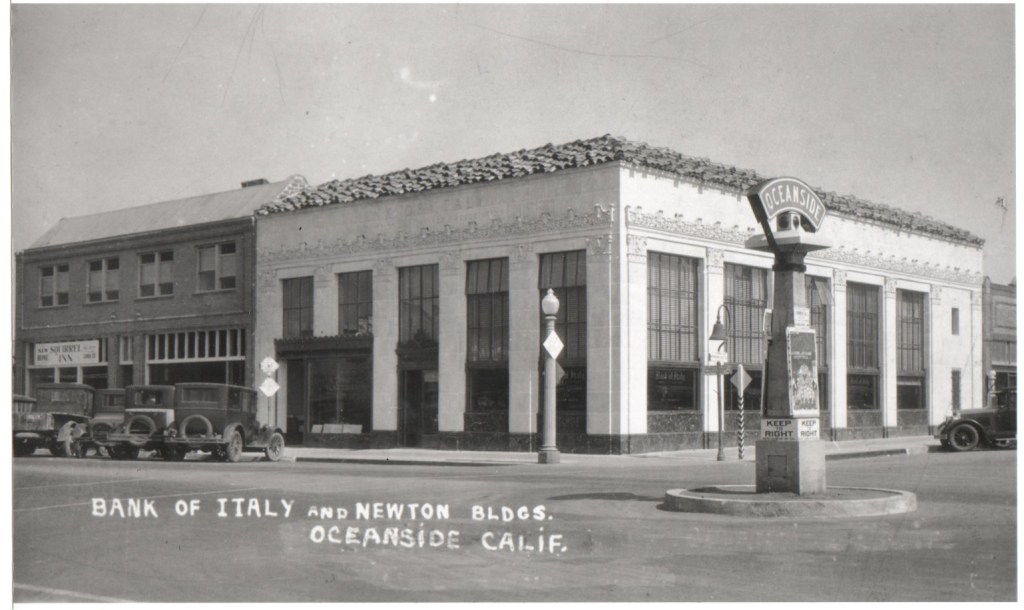
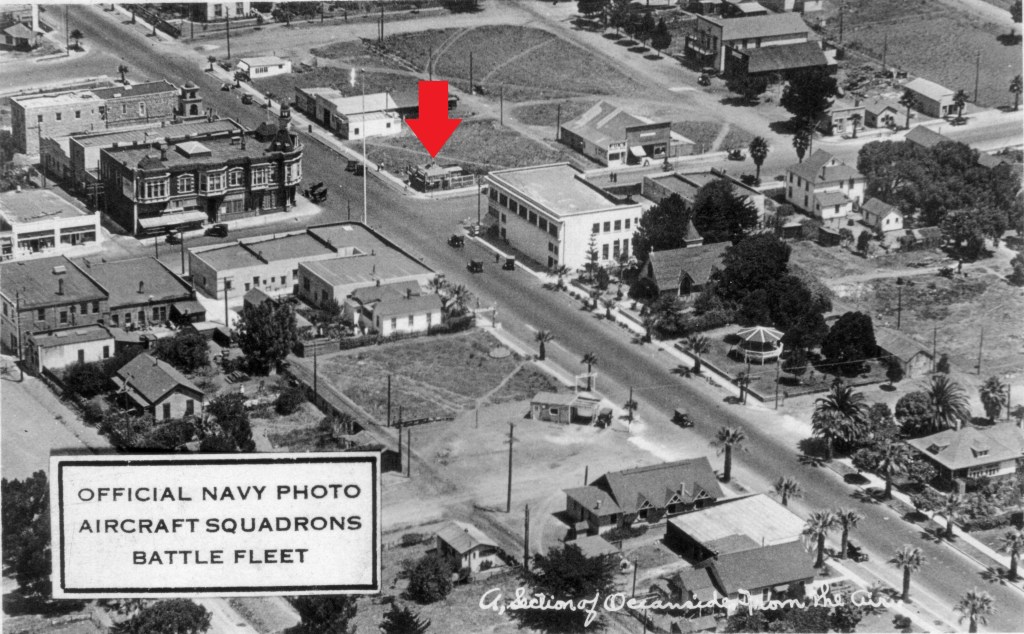
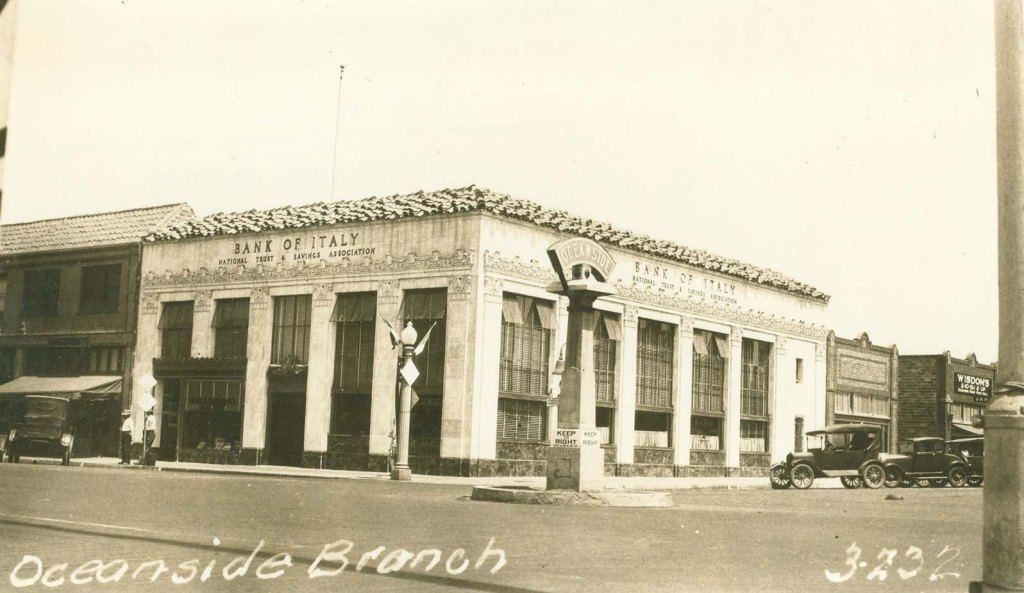

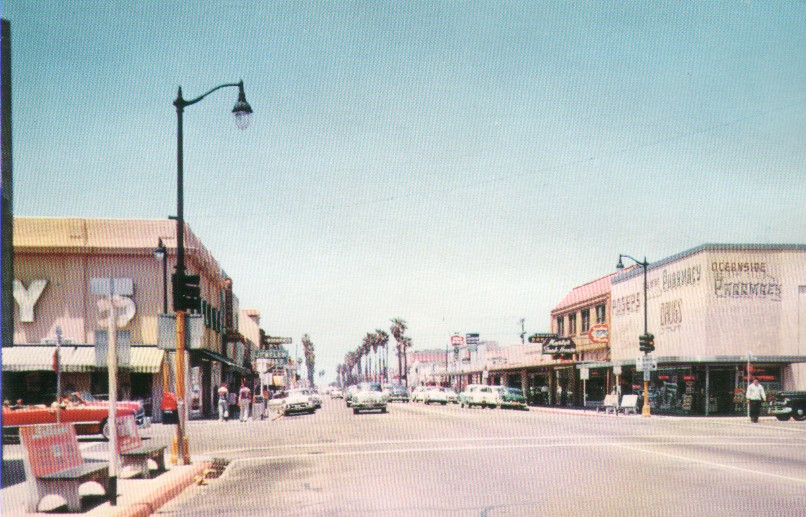


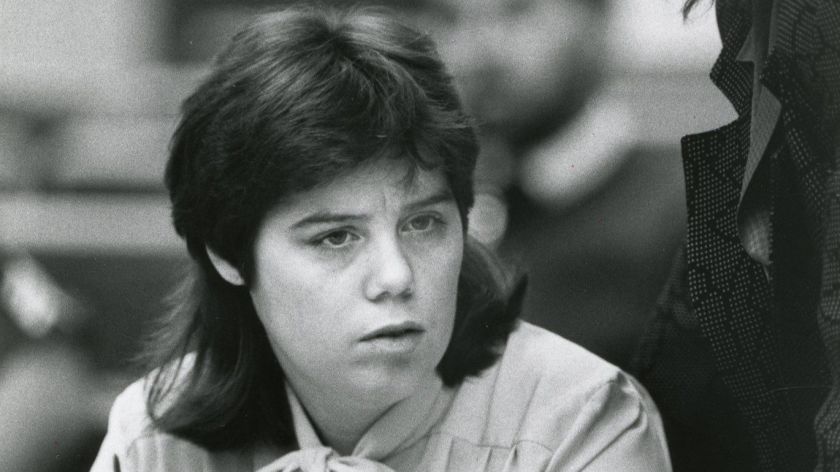

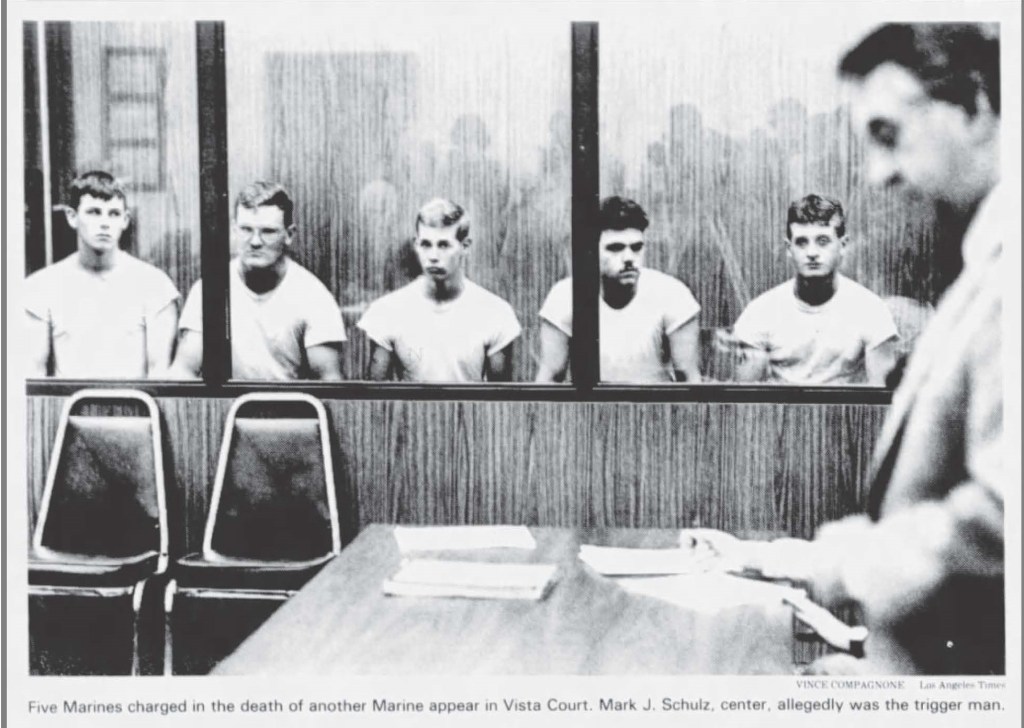
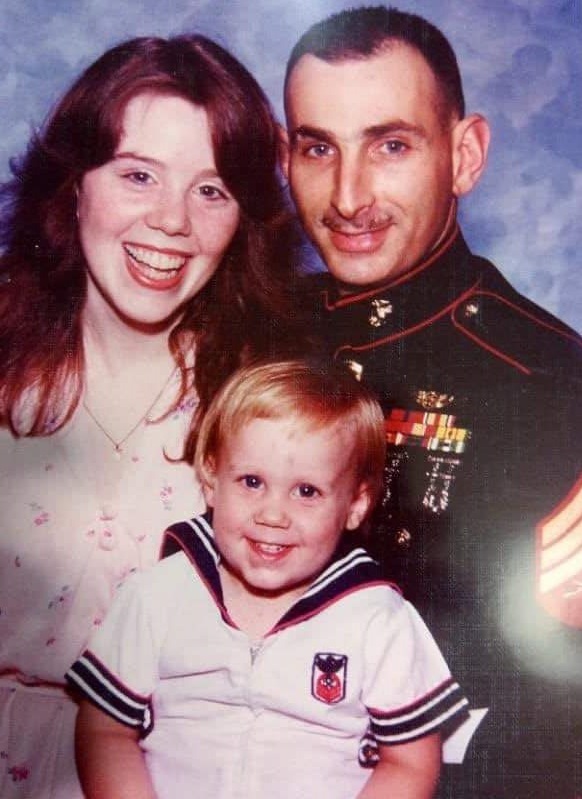


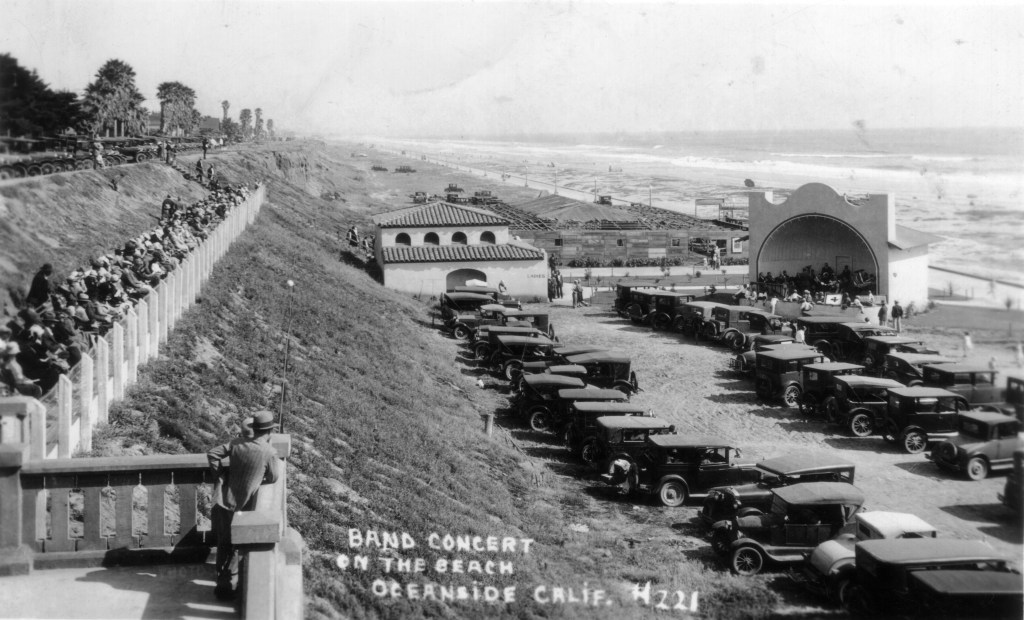

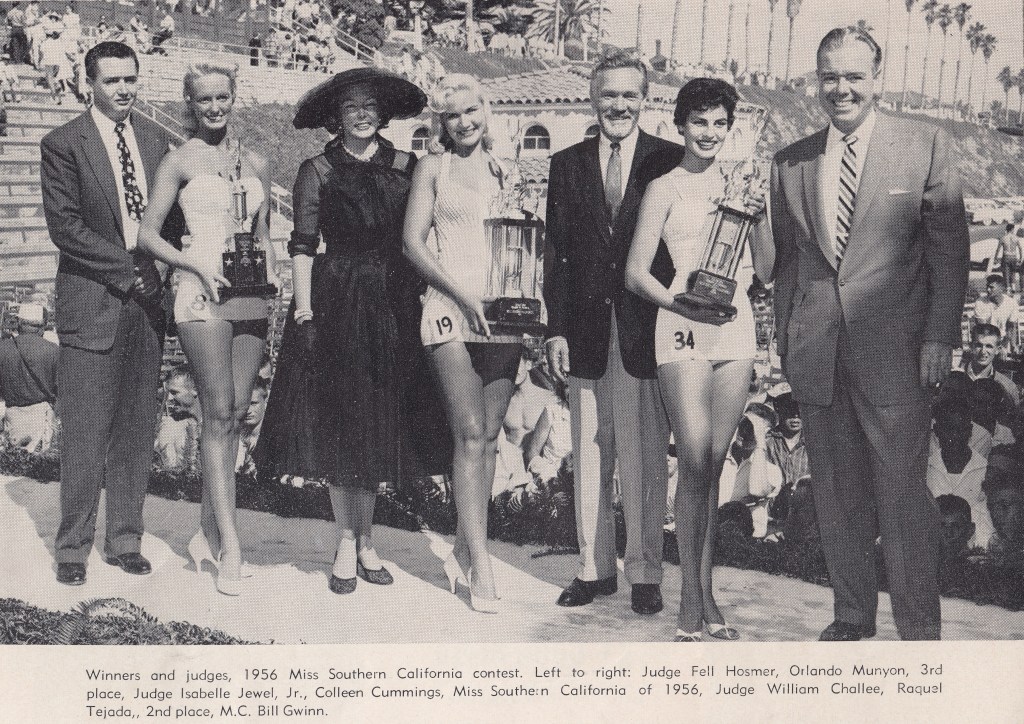


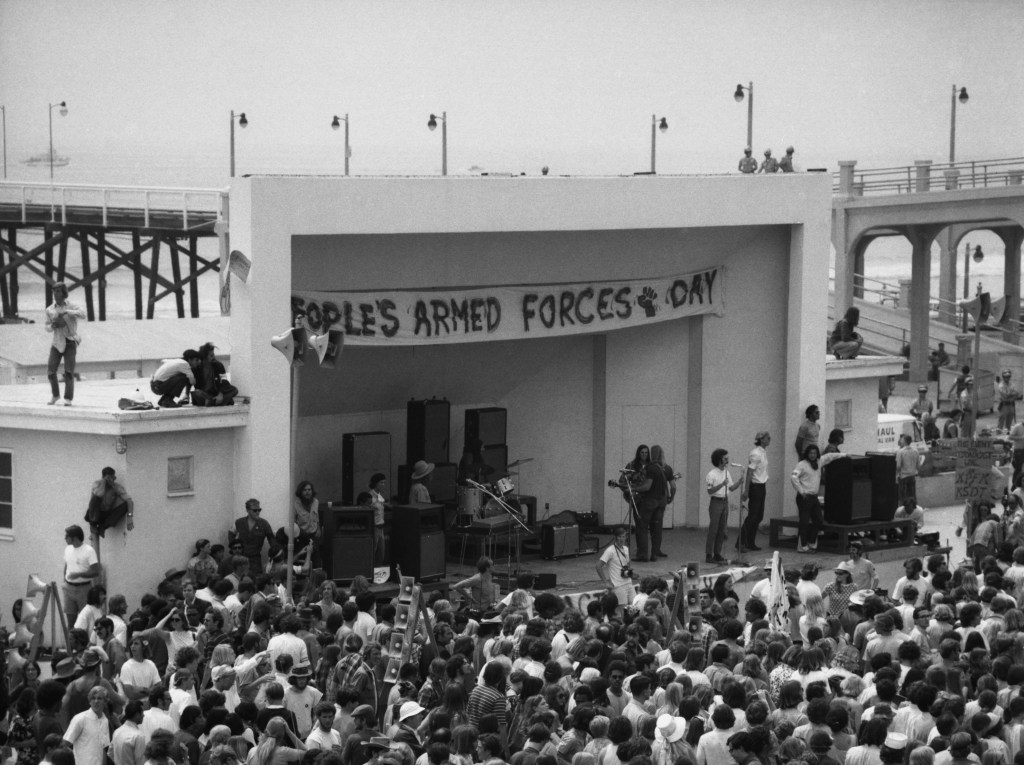
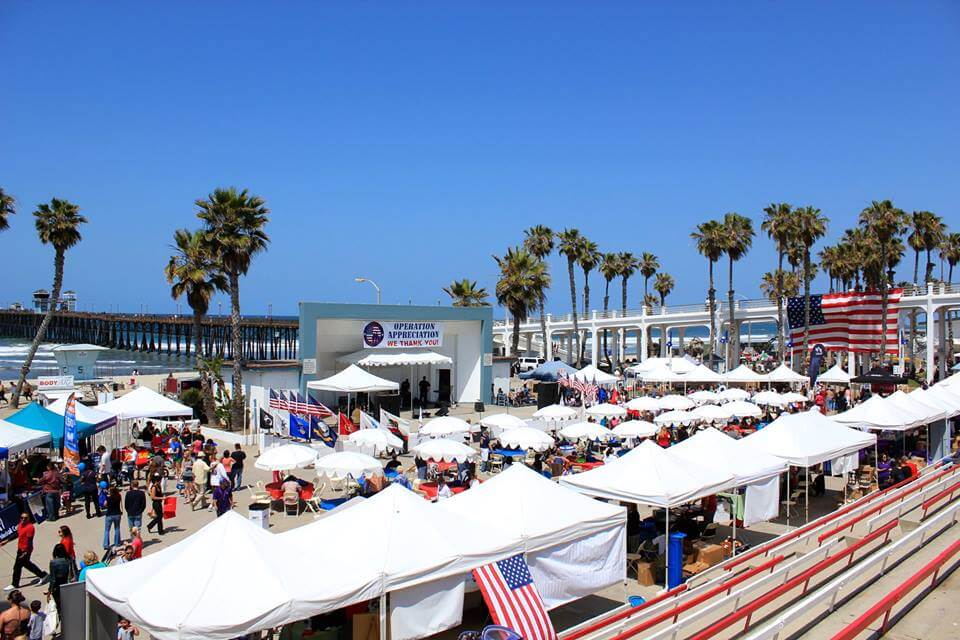


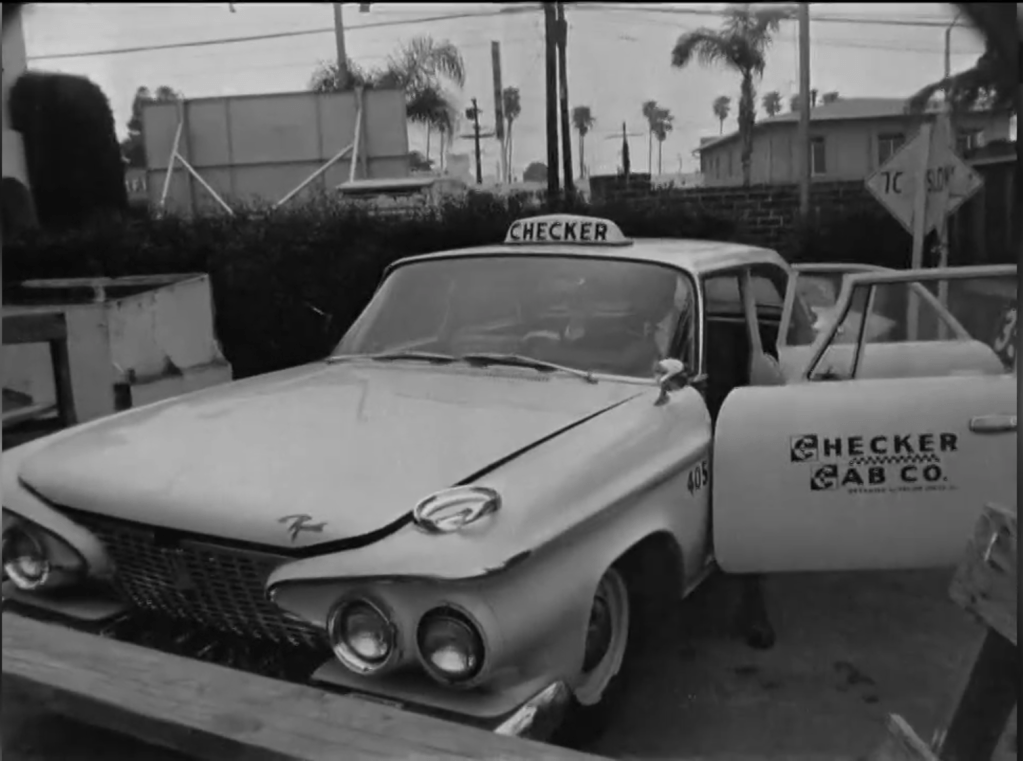


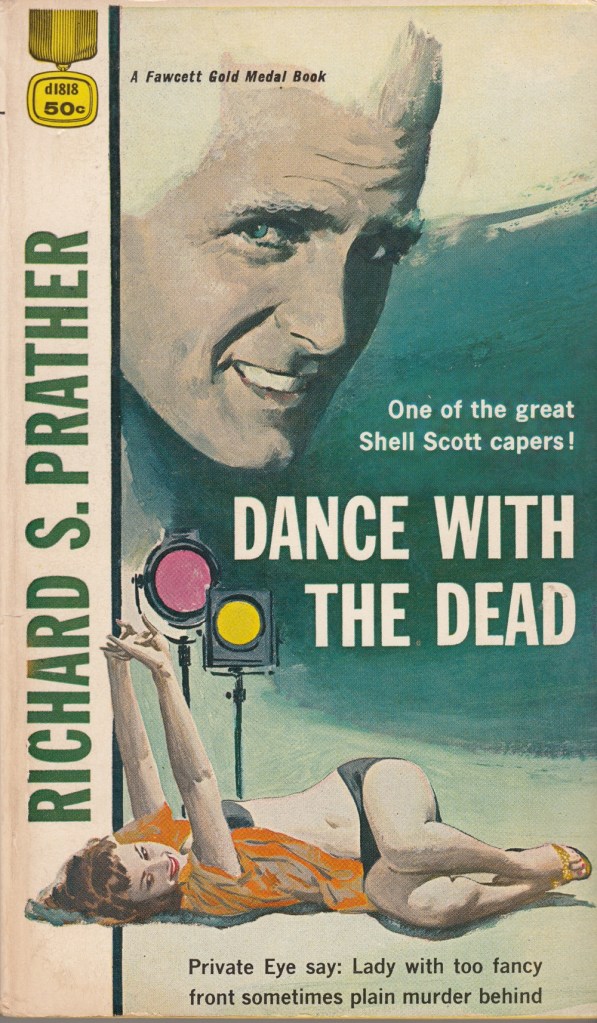


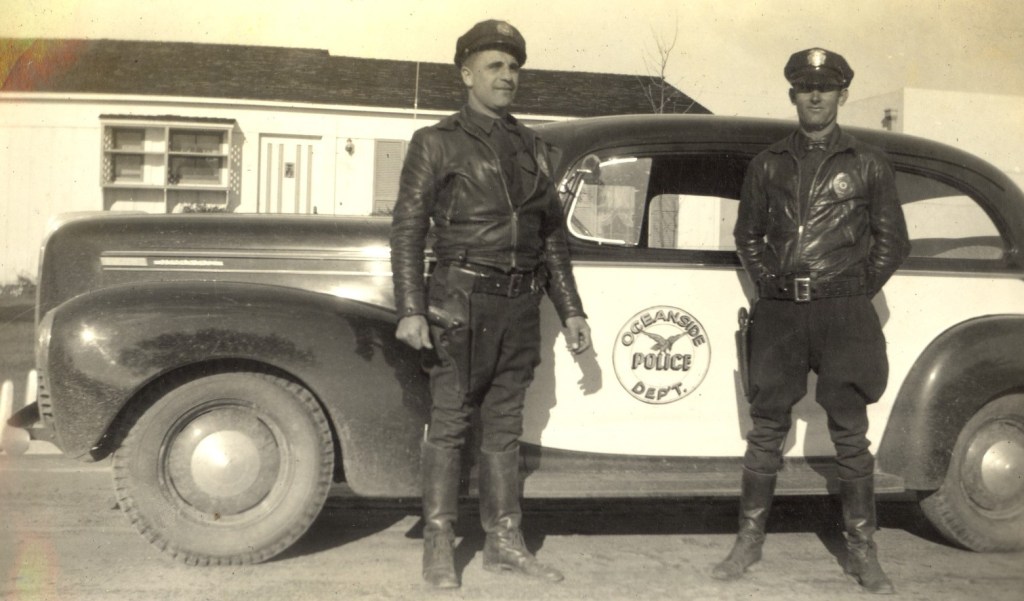



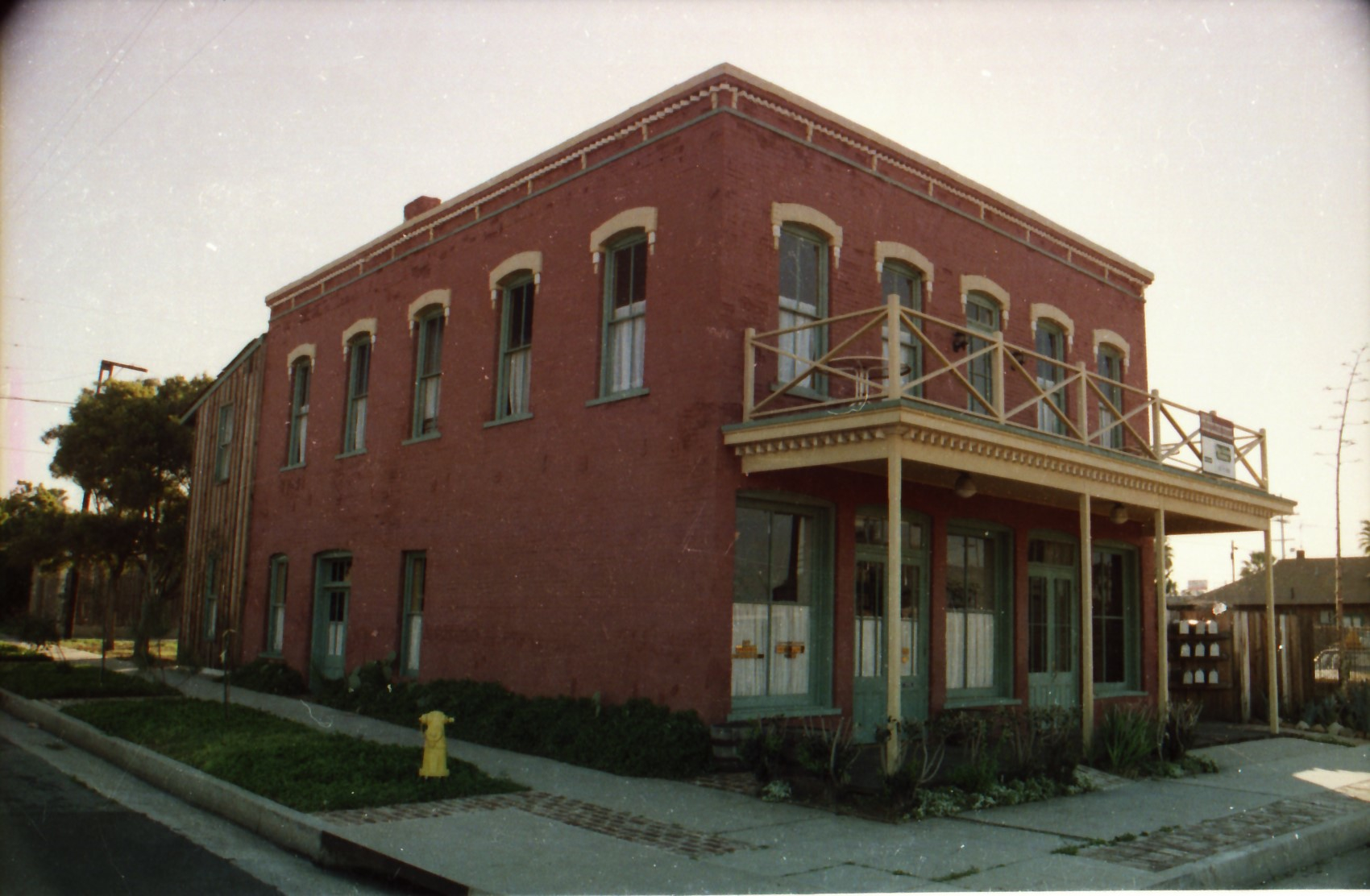
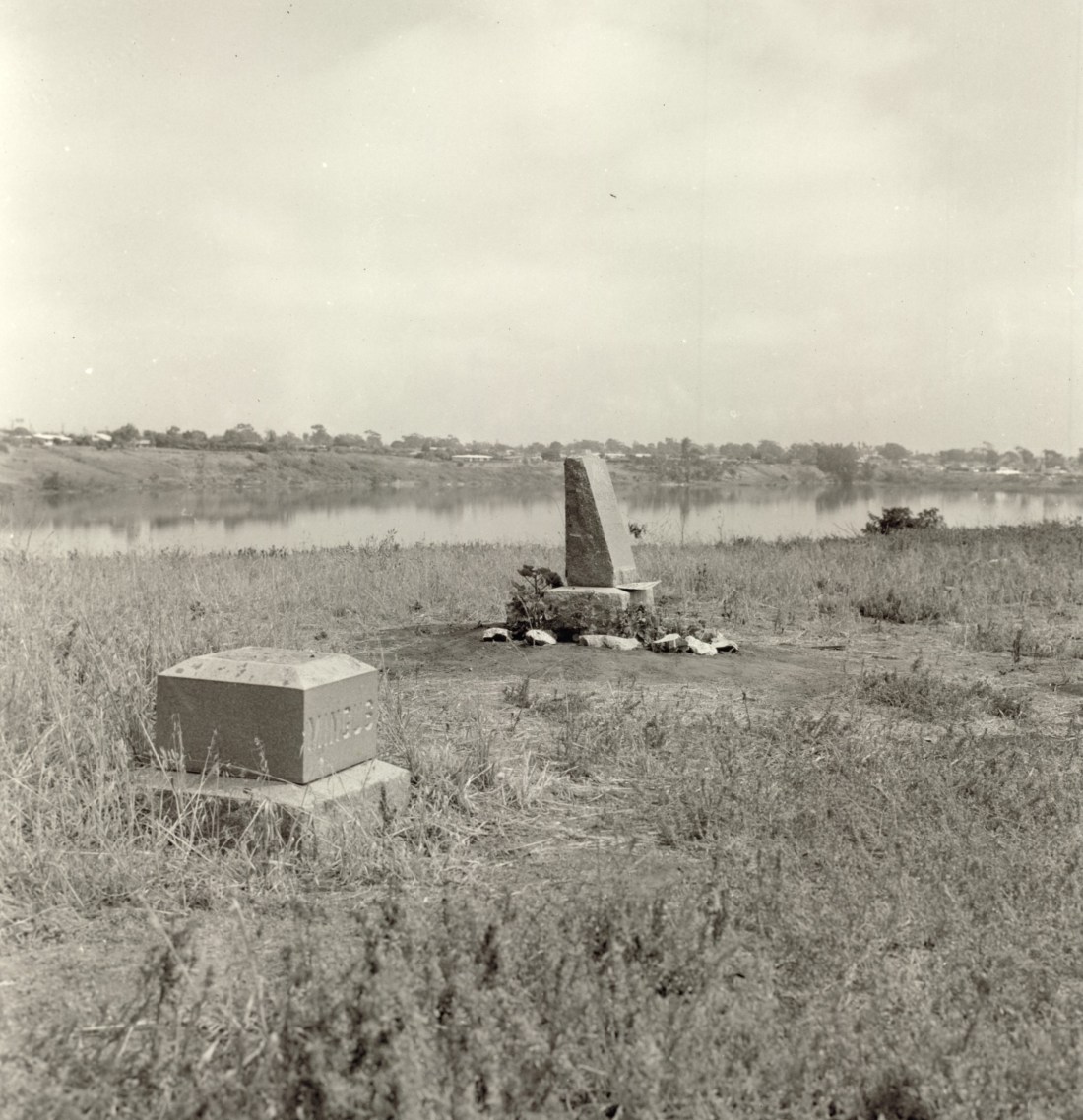

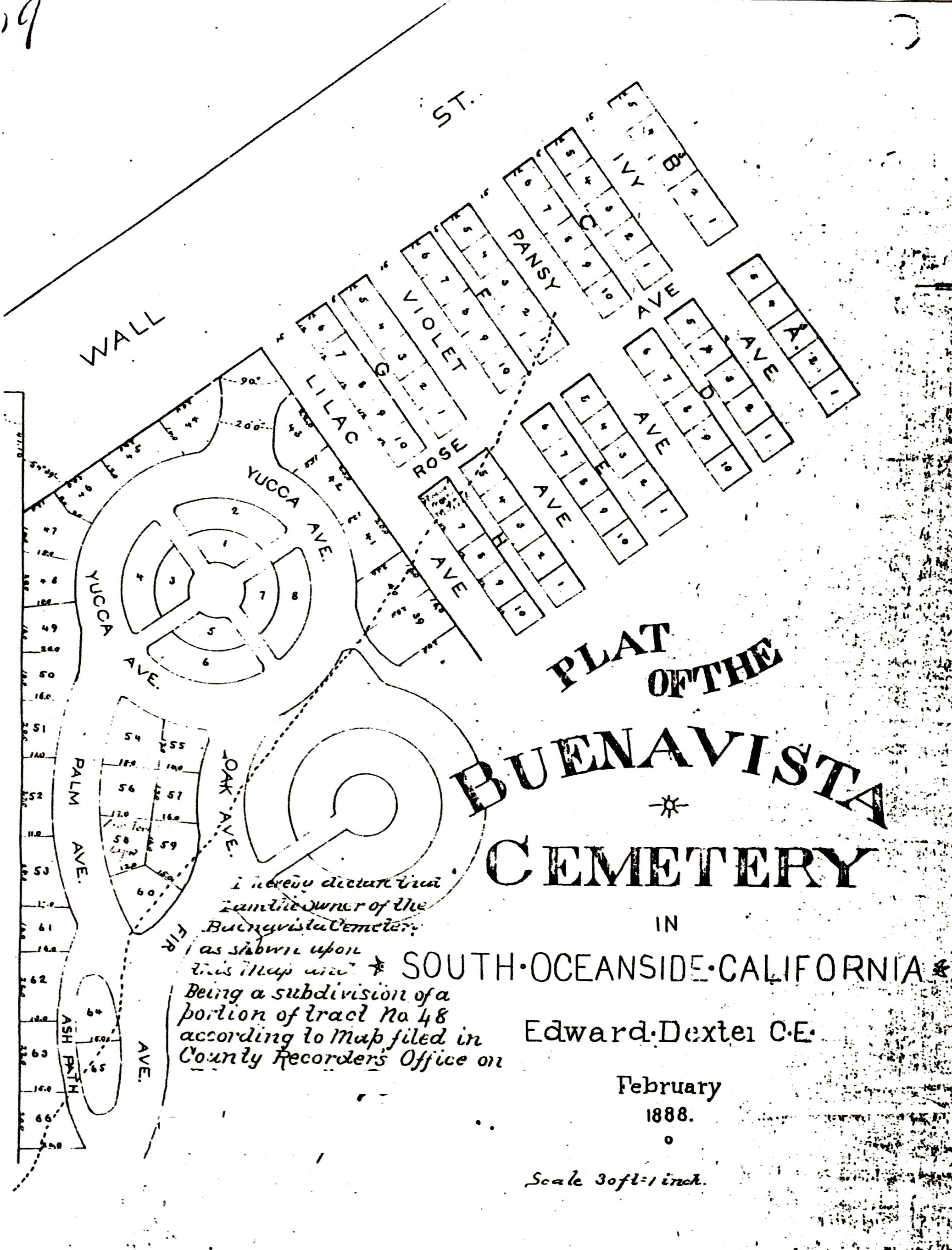




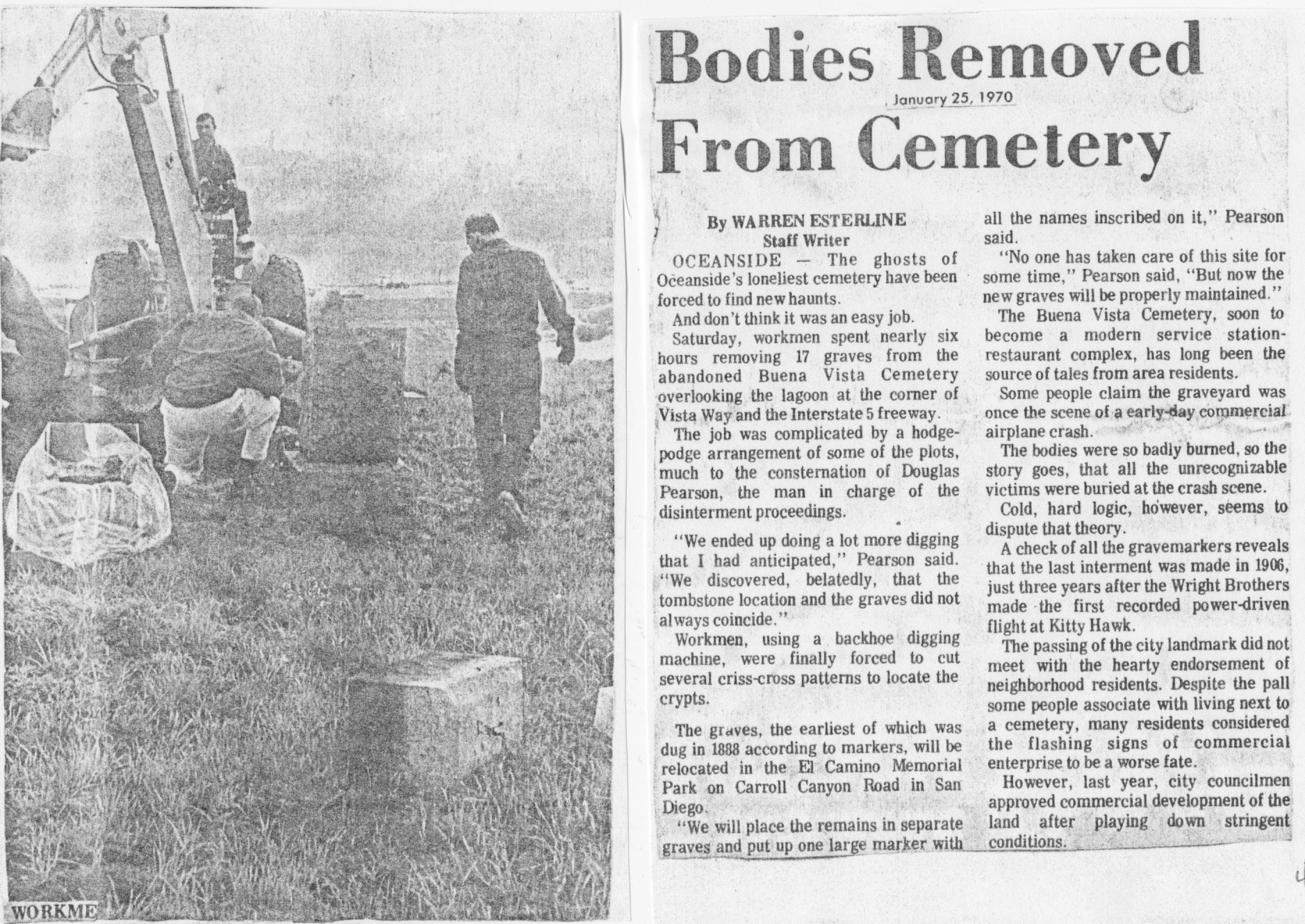

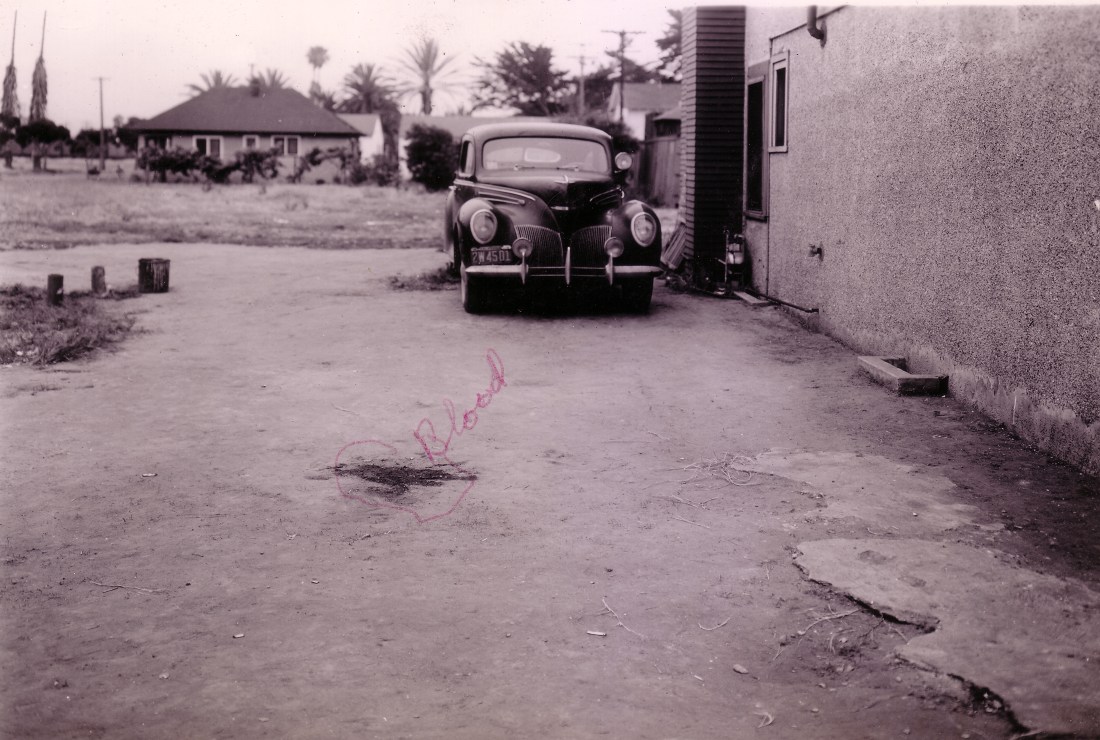


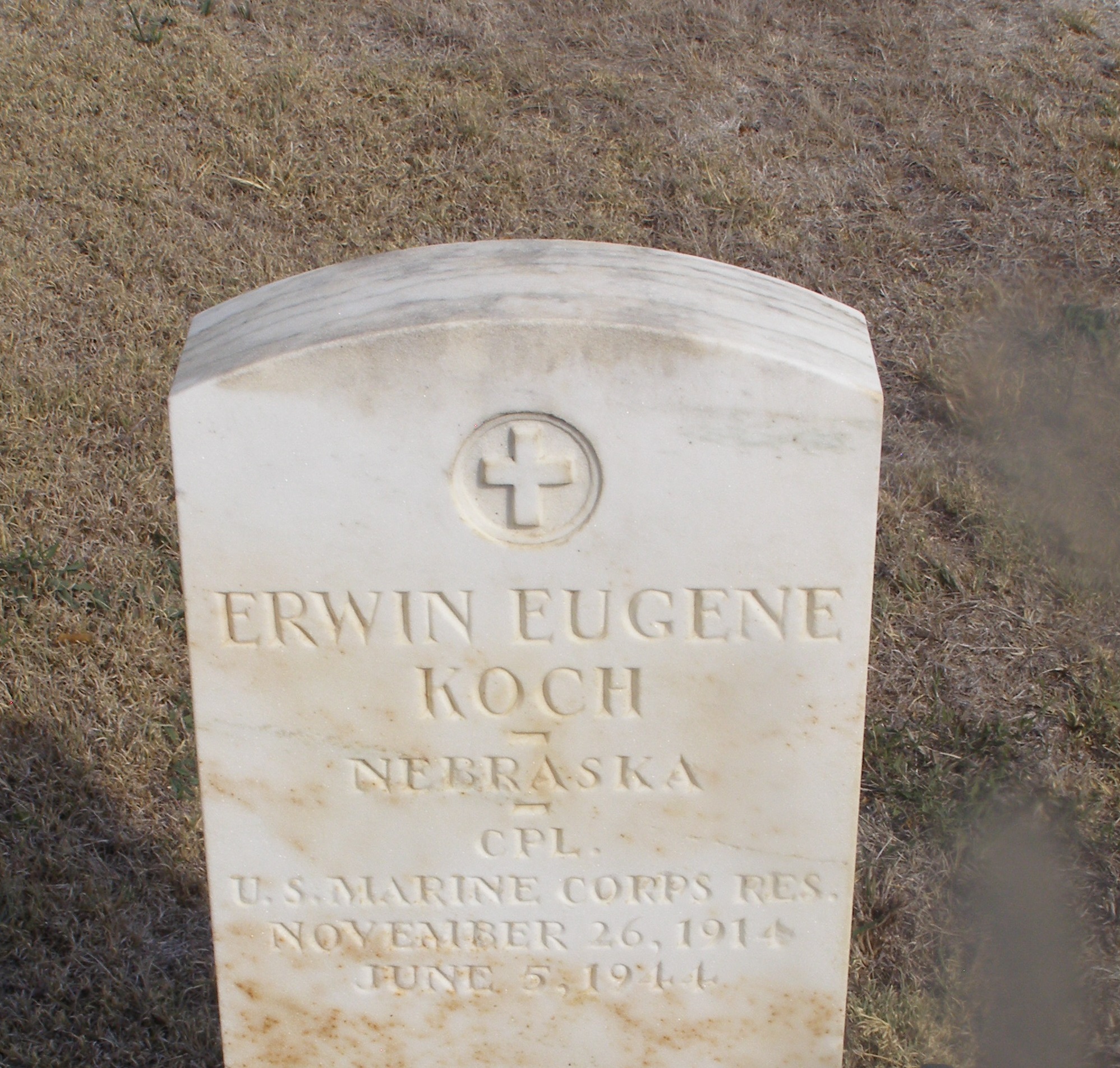
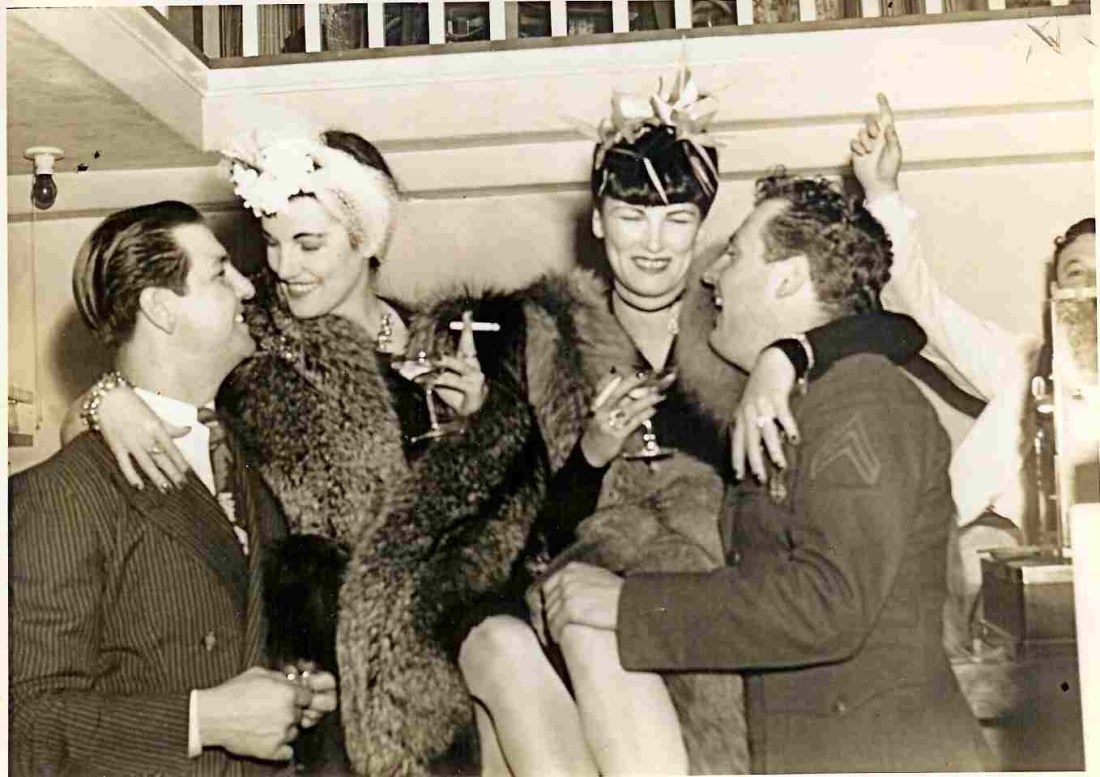
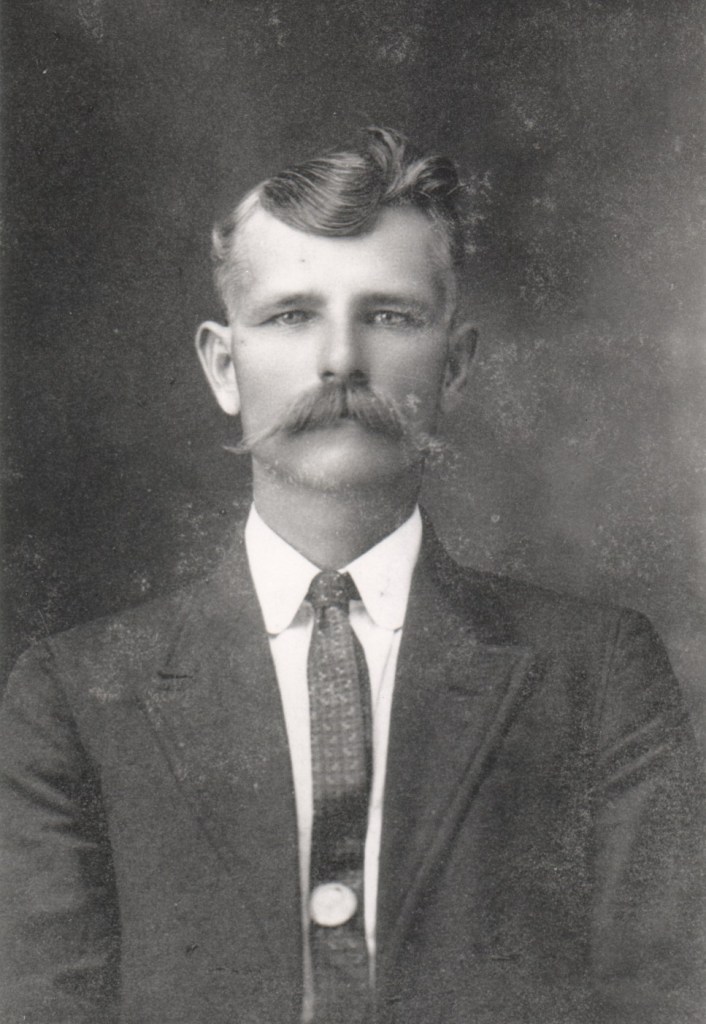





 Histories and Mysteries