South Oceanside’s popular health food store “Cream of the Crop” has been around for nearly 40 years. But the history of the building is a colorful one beginning in the 1940s …. once occupied by a fish grotto, cocktail bar and later a gentlemen’s club called the “Man Trap.”
Built in 1944, the building was owned by Dr. Clifford and Cora Brodie and housed Brodie’s Fish Grotto which opened in the summer of 1945. The Brodies had an auto court-style motel on the southwest corner of Vista Way and Hill Street (Coast Highway) in South Oceanside. They also owned an apartment building at 2012 South Tremont.
The Ellis Motel was built in 1939 as the Brodie O Tel at 2001 South Hill Street (Coast Highway)
Clifford Brodie was married up to five times and Cora may have been wife number two. They were married in about 1930 and had one son, Elwood. The couple divorced and Cora remarried, her new married name was Shuey. Cora received the Tremont Street apartment building where she resided, along with the building located at 2009 South Hill Street a.k.a. Coast Highway, in the divorce settlement.
Dr. Clifford E. Brodie
Cora Shuey opened a new restaurant in her building on Hill Street called “The Port Hole.” It operated from 1947 to 1952. Athur Vitello then opened a restaurant and cocktail bar called Diana’s, in mid-1952, while Cora retained ownership of the building.
Diana’s was a popular hangout for several years along the historic Highway 101, on the outskirts of Oceanside. Clientele came from both Oceanside and Carlsbad and beyond.
In 1955 a shocking incident occurred there when a man shot his wife, killing her instantly, and then turned the gun on himself. James and Joyce Nolan were living in the motel next to Diana’s at 2001 South Hill (Coast Highway). The couple had entered the establishment and had a noticeable disagreement or fight then left. Joyce Nolan returned alone to the cocktail bar and her husband re-entered and asked her to come home. She refused saying she wanted to finish her drink. Soon after James Nolan approached his wife and without a word shot her in the throat with a 38-caliber pistol. He then shot himself in the head.
Detectives enter Diana’s restaurant and bar to investigate the murder-suicide.
Oceanside Police were summoned by shocked bar staff. In his pocket police found a tattered letter written by James Nolan to his parents. It read: “I can’t take it anymore. The only one I ever loved is Joyce and we just can’t seem to get along so I’m ready to call this life to a finish.” They had only been married a few months.
In June 1959, Cora Shuey had the building “completely redecorated” and opened “The Coral Reef, Oceanside’s newest restaurant and supper club.” Cora Shuey died in 1960 and was buried in Eternal Hills.
By 1961 the bar/restaurant was owned by Marvin Burke and for a time it was called “Marv’s Coral Reef.” It remained the Coral Reef through the mid-1960s when it was later renamed by owner Robert F. Blanas as the “Pink Kitten” from 1967 to 1968. The Pink Kitten was no supper club but an establishment known as a “go-go bar” featuring topless dancers.
The name “Pink Kitten” did not last long and the tamer, if not ambiguous name, “Coral Reef” was returned by 1970, but the topless dancers remained. Help wanted ads ran in the local paper offering $3.25 an hour for single or married go-go girls. (The state minimum wage was then just $1.60.) “Earn while you learn” was the headline, but it was unclear what the women would be learning.
But by 1972, the adult venue was renamed “The Man Trap” leaving little to the imagination. Its clientele were often rowdy marines, who would get into fights with each other and or the locals. On one occasion Marine officers were relieved of their commands because of a bar fight at the Man Trap.
In 1974 three Marine officers faced charges after a brawl that left a bouncer injured. Lt. Colonel Robert Hicketheir was charged with felony assault, while Major Patrick Collins and Col. John I. Hopkins were charged with battery and misdemeanor assault. The doorman of the Man Trap, James Weaver, was struck on the head with a drinking glass and suffered cuts and bruises.
Newspaper accounts reported that Hicketheir had taken a doorman’s flashlight and tried to shine it at a dancer. When Weaver attempted to retrieve the flashlight, he was struck in the head. Collins then allegedly struck Weaver continually with this fist “about the head and upper body while suspect number one held him.”
Hopkins was later acquitted by a judge after he determined the Marine officer had simply tried to intervene in the melee. In July 1974, Hicketheir and Collins were declared innocent on all counts by a jury of four women and eight men. Their accounts were vastly different from the original reports, and stated that Weaver was the aggressor.
Their testimony was that Hicketheir had used the flashlight to view a vending machine, when the doorman picked Hicketheir up and shoved him against the wall, which started the physical altercation. Collins testified that he was simply coming to the aid of Hicketheir. The newspaper noted that the prosecution witnesses were “flamboyantly dressed” with “contemporary hairstyles” and were bartenders and topless dancers.
There was considerable controversy of having a topless bar in quiet South Oceanside, and it turned even more controversial when the dancers went from topless to totally nude in 1978. Owners Herbert Lowe and Robert Gautereaux Sr., defied the City and offered total nudity, despite the fact that they were not licensed to do so.
The Man Trap was open 11 AM to 2 AM during the week and Saturday and Sunday from 2 PM to 2 AM. Starting pay for dancers was $5.00 an hour with the promise of “excellent tips and good working conditions.”
An employee of the Man Trop reported that two girls had been hired specifically to dance nude on Thursday nights, because the regular top topless dancers were reluctant to remove their G-strings.
A court case ensued and a hearing was held on October 14, 1978 in Superior Court where Judge Michael Greer ruled that the Man Trap “could continue to feature topless and bottomless female dancers” until December 4th of that year, but “called for changes.”
The bar was ordered to place the stage area 12 feet away from customer seating and to prohibit dancers from socializing with customers or serving them alcoholic beverages. Joshua Kaplan, attorney for the owners declared “we will remain totally nude until December 4 and then after that forever.” Oceanside Deputy City Attorney Warren Diven said that the Man Trap was in violation of a city ordinance that prohibits topless or nude dancing in bars.
Kaplan argued that the Man Trap was a “theater” and therefore exempt from the ordinance. He said owners Lowe and Gautereaux (who also owned the Playgirl Club in downtown Oceanside) had made improvements of more than $60,000 to assure that the established met the “legal definition of a theater.” But City Attorney Divon countered that “the primary purpose of the man trap was to serve alcoholic beverages and not to provide entertainment” and added that the type of entertainment offered by the Man Trap “does not rise to the dignity of a theatrical performance.”
The Playgirl Club on Third Street (now Pier View Way)
Mayor Pro-tem Bill Bell said, “We will pull out all the stops to close both of them, the Man Trap and the Playgirl. Enough is enough.” But both establishments continued operating. In 1979 the Man Trap Theater began to featured ladies’ night, Wednesday night with male dancers. Saturday was couples’ night with male and female dancers.
Skip Arthur, purchased the Man Trap, as well as the Playgirl. But the Man Trap was closed after the Alcohol Beverage Control board pulled its license for having nude dancers.
The 3,300 square foot building at 2009 South Hill Street (South Coast Highway) remained vacant while the owner offered it for rent. In June of 1980 the building was leased to the FVW Post 9747, a largely Black Veterans’ organization of 200 members, who had faced protests when trying to lease a different location on Mission Avenue. (FVW Post 9747 later merged with VFW Post 10577 to become Oceanside Memorial Post 10577.)
In March 1987 the building that had once housed restaurants, served cocktails and offered adult entertainment, became a health and gourmet food store called “Cream of the Crop.” For nearly four decades the health food store has flourished with a faithful clientele of its own, albeit a bit more “wholesome.”
Google Street View of Cream of the Crop at 2009 South Coast Highway in 2021
Our City is made up of many different neighborhoods, often with their own unique characteristics, history and even architecture. As Oceanside’s population grew, its borders expanded with various subdivisions and new housing developments. From the exclusive enclave of St. Malo to Potter homes in South Oceanside and Francine Villa in North Oceanside, Oceanside neighborhoods are as diverse as the people who live here. Here are a few neighborhoods, some forgotten and others well remembered.
Guidottiville
Guidottiville was named by and after Amerigo Edwardo Guidotti. The area was near what is referred to as Lawrence Canyon just south of present Highway 76. Guidotti built his residence there along with several rentals and lived there for many years. The homes were removed by the 1980s to make way for the Highway construction.
Guidottiville in Lawrence Canyon, south of present day Highway 76
Pine Heights
Pine Heights was a rather remote area of Oceanside, accessible only via Eighth Street, now called Neptune Way. Pine Heights provided expansive view of Oceanside and panoramic view of the Pacific Ocean. Niels Hansen, a local grocer, built a large Craftsman style home designed by noted architects the Quale Brothers in 1908. Also that year, Attorney John Johnston hired prominent Chicago and San Diego architect Henry Lord Gay, to design his $10,000 home in Pine Heights. The Hansen house was later moved to North Clementine Street but the Johnston home was demolished. Pine Heights is now the location of a 15-acre condo development by Evening Star Development.
The Hansen Home in Pine Heights.
North Oceanside Terrace
A new subdivision established in the late 1940s was situated along the northern most border of Oceanside along Camp Pendleton. North Oceanside Terrace includes Capistrano Drive, San Luis Rey Drive, Monterey and Sunset and other streets. Many of the homes built there were built in the early to mid 1950s and purchased by the military families that were stationed at Camp Pendleton. In 1953 the City approved Francine Villas to the east, adding over 300 homes. These homes were introduced as rentals to military and civilians with a two bedroom home renting for $72.75 and a three bedroom for $82.75. Because of the growing density and traffic, an additional entry into the neighborhood was provided, initially called “River Road”. Later Loretta Street from the Eastside neighborhood would be built across the San Luis Rey River to provide residents access. In 1955, construction of North Terrace Elementary School began, opening the following year. Today the area is more commonly referred to as Capistrano because of the area park.
1974 aerial of a portion of North Terrace neighborhood, school and Loretta Street crossing.
South Oceanside
John Chauncey Hayes established South Oceanside, a small township just south of the City of Oceanside in the 1880s. In the earliest days it had its own bank, a school building, cemetery, several brick residences and a newspaper, the South Oceanside Diamond. This largely rural area included the Spaulding Dairy (established about 1913) and was home to acres of flower fields owned by the Frazee family and others. It turned residential when Walter H. Potter, “the man who built South Oceanside” began building dozens of small homes in 1947 that stretched from Morse Street to Vista Way.
Aerial view of South Oceanside looking west, circa 1970
Eastside
The Eastside neighborhood is just east of Interstate 5 and north of Mission Avenue, with entrance by Bush or San Diego Streets. The subdivisions of Mingus & Overman, Reece, Spencer, Higgins & Puls, which encompass the area, were mostly farmland when families from Mexico began settling there in the 1910s and 1920s. Most of the early residents were laborers who worked in the fields of the San Luis Rey Valley and the Rancho Santa Margarita (now Camp Pendleton). Many of the homes were built between 1920 and 1940 by the hardworking fathers and grandfathers of the families that still call Eastside their home. This neighborhood was referred to as “Mexican Village” by local officials but residents called it Posole. It was last neighborhood to have paved streets and a sewer system, which were not added until the late 1940s! Eastside was also the home of Oceanside’s first growing Black population in the 1940s and 1950s, along with Samoan and Filipino families.
Higgins and Santa Barbara Streets in Eastside shows dirt streets and houses on blocks because of the lack of sewer system.
Mesa Margarita
As Oceanside’s population grew at steady pace in the 1950s and 1960s, its borders continued to extend eastward. New housing was always in demand. Sproul Homes developed many new neighborhoods including Mesa Margarita, which is often referred as the “Back Gate” area because of its proximity to northeast entrance to Camp Pendleton. In 1965, 62 acres along North River Road were purchased by Fred C. Sproul Homes, Inc., a residential development firm, from Harold Stokes and Joe Higley. The Stokes and Higley families were long time dairy farmers in the San Luis Rey Valley. With the plan to build 275 new homes on the property it was one of several developments that changed the landscape of rural to suburban.
Sproul Homes ad in 1963
Oceana
One of the first adult only communities built in Southern California was that of Oceana. Situated east of El Camino Real and south of Mission Avenue, this planned community was built in 1964 at a cost of $25 million. It was touted as being “a city within a city” built on 180 acres with 1,500 lanai cottages and 300 apartments. At the time it was built it required that at least one adult be age 40 or over. A two bedroom, two bath model was listed at $16,995 and the community offered a variety of amenities which included a pool, golfing, library and restaurant.
Oceana development in 1960s
Henie Hills
Henie Hills was owned by figure-skater Sonja Henie. Sonja and her brother Lief purchased 1,600 acres of ranch land in about 1941 which included the present day El Camino Country Club. In the early 1950’s the Henies began subdividing part of the land near El Camino Real at which time some of the first custom homes were built. A portion of this land was sold to Tri-City Hospital and eventually acquired by MiraCosta College. Miss Henie built a large house on Oceanview Drive, which she used during her visits here from her native Norway. She continued ownership of 350 acres until 1968. In the 1974 Henie Hills opened as one of the nation’s first planned residential estates community, offering homes on estate-size lots averaging one-half acre with views of the sea, mountains and golf fairways in the valley below. Home prices ranged from $54,000 to $81,000.
Driving Range at golf course, Henie Hills sign in background
Fire Mountain
Fire Mountain was at one time called “North Carlsbad”. It was a largely rural area planted with avocado and citrus groves, consisting of approximately 338 acres. While the town of Carlsbad eventually grew and incorporated, North Carlsbad remained an unincorporated area of San Diego County, an island surrounded by the city limits of Oceanside. The City of Oceanside annexed the area in the 1960s. It has developed into a desirable neighborhood simply named after the road traveling through it, consisting of middle-class homes, tract and custom homes, many of which sit on large lots, some offering views of the Pacific Ocean.
1956 Thomas Guide of Fire Mountain area before annexed to Oceanside.
St. Malo
A group of twelve homes was built by 1934 in an exclusive enclave in South Oceanside at the end of Pacific Street. Pasadena resident Kenyon A. Keith purchased 28 acres of oceanfront property and contained homes resembling a French fishing village that was known as St. Malo. Well-to-do property owners used St. Malo for vacation and summer homes. Early film director Jason S. Joy’s home was identified as “La Garde Joyeuse” and included an outdoor bowling alley and volley ball court. Author Ben Hecht was another resident, as well as Frank Butler, who co-wrote “Going My Way”. The beautiful community of St. Malo remains one of Oceanside’s best kept secret and continues to serve as summer homes and getaways for the rich and famous.
St. Malo homes fronting the Pacific Oceanside. Jason Joy house far right.
Plumosa Heights
Banker B.C. Beers established a new subdivision in the 1920s called Plumosa Heights, named for the plumosa palms lining the streets. This once exclusive neighborhood includes West and Shafer Streets, two of the street names are named for his children, Alberta and Leonard. The Plumosa Subdivision required at least a $4000 structure on the property to be set back at least twenty feet from the street. Plumosa Heights continues to be a desirable neighborhood with concrete streets and original cement light posts. Although it was the home of many affluent Oceanside residents, it was also inhabited by Oceanside’s middle class.
Leonard Street looking west at South Clementine and South Ditmar Streets, circa 1925
Along Oceanside’s Coast Highway you can drive, walk and bike past buildings that are 75 to 100 years old from the north end of town through South Oceanside. Because the façades have changed over the years, it is sometimes hard to distinguish a historic building from a newer one.
A building located at 1821 South Coast Highway is a good example. It is over 75 years old and built in 1948. It was the home of Hampshire House Candies and owned by Glen and Wilma Hampshire. The Hampshires came to Oceanside in 1946 and first opened a candy store at 1811 South Hill Street (now Coast Highway).
Hampshire House Candies at 1821 South Hill Street/Coast Highway in 1948
George “Glenn’ Hampshire was a native of Utah born in 1907. He married Wilma A. Dooley in about 1943 and the couple had two daughters: Glendelin and Charlotte Jane, both born in California.
The Hampshires were so successful with their home-made candies, their chocolates, nuts and peanut brittle were sold in other stores throughout San Diego County including Encinitas, Chula Vista and Fallbrook. The demand necessitated a larger storefront and a move from 1811 to 1821 South Hill Street (Coast Highway) which was built at a cost of $12,000 by local contractor Malcolm Smith.
Its newly built “factory and salesroom” was over four times larger than original store. As reported in the Oceanside Blade Tribune: “The new building which is of a very attractive English style, features in addition to its modern sales room and business office a specially designed kitchen containing over 900 square feet of space. Adjacent to the kitchen is a refrigerated chocolate room in which a constant temperature of 65 degrees is maintained. The firm which makes under the Hampshire House label hand-dipped chocolates, fudges, hard candles, caramels and specialties, does a brisk wholesale and retail business throughout this area.”
Sadly, it seems that the Hampshire marriage was not as successful as their candies. The couple split in the late 1950s. Glen relocated to Los Angeles where he died at the age of 59 in 1966.
Wilma continued operation of the candy store and living in South Oceanside, but then sold the business in October 1960. For a number of years, the former candy store was used as a real estate office, occupied by Century 21 in the 1970s. By 1994 it housed a temp agency.
1821 South Coast Highway, 2020 Google view
The building has been remodeled over the years but still resembles its original design. Although it is one of the oldest buildings of its era still standing along Coast Highway in South O, the Hampshire House Candies shop is only a sweet memory for some.
I was recently asked about Ida Richardson of Rancho Guajome. Who was she? Who fathered her children? Where did she come from? These are some questions that have been asked for decades. Little to nothing could be found about her but after I found a few small clues, the hunt was on. What I discovered through vital records and recorded documents answers those questions and more.
Rancho Guajome, owned by the Couts family for nearly 100 years, Oceanside Historical Society
Ida K. Richardson, who would inherit the Rancho Guajome in Vista, California, from Cave Couts Jr. after his death in 1943, was often referred to as his housekeeper or secretary. Others have suggested that she was his common law wife. Some historians believe that Couts fathered her two children, Belda and Earl. Because of this assumption, it is often cited that the historic Rancho was passed down to his “descendants.”
But were Belda and Earl really the offspring of Cave Couts, Jr., the “Last of the Dons”? What was the relationship between Ida and Cave? Who was the father of her children? Perhaps history will need to be rewritten as those questions now have answers.
Ida Kunzell Richardson was born June 3, 1898 in Ventura, California to William K. Richardson and Ida Kunzell Richardson. Her father was born in Leavenworth, Kansas and her mother in Germany. The couple were married October 14, 1897 and the Ventura Free Press published their marriage announcement under the headline “Married Before Breakfast.”
“Thursday morning, Reverend E. S. Chase, pastor of the Methodist Church was called upon to tie the nuptial knot making Mr. William K. Richardson of Randsburg, Kern County and Miss Ida Kunzell of this city, man and wife. The ceremony was performed before breakfast in order that Mr. and Mrs. Richardson might take the early train for their home at Randsburg.”
William King Richardson was 35 years old who worked as a miner. Ida was 25. (Their daughter Ida was born just 8 months later.)
While the newlyweds may have made their home in Randsburg, a mining town in Kern County, it appears they eventually returned to Ventura. Just 11 days after baby Ida Richardson was born there, her mother died, on June 14, 1898.
Ventura Free Press June 17 1898
Little Ida went to live with her maternal aunt and uncle, Minnie and Smith Towne, while her father returned to Kansas. When he died in 1948 his obituary mentioned his only survivor was a daughter living in California. It is unknown if Ida ever saw her father again.
Ida was raised by her Aunt Minnie and her uncle Smith D. Towne, who was a blacksmith. In 1910, he and Minnie, along with their son Frank and niece Ida were living in Pasadena.
In early 1912 the Towne family, along with Ida, moved to Strathmore, Tulare County, California. Sadly, soon afterward, Ida’s aunt and surrogate mother, Minnie Kunzell Towne, died February 21, 1912. The Tulare Advance Register published her obituary:
“Mrs. Minnie Towne, wife of S. D. Towne, who resides 8 miles west of Tulare, passed from this life this morning at 2:30 and the funeral will take place tomorrow afternoon at 1:30 from the Goble undertaking parlors. The body will be shipped to Oakland for cremation. The deceased was 47 years, 11 months and six days of age and was born in Germany. Mr. Towne and his wife are newcomers to this section, having recently come from Los Angeles.”
Ida Richardson was not yet 14 years old when her Aunt Minnie died. She continued to live with her Uncle Smith Towne and local newspapers referred to her as Ida “Towne.” She and her cousin Frank attended high school in nearby Porterville.
Porterville High School in Porterville, California where Ida Richardson attended school in 1916
While in school Ida was noted for her writing skills. In 1916 she came in 2nd place for an essay entitled “Alcohol and Tobacco”, a piece on the dangers of such, for the Porterville Woman’s Christian Temperance Union (WCTU). The organization campaigned against alcohol, advocated for abstinence, and also supported women’s suffrage. Ida won $2 for her writings. Another essay she wrote that year, called “Peace and War” about the futility and despair of war, was published in the Porterville Recorder May 15, 1916. She graduated from high school in June of that year.
Ida was included in several of the personal notes and columns in the newspaper, which included her trips to the mountains or visiting friends.
On Monday, May 7, 1917 readers of the Porterville Recorder would read that a Fred C. Wehmeyer of Success (another small town in Tulare County) had left for Los Angeles to get married. It was reported that his bride was “a Strathmore woman.” Who was Wehmeyer’s bride?
The newspaper revealed two weeks later that “Mr. and Mrs. F. C. Wehmeyer of Success, who returned recently from a wedding trip to Southern California, were given a merry charivari by their friends a few nights ago. Mrs. Wehmeyer was Mrs. Miss Ida Towne of Strathmore.”
The following morning, a correction was published in the newspaper stating “It was Miss Ida Richardson of Strathmore, and not Miss Ida of Towne, who became the bride of F. C. Wehmeyer of Success recently.” Ida, who was raised with the Townes, did not mind to be included under the Towne family name for years, but her legal name of Richardson was used for her marriage and the clarification was made and noted.
The Los Angeles Times published a list of marriage licenses issued on May 7, 1917 which included Fred and Ida’s. Fred was listed as 44 years of age, while Ida’s age was 23. However, Ida was just a month shy of her 19th birthday and Fred was actually 56, near her father’s age.
The couple may have intentionally tried to disguise their age gap on the marriage application. Subsequent census records, however, were consistent with Fred’s birth year of 1861.
Frederick Christian Wehmeyer was born February 21, 1861 in Elkhart, Indiana. He first married Annie Bowlan in 1887 in Fresno, California. They had one son, Frederick Francis Wehmeyer, born in 1888. The two divorced and his son presumably stayed with his mother. (He was later living with an aunt in 1910.) Fred C. Wehmeyer remarried in 1896 to Lena Rogers, who died in May of 1916.
Frederick Christian Wehmeyer
By the summer of 1919, Fred and Ida had moved to Vista, California and were living on or near the historic Rancho Guajome where Fred was working as a farmer.
Rancho Guajome is an important historic landmark in San Diego County, once the home of Col. Cave Johnson Couts and his wife, Ysidora Bandini. The rancho was given to the couple as a wedding gift. Couts designed a large Spanish-style ranch house built by local Native Americans, made of thick adobe walls. The ranch house, with 7,680 square feet of living space and 20 rooms included a dining room, study, pantry, a kitchen, and eight bedrooms. Cave and Ysidora had ten children, eight who lived to adulthood, and were raised at Guajome.
View of Rancho Guajome, Oceanside Historical Society
Col. Couts’ namesake, Cave J. Couts, Jr. was born 1856 and lived most of life on the Rancho. At the age of 20 he was deputy city engineer in Los Angeles, and was one of the first engineers of the California Southern Railway in San Diego. He went on surveying trips for the Southern Pacific Railroad and was one of the engineers that made the first surveys for the Panama and Nicaragua canals. Couts also surveyed the new town of Oceanside and laid out streets.
Cave J. Couts, Jr.
Cave Couts, Jr. hired Fred Wehmeyer to work on the Rancho, where he and Ida may have lived as well.
On August 8, 1919 Ida and Fred welcomed their first child together, whose name appears on the birth certificate as Elnor Kunzell Wehmeyer. (Fred’s age is off by 10 years but was likely provided to the recorder as such.) The baby was delivered by Dr. Robert S. Reid, a well-known and beloved Oceanside physician.
Birth certificate of Elnor Kunzell Wehmeyer, later renamed Belda Richardson, Kristi Hawthorne research
In the 1920 census Fred and Ida’s daughter has been renamed Belda.
1920 US Census. Note the ages of Fred and Ida are accurate and Elnor is now renamed Belda.
The following year on October 13, 1920, Ida gave birth to a son whom she named Richardson Wehmeyer. Dr. Reid once again made the house call to deliver this baby.
Birth certificate of Richardson Wehmeyer, later renamed Earl Richardson, Kristi Hawthorne research
On October 14, 1922 the Oceanside Blade noted that “Mr. and Mrs. Fred Wehmeyer of Guajome Ranch were in Oceanside Tuesday.” Fred was employed by Cave Couts as ranch foreman.
Belda Wehmeyer and her father Fred at their Vista Ranch, 1921. Photo courtesy Lisa Wehmeyer
Ida filed for divorce on December 1, 1923 in the Superior Court in San Diego. In the complaint for divorce she stated that she and Fred were separated on about October 8, 1923. The number of years from marriage to separation was given as 6 years, 1 month and 5 days.
The divorce complaint also states that the marriage produced two children: a daughter, “Bela” Wehmeyer, aged 4 years and 3 months, and a son “Sonny Boy” Wehmeyer, age 3 years and 1 month.
Complaint for Divorce filed by Ida Wehmeyer in 1923, Kristi Hawthorne Research
Ida stated that Fred had “disregarded the solemnity of his marriage vows for more than one year” and had failed and neglected to “provide for the common necessaries of life.” She further stated she had to “live upon the charity of friends” although Fred was capable of making “not less than $100 per month” and more than able to support her.
Local rancher Sylvester Marron served the complaint upon Fred Wehmeyer on December 4, 1923. It appears that Fred did not respond to the complaint and a default was entered. Fred was ordered to pay child support of $20 per month and the children would remain with Ida. The final judgment of divorce was not entered until February 26, 1925.
Was this charity that Ida noted in her divorce papers coming from Cave Couts? It is likely. However, that did not mean Couts terminated his friendship or working relationship with Fred Wehmeyer as he continued to work at Guajome. Couts even sold Fred property in 1925.
The North County Times reported on April 13, 1925 that an excursion of eight automobiles took a number of passengers to tour various parts of North San Diego County on Easter Sunday. They traveled to the San Luis Rey Mission, the Rosicrucian Fellowship and Rancho Guajome. J. B. Heath, author of the column, wrote that “At the Guajome ranch, buildings of which, covering two acres of ground, have just been restored at an expense of $20,000. The people were shown every attention by F. C. Wehmeyer foreman, in the absence of the owner.”
Belda Wehmeyer circa 1923 at Vista. Photo courtesy of Lisa Wehmeyer
After the divorce it is likely that Ida returned her surname to her maiden name of Richardson. But she also changed the children’s names. Elnor was changed to Belda, and Richardson was changed to Earl. (To reiterate, the divorce record filed by Ida gave their names as Bela and Sonny Boy.)
There are no public images of Ida but two photographs of Ida and her children were included in a 2008 book entitled “Ranchos of San Diego County” by Lynne Newell Christenson Ph.D. and Ellen L. Sweet. Ida is clearly a beautiful woman, and the images show the rancho in the background. The children appear to be 2 and 3 years old.
In the 1930 census, Ida and her children were living with Cave Couts at Rancho Guajome and listed as his adopted daughters and son. It is very doubtful that there was such an adoption, but that this relationship was listed as such for the census records or taker.
Ida Richardson Wehmeyer, right, with friend. Photo courtesy Lisa Wehmeyer.
Fred Wehmeyer, listed in the same census district, was living on the property he purchased from Couts, just two miles south of Rancho Guajome, and operating a fruit farm. It is telling that Fred continued working for Cave Couts while Ida and her children lived on the rancho. Couts obviously maintained a relationship with both.
On September 22, 1930 the North County Times reported that Wehmeyer was working for Couts to restore the Bandini home in Old Town.
“Cave Couts, who owns the old Bandini home at Old Town San Diego, has been having it thoroughly repainted and renovated. It is one of the historical places in the bay section and Colonel Couts is making of it a lasting monument. Nearby and in the next block to the famous Ramona’s Marriage place, Colonel Couts has built a court of adobe enclosing an entire block. It has 40 double apartments surrounding a center court. The work has been in progress for several months. F. C. Wehmeyer of Vista has been employed on the big construction job.”
Belda Richardson attended local schools and graduated from San Diego State College in 1940. On August 30, 1941 she married Millard “James” Marsh in Yuma, Arizona. James Marsh was a native of Indiana, born in 1914 and was employed as a photographer. After three years in San Diego, the couple relocated to San Francisco, living at 1 Jordan Avenue in the downtown area.
Belda Richardson, San Diego State College 1940
Belda divorced James in 1946 and continued to reside in San Francisco. James Marsh moved to his parents’ home in Fallbrook and two years later took his own life.
Marriage certificate of Belda Richardson and Millard James Marsh, Kristi Hawthorne research
Earl Richardson married Geraldine Morris, the daughter of local businessman Oliver Morris. The couple had three children.
Upon the death of Cave Couts in 1943, his obituary stated that “his secretary, Mrs. Ida Richardson, managed all his affairs, according to the son and only child, Cave J. Couts III, 4188 Arden Way.” (Couts only marriage was to Lilly Bell Clemens, niece of Samuel Clemens, aka Mark Twain, and was a tumultuous one, ending in a bitter divorce and custody battle.)
In a variety of accounts Ida has been listed as a housekeeper, secretary and even common-law wife of Cave Couts. Respected historians have agreed with suggestions that Belda and Earl were fathered by Couts.
While Cave Couts died July 15, 1943, Fred C. Wehmeyer died one month earlier on June 12, 1943. His obituary, which ran in the Vista Press stated that he was 81 years old (he was 82) and had passed away at the general hospital in San Diego. It went on to state that:
“He had been a resident of Vista for many years. He is survived by a daughter, Mrs. James March (sic) of San Diego; two sons, Earl Richardson, of Vista, Fred F. Wehmeyer of Hepner, Oregon, and four grandsons, all of whom are in the military service, and two granddaughters.”
Obituary of Fred C. Wehmeyer, July 15 1943, Vista Press
Belda and Earl had grown up on Rancho Guajome with their father living just two miles away. Surely, they saw him working as foreman on the very ranch on which they lived. Fred knew of his children, and the marriage of his daughter. They were included in his obituary. Did they remember and acknowledge him? Did they read this obituary?
Fred C. Wehmeyer, age 80, at Vista, California. Photo courtesy Lisa Wehmeyer.
It is apparent that Fred Wehmeyer was not lost altogether to history but somehow Ida had managed to erase him from her life and that of her children. Did Ida ever offer information as to how she came to Vista? How she ended up at the Rancho Guajome? Did she every mention Fred Wehmeyer to anyone in her many interviews? Did she clarify the rumors or innuendos that her children were fathered by Cave Couts?
In an article written by Iris Wilson Engstrand and Thomas L. Scharf for the San Diego Historical Society Quarterly, Winter 1974, Volume 20, Number 1, entitled “Rancho Guajome, a California Legacy Preserved” the historians write that: “The will of Cave Couts Jr. provided that Rancho Guajome would pass to Mrs. Ida Richardson as a life estate —because of her loyalty and faithful service. Mrs. Richardson, who moved to the rancho in the 1920s as a housekeeper, became the constant companion and helpmate of Couts. She was the mother of his two youngest children, Belda Richardson, who died in 1971, and Earl Richardson, final heir to Rancho Guajome, the place of his birth.”
County historian Mary Ward also believed the children were Couts’ and that “successive generations of Couts heirs resided in the ranch house until 1973.” It seems no one knew that Fred Wehmeyer existed and he may have never been mentioned again by Ida.
When Belda Richardson Marsh died May 16, 1970 in San Francisco, at the age of 50, it was her brother Earl who was the informant on her death certificate. On the certificate Earl does not provide the name of Belda’s father, instead he simply put “No Record.”
Death Certificate of Belda Richardson Marsh
While Earl was just five years old when his parents’ divorce was final, did he not remember his father? Did he not see his father when he was working on Rancho Guajome for several years? Did Earl ever see or have his original birth certificate which clearly states his father as Fred Wehmeyer? Or did Ida hide this information from him? What is telling, is that he did not list Cave Couts, Jr. as her father. So Belda and Earl presumably did not know who their father was and did not believe him to be Couts.
Researchers and genealogists have not been able to obtain information on the children’s births for decades, and the identity of their father, because their last name was changed by Ida many years ago.
Ida and her two children died within four years of each other. Ida Kunzell Richardson died November 15, 1972. Her obituary states that she had lived in Vista for 74 years, but it was actually 55. Earl Richardson died December 4, 1974.
Early photo of Fred Francis Wehmeyer, oldest son of Fred C. Wehmeyer
Interestingly, Fred C. Wehmeyer’s son, Fred F. Wehmeyer, eventually came to live in Vista and died there in 1973. After his father’s death in 1943, Fred Francis, apparently unable to remain silent about his father, who had been forgotten by his two younger children or their memories of him erased by their mother Ida, wrote a loving eulogy that was printed alongside his father’s obituary.
A Son’s Tribute to His Father
“Dad was a great man, that simple greatness that encompassed all the old-fashioned, homely virtues, now considered obsolete by so many. As James Whitcombe Riley once described a friend, “his heart was as big as all outdoors.”
Born on an Indiana farm of a father who had fled Europe to escape Prussian tyranny as far back as 1837 and to a mother of Pennsylvania Dutch origin, he became a true pioneer, for he marched in the Vanguard of civilization as it pushed its way westward through Kansas, Nebraska, New Mexico, California, and Washington.
In later life, he returned to California, which, in his mind at least had developed to become the greatest state in the union. He loved California, especially that part of San Diego County around Vista and never tired of extolling its virtues.
In wealth, his friends were legion, in poverty they were few but more sincere. He never whined about the fickleness of fate or harbored a grudge against the vicissitudes of life. He never used harsh words or even thoughts for those who had betrayed him or expressed more than mild rebuke about those who had openly robbed him.
As a youth, his strength and agility gave rise to many Paul Bunyanesque tales along the frontier borders. A mighty man, his true feats of strength became greater with the retelling by admirers. Personally, he was modest, and I never heard him brag of himself; he was a clean spoken man, never given to profane or obscene language.
He died in his 83rd year, facing death as fearlessly as he always faced life.
He has now stepped through those somber shadows that curtain the future of all life. I am very proud to be his son.”
Fred F. Wehmeyer
In spite of this loving tribute which defended his father’s integrity and his memory, Fred C. Wehmeyer was forgotten in the history of Vista and Rancho Guajome. His family name was removed from his children Belda and Earl, and nearly lost altogether. It is my privilege to tell his story, along with Ida’s, so that history can be amended and even restored.
The Star Theater with its towering marquee captures the feel of the 1950s with its bright neon colors and flashing stars, embodying an era of fun and optimism. The year it opened Elvis Presley had five hit singles, The Platters crooned to young lovers while Fats Domino and Chuck Berry reigned at the sock hops.
In January of 1956 plans for the new theater on the northeast corner of Fourth and Hill Streets (Civic Center Drive and Coast Highway) were announced. It was reported that a hard top theater would be built at a cost of $200,000 (or $193 a seat) by Fred Siegel, owner of the Margo and Palomar Theaters. Fred William Siegel was described by the Oceanside Blade Tribune as a “builder, exploiter, exhibitor and financier” and that his life resembled a Horatio Alger tale, (a rags-to-riches story).
Fred W. Siegel, circa 1956 (Oceanside Blade-Tribune)
Born in Omaha, Nebraska in 1886, Siegel came to Los Angeles at the age of six with his mother and two sisters, Amelia and Anna. To help his family he sold newspapers for five cents at the corner of Second and Springs Streets in downtown LA. By 1910 Fred was working as a bookkeeper for a building and loan company.
The following year Siegel went to work as a general contractor building homes and apartments. In 1914 he married Jeannette Solomon; their engagement made the Los Angeles Times. The couple welcomed their first of three sons, Fred W. Siegel, Jr. born in 1918, followed by John M. in 1920 and Robert C. in 1924.
In late 1923 Fred was the owner and manager of the Hotel Ritz at Flower and Eighth Streets, a 250-room hotel he had built. If the hotel name sounds familiar, as in Ritz-Carlton, it was because Siegel thought nothing of “borrowing” names of popular establishments and attaching them to his projects.
Ad for Siegel’s Hotel Ritz in The Los Angeles Times Tue, Jan 1, 1924, Page 225
Siegel ventured into the movie business when in 1929 he leased San Diego’s Spreckles Theater, converting it to a movie house. The following year he turned the Majestic Theatre in Los Angeles to a “talkie palace” shortly after establishing American Theaters, Ltd., of which he was the president. Months later Siegel leased the Dufwin Theatre in Oakland, California, also converting it and renaming it “The Roxie” after New York’s famous Roxy Theatre.
Siegel then made his way to Oceanside, leasing the Palomar Theater in downtown Oceanside in 1934, which he later purchased in 1952. He also operated the Margo Theater for several years, which was built in 1936 (later known as the Towne and now known as Sunshine Brooks). In 1937 Siegel announced that he had a ten year lease on a new theater under construction in Escondido, the Ritz, on the corner of Juniper and Grand.
The Margo Theater on North Hill Street in 1955. It later became the Towne Theater and is now the Sunshine Brooks, home of the Oceanside Theater Company.
By the mid 1940’s Fred and Jeannette purchased a modest home at 140 South Pacific Street, which was later enlarged with a small apartment and garage.
In 1945 the Siegel’s purchased an empty lot vacated by the First Baptist Church of Oceanside. The small church building was moved one block to the east, its original location, because traffic on the Highway 101 was so noisy that the preacher could not be heard.
The First Baptist Church of Oceanside before it moved in 1945. It would be the site of Siegel’s new theater years later.
In 1952 Siegel acquired the adjacent lot, which contained the Sunshine Hotel, owned by Mr. and Mrs. Charles L. Martin. The small hotel was later moved to Short Street (Oceanside Boulevard) near Cleveland Street. Siegel announced his intention to build a new large theater on the site.
The Sunshine Hotel property on the 400 block of North Hill Street (Coast Highway) was purchased by Siegel in 1952 to make room for the Star Theater.
Fred petitioned the city to waive parking restrictions on a proposed new theater. The city required one parking space for every 10 theater seats. This was a newer requirement placed on new construction and Siegel balked at the idea of having to obtain land for a parking lot for over 100 cars. The process took over a year to resolve and a compromise was offered of one parking space for every five seats but Siegel still insisted the cost was prohibitive. Finally, the city agreed to allow the theater to be built with just 10 off-site parking spaces allocated to the theater that would seat nearly 1,000 people!
Siegel reported that his new theater was “destined to be the finest theater between Los Angeles and San Diego for years to come.” Designed by Los Angeles Architects William Glen Balch, Louis L, Bryan, John Loring Perkins and W. K. Hutchason, the stadium-type theater was built of reinforced concrete block. The contract was awarded to local contractors Richardson Brothers.
Lobby of the Star Theater, Box Office Magazine October 20, 1956
Details of the theaters progress were shared: “No expense has been spared to insure you’re having the most modern equipment, superb acoustics, comfortable seating, and the little conveniences that add to your pleasure. These will be backed by the best pictures that Hollywood produces. So have a little patience; you soon can make the Star Theater headquarters for your entertainment hours.” Siegel’s connections to movie studios facilitated his theaters to show movies the same day they opened in Los Angeles, when smaller markets would have to otherwise wait 2 to 4 weeks.
The Star, called “the theater of tomorrow” by projectionist Ray Dickson opened as one of the largest theaters in San Diego County at a reported total cost of $325,000. When the Star Theater was opened it boasted of the most modern design of its time, featuring “Stereophonic sound” with the system built “in the ceiling, permitting the sound to flow over and around you.” The first movie shown on August 18, 1956 was Moby Dick starring Gregory Peck.
The Blade-Tribune described the theater’s interior: “Audiences will move from the lobby into the theater over two semi-circular ramps leading to the cross-over aisle, which will separate the 440 loge seats in the rear from the rest of the house. The loges will have a rise as high as 15 feet, and will be equipped with the latest design reclining seats.”
The Star Theater seating. Box Office Magazine, October 20, 1956
Jeannette Siegel pointed out, “These aren’t just another section of chairs with higher prices. These are real loges. The manufacturer calls them ‘relax recliners’ because of their comfort, and the fact that the backs recline in response to pressure against them. And you don’t have to draw up in a knot when another patron passes in front of you,” she added. “There’s lots of room between rows. You can smoke there, too.”
In back of the loge seating was “a crying room for youngsters fitted with electric outlets for bottle warmers. Ladies’ powder room and men’s room are off the lobby. A decorative theme based on the star motif adopted from the theater’s name is used throughout. Star patterns in five-colors are depicted in the terrazzo floor of the foyer, while overhead will be installed the largest marquee in the area. Lobby and foyer walls are in natural stone, except the interior walls of the lobby, where wood paneling is used for greater warmth. Auditorium walls and ceiling are of acoustic plaster. Special carpeting was designed by the architects to harmonize with the over-all color motif. An ornate, fully-equipped, refrigerated snack-bar will be installed in the foyer.”
Star Theater, an ad in the 1966 Oceanside High School Yearbook
The Star’s Googie-style marquee, at the time the largest in San Diego County was 65-foot wide, broken into three sections, with 35 feet across the front, 20 feet toward the north and 10 feet looking east. In addition, the marquee was said to have been unusual in that it was “one of very few over the nation with a yellow background, recently discovered by color experts to be superior to conventional white backgrounds since lettering thereon can be read much farther.” The stunning feature of the marquee was its theme, “a field of flashing and twinkling stars” and “an electrical waterfall cascading from 48 feet in the air.”
The Palomar Theater in the forefront, with the Star in the background, 1970
Fred Siegel died just two years later on July 23, 1958 and was buried in Forest Lawn Cemetery in Glendale. Fred Jr. died suddenly on January 12, 1959 and then Jeannette died May 22, 1959. They too are buried in Forest Lawn. Sons John and Robert Siegel took over the theater businesses, which would also came to include the Valley Drive-in.
As multiplexes became popular, older theaters struggled to find an audience. Mann’s Theater built an 8-screen multiplex on Vista Way in 1980. Eventually Oceanside’s downtown movie houses were regulated to playing “B” movies or “reruns” of older popular films.
The Star showing “B” movies in about 1986
The Star was purchased by Walnut Properties in 1982, along with other theaters in downtown Oceanside. Things changed abruptly when in 1987 Walnut changed the movie selection from popular films to adult films all accompanied by the triple X rating. The Palomar followed, then the Crest and for a brief time, the Towne Theater also went in the adult only genre. It did not help Oceanside’s already eroded image, which was once a family-friendly beach town.
The Star showing a double feature in 1979 with the raunchy comedy, “Can I Do Til I Need Glass (1977) and “Happy Hooker (1975)
In 1988 Deputy Mayor Sam Williamson suggested that Star Theater be turned in the city’s first cultural arts center. A new pier, Oceanside’s 6th had been recently completed, and construction for a new Civic Center was about to begin. The city council and residents alike wanted to improve downtown and its reputation.
That year, however, Terry Wiggins purchased the theater business and began needed renovations on the Star. At the time it was considered one of the last big screen movie houses still an operation in Southern California. He had re-carpeted, reupholstered and repainted the theater. Wiggins worked “to erase the negative image” of the once celebrated theater.
“We’re getting the families and couples back to see our movies. This theater is completely safe, there’s no violence of any kind and the on-street parking areas all around the theater are well lighted so people can feel safe coming and going,” Wiggins said. “Most of the movies I run are so-called sub run films, newly released movies that have run at the large chain theaters for nearly 3 or four weeks. I get them after they leave the major chain theaters.” Wiggins added, “We’ve got everything the big guys have got, only it’s better here because you can watch a movie the way it was meant to be watched, in a big theater on a big screen.”
In 1994 the IRS closed the Star because Wiggins owned back taxes of $56,000. While Wiggins owned the theater operation, the building was still owned by Walnut Properties.
The Star sat vacant for two years when Jim Heiser, owner of the Hill Street Blues clothing store at 205 N. Coast Highway, bought the theater building, which included three retail units in 1996 for $225,000 At that time, Heiser said he was considering converting the theater into an upscale billiards club which would include a restaurant and a venue for live entertainment.
The theater had been damaged because of a neglected roof leak. Heiser spent two years renovating and applied for a received $330,000 for exterior improvements from Oceanside’s Redevelopment Agency to restore the iconic marquee which had not been in use for several years. In November 1998 the historic Star Theater received two Orchid Awards, one for historic preservation and one for interior design from the San Diego Architects Association.
The Stars renovated neon lights in 1999
In 1999 the Star welcomed its biggest audience in decades when Star Wars: Episode I – The Phantom Menace was featured on one of the biggest screens in San Diego County, something the newer multiplexes couldn’t offer. The blockbuster hit was sold out for the first showing which began at 12:01 AM.
The renewed interest was short-lived, and the Star once again found itself competing with a multiplex when the Regal was built at 401 Mission Avenue in 2000.
Fred Siegel, who started off by converting stage theatres to movie theaters, might be amused that his beloved movie theater has been converted a popular and successful performing arts theater in 2001.
The Beauty of the Sea Will Always Be with Me mural by Skye Walker on the Star’s east elevation.
The Star’s large south facing wall was the perfect blank canvas for public art and in 2017 a mural entitled “The Beauty of the Sea Will Always Be With Me” was completed by Skye Walker. This mural design was selected by the Oceanside community with over 1,500 votes. “Art That Excites” helped to raise funds for the mural, with MainStreet Oceanside matching funds for the project. Also in 2017, Oceanside Cultural District became one of the first 14 inaugural districts designated by the California Arts Council for the State of California, within which the Star Theater, in all its neon glory, is situated.
The Star still shines brightly in downtown Oceanside …
Marion Brashears Gill has long been relegated to a footnote in the history of her famous husband, acclaimed California architect Irving J. Gill. Little has been written about her and even then it is often repeated misinformation. I sought to find all I could about this woman who captivated Irving’s heart, his one and only marriage in the later years of his life. Although I have spent over a year and gathered nearly a thousand pages of documents about her life, her marriages, her varied occupations, Marion, once described as an enigma, remains mysterious.
Marion A. Waugh Brashears, undated (University of California, Santa Barbara)
Marion Agnes Waugh was born May 31, 1870 in Apple River, Illinois. She was the only child of Charles J. and Jean (Sutherland) Waugh. The Waugh family moved to Peabody, Kansas, located in Marion County, about 45 miles northeast of Wichita. The town of Peabody had a population of just over 1,000 people in 1880.
In her younger days, she went by the name of “Mary” and attended the Peabody grammar school. In 1882 she was listed in the roll of students with her teacher noted as Mr. R. M. Williams.
Her father Charles owned and managed the Little Giant Custom Mill in 1885 which was located “at the foot of Walnut Street” near the bridge. Waugh owned a substantial farm four miles south of Peabody which he owned for decades even after he left town. He was also a building contractor, erecting several early homes in Peabody including the homes of “Senator Potter” and C. E. Westbrook.
When Marion was just 13 years old, Marion’s parents divorced in 1883, with her mother citing “extreme cruelty” by her husband. Mrs. Waugh and daughter Marion left to live in Chicago.
The Peabody Gazette, Peabody, Kansas, Thursday, May 24th, 1883
In 1889 mother and daughter were living at 377 Winchester Avenue and Marion was working as a clerk in the Pullman Building in downtown Chicago. In the directory of that year, Jean Waugh’s marital status was listed as “widow of C. J. Waugh.” This was a common practice used by many women, because of the stigma of divorce.
Marion made annual visits to Peabody, Kansas to visit friends as noted in the Peabody Gazette, particularly visits in October 1889, October 1890 and July 1891. She traveled the 675 miles by train. Her father moved to Mullinville, a small town in southeastern Kansas, but he still retained property in Peabody.
In 1892 Marion was listed in the Chicago directory working as a bookkeeper and living in an apartment at 180 Wabash Avenue. The Gibson Art Galleries, a photography studio where Marion had her photo taken, was on the same block at 190 Wabash Avenue. It is more than likely she visited the studio because of its proximity. Marion may have been around 22 years old at the time the photo was taken. In it she is wearing a striped blouse, silk scarf and a large hat. She gives the camera only a hint of smile.
Marion A. Waugh, circa 1892, (University of California, Santa Barbara)
On September 26, 1893 Charles and Jean Waugh reconciled and were remarried in Chicago. The couple then moved to Fort Worth, Texas, where Charles Waugh had relocated earlier.
Peabody Gazette, Peabody, Kansas November 16th, 1893
Marion remained in Chicago and that year filed a lawsuit against banker Frank R. Meadowcroft for $500. Meadowcroft’s bank failed and he and his brother were arrested for embezzlement six months later, charged with mishandling and spending thousands of dollars belonging to their customers. The pair were eventually sentenced to one year in prison but Marion, along with others, was out her monies.
Marriage to Brashears
In spite of the financial loss, Marion celebrated her nuptials on August 15, 1894 when she married James Bradley Brashears in Chicago. Brashears was a clerk and traveling auditor for the Chicago North Western railway company and the nephew of John Charles Shaffer, a major newspaper publisher who made his fortune in railroad investments. Years later Shaffer would be misidentified as Marion’s uncle, but it is likely she that provided that information.
Amanda Brashears with her children – Edgar, James, Sue, Amanda, John, and Maude (courtesy Robin Kaspar)
The newlyweds made their home at 525 Marion Street in Oak Park, Illinois in a large Victorian home. The following year the couple relocated to Evanston, Illinois to a home at 1305 Judson Street. While in Evanston, Marion opened a “hair salon” at the corner of Davis Street and Chicago Avenue in 1895. An advertisement she ran in the local paper indicated she was formerly with E. Burnham, a popular salon owner with two locations in Chicago.
Ad for Marion’s Hair Salon, 1895, Evanston, Illinois (courtesy Robin Kaspar)
James and Marion Brashears resided at their home on Judson Street through or up until 1904 when the couple may have separated for a time. James was traveling to Michigan for the railroad company, as noted by various newspaper reports. Marion went to Portland, Oregon and rented a room at Mrs. Gertrude Denny’s boarding house, 375 16th Street, long enough to be included in the residential directory of that city.
1305 Judson Street apartment home in Evanston, Illinois where Marion and James Brashears resided.
The following year Marion’s parents moved from Texas to Highland Park, California, a suburb of Los Angeles. There Charles purchased several lots in the city, built homes and sold them.
Marion apparently returned to Chicago from Portland in or around 1906 where she and James resided at 2000 Kenmore Avenue. Marion would later claim to have lived continuously in the Chicago area until 1908 but neither she nor James could be located in any directory published around that time.
Ethelbert Favary
By the summer of 1908 Marion had again left Chicago, traveling once more to Portland, Oregon. By 1909 she was selling shares for the Favary Tire and Cushion Company, and was presumably there to conduct business. Just how and when Marion entered into this business venture and met the company’s owner Ethelbert Favary is unknown, but it certainly changed the trajectory of her life.
Ethelbert Favary Passport photo 1920
Ethelbert Favary was a native of Hungary, born in 1879, immigrating to the US in 1902. One of the first records of him is from the Wall Street Journal on March 2, 1909 announcing the incorporation of the Favary Tire & Cushion Co. in New York with “a capital of $1,000,000” and listing the directors: Ethelburg [sic] Favary, Joseph Nordenschild, and C. S. Block.
In spite of his New York connection, Ethelbert Favary was a resident of Portland, Oregon as he was listed in the 1909 Portland directory as an electrician and renting a room at 741 Washington Street. On March 7, 1909, the Oregon Daily Journal published an article entitled “An Automobile Tire Without Rubber” in which it briefly introduces Favary: “A new automobile tire, which its promoters claim will revolutionize the entire automobile industry, has been invented by E. Favary, a young Portland inventor. The tire contains no rubber, no air and no springs and is more resilient than the present pneumatic tire.”
Undated advertisement for Favary Tire Company
Back in Portland, Marion returned to the Denny Boarding house she had resided years earlier. It was during this second Portland residency that Marion became involved in a scandal or series thereof that would later result in a lawsuit.
Denny Boarding House
While at the boarding house Marion met and became acquainted with Reverend Nehemiah Addison Baker, a young preacher of the First Unitarian Church in Portland. The Reverend and Marion both rented rooms on the third floor, but another room separated them. The two were friendly enough that Marion visited Baker’s room on several occasions, many of them considered “after hours” visits. Baker would later insist that the visits were innocent and that the two simply talked and sometimes read passages from “Dante’s Inferno.”
Their friendship did not go unnoticed by other tenants, especially the late-night visits. It was reported to the landlord that Rev. Baker asked Marion to leave his room in a loud and abrupt manner. Baker would later deny that he had ever asked Marion to leave his room and that nothing inappropriate happened between them.
The Oregon Daily Journal May 9, 1914
While at the Denny boarding house, Marion was visited by Ethelbert Favary. Marion was selling shares of the Favary Tire Company and was said to have been his personal secretary. Favary conducted business or met with Marion there somewhat regularly. Curiously, he kept a typewriter in the room of Rev. Baker.
The relationship between Marion and Ethelbert raised eyebrows as the two locked themselves in the parlor of the boarding house on more than one occasion. Marion would insist they needed privacy to attend to business matters. Tongues wagged when they were seen on a street car together on Christmas morning. Perhaps this behavior would hardly be noticed today, if at all, but this was just a few years after the Victorian era, where there were certain protocols of acceptable behavior between the two sexes.
In addition to what was viewed as unsuitable behavior, Marion was accused of being forward and overly flirtatious with other men involved in the Favary Tire Company. On one occasion Marion came in briskly to an office and asked the wife to leave as she needed privacy…with the woman’s husband.
Marion would claim that the gossip about her alleged behavior caused her great distress, causing her to lose sleep and have what we would term a nervous breakdown. A doctor was called, as was her husband, James Brashears, who traveled to see her when notified of her condition.
However, this distress could have been brought on by the departure of Ethelbert Favary, who left Portland to marry Victoria Morton. Favary relocated, at least briefly to Boston, giving his address as 10 Cumberland Street on a marriage application. The couple married in New York on April 9, 1909 by a rabbi at 265 West 90th Street.
The marriage was brief. Victoria claimed that her husband abandoned her shortly after the marriage. While separated Ethelbert apparently paid a sum of support to Victoria, which amount was soon reduced and then ceased altogether. He traveled to London in 1911 and upon his return Victoria had him jailed in the Ludlow Street Jail for not paying her financial support. Ethelbert refused to pay and spent at least four weeks in jail.
Ludlow Street Jail in New York City
Favary would marry another four times but he somehow remained a connection with Marion for decades and one that would take them across the country and back again.
Rumors among the boarding house residents, Marion’s business associates and others, suggested that Marion was distraught and physically ill after an abortion. Because of their intimate walks and talks, Reverend Addison Baker was thought to have been the father.
Gertrude Denny, owner of the Denny Boarding House where Marion lived (courtesy of Oregon Historical Society)
Whatever the reason of Marion’s distress, Mrs. Gertrude Denny did not want the gossip, the scandal or the hysterics in her dignified boarding house. She raised Marion’s rent so high that in response Marion left, although she remained in Portland for a brief amount of time.
It is unknown where Marion traveled next. She may have gone back to Chicago, although no record for her could be found. However, in 1912 Marion is found living in New York City and she is also listed as one of the incorporators of the Favary Tire Company!
It was reported that a plant located in Middletown, New York would soon begin producing tires. It is unknown if the plant ever produced a single tire and the company was sold or liquidated by 1915.
Slander Lawsuit
Months later, in April 1913, Marion filed a $50,000 slander lawsuit in New York District Court against Susan W. Smith, a former “partner” in the Favary Tire Company. Smith was a native of Alabama, born in 1855, and the widow of Preston C. Smith. The women met while in Portland selling shares of stock. There may have been some competitiveness between the women as Marion let it be known that she had sold 1,000 shares of Favary stock but Smith, with her “reputed business acumen” had sold only 137 1/2 shares.
While Marion’s original complaint was not available for review, Susan Smith’s answer was and in it detailed the conversation that culminated in litigation:
“In the spring of 1909, at the corner of Clay and 13th St., in Portland, Oregon, Marion Brashears told Susan Smith that a certain George K. Rogers, a promoter of the Favary Tire and Cushion Company, by which said company Marion Brashears was then employed, had insulted her by saying “Don’t you come so near me. My wife does not like it and neither do I.” Whereupon Susan Smith said to Marion “Well, I would never enter his office again.” Whereupon Marion replied, “What? Give up my business career because that man insulted me? Never.” Susan Smith then learned from further conversation with Marion Brashears that she did not resent or feel shamed at being so addressed, and did not seek to avoid further similar insults.”
However, Marion did in fact resent that conversation but she waited four years before filing suit against the woman she deemed solely responsible for spreading rumors about her. The lawsuit and subsequent trial made headlines from coast to coast, including Portland, Chicago, New York, Los Angeles and everywhere in between.
Before the case was publicized, however, on June 9, 1913 Marion’s mother Jean Waugh died at the age of 71 in Los Angeles. Two published obituaries of Mrs. Waugh do not mention her daughter.
A myriad of depositions were taken before Marion’s case went to trial. Marion was described as a “wealthy widow” in newspaper accounts. Marion described her once former friend and partner, Susan W. Smith, as the “Hetty Green of Portland, Oregon,” a very wealthy New York businesswoman said to have lived miserly.
When Smith testified, she said that her comments were private ones concerning Marion and that she had simply warned a younger woman “not to be too chummy” with Mrs. Brashears, “lest her reputation be impaired.”
The gossip also seemed to be second hand. “I told her,’ sobbed Mrs. Smith, “that Mrs. Denny told me that Mrs. Taylor told her she had overheard the Rev. Mr. Baker exclaim to Mrs. Brashears, ‘For God’s sake, leave my room!'”
If Marion wanted to save face and protect her dignity, the suit had the opposite effect. Details of the accusations and testimony of dozens of witnesses were published on the front pages of numerous newspapers across the country. Salacious selections of testimony and contents of depositions were printed about Marion and what was seen as her forward behavior toward men, including Rev. Baker, Ethelbert Favary, and a married man under the disapproving eye of his wife.
Testimony of George K. Rogers
George K. Rogers, a witness for the defendant, was asked what occupation Marion may have held before she began selling shares in the wheel company. He answered: “Well, I don’t just exactly know. I understood when I first became acquainted with her that her occupation was an interior house decorator, or something of that kind, artwork, or something. She became interested in the device I was handling and aided considerably with my work in connection with the inventor. I might almost say she changed her occupation for that work.”
He spoke about Marion’s unwanted behavior that he considered inappropriate and that he felt strongly that Marion wanted to have sex with him. “On some occasions in the office, she would want to emphasize some remark she wanted to make, and she would come up and tap me on the breast. I told her at one time we could do business without such familiarity and I thought it better she keep a little distance.“
Rogers also mentioned that Marion would stand very close, or even against him when signing company documents. His wife would testify that in her presence Marion would “corner” her husband, “standing against” to speak with him.
Susan W. Smith
While it seems that several people had very strong opinions about Marion Brashears, she only sought out to sue Susan W. Smith. The slanderous statements Marion claimed that Susan Smith repeated about her were as follows (per the deposition transcripts):
Mrs. Brashears had been forced to leave the boarding house in Portland and that she was not a fit associate for anyone; and was an immoral character.
Marion further alleged in her complaint that her former business associate Susan W. Smith said, “I will make it so hot for her, that she will be obliged to leave Portland. I will make it my business to ruin her reputation with anyone she knows.”
She (Marion) goes into the room of Dr. N. A. Baker, a clergyman, at night, and you know there is only one reason for a woman to go into a man’s room at night, an immoral one. I know she is criminally intimate with this young man. I want you to know I am a southerner and I can hate. She (Marion) was a bad woman. She was Mr. Favary’s mistress. She had tried to tempt Mr. Rogers.
The most scandalous remark Marion alleged Smith said was that Marion “had been guilty of intimacy with this minister, Rev. N. A. Baker and had had an abortion which was the cause of her sickness.”
Testimony of Reverend Baker
In his testimony Rev. Nehemiah Addison Baker recalled meeting Marion Brashears in July of 1908 and that while residing at the boarding house, Marion would come to his room at night and stay as late as 11 o’clock, sometimes till midnight. When questioned about their activities, Baker said they would read together.
Baker said that Marion would come in his room when he returned from meetings or appointments. “I got home at 9 perhaps 9:30 and she might get home at 9:30 or 10 and she would come in; and there has been some reference to midnight, and I doubt if that was more than once or twice.” He was asked if he had ever asked Marion to leave his room and he said no.
When asked how old Mrs. Brashears was, the much younger Baker answered, “Did she seem to be to me? It was an enigma. I never attempted to surmise. It was immaterial to the situation.“
When asked about Ethelbert Favary, the minister said that he knew Favary had visited Brashears while she was at the boarding house. He said, “I know he came to the house and visited her in the parlor of the house. I believe I did hear some comment, I cannot tell you where it came from now, that the door was locked.”
When asked if Mrs. Brashears ever made any advances toward him, Baker said no. But when he was then more pointedly asked, “Did she make any advances when you and she were together?” He answered, “Well, my understanding of advances might be different from what would generally be accepted.” He then went on to describe an occasion where they went for a walk. “I think she took my arm, in such way to escort herself, or help herself on the path.”
He was questioned: “Did her action at that time impress you as being a little improper?” Baker answered “I don’t know, as there was any impropriety in it, in taking a gentleman’s arm, but it surprised me, that is all.”
His response brought the next question: “Why did it surprise you?” To which he replied, “Because I thought it might’ve been more my place to have taken the lady’s arm, if there were any need of such an escort.”
Further questioning continued: “Did she at any time embrace or attempt to embrace you?” He answered. “Well, only this occasion I speak of, I might have interpreted that.” Baker went on to say that Brashears “bore herself as a perfect lady in every way, or otherwise I would not have been comfortable under such association.”
When asked, “Was there anything intimate or caressing in the manner in which she took your arm?” Mr. Baker replied, “I thought so at the time.”
“In what way did you think it was particularly caressing?” Baker answered, “Well, I suppose by intensity.”
“Because she held your arm tight; was that the reason?”
“Yes sir.”
“When it came to relinquishing that hold, you were the active factor?”
“I believe I was.”
“You withdrew your arm?”
“Yes sir.“
Under cross examination Baker was asked if he and Marion “ever spoke of personal love” between them and he answered, “Never.”
“Did you ever discuss that topic generally?”
Baker replied, “I discussed what I would call the larger social relations.”
“And that included matters of affection, matters of sex, and matters of family life?”
Baker responded, “Yes sir.”
“Did Mrs. Brashears ever speak to you of her husband?”
“Yes sir.”
“Didyou ever caution her that her husband might possibly misinterpret her conduct?”
“No sir.”
Baker also added that he had no other association with other women in the house.
What did Marion hope to achieve by her lawsuit? Did she know or realize that the trial would be so sensational? Was she humiliated or delighted?
Marion, who was described in newspaper reports as “pretty” and “willowy” defended her late night visits to the minister’s room, saying, “Rev. Mr. Baker is a most devout and sincere man. Many of the other boarders went to his room just to be cozy when their own apartments were not warm enough.”
The trial came to an end on November 12, 1914 with Marion Brashears losing her lawsuit and having to pay attorney fees for the defense of Susan W. Smith.
Divorced
Marion was back in court in May of 1916 when she filed for divorce from her husband James Bradley Brashears, claiming he had abandoned her. Marion hired attorney Alice Thompson, a progressive choice for the time. Thompson was co-owner of a woman-owned law firm, Bates & Thompson, in Chicago, Illinois.
James Bradley Brashears, 1924 passport photo
James Brashears claimed in his answer that he had never left Marion. He traveled in his work for the railroad, and newspapers reported some of his trips on behalf of the railroad.
In the divorce papers Marion claimed that she had been a faithful and loving wife and had maintained her home in Chicago until 1908 (although she was living in Portland, Oregon in 1905) and that she herself traveled for business purposes. She was granted the divorce.
In August of 1916 Marion was staying in Beachwood, New Jersey, a “summer colony” near the metropolitan area of New York City where she was elected publicity chairman for the Beachwood Property Owners Association. The following month she was elected President of the Beachwood Women’s Club.
Marion purchased a summer home at 424 Beacon Avenue in Beachwood in about 1919 but in early 1920 she was in California where she purchased property in Highland Park, where her father resided and sold her Beachwood cottage a year later.
New Era Expression Society
In July and August of 1920 Marion conducted lectures in San Francisco on “worry” and “personality” for the New Era Expressions Society. The New Era Expression Society provided a forum for followers or members to “express ideas on personality, inspiration, psychology, Raja yoga, ethics, philosophy, elocution, poetry, public speaking, music, drama, self-culture, short talks, and exchange of ideas.”
San Francisco Chronicle July 22,1920
Marion was touted as a psychologist in one of the ads and it is likely her association with the New Era Expression Society that she took on her role as a “vocational analyst.” This appears to be a “gift” rather than a science, determining a job or career for clients. At times these analysts also ran ads for palm and character readings.
5101 Alamden Drive, Highland Park where Marion lived in 1921 (Google view)
In 1921 Marion was living at 5101 Almaden Drive in Highland Park, California, along with a local teacher and private tutor, Edith E. Beamer, who was likely renting a room from her. Two years later Marion was residing at 4620 Fifth Avenue in Los Angeles, again with Edith Beamer.
Death of Charles Waugh
Marion’s father, Charles Waugh, died October 15, 1923 at the age of 84. Charles had been living with Alva and Daisy Bahen at 5127 Range View Avenue in Highland Park, California. The couple had been caring for Marion’s ailing father and Daisy had been his housekeeper for several years up until he moved in with the Bahen family.
Likely the sole heir to her father’s estate, the following year Marion was sued by Daisy Bahen for $10,000. Daisy claimed that Charles Waugh had promised her this sum for her services and long term care. It is unknown how this lawsuit was resolved. [The court case was unavailable from the Los Angeles County Superior Court Archives, along with the probate case of Charles J. Waugh.] Marion was also sued by attorney L. T. Mayhew, who handled her father’s estate, for the sum of $458.52 for nonpayment of services.
One month after her father’s death, Ethelbert Favary, Marion’s alleged lover and business associate, moved from the east coast to Southern California. Is this merely coincidence? Did Ethelbert come to Los Angeles to woo Marion? Did she refuse him or did he refuse her?
In 1924 Marion moved into a home at 2325 Via Panale in Palos Verdes Estates, designed by architects David Witmer and Loyall Watson. The beautiful home was built in the Mediterranean Revival style. Marion hired renowned architect Irving J. Gill to design the home’s landscape.
Marion’s home 2323 Via Panale, Palos Verdes Estates, May 2024 (Courtesy Palos Verdes Historical Society)
While it is unknown how much money or property Marion inherited from her father’s estate at this time (while waiting on records to become available) she was said to have invested money in the Julian Petroleum Company. It collapsed in 1927 after it was discovered the owner, Courtney Chauncey Pete, defrauded local investors of $100 to $200 million. It was the second time Marion had lost money by fraud, and this may have been a substantial sum.
Favary Marriages
If Favary was only interested in Marion’s money now she suddenly had none or a lot less. (Of course, this is only speculation.) While Favary’s company was once valued at $1 million, it is unknown if the tires were ever mass produced.
On January 8, 1928 Ethelbert married his second wife, Mary, in Tijuana, México. While the marriage lasted nearly six years, in 1934 he petitioned the court for an annulment of the marriage. The reasons listed for his request for an annulment was that “the parties were not acquainted with the witnesses to the purported marriage for a period of two years or at any time at all” and that neither Ethelbert nor Mary had “submitted to a physical examination by a physician or anybody purporting to be a physician.”
Apparently, this flimsy argument after a six-year marriage was sufficient and Favary was granted the annulment in 1934.
Favary then married Edith L. Bowslaugh on March 30, 1935 but this time it was Edith who filed for divorce or annulment that same year. Edith said the couple separated after just four months after Ethelbert treated her “in an extremely cruel and inhuman manner“, and “inflicted cruel and mental suffering” upon her.
Edith Lillian Bowslaugh, Ethelbert Favary’s third wife
Edith alleged that her husband had misled her about both his occupation and income. Before their marriage, Ethelbert told Edith that “he had sought the world over for a mate and felt that he had found her.” After the marriage Edith had deposited “all of her income in a joint bank account” and gave Favary access to the same, which he spent for his “own personal gain.”
On top of that, the couple lived in a small three-room apartment at 453 1/2 Tujunga, in Burbank, California, occupied by 3 dogs, 20 lovebirds, 20 canaries and one parrot. Ethelbert told Edith it was “her duty as his wife to look after the care, maintenance and comfort of the animals; that were his real love motive in life that they were his children and that she should be satisfied looking after the animals and birds” and willing to help pay for their “maintenance.”
If that wasn’t enough humiliation, and most telling, Ethelbert told Edith, before they were married that “he could have married a woman who had $1 million” and by “innuendo made her feel that he had made a mistake by doing so.”
Who, other than Marion, could Ethelbert be referring to?
Edith was granted her request for annulment on October 9, 1935 by Judge Clarence L Kincaid. Ethelbert then married Bertha Hirson in Ventura in 1936, who died in 1945. His fifth marriage was to Sadie Lang Gross in 1950.
Marriage to Gill
On May 28, 1928, Marion and Irving J. Gill were married at her home in Palos Verdes. The marriage announcement was published in Time Magazine, which stated that Marion was a “vocational analyst” and “the niece of potent Publisher John C. Shaffer (Chicago Post).”
Irving J. Gill
This occupation and her supposed relationship to Shaffer would be repeated in other newspapers, and then later, biographies written about Gill and his marriage to Marion. Again, it was her ex-husband who was the nephew of Shaffer. It stands to reason Marion herself would have provided this information for reasons unknown. Also misleading, on the marriage license to Gill, Marion indicates that she is a widow, rather than her actual marriage status as divorced.
San Diego Union, May 28, 1928
The San Diego Union reported that the marriage was the “culmination of a 10-year romance.” Several writers/historians have suggested the couple may have met while living in Chicago decades earlier. It is more likely that Marion and Irving met some time after she moved to California between 1920 and 1924, or when he designed the landscape for her Palos Verdes home.
Carlsbad
Two weeks before their marriage, Marion purchased property in Carlsbad. The Oceanside Blade Tribune reported that: “Mr. and Mrs. Edward Glasscock have sold their acre home site in the Carlsbad Palisades for $13,500. The purchaser is a Los Angeles woman, and announces her intention of building one of the most beautiful homes in Carlsbad.” The property was located on the southeast corner of Pine and Lincoln Streets.
Tract Map of Carlsbad, Tract 218 corner of Pine and Lincoln is the location of the avocado ranch Marion purchased in 1928
While writers have speculated that it was Marion’s family who owned property in Carlsbad that she in turn inherited, nothing could be found to substantiate this after a search through recorded deeds in the San Diego County Recorder’s Office. What was discovered is that Marion herself purchased properties in Carlsbad and they were recorded as her sole property.
Irving Gill was in Carlsbad two weeks before the nuptials, along with John S. Siebert, another San Diego architect. The two men were making a survey of the Newberry Mineral Spring property to design a new “Health Hotel.”
The Carlsbad Journal reported: “Mr. Gill, who is the originator in San Diego of a plain, practical and dignified style of architecture, is enthusiastic over the opportunity on the Spring property for producing a group of buildings with landscaped surroundings that will command the admiration of all lovers of architectural beauty.
“It is expected that he will be retained for other work in prospect for Carlsbad, and it is his purpose to create a particular design which he will christen ‘Carlsbad architecture,’ one that will set this city out as one of the most attractive communities on the Broadway of the Pacific.”
The following week it was announced that Gill had plans to move to Carlsbad: “Irving J. Gill, San Diego architect, who is drawing tentative designs for the new Carlsbad Mineral Spring health hotel, was in the city yesterday, and attended the noon luncheon of the Chamber of Commerce. In a brief talk to the club Mr. Gill intimated that his future plans contemplated a home in Carlsbad, and in that connection proceeded to say that he considered Carlsbad as offering the greatest opportunity for the development of a new architectural fashion of any place on the coast.”
Again, Gill remarked that he had conceived an “entirely new type of architecture designed with its future program in view and one that will command the attention and respect of culture and wealth” to be known as “Carlsbad architecture.”
Marion and Irving were living in San Diego just after their marriage. Marion gave a San Diego address on the deed for the Glasscock property, when it was recorded June 2, 1928.
In July of 1928 the Carlsbad Journal reported: “Mr. and Mrs. Irving Gill of San Diego were in Carlsbad Monday looking after their property interest and calling on friends.”
Unfortunately for Irving Gill, he was not selected to design what would become the Carlsbad Hotel on Carlsbad Boulevard and Gill’s “Carlsbad architecture” never came to fruition.
The Gills then lived in Palos Verdes for a time but visited Carlsbad frequently. Their visits were included in the local paper. The September 28, 1928 issue of the Carlsbad Journal reported: “Mrs. Irving J. Gill of Palos Verdes spent today at her Carlsbad avocado ranch, and had as her guests, Mrs. Joseph Bushnell of Chicago, Chicago, Mrs. Edgar Brashears of Walnut Park, and Mrs. Charles Blodgett of Huntington Park.“
Mrs. Edgar Brashears was Marion’s former sister-in-law. Edgar was the brother of her ex-husband James Bradley Brashears! Edgar K. and Virginia Brashears moved to Southern California in about 1925. (Certainly they knew Marion was not a widow!)
In November of that year, another visit was noted in the Journal: “Mr. and Mrs. Irving Gill of Palos Verdes, accompanied by their friends, Mr. and Mrs. Snyder, visited their avocado ranch at Carlsbad Saturday.” The avocado ranch was on the one acre “home site” Marion purchased in May. The 1929 Sanborn maps show a small house near the corner of that property.
The article went on to say that “Mrs. Gill is much interested in the civic welfare of Carlsbad and has presented a silver loving cup to be awarded to the individual or organization performing the most practical and outstanding civic act in 1928. The cup is on display in the Journal office.” (If the silver trophy was actually awarded to anyone, no mention of it could be found.)
Other visits memorialized in the Carlsbad Journal were as follows:
January 11, 1929: “Mrs. J. Irving Gill of Palos Verdes was here over the weekend looking after her property interests and was a guest in the home of Mr. and Mrs. J. W. Armstrong.”
January 25, 1929: “Mr. and Mrs. J. Irving Gill of Palos Verdes Estates were weekend guests of J. W. Armstrong and family going from here to San Diego. Mrs. Gill was looking after her avocado grove on the Palisades.”
March 1, 1929: “Mr. and Mrs. J. Irving Gill of Palos Verdes Estates, who have been spending a week on their Carlsbad Ranch, had as their guests over the weekend, Mrs. John W. Mitchell, proprietor of the Mitchell art galleries at Coronado.”
March 22, 1929: “J. Irving Gill of Palos Verdes Estates spent several days this week in Carlsbad personally supervising his avocado ranches here.”
March 29, 1929: “Miss Edith Beamer of Palos Verdes Estates accompanied her friend Mrs. Irving Gill to Carlsbad the first of the week for a short visit. Mr. and Mrs. Gill are spending some time here superintending their avocado lands.”
Living Separately
By the summer of 1929 Irving Gill was spending “the summer” in Carlsbad. Had Marion and Irving legally separated? It is likely Gill wanted to remain in Carlsbad to work on a variety of projects, including the fire and police station in Oceanside, built that year. He would later design the Americanization School, Oceanside City Hall building, the Nevada Street School, a private home at 1619 Laurel Street in what was then referred to as North Carlsbad (now Oceanside) and his last work, the Blade Tribune newspaper building.
Gill drawing of the Oceanside Fire and Police Station, corner of Third and Nevada Streets, 1929 (University of California, Santa Barbara)
In June of 1929 the Carlsbad Journal reported that he was “preparing the plans for the new W. F. Oakes residence in Paradise Valley.” Paradise Valley was a neighborhood near or around Valley Street in Carlsbad.
The home’s description was as follows: “The house will have 10 rooms, including six bedrooms, with four baths, sunrooms, living rooms, done in the Gillesque style of architecture, buff, stucco, plastered roof, and build adapted for extensive landscaping. It will be one of the most beautiful homes in Carlsbad and will introduce the new architecture into this district.” (Whether or not Gill designed the Oakes home, the family lived at 1281 Magnolia Avenue. A house located there, in a Spanish eclectic style, has been extensively remodeled.)
Undated photo of Marion Brashears Gill (University of California, Santa Barbara)
After one year of marriage, it was reported that Irving “went to Palos Verdes Estates last week to be with Mrs. Gill on their first wedding anniversary.” In July Marion visited Irving twice, however she stayed at Carlsbad’s Los Diego Hotel rather than the modest house located on her property.
In August of 1929 the Carlsbad Journal announced that “Irving J. Gill, who has been resuscitating on his Carlsbad avocado ranch the past two months, has opened an office in the Scheunemann building on First Street (State Street) to resume intensive work on architectural maps and drawings. Mr. Gill, who enjoys national fame as one of the leading American architects, has a number of commissions to execute, and has equipped his commodious office space with the necessary paraphernalia for the work.”
Later that month announcement was made that Gill would help form and instruct an architects’ club for local students, but it is unknown whether this club was actually formed.
In early September a visit from Marion was noted, but on September 27, 1929 the Carlsbad Journal reported that Gill had been seriously ill. “Architect Irving J. Gill has almost completely recovered from a sudden and severe attack of illness last week.”
Gill’s “summer” residency in Carlsbad continued to the fall and winter. In December of 1929 he was one of several men who were vying for a spot on the Carlsbad Chamber of Commerce. Gill was not selected, however, which seems a missed opportunity for the town of Carlsbad.
Irving spent the holidays with Marion in Palos Verdes. Her visits to Carlsbad seemed to wane. Although E. P. Zimmerman, a Gladiola grower in Carlsbad, named a gladiola for Marion in early 1930, another visit was not reported until the May of that year. The 1930 census records indicate that Marion was still living with or renting a room to Edith Beamer.
Irving visited Marion in June of 1930, the couple attended the dedication of the new Palos Verdes Library.
In September of 1931 Marion bought Lot 7 and 8 in the Optimo Tract, and then Lot 11 of the same Tract. The lots were located on Eureka Street, with Lot 7 being on the corner of Eureka and Chestnut Streets, which borders the southeast corner of Carlsbad’s Holiday Park east of Interstate 5.
Optimo Tract where Marion purchased Lots 7, 8 and 11 (near present day Holiday Park)
One year later Marion sold or transferred these lots to her friend Edith Beamer. Edith would later sell or transfer them back to Marion and they exchanged ownership again at least twice.
Wine Lawsuit
While researching Marion in a variety of newspapers and publications, it was discovered that a lawsuit had been filed by a “Mrs. M. W. Brashears” in or around October 1931 in Visalia, California. This lawsuit involved a “woman from Los Angeles” who was a school teacher. In the 1930 census Marion Gill’s occupation is listed as a private teacher.
Editor’s Note: It is my belief that Mrs. M. W. Brashears is Marion Waugh Brashears Gill, who was living in the Los Angeles area and was purportedly a teacher, private or otherwise. There were no other women (or men) found in Los Angeles County with those same initials and last name. In a tax delinquency report in 1929 in Palos Verdes, her name is given as M. W. Brashears Gill.
Why would Marion use her former married name instead of her current one? It could because she had attempted to purchase 30,000 gallons of wine during the Prohibition era for resale and distribution.
Two years earlier, on December 14, 1929 Marion entered into a contract with Frank Giannini, a Tulare County rancher. In the lawsuit that precipitated, Mrs. Brashears aka Marion Gill, told the court that Giannini agreed “to sell her the wine at about $.55 a gallon, assuring her that she could dispose of it to rabbis, priests and ministers who needed it for sacramental purposes at the rate of $1.50 a gallon.”
She also alleged that Giannini told her that she could sell the wine without violating the law when signing the contract involving 30,000 gallons, making a down payment of $6000. Newspapers reported that the wine purchased included 9000 gallons of port, 9000 gallons of Muscat, 6000 gallons of Sherry and 6000 gallons of Angelica.
After unsuccessfully attempting to sell the wine in California to said clergy, Marion hired an agent “who said he knew rabbis in Chicago” but alas, those rabbis had their own sacramental supply of wine. It is pure conjecture on my part, but could it be that the agent was one Ethelbert Favary?
Giannini contended that “Mrs. Brashears was aware of the situation when she signed the contract” and maintained that if their deal was in violation of the Prohibition laws, the court was not in a position to give relief to either side.
Judge J. A. Allen awarded “Mrs. M. W. Brashears” $5,600 with interest dating back to December of 1929. Giannini appealed all the way to the United States Supreme Court who refused to hear the case. The story is just another interesting chapter in Marion’s already interesting life.
In January of 1935 it was announced that Marion had sold her Palos Verdes home to Mr. and Mrs. James P. McDonnell. However, a 1936 directory lists Marion still living there with guests or boarders, Adolfo and Clara Di Segui, while her husband remained in Carlsbad. Perhaps the sale of the home fell threw or Marion demurred.
Death of Irving J. Gill
It has been assumed by some that Marion and Irving divorced, but no such action could be found in San Diego County Superior Court records, or in Los Angeles. (Reno, Nevada, “the divorce capital of the world” was also checked for divorce records and none were found.) It could be that the two remained friends, or were amicable with their separate living arrangements or that there was some estrangement. It is often noted, however, that Gill wrote loving letters to Marion while they were apart.
On October 7, 1936 Irving J. Gill died in a San Diego hospital after a long illness. It was reported that his wife Marion and a nephew, Louis J. Gill were at his bedside.
Irving was cremated but no one knew what became of his ashes. There has been speculation that Marion received and then scattered them. But Marion never took possession of her husband’s cremains. In 2023 the Irving J. Gill Foundation reported “Gill’s ashes have been sitting in a tin box, on a shelf, in a closet at the Cypress View mortuary in San Diego. The mortuary paperwork states that they are to be held until ‘family comes to pick them up.'” The IJG Foundation plans to provide Gill a proper burial and resting place in October 2024.
Marion remained in her Palos Verdes home as late as 1938, sharing or renting rooms to Jenny Mills, James and Frances McDonald, and Virginia Randall. (She was not found in the 1940 census, but in 1943 she sold the lots in Carlsbad’s Optimo Tract and was listed as living in Laguna Beach.)
Death of Marion and Fight for Her Estate
Marion’s first husband, James Bradley Brashears died in Indiana on January 30, 1944. He had moved from Chicago to Indianapolis in about 1935.
By 1946 Marion had moved to a home at 223 Avenue F in Redondo Beach. In the 1950 census she was living alone and her occupation was given as interior decorator.
On December 1, 1952, at the age of 82, Marion died; just weeks earlier she had been declared mentally incompetent due to senility. Thus began a fight for her estate, valued at $25,000 that would be drawn out for years. Those who claimed a part of her estate included none other than Ethelbert Favary, who claimed to be Marion’s legal guardian.
Ethelbert had hand written a statement entitled “Will of Marion Brashears Gill” in which stated: “I, Marion Brashears Gill, appoint as my executor, E. Favary, this November 18, 1952, at Los Angeles, California.” The statement was purportedly signed by Marion and the witnesses were William A. Monten and E. Favary himself.”
Ten days later, however, and three days before her death, Mary Jane Mayhew Barton drew up her own handwritten statement which read: “I name Mary Jane Mayhew Barton as my sole heir to my estate this twenty-eighth day of November nineteen fifty-two. She is my dearest one.”
Court Exhibit, copy of Mary Jane Barton’s handwritten will, signed by “X”
Next to Marion’s name was an “X” as Marion was too physically frail (and likely incapacitated) to write at all. This statement was witnessed by Margaret and James Forsyth and Mercedes B. Hall. The Forsyths ran a nursing or convalescent home where Marion spent her last days.
It is inconceivable that neither party were thrown of court entirely for elder abuse for undue influence.
Mary Jane Mayhew Barton was a renowned harpist once under contract with Universal Studios and a member of the 20th Century Fox Orchestra, who played in several movie scores. Her relationship with or how she met Marion is unknown.
Barton claimed that Ethelbert and his wife Sadie had already gone through Marion’s house and taken away items in bags. Mary Jane claimed that she had her own money and income, insinuating that she did not need to go after Marion’s estate, but that it was rightfully hers because Marion had willed it to her.
A long-lost cousin from Canada was found by attorneys who claimed she was Marion’s closest living relative and therefore should be the rightful heir.
Marion’s probate case was discharged on January 27, 1959. The file contained over 400 pages. In the end, after the State of California, creditors and various attorneys got their share, Mary Jane Barton received what was left, but perhaps the most valuable, four lots in Palos Verdes Estates.
Marion was buried in Pacific Crest Cemetery in Redondo Beach. Her gravesite is unmarked. She was placed in a section designated for “unclaimed” or “unpaid” for people.
It seems Ethelbert Favary, whom she knew for over four decades, her supposed “legal guardian” and claimant to her estate, did not care to make sure Marion had a proper burial or marker. Certainly, Mary Jane Barton, who was the recipient of what was left of Marion’s estate and named herself to be Marion’s “dearest one,” could have seen to her burial.
No, Marion was forgotten, ironically like she “forgot” her husband Irving Gill; his ashes never claimed by Marion, sitting in a box for nearly 90 years.
The story of Marion has nearly been forgotten as well…but she was there waiting to be discovered. Scattered pieces of her life in newspapers, directories, lawsuits and other documents, all waiting to be gathered and assembled to tell her story.
While her marriage to Irving J. Gill made her notable, Marion Waugh Brashears Gill made her own headlines. She lived a fascinating, unconventional life on her own terms.
Mary Agnes Waugh. This may be a graduation photo, circa 1888 (University of California, Santa Barbara)
I want to thank Robin Kaspar for providing photos and information, along with the Oregon Historical Society, Julius J. Machnikowski, Clerk of the Circuit Court of Cook County, the Peabody Township Library in Peabody Kansas, the National Archives and Records Administration, Los Angeles County Superior Court Archives, John Sheehan, FAIA Principal, Irving J. Gill Foundation. Research included documents obtained from the NARA, San Diego County Recorder’s Office, Los Angeles County Recorder’s Office, Circuit Court of Cook County, Los Angeles County Superior Court Archives, and more.
The pier fire on April 25, 2024 shocked residents of Oceanside, stunned to see clouds of black smoke covering the pier, and blanketing downtown. People lined Pacific Street, streaming live on social media as they watched the pier burn and firefighters battle the blaze. Scores of fire trucks, boats and air support were assembled as the black smoke billowed over downtown. As the fire raged on it seemed the pier would be lost. Smoke and flames continued through the night and daybreak. Emerging from the flames the Oceanside pier stands heavily damaged on the west end. But it still stands.
Oceanside Pier Fire April 24, 2024 (Fox 5 San Diego)
The Oceanside Pier has been built and rebuilt six times. It has become a part of our identity as a city. It is part of who we are and we feel emotionally connected to it.
Pier smoldering into the night and next morning
One hundred thirty-six years ago, our first pier was built in 1888 at the end of Wisconsin Street (formerly Couts Street). That same year Oceanside incorporated as a city. The first pier was called a wharf and it was hoped that Oceanside would become a shipping port. Built by the American Bridge Company of San Francisco, by August the wharf was built to an impressive length of 1200 feet. But the first pier was damaged by storms in December of 1890 and reduced to 940 feet. By January 1891 a larger stormed finished what was left and swept away all but 300 feet of Oceanside’s first pier and the beach was covered with its debris.
Only known photo of Oceanside’s first pier (in the far distance) taken 1890 (Oceanside Historical Society, Carpenter collection)
While short-lived, Oceanside was invested in having another wharf or pier. Melchior Pieper, manager of the South Pacific Hotel, initiated the idea of rebuilding as he gathered lumber from the first pier that had washed to shore and stored it behind his hotel on Pacific Street.
Pieper suggested that the pier be built at the foot of its present location, Third Street (now Pier View Way). There was some resistance against the Third Street location, a site between Second and Third was favored, but A. P. Hotaling, the hotel owner, agreed to donate $350 so city officials relented. Pieper donated an additional $100 and offered to house the workmen for free.
The building of Oceanside’s second pier in 1894 (Oceanside Historical Society)
Oceanside’s second pier was completed in 1894. It was small, just initially 400 feet into the ocean, and braced with iron pilings, giving it the name of “the little iron wharf.” It was later extended a few hundred feet, but by 1902 it was damaged severely by heavy storms.
Residents were resolved to have a pier, however, and in 1903 Oceanside’s third pier was built. Supported by steel railway rails purchased from the Southern California Railway Co., it was nearly 1300 feet, later extended to 1400 feet. It was hailed as Oceanside’s “steel pier.”
Oceanside’s third pier built in 1903 (Oceanside Historical Society)
Again, storms took a toll on our pier when in 1912 supports were swept away from the end of the structure, leaving the stumps of railway steel exposed. Since diving from the pier was allowed, this posed a danger. A warning sign was put in place to prevent divers from diving from the extreme end. By 1915 the steel pier which once seemed almost invincible, was down to a little more than 800 feet.
Voters approved a $100,000 bond issue in 1926 to build a fourth pier. In December of that year a single bid of $93,900 from Sidney Smith of Los Angeles was accepted and work began the same month. Compromises were made as to the construction of the pier as many had called for a concrete pier but the cost was prohibitive. Instead, a concrete approach was built, 300 feet long, with the remaining 1,300 feet built of wood. ( That same concrete portion is still used today, but it now needs to be rebuilt.)
Oceanside’s 4th pier built in 1927 (Oceanside Historical Society)
When the 1600-foot pier was dedicated on July 4, 1927 Oceanside threw a three-day celebration that drew an estimated crowd of 15,000-20,000 to participate in the weekend of festivities.
By the 1940s it was evident that the fourth pier would have to be replaced. The pier that celebrated the roaring ’20s, and survived the Depression, had also aided in World War II. A lookout tower was erected on the end to aid in the search for enemy aircraft and submarines. The added weight of this tower left the pier weakened to a point where its safety was questioned.
Resident E.C. Wickerd, described as a “pier enthusiast”, circulated petitions in favor of saving the pier. He stated, “The pier has been one of Oceanside’s biggest advertising and tourist assets, and should be protected.” But with continuing heavy storms in 1945 and 1946, the pier was closed after being deemed unsafe by deep sea divers and engineers.
In late February 1946 the proposal was made for a bond election to reconstruct the Oceanside pier. Three hundred signatures were needed to get on the April 9th ballot. The needed signatures were collected and the bond election passed. The $200,000 bond would build Oceanside next pier in 1947 to a length of 1,900 feet –the longest on the West Coast.
Fifth Pier built 1947 (Oceanside Historical Society)
The white-railed pier could take fisherman and pedestrians out farther than any of its predecessors. A 28-passenger tram operated by the city could take guests out to the end of the pier and have room enough to turn around. McCullah sportfishing took enthusiasts out to fishing barges anchored over the kelp beds a mile out. For years this pier stood longer than any other pier the city had built previous.
California Dreamin’ … Oceanside’s beautiful 5th Pier (Oceanside Historical Society)
But piers do not last forever and after nearly 30 years, it was showing its age. In 1975 the pier was faced with closures after severe storm damage and in October, Public Works Director, Alton L. Ruden said that the “pier could collapse at any time, and it would cost more than $1.4 million to replace it. Some morning we’re going to wake up and there won’t be a pier. It can go in an hour. It’s like a string of dominoes. But it’s only during storms that it is dangerous and that’s why it’s closed, when necessary.”
After nearly 30 years, it fell victim to the relentless storms. It was damaged in 1976 by heavy surf and then a fire at the Pier Cafe caused further damage. The end of the pier was open, vulnerable, angled to the north and had to be amputated.
The Oceanside Pier damaged by storms in 1978 (Oceanside Historical Society)
The pier was placed as “No. 1 priority in the redevelopment plans for downtown” but it would be over a decade before a sixth pier was built.
Funding of the pier came from the Wildlife Conservation Board, State Emergency Assistance, Community development, the State Coastal Conservancy and the Federal Emergency Management Agency. The new pier proposed would be nearly 1,500 feet long and would include a restaurant, tackle shop, lifeguard tower and restrooms. The total cost, including the demolition of the 1947 pier, was then estimated at $3 million dollars.
Oceanside’s Sixth Pier in 1988, photo by Lu DeLucy
In August of 1985 Good & Roberts, Inc. of Carlsbad was awarded the contract to restore the concrete portion from the 1927 pier. In early 1986 the construction contract was awarded to Crowely International of San Francisco, the same city that built our first wharf in 1888. The new pier was built 3 feet higher at the end than the previous piers. This was because the waves do their greatest damage there. By raising the end, the life of the pier could be extended.
Oceanside’s sixth and present pier was dedicated and formally opened September 29, 1987. At a cost of $5 million dollars the pier was 1942 feet long and deemed the longest wooden pier on the west coast. Engineers said it could last 50 years.
Our pier is a beloved landmark. A wooden promenade out to the ocean that hundreds walk every day, thousands each year. While there are other piers in a handful of coastal cities, our pier has been a testament to our resilience and determination.
The pier is synonymous with Oceanside. If history tells us anything, we can and will rebuild again. Will we see our seventh pier sooner than expected? If repairable, we will enjoy and appreciate this one for years to come. This isn’t the end, it’s only a new chapter in Oceanside Pier history.
On the northwest corner of Third and Hill Streets (Pier View Way and North Coast Highway) sits an empty building that has seen better days, with its exterior scraped away, windows broken and metal awning left to rust. No one can remember the building in its glory days but many will remember the H&M Military store owned by Harry and Mary Cathey, a popular destination for Marines needing essential gear. It was the largest of the many military stores that once filled Oceanside’s downtown business district.
Mason building, aka H&M Military Store at 301 North Hill Street/Coast Highway. (Photo taken March 8, 2024)
But the building pre-dates Oceanside’s relationship with Camp Pendleton and its Marines. Nine decades ago this was once a beautiful art deco style building. Modernization may hide its original exterior but perhaps one day it will be restored.
Prior to the present building, Charles D. Merrill and his brother William owned the property. They were the first licensed Ford dealership in Oceanside and in 1920 built a new building on the prominent corner in downtown Oceanside and further expanded it after 1925.
Merrill’s Garage was a Ford dealership, located at Third and Hill Streets in the 1920s. Note the historic Schuyler building to the left. Oceanside Historical Society
Paul Beck, co-owner of the Oceanside Blade Tribune newspaper recalled the Merrill’s dealership when he arrived in Oceanside in 1927: “Across the street to the West was the Merrill Brothers Ford Agency. Having no transportation upon arrival in Oceanside, one of the first deals that the young Becks made was for a Model A Ford. As I recall, the total price was $475, and we talked the Merrill’s into a “due bill”, which meant $400 cash and $75 in advertising.”
The Merrill building included a storefront that was situated on Third Street (Pier View Way). In 1929 Ed Wolmer leased that space, at 410 Third Street, to open a music store.
The February 5, 1929 Oceanside Blade reported: Rebuilding of the lower floor of the building at 410 Third Street to be occupied by the Ed Wolmer Music House is well along and Mr. Wolmer states that he is expecting to be in his store by the last of the month. The front has been modernized and the interior handsomely refinished and when completed the store will be a most attractive salesroom for the display of the extensive line of pianos, radios, panatropes, and musical merchandise which will be carried.
Two years later the Merrill Bros. moved their Ford dealership just to the north, near the center of the block, and sold the property to B. A. and Marian Mason in 1931. Despite the fact that a Depression was gripping the country, the Masons began construction of a two-story brick building on the property.
The November 19, 1931 Oceanside Blade Tribune reported the following: Operations on the new Mason building, being erected at Third and Hill Streets, will be resumed tomorrow, according to a statement from Omer Nelson, superintendent in charge. Delay in the erection of the building was brought about by negotiations regarding the expansion of the building to take in another story. “We are resuming operations,” said Nelson, “while the parties continue their negotiations toward the expansion of the building. We are holding things open so that if necessary, we can make a third story to the build.” Work on the building has been at a standstill for the last few days, with part of the brick walls erected. Nelson is on the job today, preparatory to getting the full construction crew back on the job again tomorrow.
The third story was not added and the building was completed in early 1932. The lessee was Wolmer’s Music House who moved from their former location fronting Third Street into the new Mason building fronting Hill Street.
Ed Wolmer’s Music House on the northwest corner of Third and Hill Streets, 1932. Oceanside Historical Society
Oceanside resident Ernest Carpenter remembered in an interview: “It was a music store, sheet music and all that kind of stuff. They had a big statute and I can’t remember, a dog, a big statue of a Dalmatian in the front. When I was a little kid I didn’t want to walk on that side of the street because I was afraid of that dog!”
Mason building to the right, looking west on Third Street (Pier View Way). Note the dog statute. Oceanside Historical Society
Wolmer’s Music Store, remained at 301 North Hill Street for several years, and also sold appliances. In 1946 Bob Shaffer and Gordon Duff purchased the appliance business and moved it to Third and Freeman Streets.
In 1940, Henry and Lina Howe bought the Mason building at 301 North Hill Street and owned it for several years, later deeding the property to their son and his wife, Tracy and Ethel Howe. The Howe’s owned a hardware store on Mission Avenue in downtown Oceanside.
Motorcycle office Guy Woodward stands on the center line of the 300 block North Hill Street (Coast Highway) in 1949. Mason building is to the center right, with a portion of the original brick exposed. Oceanside Historical Society
Harold C. Cross, attorney rented an office upstairs in the 1940s, along with a variety of other businesses in the 1950s, including the Merchants Credit Association, and attorneys Daubney & Stevens.
View of stairway leading from first floor to the second level (photo taken in 2017)
By the mid to late 1940’s the building was divided into three suites fronting Hill Street or Coast Highway, to include 301, 303 and 305. The Fun Shop, a novelty store occupied one suite at 301 North Hill from 1948 to at least 1963, which was operated by T. L. O’Farrell and L. K. Broadman. Swanson’s Service Studio occupied the storefront at 303 North Hill Street from about 1948 to 1959, which was later occupied by Marine Tailors in the 1970s and 1980s. Artcraft Cleaners occupied the third suite at 305 North Hill from the mid 1940’s to about 1981.
300 block of North Hill Street/Coast Highway circa 1948. To the right is the Mason Building with Swanson’s Studio and Artcraft Cleaners signage. Oceanside Historical Society
Years before Room 204 was used for polygraph exams (curiously), the office suite was used for a tailor’s shop in the mid 1940s, then rented out to Lorraine Nelson, a public stenographer.
One of the upstairs suites used for at one for polygraph exams (photo taken in 2017)
In or about 1965, the owners “modernized” the exterior of the building, placing the metal screening along the upper portion and adding the large awning which changed the whole look of the building. Ceramic tiling was added to the exterior and the beautiful grating above the windows was either removed or covered as well.
Mason Building/H&M Military Store, 1979 Oceanside Historical Society
In 1973 Harry and Mary Cathey purchased the building at 301 North Hill/Coast Highway. Prior to that they had been tenants operating H&M Military Store which became a very successful business for decades. The Cathey’s and their store were fixtures in downtown Oceanside, supporting the military and their community. They sponsoring the local parades for many years.
301 North Hill aka Coast Highway (google view 2017)
Harry Eugene Cathey was born in Arkansas in 1928. He served in the United States Marine Corps and was stationed at Camp Pendleton. After he got out of the service, he and his wife Mary made their home in Oceanside. Harry operated Harry’s Shoe Repair store at 304 Third Street in 1954, and later moved into the Mason Building at 410 Third Street (Pier View Way) opening the Square Deal Shoe Repair store.
John Gomez with patron in the Esquire Barber Shop, 412 Third Street/Pier View Way, circa 1970s. Oceanside Historical Society
In 1954 Jack Noble operated Noble’s Barber Shop at 412 Third Street which later became the Esquire Barber Shop by 1959 and still operates under the same name today and owned by John Gomez.
410 and 412 Pier View Way (photo taken in 2019)
While the barber shop and another storefront continues to operate at 410 and 412 Pier View, the majority of the building sits empty. Its exterior has been marred by the removal of ceramic tiling (not original to the building) with boarded windows.
Damage to exterior with the removal of the ceramic tile. (photo taken March 8, 2024)
There is hope for the building. The large, corrugated metal façade which wraps around the upper portion of the building could be removed and the original exterior on the second story appears largely, if not completely, intact and would reveal its original cement finish in art deco style.
View of metal façade from interior second floor (photo taken in 2017)
Just what will become of the building is unknown but certainly its history is worth knowing and the building worth preserving. The potential for exposing the beautiful Art Deco façade and beautifying this downtown corner is just waiting to happen.
Historic homes and buildings provide character and a sense of place. “How will we know it’s us without our past?” – John Steinbeck, Grapes of Wrath


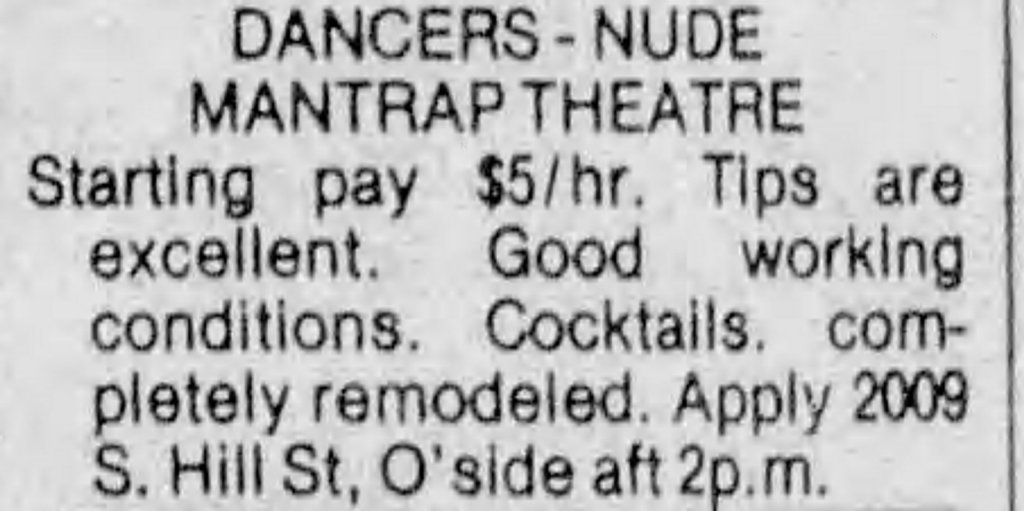
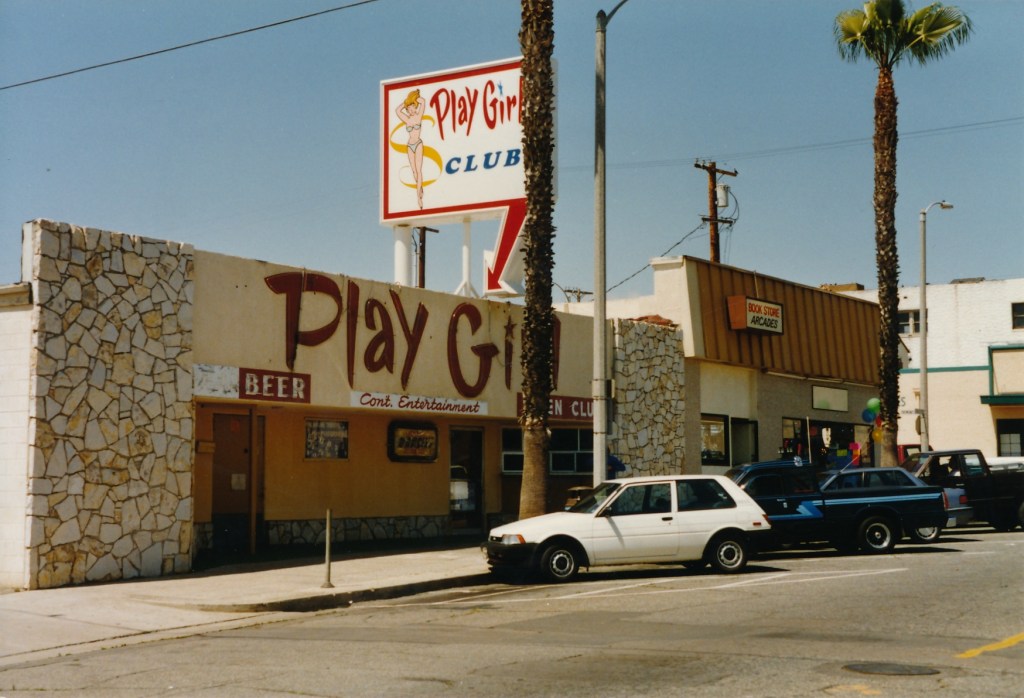

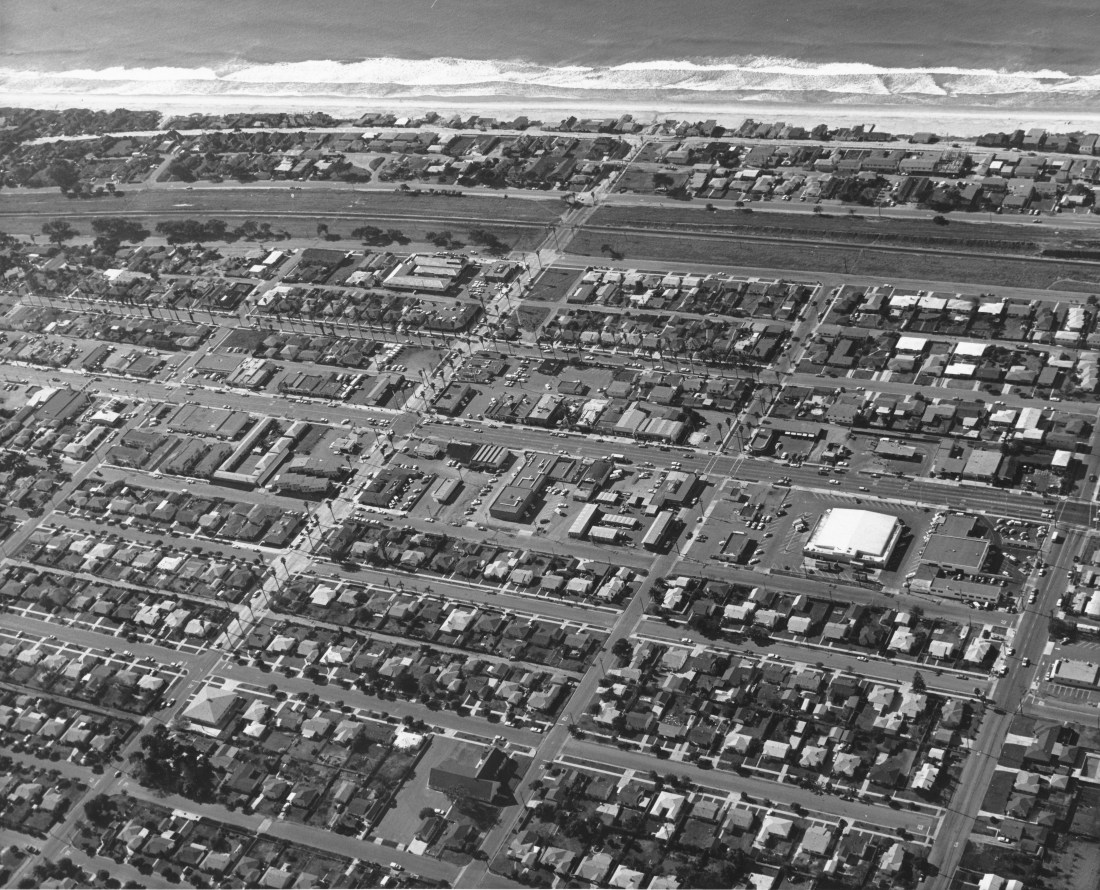
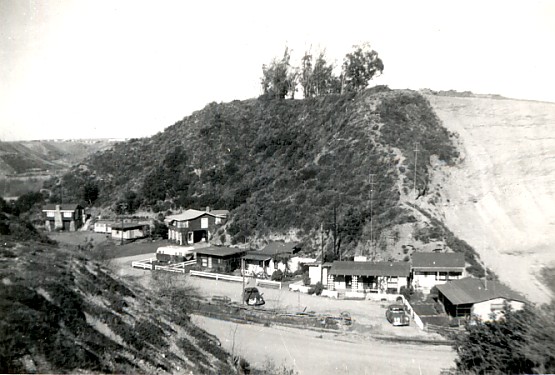
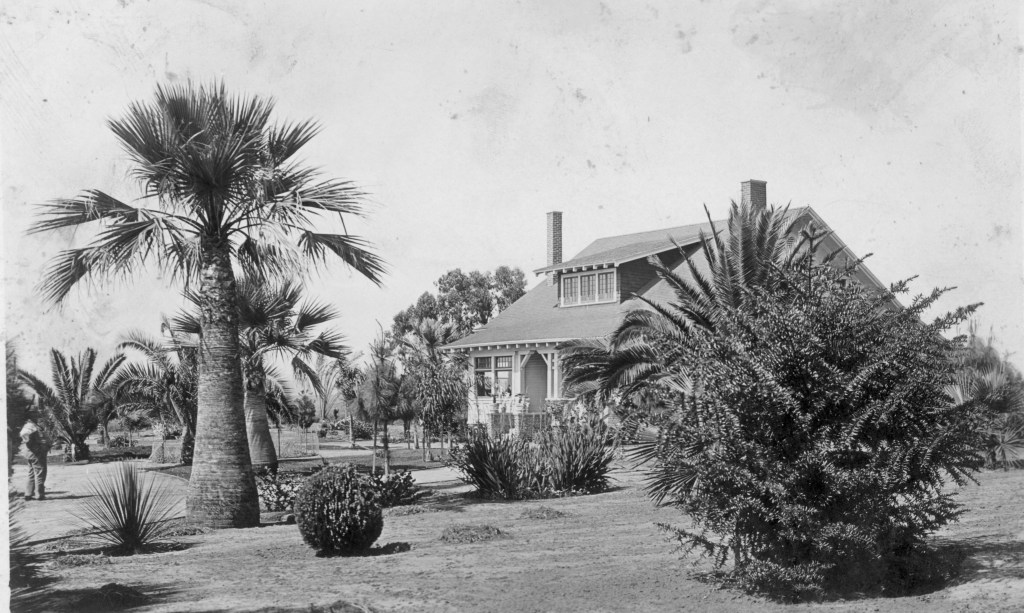

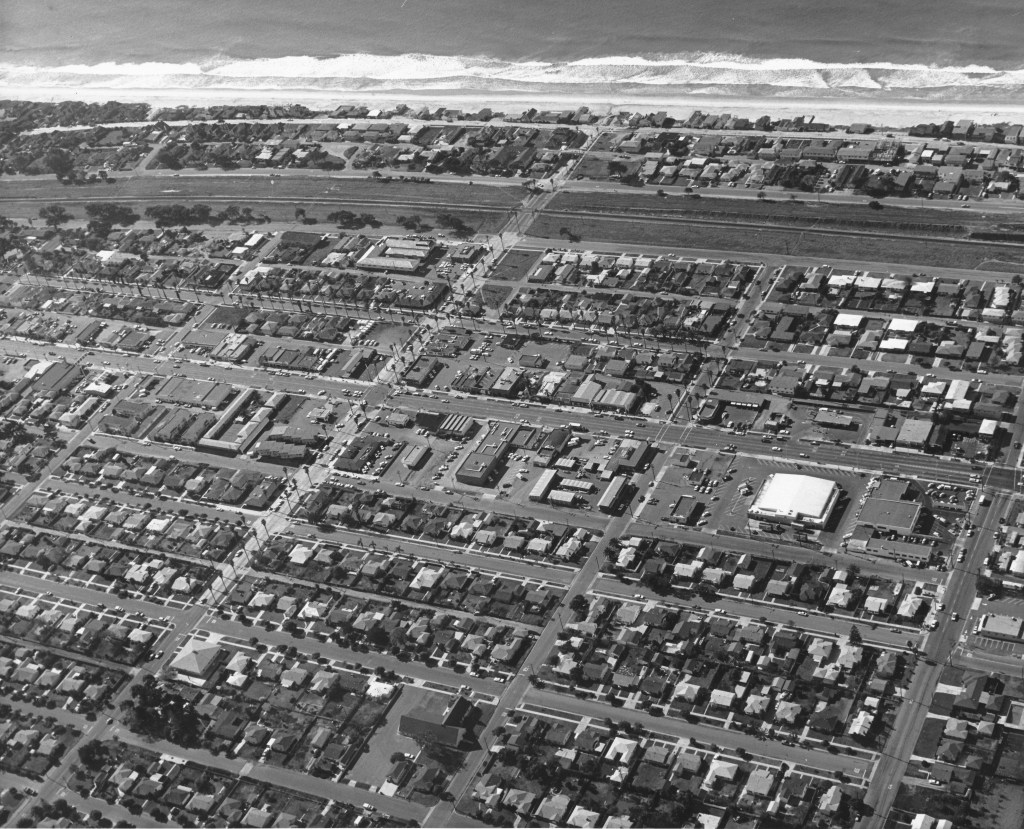


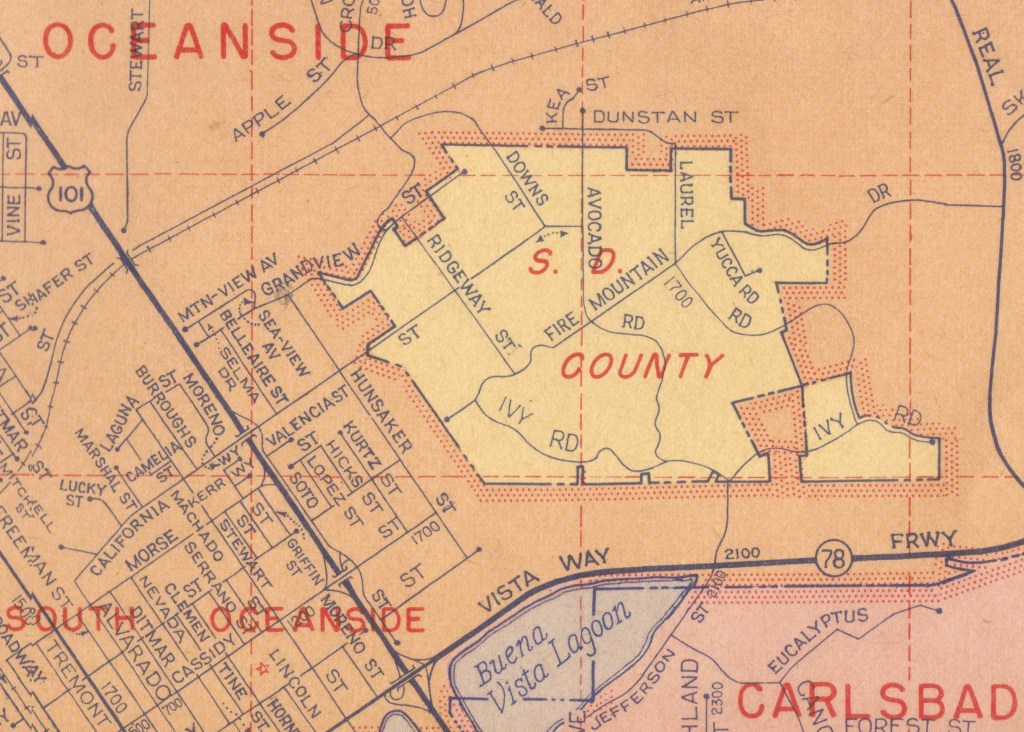

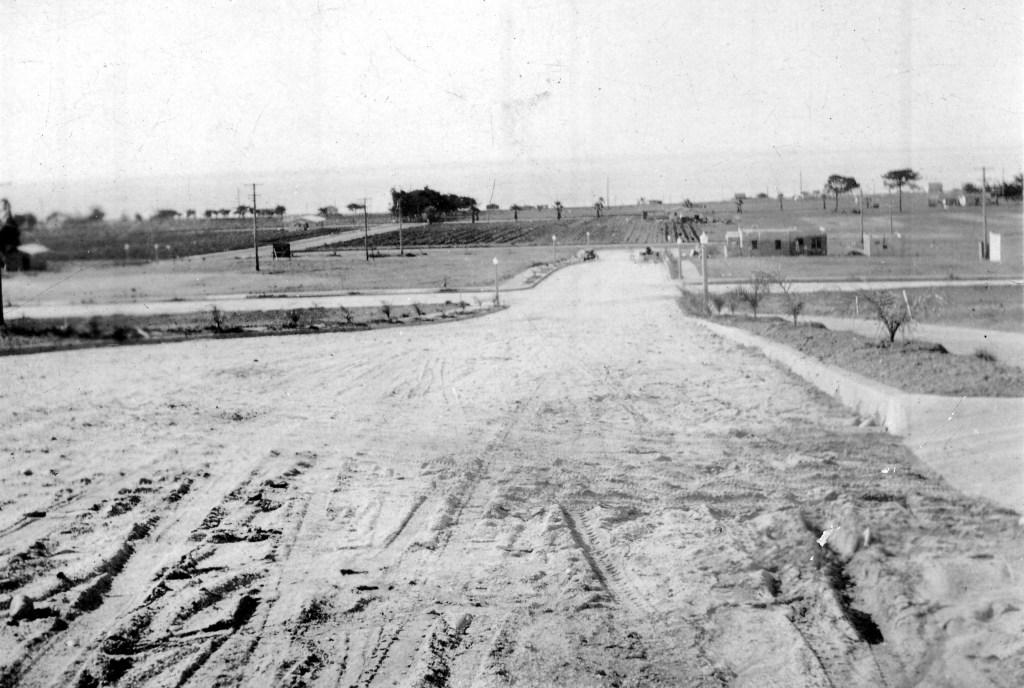


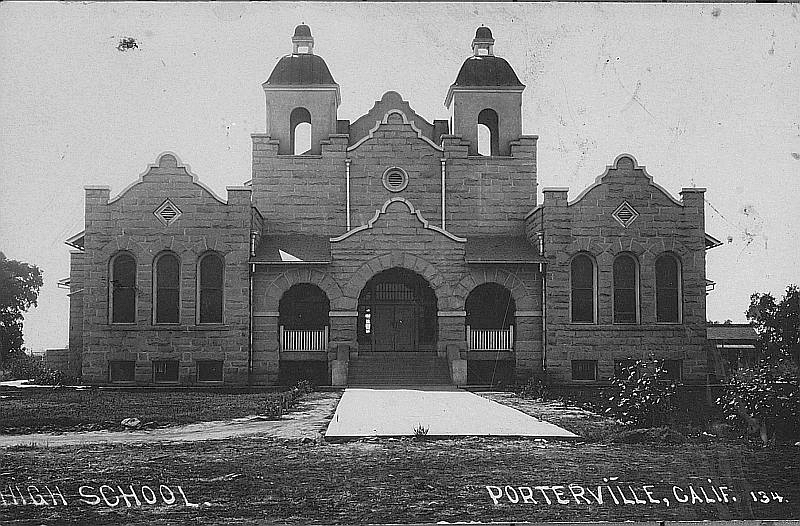


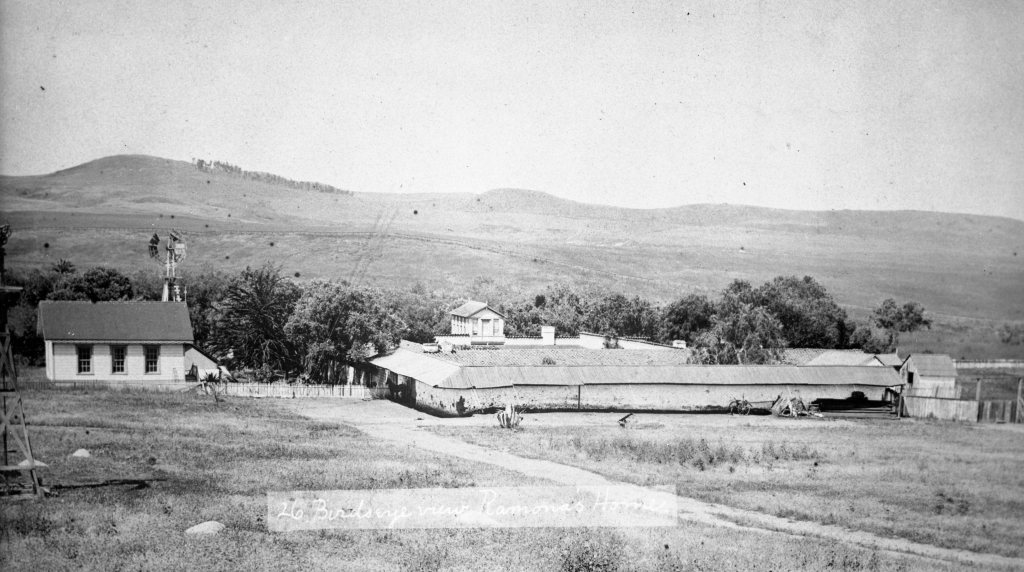


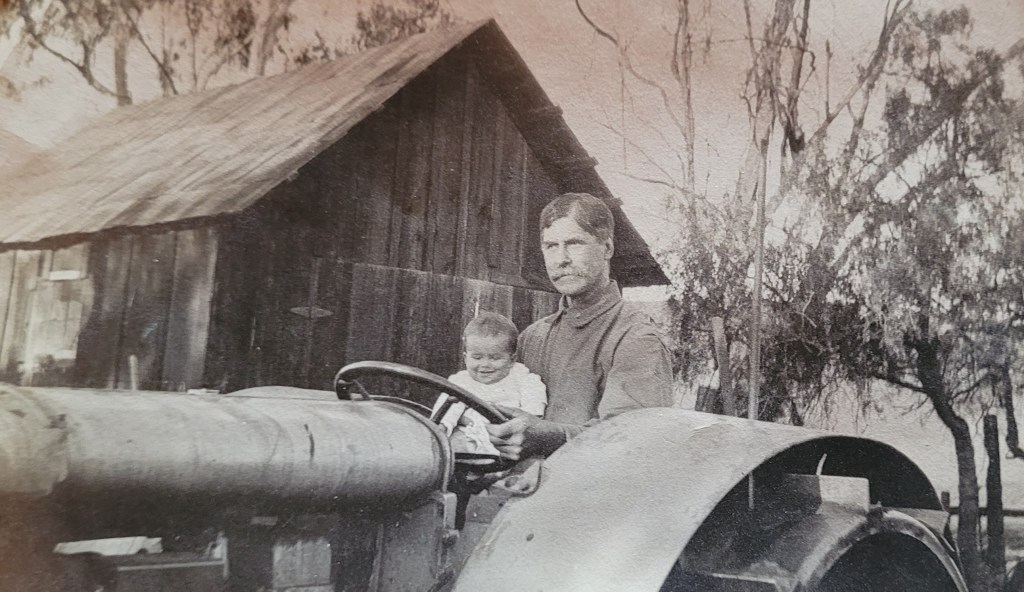
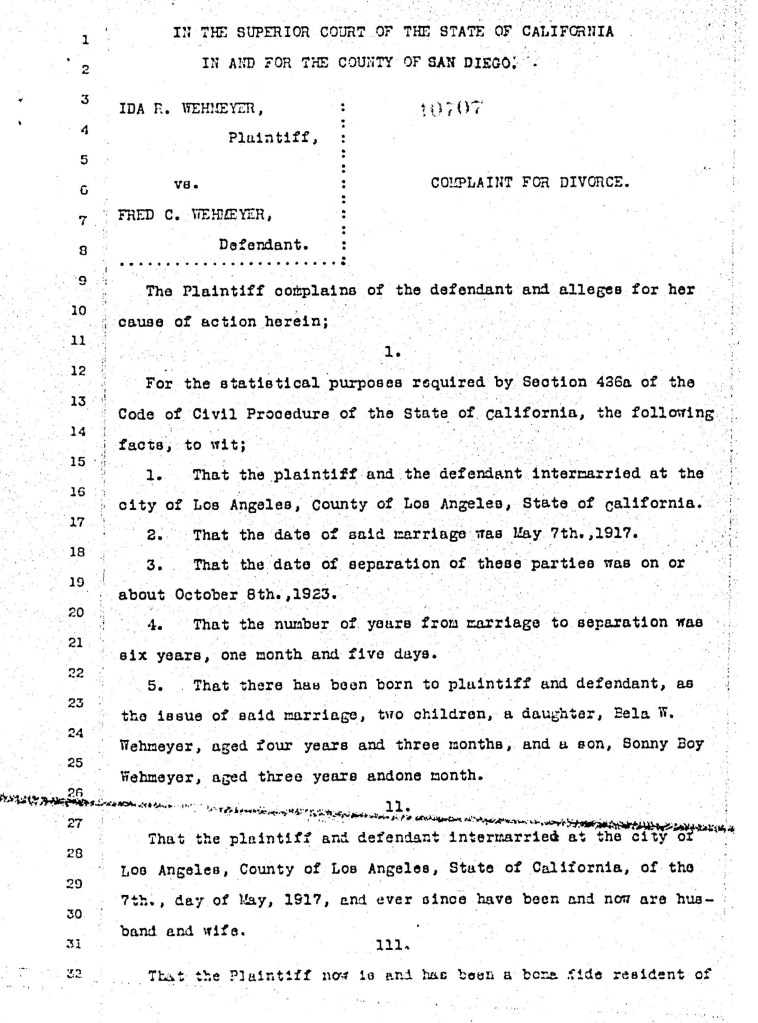
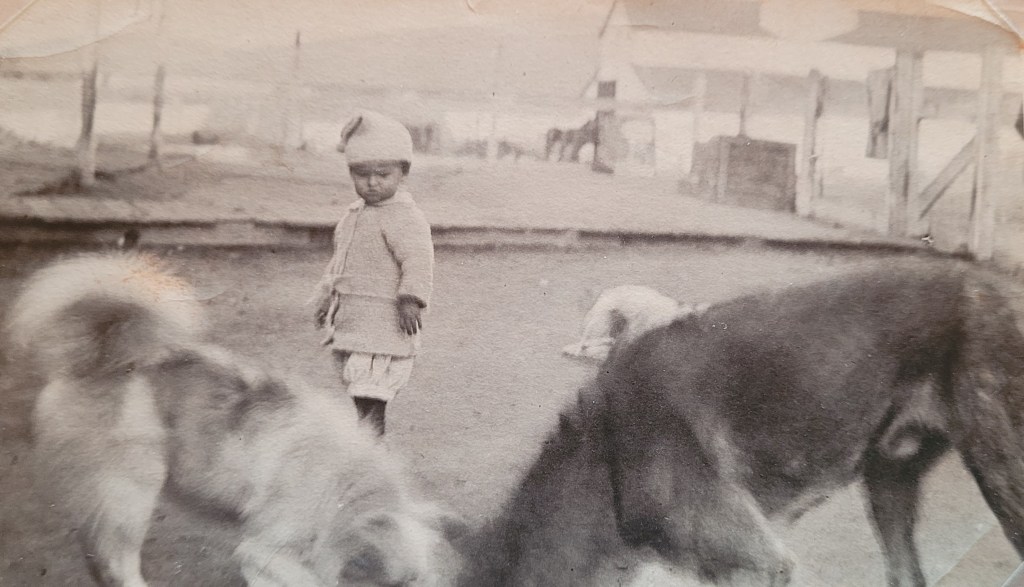
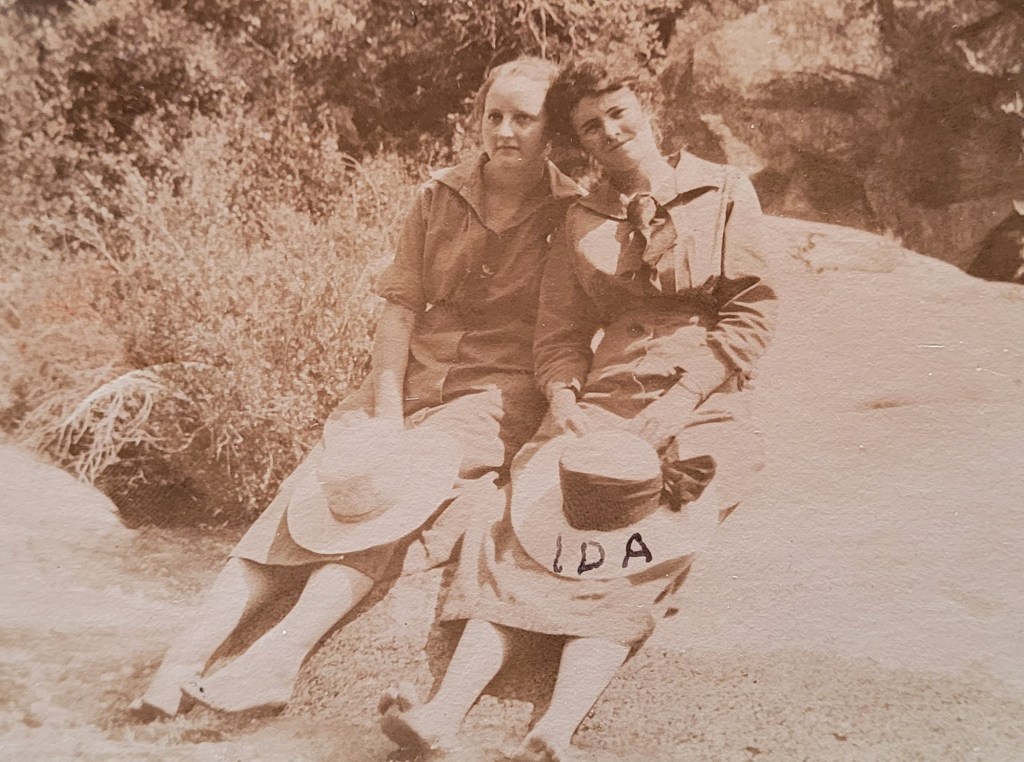
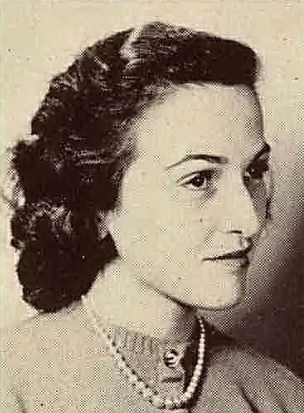

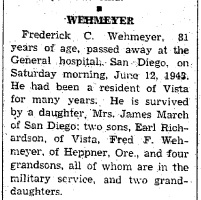
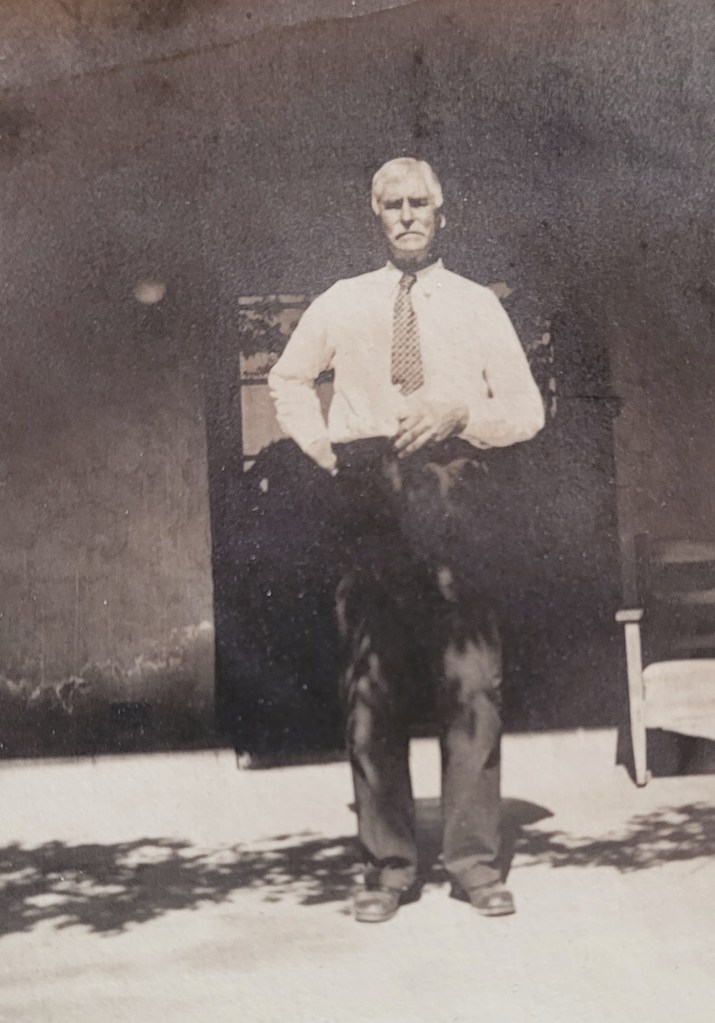


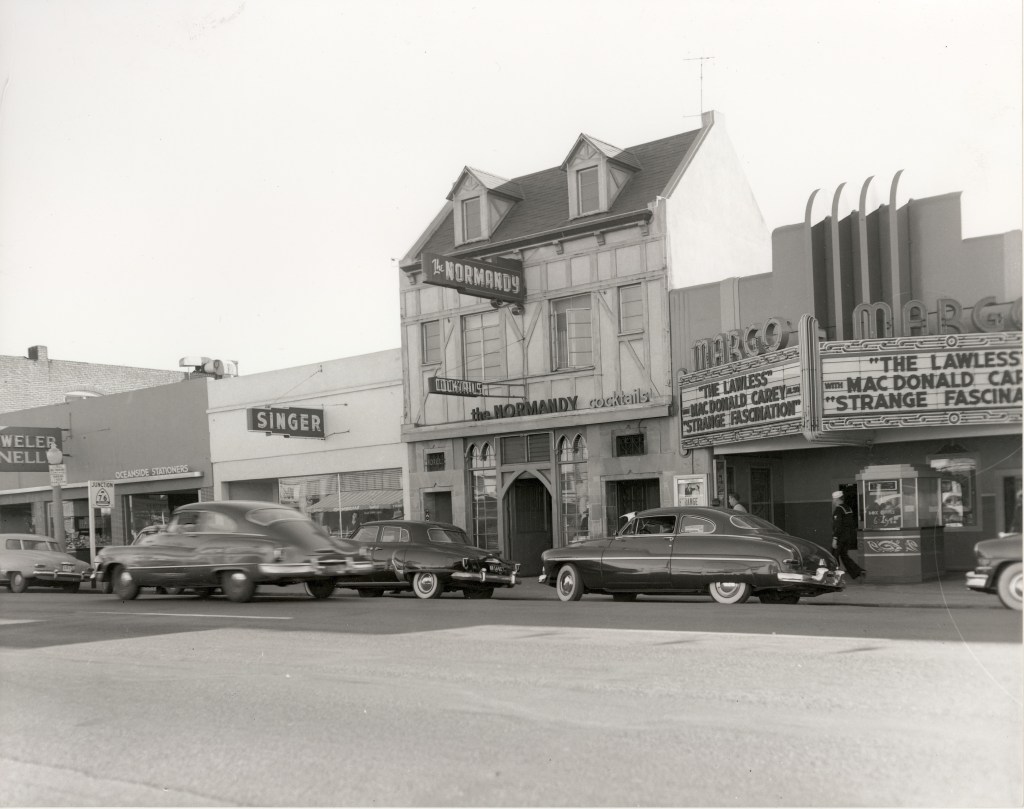


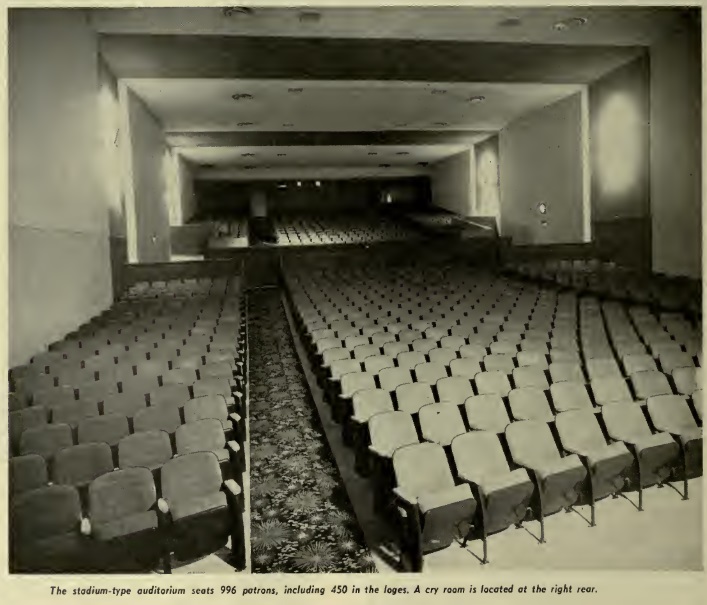

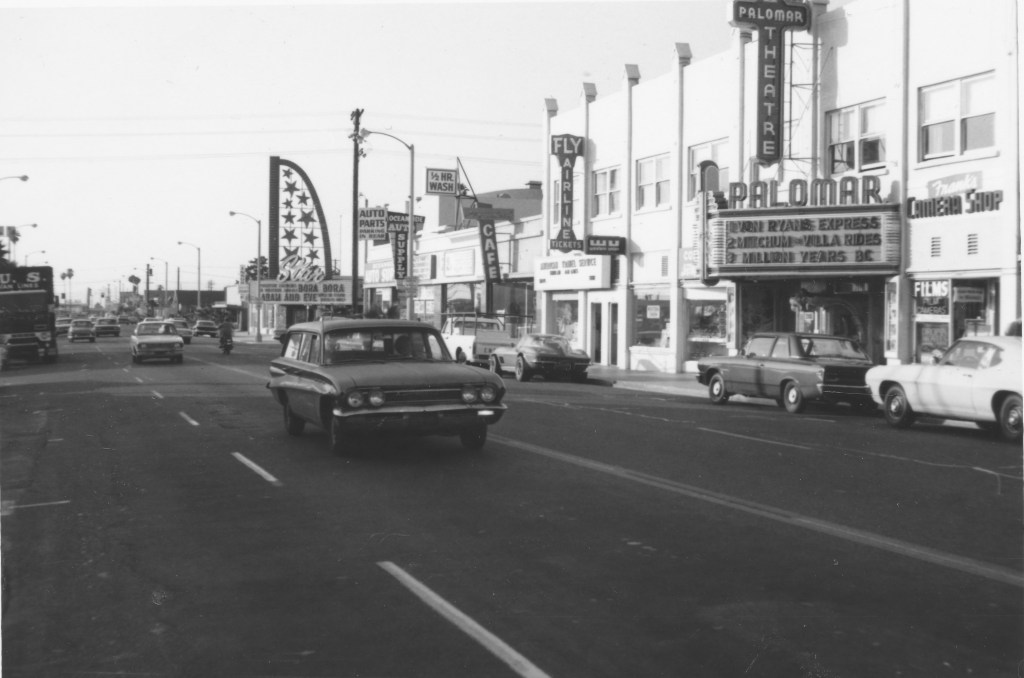



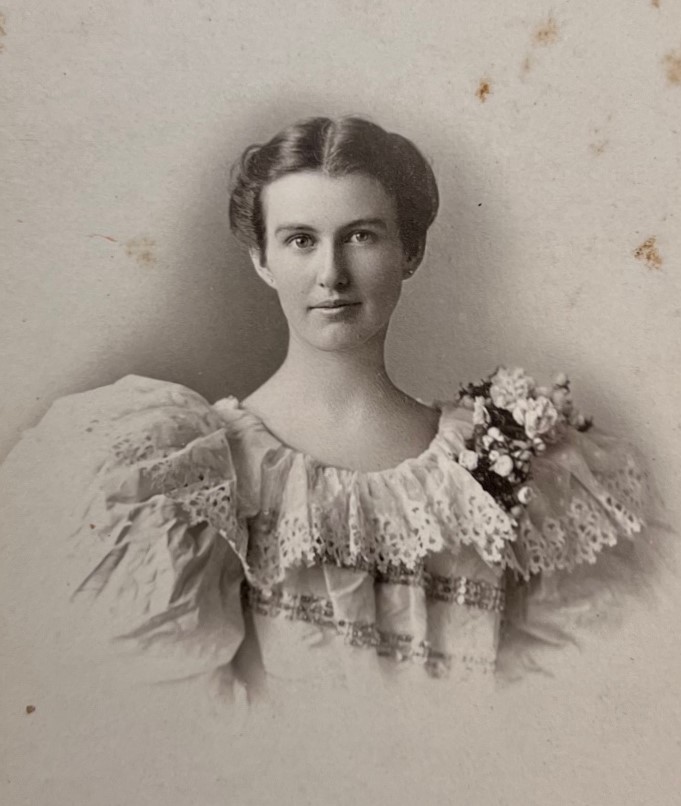
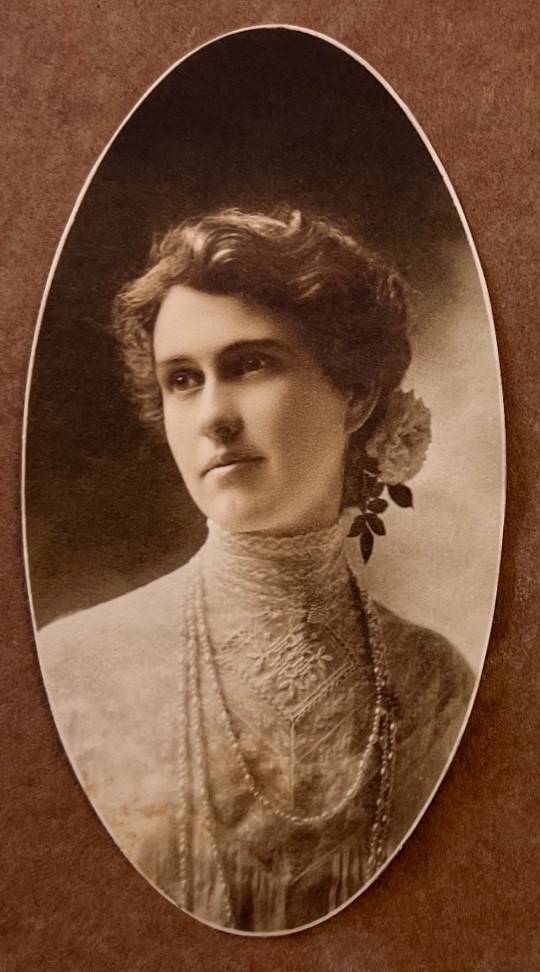


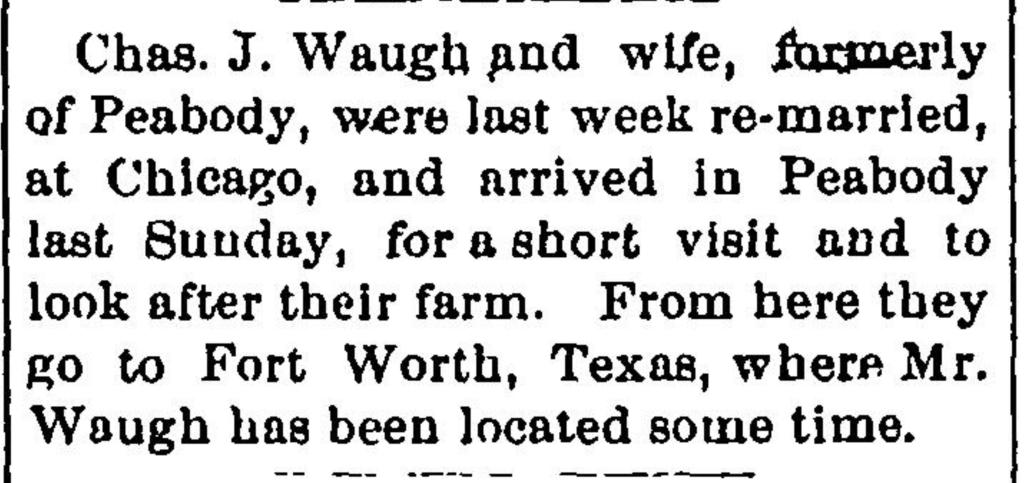


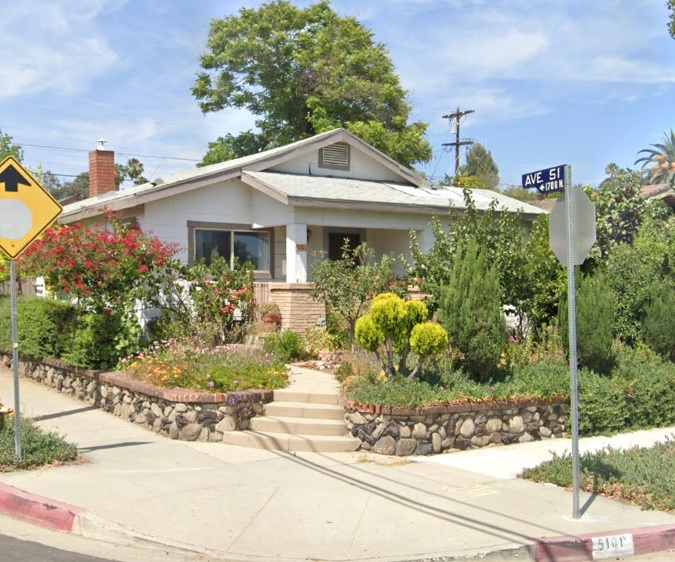


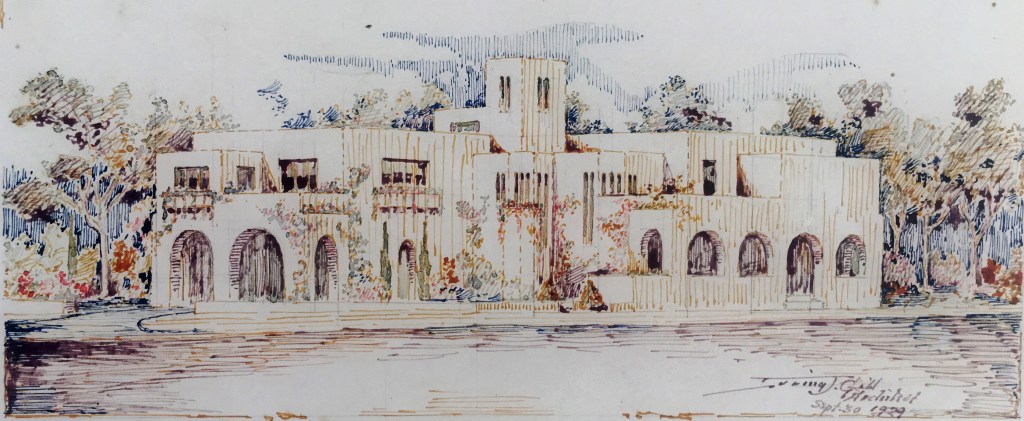


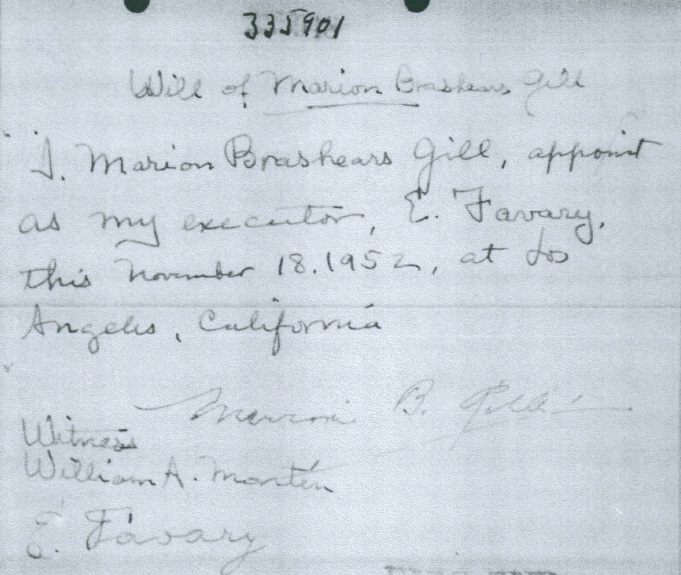
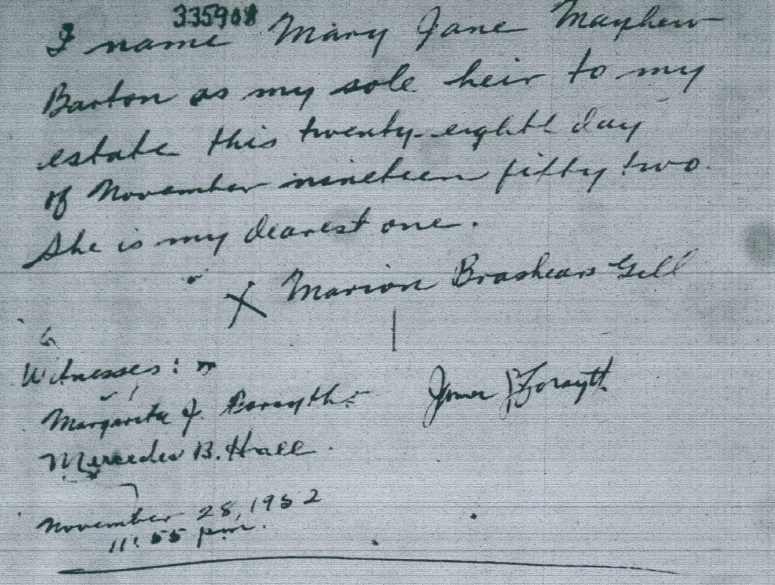




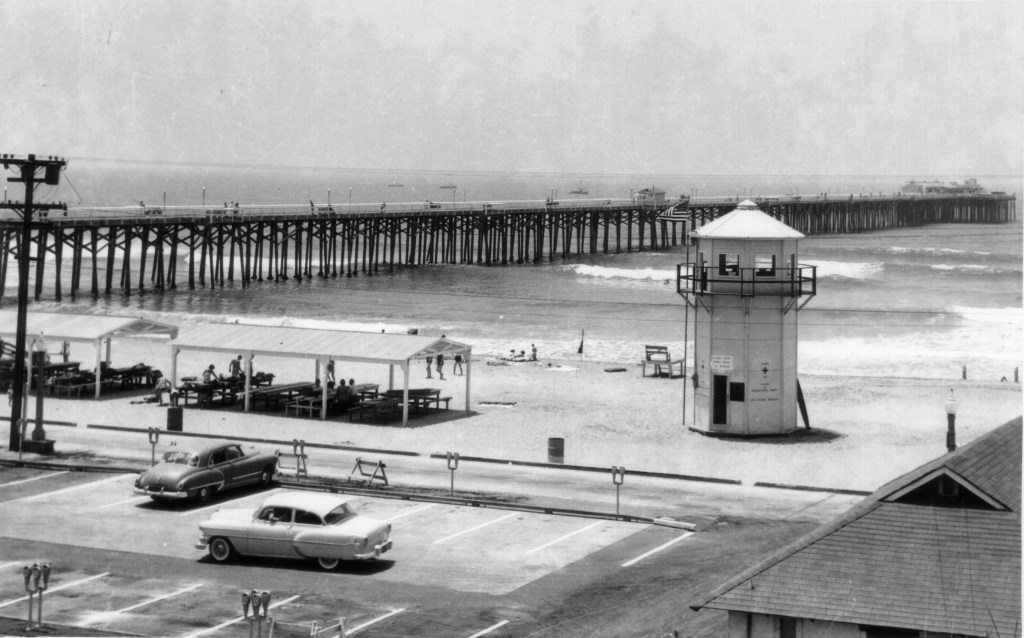


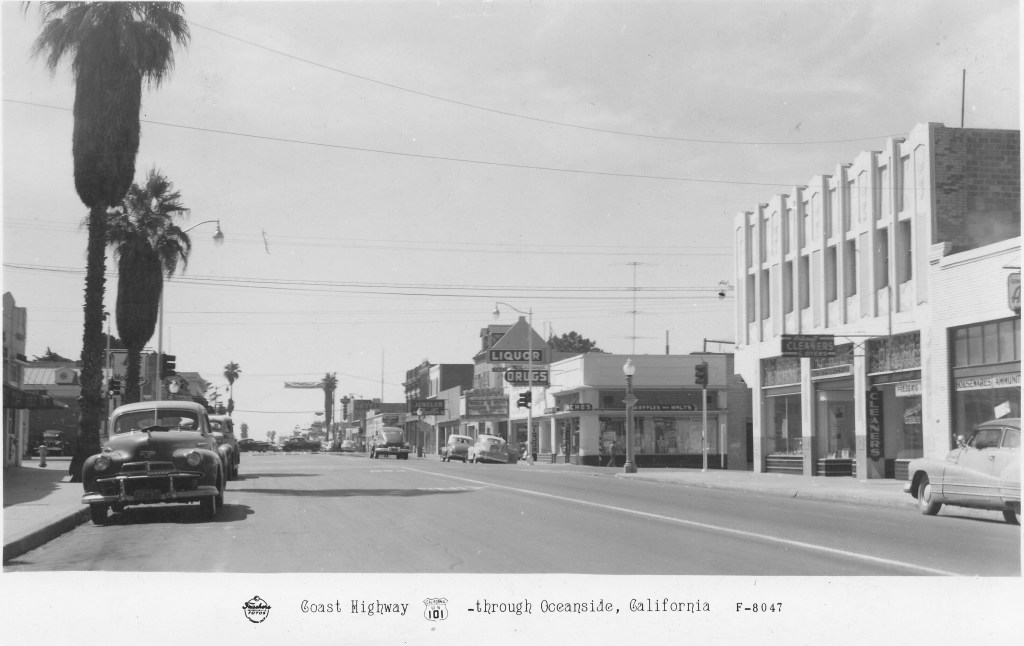



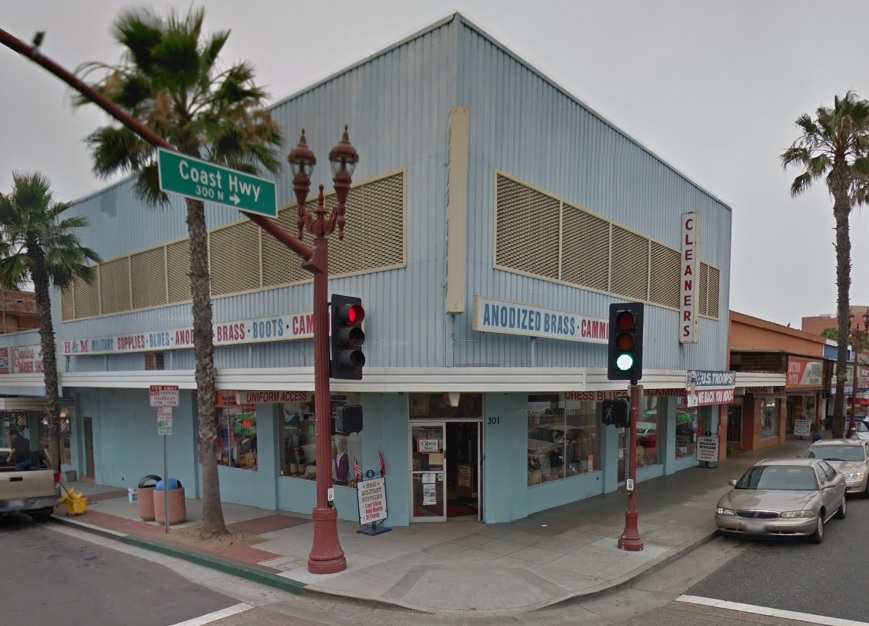


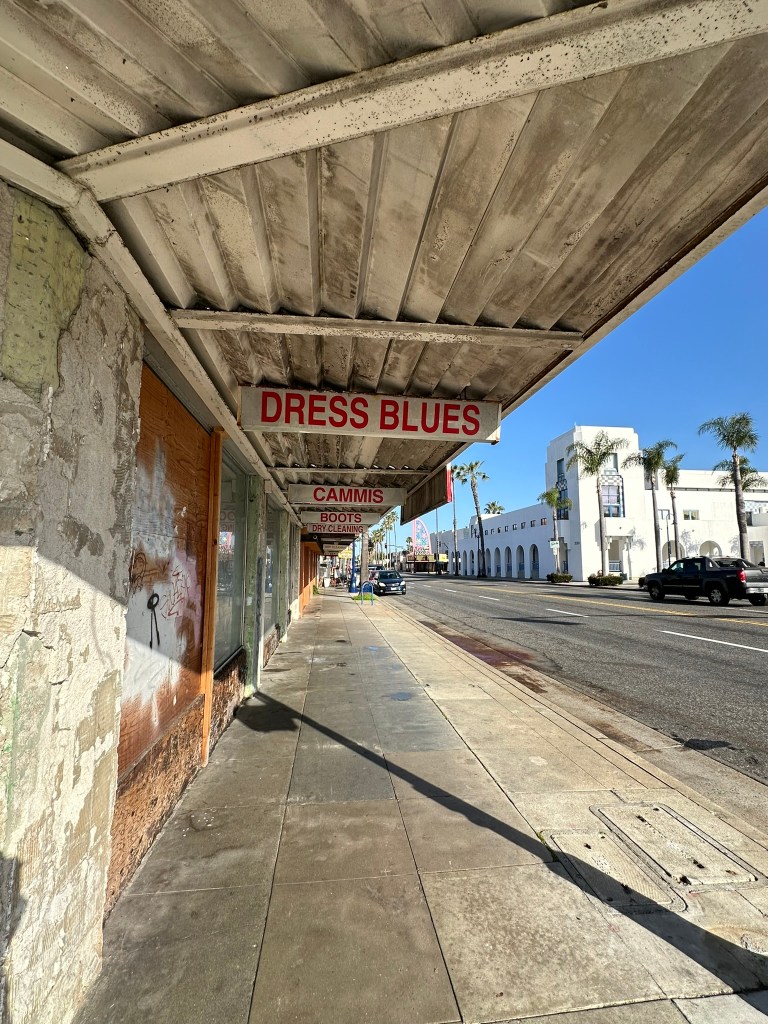
 Histories and Mysteries