History of Oceanside Street Names

Have you ever wondered why a street you travel or live on has a certain name? Developers typically get to name the streets in their subdivisions and years ago streets were named after early landowners and pioneers.

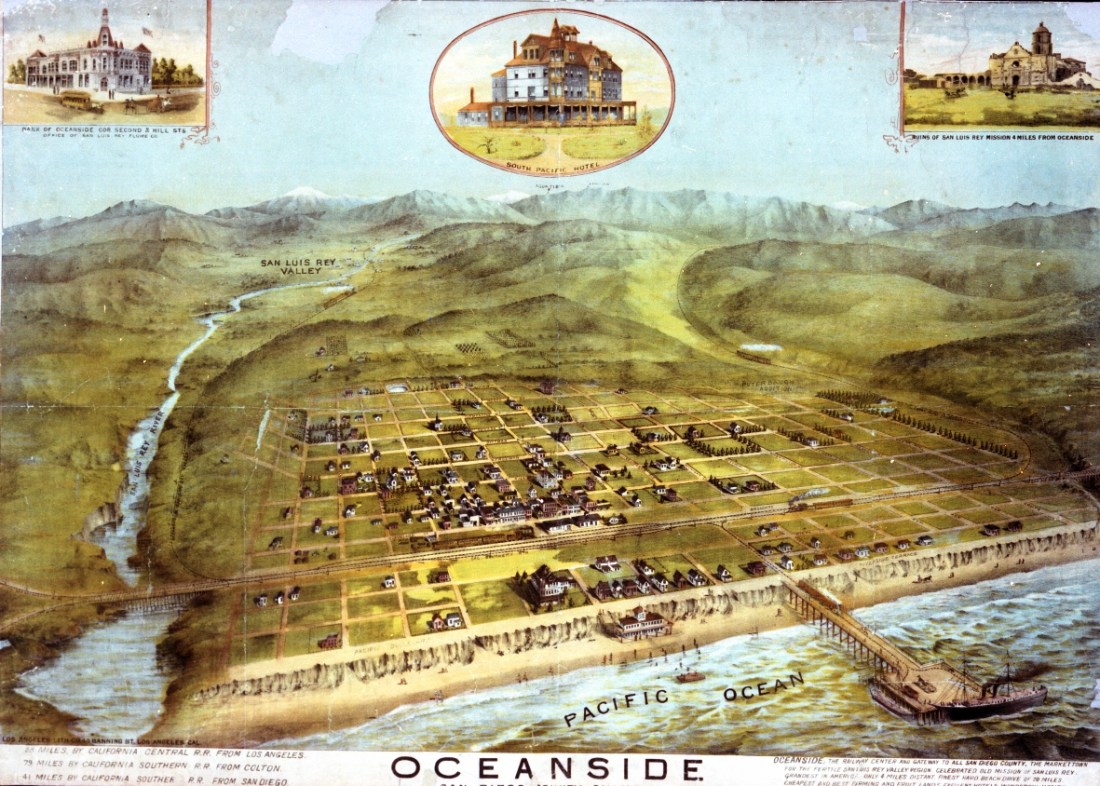
Lithograph of Oceanside in 1887. The first pier had yet to be built in this rendering and no, the train never traveled down the pier.

Since several Oceanside street names were changed in 1996, it has been diffi­cult for longtime residents to call Hill Street anything but Hill Street. Along with the name change of our beloved “main street” came new names to remember: Seagaze, Sportfisher, Neptune, etc. when First Street through Eighth Streets became a thing of the past.  However, Second Street had been conspicuously missing for decades when it was changed to Mission Avenue back in the 1950s, and no one seemed to question why.

Mission Avenue in the 1940s when it was still called Second Street.

Although residents may still lament the loss of their beloved Hill Street since it was changed to Coast Highway, several street names have been changed over the years including Short Street to Oceanside Boulevard; Couts Street to Wisconsin Avenue and the Paseo Del Mar to The Strand, just to name a few. Pacific Street north of Fifth Street (Sportfisher now) was called Washington Street! Temple Street south of West Street is now South Nevada and Boone Street south of West Street was renamed South Clementine.
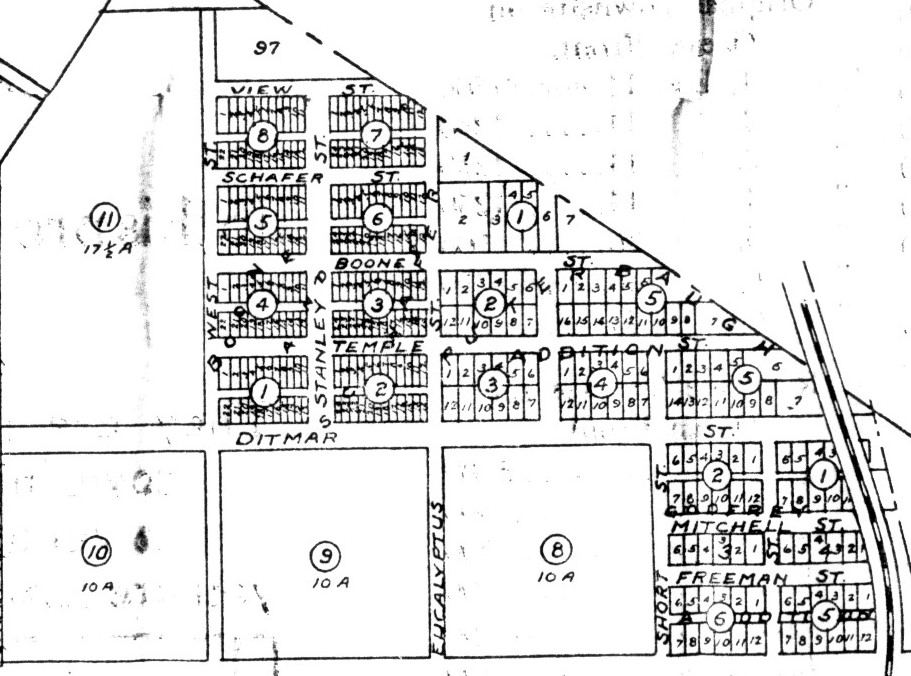
1913 Map of Oceanside showing Boone and Temple Streets south of West Street. They have since been renamed Nevada and Clementine as a continuation of those streets.

However, we can still celebrate the many street names that have been with us from the 1880s when Oceanside was being laid out and developed. 

Cassidy Street in South Oceanside was named after Andrew Cassidy, an early San Diego County resident.  According to a biography written by William E. Smythe in 1908, Cassidy “came to America when 17 and was employed three years at West Point, in the Engineering Corps.” He was stationed in San Diego in 1853 and was acquainted with Col. Cave J. Couts of Rancho Guajome, who also attended West Point. Cassidy served as a pallbearer at the funeral of Col. Cout’s widow, Ysidora Bandini Couts who died in 1897.

Cottingham Street is named after Louis Cottingham, a former city attorney and longtime Oceanside resident.

Couts Street west of the railroad was named after Cave Couts, Jr., who surveyed the new Oceanside townsite in 1883. Couts Street was changed to Wisconsin Avenue in 1927 as a continuation of that street.

Cave Couts, son of Col. Cave Couts.

Crouch Street was named after Herbert Crouch, a sheep rancher from Australia.  Mr. Crouch settled in the San Luis Rey Valley in 1869. When Mr. Crouch came to San Luis Rey he engaged in the sheep business and “the present site of Oceanside at that time was used as a part of his grazing range.”  Herbert Crouch was an historian in his own right and contributed many articles to the local newspapers.  He also kept records of weather conditions and rainfall which were studied by the county weather bureau.
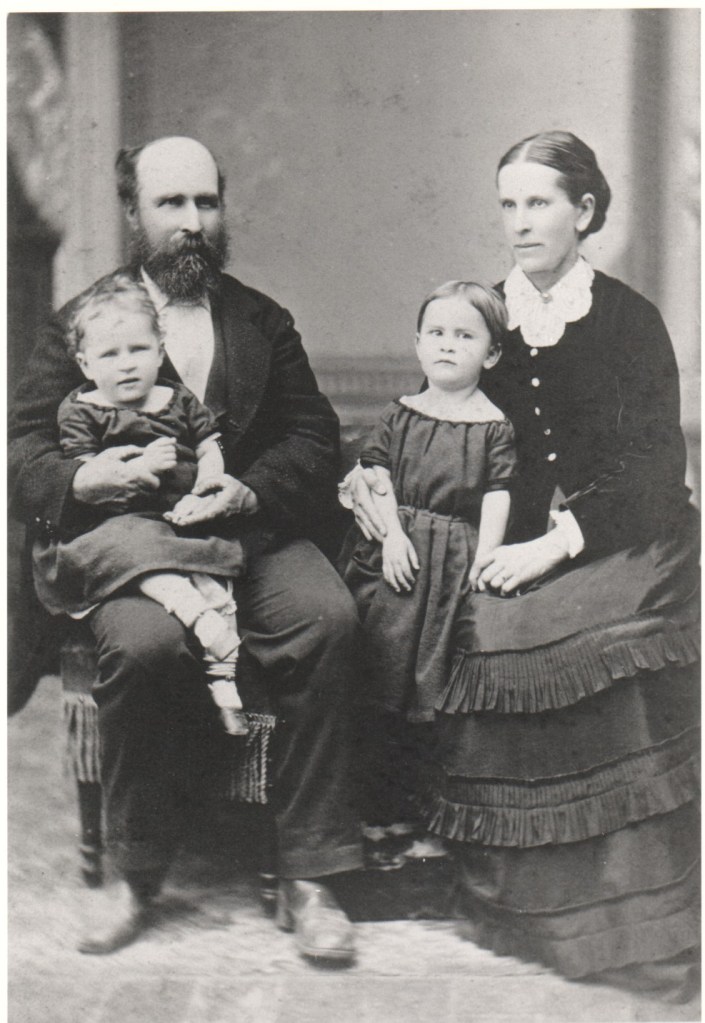
Herbert and Martha Crouch with daughters Lucy and Emily.

Downs Street was named after Ralph Downs who owned 26 acres in the Fire Mountain neighborhood. His son, Jim Downs remembered that City Engineer Alton L. Ruden, who was a friend of his father, surprised their family by naming the road “Downs Street” in the mid-1950s.  In the 1960s the developer of a new subdivision submitted “Ups” Circle to the city planners as a joke. The street name was accepted which led to the amusing intersection of Ups and Downs. 

Ellery Street is named after Henry Ellery who subdivided the tract which includes the Loma Alta neighborhood. In addition to being a real estate developer, Ellery owned a grocery store and operated a large bean warehouse here for many years. It is believed that the small street of Rose Place was named after the mother of Ellery’s wife, Ada.
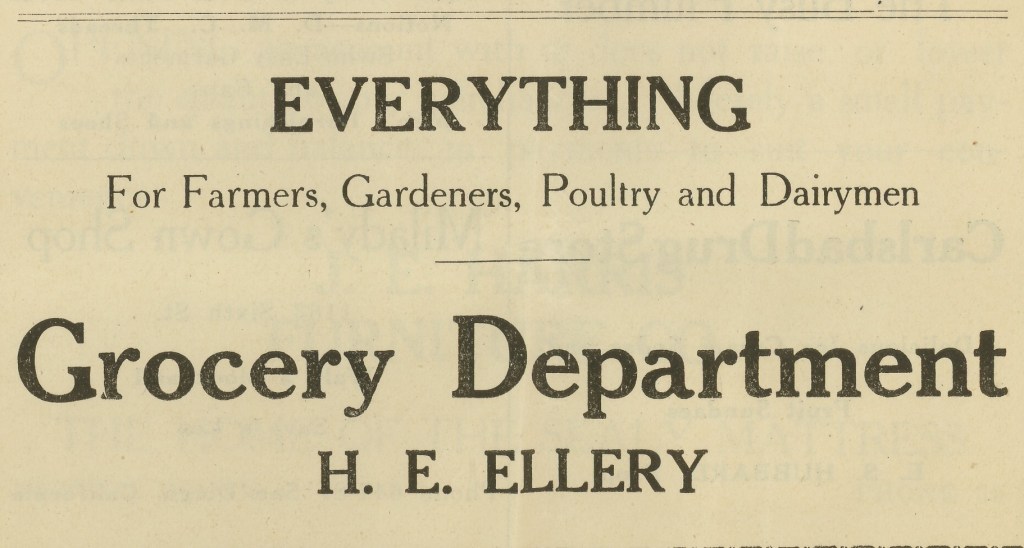
1924 advertisement for H. E. Ellery

Foussat Street was named after the Foussat family, particularly Hubert Foussat who came from France to San Diego County in 1871. His son Ramon lived near the area of the present day Foussat Street and Oceanside Boulevard. Ramon’s stepdaughter, Louise Munoa Foussat, was a Luiseno Indian who lived to be 97 years old.  Louise Foussat now has an elementary school named after her.

Ramon Foussat, left, at Walnut Grove off present day Oceanside Boulevard and Foussat Street.

Freeman Street named after the Freeman family, were early pioneers of the San Luis Rey Valley who came from Texas in the late 1860s. Many members of this family are buried in the Pioneer Cemetery in San Luis Rey. Archie Freeman, son of Alfred A. and Permelia Freeman was a deputy constable and one of the first blacksmiths in Oceanside.

Hayes Street was named after John Chauncey Hayes, an early San Luis Rey Valley resident.  Hayes was an attorney, justice of the peace, newspaper editor of the South Oceanside Diamond and real estate agent in Oceanside for several decades. His place in Oceanside history is disproportionate to the tiny little street that bears his name.

John Chauncey Hayes

Hicks Street was named after James Van Renslear Hicks who came to California and settled in San Diego County in 1874.  He served as Oceanside’s deputy sheriff and city trustee, as well as justice of the peace. In 1886, he joined John Chauncey Hayes and went into the real estate business.

Horne Street was named after Col. Daniel H. Horne who came to Oceanside from Kansas around 1886.  Col. Horne’s large home and property was located where the Mission Square Shopping Center is now, at Horne and Mission (then Second Street).  He was Oceanside’s first mayor, or president of the City Trustees in 1888. Horne helped to found the state capital city of Topeka, Kansas, which is how Topeka Street got its name. 
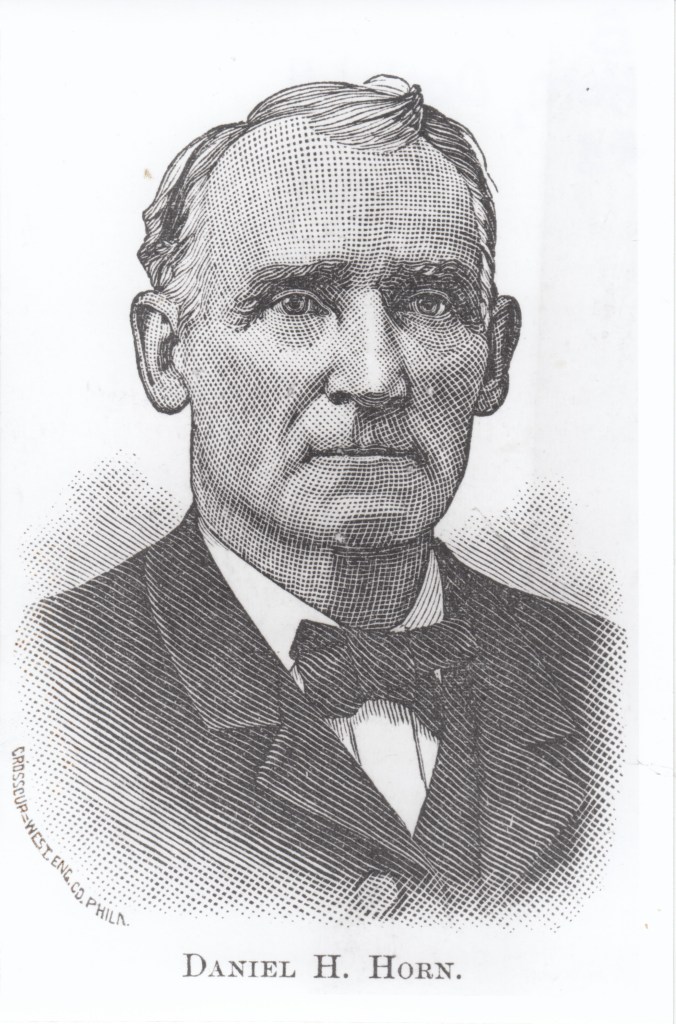
Col. Daniel H. Horne (the spelling of his name varied in publications) Courtesy Kansas Historical Society

Hunsaker Street was named after Attorney William J. Hunsaker.  Hunsaker was a partner in the law firm Hunsaker, Britt & Lamme.  He represented John Chauncey Hayes in a suit against the City of Oceanside and also defended John W. Murray, who shot and killed Oceanside’s Marshal Charles Wilson in 1889.
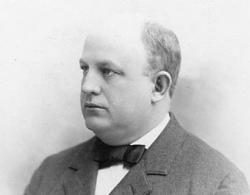
William Hunsaker

Kurtz Street was named after Daniel B. Kurtz who came to San Diego County in 1850 and elected Mayor of Old Town San Diego in 1851.  He settled in San Luis Rey in 1866 and served as Judge.

Daniel B. Kurtz

Lucky Street was named by and after Elgin “Lucky” Lackey. Lucky owned a café, then later Pacific Holidayland and developed small subdivision off of California Street in the late 1950s.

Machado Street was named for an early Spanish family.  Mac and Juan Machado were in business with Louis Wolf in the early 1880’s.

Maxson Street was named after Charles W. Maxson who arrived in San Diego on March 24, 1886.  Shortly afterward he came to Oceanside and joined with C. F. Francisco to open a general merchandise store.  He later entered the real estate and insurance business with Ben F. Griffin.  Maxson was also one of Oceanside’s first city trustees.

Mitchell Street was named after John Mitchell who came to Oceanside in 1887.  He had previously lived in Fallbrook and planted extensive orchards there.  He purchased property in Oceanside and owned a home on Pacific Street.

Myers Street was named after Oceanside’s founder, Andrew Jackson Myers.  He first settled in the San Luis Rey Valley and in 1883 received a land grant of 160 acres. A. J. Myers hired Cave Couts, Jr. to lay out the townsite and together with John Chauncey Hayes developed the town of Oceanside and began the naming of our city streets.

Oceanside’s Founder Andrew Jackson Myers

Nevada Street was said to “bear the name of the daughter of one of the first settlers, a young lady who was the belle of the village in the late 80’s.” Nevada McCullough was the daughter of John and Mary McCullough. The McCulloughs moved to Oceanside in its earliest days and were said to be some of the first residents here. 

Reese Street, is believed to be originally Reece Street, and was named after Oscar M. Reece who came to Oceanside in February of 1885 when Oceanside was said to have had only three houses.  He began a general merchandise business with his brother and was later elected Justice of the Peace.  He also engaged in the sale of real estate and was a notary public.

Reece Brothers Pioneer Store in about 1885 downtown Oceanside.

Short Street, named after an early attorney, Montgomery Short who arrived in Oceanside in 1886, extended eastward from the railroad tracks and ended at about Nevada Street. West of the railroad tracks the street was then labeled as McCoy Street after another early pioneer. In the mid-1960s Short and McCoy Streets were changed to Oceanside Boulevard.

Tait Street, which runs parallel to Pacific Street just south of Wisconsin Street, was named after Magnus Tait, an early pioneer and manager of the Oceanside Water Works in 1888.  His home is still standing at 511 North Tremont Street.

Tyson Street bears the name of Samuel Tyson, one of the earliest settlers in our city. Sam claimed to have built just the second house in Oceanside, just after the city founder’s A. J. Myers.

Weitzel Street was named after Martin S. Weitzel, a pharmacist who brought his family to Oceanside in 1885.
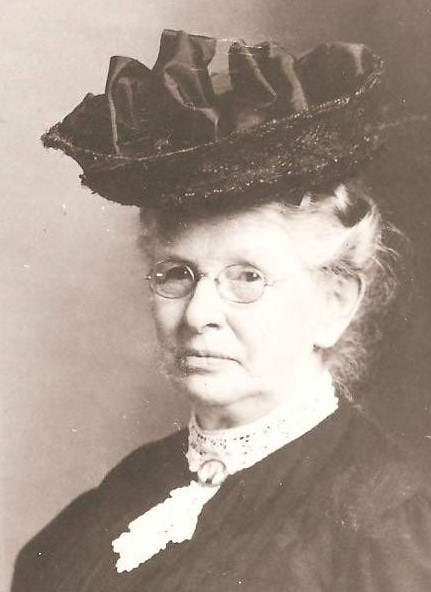
Sarah C. Weitzel, wife of Martin Weitzel.

Whaley Street was named after Francis Hinton Whaley, an early pioneer resident of San Luis Rey Township.  He was born in Old Town, San Diego and is said to have been the first white child born there. Whaley was the Editor of the San Luis Rey Star newspaper in the San Luis Rey Township in early 1880’s.  This newspaper was later moved to Oceanside and became the Oceanside Star, which then became the Oceanside Blade. The Whaley House in Old Town San Diego is one of the most haunted places in America.

Wilcox Street is named after Ray Wilcox, who was a manager of Oceanside’s early Safeway store in the 1920’s.  He later opened a real estate office, Wilcox Investment Company, and went on to become Oceanside’s mayor in 1946.

Ray Wilcox, 1938

So what is the origination of our beloved Hill Street?  There’s no clear answer but it is probable that plagiarism was involved. Hill Street, Cleveland, Broadway, Tremont and Ditmar Streets are names found in the cities of San Diego and Los Angeles.

How did Oceanside get its name?  In 1888 the South Oceanside Diamond newspaper reported that “whenever the families of the San Luis Rey Valley desired recreation and a picnic place” folks would simply suggest, “Let’s go to the ocean side.”  In 1883 after a land grant was issued to founder Andrew Jackson Myers, he began to advertise his newly formed town of “Oceanside” as a seaside resort with miles of coastline.  

Hidden Beauty, The History of the Mason Building (301 North Hill Street aka Coast Hwy)

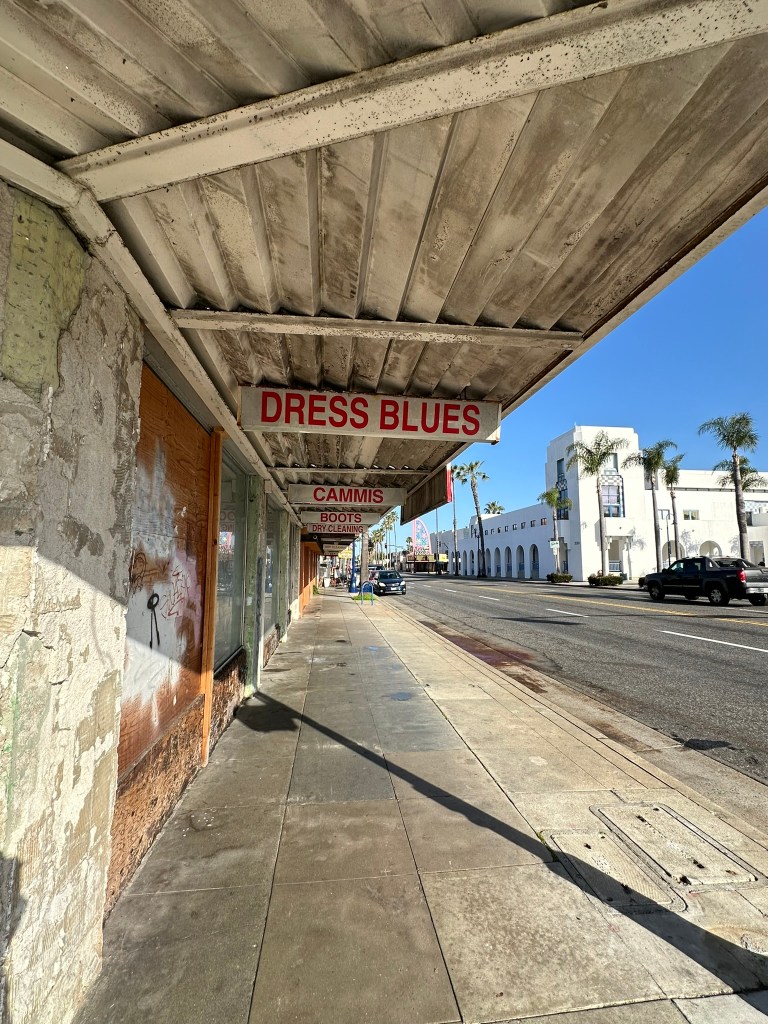
On the northwest corner of Third and Hill Streets (Pier View Way and North Coast Highway) sits an empty building that has seen better days, with its exterior scraped away, windows broken and metal awning left to rust. No one can remember the building in its glory days but many will remember the H&M Military store owned by Harry and Mary Cathey, a popular destination for Marines needing essential gear. It was the largest of the many military stores that once filled Oceanside’s downtown business district.

Mason building, aka H&M Military Store at 301 North Hill Street/Coast Highway. (Photo taken March 8, 2024)

But the building pre-dates Oceanside’s relationship with Camp Pendleton and its Marines. Nine decades ago this was once a beautiful art deco style building. Modernization may hide its original exterior but perhaps one day it will be restored.

Prior to the present building, Charles D. Merrill and his brother William owned the property. They were the first licensed Ford dealership in Oceanside and in 1920 built a new building on the prominent corner in downtown Oceanside and further expanded it after 1925.

Merrill’s Garage was a Ford dealership, located at Third and Hill Streets in the 1920s. Note the historic Schuyler building to the left. Oceanside Historical Society

Paul Beck, co-owner of the Oceanside Blade Tribune newspaper recalled the Merrill’s dealership when he arrived in Oceanside in 1927: “Across the street to the West was the Merrill Brothers Ford Agency.  Having no transportation upon arrival in Oceanside, one of the first deals that the young Becks made was for a Model A Ford.  As I recall, the total price was $475, and we talked the Merrill’s into a “due bill”, which meant $400 cash and $75 in advertising.”

The Merrill building included a storefront that was situated on Third Street (Pier View Way). In 1929 Ed Wolmer leased that space, at 410 Third Street, to open a music store.

The February 5, 1929 Oceanside Blade reported:  Rebuilding of the lower floor of the building at 410 Third Street to be occupied by the Ed Wolmer Music House is well along and Mr. Wolmer states that he is expecting to be in his store by the last of the month.  The front has been modernized and the interior handsomely refinished and when completed the store will be a most attractive salesroom for the display of the extensive line of pianos, radios, panatropes, and musical merchandise which will be carried.

Two years later the Merrill Bros. moved their Ford dealership just to the north, near the center of the block, and sold the property to B. A. and Marian Mason in 1931.  Despite the fact that a Depression was gripping the country, the Masons began construction of a two-story brick building on the property.

The November 19, 1931 Oceanside Blade Tribune reported the following: Operations on the new Mason building, being erected at Third and Hill Streets, will be resumed tomorrow, according to a statement from Omer Nelson, superintendent in charge. Delay in the erection of the building was brought about by negotiations regarding the expansion of the building to take in another story. “We are resuming operations,” said Nelson, “while the parties continue their negotiations toward the expansion of the building.  We are holding things open so that if necessary, we can make a third story to the build.” Work on the building has been at a standstill for the last few days, with part of the brick walls erected.  Nelson is on the job today, preparatory to getting the full construction crew back on the job again tomorrow.

The third story was not added and the building was completed in early 1932. The lessee was Wolmer’s Music House who moved from their former location fronting Third Street into the new Mason building fronting Hill Street.

Ed Wolmer’s Music House on the northwest corner of Third and Hill Streets, 1932. Oceanside Historical Society

Oceanside resident Ernest Carpenter remembered in an interview: “It was a music store, sheet music and all that kind of stuff. They had a big statute and I can’t remember, a dog, a big statue of a Dalmatian in the front. When I was a little kid I didn’t want to walk on that side of the street because I was afraid of that dog!” 

Mason building to the right, looking west on Third Street (Pier View Way). Note the dog statute. Oceanside Historical Society

Wolmer’s Music Store, remained at 301 North Hill Street for several years, and also sold appliances. In 1946 Bob Shaffer and Gordon Duff purchased the appliance business and moved it to Third and Freeman Streets.

In 1940, Henry and Lina Howe bought the Mason building at 301 North Hill Street and owned it for several years, later deeding the property to their son and his wife, Tracy and Ethel Howe. The Howe’s owned a hardware store on Mission Avenue in downtown Oceanside.

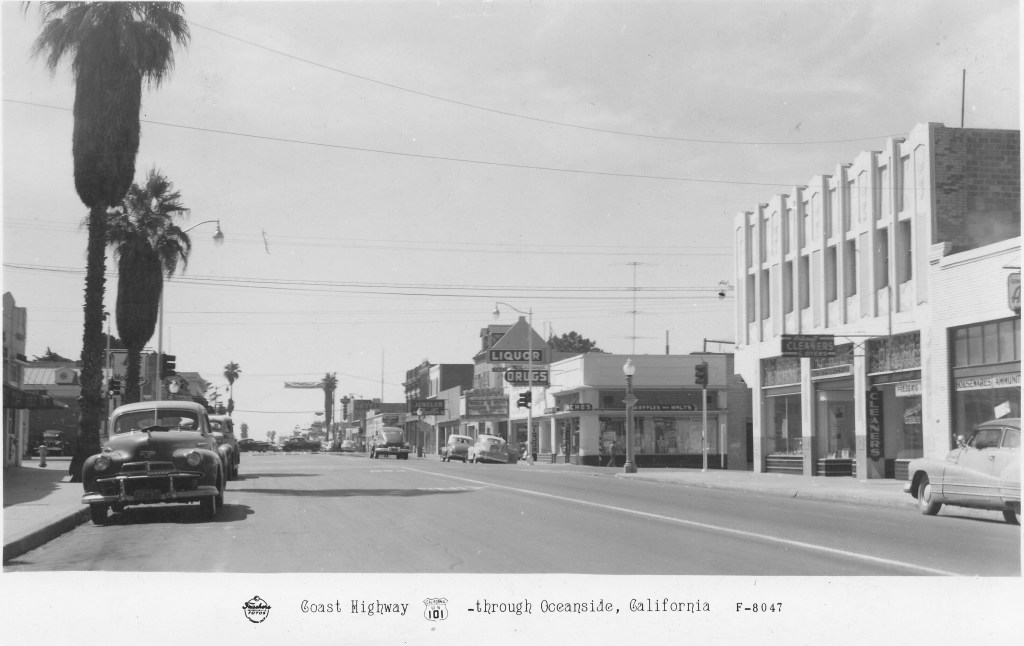
Motorcycle office Guy Woodward stands on the center line of the 300 block North Hill Street (Coast Highway) in 1949. Mason building is to the center right, with a portion of the original brick exposed. Oceanside Historical Society

Harold C. Cross, attorney rented an office upstairs in the 1940s, along with a variety of other businesses in the 1950s, including the Merchants Credit Association, and attorneys Daubney & Stevens.

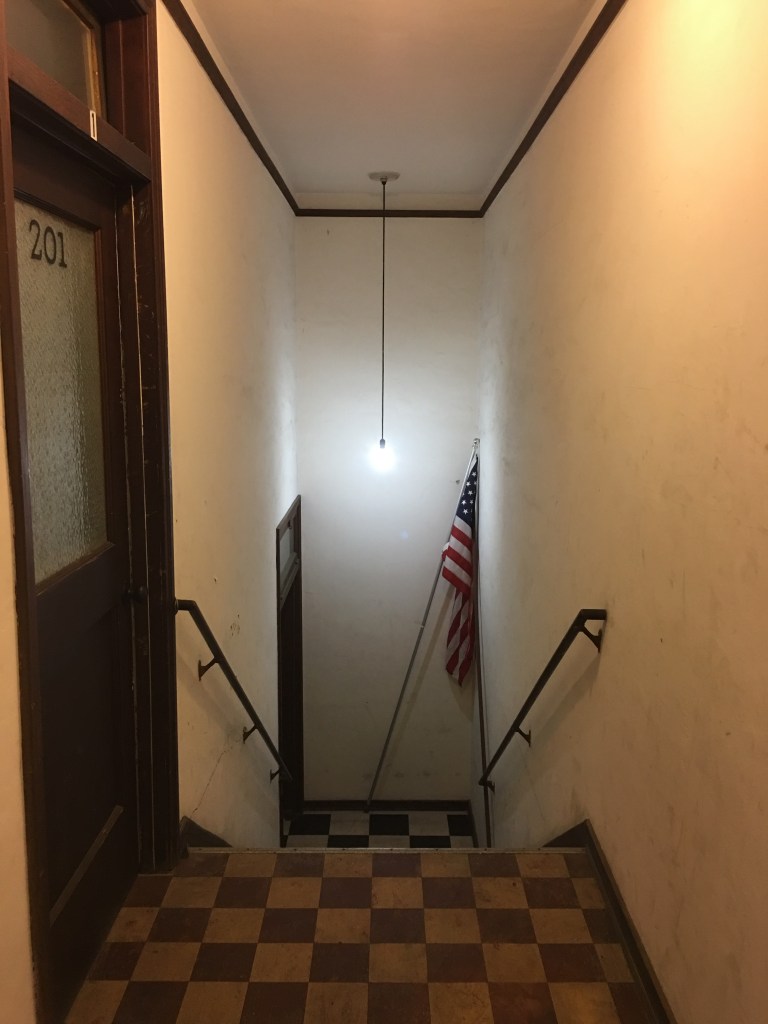
View of stairway leading from first floor to the second level (photo taken in 2017)

By the mid to late 1940’s the building was divided into three suites fronting Hill Street or Coast Highway, to include 301, 303 and 305. The Fun Shop, a novelty store occupied one suite at 301 North Hill from 1948 to at least 1963, which was operated by T. L. O’Farrell and L. K. Broadman. Swanson’s Service Studio occupied the storefront at 303 North Hill Street from about 1948 to 1959, which was later occupied by Marine Tailors in the 1970s and 1980s. Artcraft Cleaners occupied the third suite at 305 North Hill from the mid 1940’s to about 1981.   

300 block of North Hill Street/Coast Highway circa 1948. To the right is the Mason Building with Swanson’s Studio and Artcraft Cleaners signage. Oceanside Historical Society

Years before Room 204 was used for polygraph exams (curiously), the office suite was used for a tailor’s shop in the mid 1940s, then rented out to Lorraine Nelson, a public stenographer.

One of the upstairs suites used for at one for polygraph exams (photo taken in 2017)

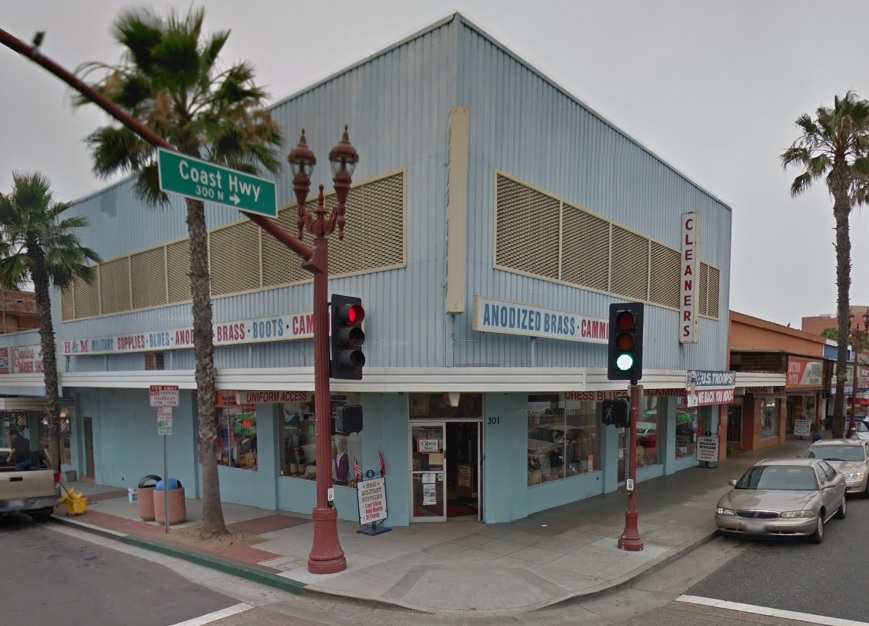
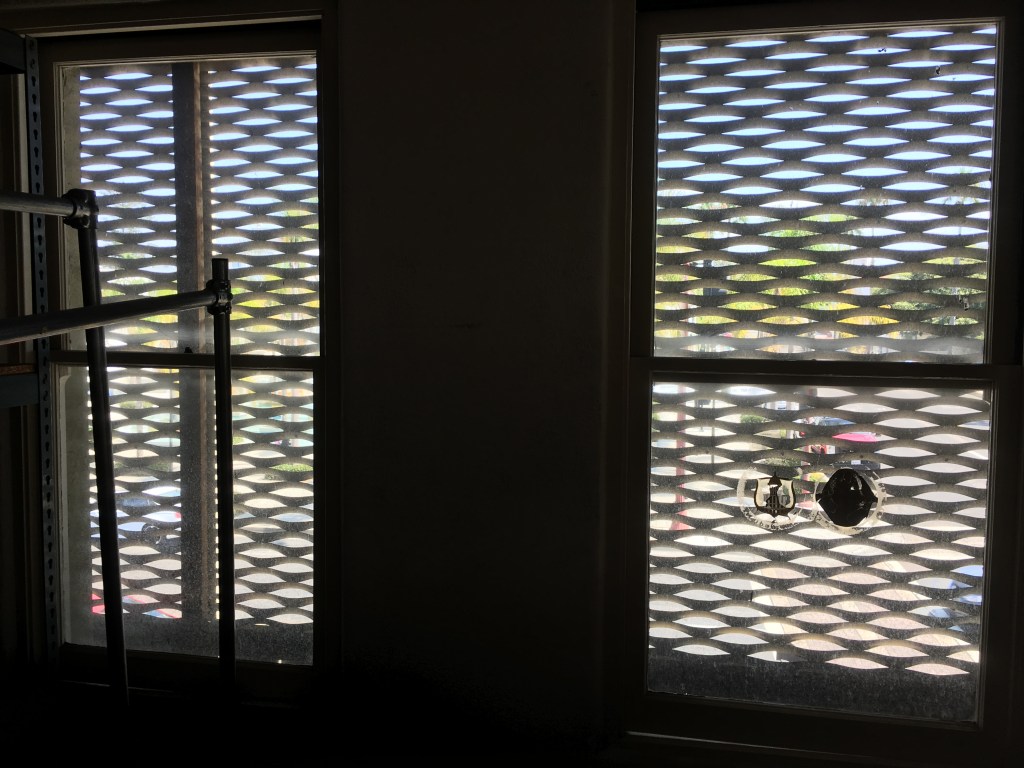
In or about 1965, the owners “modernized” the exterior of the building, placing the metal screening along the upper portion and adding the large awning which changed the whole look of the building. Ceramic tiling was added to the exterior and the beautiful grating above the windows was either removed or covered as well.

Mason Building/H&M Military Store, 1979 Oceanside Historical Society

In 1973 Harry and Mary Cathey purchased the building at 301 North Hill/Coast Highway. Prior to that they had been tenants operating H&M Military Store which became a very successful business for decades. The Cathey’s and their store were fixtures in downtown Oceanside, supporting the military and their community. They sponsoring the local parades for many years.

301 North Hill aka Coast Highway (google view 2017)

Harry Eugene Cathey was born in Arkansas in 1928. He served in the United States Marine Corps and was stationed at Camp Pendleton. After he got out of the service, he and his wife Mary made their home in Oceanside. Harry operated Harry’s Shoe Repair store at 304 Third Street in 1954, and later moved into the Mason Building at 410 Third Street (Pier View Way) opening the Square Deal Shoe Repair store.

John Gomez with patron in the Esquire Barber Shop, 412 Third Street/Pier View Way, circa 1970s. Oceanside Historical Society

In 1954 Jack Noble operated Noble’s Barber Shop at 412 Third Street which later became the Esquire Barber Shop by 1959 and still operates under the same name today and owned by John Gomez.

410 and 412 Pier View Way (photo taken in 2019)

While the barber shop and another storefront continues to operate at 410 and 412 Pier View, the majority of the building sits empty. Its exterior has been marred by the removal of ceramic tiling (not original to the building) with boarded windows.

Damage to exterior with the removal of the ceramic tile. (photo taken March 8, 2024)

There is hope for the building. The large, corrugated metal façade which wraps around the upper portion of the building could be removed and the original exterior on the second story appears largely, if not completely, intact and would reveal its original cement finish in art deco style.

View of metal façade from interior second floor (photo taken in 2017)

Just what will become of the building is unknown but certainly its history is worth knowing and the building worth preserving. The potential for exposing the beautiful Art Deco façade and beautifying this downtown corner is just waiting to happen.

Historic homes and buildings provide character and a sense of place. “How will we know it’s us without our past?” – John Steinbeck, Grapes of Wrath