History of Oceanside Street Names

Have you ever wondered why a street you travel or live on has a certain name? Developers typically get to name the streets in their subdivisions and years ago streets were named after early landowners and pioneers.

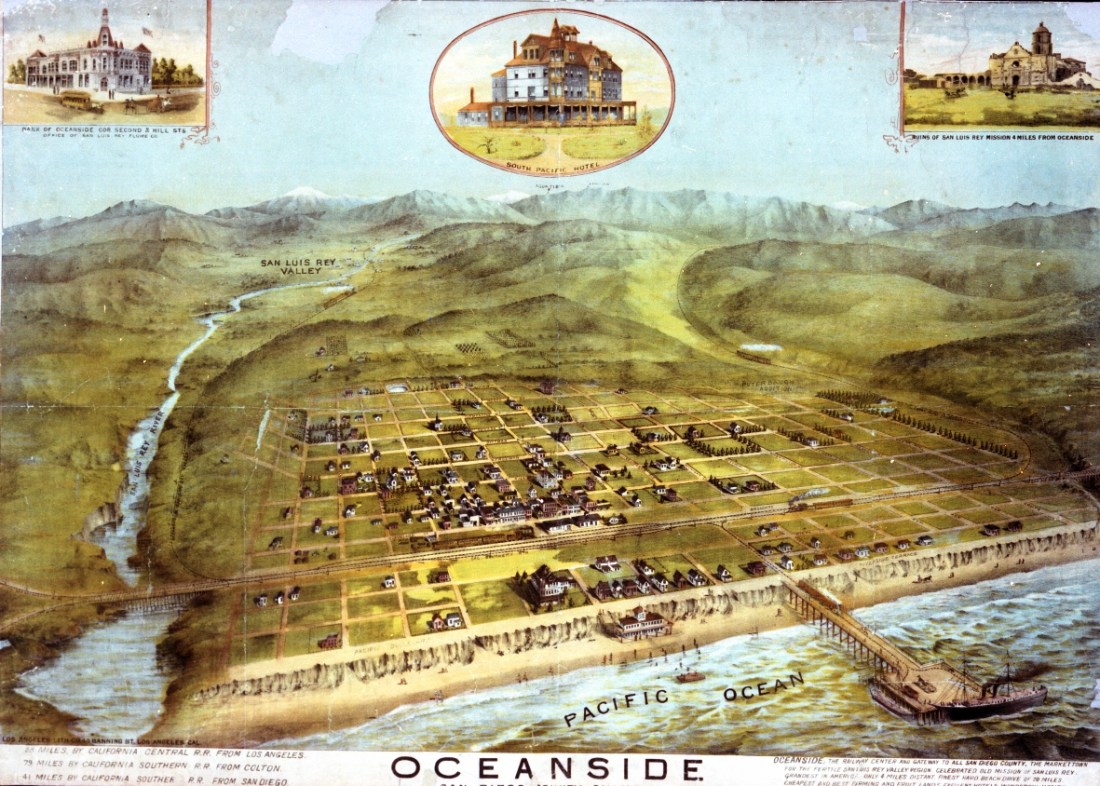
Lithograph of Oceanside in 1887. The first pier had yet to be built in this rendering and no, the train never traveled down the pier.

Since several Oceanside street names were changed in 1996, it has been diffi­cult for longtime residents to call Hill Street anything but Hill Street. Along with the name change of our beloved “main street” came new names to remember: Seagaze, Sportfisher, Neptune, etc. when First Street through Eighth Streets became a thing of the past.  However, Second Street had been conspicuously missing for decades when it was changed to Mission Avenue back in the 1950s, and no one seemed to question why.

Mission Avenue in the 1940s when it was still called Second Street.

Although residents may still lament the loss of their beloved Hill Street since it was changed to Coast Highway, several street names have been changed over the years including Short Street to Oceanside Boulevard; Couts Street to Wisconsin Avenue and the Paseo Del Mar to The Strand, just to name a few. Pacific Street north of Fifth Street (Sportfisher now) was called Washington Street! Temple Street south of West Street is now South Nevada and Boone Street south of West Street was renamed South Clementine.
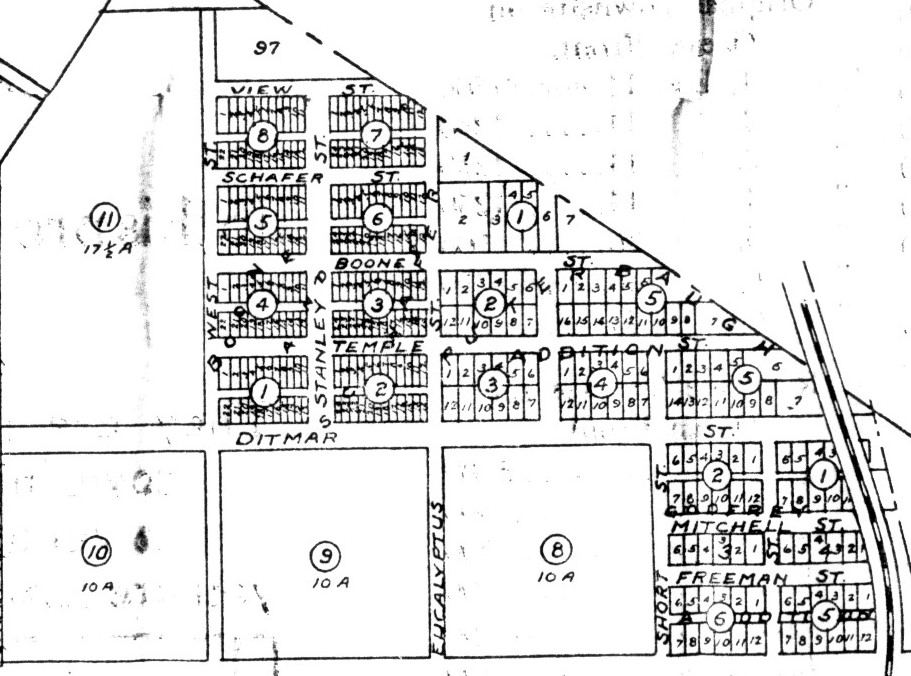
1913 Map of Oceanside showing Boone and Temple Streets south of West Street. They have since been renamed Nevada and Clementine as a continuation of those streets.

However, we can still celebrate the many street names that have been with us from the 1880s when Oceanside was being laid out and developed. 

Cassidy Street in South Oceanside was named after Andrew Cassidy, an early San Diego County resident.  According to a biography written by William E. Smythe in 1908, Cassidy “came to America when 17 and was employed three years at West Point, in the Engineering Corps.” He was stationed in San Diego in 1853 and was acquainted with Col. Cave J. Couts of Rancho Guajome, who also attended West Point. Cassidy served as a pallbearer at the funeral of Col. Cout’s widow, Ysidora Bandini Couts who died in 1897.

Cottingham Street is named after Louis Cottingham, a former city attorney and longtime Oceanside resident.

Couts Street west of the railroad was named after Cave Couts, Jr., who surveyed the new Oceanside townsite in 1883. Couts Street was changed to Wisconsin Avenue in 1927 as a continuation of that street.

Cave Couts, son of Col. Cave Couts.

Crouch Street was named after Herbert Crouch, a sheep rancher from Australia.  Mr. Crouch settled in the San Luis Rey Valley in 1869. When Mr. Crouch came to San Luis Rey he engaged in the sheep business and “the present site of Oceanside at that time was used as a part of his grazing range.”  Herbert Crouch was an historian in his own right and contributed many articles to the local newspapers.  He also kept records of weather conditions and rainfall which were studied by the county weather bureau.
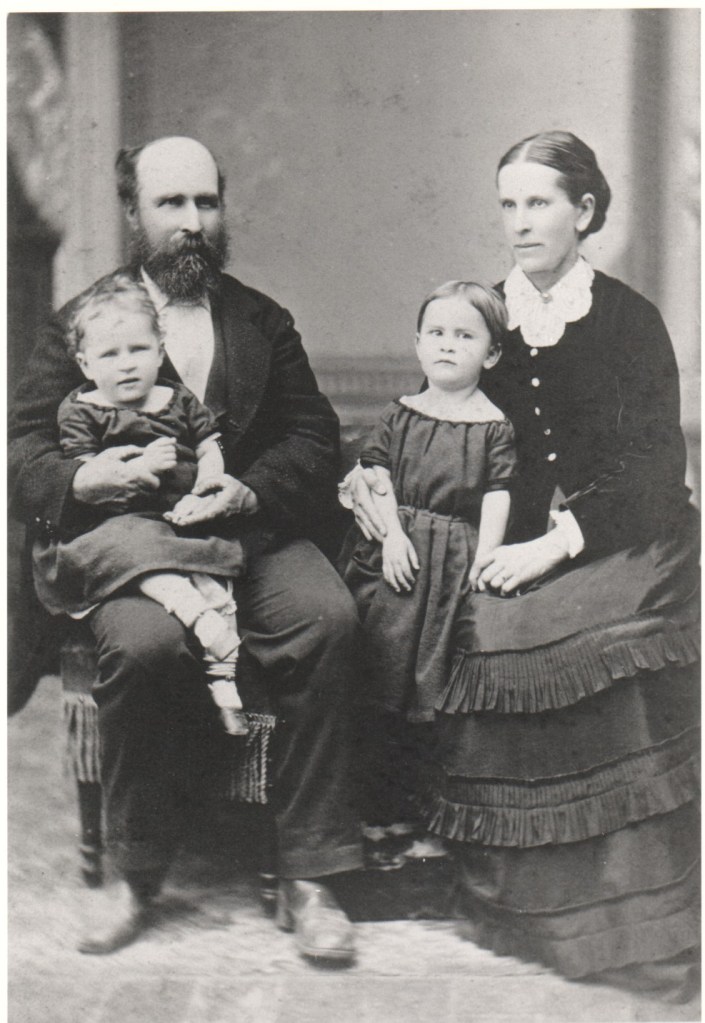
Herbert and Martha Crouch with daughters Lucy and Emily.

Downs Street was named after Ralph Downs who owned 26 acres in the Fire Mountain neighborhood. His son, Jim Downs remembered that City Engineer Alton L. Ruden, who was a friend of his father, surprised their family by naming the road “Downs Street” in the mid-1950s.  In the 1960s the developer of a new subdivision submitted “Ups” Circle to the city planners as a joke. The street name was accepted which led to the amusing intersection of Ups and Downs. 

Ellery Street is named after Henry Ellery who subdivided the tract which includes the Loma Alta neighborhood. In addition to being a real estate developer, Ellery owned a grocery store and operated a large bean warehouse here for many years. It is believed that the small street of Rose Place was named after the mother of Ellery’s wife, Ada.
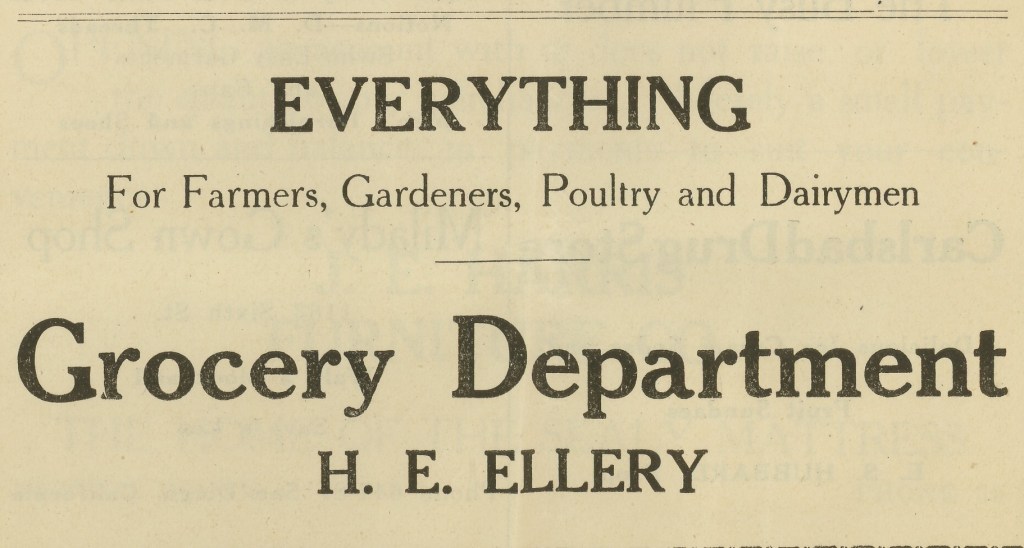
1924 advertisement for H. E. Ellery

Foussat Street was named after the Foussat family, particularly Hubert Foussat who came from France to San Diego County in 1871. His son Ramon lived near the area of the present day Foussat Street and Oceanside Boulevard. Ramon’s stepdaughter, Louise Munoa Foussat, was a Luiseno Indian who lived to be 97 years old.  Louise Foussat now has an elementary school named after her.

Ramon Foussat, left, at Walnut Grove off present day Oceanside Boulevard and Foussat Street.

Freeman Street named after the Freeman family, were early pioneers of the San Luis Rey Valley who came from Texas in the late 1860s. Many members of this family are buried in the Pioneer Cemetery in San Luis Rey. Archie Freeman, son of Alfred A. and Permelia Freeman was a deputy constable and one of the first blacksmiths in Oceanside.

Hayes Street was named after John Chauncey Hayes, an early San Luis Rey Valley resident.  Hayes was an attorney, justice of the peace, newspaper editor of the South Oceanside Diamond and real estate agent in Oceanside for several decades. His place in Oceanside history is disproportionate to the tiny little street that bears his name.

John Chauncey Hayes

Hicks Street was named after James Van Renslear Hicks who came to California and settled in San Diego County in 1874.  He served as Oceanside’s deputy sheriff and city trustee, as well as justice of the peace. In 1886, he joined John Chauncey Hayes and went into the real estate business.

Horne Street was named after Col. Daniel H. Horne who came to Oceanside from Kansas around 1886.  Col. Horne’s large home and property was located where the Mission Square Shopping Center is now, at Horne and Mission (then Second Street).  He was Oceanside’s first mayor, or president of the City Trustees in 1888. Horne helped to found the state capital city of Topeka, Kansas, which is how Topeka Street got its name. 
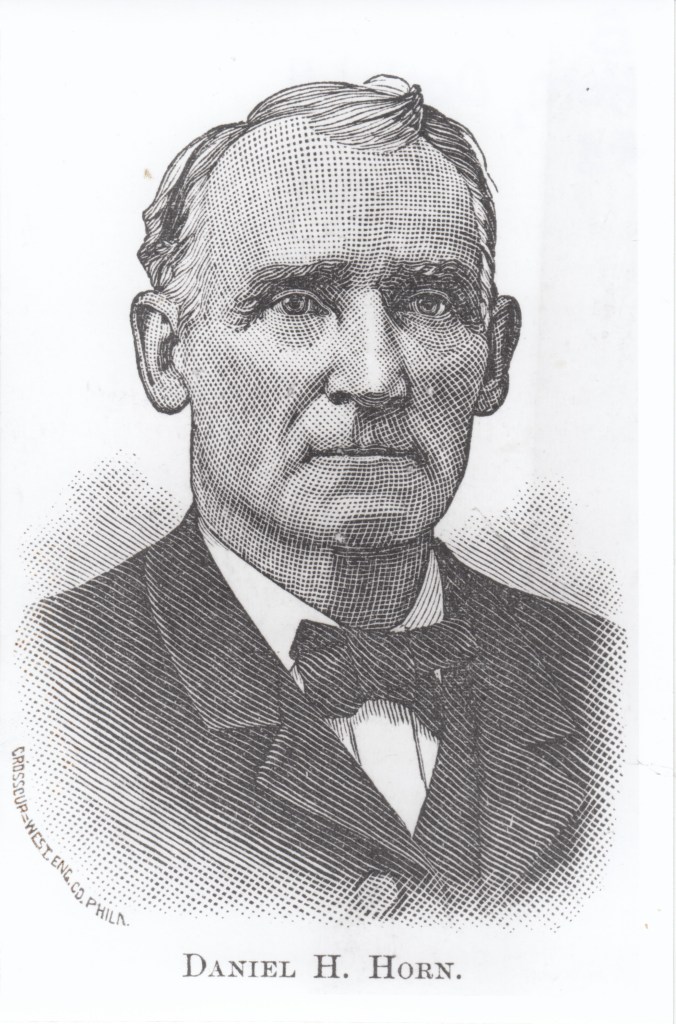
Col. Daniel H. Horne (the spelling of his name varied in publications) Courtesy Kansas Historical Society

Hunsaker Street was named after Attorney William J. Hunsaker.  Hunsaker was a partner in the law firm Hunsaker, Britt & Lamme.  He represented John Chauncey Hayes in a suit against the City of Oceanside and also defended John W. Murray, who shot and killed Oceanside’s Marshal Charles Wilson in 1889.
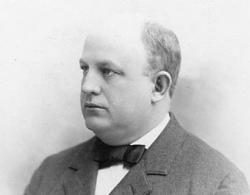
William Hunsaker

Kurtz Street was named after Daniel B. Kurtz who came to San Diego County in 1850 and elected Mayor of Old Town San Diego in 1851.  He settled in San Luis Rey in 1866 and served as Judge.

Daniel B. Kurtz

Lucky Street was named by and after Elgin “Lucky” Lackey. Lucky owned a café, then later Pacific Holidayland and developed small subdivision off of California Street in the late 1950s.

Machado Street was named for an early Spanish family.  Mac and Juan Machado were in business with Louis Wolf in the early 1880’s.

Maxson Street was named after Charles W. Maxson who arrived in San Diego on March 24, 1886.  Shortly afterward he came to Oceanside and joined with C. F. Francisco to open a general merchandise store.  He later entered the real estate and insurance business with Ben F. Griffin.  Maxson was also one of Oceanside’s first city trustees.

Mitchell Street was named after John Mitchell who came to Oceanside in 1887.  He had previously lived in Fallbrook and planted extensive orchards there.  He purchased property in Oceanside and owned a home on Pacific Street.

Myers Street was named after Oceanside’s founder, Andrew Jackson Myers.  He first settled in the San Luis Rey Valley and in 1883 received a land grant of 160 acres. A. J. Myers hired Cave Couts, Jr. to lay out the townsite and together with John Chauncey Hayes developed the town of Oceanside and began the naming of our city streets.

Oceanside’s Founder Andrew Jackson Myers

Nevada Street was said to “bear the name of the daughter of one of the first settlers, a young lady who was the belle of the village in the late 80’s.” Nevada McCullough was the daughter of John and Mary McCullough. The McCulloughs moved to Oceanside in its earliest days and were said to be some of the first residents here. 

Reese Street, is believed to be originally Reece Street, and was named after Oscar M. Reece who came to Oceanside in February of 1885 when Oceanside was said to have had only three houses.  He began a general merchandise business with his brother and was later elected Justice of the Peace.  He also engaged in the sale of real estate and was a notary public.

Reece Brothers Pioneer Store in about 1885 downtown Oceanside.

Short Street, named after an early attorney, Montgomery Short who arrived in Oceanside in 1886, extended eastward from the railroad tracks and ended at about Nevada Street. West of the railroad tracks the street was then labeled as McCoy Street after another early pioneer. In the mid-1960s Short and McCoy Streets were changed to Oceanside Boulevard.

Tait Street, which runs parallel to Pacific Street just south of Wisconsin Street, was named after Magnus Tait, an early pioneer and manager of the Oceanside Water Works in 1888.  His home is still standing at 511 North Tremont Street.

Tyson Street bears the name of Samuel Tyson, one of the earliest settlers in our city. Sam claimed to have built just the second house in Oceanside, just after the city founder’s A. J. Myers.

Weitzel Street was named after Martin S. Weitzel, a pharmacist who brought his family to Oceanside in 1885.
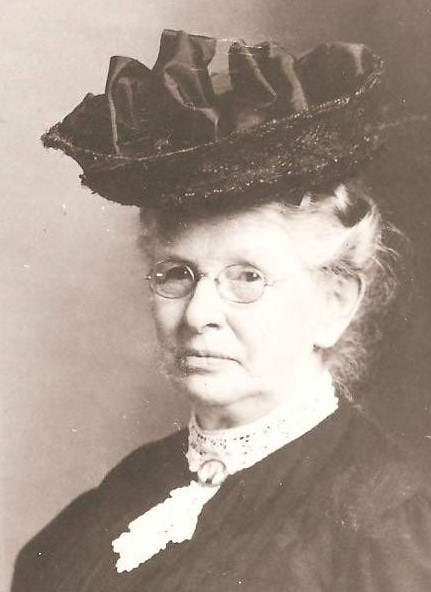
Sarah C. Weitzel, wife of Martin Weitzel.

Whaley Street was named after Francis Hinton Whaley, an early pioneer resident of San Luis Rey Township.  He was born in Old Town, San Diego and is said to have been the first white child born there. Whaley was the Editor of the San Luis Rey Star newspaper in the San Luis Rey Township in early 1880’s.  This newspaper was later moved to Oceanside and became the Oceanside Star, which then became the Oceanside Blade. The Whaley House in Old Town San Diego is one of the most haunted places in America.

Wilcox Street is named after Ray Wilcox, who was a manager of Oceanside’s early Safeway store in the 1920’s.  He later opened a real estate office, Wilcox Investment Company, and went on to become Oceanside’s mayor in 1946.

Ray Wilcox, 1938

So what is the origination of our beloved Hill Street?  There’s no clear answer but it is probable that plagiarism was involved. Hill Street, Cleveland, Broadway, Tremont and Ditmar Streets are names found in the cities of San Diego and Los Angeles.

How did Oceanside get its name?  In 1888 the South Oceanside Diamond newspaper reported that “whenever the families of the San Luis Rey Valley desired recreation and a picnic place” folks would simply suggest, “Let’s go to the ocean side.”  In 1883 after a land grant was issued to founder Andrew Jackson Myers, he began to advertise his newly formed town of “Oceanside” as a seaside resort with miles of coastline.  
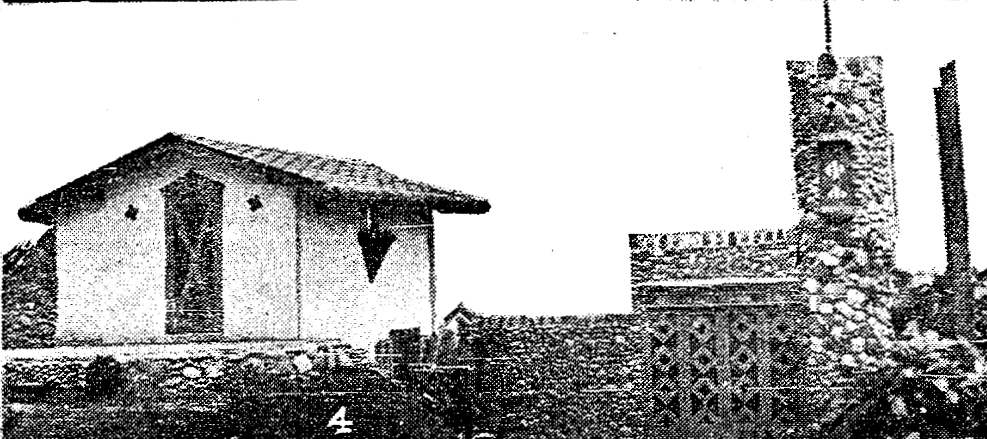
The Legend of the Castle House on Mesa Drive

For decades the mystery of the castle on Mesa Drive has captivated a select number of Oceanside residents. There are several social media threads in which people inquire “do you remember the castle house?” There are no pictures and little information. Only the memories of children and teenagers who remembered that the castle was haunted or spooky. Rumors or perhaps truth, that an old man lived there, who would threaten them with a salt rock rifle. The house looked odd and eerie. It was made entirely of beach rock they said.

Yolanda Mitchell remembers as a little girl growing up in the 1960s that the house was two stories, made of stone. It both captivated and frightened young children. “None of us had the nerve to go in there. In fact, we thought if you went in there you might not come out. So, we never did,” Yolanda said. But the memory of the castle is so vivid, even to this day, every time she drives down Mesa Drive, she still looks for the “castle.”

But just who built this castle-shaped house? Who lived there and what became of it?

Noah Freeman purchased a portion of Tract 8 in the Ellery Addition in about 1929. The subdivision was established by Henry E. Ellery in 1925, which runs along Mesa Drive from Rose Place to the then city limits (which ended just about where Pajama Drive intersects Mesa).

1939 Map of Ellery Addition in 1939

Little is known about Noah Freeman, but he was born June 19,1880 in Boston, Massachusetts. In 1920 he was living in Michigan working as a machinist. It appears he was never married. At some point, year unknown, he made his way to California and purchased a vacant lot in Oceanside.

Freeman lived a solitary life on his property off Mesa Drive, which provided expansive views of the San Luis Rey Valley. He made his living as a farmer and doing odd jobs. But as inconspicuous as the life of Noah Freeman was, the small home which he built upon his triangular shaped plot of land would make the newspaper for curious reasons. And little did anyone know — would become the stuff local legends are made of.

On July 15, 1934, the San Diego Union published an extensive piece about Oceanside, detailing its establishment and then its amenities as a city. Included in this feature were images of different architectural styles, namely the Mission San Luis Rey, the Healing Temple of the Rosicrucian Fellowship, the Oceanside-Carlsbad Union High School, Oceanside Pier, AND, the home of Noah Freeman, “self-made architect.”

It included the only image of the house that at present can be found. Are there others out there? It is very likely, but they have yet to be shared.

Noah Freeman’s Castle, from the July 15, 1934 Sunday edition of the San Diego Union

The article read as follows: “On Mesa Drive, [at] the rim of the hills east of Oceanside, is a residence that’s unique. It has been built, piece by piece and over a five-year period, by Noah Freeman, its owner, and behind its size and form there’s a story.

“Freeman first built a cracker box stucco room as a base for tending his avocado trees. Then he picked up a wheel barrel load of field stone and stoned one wall of the stucco house. ‘I had some stones left over, so I started a stone garage,’ says Freeman.

“Every time I finish something I had stones leftover, and I started something else. Then I had to get more stones to finish it, and I got enough to start something else again. I followed no plan or idea, unless it was subconsciously, and if the various units harmonize, it is because of intuition, not design.”

The article goes on to describe what would be known in later years as the “castle”: “The spectacular feature of Freeman’s rambling rock establishment is a tower room above the garage, barely large enough to contain a single bed. It is reached by a ladder, set vertically in the rounded interior of the tower’s base, so that the climbing visitor fits into available space, almost as smoothly as a cylinder in a pneumatic tube.

“In a single room of this distinctive structure, Freeman lives and ignores economic conditions almost entirely. ‘I keep a goat,’ he explains pointing to a newly finished goat yard built of old bricks burned in Oceanside in the 1880s, ‘and the goat keeps me. Her milk, with a little fruit and some vegetables, is all I require. I do odd jobs for money when taxes come due, and my avocados will bear pretty soon.’

The article finishes by saying that “Freeman is one of the many who have adapted to their own tastes like the slogan ‘Oceanside, where life is worth living.’”

1937 aerial view of Mesa Drive, (C-4261-44) CSB Library Geospatial Collection


Freeman was mentioned again in the San Diego Union on November 7, 1934, when it noted that “Noah Freeman, Oceanside, self-made architect, who designed and built his “most uniquest” home east of town climbed El Morro, nine years ago.” It went on to describe the large hill and the steep pitch reported by Freeman, but just why this was newsworthy, is unknown, but it suggests that Freeman had come to San Diego County as early as 1925.  

Noah continued to occupy his property until 1938 when the Oceanside Blade Tribune announced on April 16 that “a ranch in the Ellery tract that was owned by Noah Freeman has been sold to Mr. and Mrs. George Babb of Kansas City.” The Babb’s did not occupy the property but may have leased it.

By 1940 Noah Freeman was living at the Self-Realization Fellowship in Los Angeles and working as a janitor there. The census record of that year has a notation that reads: “Wages in this institution are paid in board and room, plus small cash allowance.”

Two years later he was working and living at the Page Military Academy in Los Angeles. In 1950 he was living in a small house he owned on Quail Drive. Sadly by 1967 Freeman had been declared “incompetent” and his property sold. He died on May 29, 1968, and his passing was noted only by a small death notice published in the Los Angeles Times. No survivors or family members were mentioned.

Noah Freeman’s death announcement in the Los Angeles Times, May 28, 1968

While that marked the end of Noah Freeman’s life, the little castle on Mesa Drive lived on. In 1940 the stone house and the property it stood upon was sold to Karl Stebinger. If Noah Freeman was somewhat of an enigma, the same can be said about Stebinger.

Stebinger was born December 26, 1873, in Freiburg, Germany. He came to the United States in 1893 and became a naturalized citizen. In 1900 he was living in Riverside, California and making a living as a farmer. By 1917 he was in Kern County, California engaged in stock raising. Moving to his property in Oceanside he was listed as a “nurseryman” in public records.

Like Freeman, Stebinger never married and lived in solitude. He occupied his little “castle” but over the years apparently grew tired, then angry at curious passersby. Stories of Stebinger chasing off, or at least scaring, trespassers with a rifle were shared amongst neighbors.

One Facebook member posted her memories: “I grew up on South Barnwell Street from 1960-1972. There was an old man who lived in that castle in the early years who supposedly built it. I used to sell stationery and stuff for Camp Fire Girls and would be the only one who would go near it because the kids were afraid of it. The man was old, and not very friendly, maybe a little crazy. When I knocked on the door he just shouted, “NO SOLICITORS!”. My parents told me never to go to that house again. It was shaped like a castle, made entirely of beach rock and shells and mortar, and it stood out because it did not match any other houses in the whole neighborhood. Even back then it had very little if any landscaping, so it looked abandoned, but someone definitely lived there, did not have a car, and had a magnificent view of the valley from the rear.”

Karl Stebinger sold his property in 1964 to residents Dave and Barbara Jones, but he may have continued to live there until his death on November 10, 1968 (the same year as Noah Freeman died).

Now unoccupied, the “castle” could be explored by those brave enough to venture onto the property. One neighborhood resident remembered going to the castle with her friends in the early 1970s. She described it as “dirty” with “empty wine bottles around” likely left from other visitors.

Stories abounded and the legend of the castle grew. Tales spread like wildfire and rumors became truth solidified in ghost stories told at slumber parties. Many believed a witch lived there and surely it was haunted.

Frank Quan posted his memories which echoed the fear of many at just the sight of the castle: “I rode past there every morning delivering the Union. I’d pedal as fast as I could and try not look over there.”

Sean Griffin remembers that the castle looked right down at his house on Turnbull Street and can still picture its turret-like roof and the fear the castle evoked. “As a kid, I always thought it was huge, but I know it really wasn’t that big. Growing up on Turnbull Street in the 1960s, the rumors of how it was haunted scared most of the kids in the neighborhood. At night, I would always run home from my friend’s house because I was scared of the castle. The older kids would dare us to go up and touch the wall and we would run down the hill scared to death.”

By 1999 the land once owned by Noah Freeman was cleared, and the castle he built torn down. By 2000 four new homes were under construction and the property it sat on became part of suburbia. But the legend of the “castle” lives on in the memories (and perhaps nightmares) of a select number of locals who long for just one more glimpse of that rock house, to either satisfy their curiosity or make their heart pound with fear again.

Thank you to Sean Griffin, Janice Ulmer, Randy Carpenter and Yolanda Mitchell for sharing their memories.