Oceanside Neighborhoods

Our City is made up of many different neighborhoods, often with their own unique characteristics, history and even architecture. As Oceanside’s population grew, its borders expanded with various subdivisions and new housing developments. From the exclusive enclave of St. Malo to Potter homes in South Oceanside and Francine Villa in North Oceanside, Oceanside neighborhoods are as diverse as the people who live here. Here are a few neighborhoods, some forgotten and others well remembered.

Guidottiville

Guidottiville was named by and after Amerigo Edwardo Guidotti. The area was near what is referred to as Lawrence Canyon just south of present Highway 76.  Guidotti built his residence there along with several rentals and lived there for many years. The homes were removed by the 1980s to make way for the Highway construction.
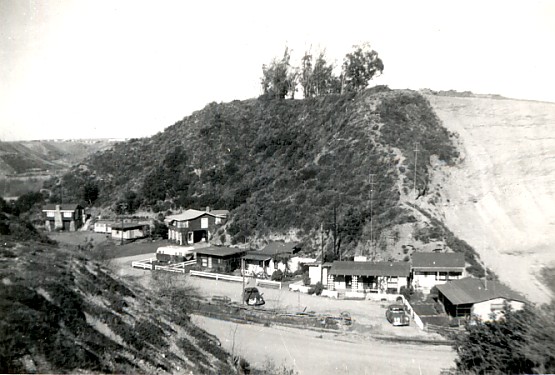
Guidottiville in Lawrence Canyon, south of present day Highway 76

Pine Heights

Pine Heights was a rather remote area of Oceanside, accessible only via Eighth Street, now called Neptune Way. Pine Heights provided expansive view of Oceanside and panoramic view of the Pacific Ocean.  Niels Hansen, a local grocer, built a large Craftsman style home designed by noted architects the Quale Brothers in 1908.  Also that year, Attorney John Johnston hired prominent Chicago and San Diego architect Henry Lord Gay, to design his $10,000 home in Pine Heights.  The Hansen house was later moved to North Clementine Street but the Johnston home was demolished. Pine Heights is now the location of a 15-acre condo development by Evening Star Development.
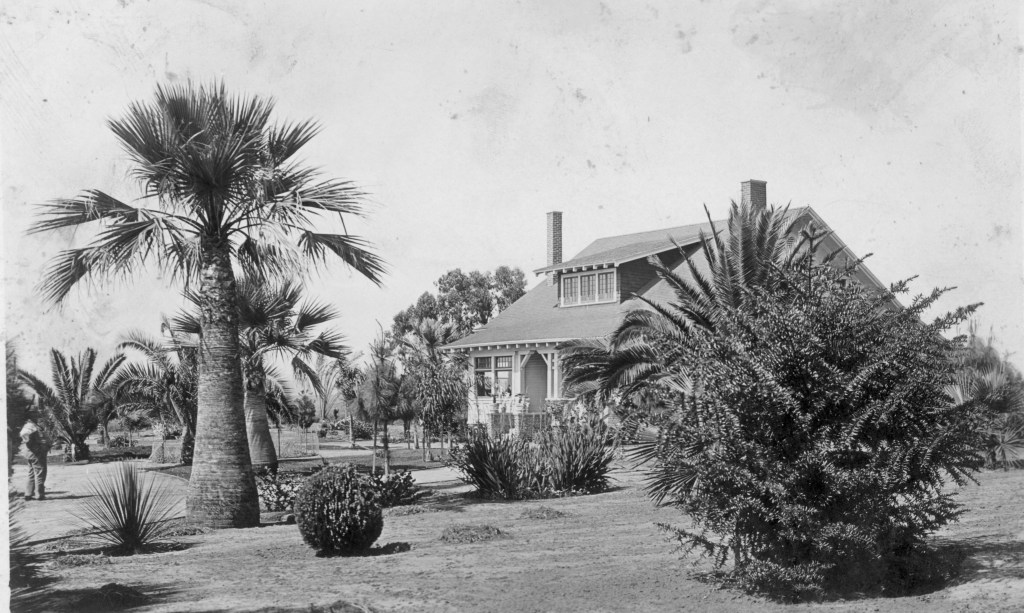
The Hansen Home in Pine Heights.

North Oceanside Terrace

A new subdivision established in the late 1940s was situated along the northern most border of Oceanside along Camp Pendleton. North Oceanside Terrace includes Capistrano Drive, San Luis Rey Drive, Monterey and Sunset and other streets. Many of the homes built there were built in the early to mid 1950s and purchased by the military families that were stationed at Camp Pendleton. In 1953 the City approved Francine Villas to the east, adding over 300 homes. These homes were introduced as rentals to military and civilians with a two bedroom home renting for $72.75 and a three bedroom for $82.75. Because of the growing density and traffic, an additional entry into the neighborhood was provided, initially called “River Road”. Later Loretta Street from the Eastside neighborhood would be built across the San Luis Rey River to provide residents access. In 1955, construction of North Terrace Elementary School began, opening the following year. Today the area is more commonly referred to as Capistrano because of the area park.

1974 aerial of a portion of North Terrace neighborhood, school and Loretta Street crossing.

South Oceanside

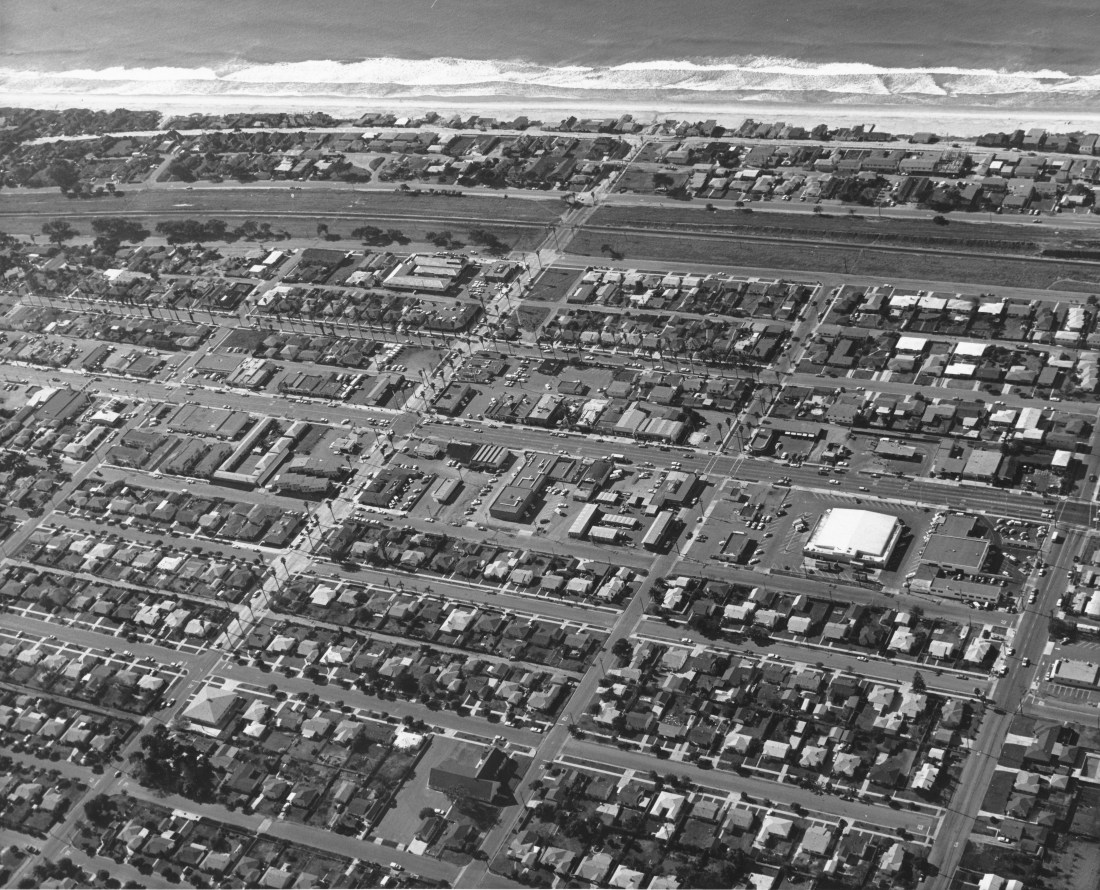
John Chauncey Hayes established South Oceanside, a small township just south of the City of Oceanside in the 1880s.  In the earliest days it had its own bank, a school building, cemetery, several brick residences and a newspaper, the South Oceanside Diamond.  This largely rural area included the Spaulding Dairy (established about 1913) and was home to acres of flower fields owned by the Frazee family and others. It turned residential when Walter H. Potter, “the man who built South Oceanside” began building dozens of small homes in 1947 that stretched from Morse Street to Vista Way.
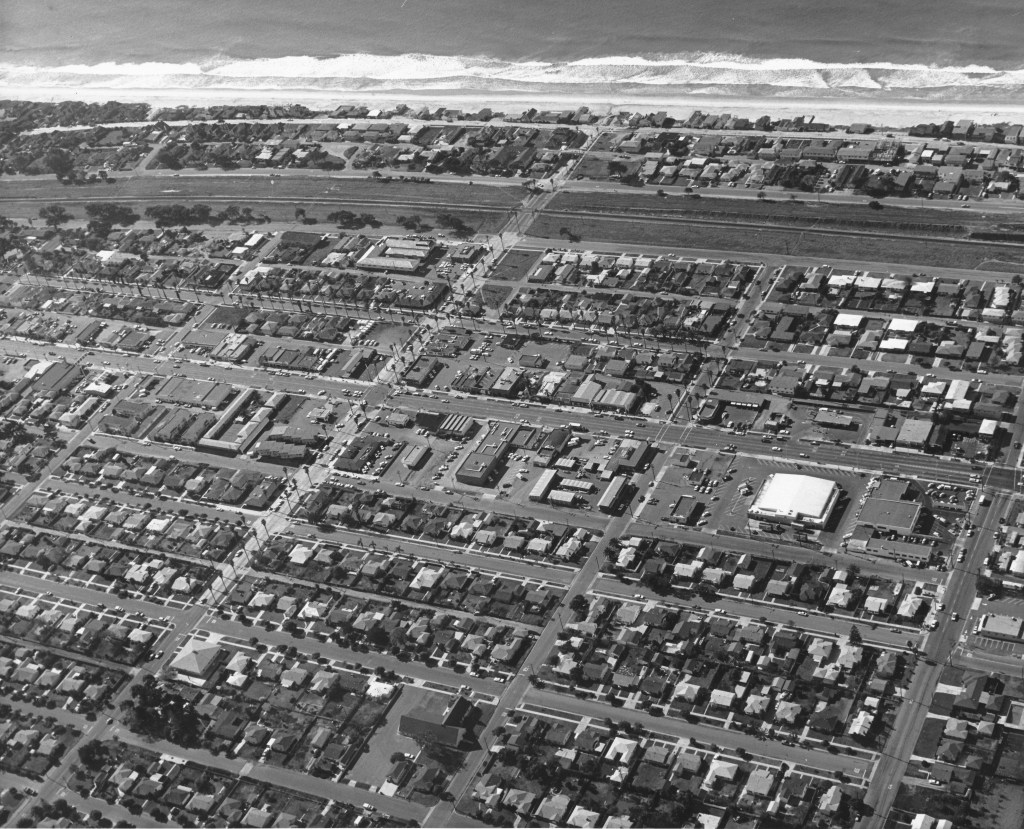
Aerial view of South Oceanside looking west, circa 1970

Eastside

The Eastside neighborhood is just east of Interstate 5 and north of Mission Avenue, with entrance by Bush or San Diego Streets. The subdivisions of Mingus & Overman, Reece, Spencer, Higgins & Puls, which encompass the area, were mostly farmland when families from Mexico began settling there in the 1910s and 1920s.  Most of the early residents were laborers who worked in the fields of the San Luis Rey Valley and the Rancho Santa Margarita (now Camp Pendleton). Many of the homes were built between 1920 and 1940 by the hardworking fathers and grandfathers of the families that still call Eastside their home. This neighborhood was referred to as “Mexican Village” by local officials but residents called it Posole. It was last neighborhood to have paved streets and a sewer system, which were not added until the late 1940s! Eastside was also the home of Oceanside’s first growing Black population in the 1940s and 1950s, along with Samoan and Filipino families.

Higgins and Santa Barbara Streets in Eastside shows dirt streets and houses on blocks because of the lack of sewer system.

Mesa Margarita

As Oceanside’s population grew at steady pace in the 1950s and 1960s, its borders continued to extend eastward. New housing was always in demand. Sproul Homes developed many new neighborhoods including Mesa Margarita, which is often referred as the “Back Gate” area because of its proximity to northeast entrance to Camp Pendleton.   In 1965, 62 acres along North River Road were purchased by Fred C. Sproul Homes, Inc., a residential development firm, from Harold Stokes and Joe Higley.  The Stokes and Higley families were long time dairy farmers in the San Luis Rey Valley. With the plan to build 275 new homes on the property it was one of several developments that changed the landscape of rural to suburban.

Sproul Homes ad in 1963

Oceana

One of the first adult only communities built in Southern California was that of Oceana. Situated east of El Camino Real and south of Mission Avenue, this planned community was built in 1964 at a cost of $25 million.  It was touted as being “a city within a city” built on 180 acres with 1,500 lanai cottages and 300 apartments.  At the time it was built it required that at least one adult be age 40 or over. A two bedroom, two bath model was listed at $16,995 and the community offered a variety of amenities which included a pool, golfing, library and restaurant.

Oceana development in 1960s

Henie Hills

Henie Hills was owned by figure-skater Sonja Henie. Sonja and her brother Lief purchased 1,600 acres of ranch land in about 1941 which included the present day El Camino Country Club. In the early 1950’s the Henies began subdividing part of the land near El Camino Real at which time some of the first custom homes were built. A portion of this land was sold to Tri-City Hospital and eventually acquired by MiraCosta College. Miss Henie built a large house on Oceanview Drive, which she used during her visits here from her native Norway.  She continued ownership of 350 acres until 1968.  In the 1974 Henie Hills opened as one of the nation’s first planned residential estates community, offering homes on estate-size lots averaging one-half acre with views of the sea, mountains and golf fairways in the valley below. Home prices ranged from $54,000 to $81,000.

Driving Range at golf course, Henie Hills sign in background

Fire Mountain

Fire Mountain was at one time called “North Carlsbad”.  It was a largely rural area planted with avocado and citrus groves, consisting of approximately 338 acres. While the town of Carlsbad eventually grew and incorporated, North Carlsbad remained an unincorporated area of San Diego County, an island surrounded by the city limits of Oceanside. The City of Oceanside annexed the area in the 1960s. It has developed into a desirable neighborhood simply named after the road traveling through it, consisting of middle-class homes, tract and custom homes, many of which sit on large lots, some offering views of the Pacific Ocean.
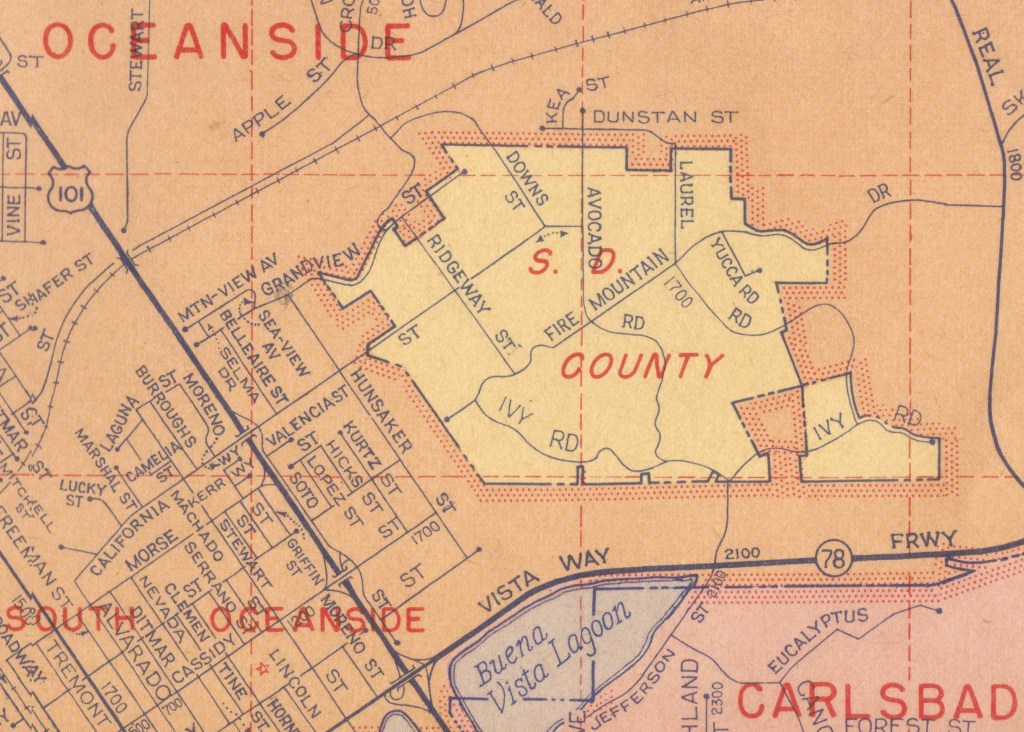
1956 Thomas Guide of Fire Mountain area before annexed to Oceanside.

St. Malo

A group of twelve homes was built by 1934 in an exclusive enclave in South Oceanside at the end of Pacific Street. Pasadena resident Kenyon A. Keith purchased 28 acres of oceanfront property and contained homes resembling a French fishing village that was known as St. Malo. Well-to-do property owners used St. Malo for vacation and summer homes.  Early film director Jason S. Joy’s home was identified as “La Garde Joyeuse” and included an outdoor bowling alley and volley ball court.  Author Ben Hecht was another resident, as well as Frank Butler, who co-wrote “Going My Way”.  The beautiful community of St. Malo remains one of Oceanside’s best kept secret and continues to serve as summer homes and getaways for the rich and famous. 

St. Malo homes fronting the Pacific Oceanside. Jason Joy house far right.

Plumosa Heights

Banker B.C. Beers established a new subdivision in the 1920s called Plumosa Heights, named for the plumosa palms lining the streets.  This once exclusive neighborhood includes West and Shafer Streets, two of the street names are named for his children, Alberta and Leonard.  The Plumosa Subdivision required at least a $4000 structure on the property to be set back at least twenty feet from the street.  Plumosa Heights continues to be a desirable neighborhood with concrete streets and original cement light posts.  Although it was the home of many affluent Oceanside residents, it was also inhabited by Oceanside’s middle class.
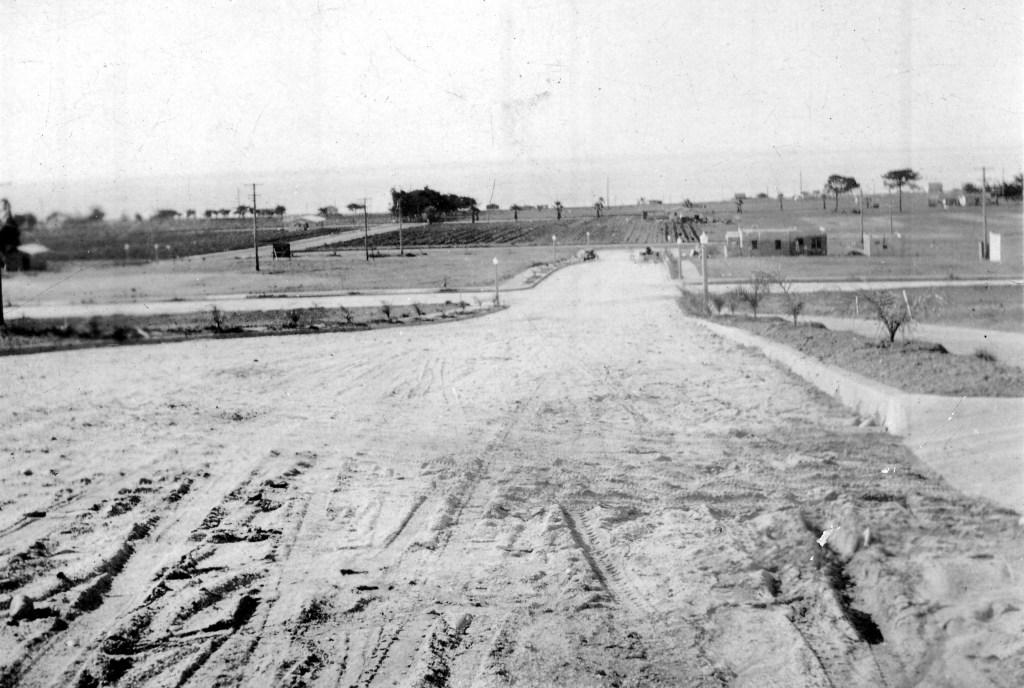
Leonard Street looking west at South Clementine and South Ditmar Streets, circa 1925

The Rise and Fall and Rise Again of the Oceanside Pier

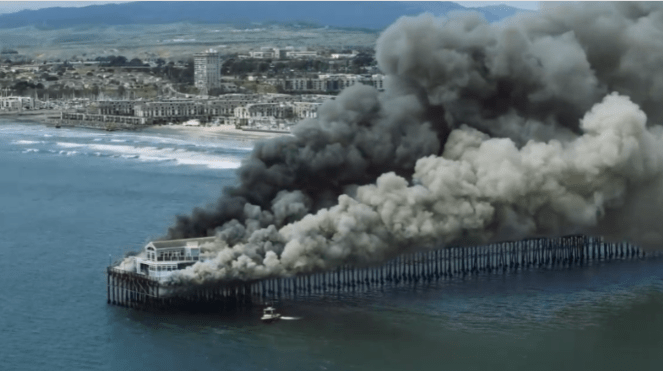
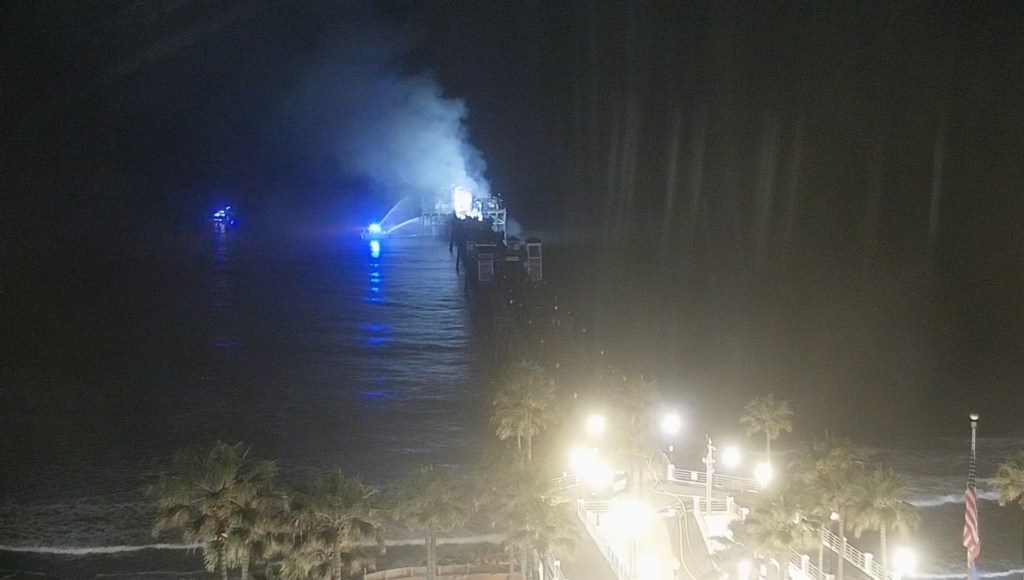
The pier fire on April 25, 2024 shocked residents of Oceanside, stunned to see clouds of black smoke covering the pier, and blanketing downtown.  People lined Pacific Street, streaming live on social media as they watched the pier burn and firefighters battle the blaze. Scores of fire trucks, boats and air support were assembled as the black smoke billowed over downtown. As the fire raged on it seemed the pier would be lost. Smoke and flames continued through the night and daybreak. Emerging from the flames the Oceanside pier stands heavily damaged on the west end. But it still stands.

Oceanside Pier Fire April 24, 2024 (Fox 5 San Diego)

The Oceanside Pier has been built and rebuilt six times. It has become a part of our identity as a city. It is part of who we are and we feel emotionally connected to it.  

Pier smoldering into the night and next morning

One hundred thirty-six years ago, our first pier was built in 1888 at the end of Wisconsin Street (formerly Couts Street). That same year Oceanside incorporated as a city. The first pier was called a wharf and it was hoped that Oceanside would become a shipping port. Built by the American Bridge Company of San Francisco, by August the wharf was built to an impressive length of 1200 feet. But the first pier was damaged by storms in December of 1890 and reduced to 940 feet.  By January 1891 a larger stormed finished what was left and swept away all but 300 feet of Oceanside’s first pier and the beach was covered with its debris.

Only known photo of Oceanside’s first pier (in the far distance) taken 1890 (Oceanside Historical Society, Carpenter collection)

While short-lived, Oceanside was invested in having another wharf or pier. Melchior Pieper, manager of the South Pacific Hotel, initiated the idea of rebuilding as he gathered lumber from the first pier that had washed to shore and stored it behind his hotel on Pacific Street.

Pieper suggested that the pier be built at the foot of its present location, Third Street (now Pier View Way).  There was some resistance against the Third Street location, a site between Second and Third was favored, but A. P. Hotaling, the hotel owner, agreed to donate $350 so city officials relented. Pieper donated an additional $100 and offered to house the workmen for free.

The building of Oceanside’s second pier in 1894 (Oceanside Historical Society)

Oceanside’s second pier was completed in 1894. It was small, just initially 400 feet into the ocean, and braced with iron pilings, giving it the name of “the little iron wharf.” It was later extended a few hundred feet, but by 1902 it was damaged severely by heavy storms.

Residents were resolved to have a pier, however, and in 1903 Oceanside’s third pier was built. Supported by steel railway rails purchased from the Southern California Railway Co., it was nearly 1300 feet, later extended to 1400 feet.  It was hailed as Oceanside’s “steel pier.”

Oceanside’s third pier built in 1903 (Oceanside Historical Society)

Again, storms took a toll on our pier when in 1912 supports were swept away from the end of the structure, leaving the stumps of railway steel exposed. Since diving from the pier was allowed, this posed a danger.  A warning sign was put in place to prevent divers from diving from the extreme end. By 1915 the steel pier which once seemed almost invincible, was down to a little more than 800 feet. 

Voters approved a $100,000 bond issue in 1926 to build a fourth pier. In December of that year a single bid of $93,900 from Sidney Smith of Los Angeles was accepted and work began the same month.  Compromises were made as to the construction of the pier as many had called for a concrete pier but the cost was prohibitive. Instead, a concrete approach was built, 300 feet long, with the remaining 1,300 feet built of wood. ( That same concrete portion is still used today, but it now needs to be rebuilt.)

Oceanside’s 4th pier built in 1927 (Oceanside Historical Society)

When the 1600-foot pier was dedicated on July 4, 1927 Oceanside threw a three-day celebration that drew an estimated crowd of 15,000-20,000 to participate in the weekend of festivities.

Pier celebration 1927 (Oceanside Historical Society)

By the 1940s it was evident that the fourth pier would have to be replaced.  The pier that celebrated the roaring ’20s, and survived the Depression, had also aided in World War II. A lookout tower was erected on the end to aid in the search for enemy aircraft and submarines. The added weight of this tower left the pier weakened to a point where its safety was questioned.

Resident E.C. Wickerd, described as a “pier enthusiast”, circulated petitions in favor of saving the pier. He stated, “The pier has been one of Oceanside’s biggest advertising and tourist assets, and should be protected.” But with continuing heavy storms in 1945 and 1946, the pier was closed after being deemed unsafe by deep sea divers and engineers. 

In late February 1946 the proposal was made for a bond election to reconstruct the Oceanside pier.  Three hundred signatures were needed to get on the April 9th ballot.  The needed signatures were collected and the bond election passed. The $200,000 bond would build Oceanside next pier in 1947 to a length of 1,900 feet –the longest on the West Coast.

Fifth Pier built 1947 (Oceanside Historical Society)

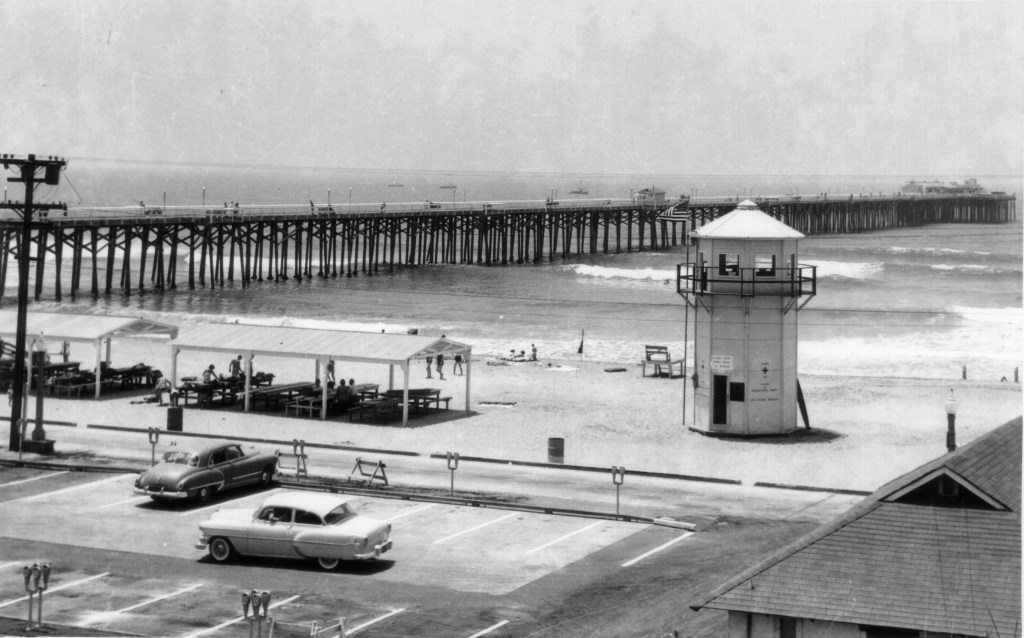
The white-railed pier could take fisherman and pedestrians out farther than any of its predecessors.  A 28-passenger tram operated by the city could take guests out to the end of the pier and have room enough to turn around.  McCullah sportfishing took enthusiasts out to fishing barges anchored over the kelp beds a mile out. For years this pier stood longer than any other pier the city had built previous. 

California Dreamin’ … Oceanside’s beautiful 5th Pier (Oceanside Historical Society)

But piers do not last forever and after nearly 30 years, it was showing its age. In 1975 the pier was faced with closures after severe storm damage and in October, Public Works Director, Alton L. Ruden said that the “pier could collapse at any time, and it would cost more than $1.4 million to replace it.  Some morning we’re going to wake up and there won’t be a pier.  It can go in an hour.  It’s like a string of dominoes.  But it’s only during storms that it is dangerous and that’s why it’s closed, when necessary.”           

After nearly 30 years, it fell victim to the relentless storms. It was damaged in 1976 by heavy surf and then a fire at the Pier Cafe caused further damage. The end of the pier was open, vulnerable, angled to the north and had to be amputated.

The Oceanside Pier damaged by storms in 1978 (Oceanside Historical Society)

The pier was placed as “No. 1 priority in the redevelopment plans for downtown” but it would be over a decade before a sixth pier was built.

Funding of the pier came from the Wildlife Conservation Board, State Emergency Assistance, Community development, the State Coastal Conservancy and the Federal Emergency Management Agency.  The new pier proposed would be nearly 1,500 feet long and would include a restaurant, tackle shop, lifeguard tower and restrooms.  The total cost, including the demolition of the 1947 pier, was then estimated at $3 million dollars.

Oceanside’s Sixth Pier in 1988, photo by Lu DeLucy

In August of 1985 Good & Roberts, Inc. of Carlsbad was awarded the contract to restore the concrete portion from the 1927 pier. In early 1986 the construction contract was awarded to Crowely International of San Francisco, the same city that built our first wharf in 1888. The new pier was built 3 feet higher at the end than the previous piers.  This was because the waves do their greatest damage there.  By raising the end, the life of the pier could be extended.

Oceanside’s sixth and present pier was dedicated and formally opened September 29, 1987.  At a cost of $5 million dollars the pier was 1942 feet long and deemed the longest wooden pier on the west coast. Engineers said it could last 50 years.

Our pier is a beloved landmark. A wooden promenade out to the ocean that hundreds walk every day, thousands each year.  While there are other piers in a handful of coastal cities, our pier has been a testament to our resilience and determination.

The pier is synonymous with Oceanside. If history tells us anything, we can and will rebuild again. Will we see our seventh pier sooner than expected? If repairable, we will enjoy and appreciate this one for years to come. This isn’t the end, it’s only a new chapter in Oceanside Pier history.

Hidden Beauty, The History of the Mason Building (301 North Hill Street aka Coast Hwy)

On the northwest corner of Third and Hill Streets (Pier View Way and North Coast Highway) sits an empty building that has seen better days, with its exterior scraped away, windows broken and metal awning left to rust. No one can remember the building in its glory days but many will remember the H&M Military store owned by Harry and Mary Cathey, a popular destination for Marines needing essential gear. It was the largest of the many military stores that once filled Oceanside’s downtown business district.

Mason building, aka H&M Military Store at 301 North Hill Street/Coast Highway. (Photo taken March 8, 2024)

But the building pre-dates Oceanside’s relationship with Camp Pendleton and its Marines. Nine decades ago this was once a beautiful art deco style building. Modernization may hide its original exterior but perhaps one day it will be restored.

Prior to the present building, Charles D. Merrill and his brother William owned the property. They were the first licensed Ford dealership in Oceanside and in 1920 built a new building on the prominent corner in downtown Oceanside and further expanded it after 1925.

Merrill’s Garage was a Ford dealership, located at Third and Hill Streets in the 1920s. Note the historic Schuyler building to the left. Oceanside Historical Society

Paul Beck, co-owner of the Oceanside Blade Tribune newspaper recalled the Merrill’s dealership when he arrived in Oceanside in 1927: “Across the street to the West was the Merrill Brothers Ford Agency.  Having no transportation upon arrival in Oceanside, one of the first deals that the young Becks made was for a Model A Ford.  As I recall, the total price was $475, and we talked the Merrill’s into a “due bill”, which meant $400 cash and $75 in advertising.”

The Merrill building included a storefront that was situated on Third Street (Pier View Way). In 1929 Ed Wolmer leased that space, at 410 Third Street, to open a music store.

The February 5, 1929 Oceanside Blade reported:  Rebuilding of the lower floor of the building at 410 Third Street to be occupied by the Ed Wolmer Music House is well along and Mr. Wolmer states that he is expecting to be in his store by the last of the month.  The front has been modernized and the interior handsomely refinished and when completed the store will be a most attractive salesroom for the display of the extensive line of pianos, radios, panatropes, and musical merchandise which will be carried.

Two years later the Merrill Bros. moved their Ford dealership just to the north, near the center of the block, and sold the property to B. A. and Marian Mason in 1931.  Despite the fact that a Depression was gripping the country, the Masons began construction of a two-story brick building on the property.

The November 19, 1931 Oceanside Blade Tribune reported the following: Operations on the new Mason building, being erected at Third and Hill Streets, will be resumed tomorrow, according to a statement from Omer Nelson, superintendent in charge. Delay in the erection of the building was brought about by negotiations regarding the expansion of the building to take in another story. “We are resuming operations,” said Nelson, “while the parties continue their negotiations toward the expansion of the building.  We are holding things open so that if necessary, we can make a third story to the build.” Work on the building has been at a standstill for the last few days, with part of the brick walls erected.  Nelson is on the job today, preparatory to getting the full construction crew back on the job again tomorrow.

The third story was not added and the building was completed in early 1932. The lessee was Wolmer’s Music House who moved from their former location fronting Third Street into the new Mason building fronting Hill Street.

Ed Wolmer’s Music House on the northwest corner of Third and Hill Streets, 1932. Oceanside Historical Society

Oceanside resident Ernest Carpenter remembered in an interview: “It was a music store, sheet music and all that kind of stuff. They had a big statute and I can’t remember, a dog, a big statue of a Dalmatian in the front. When I was a little kid I didn’t want to walk on that side of the street because I was afraid of that dog!” 

Mason building to the right, looking west on Third Street (Pier View Way). Note the dog statute. Oceanside Historical Society

Wolmer’s Music Store, remained at 301 North Hill Street for several years, and also sold appliances. In 1946 Bob Shaffer and Gordon Duff purchased the appliance business and moved it to Third and Freeman Streets.

In 1940, Henry and Lina Howe bought the Mason building at 301 North Hill Street and owned it for several years, later deeding the property to their son and his wife, Tracy and Ethel Howe. The Howe’s owned a hardware store on Mission Avenue in downtown Oceanside.

Motorcycle office Guy Woodward stands on the center line of the 300 block North Hill Street (Coast Highway) in 1949. Mason building is to the center right, with a portion of the original brick exposed. Oceanside Historical Society

Harold C. Cross, attorney rented an office upstairs in the 1940s, along with a variety of other businesses in the 1950s, including the Merchants Credit Association, and attorneys Daubney & Stevens.

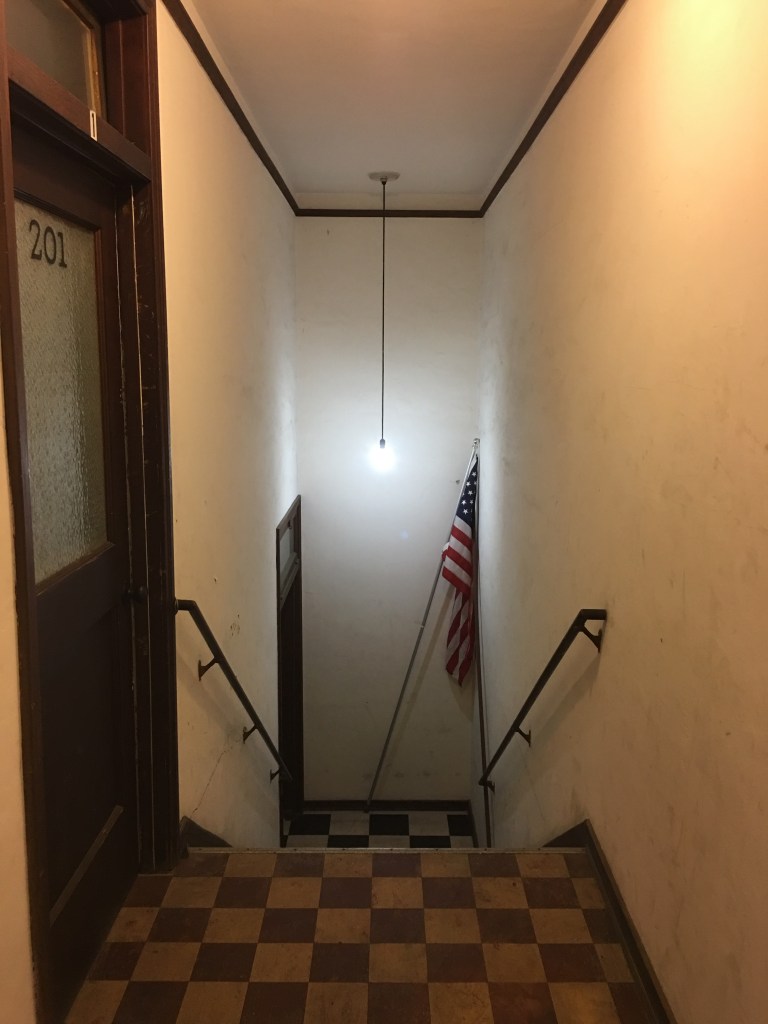
View of stairway leading from first floor to the second level (photo taken in 2017)

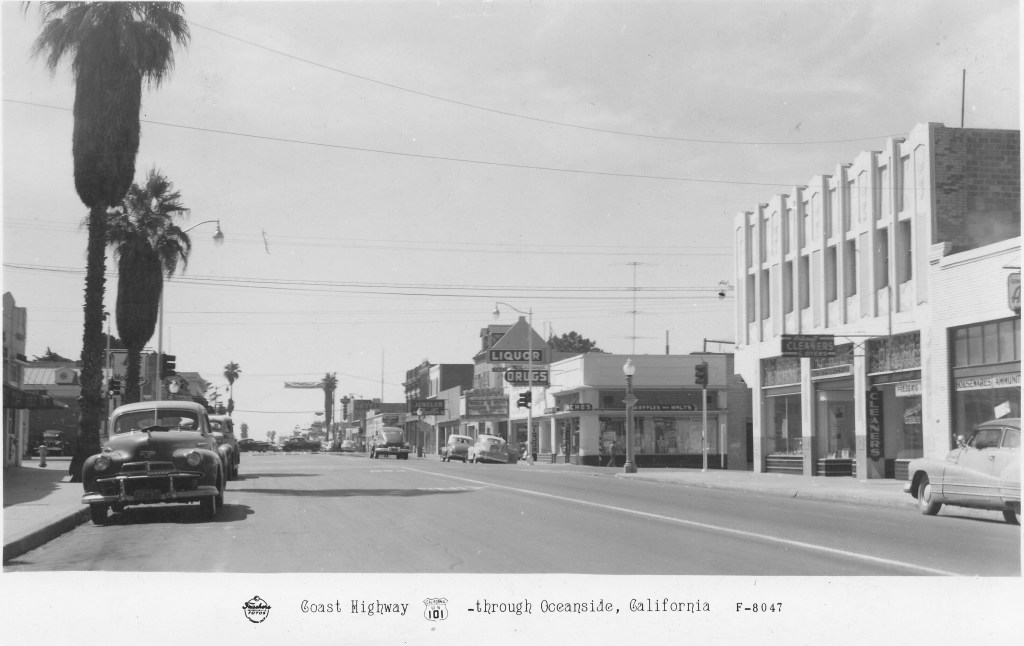
By the mid to late 1940’s the building was divided into three suites fronting Hill Street or Coast Highway, to include 301, 303 and 305. The Fun Shop, a novelty store occupied one suite at 301 North Hill from 1948 to at least 1963, which was operated by T. L. O’Farrell and L. K. Broadman. Swanson’s Service Studio occupied the storefront at 303 North Hill Street from about 1948 to 1959, which was later occupied by Marine Tailors in the 1970s and 1980s. Artcraft Cleaners occupied the third suite at 305 North Hill from the mid 1940’s to about 1981.   

300 block of North Hill Street/Coast Highway circa 1948. To the right is the Mason Building with Swanson’s Studio and Artcraft Cleaners signage. Oceanside Historical Society

Years before Room 204 was used for polygraph exams (curiously), the office suite was used for a tailor’s shop in the mid 1940s, then rented out to Lorraine Nelson, a public stenographer.

One of the upstairs suites used for at one for polygraph exams (photo taken in 2017)

In or about 1965, the owners “modernized” the exterior of the building, placing the metal screening along the upper portion and adding the large awning which changed the whole look of the building. Ceramic tiling was added to the exterior and the beautiful grating above the windows was either removed or covered as well.

Mason Building/H&M Military Store, 1979 Oceanside Historical Society

In 1973 Harry and Mary Cathey purchased the building at 301 North Hill/Coast Highway. Prior to that they had been tenants operating H&M Military Store which became a very successful business for decades. The Cathey’s and their store were fixtures in downtown Oceanside, supporting the military and their community. They sponsoring the local parades for many years.

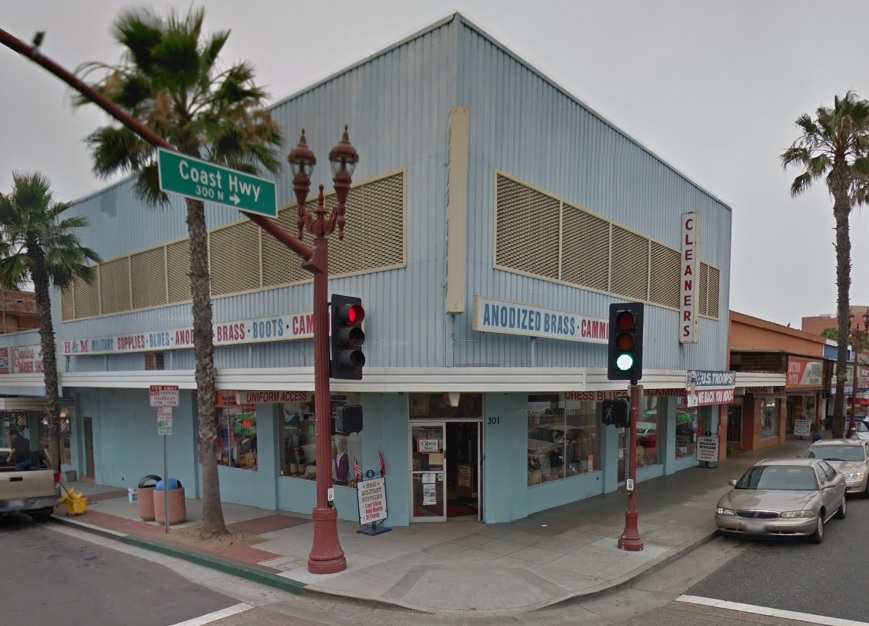
301 North Hill aka Coast Highway (google view 2017)

Harry Eugene Cathey was born in Arkansas in 1928. He served in the United States Marine Corps and was stationed at Camp Pendleton. After he got out of the service, he and his wife Mary made their home in Oceanside. Harry operated Harry’s Shoe Repair store at 304 Third Street in 1954, and later moved into the Mason Building at 410 Third Street (Pier View Way) opening the Square Deal Shoe Repair store.

John Gomez with patron in the Esquire Barber Shop, 412 Third Street/Pier View Way, circa 1970s. Oceanside Historical Society

In 1954 Jack Noble operated Noble’s Barber Shop at 412 Third Street which later became the Esquire Barber Shop by 1959 and still operates under the same name today and owned by John Gomez.

410 and 412 Pier View Way (photo taken in 2019)

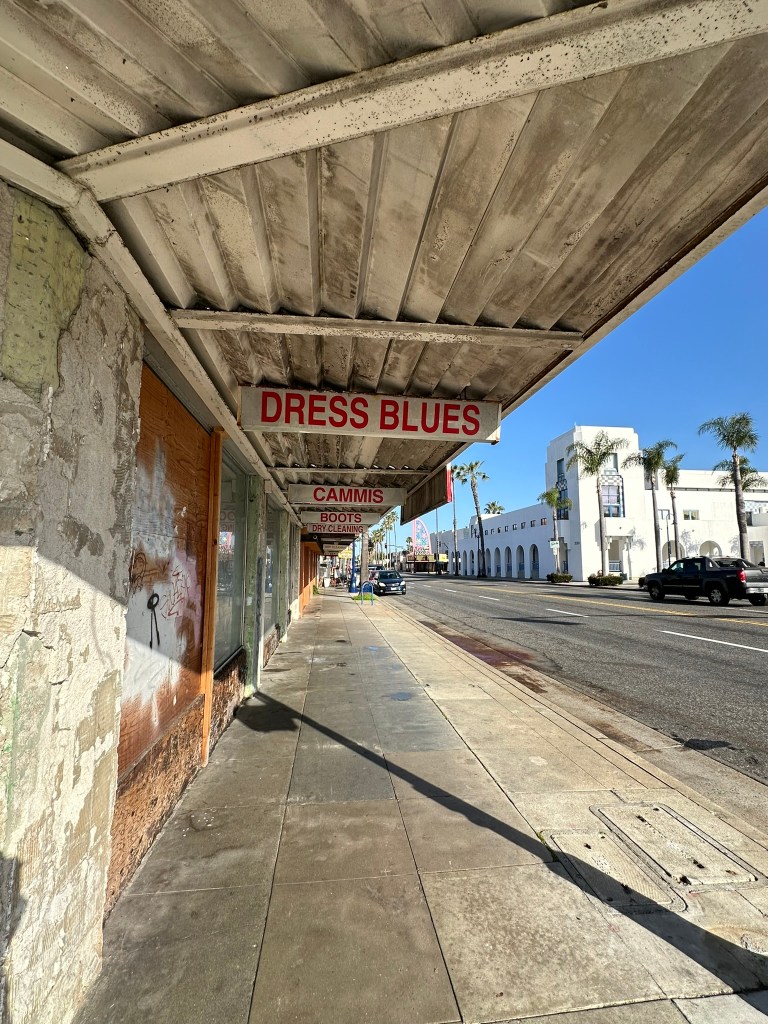
While the barber shop and another storefront continues to operate at 410 and 412 Pier View, the majority of the building sits empty. Its exterior has been marred by the removal of ceramic tiling (not original to the building) with boarded windows.

Damage to exterior with the removal of the ceramic tile. (photo taken March 8, 2024)

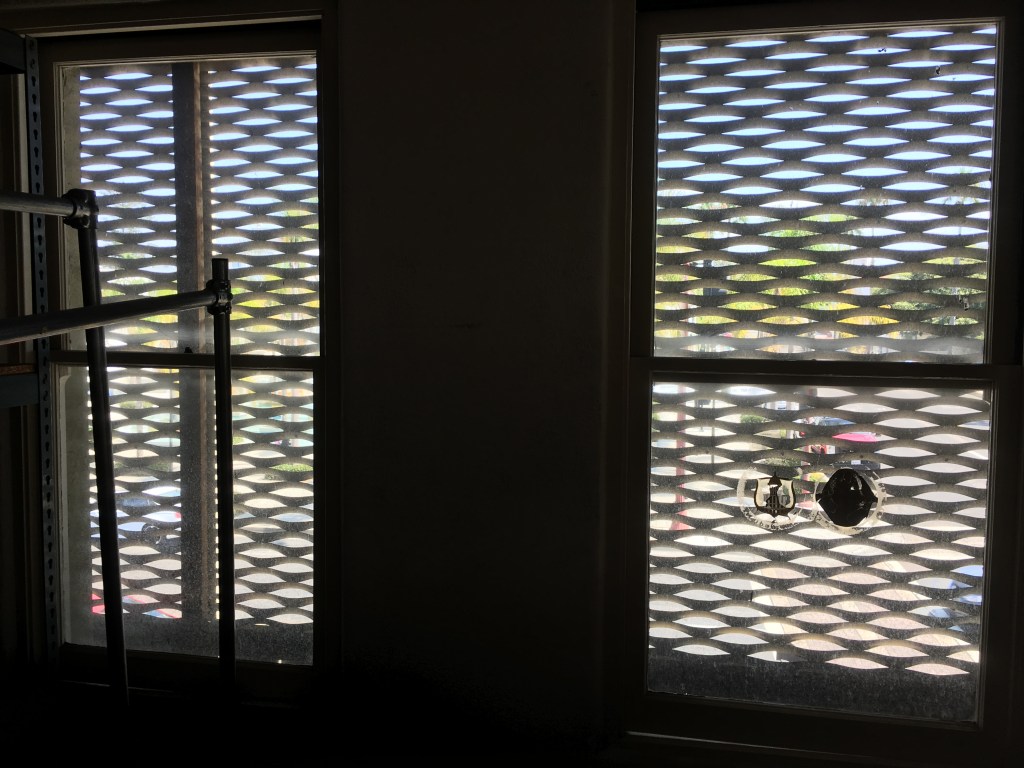
There is hope for the building. The large, corrugated metal façade which wraps around the upper portion of the building could be removed and the original exterior on the second story appears largely, if not completely, intact and would reveal its original cement finish in art deco style.

View of metal façade from interior second floor (photo taken in 2017)

Just what will become of the building is unknown but certainly its history is worth knowing and the building worth preserving. The potential for exposing the beautiful Art Deco façade and beautifying this downtown corner is just waiting to happen.

Historic homes and buildings provide character and a sense of place. “How will we know it’s us without our past?” – John Steinbeck, Grapes of Wrath