Our City is made up of many different neighborhoods, often with their own unique characteristics, history and even architecture. As Oceanside’s population grew, its borders expanded with various subdivisions and new housing developments. From the exclusive enclave of St. Malo to Potter homes in South Oceanside and Francine Villa in North Oceanside, Oceanside neighborhoods are as diverse as the people who live here. Here are a few neighborhoods, some forgotten and others well remembered.
Guidottiville
Guidottiville was named by and after Amerigo Edwardo Guidotti. The area was near what is referred to as Lawrence Canyon just south of present Highway 76. Guidotti built his residence there along with several rentals and lived there for many years. The homes were removed by the 1980s to make way for the Highway construction.
Guidottiville in Lawrence Canyon, south of present day Highway 76
Pine Heights
Pine Heights was a rather remote area of Oceanside, accessible only via Eighth Street, now called Neptune Way. Pine Heights provided expansive view of Oceanside and panoramic view of the Pacific Ocean. Niels Hansen, a local grocer, built a large Craftsman style home designed by noted architects the Quale Brothers in 1908. Also that year, Attorney John Johnston hired prominent Chicago and San Diego architect Henry Lord Gay, to design his $10,000 home in Pine Heights. The Hansen house was later moved to North Clementine Street but the Johnston home was demolished. Pine Heights is now the location of a 15-acre condo development by Evening Star Development.
The Hansen Home in Pine Heights.
North Oceanside Terrace
A new subdivision established in the late 1940s was situated along the northern most border of Oceanside along Camp Pendleton. North Oceanside Terrace includes Capistrano Drive, San Luis Rey Drive, Monterey and Sunset and other streets. Many of the homes built there were built in the early to mid 1950s and purchased by the military families that were stationed at Camp Pendleton. In 1953 the City approved Francine Villas to the east, adding over 300 homes. These homes were introduced as rentals to military and civilians with a two bedroom home renting for $72.75 and a three bedroom for $82.75. Because of the growing density and traffic, an additional entry into the neighborhood was provided, initially called “River Road”. Later Loretta Street from the Eastside neighborhood would be built across the San Luis Rey River to provide residents access. In 1955, construction of North Terrace Elementary School began, opening the following year. Today the area is more commonly referred to as Capistrano because of the area park.
1974 aerial of a portion of North Terrace neighborhood, school and Loretta Street crossing.
South Oceanside
John Chauncey Hayes established South Oceanside, a small township just south of the City of Oceanside in the 1880s. In the earliest days it had its own bank, a school building, cemetery, several brick residences and a newspaper, the South Oceanside Diamond. This largely rural area included the Spaulding Dairy (established about 1913) and was home to acres of flower fields owned by the Frazee family and others. It turned residential when Walter H. Potter, “the man who built South Oceanside” began building dozens of small homes in 1947 that stretched from Morse Street to Vista Way.
Aerial view of South Oceanside looking west, circa 1970
Eastside
The Eastside neighborhood is just east of Interstate 5 and north of Mission Avenue, with entrance by Bush or San Diego Streets. The subdivisions of Mingus & Overman, Reece, Spencer, Higgins & Puls, which encompass the area, were mostly farmland when families from Mexico began settling there in the 1910s and 1920s. Most of the early residents were laborers who worked in the fields of the San Luis Rey Valley and the Rancho Santa Margarita (now Camp Pendleton). Many of the homes were built between 1920 and 1940 by the hardworking fathers and grandfathers of the families that still call Eastside their home. This neighborhood was referred to as “Mexican Village” by local officials but residents called it Posole. It was last neighborhood to have paved streets and a sewer system, which were not added until the late 1940s! Eastside was also the home of Oceanside’s first growing Black population in the 1940s and 1950s, along with Samoan and Filipino families.
Higgins and Santa Barbara Streets in Eastside shows dirt streets and houses on blocks because of the lack of sewer system.
Mesa Margarita
As Oceanside’s population grew at steady pace in the 1950s and 1960s, its borders continued to extend eastward. New housing was always in demand. Sproul Homes developed many new neighborhoods including Mesa Margarita, which is often referred as the “Back Gate” area because of its proximity to northeast entrance to Camp Pendleton. In 1965, 62 acres along North River Road were purchased by Fred C. Sproul Homes, Inc., a residential development firm, from Harold Stokes and Joe Higley. The Stokes and Higley families were long time dairy farmers in the San Luis Rey Valley. With the plan to build 275 new homes on the property it was one of several developments that changed the landscape of rural to suburban.
Sproul Homes ad in 1963
Oceana
One of the first adult only communities built in Southern California was that of Oceana. Situated east of El Camino Real and south of Mission Avenue, this planned community was built in 1964 at a cost of $25 million. It was touted as being “a city within a city” built on 180 acres with 1,500 lanai cottages and 300 apartments. At the time it was built it required that at least one adult be age 40 or over. A two bedroom, two bath model was listed at $16,995 and the community offered a variety of amenities which included a pool, golfing, library and restaurant.
Oceana development in 1960s
Henie Hills
Henie Hills was owned by figure-skater Sonja Henie. Sonja and her brother Lief purchased 1,600 acres of ranch land in about 1941 which included the present day El Camino Country Club. In the early 1950’s the Henies began subdividing part of the land near El Camino Real at which time some of the first custom homes were built. A portion of this land was sold to Tri-City Hospital and eventually acquired by MiraCosta College. Miss Henie built a large house on Oceanview Drive, which she used during her visits here from her native Norway. She continued ownership of 350 acres until 1968. In the 1974 Henie Hills opened as one of the nation’s first planned residential estates community, offering homes on estate-size lots averaging one-half acre with views of the sea, mountains and golf fairways in the valley below. Home prices ranged from $54,000 to $81,000.
Driving Range at golf course, Henie Hills sign in background
Fire Mountain
Fire Mountain was at one time called “North Carlsbad”. It was a largely rural area planted with avocado and citrus groves, consisting of approximately 338 acres. While the town of Carlsbad eventually grew and incorporated, North Carlsbad remained an unincorporated area of San Diego County, an island surrounded by the city limits of Oceanside. The City of Oceanside annexed the area in the 1960s. It has developed into a desirable neighborhood simply named after the road traveling through it, consisting of middle-class homes, tract and custom homes, many of which sit on large lots, some offering views of the Pacific Ocean.
1956 Thomas Guide of Fire Mountain area before annexed to Oceanside.
St. Malo
A group of twelve homes was built by 1934 in an exclusive enclave in South Oceanside at the end of Pacific Street. Pasadena resident Kenyon A. Keith purchased 28 acres of oceanfront property and contained homes resembling a French fishing village that was known as St. Malo. Well-to-do property owners used St. Malo for vacation and summer homes. Early film director Jason S. Joy’s home was identified as “La Garde Joyeuse” and included an outdoor bowling alley and volley ball court. Author Ben Hecht was another resident, as well as Frank Butler, who co-wrote “Going My Way”. The beautiful community of St. Malo remains one of Oceanside’s best kept secret and continues to serve as summer homes and getaways for the rich and famous.
St. Malo homes fronting the Pacific Oceanside. Jason Joy house far right.
Plumosa Heights
Banker B.C. Beers established a new subdivision in the 1920s called Plumosa Heights, named for the plumosa palms lining the streets. This once exclusive neighborhood includes West and Shafer Streets, two of the street names are named for his children, Alberta and Leonard. The Plumosa Subdivision required at least a $4000 structure on the property to be set back at least twenty feet from the street. Plumosa Heights continues to be a desirable neighborhood with concrete streets and original cement light posts. Although it was the home of many affluent Oceanside residents, it was also inhabited by Oceanside’s middle class.
Leonard Street looking west at South Clementine and South Ditmar Streets, circa 1925
Larry’s Beach Club at 1145 South Tremont Street is remembered by many as “McCabe’s Restaurant” or “McCabe’s Beach Club”. Those a bit older will go back to when it was known as “Across the Tracks.” Even older locals will remember it as “The Pump.”
But the history of the bar goes beyond most memories — back over 75 years when it was first called the “Old-Fashioned Garden Cafe.”
1950 ad in the Oceanside Blade Tribune for the Old Fashioned Garden Cafe
The unusual name referred to the property which was once used as a garden and orchard. Julius and Mary Ulrich owned the property on the northwest corner of South Tremont and Short Street (now Oceanside Boulevard) since 1914 and grew produce there which included Gravenstein apples. The couple resided on the property for several years, raising and selling rabbits along with hens and eggs.
Then in 1949, Earl and Margaret Rice, who came to Oceanside in 1947, opened a little bar and restaurant there, what was considered a bit “out of the way” from more popular establishments in the immediate downtown area of Oceanside. Off the Highway 101, it might have been missed by the traveling public, but it became popular with the locals.
The Old-Fashioned Garden Cafe featured Acme Beer “drawn through a cooler keg at five or ten cents a glass” and “specialized” in corned beef and cabbage, Virginia baked ham, sour Brotton and roast beef.
The original building fronting Short Street (Oceanside Boulevard) was smaller in size than the present building, and a residence, located just to the west was occupied by Earl and Margaret. This dwelling later became an addition to the restaurant/bar.
By 1955 Bill Bolton acquired the business and renamed it “Bill’s Pump Room.” (Bill Bolton would later own Bolton’s Casino at 107 North Tremont Street in the 1970s.) Along with a range of food, Bill’s Pump Room served cocktails and Pabst Blue Ribbon Beer on tap. The venue hosted a wedding reception that year, after Cpl. Leonard Whitke married hometown girl Ethel Swanson at Oceanside’s First Baptist Church.
1955 ad in the Oceanside Blade Tribune for Bill’s Pump Room
The name of the restaurant was shortened to “Bill’s Pump” and by 1957 simply called “The Pump.” The phone number was Saratoga 2-5961 (Saratoga was the telephone exchange name and stood for the number “72” which would later become the local prefix of 722.)
The Pump opened at 10 am and closed at 2 am. An advertisement beckoned customers: “When you want some real good food which is served amid comfortable and relaxing surroundings, you should visit The Pump in Oceanside. You will enjoy their delicious, hot corned beef sandwiches, roasted chicken or shrimp.” The Pump also offered cocktails and draft beer.
Like any bar selling alcohol, it had its share of notoriety with fights or brawls. It wasn’t uncommon for disagreements to arise between Marines and locals. One call to the Oceanside Police Department was prompted by a probable shooting in the parking lot, but when police arrived, they discovered the “victim” was simply sprawled out in the parking lot passed out.
One fight likely inspired by boxer Mike Tyson resulted in one man biting another man’s ear off after two women started fighting inside what was then McCabe’s Beach Club. Officer Brian Sandberg responded to the incident which had spilled out into the parking lot and said, “The victim told me he could feel the suspect’s teeth grinding away on his earlobe. He didn’t realize his ear had been bitten off until the bouncer told him.”
The victim, a Marine, drove himself to the Main Gate of Camp Pendleton and police were called. Harbor Police Corporal Dwight Carwell found the missing ear in the bar’s parking lot, Sunberg said, but military doctors were unable to reattach the ear. The suspect remained at large.
In 1975 The Pump was sold to Dee and Bette Coursey, along with a partner, Aurel J. Pierce, Jr. (Pierce operated the Ice House in Escondido for several years in the 1970s.)
The Courseys soon sold their interest in The Pump to Pierce, who sold it in 1977 to William Planer. Planer and his partner, Richard Barkdull, changed the name of the bar to “Across the Tracks” in March 1977.
Across the Tracks Grand Opening in March 1977
The bar under the same name changed hands again in 1982 when it was sold to Uncle Jed’s Golden Spike, Inc., a corporation owned by Jed Landin. (Landin owned a bar at 1910 Oceanside Boulevard called Uncle Jed’s.) While Landin maintained ownership of the building, the establishment still operated as “Across the Tracks.” That year John and Danita Ward stepped in as the new managers.
In January 1983 new proprietors Joe Mrozek and Jack McCabe took over. They had a five-hour happy hour, seven days a week and advertised “sounds of the 50s” on a jukebox and live entertainment. They advertised specials and events in the Caboose, Club and Engine Rooms in “a plush atmosphere with a wisp of sea breeze and a ray of moonlight.”
“A unique approach is off to a successful start at the newly remodeled ‘Across the Tracks.’ The restaurant’s new owner Jack McCabe has been a local businessman in the area for seven years. The new head cook, Jerry Michael, has been in the area for 27 years and specializes in home cooked meals, just like grandma used to make. Jerry is assisted by Marty Roemer.
“Joe Mrozek, host and managing partner, invites you after work if you’re in the area, to stop by for Happy Hour in the Engine Room Lounge for free hors d’oeuvres. All well drinks are only a dollar from 2 PM to 7 PM daily. If you’re a sports buff, there’s a wide screen TV for your sporting pleasure. We also feature music of the 50s.”
In October 1983 “Across the Tracks” was renamed for its owner Jack as “McCabe’s Restaurant.” The new name came with all new entertainment “featuring Billy Fowler at the piano bar who recently came over from the Mira Mar restaurant and will be playing Satin Doll to Stevie Wonder music Tuesday through Saturday for your dining and dancing pleasure. Sunday and Monday dance to the music of Mac Soo. Mac recently finished a tour on Princess Cruise Ship, The Love Boat for one year.”
1983 grand reopening as McCabe’s
The following year, in 1984, a grand opening was announced for “Poncho and McCabe’s”, a new “Mexican restaurant and Irish pub featuring authentic Europato Mexican style food, and American dishes.” This however, was short-lived.
Jack McCabe was a local philanthropist, helping each year to raise funds for the Muscular Dystrophy Association. His efforts raised thousands of dollars here locally for the national charity made notable for its annual telethon hosted by Jerry Lewis.
Introduced in the 1980s was McCabe’s Babes, prominent in parades and other events, along with car washes on location to help raise money for various charitable causes.
Many locals will remember Donovan Lee, a popular disc jockey who played at McCabe’s Beach Club in the late 1980s and early 1990s when McCabe’s was one of the few spots in Oceanside for dancing on its notoriously tiny dance floor.
This was the decade of wet T-shirt and bikini contests and an annual calendar was printed and sold. In 1989 Cheryl Johnson, an Oceanside resident, was the winner of “McCabe’s Babes Bikini contest” winning $750. She had already amassed a number of titles, including Miss Bocce Ball, Miss Acapulco, Rancho Bernardo and Miss Belmont Mission Beach.
Google view 2009 of McCabe’s
Jack McCabe continued his philanthropic efforts throughout the years, building a mock “jail cell” in his establishment. A patron paid $1 for anyone in the bar they wanted to be arrested and put in the cell. The cost to bail them out was another dollar, however, others could “raise the bail” to $2 or more to keep the “jailbird behind bars.” This amusing form of fundraising helped the Oceanside Police Department purchase a need K-9 police dog.
1994 Jack McCabe puts a patron “in jail” to raise funds for OPD
In 1997 McCabe listed his business for sale and sold it in 1999, although the name was retained for several years. In 2008 it was purchased by Larry Doan, who changed the name in to “Larry’s Beach Club.”
Whatever the name, it’s remained a favorite hangout for locals since it first opened its doors as the “Old-Fashioned Garden Café” in 1949.
Larry’s Beach Club, 1145 South Tremont Street (2019 Google view)
A small cottage home near downtown Oceanside, California was once the headquarters of an influential protest movement during the Vietnam War. Celebrities such as Jane Fonda and Elliott Gould made appearances at the house to encourage and show support to protest organizers and their followers.
519 South Freeman Street in about 1991
In June of 1969 an underground organization known as the “Green Machine” affiliated with the Movement for a Democratic Military (MDM) met in a small home near Vista, and encouraged planned demonstrations at both the Camp Pendleton military base and in the City of Oceanside.
The meetings were modest in size, attracting between 30 and 75 persons. The Oceanside Blade Tribune newspaper identified the local movement as an anti-war organization similar to other “coffee house groups across the nation” operating “under the guise of providing entertainment for servicemen while spreading an anti-war and anti-military message.”
Letter written by Kent Hudson in 1969 to Marine Blues
The group was headed by Kent Hudson and Pat Sumi, attracting a following of both military and civilians, mainly students.
Kent Leroy Hudson was born in 1944 in Riverside County, California. As a youth he attended Vista High School, graduating in 1962. Hudson was also a Stanford graduate and a Navy Reservist. In 1965, Hudson spoke at the Vista-San Marcos Democratic Club about his experiences in Louisiana and voter registration of Blacks that summer.
Kent Hudson at Vista High School in 1959
In July 1968, Hudson had joined what the San Luis Obispo Telegram-Tribune called a “16-person troupe” who had organized small campaigns to encourage protests of the draft and oppression. The newspaper described the group as “bone-tired” and that their two-week campaign had exhausted their funds with no great result.
Hudson would find the following he was seeking one year later when he relocated his efforts to the Vista and Oceanside area in San Diego County. He first applied for a permit to operate a coffee house in Oceanside but was met with resistance from the city council. The group settled on a small house at 2133 North Santa Fe Avenue and converted the garage into a meeting space.
Oceanside Police Sergeant John Key described the location: “The house in Vista was surrounded by slit trenches that had been dug all the way around the house. There had been concertina wire strung on barricades that could have been pulled across the access to the house. It was, for all intents and purposes, fortified.”
Sumi and Hudson held modest gatherings, looking for support. Folksinger Barbara Dane offered it in the way of a performance and held a concert at the Armed Services Center in Oceanside.
USO building, Southeast corner of Third (Pier View Way) and Tremont Streets.
Volunteer workers and staff at the center were “surprised” by the performance as they expected folk, not protests songs. It was reported that the largely military audience joined Dane in singing anti-war songs and shouting “Join the ASU”, short for the American Servicemen’s Union. Hudson himself reported that one person in the crowd stood up and shouted, “Shoot the Lifers!”
After her performance, group members held a party at the house in Vista and a movement was born. Meetings were announced through “handbills” which were passed out to Marines by Green Machine supporters on Camp Pendleton. Then members picked up the Marines, and others interested in the meetings, on Saturday nights at various pickup points.
The Oceanside Blade Tribune described a typical meeting: “There the audience gets a soft-sell anti-war take from Pat Sumi, an accomplished speaker. They are also served free coffee and beans, and often treated to folk-singing of anti-war and anti-military songs. Recent meetings have featured a Black Panther leader from San Francisco, and nationally known folk singer Phil Ochs, an avowed pacifist. The meeting featuring the Black Panther leader included “liberation” films and speeches threatening black insurrection.”
In perhaps to alienate white readers from the group, the newspaper described the attendees as predominantly Black: “Approximately two-thirds of the audience of about 65 was black, most were Marines, but there were also two black students from Oceanside attending.”
A list of “demands” was published and distributed by the group, which read in part:
We demand the right to collective bargaining
Extend all human and constitutional rights to military men and women
Stop all military censorship and intimidations
Abolish all mental and physical cruelty in military brigs
We demand the abolition of present court-martial and nonjudicial punishment systems
We demand wages equal to the minimum federal wage
We demand the abolition of the class structure of the military
End all racism, everywhere
Free all political prisoners
Stop all glorification of war now prevalent in all branches of the military
Abolish the draft and all involuntary enlistment
Pull out of Vietnam now
The immediate goals of the Green Machine were as follows:
Disturbances involving police were to be escalated by the military personnel
Military personnel were to wear black armbands while on liberty in civilian clothes
To have mass meetings in the Oceanside beach area on December 15, 1969
To have another mass meeting at Buddy Todd Park on March 15, 1970
To start a newspaper called the Attitude Check
Marines were to create problems aboard the base at Camp Pendleton
While similar groups were organizing all over the country, the Green Machine’s presence was an uneasy and unfamiliar one for Oceanside. For over two decades the city had embraced the military and their families since the base was established in 1942 during World War II. The population included many former military personnel who chose to make their home in Oceanside after their stint (long or short) in the Marines or Navy. Many residents and business owners were in angst over the anti-war messages the group espoused, because even if they themselves were not in favor of the war, they wanted to support the military.
It was clear that Hudson just wasn’t against the war, but against the Marine Corps as a military institution when he wrote the following statements:
“No clear-thinking man joins the Marine Corps, there are to (sic) many better alternatives.”
“I have yet to meet the marine who joined to serve his country. He certainly exists, but in a tiny majority.”
“The Force Reconnaissance trainees I have met are mostly acid heads.”
The Green Machine sponsored a bus trip to Los Angeles where members could meet with Black Panthers, and the group continued on to San Francisco to participate in a march. The trip was paid for by Green Machine “allies.”
The MDM held its first rally in Buddy Todd Park in September of 1969, where it first attracted the attention of local officials and police, and the FBI was kept advised of its activities. They began publishing an underground newspaper called “Attitude Check” which was offered to Marines in downtown Oceanside.
Theresa Cerda, a local resident recalled in a 1999 interview that she got involved in the group after attending a “love-in” in Cardiff. Kent Hudson spoke and asked if anyone was interested in “organizing the G.I.’s to resist the war” to meet with him afterwards.
A 17-year-old high school student at that time, Cerda explained that the movement was funded by “rich lawyers” who “were willing to fund us to be their mouthpiece, but they backed us with money and legal. They were more the fundraiser people, the glamour, the upper echelon, we were the grunts, and we went out and did all the work.”
Hudson and group members would take vans from their house in Vista and travel to downtown Oceanside and walk the streets passing out leaflets. Teresa remembered that they were met with both resistance and acceptance. “On Hill Street [or] Coast Highway — that was very scary because we had a mix of people. I remember several times when some of the Marines would get really upset and take stacks of stuff away from me and burn them. There were times when other Marines would gather around me and protect me and say, ‘this is freedom of speech and I want to hear what she has to say’. It was usually the Black Marines, the African American Marines that would protect me. And then soon, it started snowballing and then after that we had a good mix.”
Organizers planned a beach rally in Oceanside in November of 1969, an event that set many in Oceanside on edge. City officials attempted to block the organized march, appeals were filed, and protestors vowed to march with or without a permit. The Oceanside Blade Tribune urged residents to remain calm with an editorial entitled “Keep Cool Sunday”.
“The courts will decide today whether Sunday’s march and rally in Oceanside will be held with or without the sanction of a parade permit from Oceanside.The constitutional questions of right of free speech and assembly are the heart of the issue – and whether the city’s decision is a political one as charged or merely enforcement of city ordinances.
But the court decision is really secondary to the march for it will happen regardless of the court’s ruling.
March organizers have stated they plan to walk through the city on the sidewalks – rather than parade through the streets – to fulfill the march plans.
Organizers say it is too late to call off the march, and it is too late. Leaflets have been distributed to colleges in Southern California advertising the demonstration.
The spectre of violence, and that possibility is high in the minds of law enforcement officials charged with the responsibility of maintaining law and order Sunday, is a main overriding factor.
There are rumors of marines from Camp Pendleton staging a counterdemonstration to protest the anti-war and anti-military philosophies of the marchers.
There is also going to be a relatively large contingent of Black Panthers in the march and recent events involving the organization would indicate no love lost on their part for law officials.
Angela Davis, the communist college professor, is also scheduled to speak and the massive patriotism of the area may likely be sharply prodded by what she may say in her speech.
The potential for violence is high.
But if everyone – marchers, the speakers, the marines, the spectators, and those pro and con – will just cool it Sunday, everything will go off without a hitch.
Although there are always troublemakers in marches of this nature, the main body of the marchers are quit determined to keep things peaceful.
March leaders have informed The Blade-Tribune they intend to do all in their power to keep the peace and are bringing 200 monitors in to patrol the march.
There will be little sense in letting passions and tempers, however justified by philosophy and belief, flare into violence.
The only loser will be the city of Oceanside.
The march will only be a memory after Sunday, and it would be much better as a peaceful memory.”
The day of the march the Blade-Tribune minimized and mocked the organizers and persons expected to speak.
“There is a beautiful lineup of characters for the day:
– Former military officers who wouldn’t follow orders;
– Black Panthers who have preached hate and violence in this country since their organization was founded;
– A Communist teacher;
– Leftwing “peace-at-any-price” speakers;
– Unhappy military types who can’t take discipline and order;
– A full parade of fuzzy-thinking, fuzzy-looking creeps.
There is nothing good; you can say about this march, unless you espouse the thinking of those who support it.
So stay home today. There are very few area residents who will be supporting this march. Don’t be counted among them. Don’t help the Communist cause.”
In contrast the conservative stance the local newspaper took, John Richardson, a nephew of Oceanside Mayor Howard T. Richardson, was an avid supporter of the march and saw “the protest movement in this country as a means of solving problems.” An Oceanside High School math teacher, he encouraged his students to take part or at least an interest in the MDM’s message.
John Richardson, Teacher at Oceanside High School
The Blade Tribune reported a list Richardson’s views and remarks: “He views the reaction of Oceanside Police and town officials to both [the] march and the Green Machine as “in conflict with the Bill of Rights.”
“I get just as upset when I read of the reaction of most people to the Green Machine as I did when I heard President Agnew’s attack on the press,” said Richardson. “My own personal opinion is that there are many needs in this country which are just beginning to surface.”
The article continued saying “Richardson explained the presence of Black Panthers at Green Machine meetings by saying black servicemen aboard Camp Pendleton had “expressed a desire to find out what the Panthers is all about.” Richardson, who has attended “five or six” meetings of the Green Machine said however he had never been present at a meeting of that group when a Black Panther spoke. Yet, he criticized an eye-witness account of a Green Machine meeting at which Panthers did speak, published in the Blade Tribune.
“He explained that he had been at other meetings where the Panthers spoke and said he felt in sympathy with the reporter who attended the Green Machine meeting only because he knew it “must have been the first time he had heard the Panthers speak.”
“It can be scary,” said Richardson, “especially the first time someone is exposed to it. After that however you realize that they are speaking from their hearts and from the heart of the black ghetto,” said Richardson. “Their language is the language of the ghetto, and the ghetto is not a happy place.”
“We need change, and we need it fast,” he said. “This need for change…for good change in the American political systems is why I support the movement in general and why I support the Green Machine in Oceanside. The movement is where the demand for change if being generated. Fear of the movement and fear of change is the situation Oceanside is confronted with.” He cited Oceanside’s “over-reaction” to the Green Machine as a case in point.
Illustration of law enforcement by Frank Zincavage, Oceanside High School Yearbook, 1970
The Movement for a Democratic Military, along with Rev. William R. Coates of La Jolla, coordinated the planned march and rally which was sponsored by the Citizens Mobilization Committee (CMC), which secured a court order for the march permit when the city council refused to grant it.
The march began at Recreation Park, just east of Brooks Streets and made its way west to downtown. It was reported that 250 active-duty servicemen participated and that they represented “almost 40 per cent of ‘snuffies’ in the Southland who sympathize with the MDM.” Snuffies were Privates or low-ranking military members.
The vast majority of the marchers came from outside of Oceanside from other organizations and included the Peace Action Council of Los Angeles, the Socialist Workers Party of Los Angeles, the SDS of Los Angeles and San Diego, the Black Panther Party of Los Angeles and were joined by the Young Socialist Alliance, Student Mobilization Committee, the Clergy and Laymen Concerned and Medical Committee for Human Rights.
The Oceanside Blade Tribune described the scene: “Marchers carrying hundreds of signs, most calling for an end to the war in Vietnam. Many of the signs also urged support for various anti-war and anti-military groups. Most of the marchers were young, in their teens and twenties, but several middle-aged persons and a few elderly persons marched. The vast majority of the marchers wore hippie or mod clothes, but some of the marchers were dressed in business suits and fashionable clothing.
“Hippies” by Frank Zincavage, Oceanside High School Yearbook, 1970
“Marchers chanted, “One, two, three, four, we won’t fight your fascist war,” and “Peace, Now!” and “Two, four, six, eight, let’s destroy this fascist state,” and “Power to the People.”
“A march cheerleader atop a bus leading the parade kept up a continual banter of slogans, many in support of the Black Panthers. There were few Black Panthers present, despite a scheduled mass turnout.
“There were very few spectators along the mile-long march route until it reached the downtown business area. Most of the spectators were obviously against the march, but a few joined the march as it progressed downtown.
“A crowd of about 200 spectators, mostly Camp Pendleton marines, was gathered along Hill Street between Mission and Third Street. Some of the spectators jeered and booed the marchers.
“Just before the march reached the Beach Stadium, a brief scuffle broke out when an angry marine attempted to charge a marcher who was carrying a Viet Cong flag. His companions and police subdued him.”
A vehicle parked along the demonstration route greeted marchers with the slogan, “Better Dead Than Red” painted on its side. As the march continued on Hill Street to Third Street (Coast Highway to Pier View Way) a vocal gathering at the USO challenged the anti-war group with their own signs and slogans.
Counter-protestors “The American Machine” as opposed to the Green Machine, 1969, San Diego History Center photo
The march culminated at Oceanside’s beach amphitheater where the keynote speaker was Angela Davis. The local newspaper described her as tall and lanky and added she “could have passed for a high fashion model.”
It had been reported that an “armed pro-war marine” was “perched somewhere in the crowd with a rifle, ready to gun down Angela Davis, the Marxist UCLA assistant philosophy professor.” A request was made for members of the MDM to form a “human cordon” around Davis. The Blade Tribune reported that “at first, only black marines showed up but several white marines showed up when a call was issued, ‘Let’s see some whites up here too.’”
Protests coming down Mission Avenue, San Diego History Center
A group of 10 to 12 men accompanied Angela Davis and her sister Fanta to the stage at the Oceanside bandshell. It was noted that while surrounded by her protectors, Davis was “barely visible” while she spoke.
She began her speech by calling “Richard M. Nixon, our non-president, a hypocrite who is a killer, a pig and a murderer.” She called for an end to “genocide” and other “imperialist action” against the Vietnamese people and the black community, specifically the Black Panthers.”
Crowds filled the Oceanside Beach Stadium, 1969, San Diego History Center
“There are people who will be shocked about My Lai but they will do nothing more than sit back and say how outrageous it is. They don’t realize that My Lai is no exception. It is the essence of U.S. government policy in Vietnam, just like the Chicago and Los Angeles raids are the essence of policy toward the Black Panther Party.
“The Green Beret is trained to murder Vietnamese. In Los Angeles, the police pigs have a special squad rained to murder Panthers – SWATS, the Special Weapons and Tactical Squad who came to present the warrants to our 11 black sisters and brothers in the Panther office.
“Why are the Black Panthers the target of attack? J. Edgar Hoover said it is because the Panthers pose the greatest threat to national security.
“And we pose the greatest threat to the Nixons, the Reagans, the Yortys, the Kennedys, the defense industry, the ruling class of this country … because they have shown the masses that it is necessary for all oppressed people to unite.”
Davis went on to set the following demands:
– Immediate and unconditional withdrawal of all troops in Vietnam.
– Victory for the National Liberation Front, political speakers for the North Vietnamese.
– Recognition of the South Vietnam Provisional Revolutionary Government, set up for the Paris peace talks, as being the true representatives of the people.
– That the occupying force be withdrawn from the Black Community.
– That all political prisoners, including Panthers Bobby Seale, Huey Newton and Eldridge Cleaver, be freed.
– That the liberation movement be victorious for the oppressed peoples.
Davis was followed by Susan Schnall, a former Navy nurse who was court-martialed for participating in anti-war rallies. Other speakers were Captain Howards Levy, United States Army (Retired) and Don Duncan, an ex-Green Beret.
The protestors and demonstrators were observed by approximately 190 law enforcement officers, representing every agency in San Diego County. No arrests were made although there were skirmishes between Marines and demonstrators and varying factions amongst the gathered groups. Law enforcement “covered every intersection” and “monitored the parade route.”
After the speeches were over, demonstrators and spectators began leaving the beach stadium, but a group of angry Marines remained behind police lines. They eventually “dashed through the stadium and into the streets behind the dispersing demonstrators.”
The Marines, a group estimated at 75 “charged into the main body of demonstrators on Third Street (Pier View Way) near the Santa Fe Railroad tracks” and nearly two dozen people openly fought in the street. Marine PFC Merl Windsor, 18 years of age, suffered a laceration after he was struck in the head by a rock thrown by demonstrators.
Law enforcement separated the two groups which ran east toward Hill Street (Coast Highway) and stood on opposite corners. The Marines waved a large American flag, and “cheered their side of the issue” while the demonstrators hurled “an occasional taunt and threat.” There was no other violence reported.
To restore order, police dispersed the crowds and drew a “line of demarcation down the middle of Third Street, and attempted to keep traffic flowing on Hill Street. By 6:30 p.m. the situation was termed “secure” and by 7 p.m. downtown Oceanside was nearly deserted.
“It’s a tough job when you must provide protection for both sides the peace-marchers and the counter-demonstrators,” Police Chief Ward Ratcliff told the Oceanside Blade Tribune. He added that the rumor of an attempt to assassinate Angela Davis was unsubstantiated. Ratcliff noted that none of the “estimated 3,500 to 4,000 demonstrators were left stranded in town” and that he was “thankful for the community support the police department received.”
“There were times when they [police officers] were challenged and they remained calm. We could have very easily had a serious situation,” Ratcliff said.
Mayor Richardson said the march “Looked like an open sewer running through the streets.”
Mayor Howard Richardson, left; John Steiger, right.
A few months later, in March of 1970, the Movement for a Democratic Military opened a coffee house in the Eastside neighborhood of Oceanside at 418 San Diego Street. It was reported that Black residents clashed with members of the MDM and that one evening shots were fired but no one was injured.
Just days after the Eastside location was established, and perhaps because of the unexpected confrontations, it was announced that the “Green Machine,” would be headquartered at a small house at 519 South Freeman Street.
Purchased for $19,000, the two-bedroom house was obtained via a “double closing” which is the simultaneous purchase and sale involving three parties: the seller, a middleman and a final buyer. This double closing was likely done in order the conceal the identity of the purchaser(s).
The Oceanside Blade Tribune reported that the “purchase was handled by Strout Realty, who were unaware of the actual buyers of the house. A complicated chain of trustees and secondary brokers which winds back to a Beverly Hills-based broker and a Palo Alto resident purchased the house, telling agents of Strout Realty that the property would be used as ‘rental income.’ [The] actual owner of the house apparently is Paul Robert Moore, of Palo Alto, who purchased the house through the Lawrence Moore trust funds.”
After the house was purchased on South Freeman Street, Cerda recalled meeting celebrities like actress and activist Jane Fonda, her sister Lynn Redgrave, along with actors Donald Southland and Elliott Gould, who provided financial support to the movement. Katherine Cleaver, attorney, Black Panther activist and wife of Eldridge Cleaver provided political clout and legal support. While visiting the MDM headquarters celebrities and those with political status would build up the morale of members by visiting and eating “beans from a pot” with them.
A flyer was distributed that read: “The Green Machine Project and Movement for a Democratic Military invites you to an Open House and MDM Meeting.” It went on to say that “We are going to have political speakers Robert Bryan and others from the Southern California Black Panther Party, and special guest, Miss Jane Fonda.”
A leaflet was distributed in the downtown neighborhood which stated in part: “The Green Machine Project and Movement for a Democratic Military have moved into a staff house and meeting place at 519 S. Freeman. You have probably heard or read a great deal about us in the past few months, much of it negative. We would like to have a chance to counter many of the distortions and outright lies by opening our doors to you. We would be pleased if all our new neighbors would stop by and chat with us to find out what we are really all about. Our doors are usually open from noon until late in the evening every day except Monday.”
On Sunday March 22, Jane Fonda arrived at the small house on Freeman Street, accompanied by three members of the Black Panther Party. She met with approximately 30 guests at the MDM headquarters, stayed about two hours and then departed.
Jane Fonda at UCLA, Gary Leonard photographer
While the invitation passed around seemed welcoming, the house itself was fortified and its occupants armed. Sandbags had been stacked to create a barricade on the interior of the home. Gun ports made of bricks were spaced between the walls of sandbags. The attic contained a bell and a “light warning system.”
Six weeks later, on April 28th, the house and its occupants were fired upon by an unknown gunman in a car. Eleven rounds were fired, one striking and wounding Pvt. Jesse Woodward, Jr., of Support Company, H&S Battalion, Camp Pendleton. Woodward was struck in the shoulder and taken to the Naval Hospital aboard Camp Pendleton. Identified as a “deserter from the Marine Corps” Woodward, age 19, had been absent without leave for over 4 weeks, a base spokesman said.
The Oceanside Police Department were called and dispatched to the residence at 11:55 p.m. Upon their arrival they found “about a dozen rounds of ammunition, probably .45 caliber, had been fired into the front of the house.” Police confiscated eight to nine rifles and shotguns in the possession of the MDM group.
An unidentified woman at the house was shaken, “We’ve known something like [this] might happen for a long time and our first reaction was to hit the floor.” She pointed to a large cut on her knee saying, “this came from crawling through the glass.”
Thomas Hurwitz, one of the organizers of the MDM claimed that the group was unaware that Woodward was a deserter and responded to the shooting advocating for peace: “We are urging those who attend to adopt a non-violent attitude. We don’t scare easy. We are angered and feel it was a political action. This was meant to scare marines but all it will do is make them realize we are fighting for them. It didn’t scare them … people in the military are used to being shot at, but it did make them angry.” Hurwitz, who devoted several years to anti-war protests and activism would go on to be a notable documentary cinematographer, with two Emmy Awards and a host of other awards and accolades.
The Oceanside Blade Tribune condemned the shooting in an editorial that ran May 3, 1970, entitled “Dangerous Move.”
“The Movement for a Democratic military and its predecessor, the Green Machine, have raised a lot of hackles in the North County area since they were formed last year.
“The philosophy espoused by these anti-military, anti-war groups is a direct contradiction to the general philosophy of the average resident of North County. It is understandable that feelings are so firmly polarized about these two philosophies.
“Much of the North County is retired military men who believed in the Armed Services so strongly they made it their lives’ career. The small but determined group of people who compose the MDM and Green Machine have made themselves strongly felt in the area, while accomplishing little. Most people in the Tri-City area look upon the two groups as little more than troublemakers, and the two groups have done little to prove otherwise.
“The Blade-Tribune, which first brought the machinations of these groups to the public eye, questions the motivations and honesty of the MDM and Green Machine. They have publicly admitted that their intent is to tear down the military, the backbone of the nation’s defense. They hedge when asked where their funding comes from, and just who supports the non-working crew. They have done little but cause trouble in the community, from polarizing the dissident blacks at Camp Pendleton to attracting every unhappy “marine” who bit off more than he could chew when he enlisted. They stir up trouble, under the guise of “liberating the enlisted man.” They deserve all the public dislike and distrust they have generated.
“But no matter how vociferous the disagreement, the differences should never have come to the shooting which occurred on Tuesday night. That act is far more damaging to the situation in the north County than weeks of weak, ill-attended and poorly supported demonstrations by the MDM.
“The residents of this area should be relieved that no one died in that shooting of the MDM headquarters. The 25 or so persons in the home at the time miraculously escaped the 11 shots fired. Had one of those persons been killed, it would have polarized the forces supporting the MDM, given the group a martyr, and likely prompted an influx of national leftwing radicals into the area.
“The North County can live with the MDM, despite how strongly most of the area’s residents oppose the group’s philosophies. But it cannot live with what will result from any more of the idiocy which prompted the gang-style shooting attack on the MDM staff house on Tuesday.
“The Blade-Tribune recommends those who disagree with the MDM make their protests in the form of staunch patriotism, not in midnight sneak attacks.”
On April 30, 1970, just two days after the shooting, the MDM organized a demonstration at Santa Fe Park in Vista. Several people were arrested for “disturbing the peace, parading without a permit and unlawful assembly.” Pleading not guilty were Michael Anthony Lawrence, 25, disturbing the peace and unlawful assembly; Thomas Dudley Horowitz (sic), 23, disturbing the peace and parading without a permit; Pvt. Maurice Carl Durham, 20, disturbing the peace; LCpl. William Curtis Chatman III, 21, violating the parade ordinance; James Nelson Snyder, 22, disturbing the peace; and Teresa Cerda, 18, disturbing the peace and parading without a permit.
MDM march from Tyson Street across tracks May 1970 (photo by Nick Bihary)
Just weeks later city leaders and downtown business owners would brace themselves for another “anti-war march and rally” expected to draw a crowd of 20,000. The city again denied a parade permit which the MDM appealed. U. S. District Court Judge Howard B. Turrentine temporarily upheld the city’s denial but set a hearing on the matter. Leaders of the protest said they would go forward with their planned demonstrations with or without a permit.
MDM March across railroad tracks May 1970 (photo by Nick Bihary)
Governor Ronald Reagan’s office issued a statement saying that that “the governor will keep a close watch on the situation in Oceanside, since receiving a telegram Thursday from U. S. Senator Alan Cranston (D-Calif.) in which the senator declared the demonstration ‘Poses a serious threat of possible violence.’” Adding that “If mutual aid is requested, we are ready to supply whatever assistance is needed.”
Law enforcement both city and county met to assess the pending protest. It was reported that the National Guard would “be on an alert, if the situation should get out of control.”
Riot police ready for MDM march at Pacific Street May 1970 (photo by Nick Bihary)
Mayor Howard Richardson stated that, “Oceanside has no intention of providing demonstrators with reasons for violence. We shall do all within our power to assure the demonstration remains peaceful.”
An unidentified spokesperson for the MDM told the local newspaper that demonstrators would gather at the municipal parking lot at Third (Pier View Way) and Cleveland at 12:30 p.m. Saturday and that protestors would “march south to Tyson; west on Tyson to Pacific Street; South on Pacific to Wisconsin; West on Wisconsin to the Strand and north to the beach stadium.”
Tom Hurwitz stated that he was working with Oceanside police in an effort to keep the demonstration peaceful and added “we will have several hundred monitors to assist the police in controlling the march as it moves from the assembly area to the beach.”
Marchers at the intersection of Mission and Hill Street (Coast Highway) in 1970
On May 16, 1970 an organized march and protest was held but numbers were much lower than the 20,000 persons predicted. A reported 700 law enforcement officers and 200 monitors provided by the MDM watched as a crowd of 4,000 to 5,000 gathered on the streets of downtown Oceanside.
Kent Hudson declared the march a “tremendous success” and praised both the monitors and police for their handling of the situation. The march began with shouts of “Stop the War” and “Peace Now” as well as anti-Nixon, anti-war chants.
It was reported that some of the demonstrators lashed out at the military guards present, shouting obscenities, but the newspaper reported that they were, for the most part, “drowned out by anti-war chatter and hand-clapping by the protesters.”
Footage of 1970 protest from CBS 8 San Diego below:
As the march continued towards the beach, a Santa Fe freight train came into town, blocking the protesters from continuing on their route. After a disruption of ten minutes, the engineer was instructed to proceed south to San Diego without picking up his intended freight. Protesters then made their way south on Pacific Street to Wisconsin where they walked the Strand to the Beach Stadium.
March interrupted by Freight Train in downtown Oceanside, San Diego History Center photo
Tom Hayden, a founder of Students for a Democratic Society, who would later marry Jane Fonda, was the main speaker. There were a few clashes from counter protestors throughout a series of speeches but each were broken up by police.
It was noted that at the end of Hayden’s speech, several demonstrators raced from the stadium into Pacific Street when a small group of counter-demonstrators led by youths for American Freedom burned a Viet Cong flag” and that “during a brief melee between the counter demonstrators and MDM members, one protester was knocked to the ground.”
People’s Armed Forces Day, Oceanside Bandshell, May 1970 (photo by Nick Bihary)
The Oceanside Blade Tribune reported that near the end of the event “all servicemen were asked to stand and show their Military identification cards. Of those who rose to comply at least one burned his card, waving it in the air. Then he swallowed the ashes.”
The newspaper concluded its report that “Many of those present at the demonstration reeked of marijuana. Others were stone-faced apparently bored by the whole affair or under the influence of drugs. But, the demonstration was peaceful. There were no injuries and no arrests.”
The following day an editorial ran in the conservative leaning Oceanside Blade Tribune entitled “We Wonder.”
The Blade-Tribune wonders what makes a person like most of the 5,000 or so who marched in the anti-war march in Oceanside Saturday.
We wonder how far the rights of this small-minority of rabble-rousers extend.
We wonder where are the rights of the people who make this country work, who pay the bills, and protect the nation.
We wonder why there are so many leftwingers, communist sympathizers and communists involved in the “peace” movement.
We wonder where the money comes from to support these people who don’t work, but work at undermining our nation.
We wonder why these people are allowed to flaunt the law, marching without parade permits.
We wonder why we, the taxpayers, must foot the bill for their parades. If they want to march, let them pay the bills.
We wonder why the Movement for a Democratic Military, our local radical group, and sponsor of the Saturday “anti-war” march, is so closely allied with the Black Panthers.
We wonder why so many of our teachers, who are shaping the minds of our children, are actively involved in supporting this movement.
We wonder why our school boards, boards of trustees, and other educational panels, haven’t got the guts to kick campus radicals off campus.
We wonder when the courts are going to get tough and stop bending over backwards to please these idiots.
We wonder if the news media as a whole isn’t encouraging these groups by poking television cameras and microphones and news cameras into their faces every time three of them get together and hold up a sign.
Finally, we wonder when it became unpopular to be a good American, to operate a profitable business, to serve the country, protect the nation.
We don’t think it is unpopular to do these things, but there are too many young radicals undermining this nation by degrading these principals.
Good Americans can only wonder what makes a protestor. We’re getting a pretty good idea.
Artwork in Oceanside High School Yearbook, 1970
In the summer of 1970, cracks in the unity of the various groups began to show. In July of 1970 Pat Sumi left for North Korea with a group which included exiled Black Panther Leader Eldridge Cleaver. A spokesperson for the MDM said that Sumi’s trip was “financed by several liberal groups located in Southern California.” The group were guests of the Committee for Reunification of Korea.
Just one year later, in 1971, Pat Sumi did an interview and was asked about the Movement for a Democratic Military and if it still existed. She gave a rather defeated reply: “Well, MDM still exists in the minds of people—but that’s not an organization, we discovered. We discovered what the Black Panthers have since discovered—that mass sympathy does not at all mean mass organization. Mass sympathy does not give you the power to change anything. We didn’t understand what an organization was.”
She then offered a different perspective about the group’s efforts and its impact saying, “We really messed up some G.I.’s. A lot of them went to jail. Some had to go AWOL. A few went to Canada. We had no way really to organize power to protect G.I.’s when they were arrested or harassed.”
Of the shooting of the MDM headquarters at 519 South Freeman Street she said: “Finally, the thing that really broke us was in April of 1970, last year. Someone fired 12 rounds into the MDM house and nearly killed a G.I. That was when we discovered we had no organizational way to respond. That was it. That was the crisis. That was when the pigs decided to confront us. That was when we discovered we had no real power.
“After that, it was downhill for the organization. I didn’t understand all this. Last summer, I was running around in Asia telling everyone about MDM when, in fact, it was really falling to pieces. I came home and there was no MDM left.”
In 1972 Oceanside Police Chief Ward Ratcliff, along with Police Sergeant John Key, attended a hearing for the “Investigation of Attempts to Subvert the United States Armed Services” held by the Committee of Internal Security, House of Representatives.
At the hearing the two were called to testify about their knowledge of the Movement for a Democratic Military and its activities in and around Oceanside, along with its principals and the celebrities that supported their cause. By that time the MDM aka the Green Machine, was no longer in Oceanside. Key testified that problems amongst the group surfaced in June of 1970. The Black Unity Party, established by Black Marines, eventually split from the MDM.
In her 1971 Pat Sumi discussed the difficulties amongst the various groups and reflected upon the outcome of the group’s seemingly failed mission:
“I discovered that in relating to international revolutionary movements, you have to represent something. For most of us, except for the Panthers—and even now for the Panthers, it is a question of who do they really represent—you shouldn’t get a bunch of individuals to go. It’s not useful. I suppose what it did do was to heighten my consciousness of the real critical need in the American movement for a party; some kind of guiding force that can take leadership in struggle.
“We don’t have it yet. Everyone is floundering around, trying to find direction on their own. I suspect this period of pre-party struggle will last a great deal longer; in fact, too long. I think we’re going to find that we’ll have to have a party, because a whole lot of us are going to wind up in jail. There’s a good possibility in the next two, three, four years that there’s going to be a massive repression. I don’t think it’ll kill a whole lot of us—but it will put a whole lot of us away.
“People are going to understand what we understood when the pigs decide to confront us, that if you don’t have the organizational power to meet that crisis, then comes the question—’Can you make it, can you make an organization? Will you have that power?'”
In July of 1971 the Oceanside Blade Tribune reported that the “Last Combat Marines” were returning from Vietnam. Members of Support Company, 7th Communications Battalion and Forces Logistics Command aboard the USS St. Louis would arrive Monday, July 19th at Pier “E” at the Long Beach Naval Station. U.S. Military involvement in the Vietnam War continued until 1973.
519 South Freeman Street, 2020 Google view
Today the little house on South Freeman Street still stands. Its cottage-like architecture belies its role as headquarters of a war protest movement, which for a brief time was the gathering place for young activists, counter-culture revolutionaries and celebrity sympathizers.
Marion Brashears Gill has long been relegated to a footnote in the history of her famous husband, acclaimed California architect Irving J. Gill. Little has been written about her and even then it is often repeated misinformation. I sought to find all I could about this woman who captivated Irving’s heart, his one and only marriage in the later years of his life. Although I have spent over a year and gathered nearly a thousand pages of documents about her life, her marriages, her varied occupations, Marion, once described as an enigma, remains mysterious.
Marion A. Waugh Brashears, undated (University of California, Santa Barbara)
Marion Agnes Waugh was born May 31, 1870 in Apple River, Illinois. She was the only child of Charles J. and Jean (Sutherland) Waugh. The Waugh family moved to Peabody, Kansas, located in Marion County, about 45 miles northeast of Wichita. The town of Peabody had a population of just over 1,000 people in 1880.
In her younger days, she went by the name of “Mary” and attended the Peabody grammar school. In 1882 she was listed in the roll of students with her teacher noted as Mr. R. M. Williams.
Her father Charles owned and managed the Little Giant Custom Mill in 1885 which was located “at the foot of Walnut Street” near the bridge. Waugh owned a substantial farm four miles south of Peabody which he owned for decades even after he left town. He was also a building contractor, erecting several early homes in Peabody including the homes of “Senator Potter” and C. E. Westbrook.
When Marion was just 13 years old, Marion’s parents divorced in 1883, with her mother citing “extreme cruelty” by her husband. Mrs. Waugh and daughter Marion left to live in Chicago.
The Peabody Gazette, Peabody, Kansas, Thursday, May 24th, 1883
In 1889 mother and daughter were living at 377 Winchester Avenue and Marion was working as a clerk in the Pullman Building in downtown Chicago. In the directory of that year, Jean Waugh’s marital status was listed as “widow of C. J. Waugh.” This was a common practice used by many women, because of the stigma of divorce.
Marion made annual visits to Peabody, Kansas to visit friends as noted in the Peabody Gazette, particularly visits in October 1889, October 1890 and July 1891. She traveled the 675 miles by train. Her father moved to Mullinville, a small town in southeastern Kansas, but he still retained property in Peabody.
In 1892 Marion was listed in the Chicago directory working as a bookkeeper and living in an apartment at 180 Wabash Avenue. The Gibson Art Galleries, a photography studio where Marion had her photo taken, was on the same block at 190 Wabash Avenue. It is more than likely she visited the studio because of its proximity. Marion may have been around 22 years old at the time the photo was taken. In it she is wearing a striped blouse, silk scarf and a large hat. She gives the camera only a hint of smile.
Marion A. Waugh, circa 1892, (University of California, Santa Barbara)
On September 26, 1893 Charles and Jean Waugh reconciled and were remarried in Chicago. The couple then moved to Fort Worth, Texas, where Charles Waugh had relocated earlier.
Peabody Gazette, Peabody, Kansas November 16th, 1893
Marion remained in Chicago and that year filed a lawsuit against banker Frank R. Meadowcroft for $500. Meadowcroft’s bank failed and he and his brother were arrested for embezzlement six months later, charged with mishandling and spending thousands of dollars belonging to their customers. The pair were eventually sentenced to one year in prison but Marion, along with others, was out her monies.
Marriage to Brashears
In spite of the financial loss, Marion celebrated her nuptials on August 15, 1894 when she married James Bradley Brashears in Chicago. Brashears was a clerk and traveling auditor for the Chicago North Western railway company and the nephew of John Charles Shaffer, a major newspaper publisher who made his fortune in railroad investments. Years later Shaffer would be misidentified as Marion’s uncle, but it is likely she that provided that information.
Amanda Brashears with her children – Edgar, James, Sue, Amanda, John, and Maude (courtesy Robin Kaspar)
The newlyweds made their home at 525 Marion Street in Oak Park, Illinois in a large Victorian home. The following year the couple relocated to Evanston, Illinois to a home at 1305 Judson Street. While in Evanston, Marion opened a “hair salon” at the corner of Davis Street and Chicago Avenue in 1895. An advertisement she ran in the local paper indicated she was formerly with E. Burnham, a popular salon owner with two locations in Chicago.
Ad for Marion’s Hair Salon, 1895, Evanston, Illinois (courtesy Robin Kaspar)
James and Marion Brashears resided at their home on Judson Street through or up until 1904 when the couple may have separated for a time. James was traveling to Michigan for the railroad company, as noted by various newspaper reports. Marion went to Portland, Oregon and rented a room at Mrs. Gertrude Denny’s boarding house, 375 16th Street, long enough to be included in the residential directory of that city.
1305 Judson Street apartment home in Evanston, Illinois where Marion and James Brashears resided.
The following year Marion’s parents moved from Texas to Highland Park, California, a suburb of Los Angeles. There Charles purchased several lots in the city, built homes and sold them.
Marion apparently returned to Chicago from Portland in or around 1906 where she and James resided at 2000 Kenmore Avenue. Marion would later claim to have lived continuously in the Chicago area until 1908 but neither she nor James could be located in any directory published around that time.
Ethelbert Favary
By the summer of 1908 Marion had again left Chicago, traveling once more to Portland, Oregon. By 1909 she was selling shares for the Favary Tire and Cushion Company, and was presumably there to conduct business. Just how and when Marion entered into this business venture and met the company’s owner Ethelbert Favary is unknown, but it certainly changed the trajectory of her life.
Ethelbert Favary Passport photo 1920
Ethelbert Favary was a native of Hungary, born in 1879, immigrating to the US in 1902. One of the first records of him is from the Wall Street Journal on March 2, 1909 announcing the incorporation of the Favary Tire & Cushion Co. in New York with “a capital of $1,000,000” and listing the directors: Ethelburg [sic] Favary, Joseph Nordenschild, and C. S. Block.
In spite of his New York connection, Ethelbert Favary was a resident of Portland, Oregon as he was listed in the 1909 Portland directory as an electrician and renting a room at 741 Washington Street. On March 7, 1909, the Oregon Daily Journal published an article entitled “An Automobile Tire Without Rubber” in which it briefly introduces Favary: “A new automobile tire, which its promoters claim will revolutionize the entire automobile industry, has been invented by E. Favary, a young Portland inventor. The tire contains no rubber, no air and no springs and is more resilient than the present pneumatic tire.”
Undated advertisement for Favary Tire Company
Back in Portland, Marion returned to the Denny Boarding house she had resided years earlier. It was during this second Portland residency that Marion became involved in a scandal or series thereof that would later result in a lawsuit.
Denny Boarding House
While at the boarding house Marion met and became acquainted with Reverend Nehemiah Addison Baker, a young preacher of the First Unitarian Church in Portland. The Reverend and Marion both rented rooms on the third floor, but another room separated them. The two were friendly enough that Marion visited Baker’s room on several occasions, many of them considered “after hours” visits. Baker would later insist that the visits were innocent and that the two simply talked and sometimes read passages from “Dante’s Inferno.”
Their friendship did not go unnoticed by other tenants, especially the late-night visits. It was reported to the landlord that Rev. Baker asked Marion to leave his room in a loud and abrupt manner. Baker would later deny that he had ever asked Marion to leave his room and that nothing inappropriate happened between them.
The Oregon Daily Journal May 9, 1914
While at the Denny boarding house, Marion was visited by Ethelbert Favary. Marion was selling shares of the Favary Tire Company and was said to have been his personal secretary. Favary conducted business or met with Marion there somewhat regularly. Curiously, he kept a typewriter in the room of Rev. Baker.
The relationship between Marion and Ethelbert raised eyebrows as the two locked themselves in the parlor of the boarding house on more than one occasion. Marion would insist they needed privacy to attend to business matters. Tongues wagged when they were seen on a street car together on Christmas morning. Perhaps this behavior would hardly be noticed today, if at all, but this was just a few years after the Victorian era, where there were certain protocols of acceptable behavior between the two sexes.
In addition to what was viewed as unsuitable behavior, Marion was accused of being forward and overly flirtatious with other men involved in the Favary Tire Company. On one occasion Marion came in briskly to an office and asked the wife to leave as she needed privacy…with the woman’s husband.
Marion would claim that the gossip about her alleged behavior caused her great distress, causing her to lose sleep and have what we would term a nervous breakdown. A doctor was called, as was her husband, James Brashears, who traveled to see her when notified of her condition.
However, this distress could have been brought on by the departure of Ethelbert Favary, who left Portland to marry Victoria Morton. Favary relocated, at least briefly to Boston, giving his address as 10 Cumberland Street on a marriage application. The couple married in New York on April 9, 1909 by a rabbi at 265 West 90th Street.
The marriage was brief. Victoria claimed that her husband abandoned her shortly after the marriage. While separated Ethelbert apparently paid a sum of support to Victoria, which amount was soon reduced and then ceased altogether. He traveled to London in 1911 and upon his return Victoria had him jailed in the Ludlow Street Jail for not paying her financial support. Ethelbert refused to pay and spent at least four weeks in jail.
Ludlow Street Jail in New York City
Favary would marry another four times but he somehow remained a connection with Marion for decades and one that would take them across the country and back again.
Rumors among the boarding house residents, Marion’s business associates and others, suggested that Marion was distraught and physically ill after an abortion. Because of their intimate walks and talks, Reverend Addison Baker was thought to have been the father.
Gertrude Denny, owner of the Denny Boarding House where Marion lived (courtesy of Oregon Historical Society)
Whatever the reason of Marion’s distress, Mrs. Gertrude Denny did not want the gossip, the scandal or the hysterics in her dignified boarding house. She raised Marion’s rent so high that in response Marion left, although she remained in Portland for a brief amount of time.
It is unknown where Marion traveled next. She may have gone back to Chicago, although no record for her could be found. However, in 1912 Marion is found living in New York City and she is also listed as one of the incorporators of the Favary Tire Company!
It was reported that a plant located in Middletown, New York would soon begin producing tires. It is unknown if the plant ever produced a single tire and the company was sold or liquidated by 1915.
Slander Lawsuit
Months later, in April 1913, Marion filed a $50,000 slander lawsuit in New York District Court against Susan W. Smith, a former “partner” in the Favary Tire Company. Smith was a native of Alabama, born in 1855, and the widow of Preston C. Smith. The women met while in Portland selling shares of stock. There may have been some competitiveness between the women as Marion let it be known that she had sold 1,000 shares of Favary stock but Smith, with her “reputed business acumen” had sold only 137 1/2 shares.
While Marion’s original complaint was not available for review, Susan Smith’s answer was and in it detailed the conversation that culminated in litigation:
“In the spring of 1909, at the corner of Clay and 13th St., in Portland, Oregon, Marion Brashears told Susan Smith that a certain George K. Rogers, a promoter of the Favary Tire and Cushion Company, by which said company Marion Brashears was then employed, had insulted her by saying “Don’t you come so near me. My wife does not like it and neither do I.” Whereupon Susan Smith said to Marion “Well, I would never enter his office again.” Whereupon Marion replied, “What? Give up my business career because that man insulted me? Never.” Susan Smith then learned from further conversation with Marion Brashears that she did not resent or feel shamed at being so addressed, and did not seek to avoid further similar insults.”
However, Marion did in fact resent that conversation but she waited four years before filing suit against the woman she deemed solely responsible for spreading rumors about her. The lawsuit and subsequent trial made headlines from coast to coast, including Portland, Chicago, New York, Los Angeles and everywhere in between.
Before the case was publicized, however, on June 9, 1913 Marion’s mother Jean Waugh died at the age of 71 in Los Angeles. Two published obituaries of Mrs. Waugh do not mention her daughter.
A myriad of depositions were taken before Marion’s case went to trial. Marion was described as a “wealthy widow” in newspaper accounts. Marion described her once former friend and partner, Susan W. Smith, as the “Hetty Green of Portland, Oregon,” a very wealthy New York businesswoman said to have lived miserly.
When Smith testified, she said that her comments were private ones concerning Marion and that she had simply warned a younger woman “not to be too chummy” with Mrs. Brashears, “lest her reputation be impaired.”
The gossip also seemed to be second hand. “I told her,’ sobbed Mrs. Smith, “that Mrs. Denny told me that Mrs. Taylor told her she had overheard the Rev. Mr. Baker exclaim to Mrs. Brashears, ‘For God’s sake, leave my room!'”
If Marion wanted to save face and protect her dignity, the suit had the opposite effect. Details of the accusations and testimony of dozens of witnesses were published on the front pages of numerous newspapers across the country. Salacious selections of testimony and contents of depositions were printed about Marion and what was seen as her forward behavior toward men, including Rev. Baker, Ethelbert Favary, and a married man under the disapproving eye of his wife.
Testimony of George K. Rogers
George K. Rogers, a witness for the defendant, was asked what occupation Marion may have held before she began selling shares in the wheel company. He answered: “Well, I don’t just exactly know. I understood when I first became acquainted with her that her occupation was an interior house decorator, or something of that kind, artwork, or something. She became interested in the device I was handling and aided considerably with my work in connection with the inventor. I might almost say she changed her occupation for that work.”
He spoke about Marion’s unwanted behavior that he considered inappropriate and that he felt strongly that Marion wanted to have sex with him. “On some occasions in the office, she would want to emphasize some remark she wanted to make, and she would come up and tap me on the breast. I told her at one time we could do business without such familiarity and I thought it better she keep a little distance.“
Rogers also mentioned that Marion would stand very close, or even against him when signing company documents. His wife would testify that in her presence Marion would “corner” her husband, “standing against” to speak with him.
Susan W. Smith
While it seems that several people had very strong opinions about Marion Brashears, she only sought out to sue Susan W. Smith. The slanderous statements Marion claimed that Susan Smith repeated about her were as follows (per the deposition transcripts):
Mrs. Brashears had been forced to leave the boarding house in Portland and that she was not a fit associate for anyone; and was an immoral character.
Marion further alleged in her complaint that her former business associate Susan W. Smith said, “I will make it so hot for her, that she will be obliged to leave Portland. I will make it my business to ruin her reputation with anyone she knows.”
She (Marion) goes into the room of Dr. N. A. Baker, a clergyman, at night, and you know there is only one reason for a woman to go into a man’s room at night, an immoral one. I know she is criminally intimate with this young man. I want you to know I am a southerner and I can hate. She (Marion) was a bad woman. She was Mr. Favary’s mistress. She had tried to tempt Mr. Rogers.
The most scandalous remark Marion alleged Smith said was that Marion “had been guilty of intimacy with this minister, Rev. N. A. Baker and had had an abortion which was the cause of her sickness.”
Testimony of Reverend Baker
In his testimony Rev. Nehemiah Addison Baker recalled meeting Marion Brashears in July of 1908 and that while residing at the boarding house, Marion would come to his room at night and stay as late as 11 o’clock, sometimes till midnight. When questioned about their activities, Baker said they would read together.
Baker said that Marion would come in his room when he returned from meetings or appointments. “I got home at 9 perhaps 9:30 and she might get home at 9:30 or 10 and she would come in; and there has been some reference to midnight, and I doubt if that was more than once or twice.” He was asked if he had ever asked Marion to leave his room and he said no.
When asked how old Mrs. Brashears was, the much younger Baker answered, “Did she seem to be to me? It was an enigma. I never attempted to surmise. It was immaterial to the situation.“
When asked about Ethelbert Favary, the minister said that he knew Favary had visited Brashears while she was at the boarding house. He said, “I know he came to the house and visited her in the parlor of the house. I believe I did hear some comment, I cannot tell you where it came from now, that the door was locked.”
When asked if Mrs. Brashears ever made any advances toward him, Baker said no. But when he was then more pointedly asked, “Did she make any advances when you and she were together?” He answered, “Well, my understanding of advances might be different from what would generally be accepted.” He then went on to describe an occasion where they went for a walk. “I think she took my arm, in such way to escort herself, or help herself on the path.”
He was questioned: “Did her action at that time impress you as being a little improper?” Baker answered “I don’t know, as there was any impropriety in it, in taking a gentleman’s arm, but it surprised me, that is all.”
His response brought the next question: “Why did it surprise you?” To which he replied, “Because I thought it might’ve been more my place to have taken the lady’s arm, if there were any need of such an escort.”
Further questioning continued: “Did she at any time embrace or attempt to embrace you?” He answered. “Well, only this occasion I speak of, I might have interpreted that.” Baker went on to say that Brashears “bore herself as a perfect lady in every way, or otherwise I would not have been comfortable under such association.”
When asked, “Was there anything intimate or caressing in the manner in which she took your arm?” Mr. Baker replied, “I thought so at the time.”
“In what way did you think it was particularly caressing?” Baker answered, “Well, I suppose by intensity.”
“Because she held your arm tight; was that the reason?”
“Yes sir.”
“When it came to relinquishing that hold, you were the active factor?”
“I believe I was.”
“You withdrew your arm?”
“Yes sir.“
Under cross examination Baker was asked if he and Marion “ever spoke of personal love” between them and he answered, “Never.”
“Did you ever discuss that topic generally?”
Baker replied, “I discussed what I would call the larger social relations.”
“And that included matters of affection, matters of sex, and matters of family life?”
Baker responded, “Yes sir.”
“Did Mrs. Brashears ever speak to you of her husband?”
“Yes sir.”
“Didyou ever caution her that her husband might possibly misinterpret her conduct?”
“No sir.”
Baker also added that he had no other association with other women in the house.
What did Marion hope to achieve by her lawsuit? Did she know or realize that the trial would be so sensational? Was she humiliated or delighted?
Marion, who was described in newspaper reports as “pretty” and “willowy” defended her late night visits to the minister’s room, saying, “Rev. Mr. Baker is a most devout and sincere man. Many of the other boarders went to his room just to be cozy when their own apartments were not warm enough.”
The trial came to an end on November 12, 1914 with Marion Brashears losing her lawsuit and having to pay attorney fees for the defense of Susan W. Smith.
Divorced
Marion was back in court in May of 1916 when she filed for divorce from her husband James Bradley Brashears, claiming he had abandoned her. Marion hired attorney Alice Thompson, a progressive choice for the time. Thompson was co-owner of a woman-owned law firm, Bates & Thompson, in Chicago, Illinois.
James Bradley Brashears, 1924 passport photo
James Brashears claimed in his answer that he had never left Marion. He traveled in his work for the railroad, and newspapers reported some of his trips on behalf of the railroad.
In the divorce papers Marion claimed that she had been a faithful and loving wife and had maintained her home in Chicago until 1908 (although she was living in Portland, Oregon in 1905) and that she herself traveled for business purposes. She was granted the divorce.
In August of 1916 Marion was staying in Beachwood, New Jersey, a “summer colony” near the metropolitan area of New York City where she was elected publicity chairman for the Beachwood Property Owners Association. The following month she was elected President of the Beachwood Women’s Club.
Marion purchased a summer home at 424 Beacon Avenue in Beachwood in about 1919 but in early 1920 she was in California where she purchased property in Highland Park, where her father resided and sold her Beachwood cottage a year later.
New Era Expression Society
In July and August of 1920 Marion conducted lectures in San Francisco on “worry” and “personality” for the New Era Expressions Society. The New Era Expression Society provided a forum for followers or members to “express ideas on personality, inspiration, psychology, Raja yoga, ethics, philosophy, elocution, poetry, public speaking, music, drama, self-culture, short talks, and exchange of ideas.”
San Francisco Chronicle July 22,1920
Marion was touted as a psychologist in one of the ads and it is likely her association with the New Era Expression Society that she took on her role as a “vocational analyst.” This appears to be a “gift” rather than a science, determining a job or career for clients. At times these analysts also ran ads for palm and character readings.
5101 Alamden Drive, Highland Park where Marion lived in 1921 (Google view)
In 1921 Marion was living at 5101 Almaden Drive in Highland Park, California, along with a local teacher and private tutor, Edith E. Beamer, who was likely renting a room from her. Two years later Marion was residing at 4620 Fifth Avenue in Los Angeles, again with Edith Beamer.
Death of Charles Waugh
Marion’s father, Charles Waugh, died October 15, 1923 at the age of 84. Charles had been living with Alva and Daisy Bahen at 5127 Range View Avenue in Highland Park, California. The couple had been caring for Marion’s ailing father and Daisy had been his housekeeper for several years up until he moved in with the Bahen family.
Likely the sole heir to her father’s estate, the following year Marion was sued by Daisy Bahen for $10,000. Daisy claimed that Charles Waugh had promised her this sum for her services and long term care. It is unknown how this lawsuit was resolved. [The court case was unavailable from the Los Angeles County Superior Court Archives, along with the probate case of Charles J. Waugh.] Marion was also sued by attorney L. T. Mayhew, who handled her father’s estate, for the sum of $458.52 for nonpayment of services.
One month after her father’s death, Ethelbert Favary, Marion’s alleged lover and business associate, moved from the east coast to Southern California. Is this merely coincidence? Did Ethelbert come to Los Angeles to woo Marion? Did she refuse him or did he refuse her?
In 1924 Marion moved into a home at 2325 Via Panale in Palos Verdes Estates, designed by architects David Witmer and Loyall Watson. The beautiful home was built in the Mediterranean Revival style. Marion hired renowned architect Irving J. Gill to design the home’s landscape.
Marion’s home 2323 Via Panale, Palos Verdes Estates, May 2024 (Courtesy Palos Verdes Historical Society)
While it is unknown how much money or property Marion inherited from her father’s estate at this time (while waiting on records to become available) she was said to have invested money in the Julian Petroleum Company. It collapsed in 1927 after it was discovered the owner, Courtney Chauncey Pete, defrauded local investors of $100 to $200 million. It was the second time Marion had lost money by fraud, and this may have been a substantial sum.
Favary Marriages
If Favary was only interested in Marion’s money now she suddenly had none or a lot less. (Of course, this is only speculation.) While Favary’s company was once valued at $1 million, it is unknown if the tires were ever mass produced.
On January 8, 1928 Ethelbert married his second wife, Mary, in Tijuana, México. While the marriage lasted nearly six years, in 1934 he petitioned the court for an annulment of the marriage. The reasons listed for his request for an annulment was that “the parties were not acquainted with the witnesses to the purported marriage for a period of two years or at any time at all” and that neither Ethelbert nor Mary had “submitted to a physical examination by a physician or anybody purporting to be a physician.”
Apparently, this flimsy argument after a six-year marriage was sufficient and Favary was granted the annulment in 1934.
Favary then married Edith L. Bowslaugh on March 30, 1935 but this time it was Edith who filed for divorce or annulment that same year. Edith said the couple separated after just four months after Ethelbert treated her “in an extremely cruel and inhuman manner“, and “inflicted cruel and mental suffering” upon her.
Edith Lillian Bowslaugh, Ethelbert Favary’s third wife
Edith alleged that her husband had misled her about both his occupation and income. Before their marriage, Ethelbert told Edith that “he had sought the world over for a mate and felt that he had found her.” After the marriage Edith had deposited “all of her income in a joint bank account” and gave Favary access to the same, which he spent for his “own personal gain.”
On top of that, the couple lived in a small three-room apartment at 453 1/2 Tujunga, in Burbank, California, occupied by 3 dogs, 20 lovebirds, 20 canaries and one parrot. Ethelbert told Edith it was “her duty as his wife to look after the care, maintenance and comfort of the animals; that were his real love motive in life that they were his children and that she should be satisfied looking after the animals and birds” and willing to help pay for their “maintenance.”
If that wasn’t enough humiliation, and most telling, Ethelbert told Edith, before they were married that “he could have married a woman who had $1 million” and by “innuendo made her feel that he had made a mistake by doing so.”
Who, other than Marion, could Ethelbert be referring to?
Edith was granted her request for annulment on October 9, 1935 by Judge Clarence L Kincaid. Ethelbert then married Bertha Hirson in Ventura in 1936, who died in 1945. His fifth marriage was to Sadie Lang Gross in 1950.
Marriage to Gill
On May 28, 1928, Marion and Irving J. Gill were married at her home in Palos Verdes. The marriage announcement was published in Time Magazine, which stated that Marion was a “vocational analyst” and “the niece of potent Publisher John C. Shaffer (Chicago Post).”
Irving J. Gill
This occupation and her supposed relationship to Shaffer would be repeated in other newspapers, and then later, biographies written about Gill and his marriage to Marion. Again, it was her ex-husband who was the nephew of Shaffer. It stands to reason Marion herself would have provided this information for reasons unknown. Also misleading, on the marriage license to Gill, Marion indicates that she is a widow, rather than her actual marriage status as divorced.
San Diego Union, May 28, 1928
The San Diego Union reported that the marriage was the “culmination of a 10-year romance.” Several writers/historians have suggested the couple may have met while living in Chicago decades earlier. It is more likely that Marion and Irving met some time after she moved to California between 1920 and 1924, or when he designed the landscape for her Palos Verdes home.
Carlsbad
Two weeks before their marriage, Marion purchased property in Carlsbad. The Oceanside Blade Tribune reported that: “Mr. and Mrs. Edward Glasscock have sold their acre home site in the Carlsbad Palisades for $13,500. The purchaser is a Los Angeles woman, and announces her intention of building one of the most beautiful homes in Carlsbad.” The property was located on the southeast corner of Pine and Lincoln Streets.
Tract Map of Carlsbad, Tract 218 corner of Pine and Lincoln is the location of the avocado ranch Marion purchased in 1928
While writers have speculated that it was Marion’s family who owned property in Carlsbad that she in turn inherited, nothing could be found to substantiate this after a search through recorded deeds in the San Diego County Recorder’s Office. What was discovered is that Marion herself purchased properties in Carlsbad and they were recorded as her sole property.
Irving Gill was in Carlsbad two weeks before the nuptials, along with John S. Siebert, another San Diego architect. The two men were making a survey of the Newberry Mineral Spring property to design a new “Health Hotel.”
The Carlsbad Journal reported: “Mr. Gill, who is the originator in San Diego of a plain, practical and dignified style of architecture, is enthusiastic over the opportunity on the Spring property for producing a group of buildings with landscaped surroundings that will command the admiration of all lovers of architectural beauty.
“It is expected that he will be retained for other work in prospect for Carlsbad, and it is his purpose to create a particular design which he will christen ‘Carlsbad architecture,’ one that will set this city out as one of the most attractive communities on the Broadway of the Pacific.”
The following week it was announced that Gill had plans to move to Carlsbad: “Irving J. Gill, San Diego architect, who is drawing tentative designs for the new Carlsbad Mineral Spring health hotel, was in the city yesterday, and attended the noon luncheon of the Chamber of Commerce. In a brief talk to the club Mr. Gill intimated that his future plans contemplated a home in Carlsbad, and in that connection proceeded to say that he considered Carlsbad as offering the greatest opportunity for the development of a new architectural fashion of any place on the coast.”
Again, Gill remarked that he had conceived an “entirely new type of architecture designed with its future program in view and one that will command the attention and respect of culture and wealth” to be known as “Carlsbad architecture.”
Marion and Irving were living in San Diego just after their marriage. Marion gave a San Diego address on the deed for the Glasscock property, when it was recorded June 2, 1928.
In July of 1928 the Carlsbad Journal reported: “Mr. and Mrs. Irving Gill of San Diego were in Carlsbad Monday looking after their property interest and calling on friends.”
Unfortunately for Irving Gill, he was not selected to design what would become the Carlsbad Hotel on Carlsbad Boulevard and Gill’s “Carlsbad architecture” never came to fruition.
The Gills then lived in Palos Verdes for a time but visited Carlsbad frequently. Their visits were included in the local paper. The September 28, 1928 issue of the Carlsbad Journal reported: “Mrs. Irving J. Gill of Palos Verdes spent today at her Carlsbad avocado ranch, and had as her guests, Mrs. Joseph Bushnell of Chicago, Chicago, Mrs. Edgar Brashears of Walnut Park, and Mrs. Charles Blodgett of Huntington Park.“
Mrs. Edgar Brashears was Marion’s former sister-in-law. Edgar was the brother of her ex-husband James Bradley Brashears! Edgar K. and Virginia Brashears moved to Southern California in about 1925. (Certainly they knew Marion was not a widow!)
In November of that year, another visit was noted in the Journal: “Mr. and Mrs. Irving Gill of Palos Verdes, accompanied by their friends, Mr. and Mrs. Snyder, visited their avocado ranch at Carlsbad Saturday.” The avocado ranch was on the one acre “home site” Marion purchased in May. The 1929 Sanborn maps show a small house near the corner of that property.
The article went on to say that “Mrs. Gill is much interested in the civic welfare of Carlsbad and has presented a silver loving cup to be awarded to the individual or organization performing the most practical and outstanding civic act in 1928. The cup is on display in the Journal office.” (If the silver trophy was actually awarded to anyone, no mention of it could be found.)
Other visits memorialized in the Carlsbad Journal were as follows:
January 11, 1929: “Mrs. J. Irving Gill of Palos Verdes was here over the weekend looking after her property interests and was a guest in the home of Mr. and Mrs. J. W. Armstrong.”
January 25, 1929: “Mr. and Mrs. J. Irving Gill of Palos Verdes Estates were weekend guests of J. W. Armstrong and family going from here to San Diego. Mrs. Gill was looking after her avocado grove on the Palisades.”
March 1, 1929: “Mr. and Mrs. J. Irving Gill of Palos Verdes Estates, who have been spending a week on their Carlsbad Ranch, had as their guests over the weekend, Mrs. John W. Mitchell, proprietor of the Mitchell art galleries at Coronado.”
March 22, 1929: “J. Irving Gill of Palos Verdes Estates spent several days this week in Carlsbad personally supervising his avocado ranches here.”
March 29, 1929: “Miss Edith Beamer of Palos Verdes Estates accompanied her friend Mrs. Irving Gill to Carlsbad the first of the week for a short visit. Mr. and Mrs. Gill are spending some time here superintending their avocado lands.”
Living Separately
By the summer of 1929 Irving Gill was spending “the summer” in Carlsbad. Had Marion and Irving legally separated? It is likely Gill wanted to remain in Carlsbad to work on a variety of projects, including the fire and police station in Oceanside, built that year. He would later design the Americanization School, Oceanside City Hall building, the Nevada Street School, a private home at 1619 Laurel Street in what was then referred to as North Carlsbad (now Oceanside) and his last work, the Blade Tribune newspaper building.
Gill drawing of the Oceanside Fire and Police Station, corner of Third and Nevada Streets, 1929 (University of California, Santa Barbara)
In June of 1929 the Carlsbad Journal reported that he was “preparing the plans for the new W. F. Oakes residence in Paradise Valley.” Paradise Valley was a neighborhood near or around Valley Street in Carlsbad.
The home’s description was as follows: “The house will have 10 rooms, including six bedrooms, with four baths, sunrooms, living rooms, done in the Gillesque style of architecture, buff, stucco, plastered roof, and build adapted for extensive landscaping. It will be one of the most beautiful homes in Carlsbad and will introduce the new architecture into this district.” (Whether or not Gill designed the Oakes home, the family lived at 1281 Magnolia Avenue. A house located there, in a Spanish eclectic style, has been extensively remodeled.)
Undated photo of Marion Brashears Gill (University of California, Santa Barbara)
After one year of marriage, it was reported that Irving “went to Palos Verdes Estates last week to be with Mrs. Gill on their first wedding anniversary.” In July Marion visited Irving twice, however she stayed at Carlsbad’s Los Diego Hotel rather than the modest house located on her property.
In August of 1929 the Carlsbad Journal announced that “Irving J. Gill, who has been resuscitating on his Carlsbad avocado ranch the past two months, has opened an office in the Scheunemann building on First Street (State Street) to resume intensive work on architectural maps and drawings. Mr. Gill, who enjoys national fame as one of the leading American architects, has a number of commissions to execute, and has equipped his commodious office space with the necessary paraphernalia for the work.”
Later that month announcement was made that Gill would help form and instruct an architects’ club for local students, but it is unknown whether this club was actually formed.
In early September a visit from Marion was noted, but on September 27, 1929 the Carlsbad Journal reported that Gill had been seriously ill. “Architect Irving J. Gill has almost completely recovered from a sudden and severe attack of illness last week.”
Gill’s “summer” residency in Carlsbad continued to the fall and winter. In December of 1929 he was one of several men who were vying for a spot on the Carlsbad Chamber of Commerce. Gill was not selected, however, which seems a missed opportunity for the town of Carlsbad.
Irving spent the holidays with Marion in Palos Verdes. Her visits to Carlsbad seemed to wane. Although E. P. Zimmerman, a Gladiola grower in Carlsbad, named a gladiola for Marion in early 1930, another visit was not reported until the May of that year. The 1930 census records indicate that Marion was still living with or renting a room to Edith Beamer.
Irving visited Marion in June of 1930, the couple attended the dedication of the new Palos Verdes Library.
In September of 1931 Marion bought Lot 7 and 8 in the Optimo Tract, and then Lot 11 of the same Tract. The lots were located on Eureka Street, with Lot 7 being on the corner of Eureka and Chestnut Streets, which borders the southeast corner of Carlsbad’s Holiday Park east of Interstate 5.
Optimo Tract where Marion purchased Lots 7, 8 and 11 (near present day Holiday Park)
One year later Marion sold or transferred these lots to her friend Edith Beamer. Edith would later sell or transfer them back to Marion and they exchanged ownership again at least twice.
Wine Lawsuit
While researching Marion in a variety of newspapers and publications, it was discovered that a lawsuit had been filed by a “Mrs. M. W. Brashears” in or around October 1931 in Visalia, California. This lawsuit involved a “woman from Los Angeles” who was a school teacher. In the 1930 census Marion Gill’s occupation is listed as a private teacher.
Editor’s Note: It is my belief that Mrs. M. W. Brashears is Marion Waugh Brashears Gill, who was living in the Los Angeles area and was purportedly a teacher, private or otherwise. There were no other women (or men) found in Los Angeles County with those same initials and last name. In a tax delinquency report in 1929 in Palos Verdes, her name is given as M. W. Brashears Gill.
Why would Marion use her former married name instead of her current one? It could because she had attempted to purchase 30,000 gallons of wine during the Prohibition era for resale and distribution.
Two years earlier, on December 14, 1929 Marion entered into a contract with Frank Giannini, a Tulare County rancher. In the lawsuit that precipitated, Mrs. Brashears aka Marion Gill, told the court that Giannini agreed “to sell her the wine at about $.55 a gallon, assuring her that she could dispose of it to rabbis, priests and ministers who needed it for sacramental purposes at the rate of $1.50 a gallon.”
She also alleged that Giannini told her that she could sell the wine without violating the law when signing the contract involving 30,000 gallons, making a down payment of $6000. Newspapers reported that the wine purchased included 9000 gallons of port, 9000 gallons of Muscat, 6000 gallons of Sherry and 6000 gallons of Angelica.
After unsuccessfully attempting to sell the wine in California to said clergy, Marion hired an agent “who said he knew rabbis in Chicago” but alas, those rabbis had their own sacramental supply of wine. It is pure conjecture on my part, but could it be that the agent was one Ethelbert Favary?
Giannini contended that “Mrs. Brashears was aware of the situation when she signed the contract” and maintained that if their deal was in violation of the Prohibition laws, the court was not in a position to give relief to either side.
Judge J. A. Allen awarded “Mrs. M. W. Brashears” $5,600 with interest dating back to December of 1929. Giannini appealed all the way to the United States Supreme Court who refused to hear the case. The story is just another interesting chapter in Marion’s already interesting life.
In January of 1935 it was announced that Marion had sold her Palos Verdes home to Mr. and Mrs. James P. McDonnell. However, a 1936 directory lists Marion still living there with guests or boarders, Adolfo and Clara Di Segui, while her husband remained in Carlsbad. Perhaps the sale of the home fell threw or Marion demurred.
Death of Irving J. Gill
It has been assumed by some that Marion and Irving divorced, but no such action could be found in San Diego County Superior Court records, or in Los Angeles. (Reno, Nevada, “the divorce capital of the world” was also checked for divorce records and none were found.) It could be that the two remained friends, or were amicable with their separate living arrangements or that there was some estrangement. It is often noted, however, that Gill wrote loving letters to Marion while they were apart.
On October 7, 1936 Irving J. Gill died in a San Diego hospital after a long illness. It was reported that his wife Marion and a nephew, Louis J. Gill were at his bedside.
Irving was cremated but no one knew what became of his ashes. There has been speculation that Marion received and then scattered them. But Marion never took possession of her husband’s cremains. In 2023 the Irving J. Gill Foundation reported “Gill’s ashes have been sitting in a tin box, on a shelf, in a closet at the Cypress View mortuary in San Diego. The mortuary paperwork states that they are to be held until ‘family comes to pick them up.'” The IJG Foundation plans to provide Gill a proper burial and resting place in October 2024.
Marion remained in her Palos Verdes home as late as 1938, sharing or renting rooms to Jenny Mills, James and Frances McDonald, and Virginia Randall. (She was not found in the 1940 census, but in 1943 she sold the lots in Carlsbad’s Optimo Tract and was listed as living in Laguna Beach.)
Death of Marion and Fight for Her Estate
Marion’s first husband, James Bradley Brashears died in Indiana on January 30, 1944. He had moved from Chicago to Indianapolis in about 1935.
By 1946 Marion had moved to a home at 223 Avenue F in Redondo Beach. In the 1950 census she was living alone and her occupation was given as interior decorator.
On December 1, 1952, at the age of 82, Marion died; just weeks earlier she had been declared mentally incompetent due to senility. Thus began a fight for her estate, valued at $25,000 that would be drawn out for years. Those who claimed a part of her estate included none other than Ethelbert Favary, who claimed to be Marion’s legal guardian.
Ethelbert had hand written a statement entitled “Will of Marion Brashears Gill” in which stated: “I, Marion Brashears Gill, appoint as my executor, E. Favary, this November 18, 1952, at Los Angeles, California.” The statement was purportedly signed by Marion and the witnesses were William A. Monten and E. Favary himself.”
Ten days later, however, and three days before her death, Mary Jane Mayhew Barton drew up her own handwritten statement which read: “I name Mary Jane Mayhew Barton as my sole heir to my estate this twenty-eighth day of November nineteen fifty-two. She is my dearest one.”
Court Exhibit, copy of Mary Jane Barton’s handwritten will, signed by “X”
Next to Marion’s name was an “X” as Marion was too physically frail (and likely incapacitated) to write at all. This statement was witnessed by Margaret and James Forsyth and Mercedes B. Hall. The Forsyths ran a nursing or convalescent home where Marion spent her last days.
It is inconceivable that neither party were thrown of court entirely for elder abuse for undue influence.
Mary Jane Mayhew Barton was a renowned harpist once under contract with Universal Studios and a member of the 20th Century Fox Orchestra, who played in several movie scores. Her relationship with or how she met Marion is unknown.
Barton claimed that Ethelbert and his wife Sadie had already gone through Marion’s house and taken away items in bags. Mary Jane claimed that she had her own money and income, insinuating that she did not need to go after Marion’s estate, but that it was rightfully hers because Marion had willed it to her.
A long-lost cousin from Canada was found by attorneys who claimed she was Marion’s closest living relative and therefore should be the rightful heir.
Marion’s probate case was discharged on January 27, 1959. The file contained over 400 pages. In the end, after the State of California, creditors and various attorneys got their share, Mary Jane Barton received what was left, but perhaps the most valuable, four lots in Palos Verdes Estates.
Marion was buried in Pacific Crest Cemetery in Redondo Beach. Her gravesite is unmarked. She was placed in a section designated for “unclaimed” or “unpaid” for people.
It seems Ethelbert Favary, whom she knew for over four decades, her supposed “legal guardian” and claimant to her estate, did not care to make sure Marion had a proper burial or marker. Certainly, Mary Jane Barton, who was the recipient of what was left of Marion’s estate and named herself to be Marion’s “dearest one,” could have seen to her burial.
No, Marion was forgotten, ironically like she “forgot” her husband Irving Gill; his ashes never claimed by Marion, sitting in a box for nearly 90 years.
The story of Marion has nearly been forgotten as well…but she was there waiting to be discovered. Scattered pieces of her life in newspapers, directories, lawsuits and other documents, all waiting to be gathered and assembled to tell her story.
While her marriage to Irving J. Gill made her notable, Marion Waugh Brashears Gill made her own headlines. She lived a fascinating, unconventional life on her own terms.
Mary Agnes Waugh. This may be a graduation photo, circa 1888 (University of California, Santa Barbara)
I want to thank Robin Kaspar for providing photos and information, along with the Oregon Historical Society, Julius J. Machnikowski, Clerk of the Circuit Court of Cook County, the Peabody Township Library in Peabody Kansas, the National Archives and Records Administration, Los Angeles County Superior Court Archives, John Sheehan, FAIA Principal, Irving J. Gill Foundation. Research included documents obtained from the NARA, San Diego County Recorder’s Office, Los Angeles County Recorder’s Office, Circuit Court of Cook County, Los Angeles County Superior Court Archives, and more.
In the mid-1930s, a young crow landed or flew into the grounds of the Mission San Luis Rey and into the hearts of the priests. The bird was friendly and curious, and the students there named him Julius.
Julius became an attraction at the Mission and provided “fun and diversion for those in residence” and “was a source of surprise to visitors” many of whom he befriended as well. He came to the call of Father Dominic and would often land on the heads of his friends, to the delight of onlookers.
Julius the Crow at the Mission San Luis Rey, 1938. Herman J Schultheis Collection Los Angeles Photographers Collection
Julius became something of a local celebrity and even drew the attention of a photographer, Herman J. Schultheis. Schultheis worked in the film industry in Los Angeles, including Disney where he worked on the animated features Fantasia, Dumbo, Bambi and Pinocchio.
Schultheis was also an avid amateur photographer who traveled the world. He visited the Mission San Luis Rey in 1938 to take a photo of Julius, the only known images of the beloved bird. In the photos Julius appears to be interested in the photographer, looking directly into the camera.
Julius the Crow at the Mission San Luis Rey, 1938. Herman J Schultheis Collection Los Angeles Photographers Collection
Crows can recognize human faces and are the only non-primates that can make tools. They are also capable of abstract reasoning, problem-solving, and even group decision-making.
Hower, as smart as a crow can be, Julius did not understand electricity. One September day in 1938, after taking a bath in the Mission fountain, feathers still wet, he flew to rest on a power wire and was immediately killed.
The fountain at the Mission San Luis Rey where Julius took his last bath. Oceanside Historical Society
The local newspaper reported there was “mourning among the padres and brothers out at the Old Mission of San Luis Rey, and among the Sisters at the Academy nearby.”
Days before his untimely death, the Mission held their annual Fiesta at which Julius, who was “perpetually hungry” was a beloved guest and “feasted from most of the plates.”
Julius, who was hand-raised “in the church”, was likely given a proper burial and a final blessing.
Julius the Crow at the Mission San Luis Rey, 1938. Herman J Schultheis Collection Los Angeles Photographers Collection
If you’re a Strand cruiser or a beach walker, you may have noticed a curious concrete structure on the 400 block of the South Strand. There used to be two, one at 416 South Strand and one at 408. The latter one is still very visible.
What remains of a beach patio, 408 South Strand, Google View 2022
What was the purpose of the structures? Very simply – beachfront patios. The patios were built in the 1950s as an amenity for guests staying at the beach cottages of Vista by the Sea, 408 S. Strand, owned by Joseph Harris. The other patio was built in front of McComas Terrace Motel, 416 S. Strand, owned by Max McComas.
The beach patio in front of the McComas Terrace Motel, 416 South Strand.
The patios provided guests a somewhat “private” perch just across from the beachfront property they were renting and included steps down to the sand. The concrete pad in front of the McComas Motel had convenient openings in order to erect beach umbrellas.
Beach side view of concrete wall at 408 South Strand, 2010
The patios were likely constructed by the property owners, as erosion began taking a toll on Oceanside’s beach south of the pier in the early 1950s. As sandy areas for beachgoers dwindled, the patios were meant for motel/cottage guests only (implied or otherwise).
However, this was public beach and around the time the 1976 California Coastal Act was approved, the patios could no longer be maintained or kept private.
Remnants of “McComas” patio, 416 South Strand, Google View 2016
After decades of heavy surf, the concrete slabs have deteriorated and the steps washed away. By 2022 rocks covered any semblance of the McComas patio in front of 416 South Strand.
Captain Harold Davis of the Oceanside Police Department was a collector of many things, including three large scrapbooks in which he placed various photos of crime and accident scenes, along with a variety of newspaper articles dating from the 1930s to the 1950s.
Captain Harold Davis of the Oceanside Police Department
One scrapbook contained a human-interest story of John M. Caves, a retired sea captain who was hospitalized in the Oceanside Community Hospital. This was not Caves’ first visit to Oceanside, and it wouldn’t be his last. Curious, about Mr. Caves and his peculiar claims, I did a bit of research and uncovered two different hoaxes perpetuated by Caves for over four decades. In between he would murder a traveling companion and serve time in prison.
John Murile Caves was born January 4, 1882, in Oakmont, Pennsylvania, a small borough of less than 2,000 person in Allegheny County. He was the second of four children born to Samuel T. and Martha Caves, who lived in a rather stately home at 713 Pennsylvania Street in the town of Oakmont. His siblings were Samuel Meredith, Henry Adams and Mary Caves. Their father Samuel Caves worked as a blacksmith with Verona Tool Works.
713 Pennsylvania Avenue, Oakmont, Pennsylvania, the home of Samuel and Martha Caves
At the age of 18 John Murile Caves was still living with his parents but held no occupation, nor was he attending school, in an era where this would have been atypical. His brothers, one older and one younger were both employed at Verona Tool Works with their father.
In 1907, at the age of 25, John was arrested along with two other men for breaking into a train car. In the newspaper account, John Caves was described as a “cripple who walked with a crutch” and “peddled shoestrings.” This may have been the first of John Caves’ personas as he was not at all crippled, at least not permanently. T. B. Shaffer, the railroad detective, reported that Caves’ two companions seemed distraught about their arrest, but in contrast John Caves was “cheerful” about the encounter. Regardless of his hapless attitude, the arrest landed Caves in jail, awaiting trial for several months after which he was found not guilty and released.
Walking Career Begins
John Caves would begin an “illustrious walking career” two years later in 1909. No official record was found of the starting point or date but in September 7, 1909, the Quincy Journal announced that Caves had arrived in Macomb, Illinois.
Going by the moniker of “Happy Jack” the Journal reported that Caves had started his walk on April 6th of that year, starting from Boston. He claimed he ran away from home at the age of 9 and (incredulously) had already completed two walking trips across the continent. Now he was determined to travel around the world against a wager of $2,000 from “Bryan’s Commoner and Munsey’s Magazine”, which purportedly provided the route that he should travel.
According to Caves, he was not to ask for a cent from anyone along the way but could accept gifts. Apparently and supposedly people were very generous as he claimed to have eaten no less than three meals a day and stayed at the finest of hotels while on his journey.
Caves further claimed he had a year in which to complete his trip across the United States, but four years to travel the world. Caves announced his intention to make his way to Lincoln, Nebraska and from there to San Francisco where he would eat a Christmas Dinner. The article ended that “Happy Jack” was 28 years old and walked at an “easy gait of 5 miles an hour.”
On September 21, 1909, Caves had walked to, or at least arrived in, Burlington, Iowa by way of Fort Madison. The Burlington Hawk Eye reported that Caves had now walked 10,090 miles and that he was on his way to Des Moines to Omaha, then to San Francisco “by Christmas.” From there Caves said he would get “free passage to Japan and Australia, from Australia to London and from there home again.” Caves next stopping place on his route would be Mt. Pleasant, Iowa, the newspaper informed readers.
For the next several years John Caves would convince or at least amuse folks with variations of this tale, and it would be perpetuated from town to town, newspaper to newspaper. But the good residents of Ottumwa, Iowa saw through the tall tales and when Caves stopped through their town they were not taken in by his charm or his story. The Burlington Evening Gazette in Burlington, Iowa (where he been just days before) disclosed: “Happy Jack, the big bum alleged globetrotter, who is trying to fool the people throughout the country, was arrested for drunkenness in Ottumwa.”
The Ottumwa Courtier shared this news in September of 1909: “John M. Caves, who claims to be a globetrotter, has clasped to his belt of claims another item. Yesterday he proceeded to tank up as much of the brew down his throat, but before he covered as much distance in this direction as he claims he has covered over the country, he fell into the hands of Office L. Lightner. ‘Happy Jack’ was jugged, and in police court he acknowledged he was drunk. Judge Morrissey gave him three days to repent.”
From the Burlington Evening Gazette, September 27, 1909
After this encounter and 3-day jail stay, on September 27th Caves had reached Albia, Iowa, stating, “I’m still going. Roads are good. I’m making 50 miles a day. I will be out of the state, Saturday, October 2.”
Oh, but “Happy Jack” was still in the state of Iowa on October 5th where he was giving a lecture of his travels in Glenwood at the Opera House.
Did Caves ever make it to Omaha or San Francisco? It is hard to say. Perhaps he was detoured.
In Trouble
Eight years later John Caves was in the news again when in August of 1917, he was arrested for assaulting a railroad conductor with a knife while working as a restaurant cook. He pled guilty and was put on parole.
WWI registration card with John Murile Caves. Note date of birth
In September of 1918 Caves was working as a “blacksmith helper” at Verona Tool Works where his father was employed in Oakmont, Pennsylvania (his hometown), according to his World War I registration card. He seemed to have settled down for a very brief time, but he would soon be on the move again for another walking trip “around the world.”
But before that Caves found himself again in trouble with authorities when on May 22, 1921, he was arrested in Bellwood, Pennsylvania. After an altercation with members of a train crew, he was ejected and in retaliation threw a rock that subsequently hit the brakeman. Caves spent over two weeks in jail until his day in court. The Altoona Mirror reported: “Happy Jack Caves, an individual of tall stature who assured the court that he was ‘a sailor from the high seas’ who had come to this section of the country to visit some friend and became intoxicated, pled guilty to through a stone through a passenger car window near Bellwood.”
Bellwood Train Station, Bellwood Pennsylvania where Caves was arrested
It is worth noting that Caves would again claim to be a sailor decades later. However, before that reinvention, he began another worldwide trek.
A Trip “Around the World” Begins
On April 1, 1919, (notably April Fool’s Day), Caves purportedly began a journey from Boston that would take him to every continent in the world, and every state in the U.S. Supposedly a total of 16 men began this trek, that would take them 99,986 miles in a period of three years. The winner of this race of sorts would allegedly win $30,000, which is equivalent to $500,000 today. The contest was supposedly sponsored by Johns Hopkins University and was the starting point.
Nothing was found about this race or contest until June 25, 1921 (two years later from its supposed start date) when the Times Herald in Olean, New York ran a story with the headline: “Happy Jack Is Ahead On His Hike Schedule.” The story stated that he had arrived in Olean, New York at 5:35 am from Eldred, Pennsylvania (a distance of about 13 miles). At that time Caves had claimed to have visited 42 of the then 48 states and that he 28 days ahead of schedule. He was due to return to Boston April 1, 1922.
The following details were included in the Times Herald article, and it is worth noting that similar details, which varied from time to time, would run in more than 50 articles from just as many newspapers around the eastern part of the country:
In every state and county which he enters he has to go to the capital and county seat. When he returns to Boston, he must have a dollar for every county seat and $5 for every capital.”
Additionally, he was to receive a signature from every town or city official that he passed through and dutifully mail these signatures to the “committee in charge.”
He was not allowed to “ask for rides or money” but he was allowed to accept “gifts of money.” The prohibition of rides included a reward of $500 to anyone who witnessed him riding rather than walking.
Happy Jack Caves walked an amazing 40 miles a day, at least according to the Herald piece, and at the time the article was written, he simply carried a knapsack weighing 65 pounds.
On July 12, 1921 the Hudson Columbia Republican newspaper reported that “Happy Jack” arrived in Hudson, New York from Albany. He had purportedly completed 70,182 miles, 23,000 of which were on foot. Caves claimed to have 20,804 miles to complete before April 1, 1922. From Hudson he was on his way to New York City, to Fall River, Massachusetts, then back to New York to Niagara Falls and then on to Canada and Montreal. Countries claimed already visited were: Norway, Sweden, Denmark, Holland, Italy, Greece, France, Russian, England, Germany, Australia, Japan, China, as well as “every country in South and Central America.”
Caves arrived in Uniontown, Pennsylvania on August 15th. The newspaper there reported that Caves was walking to settle a $30,000 wager between the Boston Pedestrian Club and the Pedestrian Club of John Hopkins University. He was on his way to Greensburg next, but the newspaper also added the unbelievable detail that Caves had “circumnavigated a wheelbarrow around the globe during the years 1893-97.” (He would have been 11 years old based on Caves’ ACTUAL age.)
On October 7, 1921 Caves passed through Massillon, Ohio “enroute to New England and Canada.” The stories kept coming as Caves went from town to town. The journey expanded, he turned his 65 pound knapsack and instead began pushing a wheelbarrow and the wager or bet became prize money instead, which grew. Caves followed no particular route but seemingly meandered back and forth, retracing his steps while approaching “the last leg,” while the finish line seemed elusive.
On or about November 2, 1921 Caves arrived in Bucyrus, Ohio and then made his way to Marion, Ohio, where he stayed at the Royal Hotel on Main Street. In just five months his story had changed significantly. According to the Marion Star, Caves had traveled 91,000 miles, visiting every country in the world, but had eight of the U.S. states left to visit (not six) but he was now 38 days ahead of schedule. During this tremendous journey Caves claimed to have worn out 90 pairs of shoes covering 43,000 miles on foot. At this point, the traveler was accepting gifts as the article stated he “‘passed the hat” while giving lectures on his adventures.
The following day the Richwood Gazette in Richwood, Ohio informed its readers that Caves arrived in town. This time Caves was to walk 99,986 miles and had 5,000 to go but was still a full 38 days ahead of schedule. The Gazette reported that Caves could ask for nothing except water and the use of a telephone.
Caves made it to Newport, Kentucky (population 316) the following day – traveling over 140 miles to do so. Even at 40 miles a day it would take him over three days nearly a week to travel that distance, so it is safe to say that he hitched a ride or hopped a train. At Newport Caves claimed to have 2500 miles to go, adding that the money he collected from county seats and state capitols was sent directly to the “Pedestrian Club of Boston” who co-sponsored the trek with Johns Hopkins Hospital.
It was more likely that he simply pocketed any money he received from gullible officials who believed his elaborate stories.
Later that month Caves made his way 400 miles south to Huntsville, Alabama. He claimed to have been 38 days ahead of schedule of his deadline of April 1, 1922. In Huntsville Caves claimed that he was native of Norway and this “fact” would often be included in many subsequent stories.
Caves trip from Richwood, Ohio to Huntsville, Alabama, a distance of 493 miles
There was no telling how much farther south he traveled and then supposedly headed north towards the finish line. Little is known of Caves and his travels until June of 1922, well after the supposed deadline.
The Wheelbarrow
The Baltimore Sun announced the arrival of “Happy Jack Caves” on June 26, 1922 with the headline “World Pedestrian Here.” Caves was on the “last lap of his journey” and now it seems he had four months (rather than three) to complete his trek. More new details were that he now pushed a wheelbarrow containing a tent and cooking utensils and a Great Dane dog was his companion.
Now he added a detail to his ever evolving story that 17 other contestants had begun with him, but they had all dropped out. In addition, out of the 99,986 miles required he had just 700 to go, although it was reported he had visited every “state in the Union” and in “every foreign country.” But if Caves was now in Baltimore, Maryland, the finish line (Boston) was just 400 miles away.
Three weeks later, on July 11, 1922 Caves was in Harrisburg, Pennsylvania a mere 80 mile trip, but it seems Caves was no longer keeping his 40 mile a day pace. The Evening News of that city reported that he had “traversed every country, continent, ocean and sea, and river in the world” along with just 45 states (versus all 48). Although these details varied, Caves still had no less than 700 miles to go, despite the fact that he had traveled 80 since his last encounter.
Rather than traveling northeast to Boston to the “finish line”, Caves instead went west to Carlisle, Pennsylvania, a distance of 24 miles, arriving July 24th. He then continued on a southwesterly direction to Shippensburg, (population 4300) a distance of just 20 miles, arriving July 26th.
From Baltimore, Maryland to Indiana Pennsylvania in June/July 1922
A representative of the town’s newspaper interviewed “Happy Jack” who now claimed to have been born in 1861, coming to America in 1881 from Norway. Still on his “last stretch” but traveling in the opposite direction, Caves added to his tall tale saying that he had been in 4 wars. His story evolved again saying he had visited “all the principle countries” — Europe, Asia and Africa and had been to 47 states. To keep track from his last count of 45, what two states did he visit in two weeks as he had only been in Pennsylvania during that time frame?
If that wasn’t enough, Caves’ wheelbarrow was said to have weighed 165 pounds and he claimed to have worn out 5 wheels, 12 axles and exactly 284 bearings, along with 46 pairs of shoes. The article went on to say that Caves expected to arrive in Boston by August 18 or 20 (even though he wasn’t headed that way) and that he was going to beat the world record by 8 months. It concluded by saying that Caves was on his way next to Hagerstown.
It was noted by one newspaper that Caves offered proof of his travels by newspaper clippings that he collected about himself. It was also pointed out that while his wheelbarrow was plastered with photos, clippings and postcards of places he claimed to have visited, none of them were outside of the United States.
On August 30, 1922, Caves meandered his way northwest (away from Boston) to Saltsburg, to Blairsville and then traveled east to Indiana, Pennsylvania. The local newspaper there said that Caves eight months away now (probably because he wasn’t going in the right direction)! It went on to say that he was a happy looking man and that at age 61 (he was really 40) “looks good for at least that many more.” After his stay Caves was on his way to Punxsutawney.
Several months seem to pass without a “Happy Jack” sighting until December 9, 1922 when Caves traveled to Snow Hill, Maryland. This 300 mile route traveling southeast was nowhere nearer Boston and he most certainly did not complete his journey by August. Nonetheless the paper dutifully reported that Caves was on his “last leg” of his journey. Notably, Caves talents and skills expounded as now he spoke 17 languages, all of which he was “more proficient in than English.”
But Caves could top even that, by saying that in 1888 he had pushed a “hogshead” (a 63-gallon barrel) from Boston to San Francisco. By completing this fete he won $16,000. If that claim wasn’t wild enough, he added that next he had SKIPPED across the entire continent and out of 24 contestants he was the only one to finish and was awarded $12,000. (Caves also claimed to have roller skated from coast to coast.)
Did anyone question these claims? The newspapers seemed very happy to take him at his word or at least print them.
Finally, it seemed that Caves’ journey was over when the Boston Globe announced on December 19, 1922, that John Muriel Caves had finished his endurance walk around the globe after reaching Wilmington, Delaware. (Eight months later than one of his supposed deadlines).
The Journey Continues
But “Happy Jack” was not finished. It seems he started over OR more likely just kept his ruse going, traveling to towns he had not yet visited with the same story. No doubt this was a continuation of the “original contest” or journey, but no one seemed to know or realize.
On January 9, 1923 he arrived in Reading, Pennsylvania. Caves was on his “last lap” of a “hike” around the world. They happily put him up at the local YMCA, noting that Caves had “obtained the seal and signature of every burgess, mayor and county clerk, or prothonotary of every borough, city or county through which he passed.”
Martha Meredith Caves, John’s mother, died on June 14, 1923 at her home in Oakmont, Pennsylvania at the age of 71. It is possible that John was there for her funeral, but he did not stay long. Just about two weeks later he arrived in Lancaster, Pennsylvania on June 27, 1923.
His arrival was regaled with a large photo in the newspaper with the headline that read: “Pedestrian Here is Near End of Journey Around the World.” Some of the “facts” remained the same: 1. The race started April 1, 1919; 2. Seventeen contestants began the race but only he continued; 3. Caves had to obtain signatures from every clerk, mayor (or king). Compared to his “previous race”, he had now worn out 47 pairs of shoes, 7 wheels, 28 axles and 284 ball bearings.
“Happy Jack” John Caves with his wheelbarrow, July, 1923 (Library of Congress)
On July 5th the Chronicle Newspaper of Shippensburg, PA noted that Caves had passed through Lancaster and noted that he had traveled through Shippensburg a year prior. They did not question why he was back in the area, seemingly traveling in circles.
In May of 1924 the Edwardsville Journal, Edwardsville, Illinois announced that Caves was nearing the end of his “long walk.” He had until September 29 to arrive in Chicago, but since he was well ahead of time, he was “not rushing.” It was revealed he had been in a St. Louis Hospital for two weeks and that his dog had to be kenneled for sore feet. Caves had now worn out 52 pairs of shoes and 28 axles on his wheelbarrow. This time the newer added detail was that out of 17 contestants, Caves was the only one left, but the others had simply not quit, as previously reported, Caves now said that 5 died while walking and 2 were killed in accidents.
Happy Jack made his way to Columbus, Indiana on January 8, 1925. Embellishments of his travels continued, including that he was given 39 dogs by the Boston Kennel Club over the course of his trip as traveling companions. He spoke all of 21 languages and was an interpreter during wartime. It was also noted that he had worn out 83 pair of specially made boots, 9 wheels and 286 ball bearings. Caves purportedly was on his way to Indianapolis to obtain the signature of the governor and that after doing so his list of signatures would be complete. He then had until January 25th to reach Boston to finish. But he never made it to Boston because he was still on his “last lap” when he reached Greenfield, Indiana on January 27th.
Close up view of “Happy Jack’s” wheelbarrow with photos and names of states he allegedly visited.
He then made his way to Dayton, Ohio and from there to Marion, Ohio on February 25, 1925. The local paper noted that Caves was on his “return trip” and that he had passed through 3 1/2 years earlier. No one seemed to notice that he was meandering from town to town.
Caves visited Crestline, Ohio one month later on March 21st. The newspaper shared that Caves had just ten days to complete his walk and claim a $10,000 prize (considerably less than $30,000 to $50,000 claimed a few years ago). It was astutely noted that he would have to travel 100 miles a day to make that happen. Days later Caves “was found ill” and brought to the Monnette hospital to recover from an undisclosed malady.
Route from Seymour Indiana to Bucyrus, Ohio in 1925
On November 3, 1925 Caves was hospitalized again, for gall stones. He was still on the “last leg” of his journey, of course. This time it was disclosed he would receive $26,000. The following month he was in Kingsport, Tennessee. In April of 1926 Caves arrived in Wythville, Virginia where he declared he had just 930 miles to go.
Then finally, on April 22, 1926 it was announced that he had arrived at the Potomac Park Tourist Camp in Washington, D.C., which apparently was the new finish line or the completion of his 99,986 “required” mileage. The accomplishment took 8 years, 3 months, 21 days and 5 hours, according to Caves, but if he started April 1, 1919, it really took 7 years and just 21 days. (But who’s counting?) Caves claimed he continued without “a day’s interruption” which wasn’t true because of recorded hospitalizations.
Caves gave his usual statistics to the newspaper: he had worn through 90 shoes, 30 wheelbarrows, 28 axels and 30 dogs, which had all died according to Cave. He also kept track of his lectures which totaled 321.
Caves revealed that he was on his way next to Annapolis, and then headed north to meet up with his wife and 5 children! At least once he claimed he had 4 children and years later he would repeat a story that his one and only wife had died from scarlet fever while traveling around the Horn.
Whiskey and Bay Rum
Despite the completion of his required 99,986 miles, John Caves continued to travel and on May 27, 1927 he was in Plymouth, North Carolina where he was scheduled for a lecture at Darden’s Christian Church to talk about his travels. The lecture was well attended but it came to abrupt halt when church leaders determined Caves was under the influence of whiskey.
On January 15, 1928 Caves was a patient in the Allegheny Hospital after a “general breakdown” although doctors could not decide the cause of his illness. He had visited his sister who was a nurse at Pittsburg Tuberculosis Hospital and had fallen while on the road near the town of Creighton. Curiously, it was revealed that Caves had been unable to talk or hear for a period of two years and communicated by writing with paper and pencil. This, of course, was untrue because of his willingness and ability to give lectures from town to town.
The Pittsburg Press, who announced Caves’ hospitalization, also reported that “during his long walk, the best time Caves made was 8 miles an hour” and that he once walked 71.5 miles in 21 hours.
In early March of 1929 his travels came to another halt in Akron, Ohio after he was “picked up” by police after drinking too much Bay Rum, which was used as cologne and aftershave lotion. The newspaper reported that the 50-year-old (closer to his actual age than most reports) had been wandering for 10 years. Caves told authorities he was the only one left in the race and he had to do now was to walk to Boston. “No more bay rum for me,” as he allegedly continued on to the fictional finish line.
Caves drank Bay Rum intended to be used as an after shave
However, later that year, Caves was found by police in Lancaster, Pennsylvania after drinking nearly a half bottle of Bay Rum (which was 58% grain alcohol). Caves claimed that he was cold and in an effort to warm up he drank the highly toxic alcohol mixture that was used as astringent.
It seems as Caves continued drinking, the public began to question some of his claims. The Intelligencer Journal printed Caves’ claim that he had traveled 99,000 miles in 12 years (with a starting year of 1917 rather than 1919) and figured that Happy Jack would have to average 22 miles a day, each and every day including “Sundays and holidays.”
Lancaster police noted that Happy Jack was neither happy nor congenial and he was sentenced to 30 days in jail.
But things would get worse for “Happy Jack” when on February 20, 1930 the Morning Post of Camden, New Jersey revealed that Caves was penniless, his dog was dead and his wheelbarrow wrecked. The newspaper cited that Caves had started his “endurance trip” 11 years ago and noted that he passed through Camden in 1926, obtaining the signatures of the County Clerk. But now he hobbled into the police station on crutches, looking for food and a place to sleep.
Caves claimed to have been struck by an automobile at Kennett Square, PA a month earlier, suffering a broken ankle. As a result of the accident he was hospitalized nearly three weeks at the Chester Hospital. The hospital gave Caves enough money to reach Philadelphia and from there he had made his way to Camden. He was sent to the Salvation Army barracks but instead went to the police department located next door because the former institute was “too crowded.” Caves informed the newspaper that he had completed 99,286 miles (still 700 shy, even years later, of the required 99,986).
Murder in Macungie
Six weeks later “Happy Jack Caves” was arrested and charged with murder on March 30, 1930. The Berwick Enterprise of Berwick, Pennsylvania said that it was the same Caves “who gained fame” by pushing a wheelbarrow “from New York to Los Angeles.” Caves was arrested for the stabbing death of John Barrett during an argument at a “hobo camp” near Swabia Creek on the outskirts of Macungie, a small town near Allentown. He confessed to the stabbing but claimed self-defense.
A subsequent newspaper reported that Caves was “well known in police circles” because of his frequent arrests for drunkenness and disorderly conduct. No longer referred to as an adventurer, he was now simply a “wanderer,” an “itinerant” or even a “hobo,” and his walking expedition called a “stunt”.
Published accounts detailed that Caves stabbed Barrett after a dispute over milk and the killing was witnessed by four young boys. He was placed in the Lehigh County jail awaiting trial. Despite previous newspaper accounts that he was 62 years old, the jail records list his correct age at 48.
The Lehigh County Jail where Caves awaited trial.
During his trial in June of 1930, Caves testified in his own defense including the fact that he was a “consort of wayfarers and hoboes” with colorful nicknames such as “Baltimore Whitie”, “Old Man Morrissey” and “Barrett the Barber”, whom he killed.
Barrett was given his nickname because he carried a razor around his neck. He was portrayed by others as ferocious and vicious.
Caves voice was described as thin and high pitched as he recounted how the two men had met in “The Jungles”, an Allentown hobo camp. Caves would beg for food for Barrett and himself, since he was a more sympathetic figure on crutches. After an argument over milk in the coffee, apparently Barrett was too liberal with the pour, Caves said Barrett struck him with a pocketknife and he in turn simply grabbed a butcher knife in self defense. The knife hit Barrett in the heart, killing him instantly.
The prosecution called four young boys to contradict Caves’ version of what happened. John Ritter, 12, Edwin Bortz, 13, Harold Rhoads, 10 and Donald Rhoads, 12 spent the entire afternoon with the two men and each testified that Caves “quarreled and grumbled” throughout the day about various things, including about a piece of liver.
The boys also testified that Caves had begged for and acquired turnips, potatoes, onions, and coffee. The two men, and apparently the boys as well, stole two kettles, two knives and “a big piece of suet” (animal fat). Caves had managed to collect $2.85 after panhandling which he used to buy bread, cigarettes and four containers of “canned heat” (Sterno). Perhaps the intention was to warm a meal with the aforementioned ingredients, Caves instead made an alcoholic mixture to drink with the liquid contents after squeezing it through a handkerchief and diluting it with water. This was not an uncommon practice during Prohibition, particularly in hobo camps.
Caves drank “canned heat” after filtering it and diluting it with water.
While at their encampment, Barrett complained that Caves put too much water in the coffee and Caves in turn complained that Barrett put in too much milk. Angry, Caves lunged at Barrett with his crutches, hitting him in the mouth and cutting his lip. The incident resulted in the soup that would be the group’s meal being spilled.
Caves reportedly said to Barrett, “Are you sorry for what you did?” to which his companion replied, “Do you want some more?” Caves then responded angrily, “I’ll give you some more!” and suddenly drew a knife, stabbing Barrett.
Afterwards, Caves placed a pocketknife in the hands of the lifeless Barrett and went through his pockets. He found two coins but said in disgust, “Two lousy cents” and then kicked Barrett’s dead body. As he walked or hobbled away, Caves said to the boys, “This is the second time he tried to kill himself.” To which Donald Rhoads replied, “You killed him, you skunk!”
John M. Caves was found guilty of 2nd degree murder after the jury deliberated over 29 hours. The only relative that showed support by attending the trial was his sister Mary Caves, who took the verdict much harder than her brother. It was revealed that he showed no sign of emotion except what was termed “a sigh of relief.”
Eastern State Penitentiary (from easternstate.org)
Caves was sentenced 6 to 12 years and sent to Eastern State Penitentiary in Philadelphia, Pennsylvania. Noted for its innovative wagon wheel design, the imposing prison once housed notorious gangster Al Capone. Caves was given the prisoner number of C-6262.
Records provided by Eastern State Penitentiary and the Pennsylvania State Archives indicate that Caves’ stay there was not without problems. He was sent to solitary confinement more than once for fighting.
The prison was visited by Dr. Doncaster G. Humm of Los Angeles, who specialized in “industrial psychology”, visited and interviewed several prisoners, including Caves, to “secure material for research.” He would later publish his findings and identified seven different temperaments defined as “normal, hysteroid, manic, depressive, autistic, paranoid and epileptoid.” Humm was of the opinion that “the marriage of those with a poor hereditary background should be discouraged. Sterilization and marriage education were suggested as eugenic ideals.”
Doncaster George Humm, Bucknell University, 1909
Records show that on June 5, 1934 Caves was transferred to Graterford Prison, a newer facility, but he was returned on January 3, 1935. Nine days later he was transferred to the Lehigh County Jail, then released on parole June 26, 1936. In December 16, 1936 he was once again returned to Eastern State Penitentiary for violation of parole.
Cave was released again on parole on June 16, 1937, perhaps because his father died, but the Pittsburgh Press reported in October that Caves had nowhere to go and asked to go back to prison. He was returned on November 7th.
John M. Caves’ World War II Registration Card
By 1940 Caves was paroled again, because in April of 1942 Caves filled out a World War II registration card (for men born on or after April 28, 1877 or before February 16, 1897). At that time he listed his address as 428 Fourth Street in his hometown of Oakmont, Pennsylvania. He was officially discharged from the penal system on January 3, 1943, which was nearly 12 years from his sentencing.
A New Life – A New Story
One year after his official release, John Murile Caves began a tour of the country with a new life story of adventure which again brought him notoriety and attention — that of an elderly seafaring captain.
On April 10, 1944, the Cumberland News of Cumberland, Maryland said that the “80-year-old former merchant marine captain, John M. Caves, Baltimore, was taken to Memorial hospital at 7:15 pm yesterday by Officer John G. Powers after being stricken with a heart attack near Central Y.M.C.A. His condition was reported to be fair.”
Seven months later Cave had made his way to the west coast to Southern California. In January 1945, he reportedly collapsed in Descanso, about 40 miles east of San Diego. He was picked up by the Highway Patrol and brought to San Diego and was described as “penniless and ill.” However, Caves’ story was filled with heroic yet fantastical details, saying that he was a merchant marine for 65 years, “shipping supplies in five major wars, six historical rebellions, captaining the lead ship in the first convoy to Guadalcanal, and losing his own ship January 16, 1942, off the coast of Newfoundland.”
He told Patrolman George Dowdy that he was hitch-hiking home to Philadelphia so that he could get medical attention and “get back into service again.” The San Diego Union promulgated this “fantastic story” but didn’t seem to question any detail. Caves, who claimed again to be from Norway, said that at age 10 he was a mess boy “on an old Norwegian sailing vessel” and that he had traveled no less than 208 trips around Cape Horn. When asked about a wife, he said he married a daughter of another sea captain many years ago, but she had died of scarlet fever while rounding the Horn.
Additionally, Caves claimed to have continued his career “through World War II and until, he left a ship at Richmond, California in December 14, 1943, his career was halted by a hit-and-run auto driver.”
He gave his date of birth as January 4, 1861 (21 years earlier than his actual birth year) and his birthplace as Upland, Norway. The newspaper article concluded with a story that Caves was the captain of the Jenny P. Higy (or Hickey in other accounts), which sunk off the coast of Newfoundland in 1942, “carrying 250 Polish refugees and a crew of 85.” All lives were saved but Caves lost his life savings. (Editor’s Note: No record could be found a ship by this name being sunk or a similar event.)
Rather than head to Philadelphia as planned, one month later “Captain” Caves was in Shreveport, Louisiana waiting for transportation to his “hometown” of Baltimore. It was a very familiar story published in the Shreveport Journal in February 1945, but with the added embellishment that he was the captain of the Paul Revere which brought needed supplies to Marines in Guadalcanal. His ship was torpedoed three times during 1941 and 1942. Caves shared the same story of losing a wife to scarlet fever.
The following month Caves arrived by train in Indianapolis, Indiana sickly and penniless. His age was given as 84 when he was really 63, but he happily told his yarns of his “long and colorful maritime career.” He was, he said, headed to Baltimore.
However, three months later he was in Ogden, Utah. Seemingly in much better health he was entertaining folks with his stories at a local canteen. The Ogden Standard-Examiner reported on June 23, 1945 that Caves was the “oldest seafaring maritime captain still on active duty” who had “a store of sea tales as long as his years of service.” These talks, of course, included the sinking of the Jenny P. Hickey, and leading a convoy to Guadalcanal. Caves however, was not trying to get back home (to either his hometown in Philadelphia or Baltimore) but “to pick up another ship and another cargo of supplies to carry somewhere across the sea.”
Across the country and back in 1945
The following month, in July, Caves had not traveled east but west, and was in Tulare, California where he had collapsed from another heart attack. Information was provided that he was a retired sea captain but still “in service of the government at Port Hueneme.” His age was listed as 70 years old, which was a bit closer to his actual.
Just as when he claimed to have walked around the world, his only evidence of his seafaring career was saved newspaper clippings about himself from various towns he had visited.
In August of 1946, Caves was in a Bethsaida hospital in Maryland, after suffering yet another heart attack. Caves said he was “visiting” in Baltimore, but on his way to San Diego when he stricken.
One month later John M. Caves was in an Albuquerque jail for being in “a dazed condition.” It was assumed he was drunk (and likely he was) but because he claimed he was 87 years old, the police had pity on him and took him to the hospital. However, it was his second visit to the same hospital in as many days and the hospital said they could not handle him, so he was taken to the county jail. When taken to jail he “relapsed into a coma” and could not speak “from the effects of a medicine found in his possession.”
The police found previously published newspaper articles that Caves had collected about himself, one published out of Kansas stating that he was born in Superland, Norway and was a sea captain for 32 years. It seems while in Chapman, Kansas he stayed at a hospital there and officials discovered several receipts or bills for various hospitals around the country. Caves was crisscrossing the country, having “heart attacks”, telling his stories, collecting newspaper articles about himself, along with the bills, and going on to the next town.
He reportedly made his way to Newark, New Jersey in January of 1947 only to travel back west to California.
Oceanside, California
In February of 1947 he was found “writhing in pain” on a sidewalk in downtown Oceanside. It seems he had suffered another heart attack, but Captain Harold Davis took him to the local hospital where he made a quick recovery after taking “a heart pill.” Caves said he was on his way to Corona by bus but didn’t have any money. Davis bought the stranger some food, who claimed now to be 87 years old, listened to his stories of the sea and purchased him a bus ticket so he could go on to his next destination.
Months later, in October, Caves was in Redding, California where he suffered another one of his trademark heart attacks. However, the next month while in Sacramento it was determined he was “just drunk” and not ill and was booked in the county jail. In 1948 he was in El Paso, Texas where he was hospitalized for, (you guessed it) a heart attack.
John Muriel Caves with his nurse at Oceanside in 1951
In March of 1951 John Caves was back in Oceanside, California. The Oceanside-Blade Tribune reported the following:
“Police were called the other night to a modest room in a local hotel—an elderly man, a heart attack, not much if any money—and thereby hangs a tale. It’s a tale of the sea, of iron men and wooden ships, dating back to the middle of the last century. As it turns out, the tale has been told before, and Capt. Harold Davis of the local police department, along with a few other people, are wondering about it.”
Well, at least there was some skepticism but that didn’t keep the paper from sharing his stories, including how he was born in an igloo in Norway!
The account continued: “Further checking by Capt. Davis showed that the man suffered heart attacks in this city in January [1947], and again in April, and there is evidence to show that his heart has put him in hospitals in other communities in California and Arizona at least. These circumstances, plus the fact that hospital nurses and Capt. Davis don’t think the man looks as old as the 92 years he claims to be, make observers somewhat doubtful. After all, a policeman of 20 years becomes so accustomed to hearing stories that he is inclined to believe nothing which can’t be documented. Still, it is a good story and the grizzled old gentleman tells is simply and well. He can’t prove it with papers, except for news clippings he has collected from other interviews, but on the other hand, his listeners can’t disprove it either. As far as we know, it may just be the best yarn since Edgar Allen Poe’s fabulous trans Atlantic balloon race.”
The Oceanside Blade Tribune then printed Caves’ “biography”, which was slightly similar in detail to other previous versions, but included mostly a new and different story of his early sea-faring career:
“Capt. John Murile Caves, a Norseman, was born in 1859 in the Land of the Midnight Sun in an igloo. One of several children, he went to sea as a cabin boy when he was 10 years old, aboard a barkentine bound for San Francisco, around Cape Horn. From there the ship loaded with wheat and barley bound for England, and then back to Norway.
Later he shipped again aboard a three-masted, full-rigged ship to Boston with a load of matches. When they docked, he tried to run away, but was caught and taken back aboard ship.
Young Caves made a number of voyages, spending 11 years on Norwegian ships. On one cruise in 1881 his ship had docked in Baltimore, and was ready to set sail for San Francisco, when Caves met a man who agreed to help him get off the ship just before it sailed. He put his bags and seat chest in the forecastle, and that night a small boat came alongside and took Caves ashore.
He lay low for three months, living in the attic of a large hotel outside Baltimore, and then went to the US commissioner to get his first papers. He became naturalized in 1886, went to sea again aboard a ship to San Francisco, and on that particular trip the vessel sprang a leak out on the Atlantic. The crew had to pump her by hand all the way around Cape Horn to Frisco to keep her afloat, Caves recalls.
After that trip Caves decided to become a steward, but one trip and went back to being an able-bodied seaman. He said the crews, who were often shanghaied in those days, complained too much about the food.
By hard work and the good fortune of having captains over him who could teach him, Caves eventually worked his way up. On Caves’ second cruise the captain of the ship had his family aboard, including, two daughters who were school teachers and who helped young Caves with his education.
In 1890 he joined the US navy to increase his seafaring knowledge, signing on for four years, but stayed in for 10 and took part in the Spanish-American war. When he was discharged at Norfolk, he took the examination and received his captain’s license.
All told, Capt. Caves has been in five wars, serving in the merchant marine in all but the Spanish-American. The others are the Boxer war, the Boer war and World Wars 1 and 11. In the last one, in 1943, he says his ship was bombed on a return trip from the Marshall Islands. For 32 years he sailed the seven seas as ship’s captain.
Since the war his health has not been good, and when he was taken ill here Tuesday night he had come from a US merchant marine hospital in Fort Stanton, N.M. He was en route to Santa Ana, where a government pension check awaits him, and then he planned to go to Port Chicago to see a nephew who is about to ship out on his first deep-sea voyage as ship’s captain.”
The article ended with this curious and telling notation: “Thursday afternoon, disappointed because the newspaper story had not appeared yet, Capt. Caves boarded a bus to Santa Ana.”
Just days later Caves was back in Oceanside. The Blade-Tribune said he had been in the hospital at Santa Ana for a heart attack. This return visit to Oceanside was not quite as welcoming as he landed in jail for vagrancy charges after panhandling.
After leaving Oceanside Caves traveled to Modesto three weeks later, had his requisite heart trouble but was jailed for vagrancy.
Two years later, in March of 1953, he stopped in Tucson, Arizona but was arrested for being drunk in public. Three weeks later Caves was in a Las Cruces, New Mexico hospital.
In June of 1953, Caves was on his fourth visit to Oceanside. This time he was given a Greyhound Bus Ticket by the “Oceanside Community Chest”, a local charity, for a one way trip to Los Angeles. The voucher was signed by Captain Harold Davis of the Oceanside Police Department.
Conclusion
From 1956 to 1957 Caves traveled back and forth to Baltimore only to come back to San Diego, then on to Denver, Kansas City, Missouri, to Indianapolis, Indiana to Claymont, Pennsylvania and then to New York.
His brother Samuel Meredith Caves died in May of 1956. His sister Mary Caves, who faithfully attended his murder trial in support of her brother, died November 28, 1956 at the age of 77. On January 2, 1958 his last surviving sibling, Henry Adams Caves, died of a self-inflicted gunshot.
One of the last mentions of John Murile Caves was found on May 15, 1958 in the Evening Sun, Baltimore, Maryland. Isaac Berman, a real estate agent had been receiving bills from hospital and ambulance services all over the west coast addressed to “Capt. John M. Caves. Berman was quoted as saying, “Who is this man and why did he give my address?”
The Evening Sun announced that Caves was receiving welfare and had given the 228 South Broadway address as his home, and supplied it to the police as well.
Caves had been in the Maryland hospital in 1956, claiming to be 99 years old. He told the staff he came from New Mexico with money given to him by a minister. His next trip, he said, was to Washington, D. C. to see about his military pension. This was a story repeated in many of the articles, but he never received a pension because of the fact that he was never in the military or merchant marines.
He stayed for a full two weeks at the Maryland hospital and then just walked out one day. Although Caves claimed chest pains, the hospital had found nothing wrong with him, noting he ate “like a horse.” His two week stay in Room 528 was $400 which like dozens others went unpaid. Other bills were left unpaid as well. Exasperated Berman said, “I guess I’ll be sending mail back to the Post Office for him as long as I live.”
It seems that soon after this unwanted publicity, Caves was sent to stay at Delaware State Hospital Cemetery in New Castle. Many of the patients there were diagnosed with mental illness and a variety of disorders.
Delaware State Hospital aka Farnsworth
John Murile Caves died January 23, 1961, at the age of 79. He was buried in the Delaware State Hospital Cemetery and was given just a number to mark his burial spot.
The cube marking the gravesite of John Murile Caves (from findagrave.com)
According to Cris Barrish of WHYY, the cemetery “has 776 such cubes that are arranged in concentric circles in what’s now known as the Spiral Cemetery. A small and weathered stone angel with her hands clasped in prayer serves as a lone sentinel over the lost souls. Patients without families who would or could afford to bury them were instead laid to rest on site.”
View of square markers in the Delaware State Hospital cemetery (Cris Barrish, WHYY)
With all the attention and publicity he had received for four decades, his nameless resting place belies the colorful, if not fabricated, and sometimes troubled life of an infamous wanderer.
So much has been written about Marine Corps Base Camp Pendleton and its history as Rancho Santa Margarita y Las Flores. I won’t try to rewrite history but instead share a brief overview of the base taken from the 8th Annual Navy Relief Camp Pendleton Rodeo program, June 11 & 12, 1955
The Marine Corps Base, Camp Pendleton, consists of three large training areas- the Base proper at Camp Pendleton, the Marine Corps Training Center at Twenty-nine Palms, California, and the Cold Weather Training Battalion at Bridgeport, California. The three facilities possess all the caries terrain and weather conditions necessary to adequately train Marines for combat roles in any part of the world. Hence, the Marine Corps Base, encompassing the satellite campus, is the training utopia for America’s most valuable asset — the United States Marine rifleman.
Cattle roundup on the Rancho Margarita
Camp Pendleton is situates on one of the most famous Spanish land grants of California history, the Rancho Santa Margarita y Las Flores. But the Santa Margarita of today is in startling contrast with the sleepy countryside that Don Caspar de Portola saw when he led one of the first Spanish expeditions into California.
In addition to a colorful history, the Marine Corps acquired three mountain ranges, five lakes, 250 miles of road, and 20 miles of beach. The hills and valleys, together with plains, rivers and coast, and the moderate southern California climate are ideally suited for the combat needs of the Marine Corps.
With the passage of the Second War Powers Act on March 27, 1942, the transformation of the Rancho into the world’s largest Marine Corps Base was initiates. Men and equipment sped to build the highways, railroads, water, sewage and electrical systems, barracks, warehouses, dispensaries, hospital and shop buildings- all that must be accomplished before troops and a military facility can function. Marshes were drained, unstable soil removed and hills made ready for barracks.
General Lemuel Shepherd
In September, 1942, six months after construction began, the Ninth Marine Regiment, under the command of Colonel Lemuel C. Shepherd, Jr., (now Commandant of the Marine Corps), moved into barracks at the new Base. Camp Pendleton was named after the late Marine Major General Joseph H. Pendleton, an illustrious figure in early California military development.
General Joseph H. Pendleton, for whom the base is named
One year after construction started, the Ninth Marines embarked for combat duty in the Pacific. In training here were the Twenty-fourth Marines (Reinforced), the Amphibious Reconnaissance Company of the First Amphibious Corps, Pacific Fleet, and the First Amphibious Corps Tank Battalion.
Before the war ended, Camp Pendleton absorbed and trained units of the Third Marine Division and the entire Fourth and Fifth Marine Divisions, in addition to thousands upon thousands of combat replacements.
It soon was recognized as an outstanding training base. Its vastness permitted use of every modern weapon. There was ample space for tactical maneuver, wide beaches for landing exercises, and there was afforded a variety of terrain for experimentation in practically all types of operations Marines were likely to encounter.
Headquarters at Mainside
Camp Pendleton became the troop reservoir for the attack across the Pacific. The Base played similar roles during the Korean conflict as marine combat trainees quickly filled barracks and maneuvered over the California hills in training for duty overseas. Time was of paramount importance and training ground was immediately ready for the mission. Camp Pendleton once again became the springboard to the East as it made ready the hard-hitting First Provisional Marine Brigade in July of 1950.
Main Gate of Camp Pendleton
Following the activation of the brigade, the First Marine Division staged at Pendleton before shoving off for Korea in August of 1950. And when the Third Marine Division moved out for Japan in the summer of 1953, it also had made ready at Camp Pendleton.
Because of the vastness of the Base and its 126,000 acres, camps within the Base were established. The Spanish influence prevailed in identifying some of the smaller camps; for example, there are Camp Pulgas, Camp San Onofre, Camp Del Mar, and Camp Margarita.
Camp Mateo
To the Marines of World War II, they are tent camps, one, two, etc., but the tents that housed these trainees have gradually disappeared, being replaced by permanent concrete structures of modern architectural design.
But the Marine in training here spends little time indoors. The four-week course of instruction in individual combat training conducted by the Second Infantry Training regiment at Camp San Onofre is action-packed; a large part of the instruction is conducted at night. Of course, there is always an inclement weather schedule, but it is seldom used.
The general pattern of training for a young leatherneck who has recently chosen the Marine Corps as his Service encompasses a ten-week course of recruit (boot) training at either of the two recruit depots- San Diego, California, or Parris Island, South Caroline. After a short leave, the young Marine reports to Camp Pendleton for a month of individual combat training before being assigned to a permanent duty station, school for specialists or replacement draft for overseas duty. If he reports firing the winter months, he also is sent through cold weather training in the High Sierras.
And it is at Camp Pendleton where the youngsters are buffed and polished. Ruffed conditioning hikes over hills to reach the best instruction sites keep the Devildogs trim. The four weeks of training stress the actions of the individual rifleman during fire team and squad movements. The individual learns the techniques of many military subjects, such as fighting in a village and street, attack of a fortified position, tank and infantry coordination, and use of all types of Marine infantry weapons.
Marines of the First Marine Division are busy daily in refresher training to maintain a high state of combat readiness. Individual and small unit exercises are held often in the Division, with large scale exercises periodically.
Adjacent to Camp San Onofre in the northern reaches of the Base is Camp Horno, the home of Marine Corps Test Unit #1. The unit carries on experimental maneuvers to test tactical theories in order to keep pace with the development of new equipment and weapons.
Also scattered throughout the Base are smaller combat units which are being formed and trained for eventual integration into larger combat and combat support units of the Marine Corps.
In order to subsist and administer to the needs of the Marine in training, supporting units are required. These are the usual found at many of the established bases. Headquarters and service units, motor transport units, a Navy Hospital, a support battalion, engineers, military police, communications, and maintenance, and disbursing units are a few of the combat service support and service support units which functions behind the trainee and Division front-line units.
In addition to training infantrymen, certain specialists’ schools are operated. The Supporting Arms Training Regiment includes units such as the field medical training battalion, tracked vehicle training battalion, the instructor orientation course, and the sergeant major and first sergeant personnel administration course. The Second Infantry Training Regiment, located at Camp San Onofre, operates the Base Non-Commissioned Officer Leadership School.
The Staging Regiment, also located at Camp San Onofre, is an administrative unit that readies Leathernecks for overseas assignments. Arrangements are made for dental and physical examinations, clothing and equipment allotments and final administrative processing of records before sailing. During the Korean conflict, over 150,000 Marines passed through this regiment before reaching their overseas units.
The Cold Weather Training Battalion conducts instruction in cold weather operations, including the use of cold weather clothing as well as survival and unit maneuvers in sub-zero temperatures under simulated battle conditions. Trainees during the winter months spend a week at the cold weather site. Marines selected for this training long remember the mock battles against aggressor forces while totin’ 60 pounds of combat and cold weather equipment.
Firing 81 mm mortars, 1950s
The other distant installation is the Marine Corps Training Center located at the desert community of Twenty-nine Palms. Here are 450 square miles of desert and mountains that serve as an ideal location for the long-range artillery, bombing and anti-aircraft training needs of the Marine Corps.
Ample recreation and entertainment facilities at Camp Pendleton are provided under the direction of Special Services. Athletic fields, libraries, swimming pools, a golf course, a beach club, riding stables and numerous other recreational facilities provide for the Leathernecks’ recreation requirements. And Camp Pendleton is proud of its coast-to-coast ABC radio program, “Marines in Review,” which has been broadcast weekly to the nation for more than four years. It is written, acted and produced by Pendleton marines and the musical scores are played by the Camp Pendleton Marine Band.
An old boathouse slowly collapsed into the waters of the Buena Vista Lagoon in the 1970s, sliding into a watery grave. Many longtime residents remember this old boathouse but few may remember its history.
View of the boathouse at Buena Vista Lagoon, looking east.
The Buena Vista Lagoon, once a slough, has a murky history much like its waters. Sloughs are “ecologically important as they are a part of an endangered environment; wetlands. They act as a buffer from land to sea and act as an active part of the estuary system where freshwater flows from creeks and runoff from the land mix with salty ocean water transported by tides.” (Wikipedia)
At times large areas of the slough were completely dry. In 1910 and 1911 residents from both Carlsbad and Oceanside gathered to race horses on a half mile track on the dried “lake bed.” In the mid 1920s the dried bed of the eastern end of the slough was considered for a landing field for planes. Of course, these activities were temporary because during heavy rains the slough would fill, sometimes past its natural capacity, and spill out over the Coast Road and into the Pacific Ocean.
In 1939 the County ended any hunting at the lagoon, although fishing was allowed. The area was declared a bird sanctuary eventually named after Bombardier Maxton Brown of Carlsbad, who was killed during World War II in action in North Africa.
Shortly afterward, a weir was built at the mouth of Buena Vista lagoon. A weir is a barrier used to control the flow of water for outlets of lakes, ponds, and reservoirs. Once in place, the weir changed the natural tidal flow of the slough, transforming it into a “freshwater brackish lagoon”.
Before the lagoon was altered in such a dramatic way, in 1901 the California Salt Company attempted to harvest salt from man-made evaporation ponds on the north end of the Buena Vista Lagoon. These ponds are shallow basins designed to “extract salt from seawater, salty lakes, or mineral-rich springs through natural evaporation.” As the water dries, the salt crystals are harvested by raking.
The July 13, 1901 edition of the Oceanside Blade reported: “The forces of the California Salt Co. are still at work in the slough between South Oceanside and Carlsbad. They are preparing to put down wells in the slough bed where points will be put in. The entire system will be connected to a pump and the brine pumped into the vats. Pumping operations are expected to commence in a few days.”
Salt Evaporation Ponds in view with boathouse on the southwest corner, 1946
The endeavor failed, however, and in a few short years the Salt Company had left town, leaving the evaporation ponds intact which were visible for decades. Because of this some have assumed that the boathouse dated back to the Salt Company.
The first evidence of the boathouse in historic photographs (dating back to 1932) reveal that the boathouse was constructed by 1946. An aerial of that year shows the boathouse adjacent to the western end of the abandoned salt evaporation ponds. In 1999 Nancy Tenaglia wrote in an article about the lagoon that her father Kenyon Keith of St. Malo had the boathouse built to store rowboats and a small sailboat. However she stated that the boathouse was eventually “abandoned.”
The boathouse was then utilized by hotel owner Dr. Clifford Elwood Brodie.
Brodie, a chiropractor, was a native of Washington State. He moved to Oceanside in 1939 and was actively involved in both business and politics. He built his first hotel, the Brodie-O-Tel at 2001 South Hill (Coast Highway) in 1939. Described as “colorful”, Brodie was married no less than five times (one marriage lasting just two months after securing a quickie divorce from a previous wife in Reno). He served on the City Council, but was the subject of a recall in 1945 because in part of his “bickering” with other council members.
After opening a twelve-room motor lodge overlooking the Buena Vista Lagoon, Brodie an avid sportsman, sought to have the lagoon transformed into a recreational spot for boaters and fishermen. He housed a boat of his own in the boathouse which was accessible from his property by way of the salt ponds.
He advertised his hotel, Brodie’s Motor Lodge, on signage and newspaper ads that said, “Sleep Where It’s Quiet.” His boathouse was painted with the words “Motor Lodge”.
Boathouse painted with “Motor Lodge” and signage that reads “Sleep Where It’s Quiet, Brodie’s Motor Lodge”
The hotel was put into “receivership” for a time during a hotly contested divorce in 1949 and during that time it was reported that the boat kept at the boathouse was stolen. It very well could have been Brodie himself who took the boat in order to keep his wife Florence from having it. Brodie was found in contempt by the courts, after locking the hotel and leaving with both funds and records (and perhaps the boat).
Entrance into the Brodie Motor Lodge from South Hill Street
In 1950 Brodie attempted to sell his hotel at the lagoon, advertising it as a Mexican style hotel with a full length porch, panoramic views and sea breezes.
The Brodie Motor Lodge, 2128 South Hill Street (Coast Highway)
Despite his earlier recall, Brodie ventured into the political arena, running for county supervisor and later for an open council seat in 1952, but was not successful. He was, however, successful in renewing a relationship with one of his former wives, Edith Wolfe, and they remarried.
Clifford Elwood Brodie
Clifford E. Brodie died in November 1953 after suffering a fatal heart attack. The lodge which bore his name continued operation.
In fact, in 1958 a very special guest checked into the Brodie Motor Lodge. Heavyweight Boxing Champion Floyd Patterson arrived in Oceanside in July of that year along with his manager Cus D’Amato. Patterson was training for his title defense against Roy Harris in a match held at Wrigley Field in Los Angeles, on August 18th. His training took place at the Beach Community Center, but he stayed “where it’s quiet” at the Motor Lodge overlooking the lagoon.
Boxer Floyd Patterson at the Brodie Motor Lodge (from the Los Angeles Times)
After his training camp ended Patterson published a personal note in the Oceanside Blade Tribune saying in part: “I’m certainly going to miss Oceanside. I know when I get back to New York I’ll be thinking of this place. I also know that wherever I go to train for my next fight, I’ll be remembering the fine time, the perfect climate and the wonderful people of Oceanside.”
By the mid 1960s the Brodie Motor Lodge was torn down but the boathouse remained on the lagoon. Eventually the paint faded and the wooden structure began to deteriorate. It began to sink, even while children and teenagers ventured in and around it, One of the last published photos of the boathouse was in 1978, with a young boy perched precariously on top of it to fish.
Boy fishing on the collapsing boathouse, August 1978
Eventually Brodie’s boathouse slipped under the waters of the Buena Vista Lagoon and while it may be lost to the elements forever, the boathouse lives on in the memories of many.
Thank you to Edith Wolfe-Badillo for sharing some of these wonderful photos with the Oceanside Historical Society.
If you’ve ever driven down South Freeman Street near Godfrey, which borders the Oceanview Cemetery, you might have seen and been curious about this vintage neon sign. It does seem an odd place for an electric sign. How did it get there and who is Ray?
Raymond (Ramon) H. Nolasco was born in 1918 in Brawley, California. He was the youngest child of Pedro and Barbara (Ayala) Nolasco, who immigrated from Mexico in 1913. By 1920, the Nolasco’s were living in Oceanside on South Hill Street, near Short Street (now known as Oceanside Boulevard). Pedro was supporting his wife and three small children working as a truck driver.
When Ramon was just three years old, his father died and his mother was left to care for and support her children. However, the family received assistance from local community leaders, and in particular four Oceanside women: Mrs. J. E. Jones, Julia Scott, Mrs. W. M. Spencer and Anna Bearhope all petitioned the county welfare office to have a small house built for the widow at 508 Godfrey Street.
Ramon and his siblings attended Oceanside schools and more than once he was noted in the local newspaper as being a good student, receiving “honorable mention” for his grades.
In about 1939 Ramon, now known as Raymond, married Barbara Arebalas. In 1940 he was employed doing roadwork and living at the same tiny house on Godfrey Street in which he was raised. That same year they welcomed the birth of their daughter Barbara.
Raymond later went to work for George Yasukochi, who was a “tenant farmer” on the Rancho Santa Margarita. In 1945 Raymond enlisted in the Army and was sent briefly to Fort MacArthur in San Pedro, California. He was discharged in 1946.
Two years after his discharge, Raymond began working for the new Eternal Memorial Park Cemetery which opened in 1947. As a former servicemember, Raymond likely took the advantage of the VA home loan program, when in 1951 he built a house (directly behind his childhood home) on the corner of Freeman and Godfrey Streets.
Original location of Ray’s Radio & Television Service at 108 South Hill, 1956
While continuing to work for Eternal Hills, Ray apparently ventured into his own business and around 1956 opened Ray’s Radio & Television Service, which was located at 108 South Hill Street (Coast Highway). He was at the location just one year, when he moved his business next door to his home at 1217 South Freeman Street. It was likely at that time he erected the neon sign at his store front, which at that time could be seen by vehicles traveling on Hill Street (Coast Highway). While the business is no longer open, the sign remains at this location.
Ray’s Radio & Television Service at 1217 South Freeman Street
Ray continued operating his service repair store until the early or mid 1960’s, all the while maintaining his job as groundskeeper at Eternal Hills, then as Cemetery Superintendent, until his death in 1982. So beloved was Raymond Nolasco by the cemetery, that a water feature, “Nolasco Falls” bears his name.
Courtesy Findagrave.com
For nearly all of his life, over six decades, Ray lived on the same “corner”; first on Godfrey Street and then on South Freeman. But from a humble beginning, Ray Nolasco made his mark on the history of Oceanside, both in neon and in bronze.

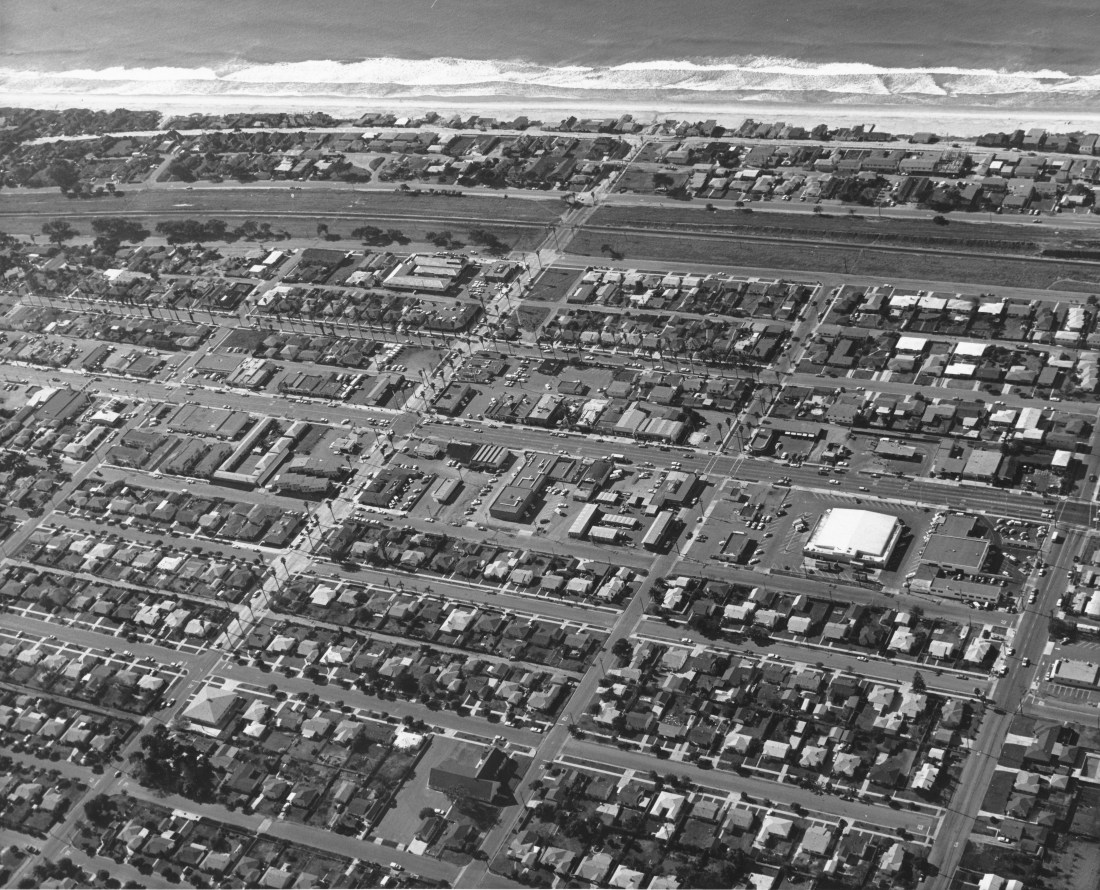
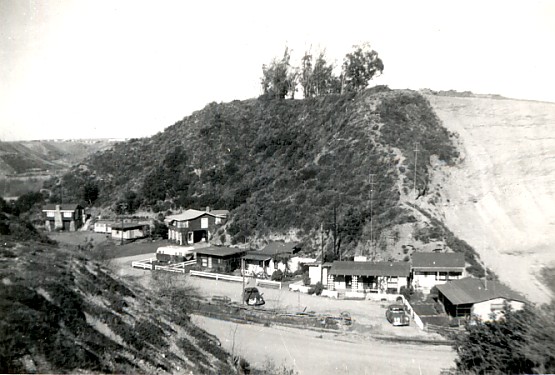
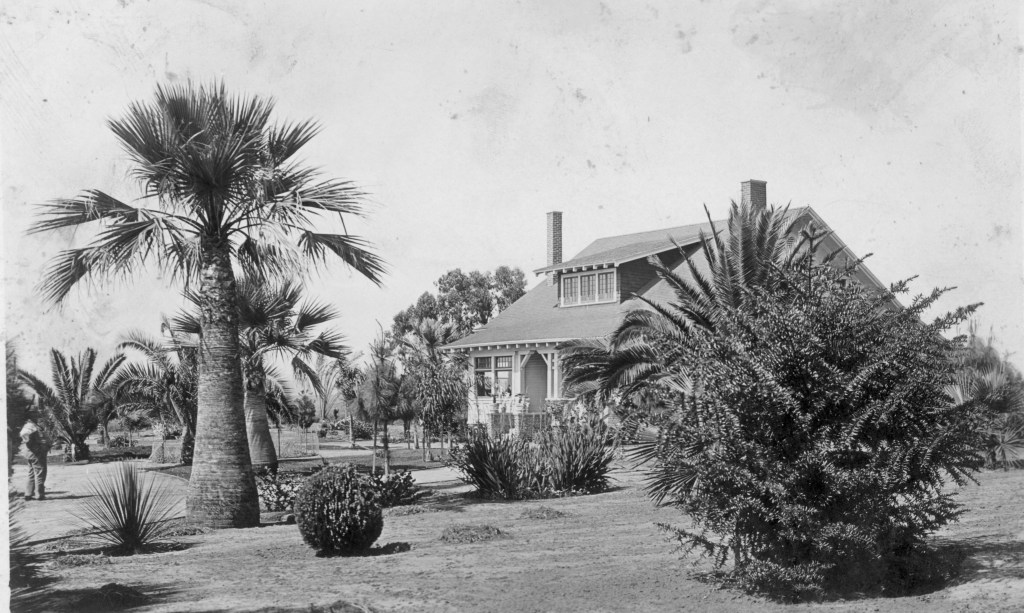



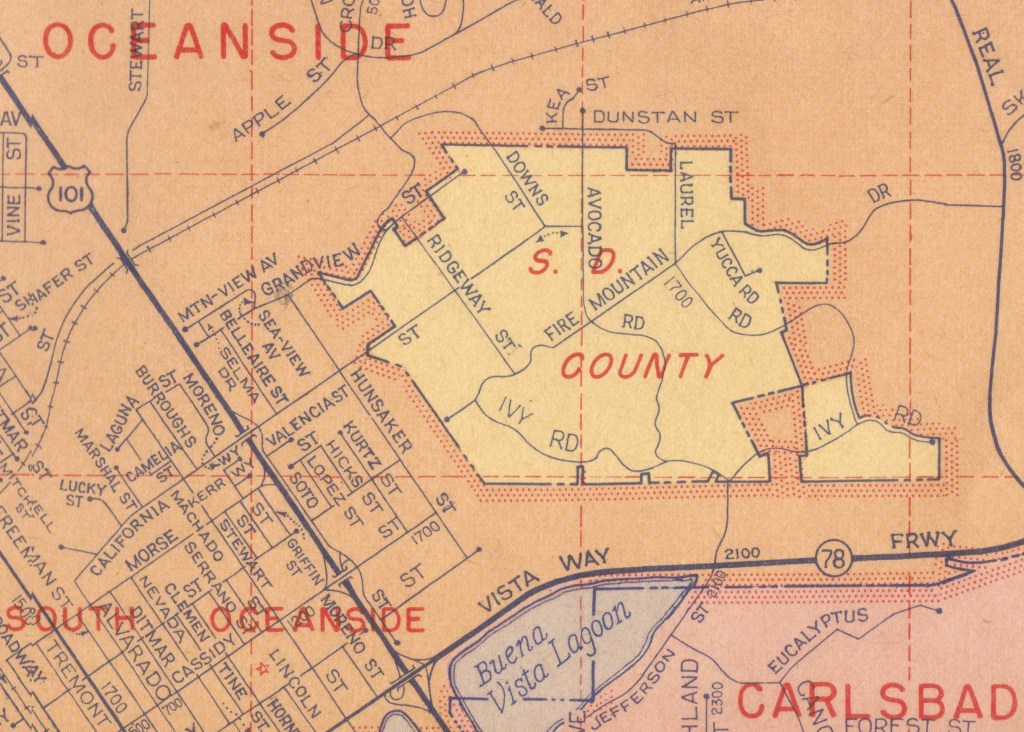

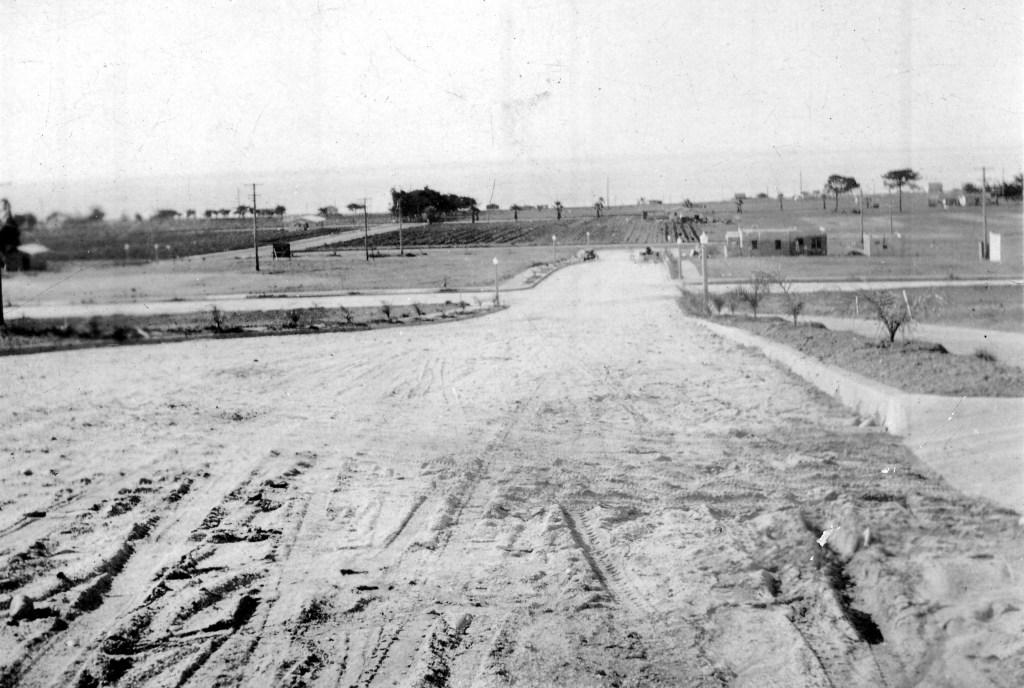
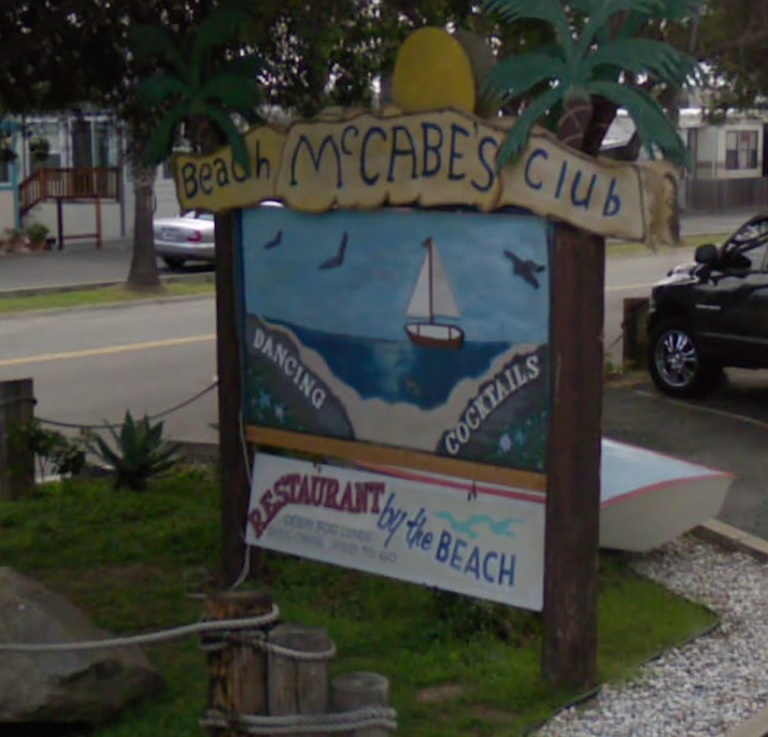



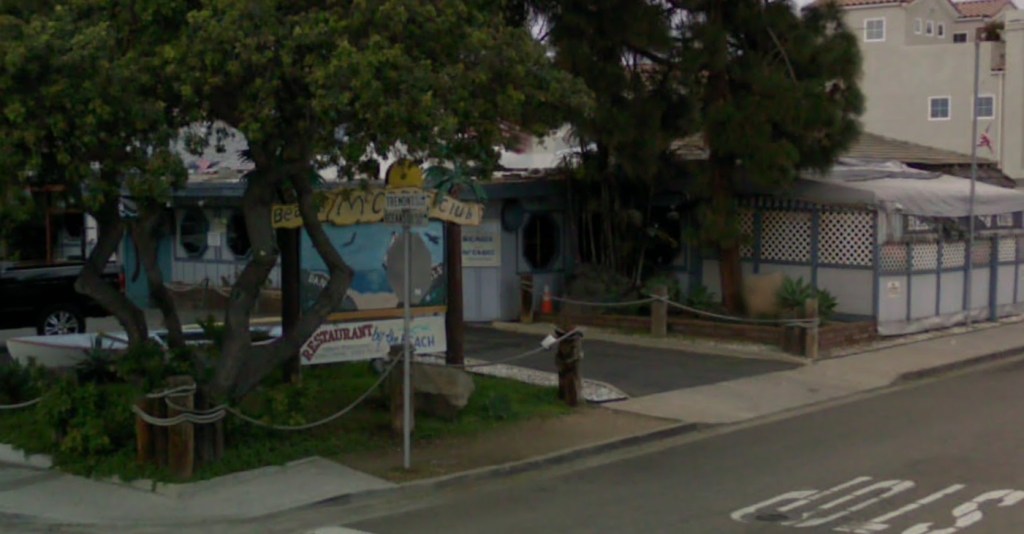


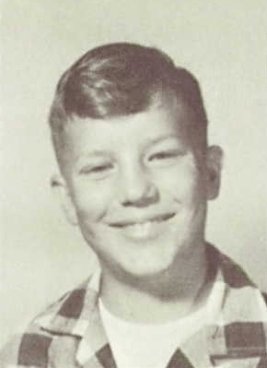


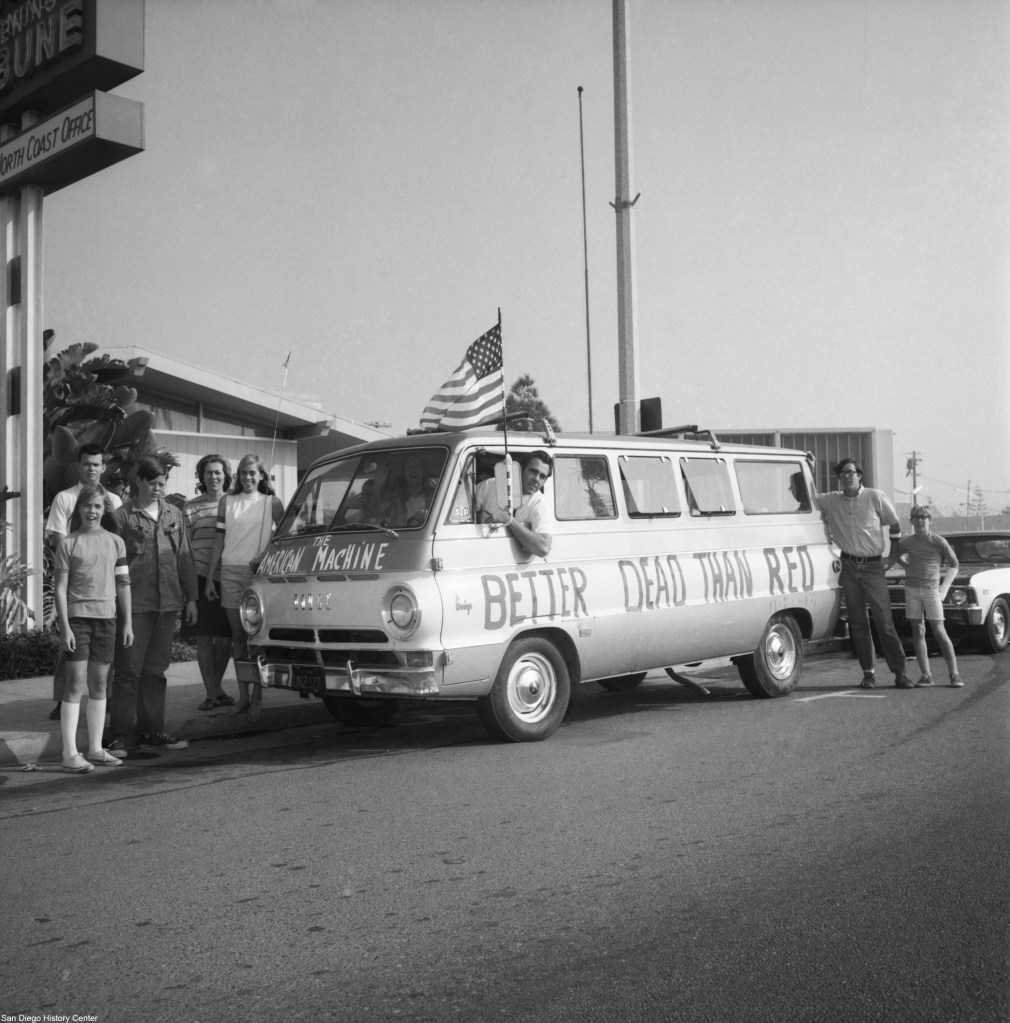


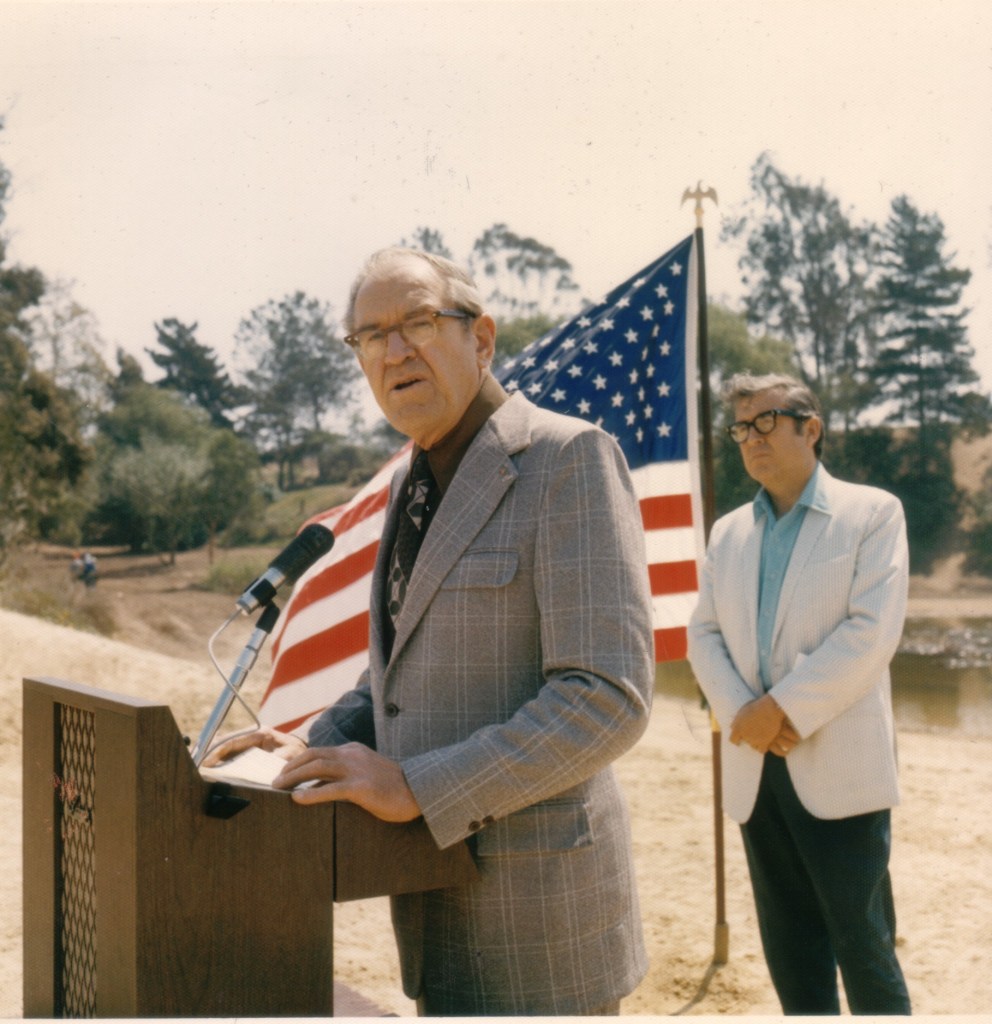

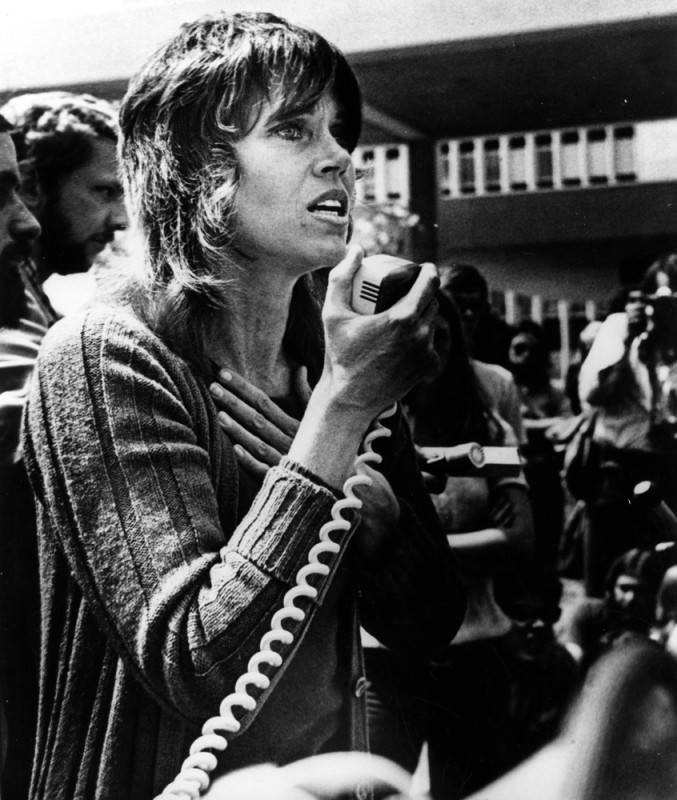
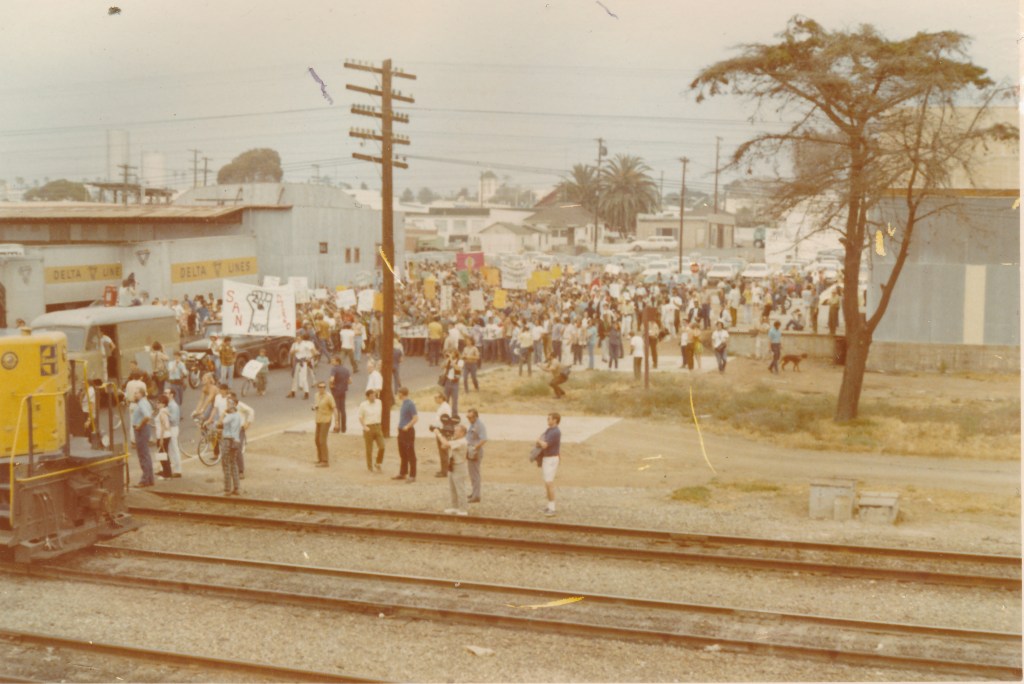
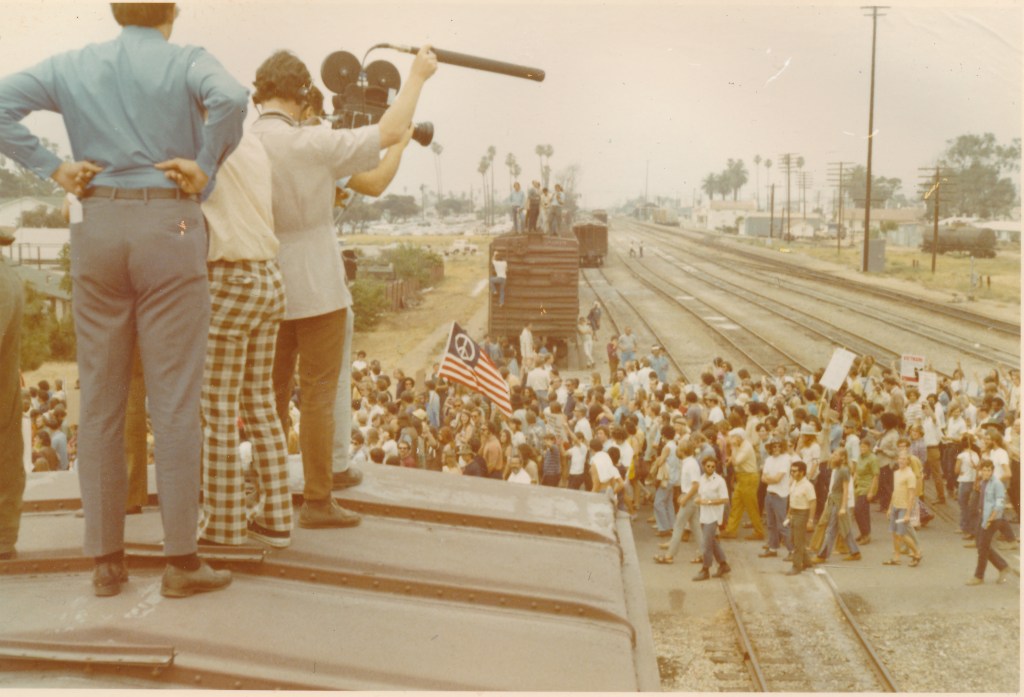


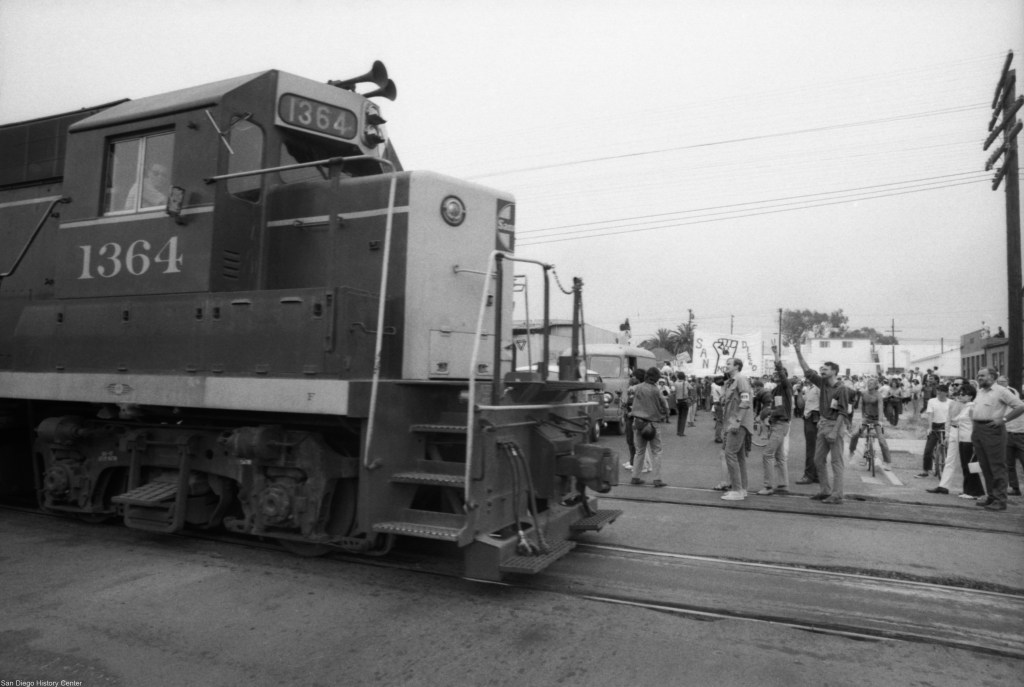


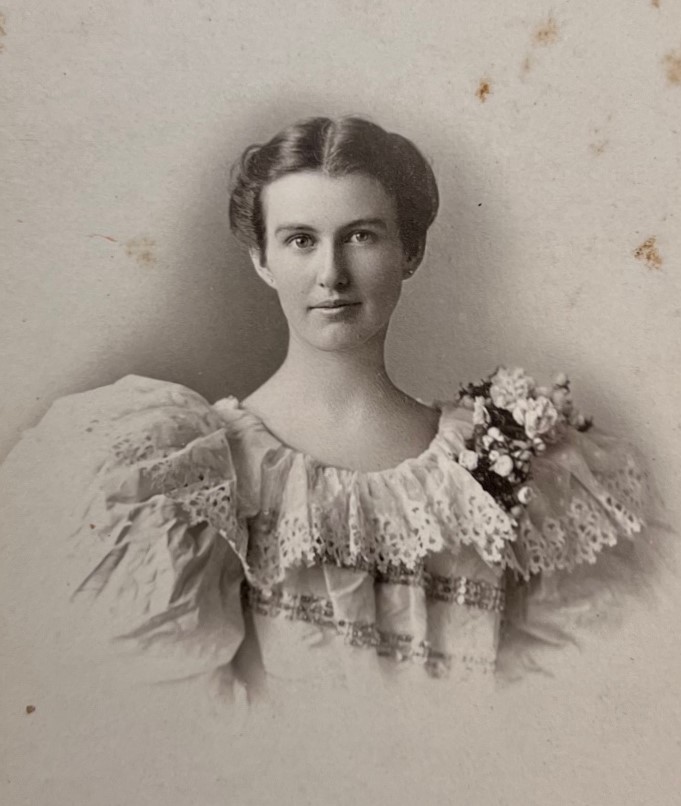
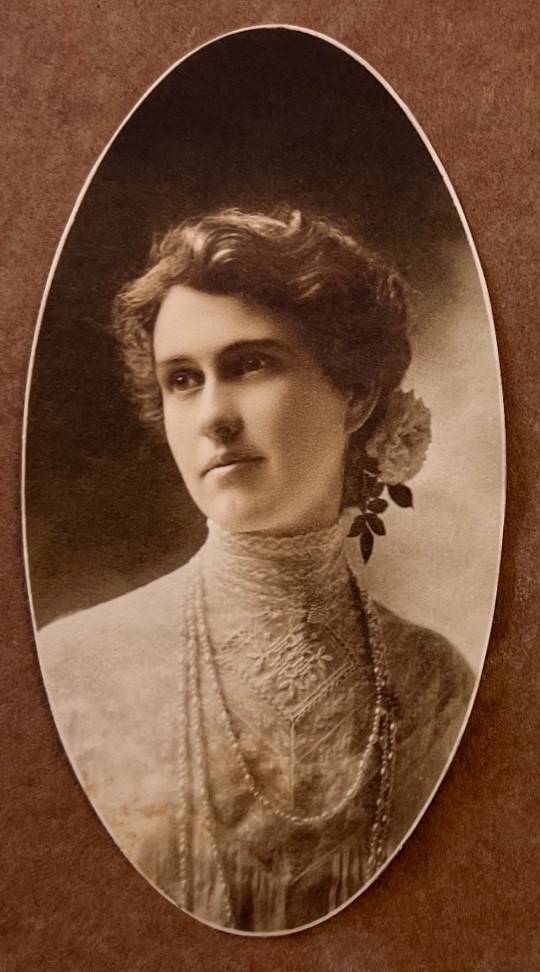


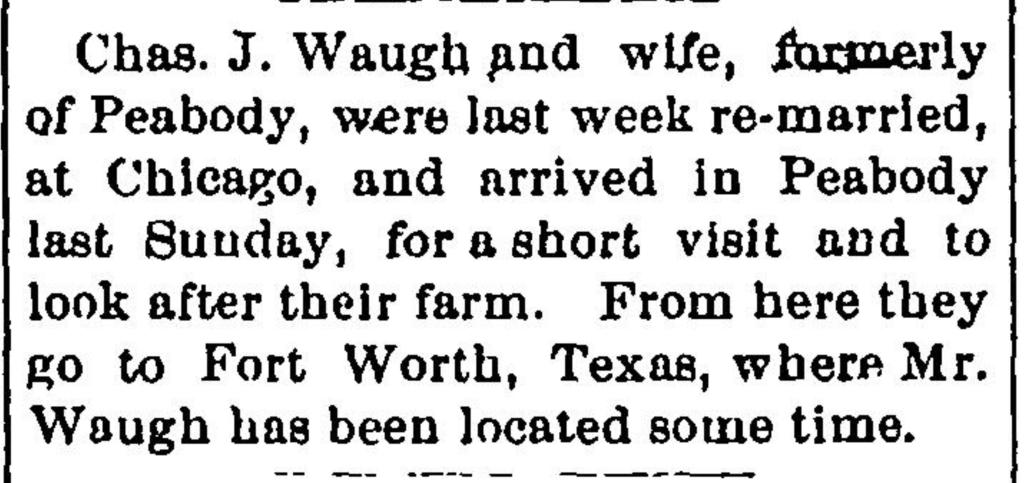





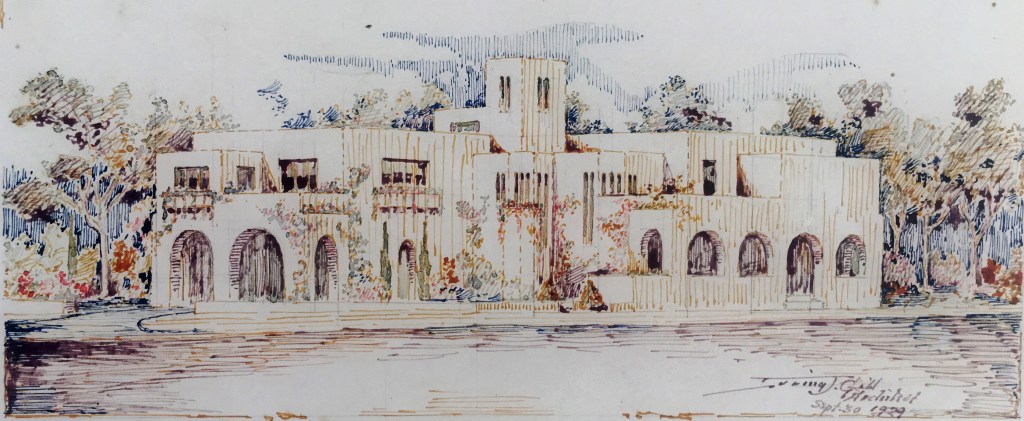


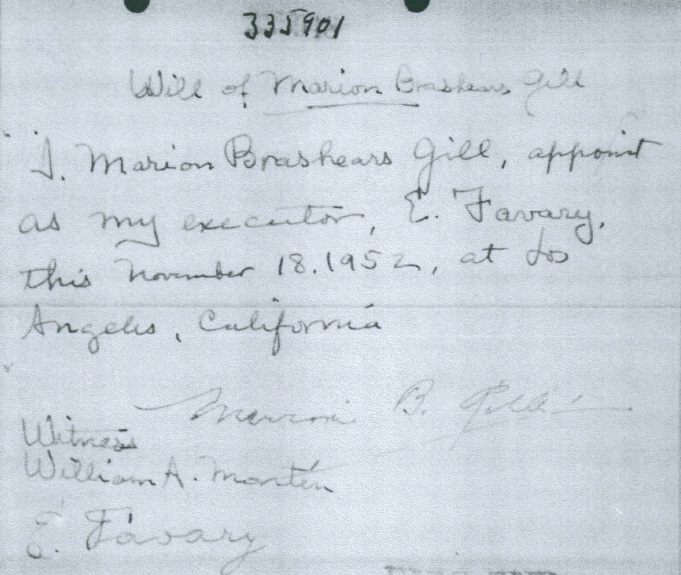
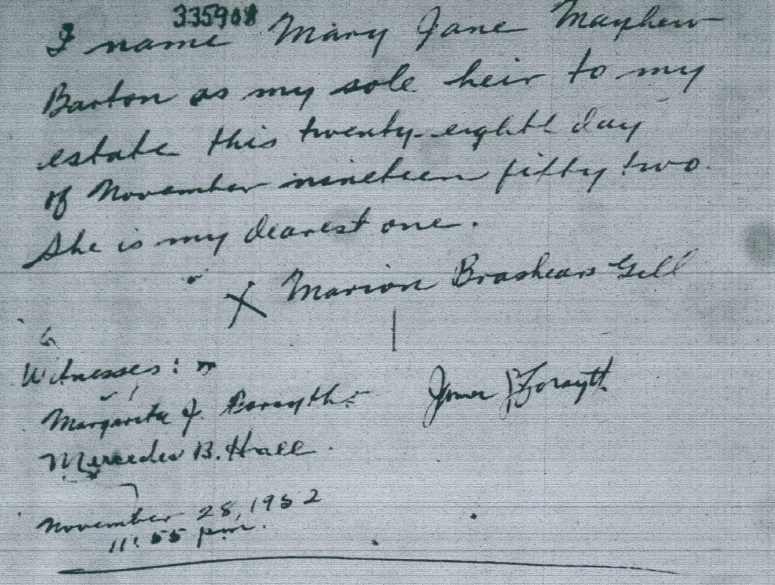

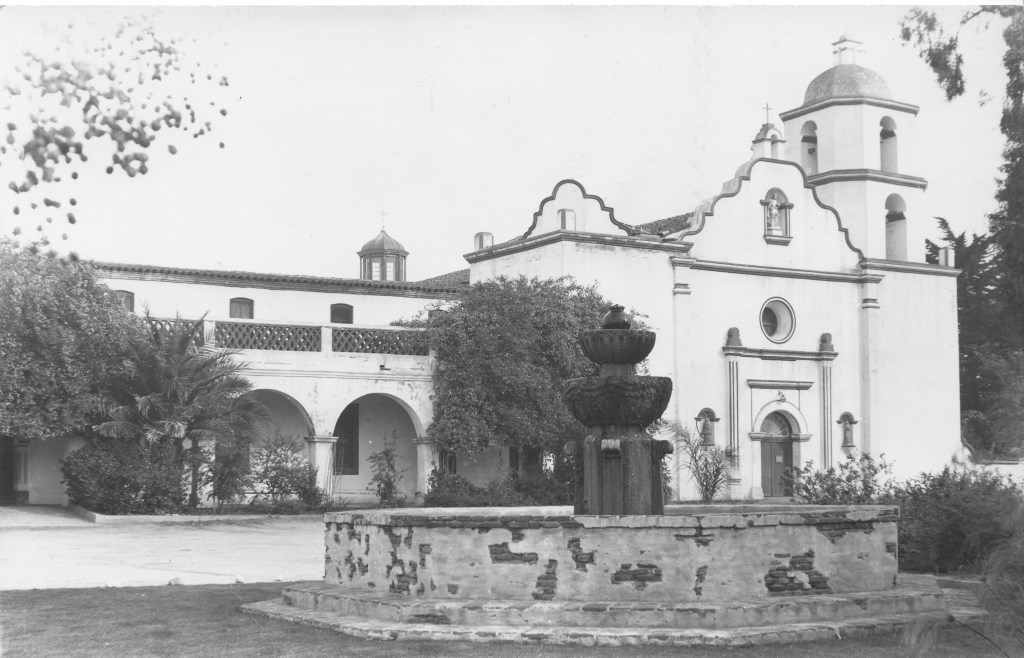











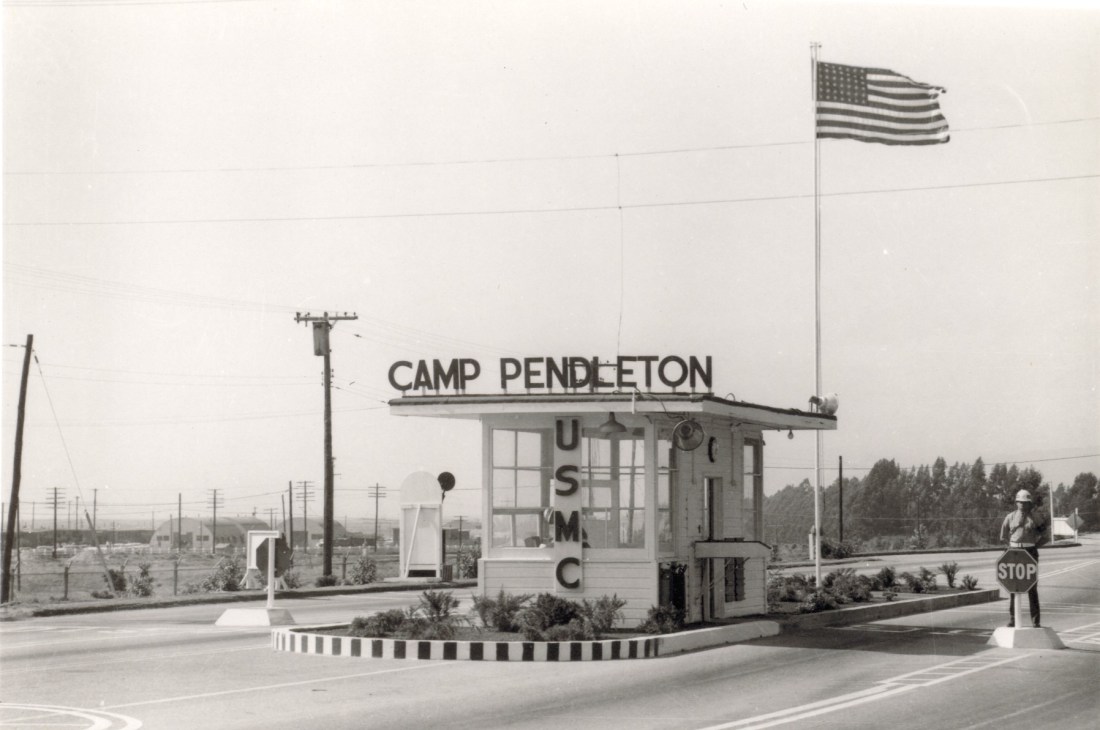


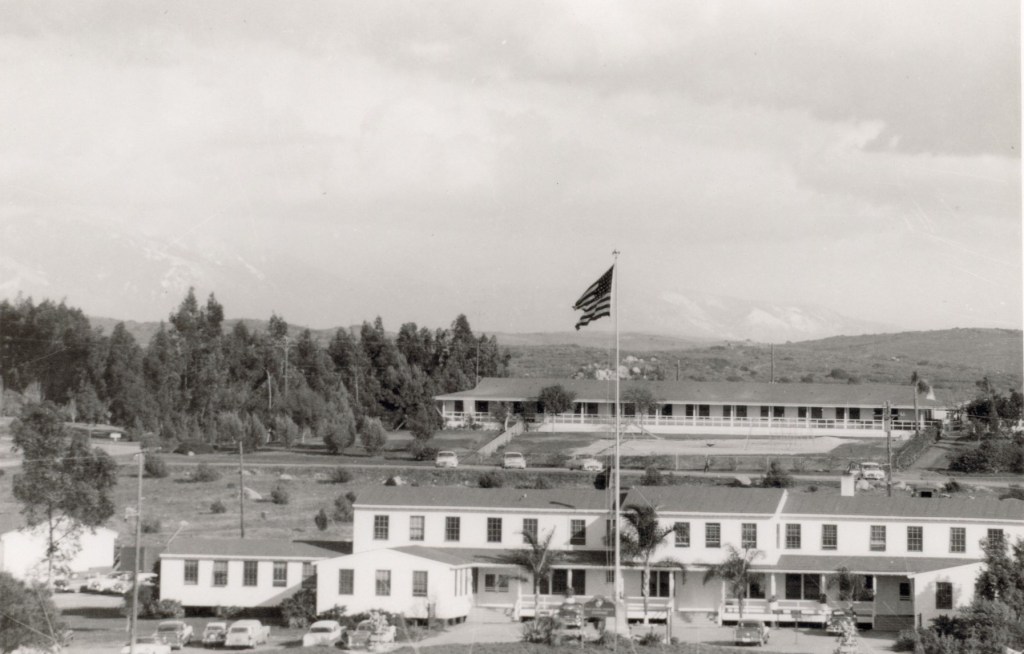
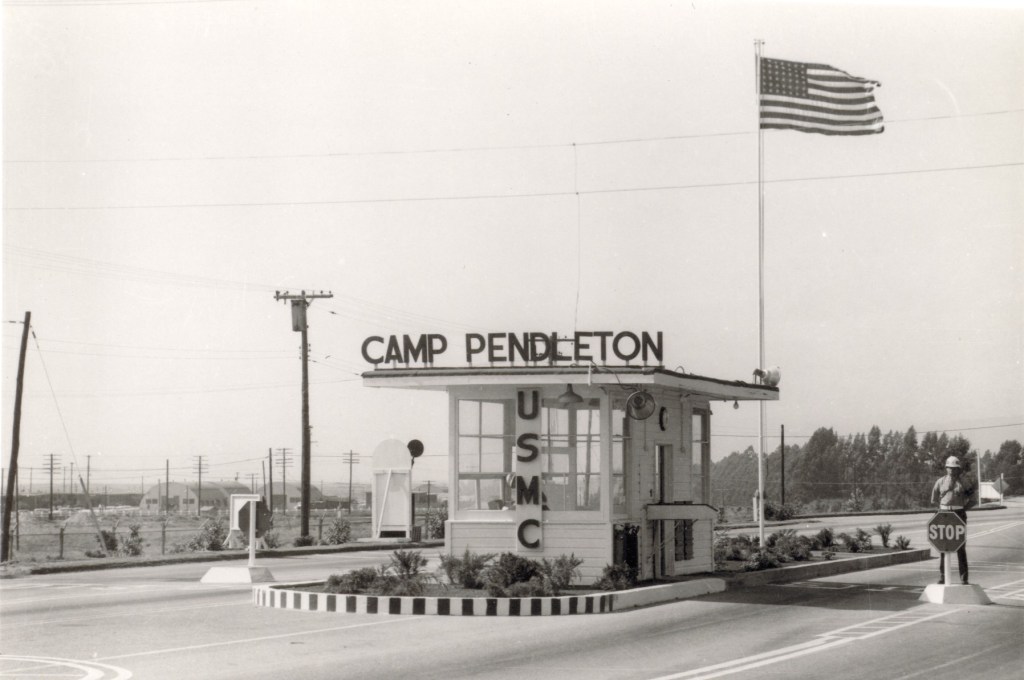


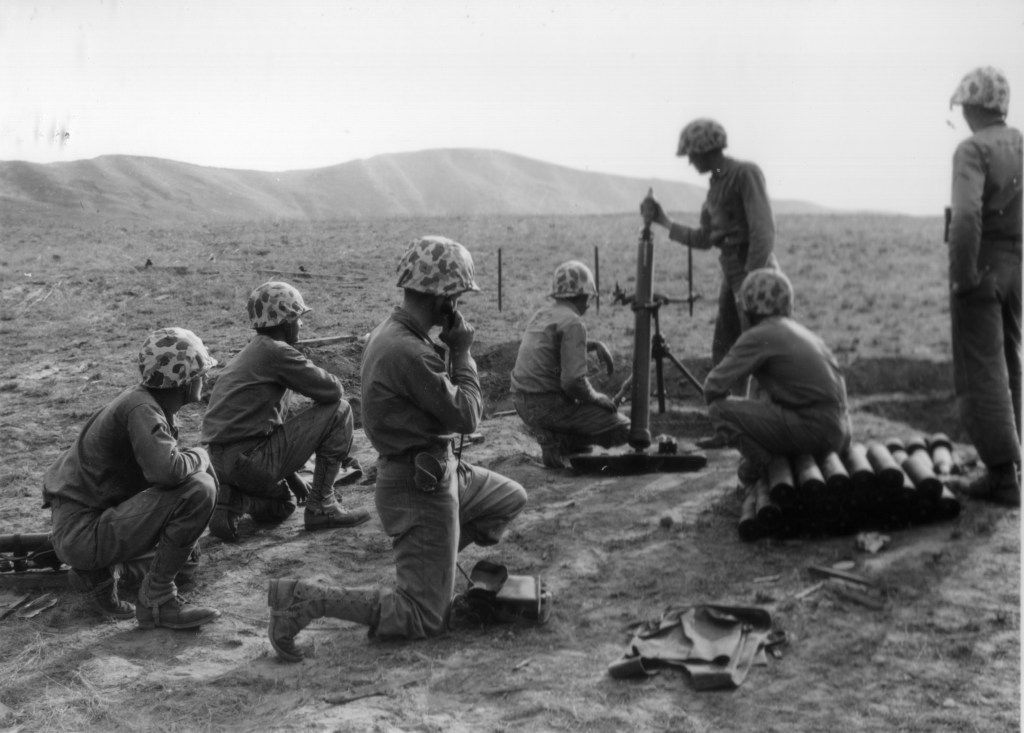


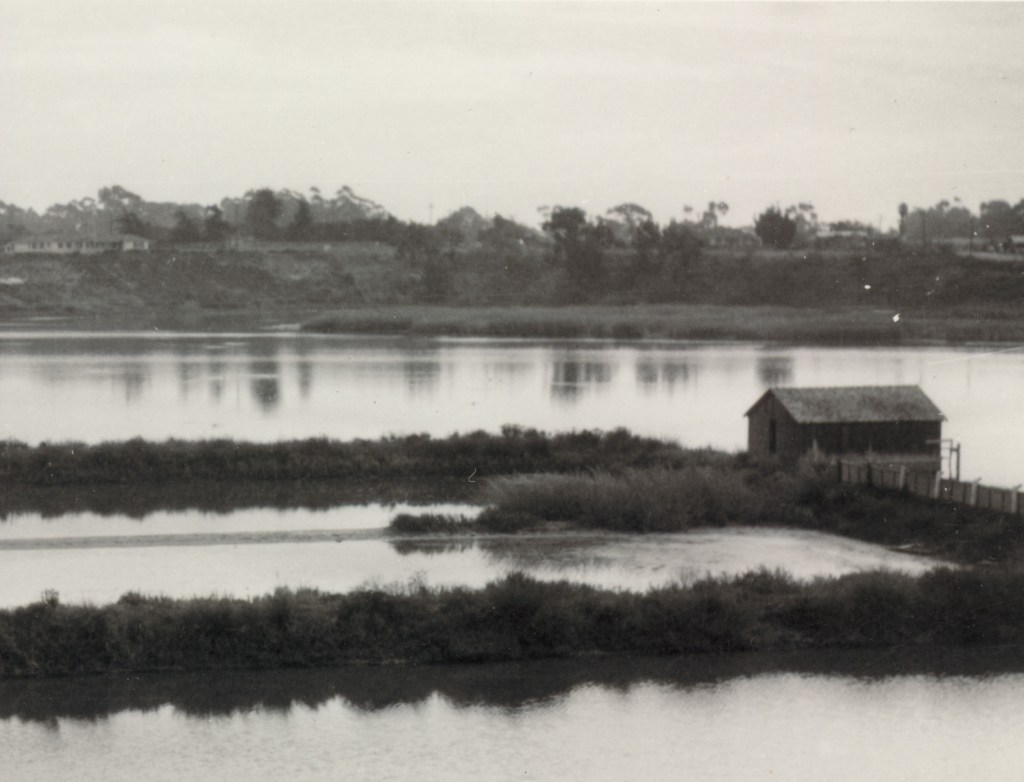

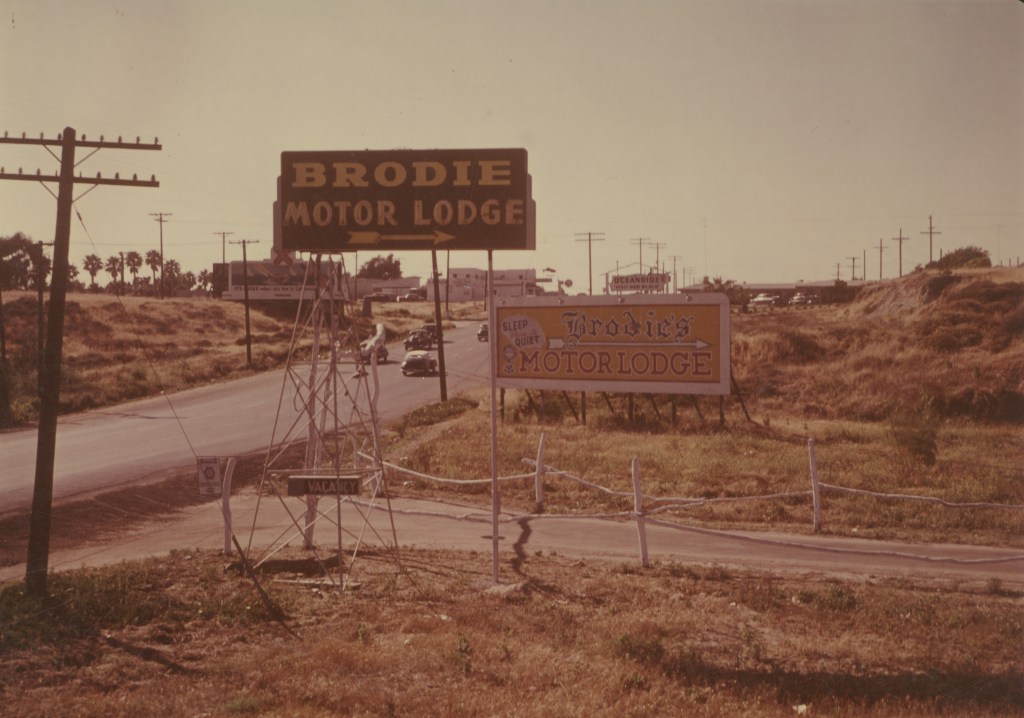


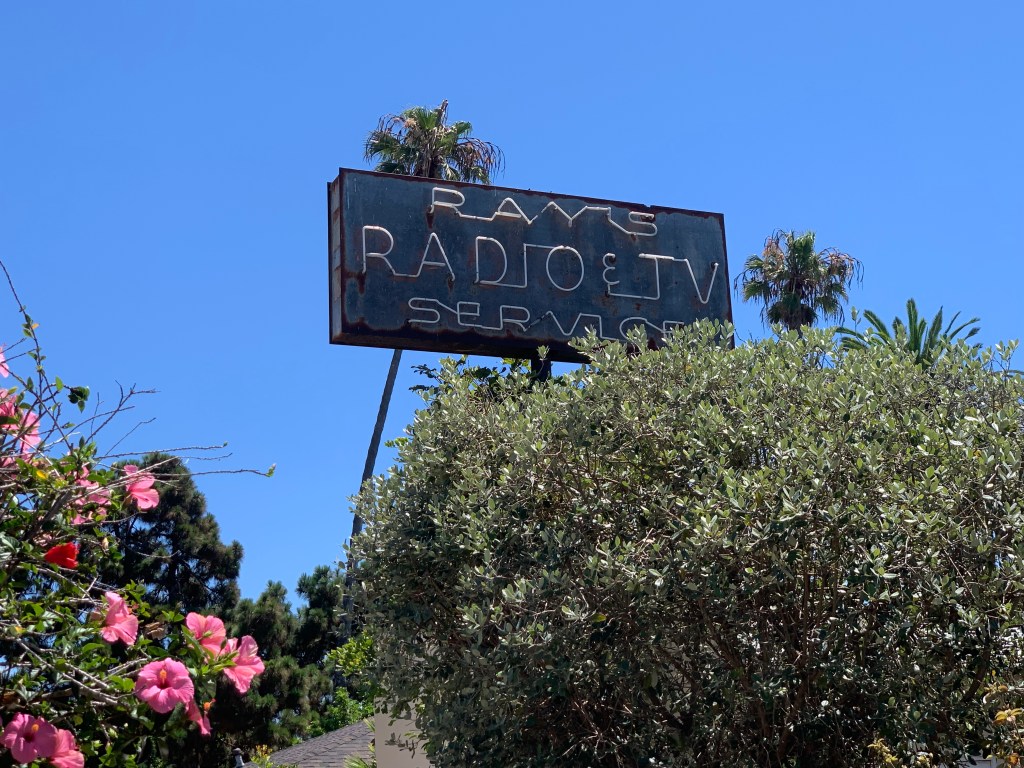


 Histories and Mysteries