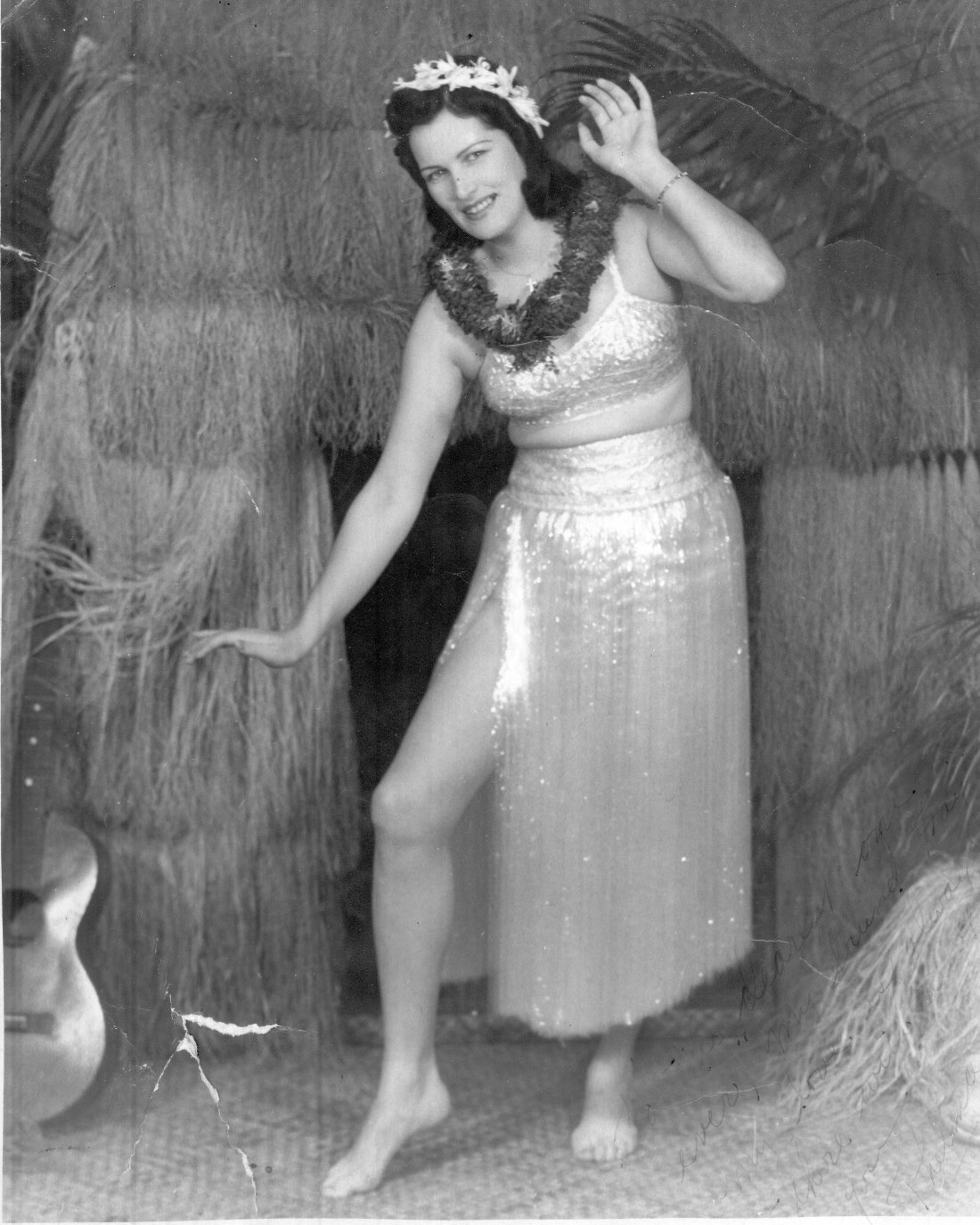
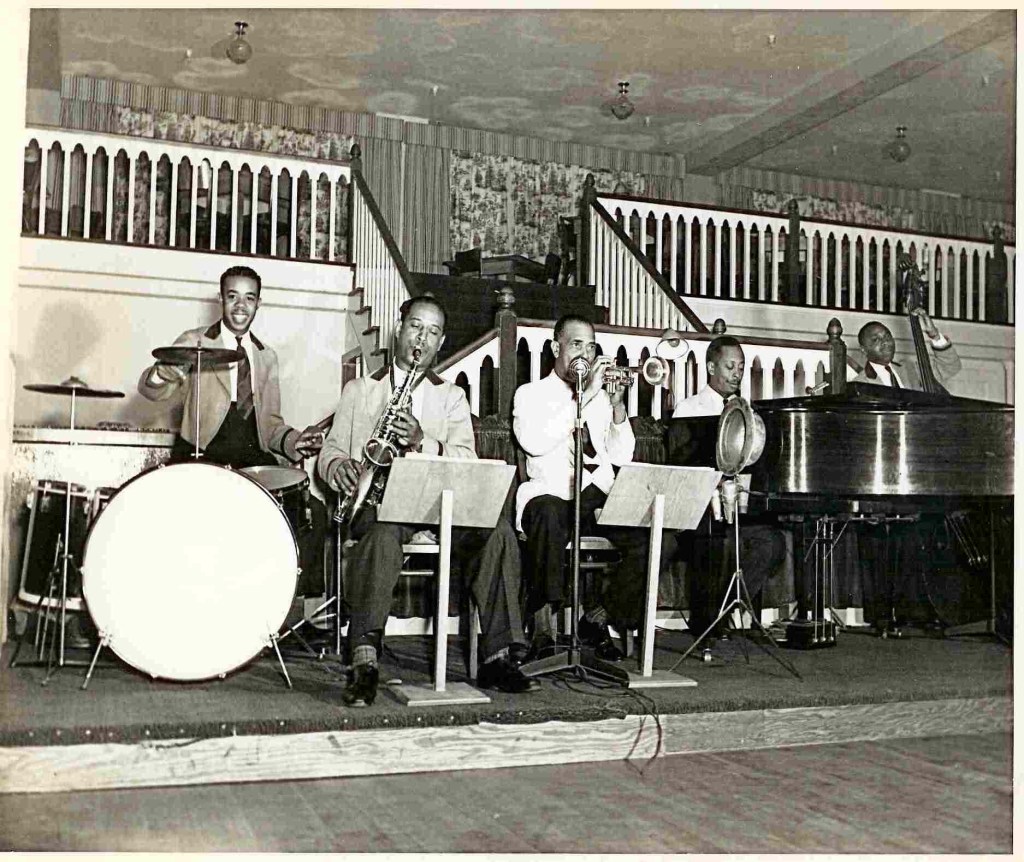
Cold Case – The Murder of Ray Davis – Shades of the Zodiac

One quiet night in Oceanside, California a senseless murder was committed with no apparent motive or suspects. Days after the murder, someone claiming to be the killer called local police with an ominous threat that resulted in armed gunmen protecting city busses for several nights in anticipation of another death. But as shocking as it was, the incident slowly faded into obscurity and the murder went unsolved. The case was in fact forgotten about altogether until in 2017 when I stumbled upon a newspaper article while doing research on an unrelated subject. As I continued research on the murder I collected dozens of newspaper articles and discovered that the case had never been solved. I then contacted the Oceanside Police Department who directed me to their Cold Case Detective.

The Murder of Ray Davis

On the evening of April 9, 1962, the Oceanside Police Department received an anonymous telephone call. The unidentified caller stated cryptically: “I am going to pull something here in Oceanside and you will never be able to figure it out.” The call was likely dismissed…until two nights later on April 11th, when a body was discovered and the caller contacted the police again.

Patrolman Terry Stephens discovered the lifeless body of Ray Davis in an alley in the upscale beachside neighborhood of St. Malo at 1:45 am.  The night of the murder, Stephens had not yet turned 28 years old, but was already a seasoned police officer. Born in 1934 in Escondido Stephens was raised in Oceanside where he lived nearly all of his life. At the age of 21 he joined the Oceanside Police Department and served on the force for 31 years before he retired.

The victim, Ray Davis was just 29 years old, a native of Michigan, born in 1933 to Glen and Virginia Davis. His parents separated when he was a young boy. In 1950 his mother was working as a dispatcher for a taxi company and at age 17 Ray was working as a waiter in a local restaurant.

Home at 616 E. Mason Street in Owosso, Michigan, where Ray Davis lived with his mother in 1950. They lived in the rear unit.

Ray married Marion Lois Solomon in 1953 in Owosso, Michigan. It was Marion’s second marriage and she had two children with her first husband, Julius Poullion.

Ray and his brother older brother Jack had moved to Oceanside in January of 1962. Oceanside had a population of less than 25,000. Jack got a job working at Marine Corps Base Camp Pendleton and Ray as a cabdriver for the Checker Cab Company. The brothers were renting a house at 525 South Tremont Street. Ray and his wife were living separately, with Marion residing in Pomona, California.

Ray Davis was working an evening shift, his cab parked on Mission Avenue in downtown. At 11:10 pm he reported to his dispatcher Lowell Sikes that he was driving a fare to South Oceanside. He never returned or responded to subsequent radio calls.
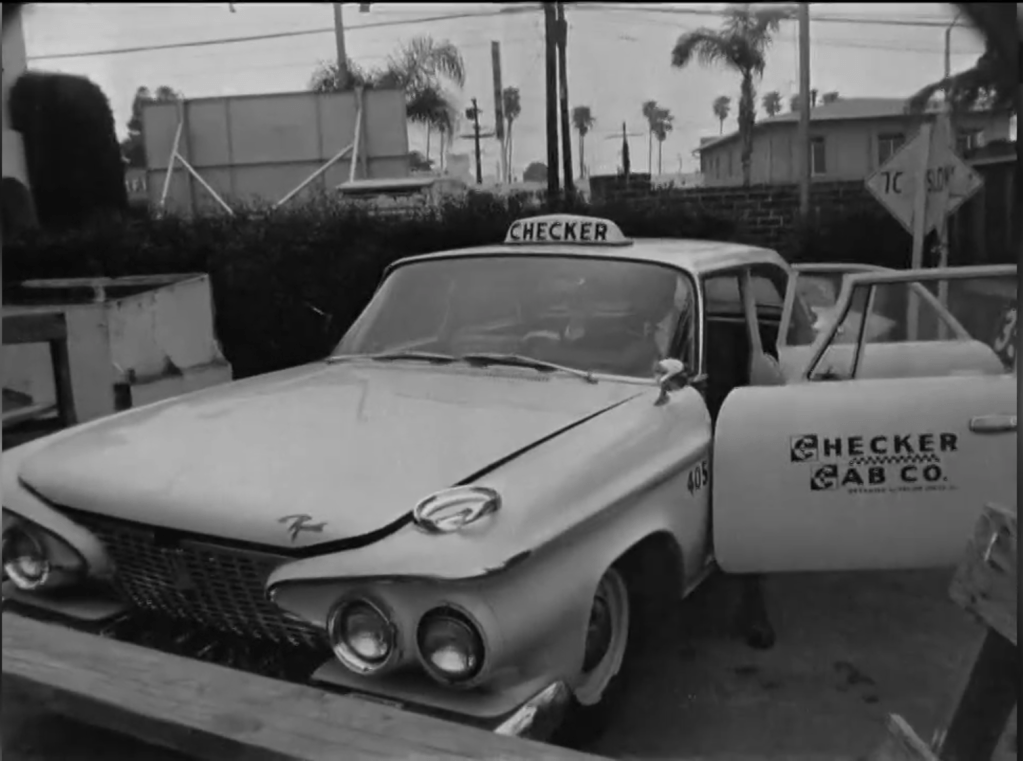
Police inspect the cab in which Ray Davis was murdered

Ray’s body had been dumped in the alley behind 1926 South Pacific Street, the home of Oceanside’s former Mayor Joe MacDonald. Across the street was the home of Oceanside’s current Mayor Erwin Sklar. This was not a neighborhood familiar with violent crime, let alone murder. (Note: Few people realize that St. Malo does not begin behind its iconic gated archway, but also includes the 1900 block of South Pacific Street.)

Davis had been shot once in the back, through the driver’s seat, and once in the back of the head. His assailant unceremoniously pulled him out of the cab and drove away. Robbery did not appear to be a motive as Davis had a modest amount of cash in both his wallet and shirt pocket.

The bloodied cab was discovered at 6:30 am, left in the alley of the 400 block of South Pacific Street with its meter showing a $2.20 fare. On scene Detective Don Brown found a third shot had been fired through the windshield of the taxi.

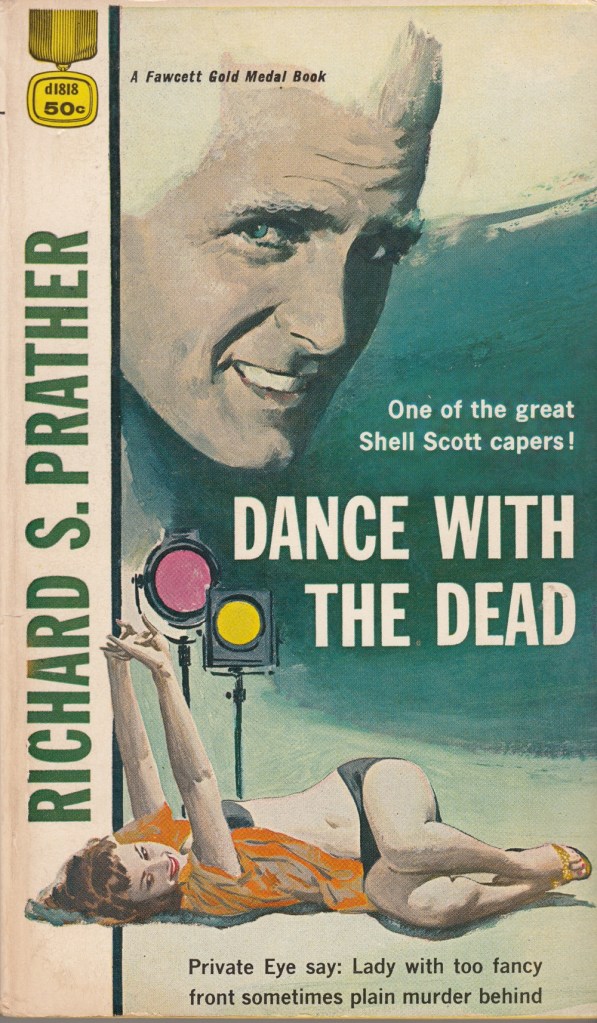
On the front seat of the abandoned cab was a paperback novel, “Dance With the Dead.” Written in 1960 by Richard S. Prather, it featured a private detective who solved crimes, all the while encountering scantily clad women…very campy stuff.
Davis was taken to the Seaside Mortuary at 802 South Pacific Street where an autopsy was performed by L. H. Fairchild of the San Diego County Coroner’s Office. Two .22 caliber bullets were removed and given to Oceanside Police Detective Floyd R. Flowers.

The following day, April 12th, both the Oceanside Blade Tribune and San Diego Union Tribune newspapers reported the murder along with the fact that police had no motive or suspect. The story of Ray’s murder was also published in several Southern California newspapers, including the Los Angeles Times. In Ray’s home state of Michigan, at least three newspapers reported the murder of Ray Davis. No mention was made of the mysterious phone call of April 9 as the Oceanside Police Department had not released that information.

Funeral services for Ray Davis were held at the Oceanside Church of God on April 13th. He was buried in a plot located in the “Sunset Slope” at Eternal Hills Memorial Park. Virginia Davis, his bereaved mother, flew from Michigan to Oceanside for the services.

Headstone of Ray Davis in Eternal Hills Memorial Park, Oceanside, California

On April 16th the Oceanside Police Department disclosed to the public that an unknown person had called them on April 9th with a veiled threat that they now linked to the murder of Ray Davis. The second phone call came with a frightening warning.

Police Chief William H. Wingard described the caller as a possible “deranged killer” and released the contents of the call:  “Do you remember me calling you last week and telling you that I was going to pull a real baffling crime? I killed the cab driver and I am going to get me a bus driver next.”

Who, but the original caller, would have known about the initial message? Who would taunt the police in such a way?

This threat was not taken lightly, considering the unknown caller seemed to have made good on his last one. Chief Wingard stated: “We have no reason to disbelieve the calls.”

In response to the threat, the Oceanside Police Department took measures to protect all city busses and armed military police were put on each bus going aboard Marine Corps Base Camp Pendleton. The newspaper reported that Frank Lilly, Oceanside’s City Manager gave Oscar Hatle, Bus Superintendent “blanket authority to take whatever steps necessary.” The unusual aspects of the murder and the unprecedented response of armed guards were big news. The story was widely distributed by the Associated Press and United Press International.

Three days passed without incident. Guards were removed from the busses, but on so-called “lonely routes” the bus company assigned two drivers. Oscar Hatle commented: “The situation still exists. We are taking no unnecessary chances.”

The police had no motive and scant evidence. They were desperate to solve the murder. Several people were questioned and released. One reported suspect was a fellow cabdriver, Charles Schofield, but the accusation had no foundation.

On May of 1962 an arrest was made of four Marines for armed robbery, but neither their prints nor ballistics matched.  Another armed robbery suspect was arrested in November but again, the fingerprints were not a match.

The murder was all but forgotten about except for the Davis family. Years passed, then decades. Ray’s brother Jack died in 1990. Ray’s mother died in 1995 and was buried at Eternal Hills Memorial Park. Ray had no biological children. After the death of his brother and mother there was no one left to remember.

Headstones of Ray and Jack Davis with their mother Virginia Davis at Eternal Hills Memorial Park

Work of the Zodiac?

It is only speculative, but it is still worth noting that seven years after Ray Davis’s murder, a killer known as the Zodiac would mimic the same deadly scenario. In 1969 he shot and killed a taxi driver in San Francisco, contacted police taking credit for it and then threatened to target a bus, in this instance one full of children.

The Zodiac killed his victims in a variety of ways and weapons, including a .22 caliber gun (as in the murder of Ray Davis). It is believed that the Zodiac may have been in the military. It is now surmised that one of his first victims may have been Cheri Jo Bates, who was murdered in Riverside, California in 1966. While there are several theories surrounding Zodiac, is it too far-fetched to believe that perhaps he started his killing spree in Oceanside?

Many serial killers are known to taunt or toy with police and certainly this was the case with Ray’s murderer. Serial killers taunt because they crave the attention, they want the notoriety and many times they are convinced of their own superiority over law enforcement.

Theories and conjecture aside, to this day the murder of Ray Davis remains unsolved. It is likely the killer is dead … even if he was just 25 years of age in 1962, he would be 83 years old in 2020.  Many of the police officers and detectives who worked so diligently to try to solve the case and protect the residents of Oceanside have passed. However, Roy K. Smith, a retired police captain, remembers the case as he was working the morning watch the night of the murder.

I first brought this case to the attention of Tom Heritage, a semi-retired law enforcement officer working part time in the Oceanside Police Department’s Cold Case files. Soon after his brief review of the file, Heritage permanently retired and moved out of the area. Detective Sylvia Guzman O’Brien then headed the department and she took a more thorough look into the unsolved murder.

In December of 2019 Detective O’Brien sent the latent fingerprint cards collected at the scene for entry into the Automated Fingerprint Identification System (AFIS). The Oceanside Police Department has kept silent about those results.

There may be DNA evidence. The murderer pulled Davis’ lifeless body out of the front seat of the cab by his belt loop but it is unknown if the evidence is sufficient to create a profile.

Detective O’Brien retired in 2021 and it is unclear if anyone is actively working this murder which is now 62 years old. The Oceanside Police Department solved a 27-year-old case in February of 2022, the stabbing death of Dolores Rabaya in 1994.

Regardless if there is a tie or link to the Zodiac killings, Ray Davis still deserves justice. Even if the killer has since died, perhaps this case could be solved through ancestral DNA forensics.

View local news reports on the links below:

https://www.10news.com/news/local-news/did-the-zodiac-kill-in-oceanside-police-re-test-evidence-in-cold-case

https://www.cbs8.com/article/news/crime/police-looking-into-claims-by-historian-that-zodiac-killer-may-be-responsible-for-1962-oceanside-murder/509-06453d97-3244-478f-9160-3cd499ce2ec0

Listen to this “Vanished” podcast about the infamous Zodiac Killer: https://audioboom.com/posts/8266146-vanished-zodiac-sick-of-living-unwilling-to-die

https://podcasts.apple.com/us/podcast/kristi-hawthorne-the-zodiac-killer-the-unsolved/id1572325461?i=1000532770818

Kristi S. Hawthorne, historiesandmysteries.blog “The Murder of Ray Davis”, 2020. Unauthorized use and/or duplication of this material without express consent and written permission from the author and owner is strictly prohibited. Links may be used, provided that full and clear credit is given to the author Kristi S. Hawthorne and historiesandmysteries.blog “The Murder of Ray Davis”, with appropriate and specific direction to the original content.
O. U. Miracle

A Name Engraved in History

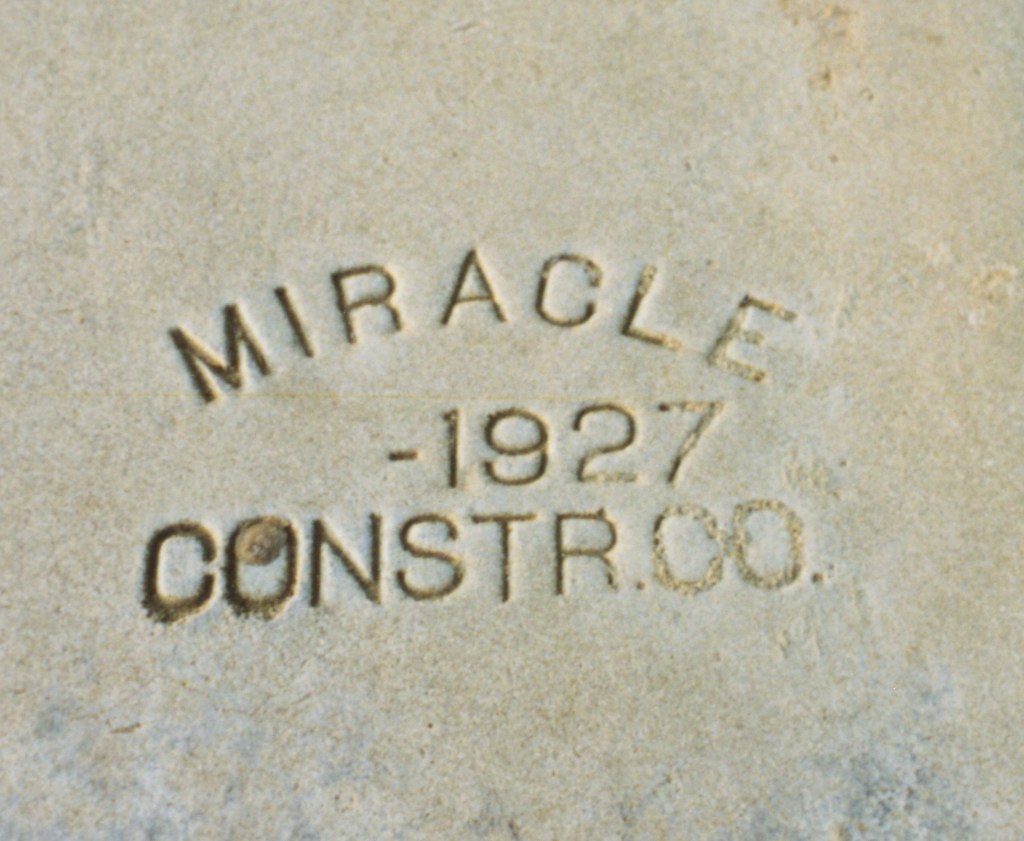
Walk the neighborhoods of Oceanside and you will find the sidewalks marked with the curious name “O.U. Miracle”.  Many downtown sidewalks and curbs are engraved with this interesting name and many people may wonder what, if any meaning it holds, or who is this Miracle. 

Orville Ullman Miracle’s parents were creative in thinking up their son’s name.  Their beloved son’s initials lovingly proclaimed his birth to the world … and I can’t help but think Mrs. Miracle must have held her precious baby and whispered in his ear, “Oh You Miracle!” Little did they know but that this name would be used as a marketing tool second to none. 

Born in 1871 in Neenah, Winnebago County, Wisconsin to James and Mary Miracle, Orville began a career in the cement business in about 1901. He later established the Miracle Pressed Stone Company, manufacturing and selling “Miracle Concrete Blocks” across the upper Midwest.

Orville Ullman Miracle (courtesy Richard Miracle Willets)

However, it was his cement business that brought him the most success. He traveled from Iowa to South Dakota, Minnesota, Nebraska and even Montana, pouring cement for roads, sidewalks and curbing for cities and townships.

Left to right: Barry Derrer, O.U. Miracle, and two unidentified workers (courtesy Richard Miracle Willets)

Miracle’s association with Oceanside began in 1927 when he was the low bidder on the contracts to improve streets throughout downtown and the ocean front. He laid miles of concrete sidewalks throughout Oceanside that have long outlasted other cement walks poured decades after.

Office of O.U. Miracle at 1933 South Hill Street (now Coast Highway)

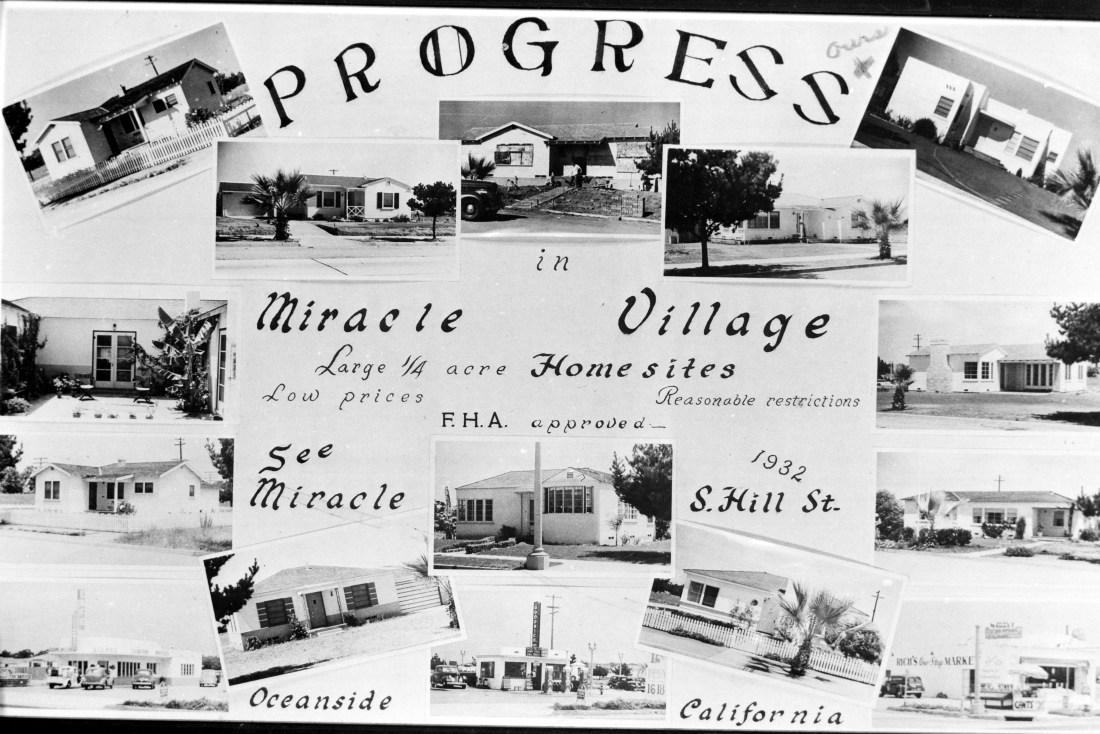
In 1938 South Oceanside became the home of “Miracle Village”. Miracle purchased nearly all of the Tolle Tract in South Oceanside, along with other lots which included either side of Vista Way from Hill Street to east of Moreno Street. He advertised his “Oh You Miracle Tract” around the southland and began building single family homes and selling them from his office at 1932 South Hill Street. The San Diego Union reported that Miracle sold lots “cafeteria style” – prices were placed on the lots, no middlemen, and buyers simply picked out their lot and brought the price tag to his office to complete the purchase.

Postcard advertisement for Miracle Village

Miracle built a house at 2022 South Freeman Street where he and his wife Grace made their home. Growing up, Robert Morton, lived next door to Mr. and Mrs. Miracle. He shared with me that Miracle built the home for his mother Charlotte Morton and it was the last empty lot on the block at the time. Other neighbors included Dr. and Mrs. George Totlon, Bob and Johnson, Rudy and Jane Sonneman, and Harold and Alma Davis.

Charlotte Morton and children in front of their home at 2018 South Freeman Street in “Miracle Village” South Oceanside

O. U. Miracle grew fields of gladiolus on parcels he owned to the east of his home. One block west he planted tomatoes and lima beans. His grandson Richard Miracle Willets wrote in his recollections: “During harvest I was put to work picking lima beans and also tomatoes. I loved picking tomatoes because tomatoes must still have some green on top to be marketable so the really delicious fully ripe ones we could eat in the field. I wasn’t really on the payroll but one evening ‘GG and GPOP’ and I were sitting in the living room listening to the radio when ‘GPOP’ said he had a surprise for me and gave me $14 which I thought was a lot of money.” 

He added that his time with his grandfather “was very precious” which included waking up in the morning and having breakfast that his ‘GPOP’ made for him – “wonderful eggs bacon and pancake breakfasts.” They would often go out in the garden and pick ripe figs and peaches to have with our breakfast.”

Looking east at Hill Street (Coast Highway) and Vista Way. (Richard Miracle Willets photo)

Willets would also recall trips to the land office with his grandfather. “I would tag along with him when he went over the Miracle Village office.  Grandpop chewed tobacco and beside his desk be had a brass spittoon. His aim wasn’t that great so the the air in the office had a distinct smell of chewing tobacco.” During the Depression years he also noted that “selling a lot for $400 at that time was a pretty big deal as money was pretty scarce.”

(photo courtesy Richard Miracle Willets)

O. U. Miracle’s unusual name brought attention from many columnists across the country, including “Ripley’s Believe It or Not” in 1934. In fact, O. U. Miracle appeared in a feature or advertisement in newspapers in nearly every state of the US between 1901 and 1949. His name was so familiar that a letter from South Africa simply addressed to “O.U. Miracle, USA” was delivered to him.          

Ad in The Los Angeles Times, Sunday, June 19, 1938

Willets remembered that his grandfather worked out a deal with the Standard Oil Company, who built a gas station on the Northeast corner of Hill Street (Coast Highway) and Vista Way.  The company paid him a few cents for every gallon of gas that was sold, which provided him (and later his daughters Margaret and Elinor) a steady stream of retirement income for many years. (The site is now the home of Valvoline, 1942 South Coast Highway.)

Described as an “ardent civic worker”, Miracle was also politically involved in the City and community affairs.  He was involved in the Elks and Rotary clubs as well as the South Oceanside Improvement Club.  Miracle served as the game warden for the Buena Vista Lagoon, which was a bird sanctuary. His grandson remembers that Orville had to tell people they were not allowed to shoot the ducks at the lagoon!

O.U. died October 9, 1949 at the Oceanside Hospital at the age of 78.  Up until his death he remained interested in the development of Oceanside.

Next time you walk through downtown, pause at each “little Miracle” you pass. It is a unique reminder of an Oceanside entrepreneur who left his mark on Oceanside in a very permanent way (and in the heart of his grandson Richard Miracle Willets).

Thelma Lawrence Garrigan

Thelma Lawrence was born in Oceanside, California in 1911.  She was the fifth of ten children born to Tom and Vera Lawrence.

Thelma’s father was born in Texas and came to California around 1898.  He met and courted Vera Sanders in Escondido.  He would often ride his bicycle 20 miles just to see her.  In 1903 they were married in Oceanside where they made their home.  Tom made a living painting houses and building boats. 

By the time she was ten years old, Thelma had seven brothers and sisters, all living in a small home on South Freeman Street.  Two of her siblings died at a young age. Her sister Eleanor died at the age of six weeks and her brother Billie died at the age of 10 from blood poisoning.  Her father worked hard to support his family, farming in various areas around town, and even working as a deputy for the Oceanside police department. 

Perhaps because her mother was so busy raising children, and her father preoccupied with feeding them, Thelma searched for love and attention outside the home. Rumors suggest that Thelma was engaged in illicit behavior when she was just 13 years old.

In 1925, at the age of 14 she married Adolph James Carpenter, of Carlsbad. The marriage took place in Orange County and was witnessed by her mother-in-law. It is unknown if Thelma’s parents were aware or approved of the marriage. On the marriage application Thelma gave her year of birth as 1906, to appear that she was 18 rather than a minor.  One year later she gave birth to a son, Adolph Keno Carpenter, at Fisher’s Hospital, which was located on Mission Road in Oceanside.  (Adolph was nicknamed “Jack” which he was called all of his life.) 

Thelma moved from Oceanside as early as 1926.  She and her young son Jack moved to Los Angeles and were living on West Temple Street. The 1930 Census records indicate that she was married but was obviously separated as her estranged husband was living in Carlsbad with his mother.  Later that year they divorced.  Census records indicate that Thelma was working as a dance instructor.  However, these were the Depression years, and it is possible that Thelma was making a living at dance halls that charged “a dime a dance.” 

According to census records, Thelma was sharing the rent with two Filipino men.  One was a “prize fighter”, the other a porter at a grocery store.  In the 1930 census Thelma’s place of birth is listed as Kentucky, although she was born in California, (and her mother’s place of birth is listed as France—she was actually born in Kentucky).  This could be due to the fact that Thelma was rewriting her personal history for any number of reasons, or more simply because someone other than Thelma provided the information to the census taker.

By 1932 Thelma and Jack moved to San Francisco.  Thelma met an Italian immigrant by the name of Alicide “Al” Pezzi.  He was a good 30 years older than Thelma and it is unknown whether they were ever married.  They were in fact living together at 1178 Hollister Avenue, (and the directory has Thelma listed with the last name of “Pezzi”). Al was a cook on a number of passenger ships that traveled back and forth from San Francisco to Honolulu.  Thelma’s niece, Dolly, remembered going to San Francisco to live with Thelma and Al Pezzi when she was 7 years old.  She remembers that Al was short in stature, to match his temper.  Dolly also vividly remembered that Al made them get rid of their family dog after it chewed his belongings. 

Alcide Pezzi

By the 1933 Thelma sent her son Jack back to Oceanside and he was raised by the Lawrence family—notably he was called Jack Pezzi rather than his birth name of Jack Carpenter.

Subsequently, Thelma then moved to Honolulu, Hawaii. Perhaps she went to Hawaii with Al Pezzi on one of his many trips and decided to stay. In 1936 Thelma was living at 1337 Pensacola Street in Honolulu. It was rumored that while she was in Hawaii she making her living as a madam at one of the many brothels in Honolulu. It has been reported that “working” in Honolulu was lucrative – $30,000 or more per year, which would be equivalent to over $500,000 today. When the Naval ships came in, the lines at the brothels would stretch around the block with prostitutes “servicing” as many as 250,000 men per month. The going rate was $2.00 (a full day’s wages) for locals and $3.00 for servicemen.

Thelma’s son Jack recalled that his mother was in Hawaii while he was attending grammar school in San Francisco and being raised by family members, his Grandma Vera, and Aunts Betty and Birdie, while Thelma sent the family money from Hawaii.

In the 1940 census, Thelma was living with or married to a William Dalton. Their residence was listed as 601 40th Avenue in San Francisco.  Her mother, son Jack and sister Betty are also listed as residing with them. Despite an apparent live-in relationship with Mr. Dalton, Thelma married Stanley Garrigan on November 13, 1940 in Reno, Nevada. They likely met in Honolulu, where Stanley was stationed. He was six years younger than Thelma, born 1917 in Orange County, California. 

Thelma made several trips back and forth from Hawaii to the mainland during the time she lived in Hawaii, either by passenger ship or plane.  Thelma’s sister Birdie visited her in 1941 and remembered that Thelma was living in a house on Booth Road and that a nightclub Thelma owned was at Waikiki Beach near the Luana Hotel. 

On December 7, 1941, Japan attacked U.S. military stationed at Pearl Harbor, Hawaii, just about 10 miles west of Honolulu.  After the bombing of Pearl Harbor, the U.S. declared war with Japan and catapulted the country into World War II.

Thelma and Birdie were both in Honolulu at the time of the attack and Jack remembered that when he and his Grandmother Vera were listening to the radio, there was a news report about an attack and at first, uninterested, Vera changed the station only to find out that the same report was on every station. It was the broadcast news of the attack on the Hawaiian Islands. Vera tried to call Thelma but there was no way to get through. The next day or so Thelma was able to contact her mother and said that she and Birdie were okay.  They had been volunteering with the ambulances and transporting bodies to a burial site.

Thelma and Birdie returned to the states, and Jack and his grandmother Vera came back to Oceanside. At the time Oceanside’s population was less than 5,000 but that would change as the Department of the Navy took over the historic Rancho Santa Margarita y Las Flores to be used as a training base for the Marine Corps. 20,000 Marines and civilian support flooded the base. The population more than doubled in five years. Restaurants, schools and hotels were bursting at the seams and there was an immediate housing crisis.

Shortly after coming back to California, Thelma purchased what was known as the “Borden building” located on the southeast corner of Third and Tremont Streets, presumably with the money she had made as a madam in Honolulu.  She went into business with her brother Jimmy and opened a nightclub called “Garrigan’s” in September of 1942.  Her husband Stanley was reportedly in Vancouver, Washington for officer’s training while Thelma and her brother went to work remodeling the building and preparing for the opening of the nightclub which offered live entertainment and dancing.

The Borden Building (built in 1929). Thelma Garrigan purchased this building for her nightclub

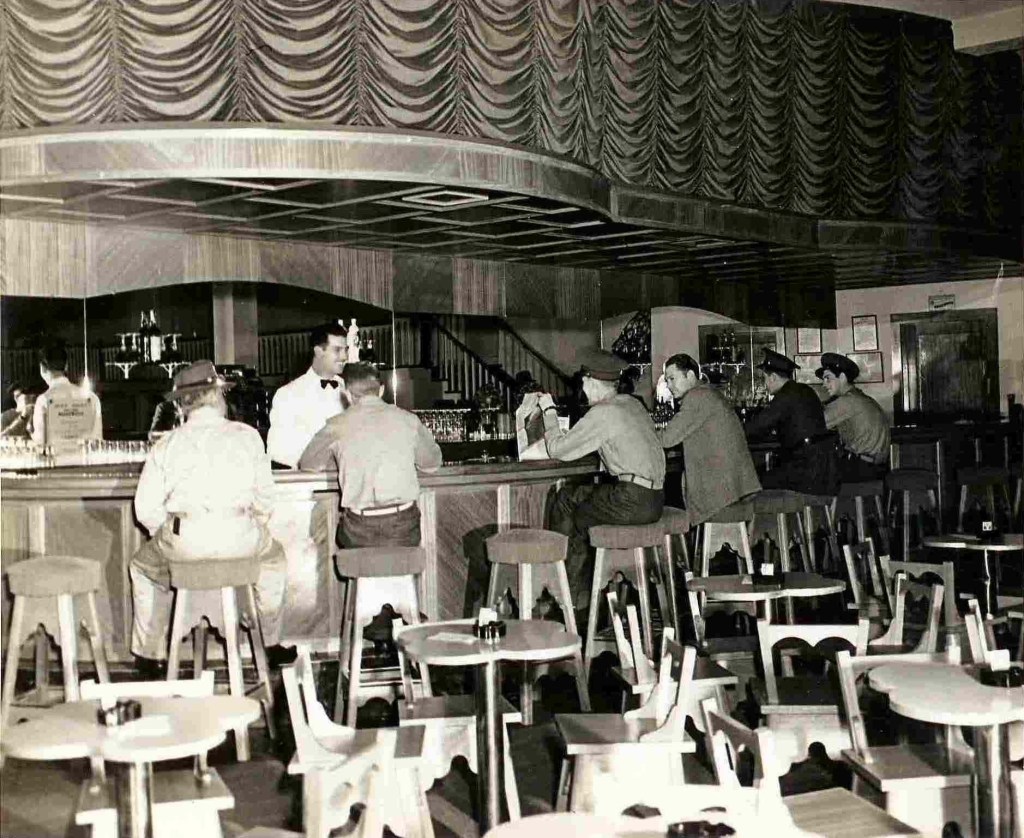
Charles O. Rowe, local contractor, was hired to remodel the main floor into a ballroom for dancing.  On one end of the room a large mahogany curved bar was built.  The mezzanine floor accommodated diners which featured a “high class steak house” and the upstairs contained rooms for employees and perhaps “overnight guests.” Thelma’s sister Vera (named after their mother) and her husband, Darrell Wilson, came to assist Thelma in the new nightclub. Darrell helped to manage the club and tended bar.

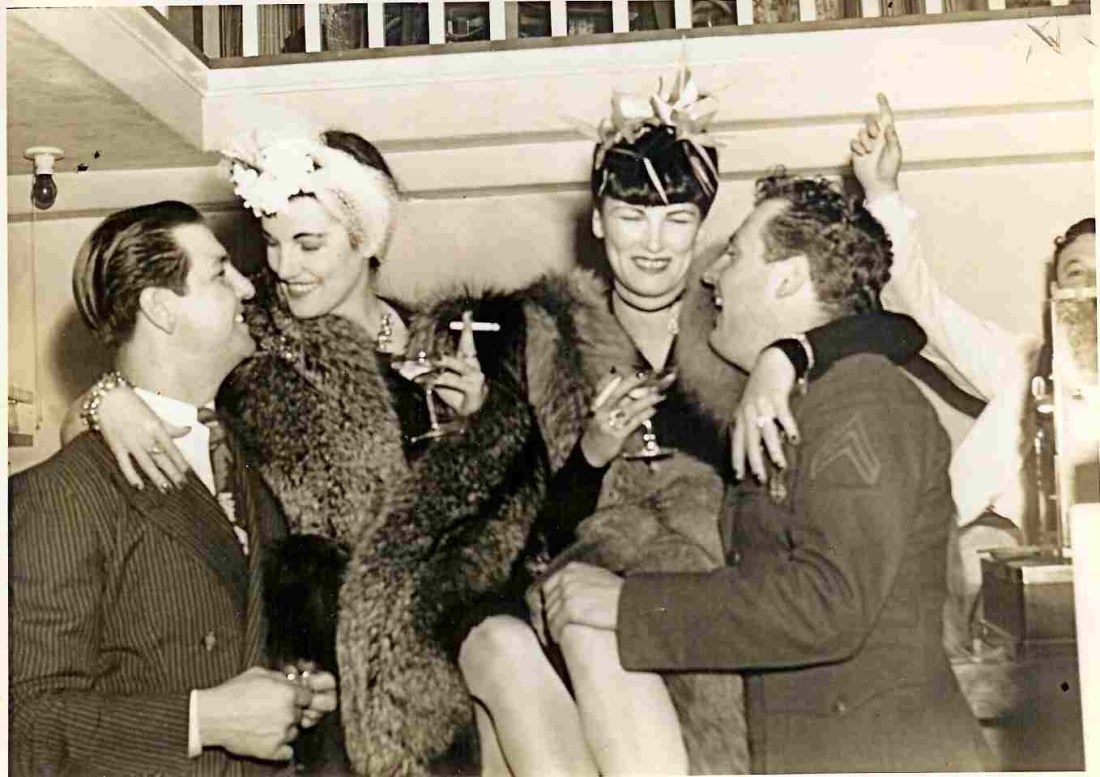
“Garrigan’s” offered live entertainment and dancing. Opened in September of 1942, Thelma’s nightclub was a huge success with over 500 people in attendance. There was nothing like it in Oceanside or surrounding communities.  The local newspaper described the nightclub:                                                             

The main floor of the building has been converted into a spacious lounge, with a dance floor, in the center.  Lamp lighted tables rim the floor.  On one side is the orchestra, “Billy Bryant and his Music,” which delighted the crowd gathered at the opening last evening. On the east of the building is the ultra-modern cocktail bar, watched over by a grand peacock on the south wall.  The peacock is radium treated and looks life like when illuminated during the evening. On the upper elevation, near the mahogany bar, are small deeply upholstered chairs that overlook the diners and the dance floor. Color effects of the entire establishment give it a rich tone.  The windows are heavily draped in blue and rust, with heavy rust carpeting on the floor.  Candle lighting is used on all tables. Even the banquet room was sold out last night, as every table was occupied by the opening night crowd.  There are two banquet rooms, which may be used for parties on the west side of the building.  These may be made into one large banquet room. Across the back of the building is the kitchen, open to the view of the diners.  It is separated by an illuminated showcase, displaying the feature of the house, Kansas City steaks.  Rest rooms are near the bar.  The office is on the mezzanine, overlooking the dance floor.

Son Jack remembered opening night when his mother made her welcoming speech to her many guests. After her opening remarks, Thelma left briefly and then reappeared in a see- through hula skirt and did a hula dance and the crowd went wild.

Thelma Lawrence Garrigan in her hula skirt

The Lawrence sisters, all beautiful, attracted attention from male customers, good for business but not marriages. Apparently sister Betty was the recipient of that attention and her husband was not pleased. He issued an ultimatum to Betty to return with him to San Francisco, which she dutifully did.

Sisters Vera and Thelma at Garrigan’s nightclub

In addition to a home on South Pacific Street, Thelma owned homes at 1931 South Horne Street and 911 Vista Way in South Oceanside, and owned a number of lots in North Oceanside. She also purchased a large ranch in Vista where she raised horses. The money she had purportedly made in Hawaii as a Madam provided Thelma a more than comfortable lifestyle but she also took care of her extended family and helped to support them.

Thelma’s nightclub success was short-lived, however, because the US government took control of the building to set up a USO for troops stationed at nearby Camp Pendleton, the largest Marine Corps Base at the time.  The family felt that Thelma was being unfairly targeted by city leaders, who pushed for the acquisition, and that many were jealous of her success. It is also possible that in addition to being a popular and swanky nightclub, Garrigan’s was doubling as a bordello. As the building was being transferred to the government, an inventory of items was taken and it included 26 mattresses and springs, 8 double beds and 10 single beds. (However, it could also be true that Thelma had to get help as far as Los Angeles to run her nightclub and that her employees stayed there for convenience.)

In any event, Thelma was poorly compensated for the loss of her nightclub, but she went on to open a smaller club in Carlsbad located on the 101 Highway. 

Garrigan’s Barrel House in Carlsbad

Her marriage to Stanley Garrigan was not a happy one. They separated just six months after they were married. After three years of separation, Thelma filed for divorce in 1944 from Stanley in San Diego County, which was finalized in 1945. She remarried that same year to a man by the last name of Robertson (identity unknown) and likely divorced again in 1946.

Thelma opened the Las Flores Inn, just north of the Del Mar racetrack, in the summer of 1948.  Her sister Vera recounted that there was a criminal element involved and one night Thelma was severely beaten by two men who may have had connections to the mafia. Her liquor license was withheld and she was forced to close just six months later.

By around 1950 Thelma moved to Phoenix, Arizona. She met Robert Lee Vint who was a newly divorced father of two. Thelma married Vint, in about 1951, her fourth (or fifth marriage if she was married to William Dalton). The union did not last and Robert Vint returned to his native state of Michigan. 

In 1962 Thelma married again to “Norman” Everett W. Holden in Las Vegas, Nevada. Holden was a native of Dillon, Montana, born in 1909 and a popular local athlete. Little to nothing is known of Thelma’s husbands. Family members, including her son Jack, had little or no particular memory of them (except for Al Pezzi). Thelma was not one to settle down. The marriage to Holden ended in divorce and Holden died in 1966.

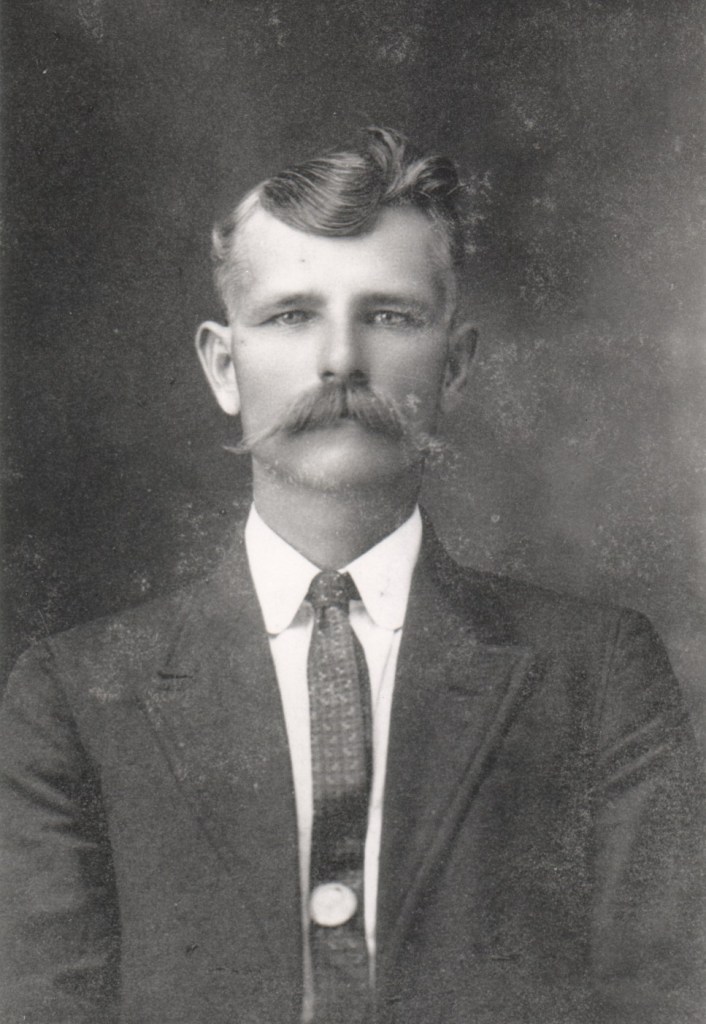
Norman Everett W. Holden, mugshot 1942

Thelma lived for several years in Twenty-Nine Palms, California. She operated a bar out in the desert catering to the Marines stationed there. By 1969 she was living in Los Angeles where she owned a dressmaking shop in the garment district. Always generous, Thelma gave her family members gifts of clothing and fancy lingerie.

Later she moved to San Luis Obispo County, near a childhood friend, where she lived until her death on November 25, 1987. In death Thelma took many secrets with her. Only the rumors remain. She was cremated and her ashes spread in the waters of Hawaii.