There’s a lot of buzz on social media about the Oceanside Pier. If you don’t already know, the current pier is Oceanside’s 6th pier, built in 1987 with a “life expectancy” of 50 years.
However, the concrete approach (steps and ramp that lead to the pier and beach) is nearing 100 years old and was built when Oceanside’s 4th pier was built in 1927.
The history of Oceanside’s fourth pier starts years before it was built. The third pier, built in 1903) had been damaged extensively by storms in April of 1915. The once 1,400 foot pier was now down to a little more than 800 feet. Public sentiment for the pier was one of concern for the city’s beloved landmark and its importance in drawing tourists: “If the pier goes, with it goes all hope of the town having summer visitors.”
1913 view of Oceanside from Oceanside’s 3rd pier, built in 1903
Later that year the Oceanside Blade reported that “Eighteen cedar pilings and six eucalyptus piles and other material arrived Wednesday for the repair of the wharf. As soon as a suitable low tide arrives the piling will be put down to strengthen the places where the old rails are rusted through.” These repairs may have reinforced what was left of the Oceanside pier, but a new one was needed.
But before action could be taken, just months later in late January 1916, a devastating flood hit San Diego County, wiping out roads, railroads and bridges and killing several people countywide. Oceanside’s pier was the only way to get much needed food and supplies to residents and those in the surrounding area. Coal for the Santa Fe railroad was shipped in; The Swift Packing Co. sent several tons of meats for Oceanside and neighboring towns and the Pacific Coast Biscuit Co. landed about two tons of miscellaneous groceries and meats.
Unloading freight and needed supplies after the 1916 Flood, (3rd Pier)
While the pier was a valuable resource during the flood and its aftermath, heavy equipment and cranes bringing the supplies to the pier caused damage, even making the pier lean to one side, forcing the closure of the pier for additional repairs after the emergency.
Talk of a new pier was everywhere; letters to the editor; proposals and calls to action at city council meetings. With no consensus and no funding, no new pier.
However, a new pier was just within reach when George W. Houk, president of the chamber of commerce of Northern San Diego County, stated that he would donate up to $100,000 in matching funds for a new pier at Oceanside. Houk had made his fortune as a wheel manufacturer, and considered “the father of the wire wheel in America”. He even included this donation in his will which was written as follows:
My said trustee shall, subject to the conditions hereinafter mentioned, pay to the city of Oceanside, county of San Diego, state of California, such sum that may be necessary, up to, but not in excess of, the sum of one hundred thousand, ($100,000.) providing said city of Oceanside donates a like sum, and providing further that the said city builds within three years after my death with said money, a pleasure pier, the site to be selected by my trustee. Upon the failure of the said city to perform said conditions, then the said sum shall be distributed with the residue of the trust property.
After Houk’s death on October 6, 1917 in Los Angeles, all of Oceanside was appropriately solemn but excited by the prospect of having a new pier. In anticipation, the Oceanside band was renamed the George Houk band in honor of the deceased benefactor.
Oceanside’s George Houk Band, 1917
Houk’s daughter, Mrs. Margaret Moody, promptly contested the will on the grounds that her father was not mentally competent at the time the will was written. She stated that in addition to the Oceanside bequest, her husband was to receive $100,000 on the condition he re-enter the army and attain the rank of captain within a good time!
Oceanside, although somewhat discouraged, still made plans to go ahead and even invited Mrs. Moody and her husband to a concert on the pier given by the band that was named in honor of her father. The bequest was lost, however, in a decision handed down by the California Supreme Court in 1921. Oceanside would have to wait before its fourth pier was built.
Finally, in 1925 several designs for a new pier were proposed and the building of an all-concrete pier was considered. An election was to be held to vote for pier and beach improvements, but, the city council failed to pass the bond election ordinance. Trustees E. W. Fairchild, Robert S. Reid and Ed Walsh voted for the ordinance that would allow a $100,000 bond issue for pier and beach improvements as well as fire equipment and water improvement. Trustees George Dickson and Jesse Newton refused, saying that $100,000 was too much and that $75,000 was adequate.
Voters angry that they were denied the opportunity to vote for the bond issue took measures to undertake a recall of Dickson and Newton. Still irritated, that when a $75,000 bond issue came to vote in September, residents rejected it with a vote of 330 to 207.
The following May, a petition with 726 names calling for an election to sell “not less than $100,000 in bonds” was filed and granted by the city council. Voters would get their chance at an election to be held in June, 1926.
The Oceanside Blade published an editorial in favor of the pier bonds and a plea to unite:
MAKE IT UNANIMOUS
For nearly two years Oceanside has been torn into factions and has been suffering daily injury because of a difference of opinion over the personalities of three or four of her citizens, and concerning the spending of $25,000. The three or four citizens were all good men, and the $25,000 was but a comparatively small increase of a sum which practically everyone agreed must be spent for the replacement of the present pier and necessary improvements on the beach.
The stormy petrels in office are now gone since the election of trustees, and by the voluntary withdrawal of two of them in the interests of harmony. A majority of the people have decided at an election, that in their judgment $75,000 is not enough for the needed pier and beach improvements. We now are asked to vote for the proposed $100,000, a sum which is but $25,000 more than the amount that even the minority agreed was minimum.
It resolves itself into a question of whether or not the voters are prepared to defeat a very necessary improvement because of a mere difference of opinion over $25,000, a sum, which, when reflected in the taxes of a growing town like Oceanside will never be noticed, and by so doing keep alive the present controversy.
The Blade feels sure that to do so would be calamity, and so we say vote for the bond issue for a pier and beach improvements and MAKE IT UNANIMOUS.
On June 19, 1927, residents made their voices heard with a resounding decision: 685 to 94 in favor of the pier and beach improvements.
Plans began immediately, with Oceanside’s City Engineer, Ruel Leonard Loucks, designing a new pier which was presented to the city.
Oceanside City Engineer Ruel Leonard Loucks, who designed the Oceanside Pier and The Strand
During the council discussion of the plans, Trustee Crandall asked about the “feasibility of supplying gasoline from the pier for pleasure boats.” Engineer Loucks replied that the proposed pier was not a commercial pier and it could not “withstand such use.”
“The new pier is to be a pleasure pier pure and simple. There is provided at the outer end a wider portion with a landing stage that may be let down to allow of receiving passengers from small boats when the condition of the sea will permit it, but as to any direct cargo or other commercial use such is out of the question.”
Sidney Smith of Los Angeles was the sole bidder in December of 1926, in the amount of $93,900. The bid was accepted and work began the same month. Compromises were made as to the construction of the pier by building a concrete approach 340 feet long with the remaining 1,300 feet made from wood.
Construction of the 4th Pier, 1927
The building of the new pier prompted other improvements including the paving of “The Strand”, also designed by Engineer Loucks. On January 12, 1927, it was reported that the city council approved the plans for the construction of a “concrete paving and driveway along the beach from Wisconsin street to Ninth street, a distance of nearly a mile. This will have on the seaward side a concrete curb and will be lighted for the entire length, the plans calling for the installation of ornamental lighting posts for the entire distance.”
Officials gather on the cement approach as construction of the pier continues, 1927
Progress on Oceanside’s new pier went quickly. In April of 1927 it was reported that the pier would be finished in time to celebrate Independence Day.
Just two months before the pier would be complete the Oceanside City Council published the following announcement: announced:
“To the people of Oceanside, who, for the last five months have critically watched all the details of construction of the new pier it is not necessary to point out the completeness of the finished structure. This pier will stand for years to come, a monument of classic beauty, utility and permanence and be the pride and honor of the city.”
Crowds gather at the opening of the 4th pier, July 4, 1928
Over the Fourth of July weekend in 1927 Oceanside’s fourth pier was dedicated. The celebration brought thousands of people from all over Southern California with the pier being the focal point of the festivities. Newspapers reported that 25,000 people came to Oceanside to celebrate those Independence Day festivities, at the time when the city’s population was just 3,500 residents.
Crowds line the Oceanside pier’s concrete approach or “bridge”
Oceanside’s fourth pier lasted nearly 20 years. However, in 1943 it was badly damaged due to storms. In addition, the weight of a Navy Observation Tower built as a lookout during World War II, was blamed for the weakening of the pier. By the mid-1940s it was undermined to a point where its safety was questioned, prompting the need for yet another new pier. Oceanside’s fifth pier would be built in 1947.
Today, plans have been approved to rebuild the concrete portion (now called a “bridge”) keeping to Engineer Loucks’ original 1926 design. The current bridge or approach is coated with decades of paint which has changed its appearance from its original “art deco” look and its smooth gray concrete finish.
This photo captures the original beauty of Loucks’ design, 1927
So what is old becomes new again.
And as a reminder: As we “critically watch” (and sometimes complain on social media) “The pier has stood” and when rebuilt, “will stand for years to come, a monument of classic beauty” and may it ever be “the pride and honor of the city.”
The large brick building at 1722 South Coast Highway is going over extensive changes and a “new transformation” but here’s a brief history of the building and some of the newspaper’s owners and publishers.
The building was built to house the Oceanside Blade-Tribune newspaper, which originated as the Oceanside Blade in 1892. It was a small but important weekly newspaper which provided world and local news to the residents of Oceanside.
Paul Beck, co-owner of the Oceanside Blade Tribune
Brothers Paul and Harold Beck, brothers who hailed from Iowa arrived in Oceanside in the late 1920s. They purchased the Oceanside Blade along with with another newspaper, the Oceanside News, and created the Oceanside Daily Blade Tribune and the paper went from a weekly publication to a daily one.
The Blade Tribune building at 401 First Street (Seagaze Drive) in 1936
In 1936 the Becks hired architect Irving Gill to design a new building for their growing business. Located at 401 First Street (now Seagaze Drive) it was Gill’s last design, which was restored in 2019.
Tom Braden with wife Joan and their 8 children.
The Becks sold the Blade-Tribune newspaper in 1954, to Thomas W. Braden. Braden was at one time an official at the Central Intelligence Agency, and his wife Joan worked for Nelson Rockefeller. Rockefeller loaned Braden the money to purchase the Oceanside Blade-Tribune.
The Bradens were connected in both political and social circles. Joan was a close friend of Jacqueline Kennedy. Tom Braden was a regular on “Meet the Press” and was appointed president of the California State Board of Education.
In 1975 Braden authored a book about his family which became a popular television series under the same name: “Eight is Enough.” The Braden family lived on South Pacific Street near the gated entrance of St. Malo.
Braden’s book inspired a television series in the 1980s.
Braden sold the newspaper to Robert S. Howard of Naples, Florida in 1967. Howard founded Howard Publications in 1961 which eventually included 19 newspapers from around the country.
Howard was the son of a small weekly newspaper publisher in Wheaton, Minnesota. Born October 23, 1924, he was the third of three children. During World War II Howard left the University of Minnesota to join the military. As a Second Lieutenant in the Army Air Corp he was a navigator and nose gunner in bombers over the South Pacific. He served valiantly, earning a Purple Heart after being shot down in the Battle of Leyte in 1944.
After his return to Wheaton, he took over the family newspaper and over his lifetime amassed 18 newspapers as Howard Publications, with over 2,000 employees and nearly a half million circulation.
The Blade Tribune Building, 1722 South Hill Street (Coast Highway) circa 1980s.
In August of 1967 construction began of 11,500 square foot “modern printing plant” at 1722 South Hill Street (Coast Highway) at an estimated cost of $700,000. That same year, Thomas Missett became the general manager and publisher. The new publishing plant was built by local contractors, Richardson Brothers, and completed in 1968.
Tom Missett, publisher of the Oceanside Blade Tribune
A large two-story addition was made years later. In 1989 the Blade-Tribune was changed to The Blade-Citizen and then again in 1995, renamed the North County Times, which ceased publication by 2013. After 120 years of a hometown newspaper, the Oceanside Blade was no more.
The building has had several tenants over the years, including a vintage market. While Oceanside’s newspaper days may have ended, the two buildings built by the publishers are still standing, one repurposed as a restaurant, the Blade 1936, and the other in South O, in the process of being reinvented.
The worn and weathered motel and adjacent property at 815 North Coast Highway has seen better days, and its remaining days are numbered. There is no arguing that the property is an eyesore but there’s a history behind each building and this one is worth telling.
The cornerstone of the old Mira Mar Restaurant and Motor Inn complex was a house built in 1887, which was once the home of William Bandini Couts. Even after 135+ years, it is still recognizable because of its architectural details and roofline. This residence was originally located on the east side of the 700 block of North Hill Street (North Coast Highway). It was moved to its location at 815 North Hill Street in about 1920 and doubled as a residence and a roadside cafe called the M&M Barbecue.
The home of William B. Couts was built in 1887 and originally located on the 700 block of North Hill Street (North Coast Highway) before it was moved to 815 North Hill Street in 1920.
Prior to its role as a restaurant, after it was moved, the site served as Baker Nursery owned by James Baker who promoted and sold avocado and naval orange trees in 1927 to 1929.
In about 1930 the building became a restaurant called Ray’s Café that did quite well because of the traffic coming through Oceanside on the Highway 101. Ray’s moved one block north and the former Couts’ residence would become the M & M Bar-B-Q operated by a couple named Mac and Mazie.
A parade float sits in front of the M & M Bar-B-Q in the 1930s
“Mack” Roman Evashchuck was born in 1896 in Russia and came to the US in 1916. As a new immigrant, he enlisted in the service in March of 1918 during World War I, assigned to the Medical Attachment of the 137th Aero Squadron. He served a little more than a year and was honorably discharged.
In 1930 Mack was living in Beverly Hills, California and working as a chef. He came to Oceanside in 1932 and along with Mazie S. Eckhart, opened the M&M Barbecue. Their roadside café was an instant success.
Mack’s business partner, Mazie Grace Severt, was born in 1898 in Pike, Oregon. She was married to Clarence Eckhart in 1925 and the couple moved to Los Angeles in 1930. Clarence worked for an ice company while Mazie worked as a waitress. Clarence died in a tragic accident on August 18, 1930 while driving his delivery truck.
It is very likely Mack and Mazie were working together at the same restaurant in Los Angeles when they decided to go into business together in Oceanside.
The M&M Bar-B-Q was the perfect place to stop for hungry motorists coming into Oceanside. It would be one of the first restaurants they would see coming into town. It was also convenient that Harold Fikstad had a service station next door to the south.
The Associated Service Station owned by Harold Fikstad located next door to the M&M Bar-B-Q (the building is just visible between the pumps)
In 1936 Mack, as a representative of the Oceanside Chamber of Commerce, began to promote semi-pro baseball, eventually serving as commissioner. In November of that year Mack and Mazie traveled to Reno, Nevada where they were married.
Their happiness would be short lived, however, as Mack became ill and was hospitalized for over a year. He died May 7, 1939 and was buried at the Los Angeles National Cemetery. Mazie did not stay in Oceanside. The restaurant which bore their initials M&M closed temporarily but would reopen and come back better than ever.
Oliver Morris, owner of the Carlsbad Hotel, purchased the property in 1942 and opened M & M Restaurant, elevating the roadside café to a destination spot. A grand opening was held July 28, 1942.
The new M&M Restaurant owned by Oliver Morris. The Couts house is still visible after the remodel.
It would become one of the most popular restaurants in Oceanside (and perhaps North San Diego County) in its time, frequented by residents and tourists along with Hollywood celebrities and politicians, such Bing Crosby, Bob Hope, Barry Goldwater, Pierre Salinger, and California Governor Ronald Reagan.
The M&M in about 1948 after another remodel of front entrance.
Oliver Miller Morris was born in 1895 in Ohio. He too served in World War I and in 1917 married Gladys Genevieve Goodwin, whose father was an hotelier. In 1919 “Ollie” Morris owned and managed the Hotel Akron in Ohio. He and Gladys were mentioned countless times in the “society” columns of the local newspaper there. They had three daughters, Georgeann, twins Mary and Barbara, and a son Thomas.
Oliver Miller Morris
In 1938 Morris sold his hotel in Akron and the following year it was announced that he had purchased the California-Carlsbad Hotel in Carlsbad, California.
With the opening of his new restaurant in Oceanside, Morris aimed to make the M & M Restaurant memorable, referred to as a swanky place and noted in society and travel columns in Los Angeles and Palm Springs.
In 1942 daughter Georgeann Morris married Nacio Herb Brown, a songwriter who wrote popular songs and Broadway hits such as “Singin’ in the Rain” and “Good Morning”, among others. Brown had a home in Oceanside’s exclusive enclave, St. Malo, and the restaurant benefitted with this “Hollywood” connection.
Morris sold the Carlsbad Hotel in the 1940s and he and Gladys Morris purchased a large ranch on Gopher Canyon Road. Sadly, Gladys Morris died in 1946.
The MiraMar Restaurant in about 1949
Oliver Morris became president of the Ocean-Desert Highway Association in 1949, promoting travel between Oceanside and Palm Springs. He was also elected as president of the Oceanside Chamber of Commerce. He continued to operate his Oceanside restaurant renamed the MiraMar Restaurant in 1949, which was advertised as “one of Southern California showplaces.” Angel Crosthwaite was the head of the MiraMar’s “special entertainment staff” in the Ship Room. Assisting him were Doris Ferris and Thelma Sheets.
The Ship Room at the MiraMar Restaurant
One of the most notable features of the MiraMar was the Rocking Ship that marked its entrance. It was built by B. E. Jones in the late 1940s. In 1952 a wine and food shop was added to the north side of the restaurant.
In the late 1950’s Morris became co-owner of the Bel Air Hotel in Los Angeles. It was frequented by Hollywood stars including Marilyn Monroe, Cary Grant and Audrey Hepburn.
Morris remarried in 1962 to Patti Higgins, public relations director for the Beverly Hilton Hotel where she handled hotel relations with many notables, including Presidents Truman, Eisenhower and Kennedy. The couple honeymooned in Europe, their nuptials featured in society and gossip columns.
Clyde Truss and wife, left, Mrs. and Mike Daugherty, center right, and Ray Feist with wife, at the MiraMar circa 1955
In 1955 the MiraMar Restaurant was sold to Frank Marcom and D. R. “Mike” Daugherty. The pair had managed the restaurant for nearly five years. A corporation, the MiraMar Restaurant, Inc., was formed with Morris as president, Daugherty as vice-president and Marcom as secretary-treasurer.
Coffee Shop Diner at the MiraMar
Mike Daugherty worked for Morris from 1934 to 1939 in the hotel business while living in Ohio. He came to California when Morris purchased the Carlsbad Hotel and then returned to Ohio until 1951 when he again relocated to California, along with his three children, Kathleen, Michael and Sue.
Postcard image of the MiraMar Restaurant and Mira Mar Inn
In January of 1958 Daugherty announced plans for a 25-unit motel and pool next door to the MiraMar Restaurant. The newspaper reported that “Oliver M. Morris, president of the firm, intends to build the first 25 units this year on land immediately” and that “future plans call for the addition of another 25 units.”
The architectural firm of Paderewski, Mitchell and Dean of San Diego, designers of the Mission Valley Country Club, Town and Country, the remodelers of the El Cortez Hotel and other commercial structures were hired to design the new motel.
Bar at the MiraMar Restaurant
Construction began in October of 1958. At that time the project was planned for a two-story, 32-unit building with garage space below. The motel features would include “soundproof walls and floors, tile baths, electric heat, switchboard telephone service, television and a heated swimming pool.” The builder was E. E. Betraun of Vista, who also built the Oceanside Beach Community Center and the local County Health Center at Mission and Barnes. Eventually a glass elevator was added to the structure bringing guests from the motel to the restaurant entrance.
In 1967 the MiraMar Restaurant underwent remodeling, adding a new dining room, named the First Cabin, and a new coffee shop. The dining room offered banquet services for parties up to 120 and was decorated in “dark walnut paneling and heavy beamed ceilings.” A nautical motif continued with “sailing ships, barometers and ship telegraph” and an open flame Franklin fireplace.
Event in the MiraMar Banquet Room, circa 1959
Oliver Miller Morris died in 1983 at the age of 88. He was buried in Ohio. Patti Morris continued to make her home on the Morris Ranch on Gopher Canyon Road until her death in 2009.
Oliver “Ollie” Morris
The MiraMar restaurant was sold to Warner Lusardi in 1976. He partnered with Bobby Astleford and Bert Lawrence. Bert Lawrence, whose family owned Lawrence Canyon, was infamous for riding his horse into the restaurant.
MiraMar Restaurant and Coffee Shop building, circa 1974
But by the 1980s, the restaurant was showing its age and tastes were changing. The MiraMar fell out of favor and was in decline. In 1985 the restaurant reopened as Jerard’s, a restaurant and nightclub advertising itself as “an old landmark with a new dimension” but its success was short-lived. In 1991 the building housed a realty office and eventually sat vacant, stripped of its nautical and antique décor.
The MiraMar Restaurant and Inn in 1979.
The MiraMar Inn’s clientele changed dramatically from the tourists of the 1950s and 1960s. In the 1980s its reputation was less than stellar and frequented by numerous problems and criminal activity. It was a sad fall from grace for a “cornerstone” property that was once so beloved and made popular by “Mack and Mazie” and then made glamorous by Ollie Morris.
Whether a hangout for Marines, Bikers, or thirsty locals in general, the Riverbottom Bar in the San Luis Rey Valley may have dated back to the 1870s. The bar was located in what was once the San Luis Rey Township, a rural but well established community by the 1860s.
Named because of its proximity to the Mission San Luis Rey, the township existed nearly two decades before the city of Oceanside was established in 1883. Residents in the valley came to the small village area because it offered a stage stop, Freeman’s blacksmith shop, Simon Goldbaum’s store, a post office and a school. San Luis Rey was featured in its own column in the San Diego Union newspaper, providing information on weather, crops and local happenings. Frank Whaley of San Diego’s Old Town eventually published a small newspaper called the San Luis Rey Star.
Early Map of the San Luis Rey Township in 1873. (Filed as Map 0076). In 1920 the County would build a road through the north half of Block 2, eliminating lots 1 through 7.
In 1873 E. G. Locke, who had been appointed postmaster in 1870, filed an official map of the township, of which he was listed as the proprietor. The township of San Luis Rey consisted of ten blocks and 7 streets. The street names no longer exist but were as follows: Main Street, San Luis Avenue, Broadway, Spring Avenue, University, Mission Avenue (not to be confused with the present-day road) and Locke Avenue, named after Elbridge G. Locke himself.
Locke partnered with local rancher William Wallace, operating a store as well as a hotel together. Wallace married Locke’s daughter, Alice on July 9, 1874.
In 1876 Locke erected a new hotel at San Luis Rey, which he named the Locke Hotel. After the new town of Oceanside was established, several businesses in San Luis Rey relocated there, including the San Luis Rey Star newspaper which then became the Oceanside Star. The Locke Hotel was to Oceanside and became one of its earliest hotels.
The Tremont Hotel on the 300 block of North Cleveland Street was once the Locke Hotel and located in San Luis Rey.
William Wallace, Locke’s one time partner, died in 1892. His widow Alice Locke Wallace owned a strip of land which is present day North El Camino Real (east of Douglas Drive). She served as postmistress in San Luis Rey from 1893 to 1908 and her son Lee Wallace followed her in the position until 1912.
On January 13, 1912 it was announced that “Lee Wallace has resigned as postmaster at San Luis Rey, and a petition is being circulated for the appointment of John W. Bradley.”
John Bradley then became postmaster, and the new owner of the Mission Store where the post office was located. In 1915 Crutcher Morris purchased the Mission Store and was subsequently appointed postmaster in 1916. William P. Jensen acquired the Mission Store and served as the postmaster of San Luis Rey from 1917 to 1932.
In 1932 Roy and Marian Sager purchased several lots in the township including Lots 8 through 13 in Block 2 from William Jensen. In 1933 Marian Sager was confirmed as postmistress of San Luis Rey. She then applied for a new location for the post office, just across the street.
1937 aerial view of the San Luis Rey Township. The red arrow indicates the Mission Store location owned by Sager and what would become the Riverbottom Bar. The blue arrow is the present day San Luis Rey Bakery; the yellow arrow is the San Luis Rey Schoolhouse built on the grounds of the Mission, and the green arrow indicates the west portion of the Mission itself.
In 1942 Roy and Marion Sager, father and son, announced their intention to sell their interest in their “grocery and meat market business consisting of merchandise and stock in trade known as the Mission store” which was “situated” on Lots 11, 12 and 13 of Block 2. While the Sagers maintained ownership of the real property, they sold the Mission Store business to Phyllis Goggin and C. Shaw.
Phyllis Mary Goggin was the widow of Daryl Henry Goggin, who was killed during the bombing of Pearl Harbor December 7, 1941. His is listed as one of the approximately 390 “unknowns” from the USS Oklahoma at the National Memorial Cemetery of the Pacific. Phyllis Goggin died just two years later at the age of 38 in 1943.
The newly opened San Luis Rey Inn in 1946
By 1946/47 the building owned by the Sagers was leased to Andrew and Marguerite Weir and would become a restaurant called the San Luis Rey Inn.
The San Luis Rey Inn had a flat roof, but the front façade and a portion of the west elevation featured a shed roof covered in clay tile. The front of building included five arched bays that resembled garage doors (an additional “bay” was also on the west end.)
A closer look at the building in several photos reveals a house on the west end, its sunken roof exposed to the elements, which was sometimes obscured from view by the leaves of the large Pepper Tree planted next door. (This structure is also clearly visible in Google Maps View from 2008 to 2019).
The San Luis Rey Inn building is similar in size and length to that of the Goldbaum Store and Hotel, once located in the San Luis Rey Township. A photo of Goldbaum’s store clearly depicts a house behind what is a “western store front”. This storefront could have easily been removed, along with the wooden parapet and then the porch enclosed. Even the name “San Luis Rey Inn” appears to be homage to Goldbaum’s San Luis Rey Hotel. As late as 1919 the building was used as polling place and believed to be used as the post office and store in the township in the 1920s.
Simon Goldbaum’s Hotel and Store in San Luis Rey. Simon is standing on the porch roof.
Simon Goldbaum was born in 1848 in Grabow, Prussia (now Germany). As a young man of about 18 he came to America. By 1868 he was living in San Francisco, but soon after moved to Los Angeles where he clerked at a general store.
Goldbaum became a Naturalized Citizen in 1871 and that year purchased a general store at Monserate (near Fallbrook). By 1873 Goldbaum moved to the San Luis Rey Township where he purchased a store and hotel building.
Ad for the Goldbaum Hotel, 1875
Simon had four brothers, William, Louis, Max and Albert who would all settle in San Diego County, namely San Luis Rey and the new town of Oceanside.
The Goldbaum his hotel and store was a social gathering spot with dances and other events held there. 1878 Simon Goldbaum was appointed postmaster of San Luis Rey and his hotel/general store would have housed the post office as was customary. He was appointed postmaster again in 1883 and 1885. He was so well known and liked, Goldbaum was called the Mayor of San Luis Rey.
He married Margaret Marks in 1886 and they had two daughters, Pearl and Helen. Pearl died in 1904 at the age of 16 due to pneumonia.
In 1901 Goldbaum was granted a license to sell alcohol at this San Luis Rey Store. He sold his business in 1907 and moved to San Diego. However, he still maintained ownership of nearly 1,000 acres of farmland in the San Luis Rey Valley. Simon Goldbaum died in 1915 at the age of 69.
If the Riverbottom Bar building was in fact the Goldbaum building, it certainly followed the historical trend as store, post office, hotel (of sorts) and saloon remodeled and transformed as the San Luis Rey Inn.
In 1947 the San Luis Rey Inn was owned by Andrew Weir and his wife Marguerite, who provided patrons food and drinks along with the opportunity to join in a community dance at what was referred to as a “Hoedown”. An ad from the 1947 Oceanside Blade Tribune read:
“Big Okie Hoedown at the San Luis Rey Inn. Dance to the music of the Okie Hoedown. Hours from six to midnight.”
The San Luis Rey Inn was frequented by both locals and Marines from the nearby military base, Camp Pendleton, established in 1942. Although it was considered “out of the way” for Oceanside residents, it was a popular nightspot beckoning customers with the romance of “Mission Days”….
“Tonight and every night in old Spanish settings, dining and dance at San Luis Rey” … “All lit up in neon and next to the large Texaco station.”
Betty Lanpher Miranda, born and raised in the San Luis Rey Valley, remembers as a child that the owner of the restaurant kept a monkey in the large, old Pepper Tree. It startled her one day as she was standing outside, but she also recalled it was tethered in some manner so as not to run away.
Owner Andrew Weir died suddenly of a heart attack in 1948, however, and wife Marguerite put the establishment up for sale by placing a classified ad in the local newspaper:
“Must be sold San Luis Rey Inn. Beer, Cafe, party or club room. Living quarters, lease and equipment. Best offer takes.” (It is noteworthy that “living quarters” is mentioned in this ad, in what may have been the Goldbaum hotel.)
The following year the San Luis Rey Inn was under new management. New owners “Johnny and Nell” (Doris M. Danforth and Nellie Burdick) offered their clientele “home-cooked foods and Coors beer on tap.”
Richard Miranda, who came to Oceanside at a young age in the 1930s, remembered that he and his friends were sold beers by the bartender when they were still in high school. However, they were not allowed to stay and had to take their beers outside and drink elsewhere as they were underage!
Interior shot of the bar in early 1950s. Helen Burgess to the far left. Owner is on far right (perhaps Nellie Burdick). Photo courtesy Tom Burgess
Helen Burgess worked at the bar/restaurant in the early 1950s. A “Spanish plate” was just 95 cents and chili beans were 35 cents. Her four children attended school at the one-room schoolhouse located nearby on the grounds of the San Luis Ret Mission. Tom Burgess and his siblings remember the establishment as “Mom’s Place.”
The San Luis Rey Inn remained a popular eatery in the 1950s offering customers “specialty steak and one dollar Spanish plates” of “tacos, tamales enchiladas at reasonable prices.”
The small township benefited from increased traffic from the “Camp Pendleton Road” as Marines and farm workers traveled through. Its small business “district” expanded including Webster & Light Radiator Repair, Brandt’s Cut Rate Rocket Station and Rudy’s Auto Wrecking.
The town of San Luis Rey in 1958. (looking east)
In 1958 Nellie Burdick sold the San Luis Rey Inn to Gene and Ethel Weaver. A legal notice read:
“All stock in trade, fixtures, equipment and good will of a certain cafe business known as SAN LUIS REY INN and located at across from the Post Office, Mission Road street, in the City of San Luis Rey, County of San Diego.”
The Weavers also owned the Base Café on North Hill Street (Coast Highway). They renamed their newly acquired establishment “Ethel’s Bar & Grill.” On February 13 1959, Tommy Duncan, a well known Western singer/songwriter performed at Ethel’s.
But the following month, in March 1959, a shooting occurred at Ethel’s and may have been the beginning of the establishment’s “reputation.”
Robert Abilez, a resident of Vista, entered the bar and asked fellow patrons to help him engage in a fight. When they refused Abilez pulled a .38 caliber revolver from his pocket but then dropped it on the floor. After picking up his weapon he sat next to two men, Almarez Vidales and Contreras Sanchez. As they drank their beers, Abilez insisted that the men go with him to fight. When they refused he drew the revolver again and fired. Sanchez stepped back and the bullet grazed his heavy leather jacket, and hit Vidales in the forearm. Lawrence Harris, the bartender, disarmed Abilez and held him while Ethel Weaver called the sheriff’s office.
The San Luis Rey Inn in 1958 before name change to Ethel’s.
Later Ethel’s would move to a location closer to the “back gate” of Camp Pendleton, and what was once known as the San Luis Rey Inn was renamed the Riverbottom Bar.
Even as Oceanside city limits expanded eastward, San Luis Rey remained a separate township, although the city of Oceanside limits surrounded it by the 1960s. It was even given its own zip code – 92068. By the 1970s it was annexed to the City. The Riverbottom Bar was given a new address of 473 North El Camino Real.
1969 Thomas Guide showing that the town of San Luis Rey and the Mission were part of the County and not city limits.
Roy Sager maintained ownership of the land that the Riverbottom and other businesses were located upon, (a total of 3 and half acres). In 1970 he sold Lots 8 through 13 in Block 2 and lots 1 through 7 in Block 3 to Roland House.
Bob Olsen, a resident of San Luis Rey, operated the bar in the early 1970’s, but records are not easy to find or determine.
One of the only pieces of memorabilia – a matchbook from Bob Olsen’s Riverbottom Bar circa 1973
In 1976 William and Donna Justus, owners of Auto Parts and Salvage Inc. purchased the 3.5 acre property but continued to lease the building to various bar owners. In the 1980s Suzanne Ochoa owned the Riverbottom Bar. Her mother Eunice Walker ran the Long Branch Saloon in downtown Oceanside before it was demolished in 1982.
In July 1997 Charles and Patricia Baker became owners of the Riverbottom and ran it for several years.
It was both a favorite “hole in the wall” to some and a dump to others. One loyal customer wrote a review in 2013 and shared its long association with Marines:
“Yes, it’s a dive bar. [It] has been here since roughly 1927. You grunts in Horno, cannon cockers in Las Pulgas, and grunts in San Mateo, ever heard of Iron Mike Hill? Well, he is real and he drinks here STILL! If you want off mainstream to have a blast come here!”
Riverbottom Bar, 473 North El Camino Real (Google view 2011)
Another reviewer in 2014 did their best in describing the Riverbottom Bar, while trying to keep expectations low:
“This place is good. This place is a true dive. Dives aren’t glitzy, cutesy or thematic, despite what hipsters like to think. You don’t hang out there to pick up women; it’s not where the “crowd” hangs out. Your standard clientele are older Marines; you’ll get some Bikers and off duty Law Enforcement on some nights. It’s one of the older buildings in the area; it was built in the 1920s as a post office. It serves beer and bar snacks, nothing too special. I used to drink here with my grandpa (retired Marine). I always had a nice time there. If you behave yourself and keep your standards and expectations low you’ll have a nice time.”
The Riverbottom Bar (Google view 2015)
The Riverbottom Bar with its uneven floors, crumbling walls, aging booths and bar remained “unremarkable” and “unpretentious.” It was described as a hideaway, a low-budget watering hole and a “local artifact.” (Perhaps over 140 years old!)
Eventually the Riverbottom closed its doors. There were plans to reopen but it never happened. One day in 2020, the old building and its Pepper Tree were bulldozed. No one noticed as it happened during the pandemic, but a piece of history, perhaps dating back to the 1870s in the small Township of San Luis Rey, quietly disappeared.
Beach concession stands have been around for 100 years or more, situated near and around Oceanside’s pier. They provided beach goers with many of the same essentials as they do today…food, cold refreshments, beach towels, etc.
One such amenity, however, has disappeared: the dressing room. Today folks come dressed for the beach — flip flops, bathing suit, cover-up or t-shirt and shorts. But oh so many years ago, flip flops and the bikini had yet to be “invented” and folks viewed trips to the beach a more formal affair — they came fully dressed.
In 1885 Founder Andrew Jackson Myers built a bathhouse below the bluff, north of the present day pier. Despite its name, it was not a place one could bathe, but instead change into “bathing attire” suitable for the beach. Dressing rooms remained in demand through the 1950s but as clothing and beach fashions change, they have since disappeared.
Myers’ bath house on the beach, circa 1888. Photo Oceanside Historical Society, Carpenter collection
Today restrooms sometimes double as a changing room, when needed. But in 1927 Ordinance 318 was passed which prohibited the Beach Comfort Station (aka beach restroom) as being used as a dressing room. There were several small dressing rooms operating on the beach (public and private).
In 1931 Archie Freeman built a small dressing room along The Strand, south of the Oceanside Pier and bandshell. The building and surrounding area would soon after be purchased by the City of Oceanside.
Dressing room in background (right) in 1940. Oceanside Historical Society, Marjorie Johnson collection
The dressing room was leased out to various people who operated it during the tourist season and summer months. Marie Jones managed it in 1941 and in 1943 Mary E. Belew was given the lease. In 1944 sister-in-laws Orene and Lora Fay Guest were granted the lease. They operated the dressing rooms for 14 years. In addition to providing changing rooms, the facility also rented out beach equipment such as chairs, towels and flotation devices
Nadine McGill and Nadine Nadon in front of Dressing Rooms at the beach, 1946. Oceanside Historical Society
In 1943 the building was enlarged to serve Oceanside’s expanding population, which was growing at a rapid rate after the establishment of Camp Joseph H. Pendleton in 1942.
View of Oceanside Pier, parking lot and the dressing rooms, circa 1945. Oceanside Historical Society
In about 1950 a small restaurant was built just to the south of the dressing rooms. This beach concession was named “Betty’s” (sometimes referred to “Betty’s on the Beach” and Betty’s Place). The space was leased from the city and operated by Elizabeth B. Smith.
Dressing rooms, beach rentals and Betty’s on The Strand, 1950s. Oceanside Historical Society
Elizabeth Carpenter was born in 1904 in Plymouth, Pennsylvania. She met Charles Mayer Smith in Ohio where they both worked at a restaurant. (Charles had a daughter from a previous marriage named Betty.) Elizabeth and Charles married in 1924 and by 1938 moved to San Diego County, and lived for a time in El Cajon where they operated a restaurant. Their daughter Merry Jacqueline was born in 1939.
Elizabeth “Betty” and Charles Smith in one of their restaurants. Oceanside Historical Society
By 1949 the Smith family had moved to Oceanside where they purchased “Willard’s House of Good Food” located at 309 South Hill Street (Coast Highway). They renamed their establishment Smith’s Dining Room which operated for one year. Charles and Elizabeth Smith then began operating the beach cafe that would become a local fixture and beach hotspot.
Dressing rooms and Betty’s on The Strand, 1950s. Oceanside Historical Society
Betty’s was a popular place for local teens and surfers. The adjacent parking on the Strand became nearly synonymous with the food stand. Betty’s remained on the Strand until the mid to late 1960s. Charles Smith died in 1964, Elizabeth in 1972. Both are buried at Eternal Hills Memorial Park in Oceanside.
Betty’s and the parking lot that “old-timers” still call “Betty’s Lot” 1950s
Betty’s on the beach was so memorable to so many that although the restaurant was torn down decades ago, many locals still refer to the parking lot on The Strand as “Betty’s Lot”.
Just two years after Oceanside was established in 1883, Magnus Tait arrived here from Lawrence, Kansas. He purchased considerable property from Oceanside Founder Andrew Jackson Myers and Tait Street is named after him. His youngest son, Magnus Cooley Tait, followed his father and became the manager of the Oceanside water works, bringing water into town by wagon.
The elder Magnus Tait was born in 1837 in Scotland, coming to America with his parents as a child. The family settled in Joliet, Illinois. In 1858 Magnus Tait married Antoinette Cooley and fathered four children.
Sons of Magnus Tait: Walter, Magnus and Thomas, courtesy Magnus Warren Tait
In 1862 the Scotsman enlisted in the Union Army and was assigned to the 1st Illinois Light Artillery. In 1864 his battalion went from Tennessee to Georgia to fight against the confederacy during the Civil War. He was captured and taken prisoner, in Camp Lawton, Blackshear and the infamous Andersonville Prison Camps, enduring with thousands of other Union soldiers, starvation, scurvy and torture. Near death he weighed just 67 pounds.
Original print of Magnus Tait’s Account
Magnus Tait wrote about his hellish experience, (note: insensitive language) published in a small booklet, which was then published in the South Oceanside Diamond newspaper in 1888 with the following headline:
IN LIVING HELLS!
A True Story of Rebel Prison Life!
By Magnus Tait,
Battery M 1st Illinois Light Artillery
In writing an account of my prison life, I may err some in dates, as it is all from memory, having kept no regular Diary, and most of us felt that if we survived the war, we would want to forget all as soon as we could; “but all of which I saw, and part of which I was.”
I enlisted in Battery M, First Regiment of Illinois Light Artillery, at Camp Douglas, Chicago, Illinois, on August 4th, 1862, and was mustered in the United States service on the 12th. Was promoted to Sergeant of No. 6 Gun, and left for the seat of war, Sept. 27.
Magnus Tait, circa 1890, courtesy Magnus Warren Tait
I will not follow our Battery from that time through all the different battles and skirmishes in which it was engaged, but leave for better hands to write its history. Since the war, I have heard Gens. Sherman and Sheridan, and Col. Bridges (who commanded the Artillery of the 4th Corps.) praise its fighting qualities.
After leaving Cleveland, Tenn., on the Atlanta campaign, and being engaged for about one hundred days–that is, some part of the day or night–the left section of the Battery was “turned over” as worn out and not considered safe for further use; so, at Marrieta, Ga., on June 30, 1864, No’s 5 and 6 Guns were “turned over”, most of the horses condemned and the men distributed among the other four gun squads. I was then put on detached duty, sometimes as Orderly for Capt. Spencer of our Battery, making trips back to our wagon train, returning with forage for the horses, hard tack and ammunition, and then escorting refugees back through the lines, and at the same time had orders from one of Gen. Stanley’s Staff to do some detective work.
At that time I had the only Chicago horse left in our Battery–the one I rode out of Chicago. He knew the drill as well as I did. I never had to go around a log or throw down a fence on the march. At two different times, I owed my life to this. Once in Georgia, I was alone, the rebels turned loose on me, after firing a volley, they started after me on the run. After a two mile run, I discovered a squad of “gray coats” in the road ahead, waiting for me to run into them. I turned, leaped the fence and headed for camp, and cleared three fences before I again struck the road. His name was “Festus”. When I was captured and a “Johnnie” rode him off–or rather, tried to–he turned his head and called, as much as to say–“Good-bye”. The brine came to my eyes–I could not help it–the last time I ever saw him. He was wounded twice–one only a scratch, at New Hope Church. At Resaca, he had a ball in his leg below the knee. I bound my handkerchief around it and after we got to camp, cut the ball out. “Noble Festus”, may his ashes rest in peace! and, if intelligence live hereafter, may we meet again.
ATLANTA, Aug. 25, 1864;–Today, the 4th Corps, with Sherman, swung around Atlanta. All extra baggage was left behind. Battery M had about four loads and a lot of stuff for Col. Bridges. I was detailed by Captain Spencer to remain in charge of it. His orders were verbal–about like this “Sergeant, you remain here and take charge of the ‘plunder’ until the wagons return for it, then you loan up and follow as quick as you can.” He probably did not then know the magnitude of that “flank movement,” as he called it; for, before the Battery had got out of sight, one of Gen. Stanley’s Staff rode up and asked me what I was going to do with those supplies and what were my orders. I told him my orders were from my Captain for me to remain there until the wagons returned for it. He smiled and said he did not advise to disobey orders, but that the pickets then in my front would be removed at 12 o’clock that night, and thought it would be safe after that; but the pickets were withdrawn between 9 and 10, and all firing ceased at dark, and I was taken in somewhere near midnight, by the 58th North Carolina Cavalry. They came from toward our lines, and I supposed they were our men until they sang out–“Surrender, you–Yank.” Next morning I was taken to Atlanta, before a General Pember or Penter, and was there questioned for half an hour, about Sherman and his army. He thought Sherman was on the back track towards Nashville, and that our army was out of grub, on account of Wheeler’s cutting the railroad so that we could not get supplies. I said “Yes,” to all that, and in twenty-four hours, Sherman was in Atlanta. This officer was an Englishman. He said that Sherman was worse than any pirate and his men were robbers. He said, “Your army has been firing into the city, with our women and children here, but have not killed anything but a wench and a mule, but this is not Sherman’s fault.” I took good notice, as I passed through, that we had knocked many a hole in the buildings: nearly every one that did not have a cellar, had a hole dug back of the house, covered with pine logs and dirt, to crawl into when we would open with our batteries. The night before the movement, our four guns fired one hundred (100) rounds, each.
On the morning of Aug. 6th., we started for Macon. Remained a few hours at East Point, where there were about 30 more “Yanks” brought in. I could see that the “rebs” were very anxious to get us off. If they had remained there a few hours longer, we would have been recaptured, as Sherman’s cavalry were up to the track next day.
Reached Macon 27th. Were put in a large building that looked like a warehouse. The guards told us that it had held “heaps of you-uns, before.” Here I was made to take off a good pair of artillery boots, almost new, and was given in exchange an old worthless pair of shoes, by a rebel officer. One of my guards next took my jacket. It was new–had drawn it only the week before and had not had time to put on my chevrons. They gave me an old blouse, taken as they said, from a dead “Yank”. The natives, all along the road, were very abusive and at some stations, the women were the worst. We would have fared badly had it not been for our guards.
Captain Henry Wirz, known as “the Demon of Andersonville”
Arrived at Andersonville, Aug. 29th., I think. Was marched in front of old Wirz’s headquarters–that infernal devil that was hung for obeying Jeff. Davis’ orders, and the Arch Traitor allowed to go free and is living today, (Sept. 1888,) and if he wished, could be drawing his $16 pension per month from the government he tried so hard to destroy, while thousands of old soldiers who gave the best three years of their lives to serve and maintain the Government, and now in poor-houses, throughout the land–many without pensions. But I have got off the track.
Illustration of Andersonville Prison, South View
There were about thirty of us in the squad. We all stood in single file. Wirz ordered a “reb” to search “every Cott tam Yank.” Those who showed any resistance were stripped. Money, watches, pocket knives, pictures of wives, children or other dear ones, were taken. One soldier had an ambrotype of his wife or mother, I did not learn which, as he was about half-way down the row and I was at the head. He tried to retain it which made Wirz so mad he snatched it from him, and threw it on the ground and with his boot-heel rent it in pieces. The boy made some remark for which he was taken off by two “rebs” and put in the stocks for six hours.
We were then turned into the pen. I will not attempt to describe it, for I could not do it justice; for, as comrade McElroy says in his book on Andersonville, that “would require a Carlyle or a Hugo,” so I would refer the reader to McElroy’s Book. I can vouch for the truthfulness of his statement in the different prisons in which I was confined, and will add that he has not all, for the English language cannot describe it. There had been 35,000 prisoners in there at one time; but at that date, there were reported to be 28,000, and the death-rate over 100 per day. We were piled with questions about Sherman, and if the Confederacy would soon be “played out”, and if there was any news about exchange, and many questions to relieve the minds and bodies that were starving to death by inches.
I wandered along, crossed the swamp near the rebel sutler’s tent and sat down on the ground and began to think what chance there was for me to live in such a place with not a thing to cook or even to eat my rations in, if I had any, except an oyster can a guard gave me in exchange for my tin cup, and an old jack-knife that I had slipped in my shoe with the photograph of my four children. These I kept all through and brought home with me.
Illustration of Andersonville Prison, North View
While sitting there, I could see the sand alive with “gray-backs,” so I got up and began to hunt for the “hundred” I was put in, but did not find it that night. Another sergeant who belonged to an Iowa regiment, who was turned in with me, and I, lay down on the ground, but not to sleep. We talked about what we had seen in the few hours we had been in. He said, “It does not seem possible that our Government can know or believe that it is one-tenth as bad as this, or it would march an army here at once and release the prisoners. Why if our women in the North, could even take one look in here, they would march down here and turn the ‘boys’ out!” That is the way we talked, until the sentry on the box sang out, “Three o’clock and all is well!” when we closed our eyes.
We did not find our squad next day, in time to draw our rations; but that did not trouble as much then as it did later on. We thought we never could eat wormy peas and a piece of half-baked corn bread. That night about sundown, I was beginning to feel as if I could eat something, if I could get it, so I went down to the “Providence Spring,” as it is now called. It had broken out a few weeks before I came in after a heavy rain. I think the water had dammed up against the stockade and followed along the bottom of a trench that it was set in, five or six feet deep, until it struck some of our tunnels, and then broke through on our side. It was a Godsend to the prisoners, no matter where it came from, and it probably saved thousands of lives that the rebels intended should go by drinking from the swamp that received the filth of 35,000 prisoners.
But to return:–I had taken a drink and filled my can and was returning, when I ran across Geo. Pickle, a comrade of the 100th. Illinois, captured at Chattanooga. We had been school-mates. We were both surprised and I was delighted to find some one in that hell I was acquainted with. I went to his hole in the ground, covered with half a “pup tent”, and there took my first meal in Andersonville. He had some soup made from cow peas, and every pea seemed to have from two to four bugs, and when he handed me some in my can I began to skim off the bugs, he smiled and said that in a few days I would be very glad to take my soup–bugs and all, which proved too true.
In about three weeks, I was taken with bloody flux, and did not expect to recover. Nothing but a determination to live and return, was all that kept most of us alive at that time. I told my Iowa friend (I wish I could recall his name,) to take my photographs and write my wife if he should ever be released. We had nothing over us, but lived in a hole scooped out of the bank. I had half a canteen. He had been watching for a rat he had seen come out of a hole near the cook house, and had made a snare from some horse hair to which he attached a string. Then he put the snare over the hole, and would lie and watch for hours. At last he “fetched him,” and I think he saved my life. I was able to sit up, but could not walk. I think I can taste that rat soup to this day! I soon got so I could walk around once more.
Some may think that swearing does not good. Well perhaps not, in “God’s Country”; but I have seen prisoners so low that they could not stand, who, after damning the rebels for ten minutes, could get up and walk!
From Library of Congress
Sometimes we would wish to be God for a while, and we should have the rebels suspended over hell, with a knife to cut the rope. This, talking about “something good to eat”, and various plans of escape, and the prospects of being exchanged, were about all our conversation. We wondered why our Government did not exchange us.
Many tunnels were started. Some of them were underway for months. The rebels would find them out by one who was nearly starved, betraying his comrades for the chance of being taken outside and having full rations. We would have killed them, if we could have got hold of them then, but now, when I look back and think it over, I cannot blame them, for in their starved condition, they were not accountable for what they did, when it was for something to eat.
I worked nights for three weeks, in one of those tunnels. We were all sworn to secrecy. Our tools were case and butcher knives, a half canteen and a broken shovel. We would haul the dirt up in bags made of meal sacks, hang them around our necks, and walk around the camp and scatter it as we went. In the morning nothing could be seen. We had dug under two of the stockades, (there were three around the prison,) and were waiting a favorable night to make a break, when it was discovered! Some thought we had been betrayed, but we could never spot the man. Some of the second row of logs of the stockade, began to sink. We had run up too close to them. The “rebs” began to dig, and soon found our hole.
I never tried tunneling after that in Andersonville, for I now began to feel the effects of my prison diet. Scurvy and diarrhea both began on me. One of my legs began to swell. My left foot got to be about twice the ordinary size. My gums were swollen and my teeth were so loose, I could pick every one of the front ones out with my fingers.
The few rags I had on were only kept together by sticks or stings. I never saw, while I was there in any of the prisons, one garment of any kind, issued by thee rebel government. The only way our supply was kept up, was by taking the clothing from the dead, and then we would draw lots for the different pieces. We would tie a string (with something for a tag, attached, giving his name and regiment,) around the neck of the dead. The rebels would throw the dead in the mule wagons like so many slaughtered hogs, and in the same wagons that they brought our rations in. There were some prisoners brought in–a Tennessee regiment, that Wirz stripped almost naked because they were from a Southern State and when I left Andersonville, a great many of them had nothing on but a piece of old blouse or drawers around the waist, like Indians; but unlike them, they had no blankets and no covering at night, but would huddle together like hogs, to keep warm; and in January, that winter, ice formed thicker than window glass, a number of nights; and almost every night, there was white frost.
Every day we would take of every rag we had on, and “esa” as we called it. We would turn our clothes and pick off the “graybacks,” throw them on the ground and then dress. When one became so weakly or negligent that he did not perform this duty every day, you could tell about how long he would live; for it was only a matter of time, if he had any clothes; for it would not take the “graybacks” long to suck out what little blood he had left in him, as the sand that we lay was alive with them.
My leg and foot began to grow some better so I could walk around. I dug some roots out of the swamp that received the filth of the camp, and pounded them up, steeped them in my can, and drank the tea. I did not know or care what they were.
About this time I sold some corn mean beer on commission, for a comrade who had in some way, smuggled in some greenbacks and bought a sack of meal. He would put some in water and let it stand in the sun, then add a little sorghum, and in two weeks it made splendid beer–that is, we thought so. For every four cups I sold, I got a 5 cent greenback or 25 cents “Confed”. I think this sour drink helped my scurvy.
Graveyard at Andersonville Prisoner of War Camp, Library of Congress
Our men did all the work of burying our dead comrades, and when any were taken out to do that work, they took an oath not to go over two miles from the camp, and they got full rations while out. When I first got in the pen, I found a brother Scot by the name of John B. Walker, a shoemaker. He was taken out to make shoes for Wirz’ wife and daughters. He made them from Yankee boot tops, as leather was $60 to $70 per pound. I sent work by a rebel driver, for Walker to get me out side to help in the cemetery, if possible. In about a week, I was taken out with four others, and sent to the Yankee prisoners’ quarters. I found Walker the man I think I owe my life to. He was from a Pennsylvania regiment. I forget the number. He showed me a pencil sketch of the pen, and at the close of the war, he had it lithographed and sent me a couple of views. I have not heard from him since. The first night out, we all ate too much. If it had not been for our friends, three of the five would soon have been laid in the shallow trenches that we went out to dig for others. I never can forget that night’s eating, for we wanted to eat all the time. It was good corn meal, not coarse stuff, such as was served to us inside. Two were turned back in a few days. I did not do one half my task, but some of my comrades helped me.
The trench was six and a half feet wide and two feet deep. The dead was laid in as close as they could be then a short board was put down at the head of each, with whatever name or regiment that was on the tag pinned on his rags or tied around his neck.
I was out two weeks; but had to be returned inside, as I was too weak to do any work. I saved about three pounds of meal to take back. I made me a shirt from a meal sack, by cutting a hole for my head and one for each arm. I had then been some time without any. I also made a pair of pants from another sack. I took in with me a hickory stick for a walking cane. The shavings that I cut off in making it, served to cook my peas. I have it yet.
While outside, we could hear the chaplains pray every night, asking God to destroy the “Yanks”, and drive the invaders from the South; but not one of them ever came inside or said one word to us about this world or the other–I mean of the Protestant ministers. There was a Catholic priest by the name of Hamilton–a pleasant-spoken man. I think he came from Macon. He would come among the prisoners and would perform the last rite of the church for one who wanted him to; but we could not get one word from him about how things were progressing outside. I asked him one day, to bring a newspaper, but he shook his head–he did not trouble himself about such matters. One day a little dog followed him inside the stockade. Whether it was his or some “reb’s”, we never knew. I followed him for nearly an hour, to catch the dog; but could not make it. I think he mistrusted, for the dog never came again. O, what a feast we would have had, if I had caught that dog! I could have cut him up and sold him for 50 cts. greenback, and his hide would have been a fortune!
To quote a few notes taken at the time–“Andersonville, Sept. 8th. This morning, 2,000 of us were taken out and put on board the cars, 80 in a car. The “rebs” told us we were going to be exchanged–300 having gone the day before. Were two days and nights on the cars. Were not allowed to get out for anything. The guards would give us but little water. Arrived at Savannah on 10th. Entered the city on Liberty street. Lay in the cars an hour, as the pen was not ready. We were surrounded by the Stay-at-home guards and the belles of the city. Some of the remarks of both, made us bite our lips; but we had to take it.
Sgt. Magnus Tait, posted by David Matthews, Findagrave.com
We were then unloaded and marched up Washington street past a large prison, to the outskirts of the city and halted, as the fence was not quite finished. It was a large enclosure somewhat like fairgrounds at the North–posts and strings with twelve foot boards nailed on the inside. As we lay there on the grass, what a contrast to the lice and filth we had left!
A few minutes after we were halted, a number of women with servants, carrying large baskets filled with victuals, covered with white clothes, asked permission to distribute them among the prisoners; but a rebel officer near me, ordered them to leave the grounds at once, or he would have them all arrested. O! what a tempting sight were those white covered baskets! They were so near the squad I was in so that we could smell the stuff, and I think I can smell it yet, after all these many long years! Remember, we had had nothing for the trip but one “hard-tack” and whatever we had on hand to start with.
We were turned inside Sept. 11th., the pen was so crowded that we could hardly lie down. They had put 1,000 more in that they had calculated on. They had been sent to some pen in South Carolina; but the “Yanks” had burned a bridge, so they were returned and put in there. We drew rations that day–the best we had had in the Confederacy, and more of them; meal–1/2 lb., bacon one inch square, rice–1 pint, salt–one tablespoonful and wood to cook with–something we never received at Andersonville, although we were there in midst of a pine forest. Every other day, we would get a small piece of beef instead of bacon. This is about what our rations were, while we were at Savannah. About once a week, they would drive in the pen with a barrel of poor molasses. Some of the boys called it Sorghum. Each one would get a small allowance. It was fine for the scurvy. Some would drink it and some would make beer with it and a little rice water.
When I was turned in, I looked around to see if there were any one I knew, but could find none. I sat down by the gate and wondered how long before we could see God’s country. I had now an old quilt, a tin plate, half-pint cup, a spoon I had made out of a piece of tin, and a 50 cent greenback I had made peddling tobacco. The quilt, cup and plate, I got from a comrade who was taken out for exchange.
While sitting there, three members of the 5th Indiana Cavalry, came along. Their names were Nathan Williams, Thompson Alexander and John Doughety. We formed a squad by ourselves. They had one blanket and one half “put tent”. I took my 50 cents and bought some small poles. We took the tent and blanket and made a cover to keep off the sun. By lying close together and “spooning”, we could be covered at night with my quilt.
That night I dug out under the fence, with my half canteen. The ground was sand, and the boards were down only a few inches. The night was very dark. I went right into the city, for we had heard there were many Union people in Savannah. I thought it I could only strike one of them and could be secreted until Sherman arrived, I would be all right.
When I had got well down into the town, had crossed two railroad tracks, and was wishing I could meet some darkey, (for I knew he would direct me O.K.), when I ran right into two men who took hold of me and asked me who I was and where I was going. I did not answer as quickly as I ought, and when I did, I gave myself away. One was a rebel corporal. He turned me over to the other who was a citizen. He took me to his house and locked me up in his smoke-house. Next morning I was given a corn pone and a bowl of milk–the first I had in the Confederacy. I was then taken down to the pend and hurried in without any punishment, as the lieutenant in charge said it was his business to hold us, and our to get away if we could.
The pen was terribly crowded. They had put in one-third more than was intended. The citizens were afraid we would breed some contagious disease. The mayor and others told the officer in charge, that if it were not enlarged or some of us sent away, they would tear the pen down some night. They did not care so much for our comfort as for their own health. They then extended the pen and also dug a ditch on the inside, a short distance from the fence, which stopped all further tunneling under it. The ditch also served as a dead line.
One day, in the afternoon, a darky drove in with his four-mule team and the barrel of “long-sweetening”, as the boys called it. It was a very warm day, and the jolting of the wagon had stirred it up, and when it was rolled off, it struck on the chimb, and the head blew out and scattered about one-half on the boys who stood around. In the confusion, I crawled under the wagon and got up on the hounds. When I had got in about as small space as possible, I looked around, and there lay another Yank on the front hounds! We did not have long to wait. The darky soon got up on the wheel-mule, took up his rope line and drove out the gate. We went about two miles, to the edge of the timber to a wood camp. I told my chum to lie quiet until dark, and we would then slip the city; but as soon as the driver unhitched and turned out his mules, he called to some other darky to come and help him “off wid de box an’ put on de wood-rack” to haul a load of wood to the prison next morning. When they lifted the box, we scared them so badly they let it drop! The white boss who was standing near, took charge of us, put us in one of the board shanties, gave us a good supper and breakfast and said he would have to turn us in, as there were two other white men there who saw us. This old man appeared to be for the Union, as much as he dared be. He was seventy-five years old, and said the Confederacy has about gone to h–l and he was glad of it–that he had lost two sons fighting for the d—d slave-holders.
We rode into the prison, next morning, under guard of one of the white men, armed with a fine English breech-loading shotgun. We escaped punishment again but every wagon that went out after that was searched inside and out. I never knew that comrade’s name, but he belong to an Iowa regiment, and if this should ever reach him, I wish he would write me at Los Gatos, Cal.
Map of Camp Lawton at Millen, Georgia. 8600 prisoners confined November 14, 1864, Library of Congress image
Savannah, Ga., Oct. 12th. This morning the rebels told us we were going to be exchanged–the old story, when they wanted to run us to some new place or “bull-pen”, as we called it. We were put in boxcars, eighty to a car, and run to Millen, Ga., called Camp Lawton. It is a new camp, with plenty of stump-wood. The trees had all been chopped down and hauled away. A stream of water runs by it like Andersonville, but no swamp. As we were among the first arrivals, we had plenty of wood. Rations not as good as Savannah-less meal and more cow peas. The man who donated this land for our use, was a rebel captain. His wife said they owned 900 acres of land there, and she hoped they would catch enough dirty Yanks to cover their entire tract. (That man since represented this government in Austria–one of Cleveland’s appointments.)
October 25th. This morning Thompson Alexander died. We drew lots for his clothes. His boots fell to me. I cut the tops off and traded them to a rebel guard for $5.00 worth of tobacco which I cut up in small pieces, half an inch wide, and peddled them around camp–sold them for 5 cts. greenbacks, or 25 cts. “Confed.” or one ration. I limited myself to three pipes per day.
Nov. 8th. This morning the rebel captain came in and told us they were voting for Lincoln and McClellan, in the North, and he wanted the pen to vote, to see how we stood. I was appointed one of the judges. The Johnnies came in to see that we had fair play. We used black beans for Old Abe and white ones for McClellan. When we counted up, we had polled 4,500 for Old Abe. At that time there were not over 6,000 in the pen. The vote made the rebels made. The keeper said he hoped that we would lay there until the maggots carried us out of the stockade.
In about a week or ten days an order came to exchange 700 prisoners. We never knew what the order from our Government was, but we heard it was to take 700 sick. But they took very few sick men, unless they had a watch or $50 in greenbacks; or, if they were Masons they were O.K. A $50 greenback, a gold watch, or even a silver one, was all that was needed to again see God’s country and Home!
About the 20th of November, several rebel officers came into camp and told us our Government had forsaken us and was content to let us lie in prison and rot–that England and France were about to recognize the Confederacy, and that the best we could do was to enlist in the Southern army. We would get good clothes and plenty to eat and the same pay as their soldiers. A few went out, but I never knew how many. I know that several were from New York city–mostly Irishmen who had been cursing Old Abe and praising McClellan, as much as they dared in the pen. The next day they called out every foreigner and wanted every man who was not born in the United States, to go outside the stockade. I supposed we were then going to be exchanged; but after drawing us up in line and separating the artillery, cavalry and infantry–each by themselves, they made about the same talk as the day before. I was offered a lieutenant’s commission in a battery; if I would join the Confederacy and take the oath; but I told them NO! I would do anything outside, that I was able to do, that did not require me to take an oath against my country–that I would try the pen awhile longer. There were a few who availed themselves of this way to get out–some few in good faith, hoping to get a chance to desert to our lines; but the most who went were men who hated the “d—d Nagur.” They said all the war was got up for was to free them. They were going on the other side.
Toward the last of November, we were ordered out and hurried into box cars–70 to 80 in a car, and given two hard-tack. The most of us took what cooking utensils we had along, although the guards told us we were going to be exchanged; but they had lied so often to us that we could not believe them. We heard rumors that Sherman was getting too close to Camp Lawton. We were run to Savannah, then changed cars and went on the Gulf road. We were five days going 80 miles. All we had to eat on this journey, was the two hard-tack and a pint of shelled corn. A great many died, when they came to eat the dry, hard corn. The engine was about played-out and if it had not been for a Yank who helped repair it, they would probably have had to abandon it. We arrived at Blackshear, Ga., Dec. 3d. 1864, in the night, and marched into an open field. It was the coldest night I ever felt, while a prisoner. Ice froze two inches thick. We had only two log fires for all 4,000 men. The strong kept away the weak ones from it. I tried it, but was shoved away, and I wandered around trying to keep warm or from freezing. I think I suffered more that night than nay other, while a prisoner–at least, I remembered it with greater horror than any other night! In the morning stiffened bodies lay around in all directions! I remember one place close to the track, where five men lay dead, with a thin, old blanket over them. I never knew, nor have I ever heard, whether these bodies have been removed, or if there is anything to mark their resting place. We never could get the right count; but we heard before we left, they had buried 300 Yanks, or, as the guards said: “We have 300 less to guard.” Others said there were only hundred and sixty.
Blackshear Prison, considered as a ‘corral’ for human beings.
We remained at Blackshear a few days. It was only a railroad station, in a heavy pine woods. A few long-haired natives–very old and slab-sided women–came to see us. They looked as if they thought we were some wild animals they had never seen before. I heard one woman say she had not thought the Yanks were so black, and another said we did not have thick lips and curly hair like their darkies. We were just as black as any Southern field hand, caused by the pine smoke from what little fire we did have and not having seen any soap from the time we went in. One thing that looked strange to us was–all the young women (and the old ones, too,) seemed to be as straight as the pine trees that surround them. Bosoms or busts they did not have, nor were there any visible, outward signs of any; and even the negro wenches we saw there, were not burdened in that way. Some of the boys, while we were waiting at the platform for the cars to be backed up, were making observations about how the children were raised, and most of them tow-headed, when one Yank said the country was so d—d poor that the women could not give milk to their children, and they had to be raised on cow’s milk. Some one in the crowd heard it and told the rebel captain. He called the man out and asked if he made those remarks. He acknowledged that he did, and told him what remarks they had been making about us. It pleased the captain so much that he told the guard to “give that Yank an extra hard-tack.” He said that the men who built that railroad through such a country ought to be hung; and if he remained there a few days longer, he would hunt around and kill all the cows and thereby cut off their supply, so they would have to move out, if they raised any more children. That gave us the laugh, and we moved into the cars, and the natives took an extra dip of snuff!
About Dec. 6th. or 7th., orders came to pull out, as Sherman was at Savannah; so we were again piled into cars, and run to Thomasville, the end of the Gulf R.R. We were fifty-two hours making the trip, with an old, asthmatic engine, and four, small hard-tack to eat, for the entire journey. That was all that was issued to us by the rebs; but there were a few who had some money, and they could some sweet potatoes and now and then, a pie which was sure death, unless the Yank who ate it, was able to walk around a few hours after. I got some sweet potatoes twice, on the trip. I traded some Yankee buttons that I had cut from the jacket of a soldier who died in the car that I was in, which I did if I could get to them first or before the rebel guards came around. The were just as good as greenbacks.
My teeth and gums were so bad with scurvy that I could not use them. I had a piece of hoop iron with one edge sharpened some on a stone. This I would use as a knife to scrape the potatoes. I began to improve from the first potato I got hold of.
Thomasville is quite a town, on a rise of ground, and is surrounded by swamps–the county seat of Thomas County–was reported by the natives where we were there, to have 2,500 inhabitants.
We were turned in the woods, and a strong guard placed. Several of the boys got away. Quite a number returned and gave themselves up. They told me they waded in swamps waist deep. They did not think it of use to try to escape, as the turnpike and railroad brides were both guarded but I heard of a few who did reach our gun-boats after terrible suffering.
Our rations were mostly yams–very little bread, some rice and pure water: so most of the camp began to pick up. A few of the very weak ones dropped away very quickly.
About Dec. 10th., the rebel sergeant in charge of the rebel guard, (who was a Scotchman from Canada, and as all the men in his department had to enlist, he enlisted in Home Guards; but was a good Union man) came in and he and I had a few talks on the sly, from which I inferred that the Confederacy was about on its last legs. One morning, he came to me and wanted to know if I could repair a piano. If I could, I would be taken outside and up town, and have plenty to eat. I told him I used to make pianos, in the North; but was afraid I could tune one then, as I had been out of practice so long.
Next morning, an order came from the captain, that I should go to headquarters and take an oath not to go two miles from the city, and must report every morning–the sergeant agreeing to stand for me. He told the captain that our fathers were acquainted with each other, in Canada. The sergeant told me that the furniture which I was to repair, belonged to one of the nobbiest families in town. I am sorry that I cannot recall his name; but the man was a colonel of a Georgia regiment, then in front of Richmond, and had charge of a brigade. I looked down at my baggy pants that I had cut and made myself, from meal sacks, and said I did not look presentable to go in a lady’s parlor; so he took me up to his quarters, and there, by the aid of soft soap, I did manage to take off most of the black that had been there from the time I first struck Andersonville. It was the first wash with soap of any kind, in the Confederacy. I had thrown away my old shoes that I had tied on my feet with strings, and had taken a very good pair from a dead comrade, in the cars, and I had just completed a shirt and a pair of pants, with very wide legs, from meal sacks. The sergeant cut my hair as close as shears could do it, and he gave me an old hat and jacket, and I was fixed! I lay around his tent that day, and that evening, went down to headquarters to report. Some of my old bunkmates did not know me. They thought I would not live long, I looked so white! I told them about soft soap, and smuggled them in some peanuts which I got from a New York man–an engineer on the road–with a promise of more and an invitation to go to his house.
The next morning I went to Mrs. Col. _____’s house with the sergeant, and was introduced as “Captain Tait, of the Yankee Army,” and was to remain there as long as she had work for me to do. They owned sixty negroes, but most of the able-bodied men were at the front, working on fortifications, or had run away. The negro quarters were full–or seemed so to me–of young ones, from babies up to fourteen. They were of all colors, from very black to very light complexions.
One of the casters had come off a leg of the piano, the rack that held the music was broken, some drawers in a bureau needed fixing, the runners had become loose, and the dining table needed some screws. Well, glue was one thing I wanted. She did not think there was any nearer than Savannah. She was very kind, and was surprised at my weak and emaciated condition–asked me all manner of questions. I told her if she thought I was thin, she ought to see some of those in prison. She said it was a shame to treat the prisoners so, when the Yankee government gave their prisoners so much to eat. She told me she had a brother captured in Shiloh, who was taken to one of the Northern prisons. He was exchanged and went home, and could not say too much in praise of the amount and quality of food we issued to the rebels.
It was there that I first beheld myself in a glass. To tell the truth, I did not know myself! If my photograph had been taken without my knowledge, and shown me, I should have asked who it was.
I told the lady that if I had some glue and tools, I could fix her furniture. She spoke to a servant and gave her a bunch of keys. In a few minutes she came in with a tray on which was piece of gingerbread and a glass of wine. She told me to take it–she knew it would help me, I looked so weakly. Now, this time I had made up my mind not to eat or drink too much, as I did at Andersonville. The wine, she said, was some that had run the blockade at Savannah, before our gun-boats got so thick. I did not know the name of it. I drank it. She sent out for an old darkey who looked to be a hundred years old. She told him to take me out to the carpenter’s shop, and see if I could find any tools, and to obey my orders, while I was at the house. I went to the shop. It was at one end of the negro quarters. The darky told me he did not think there was anything in the shop but a few old, broken tools, as Jeff. Davis had sent for their carpenter to repair the railroad, and he had taken all the tools.
I had just reached the shop. He opened the door–all I could see was a work bench. I remember taking hold of it as it came swinging around! and lay down on it. Imported wine was too much for me! when I awoke, it was afternoon, and I felt rested. The darky had closed the door to keep the young “trash” from crowding around the shop to get a peep at a real, live “Yank”. I told him to tell his mistress that I could not find any tools around the plantation; that I would go down to the round-house of the railroad and see if I could find some and be up next day. I took a back street to camp, to avoid being stared at by the natives. When I had got half way back, a young lieutenant, who was home on furlough, came up and told me he would arrest me and take me back to camp, as someone had seen me come out of the negro quarters. So I marched down and that young cub preferred those charges. I thought now that I had got myself into a scrape. I waited there about an hour, until the captain came. I told my story of how I went to the quarters. He wrote a note and sent an orderly up to the house. I never knew what the note contained, nor what answer came from the colonel’s wife, but I was released when he read it. He then gave me a pass that read something like this: “TO ALL WHOM IT MAY CONCERN,–Know ye, that Sergeant Tait, Yankee prisoner, is allowed to go anywhere within two miles of the city. He is to report at these headquarters every evening. Captain, C.S.A.
Next morning I went to the little repair shop and found my New York friend. I there got some prepared glue made in London, and some tools–a wood-saw, a file and a gimlet, for Mrs. “F.” as I will call her had brought half a dozen silver-plated knives and forks without handles, and wanted to know if I could put wooden handles on them. She seemed to think a “Yank” could do almost everything. So next morning I went to work, and in a week, had Mrs. F. well fixed up, considering the tools and material I had to work with. Every day, at dinner, when she was alone, I dined with her and the family. My breakfast and supper, I took in the kitchen; alone, waited on by one of the house-servants. The dinners consisted of milk, corn bread, bacon, and yams. She had had very little to eat for six months.
I was then invited to the New York man’s house, to dinner. He and his wife were both Union people, caught South when the war broke out. How anxious the wife was to return to her people! She gave me half a bushel of peanuts and I took them to camp.
I was afraid that I would then be again turned in; but about Dec. 20th, a carpenter by the name of Wood, from one of the New England States, came into camp and wanted to get some carpenters to out to work. He had gone South a few years before the war, and was even more bitter against the abolitionists, than the men were who owned slaves. He offered to give the carpenters good quarters and plenty to eat, and the oath we had to take was similar to the one I had taken. Nathan Williams, John Dougherty, I and some others whose names I cannot now remember, took the oath. [A few years ago, I had a letter from Comrade Dougherty who was then living in his native State, Indiana.]
We were to build works for slaughtering hogs. We had about 40 darkies to help us. They did all the heavy work, as we were not able to use an axe. We put posts in the ground about two feet, had them stick up seven feet and then pinned 2 x 10 pieces on them, flatwise. Then, every four feet, we put in a stout peg to hand the hog on. We put up several of these about ten feet apart, enough to hang up 200 hogs.
We had just got ready to slaughter, when word came that we were too near Sherman. An order came to drive the hogs to Oglethorpe 40 miles south of Macon. Mr. Wood and the “Yanks”, and negro cooks, started for Albany, in a wagon. There we took cars for Oglethorpe, a small town on the Southwestern R.R. There we erected the same arrangements for slaughtering, as we had made at Thomasville. We had good quarters in an old warehouse, where we found about 400 Bibles that were sent down from Boston before the war, to be distributed to the heathen. I gobbled one, and have it in my house now.
We slaughtered about 800 hogs, dry-salted the meat, and rendered the lard. We had plenty of fresh meat and corn meal, but no vegetables. Still, we could hardly do half a day’s work in a day. The scurvy now began to appear, and the diarrhea that seemed to ease up somewhat when we first got out and received full rations, now came back worse than ever.
There I saw the first slave woman stripped and whipped until the blood ran down her back. She was a house servant–an octoroon, eighteen or twenty years old. She was accused of stealing a turkey. Her hands were tied to a limb of a tree, above her head. Her feet were also tied. An old man did the whipping. The yard was full of white children and the rest of the slaves that I suppose, belonged to the place. He gave her twenty lashes on the back. She pleaded with her mistress to spare her, as she said she was innocent; but her mistress told her to confess and tell where the turkey had gone, and told the old devil to give her a dozen more. Before he got through her clothes fell from around her waist, to the ground. She appeared to swoon and hung by the rope that held her hands, stark naked, before the crowd. The slave women took her down and carried into one of the cabins. They did not know that a couple of Yanks were looking at them through cracks in the fence! About a week after, one of the darkies in our gang, told me he knew the negro that took that gobbler, and the girl knew nothing about it. It was over a week before we saw the girl out again.
Rumors began to come that “Sherman was raising h–l through Georgia.” That is the way our boss put it.
There were a few Union men there, but we could only converse with them after dark. They were mostly old men who had always voted the Whig ticket. I want to state here, that I never ran across a man in the Slave States, either while a prisoner or soldiering, who was a Union man and Democrat or had voted with that party; but every Union man had been a Whig and then was with the Republican party. Major Bacon, the man who had control of the whole business, was a very bitter rebel. He was quite old and had been in the Mexican War. He owned several slaves, but most of them had run into the Yankee lines. We said among ourselves, that we were making this bacon for “Uncle Billy” Sherman; and sure enough, the Union Calvary got every pound, but the live Bacon got away.
About the 15th. of February, orders came to stop slaughtering hogs, as Sherman’s cavalry was too near, all “pa-roled” Yanks were ordered in. We were told that we were to be taken back to Andersonville and there paroled; but we had been lied to so much, we did not and could not believe it. We three talked much about making a break for our lines. We had no means of knowing how close we were to them. Had we known, at that time, that our cavalry was so near, we could have made a break and got to them in a few days. We had about made up our minds to make the trail, when I broached the subject to Mr. Wood. I told him plainly that as he had used us like men, we would not try, while we were in his charge. We gave him our word that, while he had control, we would be on hand; but that the night that he might turn us over and get his receipt, we thought of taking “French leave.” He advised me, on his word as a Northern man, that the Confederacy was on its last legs and could last but a few months longer, and he thought the quickest orad home, was to go ahead and be turned over; and; sure enough, it went to h–l in a few months after.
We were taken to Albany and there met the remainder from Thomasville–between three and four thousand–I do not remember the number.
We marched across Flint river, over a covered bridge. When at the middle of the covered part, we met a darky with a mule team and a wagon loaded with ear corn, coming across. The rebel guards ahead, made him haul up along one side and they went on. By the time one third of the Yanks had passed, he did not have one ear of corn left. Some of them got two, three and four ears. I go two. They came very handy before we got to our lines, but I felt sorry for the poor darky. We wanted him to leave the team and go with us.
We went by rail to Montgomery and Selma, and then to Meridian, Miss. There we remained a few days, as the rest of the way to Vicksburg was to be made on foot.
My left leg was swollen to twice its natural size with the scurvy, and the diarrhea had been my greatest trouble since I left Andersonville.
Now, from there to the last day before we reached Black River, I do not remember anything. It is all a blank to me. All I know is what was told me by comrades who helped me along. I should like to know their names. One was a sergeant in the 5th or 8th Iowa.
We were in charge of a rebel major. It had been raining for several days, and we were the most deplorable-looking beings imaginable–scantily clothed, and what we had were rags. We crossed Black River on pontoons, about four miles from Vicksburg, I think, and then took the cars for some point near town.
I shall not try to describe the scene when we first saw the Old Flag floating over Vicksburg! We had at last got sight of “God’s Country”!
The Battle of Vicksburg. The Union Army gained control, with the surrender of the Confederates, on July 4, 1863, over a year before Tait made it there. Library of Congress image
Quite a number gave one cheer for that old flag and dropped down dead. The excitement of being exchanged and getting home, had nerved them up to this time; but the emotional feelings were too much for them in their weak and starved condition. As we marched or were carried, up the bank to the top of the hill where we were camped, we were served with coffee and whiskey, by colored soldiers who stood on each side. Some were so weak that a cup of coffee made them drunk!
We were then taken to McPherson Hospital, where our rags and “graybacks” were exchanged for a new suit of blue, but it took more than one scrubbing to get the black of prison-life, washed out.
We were put in wards according to the States we were from. Each State had agents from the Sanitary Commission, sent down with all kinds of delicacies. The one from Illinois, was a Miss Lovejoy, a kind, loving young lady who never seemed to tire of ministering to our wants; for she was with us late at night and the first one we would see in the morning.
The second morning, several of us were weighted by one of the sergeants. My weight was 67 1/2 pounds, without hat or boots. We were told that twenty were to be weighed and their weights sent to Washington, as evidence against Wirz; but I never knew whether they were sent for that purpose or to satisfy the scientific as to how poor and thin a man could get and live.
With all the kind treatment we received, a great many died. Some, when they got able to walk around, if no one watched them, would eat too much. They were like children. The day I got so I could walk outside with a crutch and cane, I could not go far. I sat down under a pine tree, or rather a stump that a cannon ball from one side or the other, had taken the top off about thirty feet from the ground, during the siege. Close to me lay a soldier, rolled up in his blanket–I supposed, asleep. Soon a couple of guards came along and pulled the blanket off his head, when he jumped up and gave a yell, and tried to run but fell. Under his blanket he had several loaves of bread, tin cups, canteens and tin plates! He had recovered so he could walk around, still he was afraid the rations would be short, and he told the guard it would soon be as bad as Andersonville, and he would have some to start with! That afternoon, he went into a tent where some colored soldiers stayed and ate all he could and carried off all that was left, so when he again went to Andersonville he would have a supply to start with. That night, the poor fellow died, raving about something to eat. Two days later, his wife came down, expecting to take him home. He belonged to an Indiana regiment.
Example of man’s inhumanity — Starved to death. “Private Phillip Hattle, Co. I. 31st Pa. Vol’s. died June 25th 1865, caused by ill treatment while a prisoner of war in the hands of the rebels.” Library of Congress
We were still in charge of the Rebel Major, and the way the bottom was being knocked out of the Confederacy, he found it very slow work to get a like number of rebs from Rock Island to exchange for us so he could make the trade and return South. About two o’clock one night, we received the news that Lincoln had been murdered. One who was not there cannot realize the feelings of those prisoners when they heard the account. I think we felt worse than the soldiers in the field! A few of us cut a rope from a tent and went for our rebel major with a firm intent to hang him to a pine tree that stood near, in retaliation, but in some way he got wind of our movements, and was gone, and next morning, he was nowhere to be found. We kept quiet and said nothing about our “neck-tie party”. I do not remember the names of any of the “party” or the regiments to which they belonged; but if this should ever be seen by any of those “boys”, I want to hear from them.
The next morning, they began work to ship North all who were able to go. The Sultana, a large boat, was loaded with over 2,000 persons. I begged to be allowed to go; but the doctor in charge said I was not able and must wait for the next boat, which I did, going up the river on the Baltic, to Jefferson Barracks, Mo. The Sultana, on the second night out, was blown up and some 1,600 lives lost, after they had braved death in the different rebel hells! They were so near home and liberty and were to be either blown to pieces or find a watery grave, by the traitor’s devilish work of placing a torpedo in the boat’s coal. The fiend who did it, acknowledged it in St. Louis, in 1887.
I was now down again unable to walk, with a large abscess back of the knee of my left leg, and I had to be carried to the boat on a stretcher. Before I was put in my berth, I saw a passenger run and jump overboard. They had had hard work to get him on the boat, as he thought they were taking him to another rebel prison! He had been lied to so much, and his mind being affected, he could not believe his own brother, who had come from Chicago to take him home. I did not learn whether they recovered his body. He belonged to the 85th or 86th Illinois.
When we reached Jefferson Barracks, I was out of my head. I do not remember anything about landing. When I became rational, I found myself on a clean cot, and my blue suit replaced by a clean shirt and a pair drawers. A man and woman were standing looking at me. She asked him if he thought I would live. He said the chances were against me. I closed my eyes and heard them talk of my chances and what I had been talking about while out of my head. They said I would talk about a wife and four children one minute, and d–n the rebels and old Wirz the next. This surgeon and his good wife were from Wisconsin. I would like to learn their names and address. I wrote the Assistant Adjutant General of the State, several years ago, but he failed to find any record of them, as they were probably detailed from some headquarters.
Magnus Tait, circa 1890, photo courtesy of Magnus Warren Tait
I heard him tell his wife to watch me closely and if I awoke in my right mind, to send for him at once, as he wanted to open the abscess and also to tell me that my wife would soon be there. When I awoke, she gave me something to drink that had considerable whiskey in it. She told me where I was and how I got there. The first thing I asked for was something to eat. I told her that it did not seem that our government was determined to finish the starving the rebs has so well begun; she smiled and said I could have anything I wanted, so I ordered six eggs; but do not remember what else; all of which she said I could have; but instead of getting them, the doctor came and took a look at my leg and told me it had to be opened at once or I would not live twenty four hours. He said the surgeon at Vicksburg ought to be discharged for not attending to it before I was put on the boat. I wanted him to give me some anesthetic while he ran his lance in, but he said–“No, you are too weak to stand it. To be plain with you, now that you are in your right mind, the chances are ten to one against you.” My leg was more than double its usual size. While he had been talking to me, he had thrown off the cover. The ward nurse had come in to assist in the operation.
His wife put her arms around my neck, put her face down to mine and gave me a good hug; when he, at the same time, ran his lance into my leg. His man was on hand with a basin. I fainted, although there was no pain. When I came to, I found they had taken out a pail of matter.
Antoinette Cooley Tait, wife of Magnus Tait, photo courtesy of Magnus Warren Tait
I began to improve from that time. I had written to my wife from Vicksburg, that we were to be sent to Jefferson Barracks, and I would be home as soon as I was able to travel. A few days, (I do not remember how many,) after were the operation, as I lay on my cot, (I had not yet tried to walk or stand,) who should walk in with the doctor, but my wife and brother John! To say that I was surprised, would be putting it too mildly. It was rather too sudden for me just at that time, and they say I did not want to go home; but next morning they started with me. With a pair of hospital crutches and their help, I could get along.
The Post Surgeon would not let me go unless I took my discharge (June 19, 1865,) which I ought not to have done, as I did not do any work for years; and after twelve years, I received a pension of four dollars per month! and am still (June, 1888) drawing that amount, with a constitution wrecked by exposure and starvation in the five living hells I was confined in–Andersonville, Savannah, Millen, Blackshear and Thomasville, and the old arch traitor (who caused, or at least appointed and retained in office Wirz and Winder and sanctioned and approved their devilish methods of slaughter,) is still alive and enjoying all the blessings of this free country he tried so hard to destroy. Hell will never be complete until he is there. If Jeff. Davis is not consigned to the warmest corner of it, the other world should be entirely obliterated.
“Solider, rest, thy warfare o’er!”
Hie thee to thy home once more,
There may our saved, united land
Reward thee, with a grateful hand.
THE END
Notes to publisher from Antoinette Tait
Editor’s Prologue (K. Hawthorne): Captain Henry Wirz, of Andersonville Prison was arrested and “accused of committing 13 acts of personal cruelty and murders in August 1864: by revolver, by physically stomping and kicking the victim, by confining prisoners in stocks, by beating a prisoner with a revolver and by chaining prisoners together. Wirz was also charged with ordering guards to fire on prisoners with muskets and to have dogs attack a prisoner.” (Wikipedia). He was found guilty on several counts and hanged on November 10, 1865.
Magnus Tait survived his ordeal but was never the same physically and his experience as a prisoner of war and the cruelties he suffered and witnessed haunted his memories. He died September 19, 1906 in Santa Clara County, California.
Magnus Cooley Tait, son of Magnus and Antoinette Tait, owned a home, built in about 1886/87 at 511 North Tremont Street. It still stands today.
Home of Magnus Cooley Tait (son of Magnus Tait), 511 North Tremont Street, Oceanside, Cal. circa 1990
For decades the mystery of the castle on Mesa Drive has captivated a select number of Oceanside residents. There are several social media threads in which people inquire “do you remember the castle house?” There are no pictures and little information. Only the memories of children and teenagers who remembered that the castle was haunted or spooky. Rumors or perhaps truth, that an old man lived there, who would threaten them with a salt rock rifle. The house looked odd and eerie. It was made entirely of beach rock they said.
Yolanda Mitchell remembers as a little girl growing up in the 1960s that the house was two stories, made of stone. It both captivated and frightened young children. “None of us had the nerve to go in there. In fact, we thought if you went in there you might not come out. So, we never did,” Yolanda said. But the memory of the castle is so vivid, even to this day, every time she drives down Mesa Drive, she still looks for the “castle.”
But just who built this castle-shaped house? Who lived there and what became of it?
Noah Freeman purchased a portion of Tract 8 in the Ellery Addition in about 1929. The subdivision was established by Henry E. Ellery in 1925, which runs along Mesa Drive from Rose Place to the then city limits (which ended just about where Pajama Drive intersects Mesa).
1939 Map of Ellery Addition in 1939
Little is known about Noah Freeman, but he was born June 19,1880 in Boston, Massachusetts. In 1920 he was living in Michigan working as a machinist. It appears he was never married. At some point, year unknown, he made his way to California and purchased a vacant lot in Oceanside.
Freeman lived a solitary life on his property off Mesa Drive, which provided expansive views of the San Luis Rey Valley. He made his living as a farmer and doing odd jobs. But as inconspicuous as the life of Noah Freeman was, the small home which he built upon his triangular shaped plot of land would make the newspaper for curious reasons. And little did anyone know — would become the stuff local legends are made of.
On July 15, 1934, the San Diego Union published an extensive piece about Oceanside, detailing its establishment and then its amenities as a city. Included in this feature were images of different architectural styles, namely the Mission San Luis Rey, the Healing Temple of the Rosicrucian Fellowship, the Oceanside-Carlsbad Union High School, Oceanside Pier, AND, the home of Noah Freeman, “self-made architect.”
It included the only image of the house that at present can be found. Are there others out there? It is very likely, but they have yet to be shared.
Noah Freeman’s Castle, from the July 15, 1934 Sunday edition of the San Diego Union
The article read as follows: “On Mesa Drive, [at] the rim of the hills east of Oceanside, is a residence that’s unique. It has been built, piece by piece and over a five-year period, by Noah Freeman, its owner, and behind its size and form there’s a story.
“Freeman first built a cracker box stucco room as a base for tending his avocado trees. Then he picked up a wheel barrel load of field stone and stoned one wall of the stucco house. ‘I had some stones left over, so I started a stone garage,’ says Freeman.
“Every time I finish something I had stones leftover, and I started something else. Then I had to get more stones to finish it, and I got enough to start something else again. I followed no plan or idea, unless it was subconsciously, and if the various units harmonize, it is because of intuition, not design.”
The article goes on to describe what would be known in later years as the “castle”: “The spectacular feature of Freeman’s rambling rock establishment is a tower room above the garage, barely large enough to contain a single bed. It is reached by a ladder, set vertically in the rounded interior of the tower’s base, so that the climbing visitor fits into available space, almost as smoothly as a cylinder in a pneumatic tube.
“In a single room of this distinctive structure, Freeman lives and ignores economic conditions almost entirely. ‘I keep a goat,’ he explains pointing to a newly finished goat yard built of old bricks burned in Oceanside in the 1880s, ‘and the goat keeps me. Her milk, with a little fruit and some vegetables, is all I require. I do odd jobs for money when taxes come due, and my avocados will bear pretty soon.’
The article finishes by saying that “Freeman is one of the many who have adapted to their own tastes like the slogan ‘Oceanside, where life is worth living.’”
Freeman was mentioned again in the San Diego Union on November 7, 1934, when it noted that “Noah Freeman, Oceanside, self-made architect, who designed and built his “most uniquest” home east of town climbed El Morro, nine years ago.” It went on to describe the large hill and the steep pitch reported by Freeman, but just why this was newsworthy, is unknown, but it suggests that Freeman had come to San Diego County as early as 1925.
Noah continued to occupy his property until 1938 when the Oceanside Blade Tribune announced on April 16 that “a ranch in the Ellery tract that was owned by Noah Freeman has been sold to Mr. and Mrs. George Babb of Kansas City.” The Babb’s did not occupy the property but may have leased it.
By 1940 Noah Freeman was living at the Self-Realization Fellowship in Los Angeles and working as a janitor there. The census record of that year has a notation that reads: “Wages in this institution are paid in board and room, plus small cash allowance.”
Two years later he was working and living at the Page Military Academy in Los Angeles. In 1950 he was living in a small house he owned on Quail Drive. Sadly by 1967 Freeman had been declared “incompetent” and his property sold. He died on May 29, 1968, and his passing was noted only by a small death notice published in the Los Angeles Times. No survivors or family members were mentioned.
Noah Freeman’s death announcement in the Los Angeles Times, May 28, 1968
While that marked the end of Noah Freeman’s life, the little castle on Mesa Drive lived on. In 1940 the stone house and the property it stood upon was sold to Karl Stebinger. If Noah Freeman was somewhat of an enigma, the same can be said about Stebinger.
Stebinger was born December 26, 1873, in Freiburg, Germany. He came to the United States in 1893 and became a naturalized citizen. In 1900 he was living in Riverside, California and making a living as a farmer. By 1917 he was in Kern County, California engaged in stock raising. Moving to his property in Oceanside he was listed as a “nurseryman” in public records.
Like Freeman, Stebinger never married and lived in solitude. He occupied his little “castle” but over the years apparently grew tired, then angry at curious passersby. Stories of Stebinger chasing off, or at least scaring, trespassers with a rifle were shared amongst neighbors.
One Facebook member posted her memories: “I grew up on South Barnwell Street from 1960-1972. There was an old man who lived in that castle in the early years who supposedly built it. I used to sell stationery and stuff for Camp Fire Girls and would be the only one who would go near it because the kids were afraid of it. The man was old, and not very friendly, maybe a little crazy. When I knocked on the door he just shouted, “NO SOLICITORS!”. My parents told me never to go to that house again. It was shaped like a castle, made entirely of beach rock and shells and mortar, and it stood out because it did not match any other houses in the whole neighborhood. Even back then it had very little if any landscaping, so it looked abandoned, but someone definitely lived there, did not have a car, and had a magnificent view of the valley from the rear.”
Karl Stebinger sold his property in 1964 to residents Dave and Barbara Jones, but he may have continued to live there until his death on November 10, 1968 (the same year as Noah Freeman died).
Now unoccupied, the “castle” could be explored by those brave enough to venture onto the property. One neighborhood resident remembered going to the castle with her friends in the early 1970s. She described it as “dirty” with “empty wine bottles around” likely left from other visitors.
Stories abounded and the legend of the castle grew. Tales spread like wildfire and rumors became truth solidified in ghost stories told at slumber parties. Many believed a witch lived there and surely it was haunted.
Frank Quan posted his memories which echoed the fear of many at just the sight of the castle: “I rode past there every morning delivering the Union. I’d pedal as fast as I could and try not look over there.”
Sean Griffin remembers that the castle looked right down at his house on Turnbull Street and can still picture its turret-like roof and the fear the castle evoked. “As a kid, I always thought it was huge, but I know it really wasn’t that big. Growing up on Turnbull Street in the 1960s, the rumors of how it was haunted scared most of the kids in the neighborhood. At night, I would always run home from my friend’s house because I was scared of the castle. The older kids would dare us to go up and touch the wall and we would run down the hill scared to death.”
By 1999 the land once owned by Noah Freeman was cleared, and the castle he built torn down. By 2000 four new homes were under construction and the property it sat on became part of suburbia. But the legend of the “castle” lives on in the memories (and perhaps nightmares) of a select number of locals who long for just one more glimpse of that rock house, to either satisfy their curiosity or make their heart pound with fear again.
Thank you to Sean Griffin, Janice Ulmer, Randy Carpenter and Yolanda Mitchell for sharing their memories.
Denkichi Fujita immigrated to the United States from Japan in 1900, his wife Fuji in 1910. Like many Japanese in the Oceanside area, Denkichi engaged in farming to support his family. In 1930 there were of 132 Japanese living in the Oceanside census district, including the Fujita family. In 1940 the census records indicate that number to be 349.
The Fujitas raised three children, all born in San Diego County, including Minoru Fujita, who was born on February 10, 1917. Minoru, along with his siblings Isamu “Sam” and Audrey, who has born in Carlsbad, attended Oceanside-Carlsbad Union High School.
1931 Oceanside-Carlsbad High School Baseball team. Isamu “Sam” Fujita is second from left, middle row.
Both Isamu and Minoru played sports, football, baseball and track. Minoru was notably involved in the high school student body. In 1941, Audrey Fujita was noted for “the fastest speed ever typed in competition in Southern California Commercial Meets” typing 79 words per minute.
Minoru Fujita with fellow classmates Jerome Green, Lula Ley. Class of 1934 Oceanside-Carlsbad Union High School.
All three Fujita children were mentioned prominently in the local paper for their participation in local clubs and activities. It seems they were included and accepted in the local community and given due recognition for their many achievements.
After the bombing of Pearl Harbor and during World War II, heightened anger and suspicion grew of Italian, German and Japanese immigrants. In February 1942, registration of “enemy aliens” began. The local paper reported that there was a “long queue of applicants” being registered of “non-citizen residents of Japanese, Italian and German parentage. Mrs. Ferrell Lauraine, assistant postmaster, and Harold Ulmer, of the post office clerical staff, are conducting the examinations and issuing the identification certificates which bear the photo, thumbprints and detailed data.”
The local paper reported on April 1, 1942 that “Arrangements to put one of the most successful of the Japanese ranches on the Santa Margarita Rancho into trust, for the duration, has been completed this week, according to Mr. M. Tachibana of the Aliso at Sycamore canyon, seven miles north of Oceanside.” Tachibana leased over 200 acres on the rancho which was being transformed into a military base.
Two weeks later the South Hill Market was offering free cabbage with the purchase of 50 cents of grocery or meat. The ad said, “This cabbage was obtained from an abandoned Japanese ranch. It is the finest cabbage you have ever had. Come in and get yours while it lasts.” Of course the ranch had not been willfully abandoned; its owners had been rounded up and sent away.
It was estimated in 1942 that Japanese grew and farmed 35 to 50 percent of the vegetables grown in California. The government scrambled to find farm workers to replace both the Japanese farmers who were being interred and men who had been drafted to fight in the war.
Locals had mixed feelings but largely supported the evacuation of the Japanese. While feelings of hostility were on the rise, some came to the defense of the local Japanese community and in a letter to the editor of the Oceanside Blade Tribune Bessie Lindsey Stewart wrote, “I do not feel however, that developing a hatred toward these worthy Japanese people who have won the affections of the residents of Oceanside and Carlsbad will remedy this situation in the least. They, like us, are caught in the torrent from a broken dam but can do nothing to stop the onrush of the water.”
The following month curfew for Japanese was enacted. Public Proclamation Number 3, issued by Lieut. Gen. J. L. DeWitt, U. S. Army, was received by Oceanside Judge W. L. Hart on March 27, 1942. The proclamation, became effective at 6 am and “established” the hours which “Japanese nationals and citizens alike may be on the streets.” The order went on to say, “at no time are they allowed on the streets between 8 pm and 6 am, and at all other times such persons shall be at their place of residence or employment or traveling between these places.” In addition, Japanese were prohibited from firearms, weapons, ammunition, bombs, explosives, short wave radios, transmitters, signal devices, codes or even cameras.
The next month J. Amamato, a 57-year-old native of Japan, was arrested for breaking the new curfew. He was staying at a boarding house (The Bunker House) but had ventured up to Hill Street (Coast Highway) where he was detained. Many felt that the boarding house should be immediately cleared of all Japanese inhabitants because of its proximity to the electrical utilities yard directly behind it. Citizens expressed fears of sabotage.
Boarding House aka Bunker House at 322 North Cleveland Street.
The “relocation” of Japanese immigrants, and Japanese Americans began in San Diego in late March and early April of 1942. The Oceanside Blade Tribune reported that “Three hundred Japanese are preparing to leave Oceanside by train Friday for the Parker reception center on the California-Arizona line, and 300 more will leave Sunday. This will complete the evacuation of all Japanese from San Diego County. The Japanese all must go by train and are allowed to take only limited personal effects. Their cars have been stored in San Diego for the duration.”
Isamu “Sam” Fujita was the executive secretary of the Japanese-American Citizens League and was noted for his “valuable assistance and cooperation in the Japanese evacuation.” During the registration process he and his sister Audrey served as interpreters to their fellow countrymen and women.
Isamu “Sam” Fujita
Included in this forced relocation was the Fujita family, who were sent to the Poston Interment Camp in Yuma County, Arizona. Sam Fujita was quoted as saying, “It is part of our duty as Americans to go. If our departure will improve public morale, it is our job to accept it in the spirit possible. This seems to be the best way we can be of service, and we are taking it in our stride.“
Despite the fact that he and his family were incarcerated by the US government, Minoru Fujita enlisted in the Army on May 21, 1943. He was injured during combat by an artillery shell in 1944 and was discharged December 28, 1945. The internment camp where his family lived had closed just one month earlier.
It is unknown whether the family returned to the immediate area after they were released. Sam Fujita died in 2003, four months before his 90th birthday in La Mesa. Minoru Fujita died at the age of 92. Audrey Fujita Mizokami died at the age of 101 in Hawaii.
South Oceanside, a popular (and some would say “trendy”) neighborhood, was once a separate township of its own. Situated between the town sites of Oceanside and Carlsbad, it was established by John Chauncey Hayes, who was also heavily intertwined with the establishment of the City of Oceanside.
John Chauncey Hayes, founder of South Oceanside
Born in Los Angeles in 1852, he was the son of Judge Benjamin I. Hayes and Emily Chauncey. His father was the first judge of the district court to serve Los Angeles, San Diego and San Bernardino counties. The Hayes family moved to San Diego and the younger Hayes studied law in his father’s office until 1875, when he married Felipe Marron, daughter of Silvestre Marron. The newlywed couple moved to San Luis Rey, where Hayes “engaged in locating government and state lands” along with farming and delivering mail.
In the early 1880s Hayes bought 1200 acres of coastal land between Oceanside and Carlsbad. Even when he became the exclusive real estate agent for Andrew Jackson Myers, Oceanside’s founder, he also served as Justice of the Peace and postmaster. If that wasn’t enough for an enterprising, ambitious businessman, Hayes began to develop his new township of South Oceanside which included a depot, hotel, cemetery, a two-story brick schoolhouse and its own newspaper, The South Oceanside Diamond, of which he was the editor.
Map of South Oceanside, California State Railroad Museum
South Oceanside also had a brickyard just south of Kelly Street between Ditmar and Moreno Streets. The muddy clay from the nearby lagoon was used to fashion and fire bricks used to build buildings and no less than 10 homes. Hayes had a brick building erected to house his newspaper printing and real estate office.
Ad for South Oceanside in the South Oceanside Diamond Newspaper
In addition to these amenities, South Oceanside also offered a hotel for visitors. Located on the corner of Kelly and Tremont Streets (the exact location is unknown), Hannah Trotter operated The Diamond House. The name of Trotter’s establishment went along with the theme of South Oceanside, with its newspaper, the Diamond, and Hayes’ hyperbolic advertisement of “buying and wearing diamonds.”
Hannah Bell Trotter was born in 1836 in Pennsylvania. She married Thomas Trotter, a coal miner, in about 1866 and the couple had five children. After her husband’s death, Hannah and her children came to the new township of Oceanside as early as 1886. In 1887 Trotter acquired and filed her own addition to the town of Oceanside, a five acre tract in the northern part of town. It would be the first addition/subdivision in Oceanside established by a woman.
Hannah Trotter Addition, 1887
In March of 1888 it was first announced that the “foundations are being laid for Mrs. Trotter’s boarding house. It will be a brick building, costing $3000.” (The foundation was brick, but the house was actually made of wood.) The house would be finished by May 1st and it was noted that Mrs. Trotter would “keep a first class place.”
Ad for the The Diamond Hotel in the South Oceanside Diamond Newspaper, 1889
The South Oceanside Diamond reported on May 18, 1888 that “The Diamond House, built and to be conducted as a hotel by Mrs. Hannah Trotter, is almost completed, and will be of great benefit to this community. The grounds surrounding the hotel will be highly ornamental, choice trees, flowers, grass, etc., having already been selected by the proprietress, who is adept in the art of floriculture.” The following month, the Diamond reported that “Hannah Trotter has opened her boarding, house and is ready to accommodate boarders.” Weekly advertisements were included in each edition stating that the Diamond House was “first class in every respect” and the “best table set on the coast.”
Hannah Trotter died in 1911 at the age of 76. Prior to her death the property upon which her boarding house was sold to Augusta Dickson Garden in about 1896 and the two-story home was featured in a grainy photo in the Oceanside Blade newspaper.
In 1913 Belle McWilliams bought what was then called the “South Oceanside Hotel” from Mrs. Garden. It was noted that Hannah Trotter had operated the hotel “in early days.” Belle McWilliams was said to have plans to make “considerable improvements to the property” which included an “amusement pavilion” and “facilities provided for catering to automobile parties.” It is likely that the building had been moved to front South Hill Street, or what was known as the Coast Route or Highway 101, as the hotel was referenced as “being on the auto route.”
Emma “Belle” Mitchell McWilliams was a native of Arkansas, born in 1863. She married Hugh Harris McWilliams in 1900 in Texas. Hugh McWilliams had a daughter, Murrie, from a previous marriage. The trio arrived in Oceanside from Texas in 1913.
On July 5th of that year, an opening celebration and dance was held at the former boarding house and hotel, renamed the “Ye Wayside Inn.” Admission to the dance was 75 cents but spectators were welcomed “free of charge.” It was announced that “parents can be sure that their daughters will be carefully chaperoned and no rowdyism permitted.” Perhaps there was concern by locals because Belle McWilliams had petitioned the county supervisors for a liquor license.
Belle operated her Wayside Inn with little incident but in 1915 a bizarre and tragic event unfolded there.
George Melvin Slobohm, superintendent of the state highway, overseeing road work on the Highway 101, had been staying at the Wayside Inn. Belle McWilliams would later state that the Slobohm “had been acting oddly for several days.”
On Sunday, August 8th, Slobohm, approached McWilliam’s 24-year-old daughter Murrie and asked to speak with her privately. While in the house, he proceeded to confess his love for her, but told Murrie that because he was already married he had decided to kill her and then himself, as a future together was not possible.
In spite of this terrifying news, Murrie McWilliams kept her wits about her, and convinced Slobohm that they should leave the house and walk down to the beach. As they walked out of the Inn, Slobohm was armed with a shotgun.
Murrie spotted her father and instinctively ran to him for help. The crazed man shot at her as she ran, but missed. Miraculously, just at that time Belle arrived at the property in a buggy, and witnessed the fearful scene. Father and daughter climbed into the buggy as Belle drove hard and fast to the home of Warren E. Spaulding, a dairy farmer, just to the east near Cassidy and Stewart Streets, to call for help on the telephone.
Warren E. Spaulding at his dairy ranch in South Oceanside
George Slobohm remained on the property and did not give chase. When local Constable DeBord, along with M. J. Maxey, George and Robert Borden responded to the emergency, they found Slobohm dead on the porch with a self-inflicted gunshot wound to the head.
But before he turned the gun on himself, Slobohm had set fire to the McWilliams’ house in several places, pouring gasoline on the floor in four of the rooms and setting it ablaze. The officers managed to put out the fire and “save the house without much damage except in the laundry room which was pretty badly scorched.”
San Diego County Coroner Marsh came up that evening and a jury was summoned consisting of George A. Lane, Ben Higgins, John Osuna, D. A. Ellis, A. B. Curtis, and Josephine Jascen. They listened to the testimony of Murrie, Belle and Hugh McWilliams, viewed the scene and a verdict of suicide “was rendered accordingly.”
The Oceanside Blade stated that “Slobohm, who was about fifty years old, was a quiet man who bore a good reputation and was well liked by those who have had occasion to do business with him since he has been connected with the highway work here. He leaves a son, Henry, who has been living here, and two daughters and a widow in Los Angeles.” The next day George Slobohm’s wife and son came down from Los Angeles Monday and made arrangements for the removal of the body.
By the 1920s, Hugh and Belle McWilliams sold their Wayside Inn and moved closer to downtown Oceanside. Hugh McWilliams died in 1928 and Belle one year later.
1932 aerial of South Oceanside and Hill Street/Coast Highway (UCSB Library)
What became of the Wayside Inn, formerly the Diamond House and South Oceanside Hotel, is unknown. South Oceanside was annexed years prior and became part of the City of Oceanside. But it would stay a largely rural area for several years. Even as late as 1930 there were less than 10 homes or buildings fronting the coast highway. It wasn’t until the post war years when tracts of homes replaced the dairy cows, fields of crops and eventually the acres of flowers planted by the Frazee family.
A small cemetery sits on a knoll in the San Luis Rey Valley. From its vantage point it provides panoramic views and a direct view of the Mission San Luis Rey and grounds. It may go largely unnoticed by busy commuters driving past it while traveling on State Route 76 or Mission Avenue. Some of the earliest pioneer residents of the San Luis Rey Valley and Oceanside are buried there.
Decades before Oceanside was established, a small township was settled near the historic Mission San Luis Rey. The San Luis Rey Township was a vital, busy place with a post office, hotel, general store, and a newspaper called the “San Luis Rey Star. The township was also a stopping place for most travelers going to and from San Diego and Los Angeles before the railroad was built in 1881.
Simon Goldbaum’s store in San Luis Rey Township
Many families from various parts of the country (and even from abroad) came to settle in the area; families that included the Goldbaums, Lanphers, Libbys, Bordens, Hubberts, and Freemans. They raised cattle, sheep and engaged in farming.
At that time there was only one cemetery in the area, that belonging to the Mission San Luis Rey, but it was in ruins. At some point in the late 1860’s land was designated for a cemetery, just south of the Mission. The first known interment in this burial ground was that of one-year-old Catherine Foss, who died in 1869. A few years later David and Rebecca Foss would lost another child, a boy who lived just three days.
Residents gather around the creamery building located in the San Luis Rey Valley.
Perhaps because of this initial burial of baby Catherine, and the imminent need of a proper cemetery, Isaac Kolb donated the land in 1875 to “reserve for public burying ground or cemetery where the same is now used for that purpose”. The following year the cemetery was deeded to the San Luis Rey School District “to hold in trust for a public burying ground”.
Marker of Catherine Foss, along with her brother, father and mother. This headstone originally had an ornamental top which was likely stolen.
Among the arrivals to the valley were Andrew Jackson Myers and his wife Sophia, who settled there around 1875. In 1881, Maggie Myers, their infant daughter died and was buried at the cemetery.
In 1883 Myers received a land grant that would become the new town of Oceanside and Myers has his place in local history as the founder. But in 1886, tragedy struck the family again when another child died, his namesake, Andrew Jackson Myers, Jr.
The mortality rate for children in 1870 and 1880 was over 316 per thousand births, meaning over a third of children did not make it to their fifth birthday. Years later the Myers would lose two more older children to sickness, who also were laid to rest in the cemetery known simply as San Luis Rey.
When Sophia Myers died in 1906, she was buried near her children. A year later, in 1907, Andrew Jackson Myers, died and was buried there as well. However, only two markers remained, that of little Maggie and Andrew, Jr.
The list of those buried in the modest country graveyard continued to grow, but was not chronicled. Life without modern medical care and antibiotics was a difficult one and even the most common ailments could turn deadly.
Susan Elizabeth Latimer Libby died at the age of 32 in 1900. She was the wife of Charles S. Libby and the mother of four children. The newspaper reported that “A few weeks before her death she contracted a cold which resulted in pneumonia and a sudden turn for the worse caused her death.”
Death often comes suddenly and unexpectedly in tragic ways. In 1891 Dave Kitching was killed at the age of 22 in a farm accident. The Diamond newspaper reported that the details, “The hay press guillotine had crushed his leg three days previous, and the shock was more than his constitution could stand. The young man had developed into a most promising worker and citizen, although his pathway was not strewn with flowers by any means. A dependent mother and several disconsolate sisters have lost their mainstay and support; San Luis Rey is deprived of its most exemplary young man. Words cannot express the sorrow and grief of the community. The Diamond sheds tears with the mourners who are legion and stand askance at the sad havoc cruel death has wrought of a sudden like a flash of lightening from a clear sky.” The paper further noted that the “untimely death of Dave Kitching has cast a gloom over the whole community” and that Ida Rooker, his fiancée was “prostated with grief.”
Marker of David Kitching, photo taken in 1989
In 1898 Antonio Subish, a resident of Bonsall, accidentally shot and killed himself. It was reported that he had placed his gun, “a short-barreled breech loader, against a log and as he picked it up by the muzzle and drew it toward him the weapon was discharged, the load entering the unfortunate man’s right breast causing death almost instantly.” Subish was 47 years of age, leaving behind a wife and several children. He was buried in the San Luis Rey Cemetery.
Henry Lusardi, Jr. was buried in the hilltop cemetery, carried by his classmates after drowning in 1930. Henry drowned after swimming in what was described as a deep pool three miles below Lake Hodges dam. His lifeless body was submerged more than 24 hours while his family and friends waited frantically for crews to locate him. The Oceanside Blade reported that “efforts of officers to raise the body had been futile because Lusardi had taken off all of his clothes before stepping into the water, and grappling hooks failed to attach.” Finally, Lt. A. H. Brown, equipped in a diving suit, descended into the water and brought up the lifeless body. Thirty-three years later, his father Henry Lusardi, Sr. would be buried near his son.
Lucia Nares, who died in 1932 and Ramona Heredia, who died in 1934, were both buried in the San Luis Rey Cemetery after bouts will illnesses. The two young girls were buried next to each other as the families were very close.
Alford (Alfred) A. Freeman, the patriarch of the Freeman family who came to San Luis Rey from Texas in 1870, was buried there with his wife Permelia. Their graves are marked by two unusual handmade markers, fashioned by their son Almarine. Members of the Freeman family were buried in the southwest corner of the cemetery. At one time a row of wooden crosses (now since removed or eroded by weather and time) signified the burials of several individuals. Others have more traditional headstones and in recent years concrete crosses have been erected.
While no official list was kept, it seems that most families were given a specific row or area in the cemetery. Walking the cemetery, one can see a distinct row for the Lanpher, Woodruff, Libby, Hubbert, and other families like the Abilez (aka Avilez) were buried in groupings.
One notorious burial was that of John W. Murray, who gunned down Oceanside’s Marshal Charles C. Wilson in July of 1889. Wilson was in the process of arresting John W. Murray for disturbing the peace. Murray who, with another man by the name of Chavez, had consumed more than his share of alcohol at a nearby saloon, was still wanting “to paint the town” after the saloons closed. Marshal Wilson instructed Murray and Chavez to go home and behave themselves, according to newspaper accounts, but this only incited Murray. Wilson managed to arrest Murray’s cohort Chavez, and in the process, without warning, Murray rode up to Wilson and shot him in cold blood. J. Keno Wilson, a constable, watched in horror as his brother collapsed. He then fired after Murray, hitting his horse, but Murray escaped in the night. Charles Wilson died in his brother’s arms as Oceanside’s Dr. Stroud was called, but it was too late.
Murray fled to his uncle’s house, that of Benjamin F. Hubbert, a rancher in the San Luis Rey Valley. Unaware of the murder, Hubbert obliged his nephew breakfast and Murray went on his way. A reward for Murray “dead or alive” of $1300 was posted and he later surrendered to John Griffin, who with others, took him by wagon to the court in San Diego.
The twenty-three old Murray went to trial for murder and was found guilty. His conviction was appealed but his sentence of hanging upheld. Murray fell ill while awaiting both his appeal and pending death sentence and died April 13, 1892 in the county jail. He is buried at the cemetery along with his Uncle Ben Hubbert and other family members.
Murray’s death certificate
In 1947 Maria Susan Salgado died and was laid to rest in the cemetery. Her obituary stated that she was born on the Rancho Guajome and that “she could recount that her father worked in the San Luis Rey mission in the early days, and she could also recount many of the interesting early days of California, which was built around the old California ranchos.”
Marker of Maria Salgado, great granddaughter of Tomasa Huisch
Salgado was a direct descendant of Tomasa Huisch, a Native American woman born as early as 1796. Tomasa was the mother of Josephine Silvas, the grandmother of Gertrude Salgado and the great grandmother of Maria Salgado.
As one of four Luiseno Indian women who lived near the Mission San Luis Rey, Tomasa told visitors stories of how as children they helped to build the Mission. The Oceanside Blade featured three of the women in a story in 1895 and said of Tomasa, [She] “is known to be more than a hundred years old and is put by some above 130. She claims that she packed “dobes” when the mission was built, and, as its construction was begun the first decade of the present century, there is little ground for doubting that she is, at least, in her second century teens. She was the mother of a large progeny, some of whom lived to be very old, she surviving them all.”
Photo of three of the Luiseno Women, Rosaria, Tomasa and Vaselia circa 1892
Tomasa Huisch died on June 8, 1899, and was buried on June 10th in the Mission San Luis Rey Cemetery, her burial recorded on page 9, paragraph 38 in the cemetery records. The Oceanside Blade reported her death: “Tomasa the ancient Indian woman, one of the landmarks of San Luis Rey died Thursday night. She was said to be over one hundred years of age and as a little girl helped at the completion of the old Mission.”
There are several other Native Americans buried at this historic cemetery including Nick L. Beyota, Andrea O’Campo and Lee Duro.
It is not known if an actual burial map or even a burial list of the cemetery ever existed, but it seems unlikely, and none has ever been found. The San Luis Rey School District, although the legal owners of the cemetery, seem to have kept no official record of any kind. The San Luis Rey Township and surrounding ranches formed a tight-knit community, and the valley residents knew where their loved ones were placed (with or without a permanent marker) rested and must have assumed that someone would always know and remember. They likely never planned for what lay in store for the cemetery in later years, which came to be called the San Luis Rey Pioneer Cemetery.
View of the Mission San Luis Rey in about 1908. This rare image provides the only historic view of the Pioneer Cemetery.
Cropped view of previous image highlighting the cemetery. The two “white” headstones right of the center are that of Stephen Lanpher and the Foss family.
San Luis Rey School Trustee and valley resident Shirley Anson Woodruff was responsible for pointing out available burial sites to families looking to bury their dead. For years he was the cemetery’s only “caretaker” but apparently kept no record of burials or placements of graves. He filed the yearly tax exemptions for the cemetery with the county.
Shirley Anson Woodruff
Over the years attempts were made to document persons buried there and one list contained an estimated 84 burials. There were at least two partial lists done between 1960 and 1980, decades after most of the earliest burials. The persons collecting the information likely counted and chronicled existing headstones. A realistic number based on death certificates and obituaries place that number above 120.
When the Oceanside school district took over the San Luis Rey School District, it unknowingly acquired the cemetery as its trustee. Shirley Woodruff continued to file the annual tax forms for the cemetery until his death in 1989. He was buried in a plot reserved for him several decades ago, alongside family members.
As the population grew and construction increased in the valley, the San Luis Rey Cemetery seemed all but forgotten except for the descendants of those early citizens. By 1989 the entrance, which was originally located off the south side of Mission Avenue, was changed to Rancho Del Oro a newer road between Mission Avenue and the Expressway. The cemetery had long been enclosed by a simple barbed wire fence, which was replaced by a chain link one. Grass and vegetation grew around the cemetery making it nearly invisible. Vandals frequented the cemetery, leaving beer cans and litter strewn about. Weathered wooden crosses were taken out of the ground and tossed and headstones were pushed off their bases. By the late 1980s the cemetery was overgrown, grass was nearly waist high.
Volunteers at 1991 cleanup
The Oceanside Historical Society, which was organized in 1985, began researching and documenting the cemetery in 1989. In 1991 the Society formed a cleanup, calling on their members, descendants of the pioneers, and interested residents to help. A group of Marines from Camp Pendleton volunteered and after much effort many bags of trash were removed, including a mattress, along with an entire dumpster of brush and weeds. Several headstones which could be lifted by simple “manpower” were placed back on their bases.
Photo of Leovi Cerda’s original headstone. Photo was provided by Cerda family and taken in about 1968.
Shortly after, it was discovered that headstones had been stolen. The markers of Leovi Cerda, Benjamin Neff, as well a “double” headstone for William E. and Catherine Libby. A handmade marker for Frank Meza was destroyed. In addition, an attempt had been made to dig into three gravesites but did not get far due to the fact that the ground is hard clay.
Handmade marker of Frank Meza, who died in 1937. Photo taken in 1989 before it was destroyed by vandals.
Also stolen was one of the oldest and most unique headstones, that of Steven D. Lanpher, who died in 1891. His granddaughter Betty Lanpher Kopcso filed a police report in January of 1996 after she had visited the cemetery and discovered his headstone was no longer there.
Unusual “tree stump” headstone of S. D. Lanpher, photo taken in 1989 before it was stolen and damaged.
This unusual theft was reported in the newspaper and one month later the Oceanside Historical Society was contacted by the Oceanside Police Department on December 2, 1996 informing us that the headstone had been dropped off at their station. An unidentified woman in Fallbrook had read about the missing Lanpher headstone and realized that it was the very one she had sitting in her front yard. She had the heavy granite stone loaded into a van, drove to the Police Station and told an officer that she wanted to turn it in. She did not want to give any details, only that she had purchased the headstone for $100. It took five police officers to remove the 400-pound marker from her van and place the headstone into “evidence”.
The headstone was then returned to its rightful place and although somewhat damaged, stands once again at the grave site of Steven Lanpher. The other headstones still remain missing, prompting the family of Leovi Cerda who died in 1934, to replace her headstone with a similar one.
In 1997 the unsightly chain link fence was removed and replaced with a barbed wire fence supported by wooden posts, which was more in keeping with the cemetery’s authenticity. Rancher Dave Jones donated a strand of barbed wire that had been saved from the original fence.
Near southwest corner of the cemetery in 1989, chain link fence in view. These wooden crosses were removed by vandals.
With a grant from the San Diego County Board of Supervisors, a sizeable donation from the Oceanside-Pacific Kiwanis Club, and generous donations from members and descendants, an archway and gate were erected providing a sense of dignity and history to the cemetery.
The Oceanside Historical Society placed a memorial headstone for both Sophia and Andrew Jackson Myers, founders of Oceanside, near where their two small children were buried, Maggie and Andrew, Jr.
On December 20, 2006 Oceanside Police Officer Daniel Bessant was killed while responding to a routine traffic stop. His family requested that a memorial marker be erected in his memory near the southeast corner of the cemetery so that his fellow officers would see it while driving on the 76 Expressway.
Permission was given to erect this memoriam marker for fallen OPD officer Daniel Bessant
On April 27, 2013 a group of more than 100 people from the Carlsbad California Church Stake of the Church of Jesus Christ pf Latter Day Saints spent hours to clean headstones, trim, mow and upright fallen markers. The group also provided historical genealogies of many of the people buried there.
Volunteer cleaning headstone in 2013.
There are many who visit the cemetery and at times are alarmed at its appearance. In the summer there is little or no vegetation. During the rainy season the grass grows tall. It is important to note and remember that this cycle is the same as it has always been for over 150 years. It is not suitable to change this cemetery into a memorial park with a green lawn and landscaped shrubbery.
Looking northeast toward Ivey Ranch circa 1991
Currently the cemetery is being maintained by two dedicated volunteers who keep it mowed (after the rainy season), pick up trash and place flags on graves of veterans, most of which are from the Civil War and World War I.
In 2021 the Oceanside Unified School District transferred “ownership” to the Oceanside Historical Society as official trustees of the cemetery.
We encourage descendants and concerned citizens to donate to the Oceanside Society Historical, helping us maintain this precious historical cemetery and preserve the history of the people buried there.


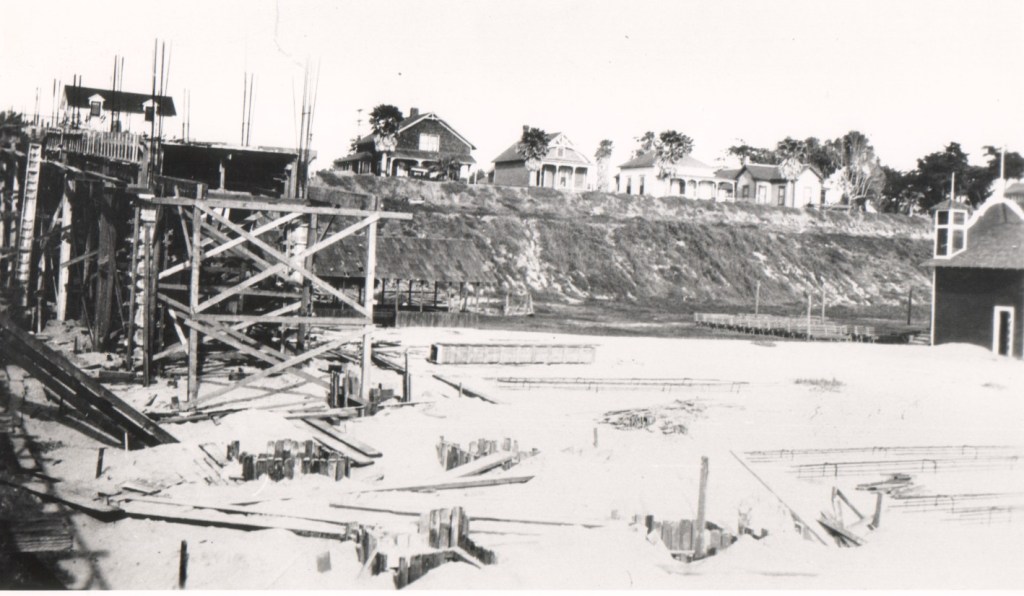
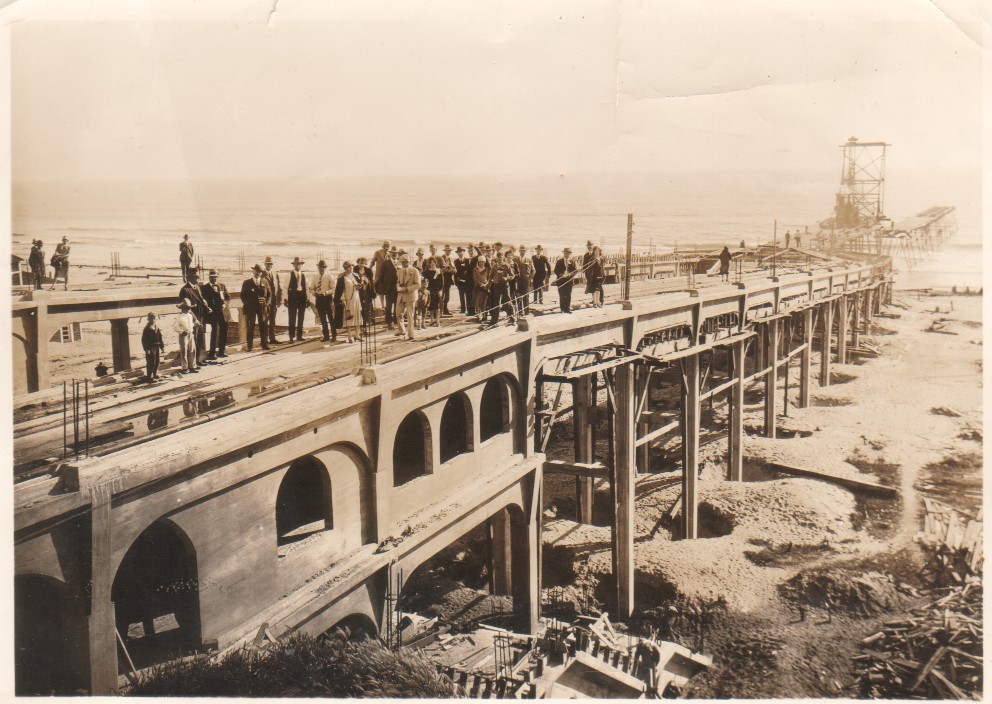


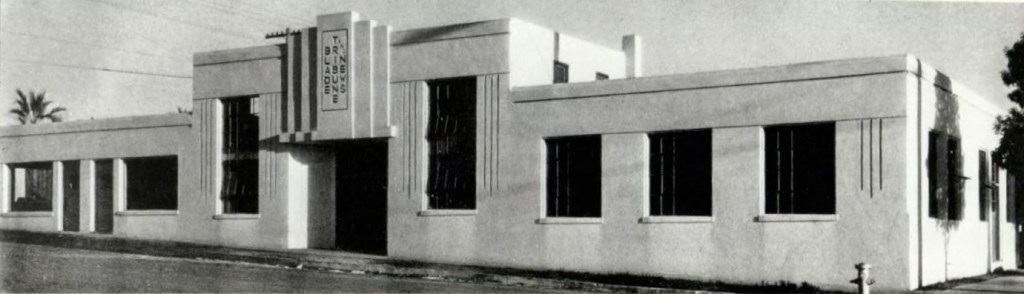
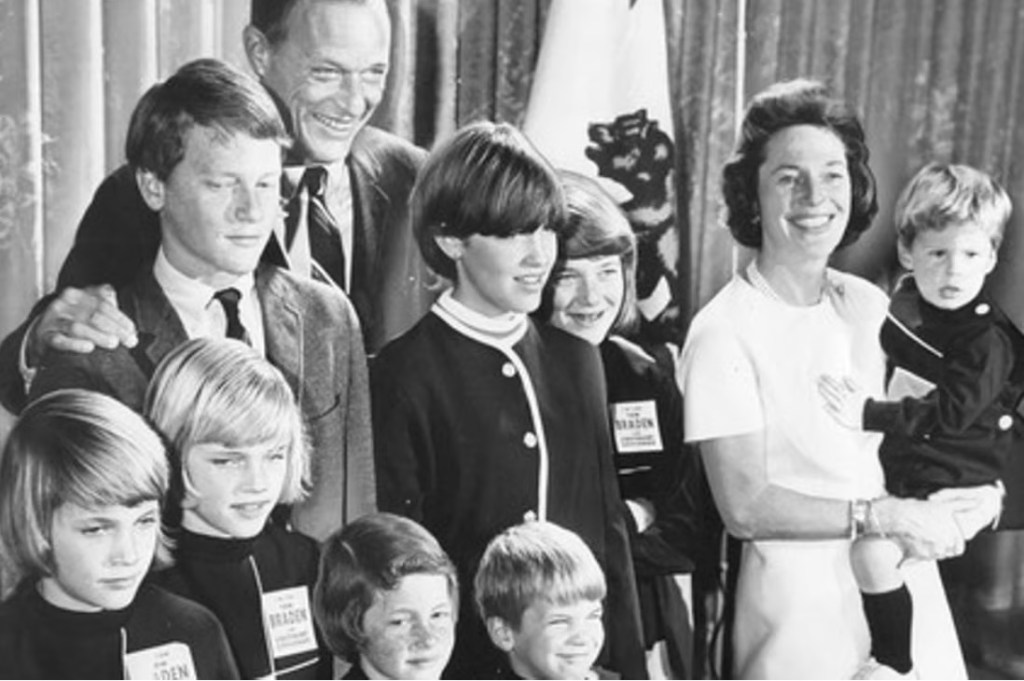


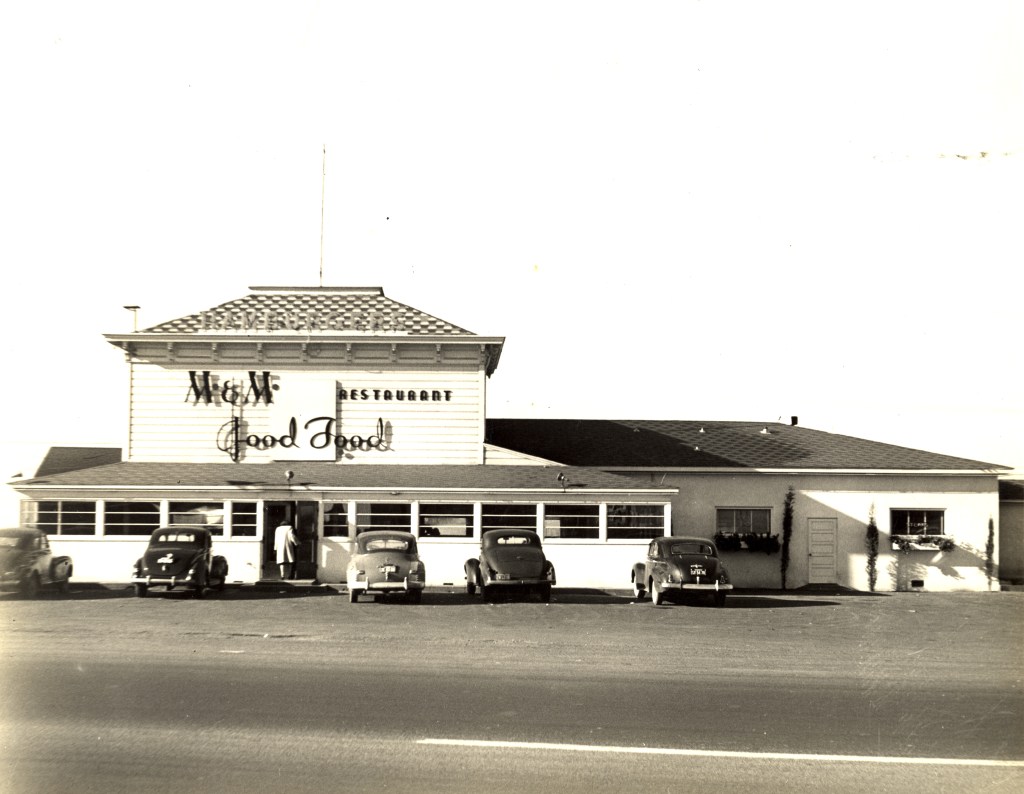


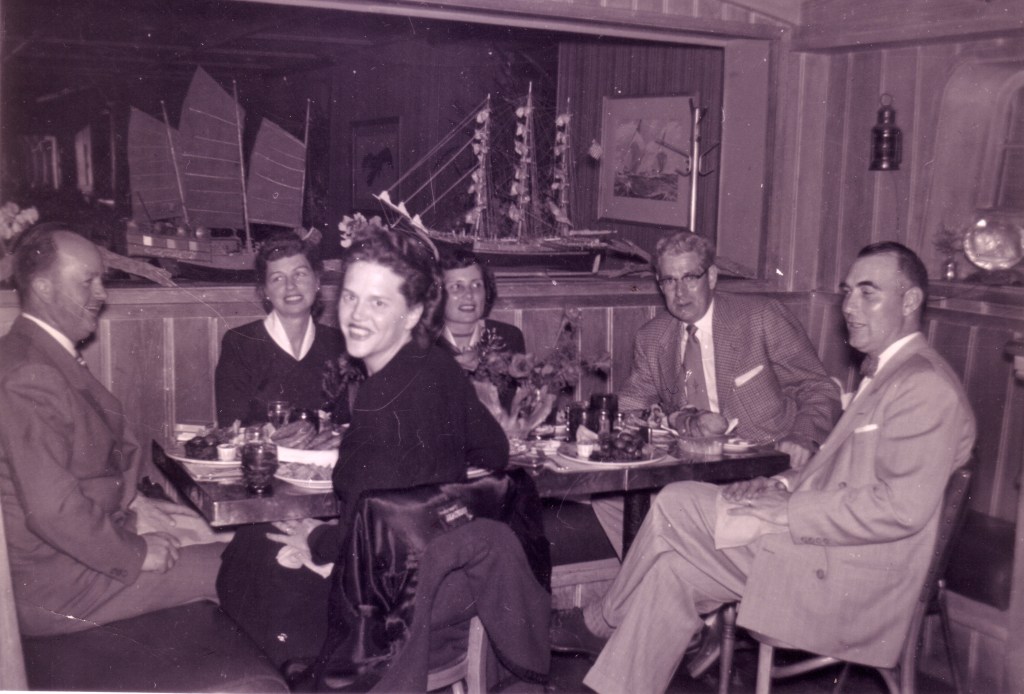
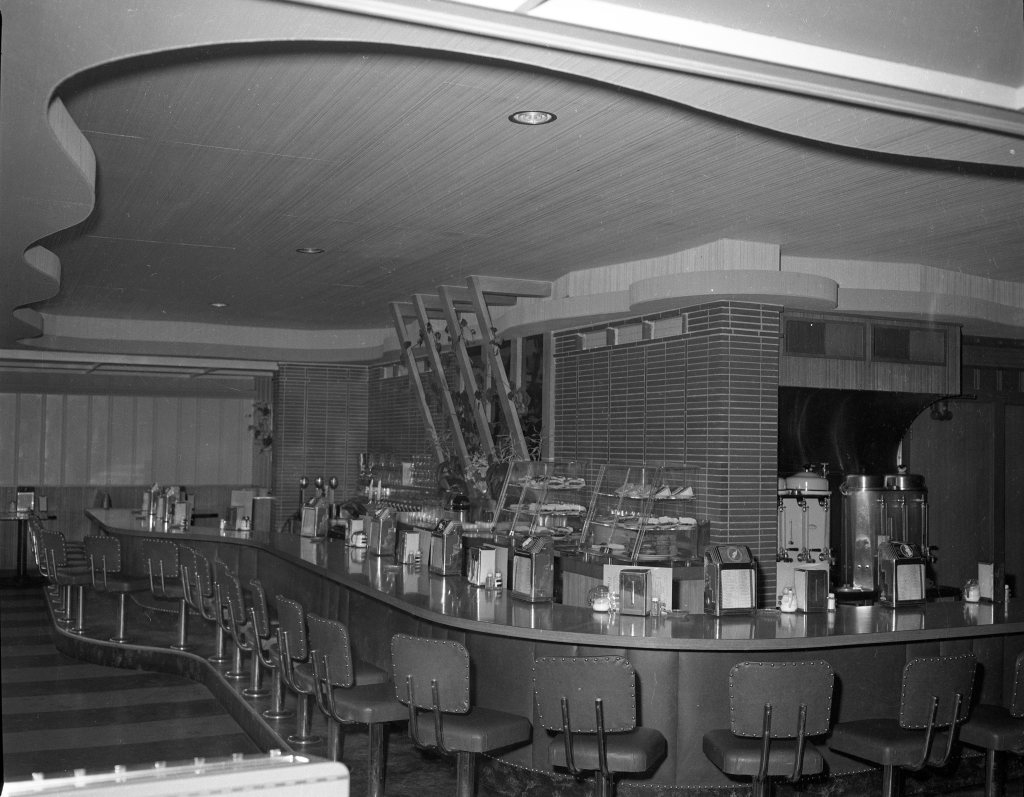


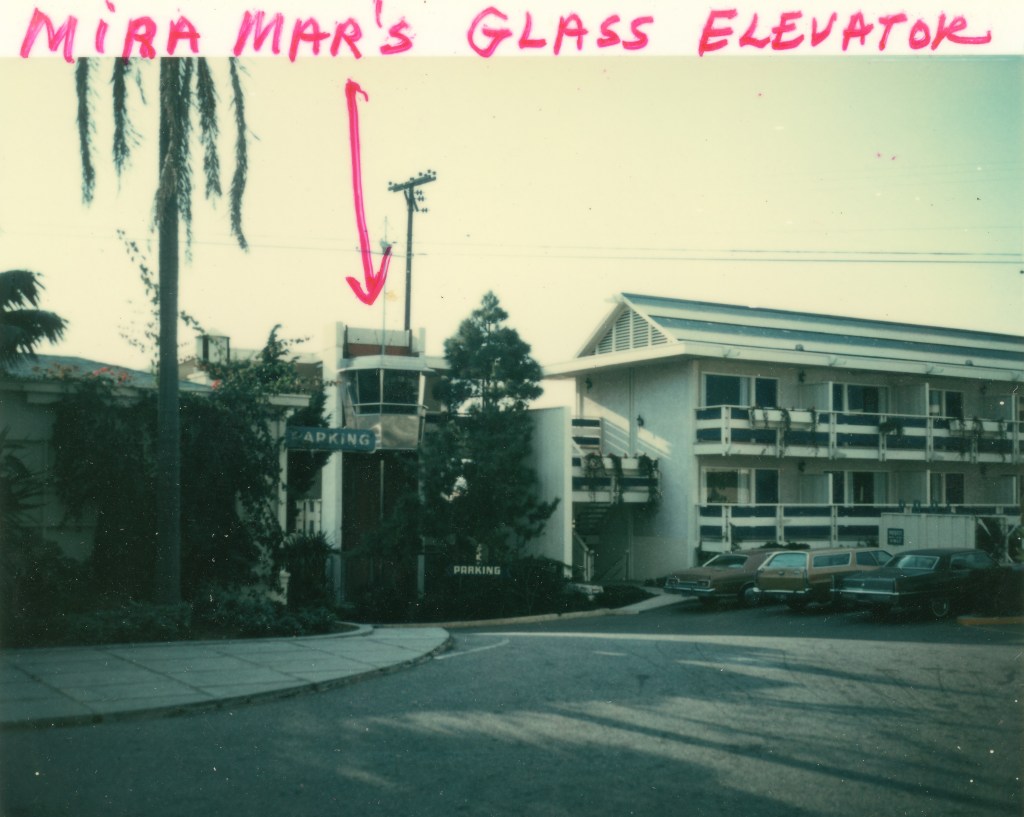

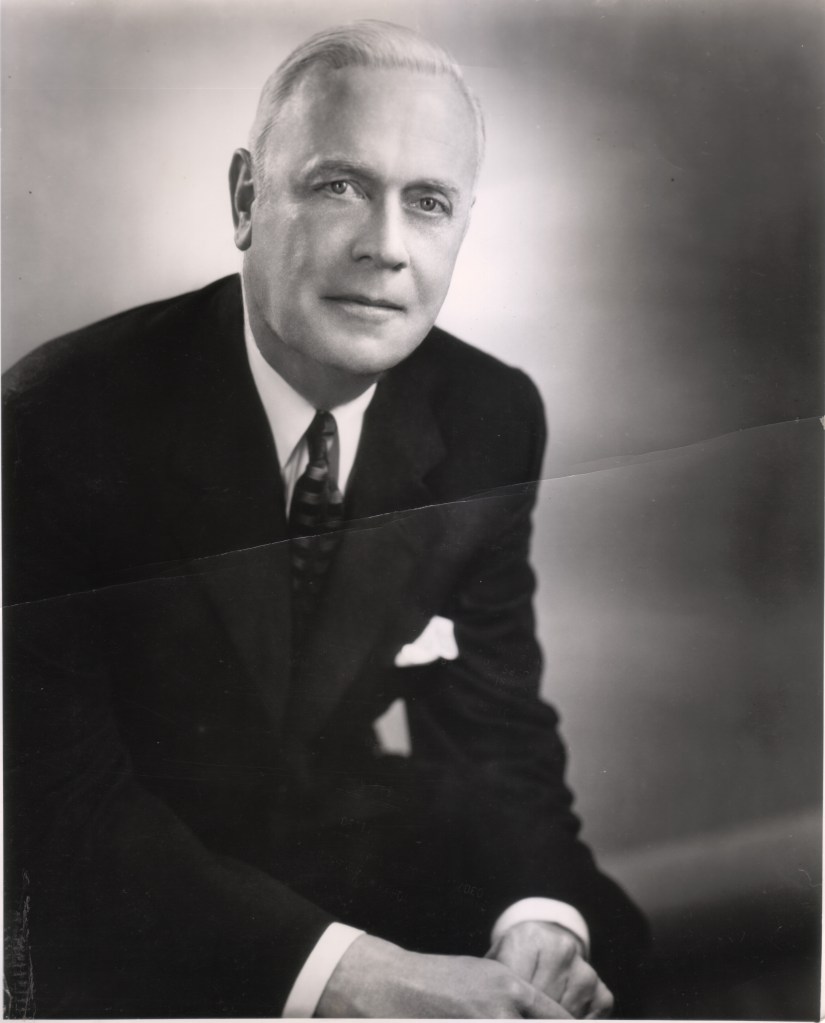


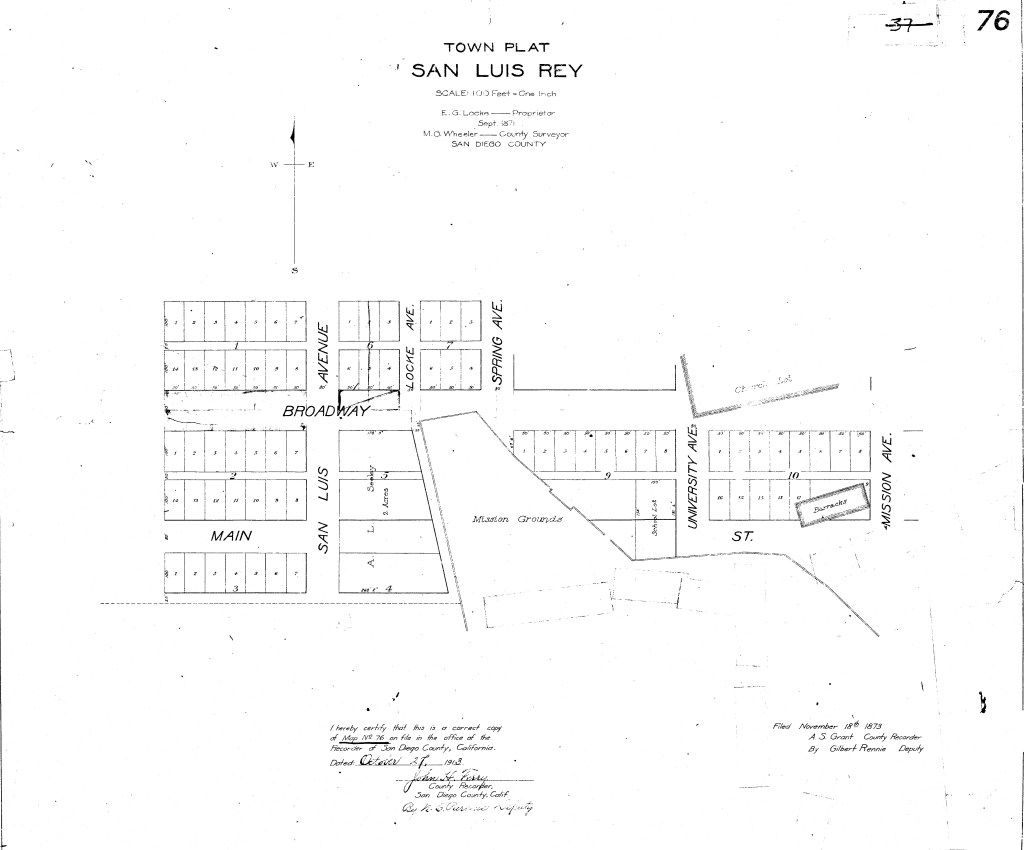
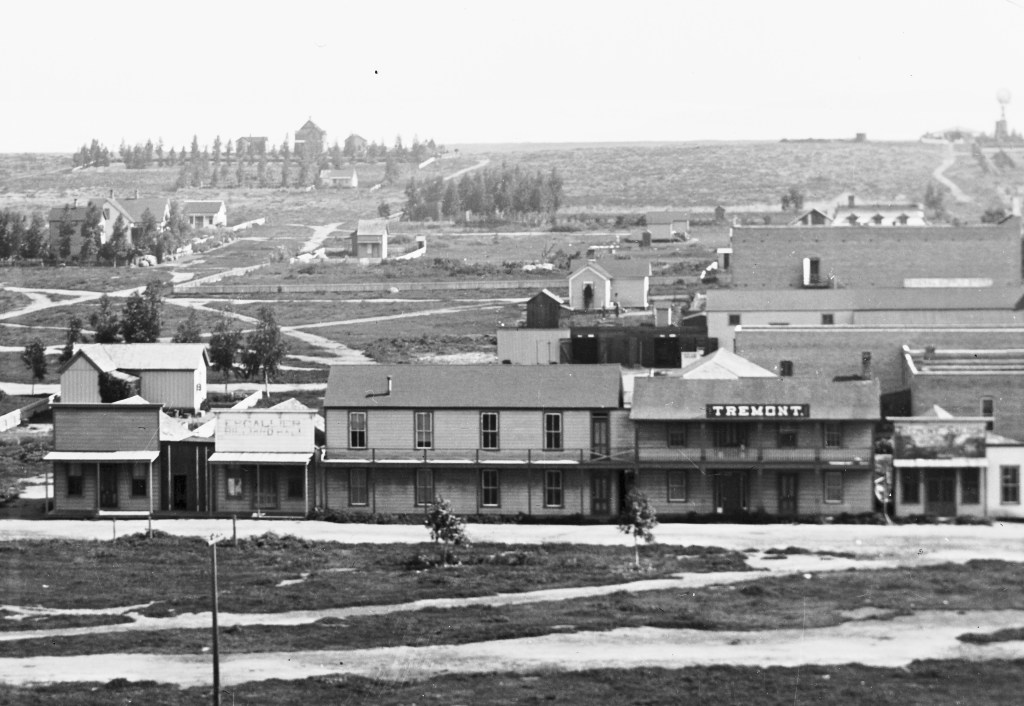
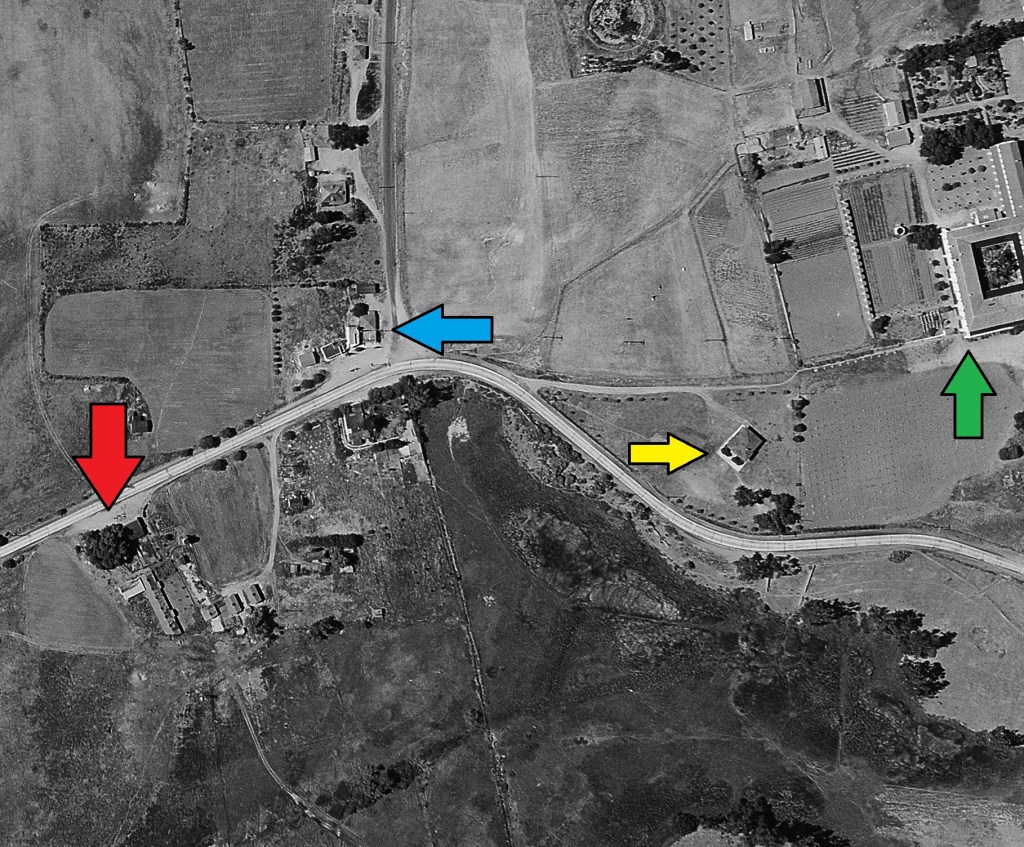


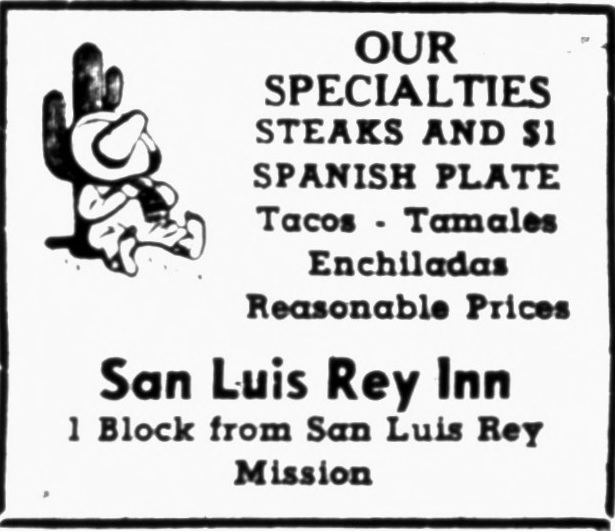


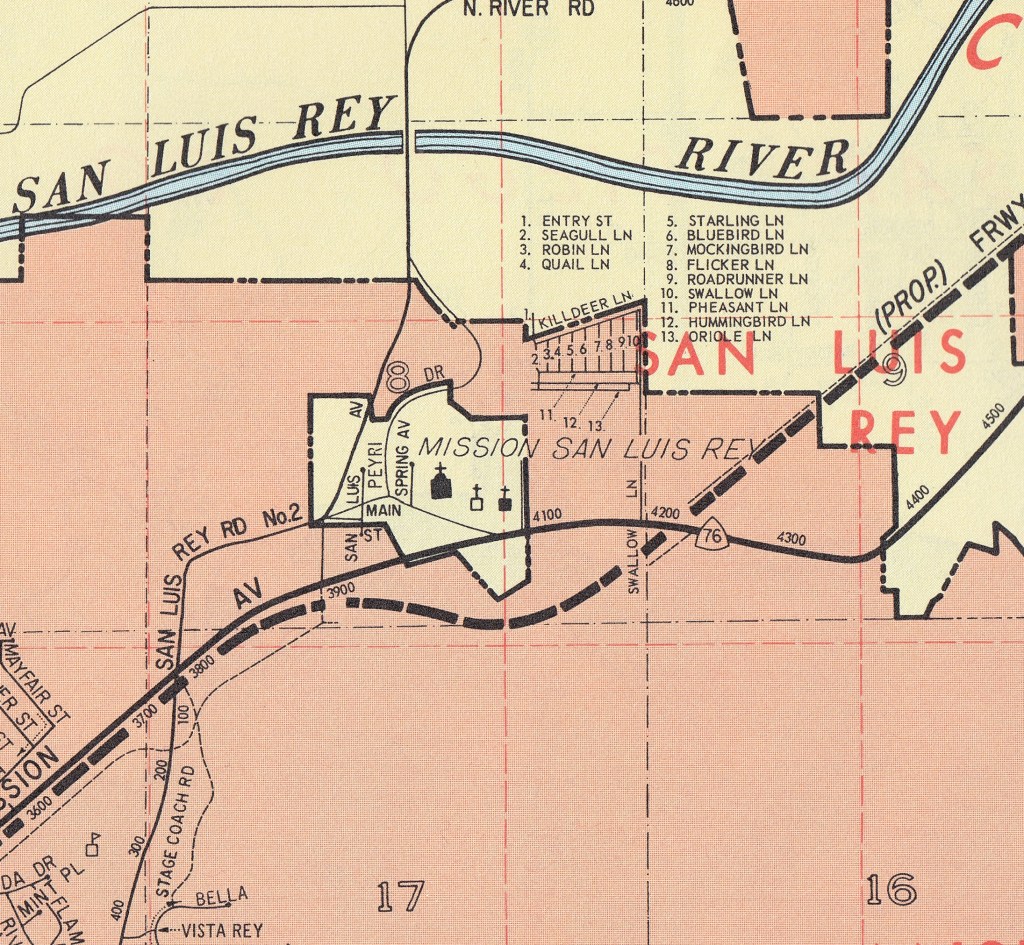


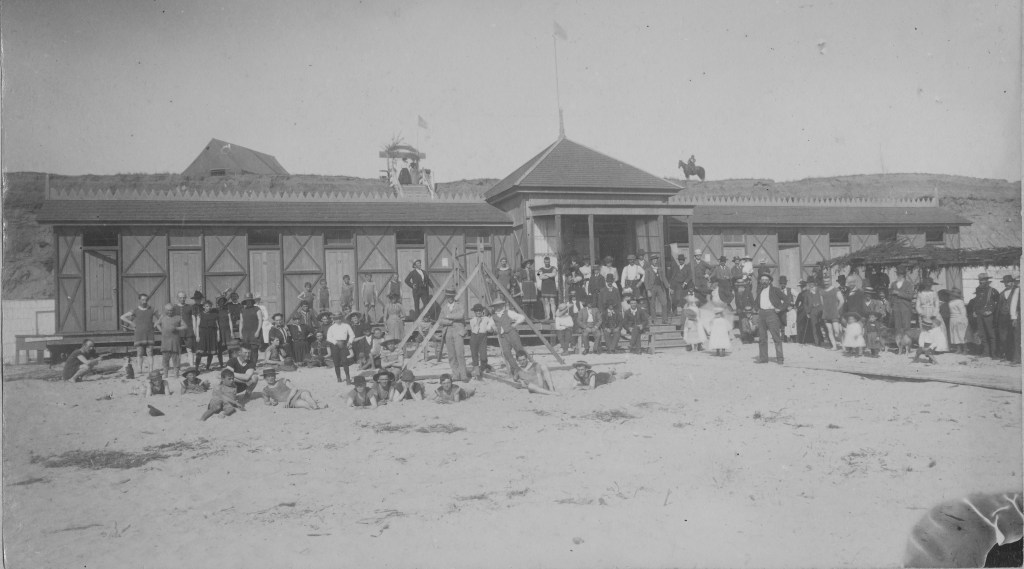

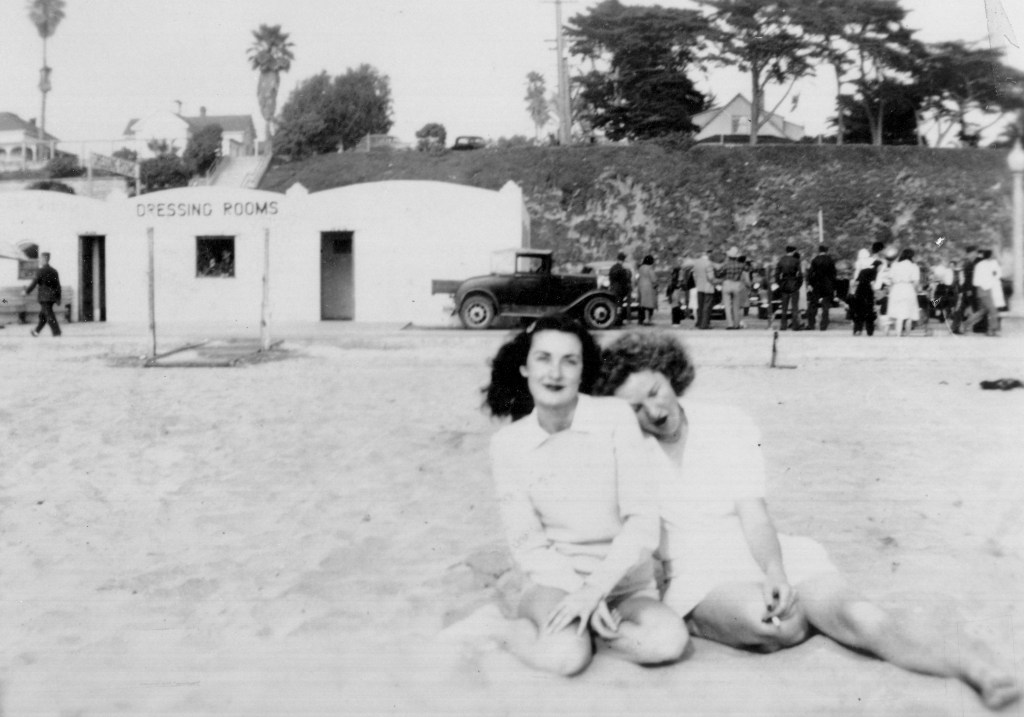


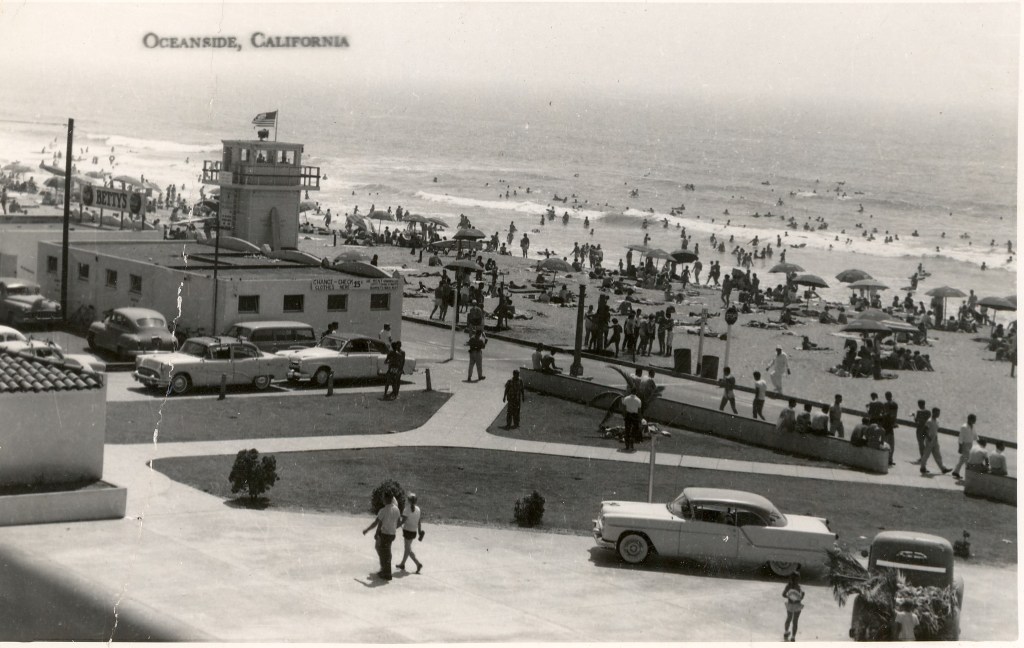
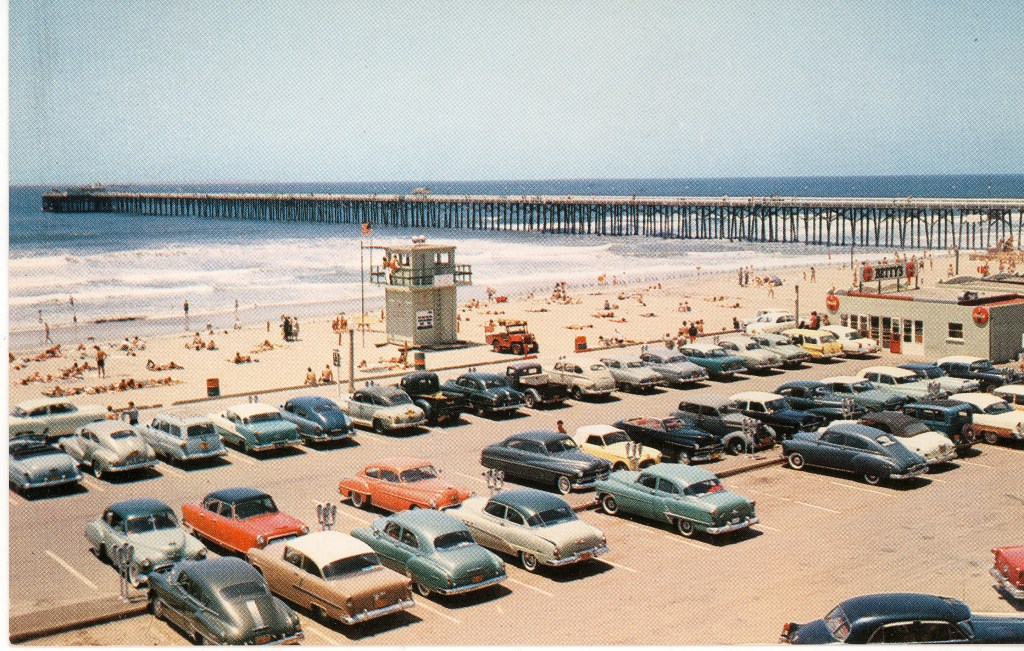


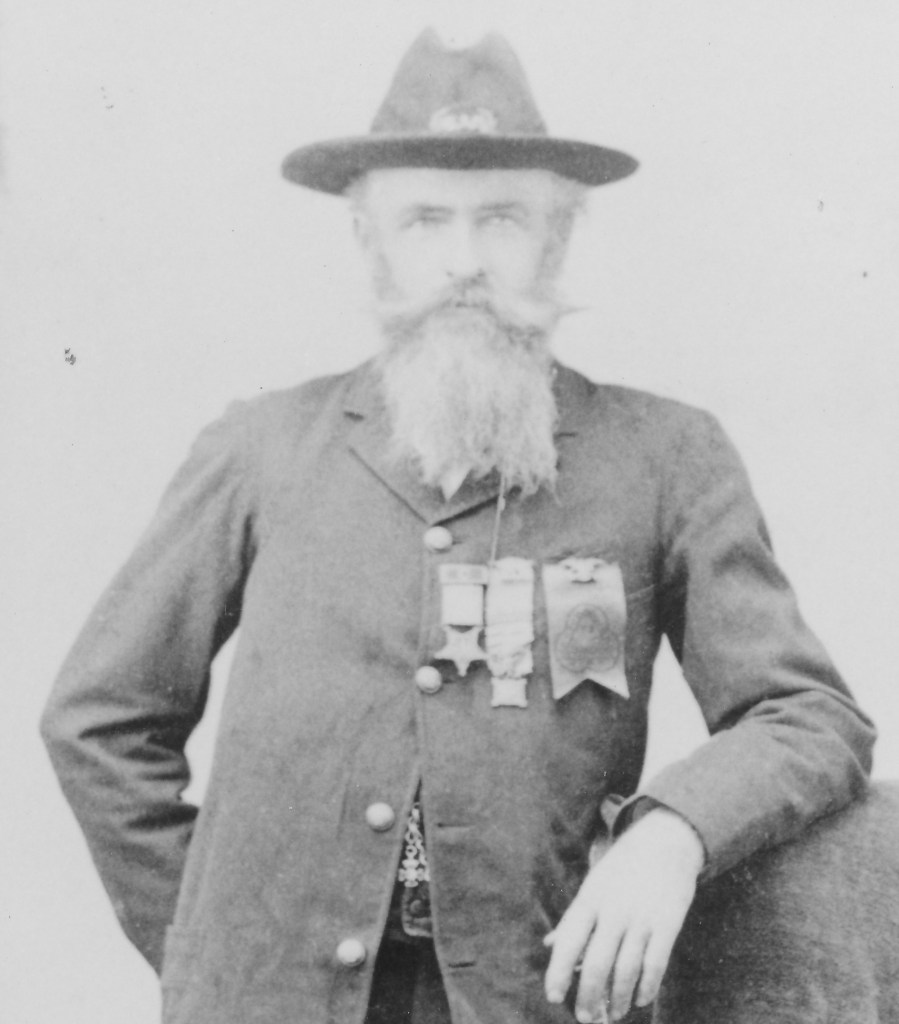


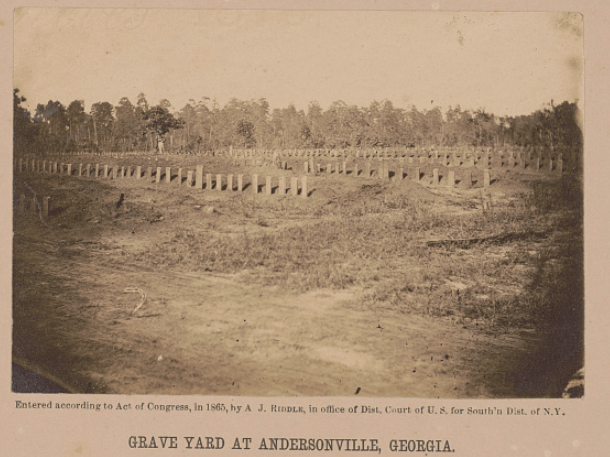
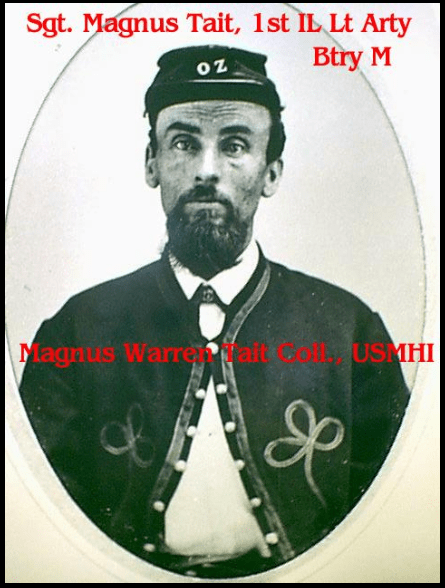


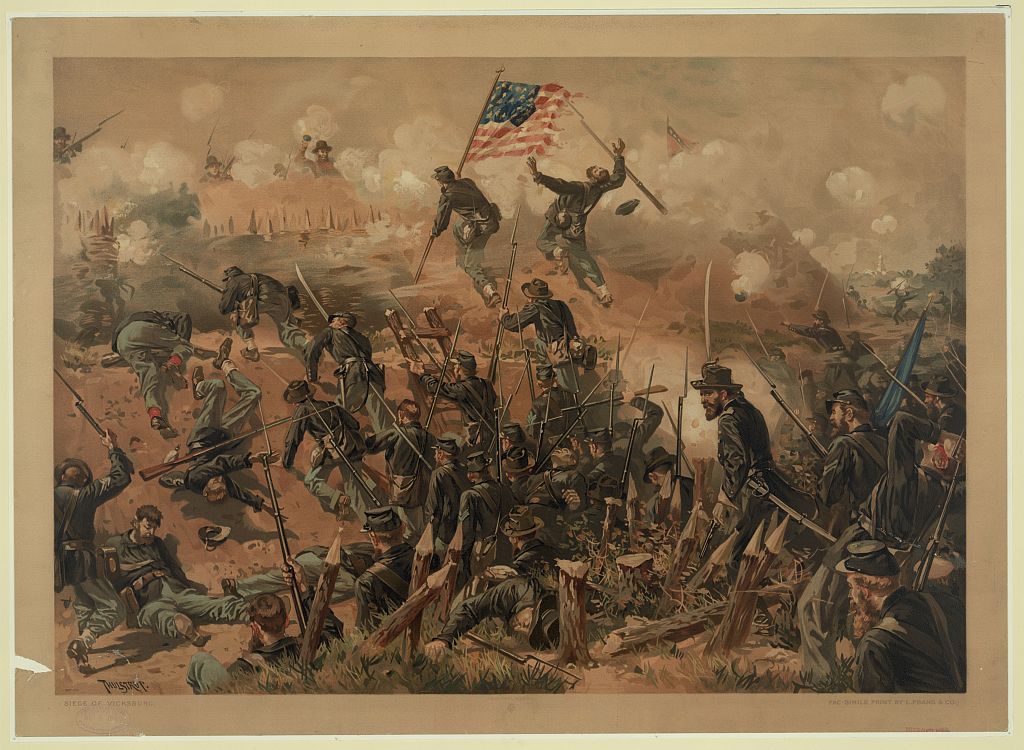


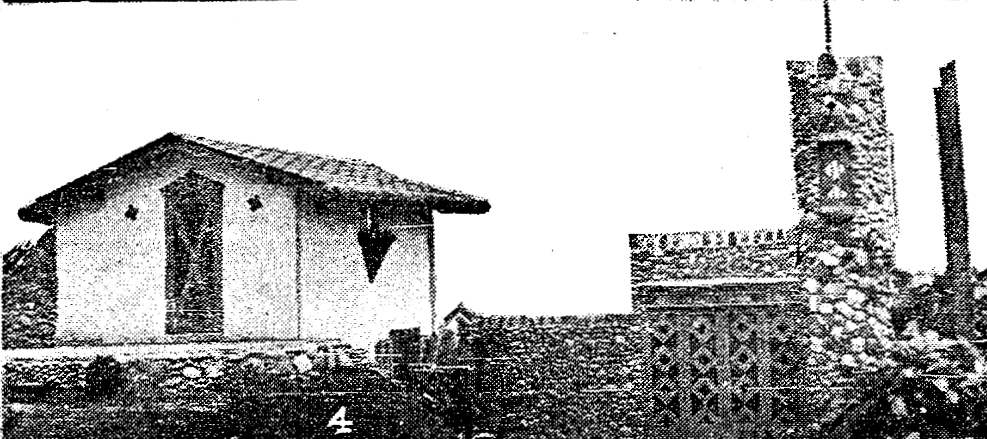


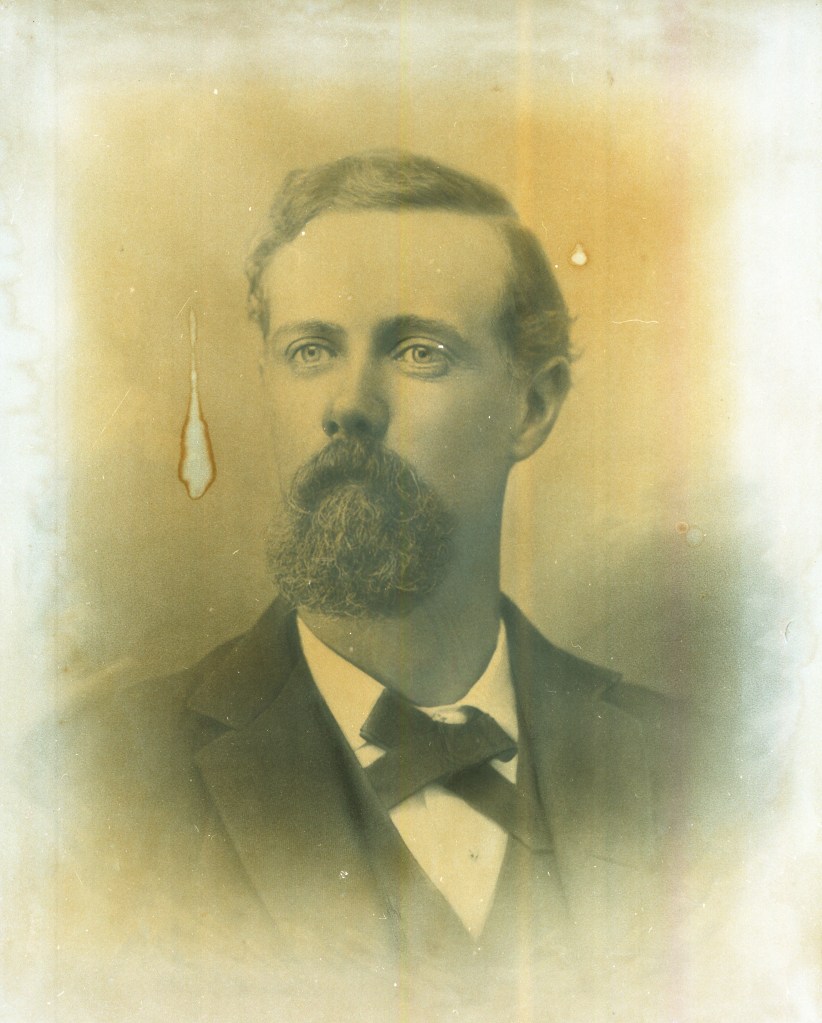
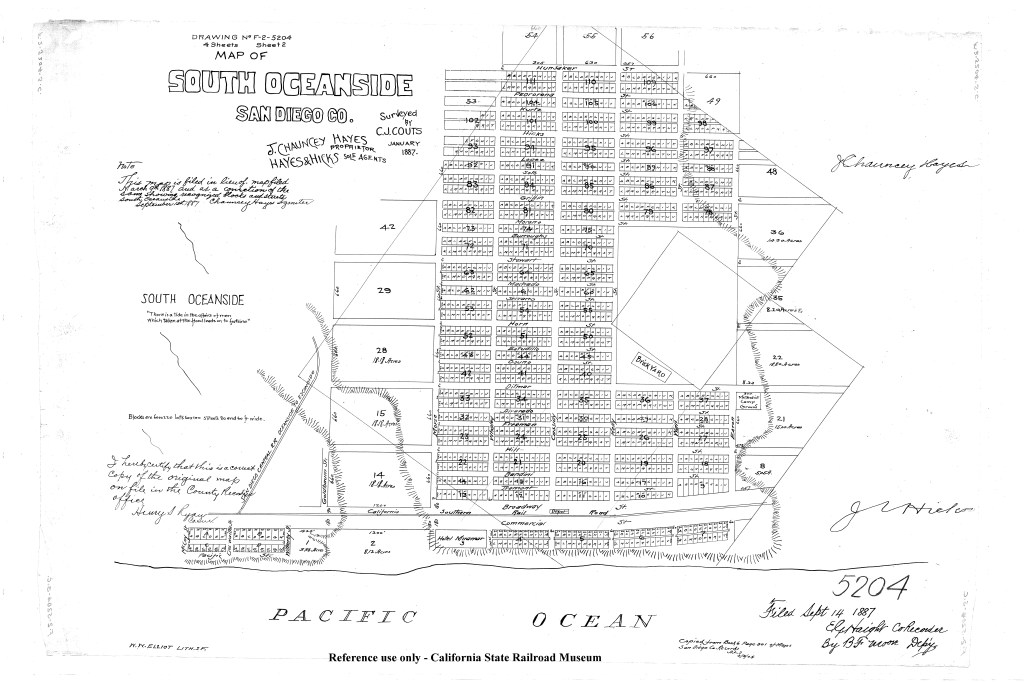


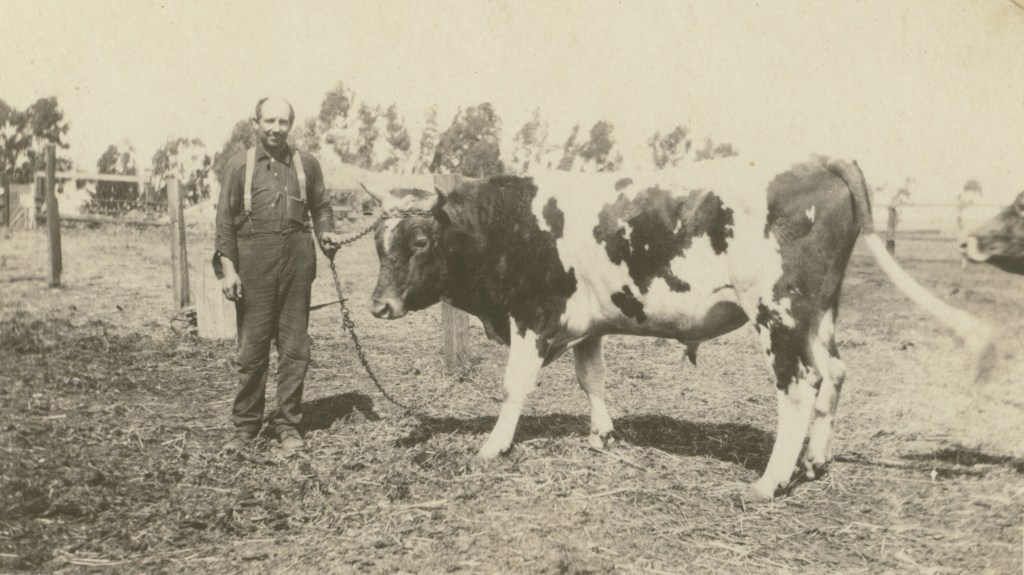


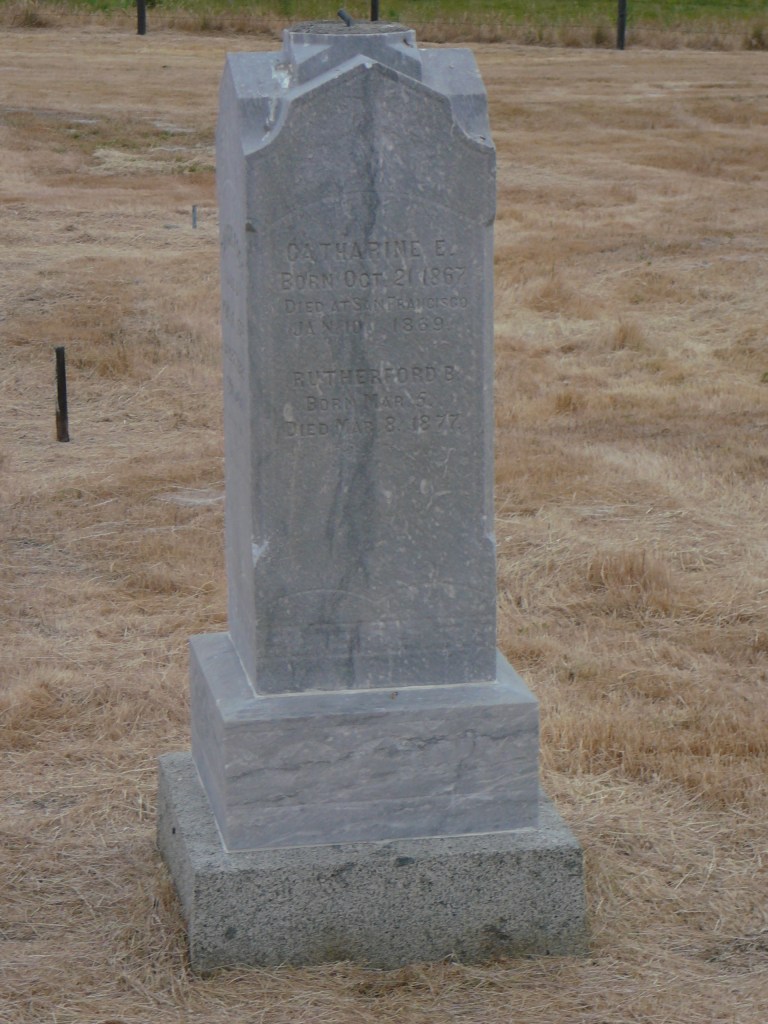


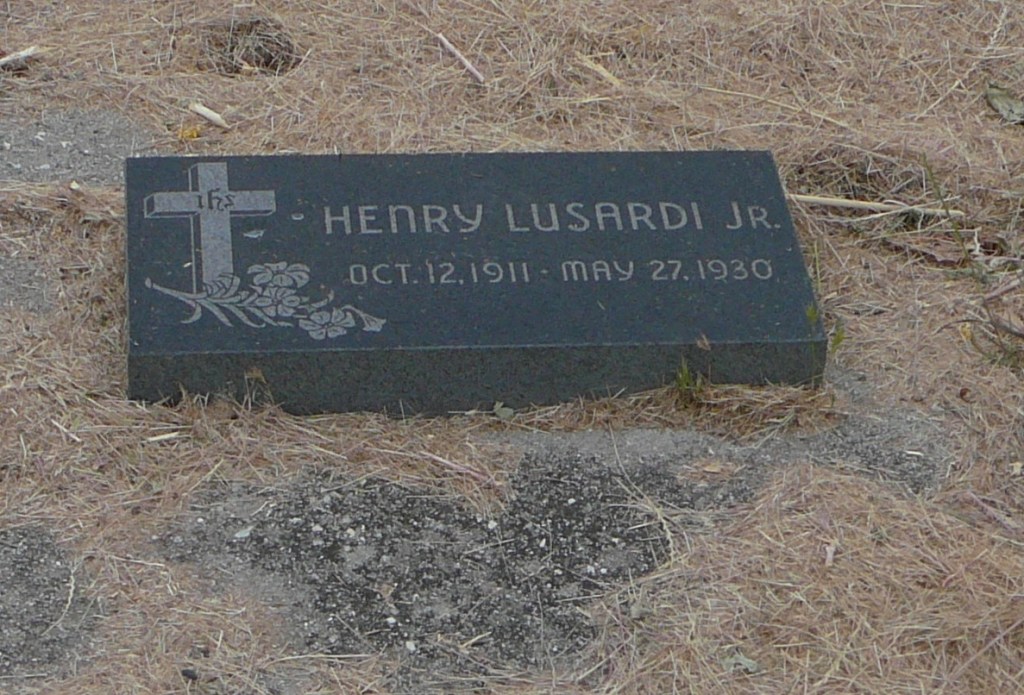
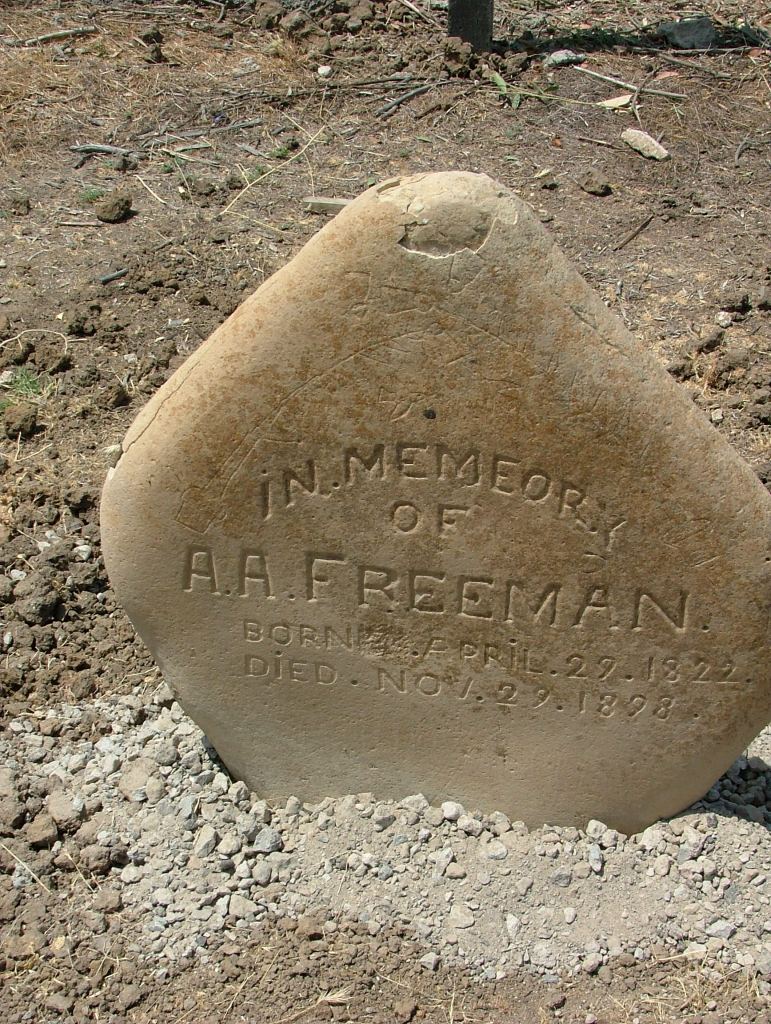

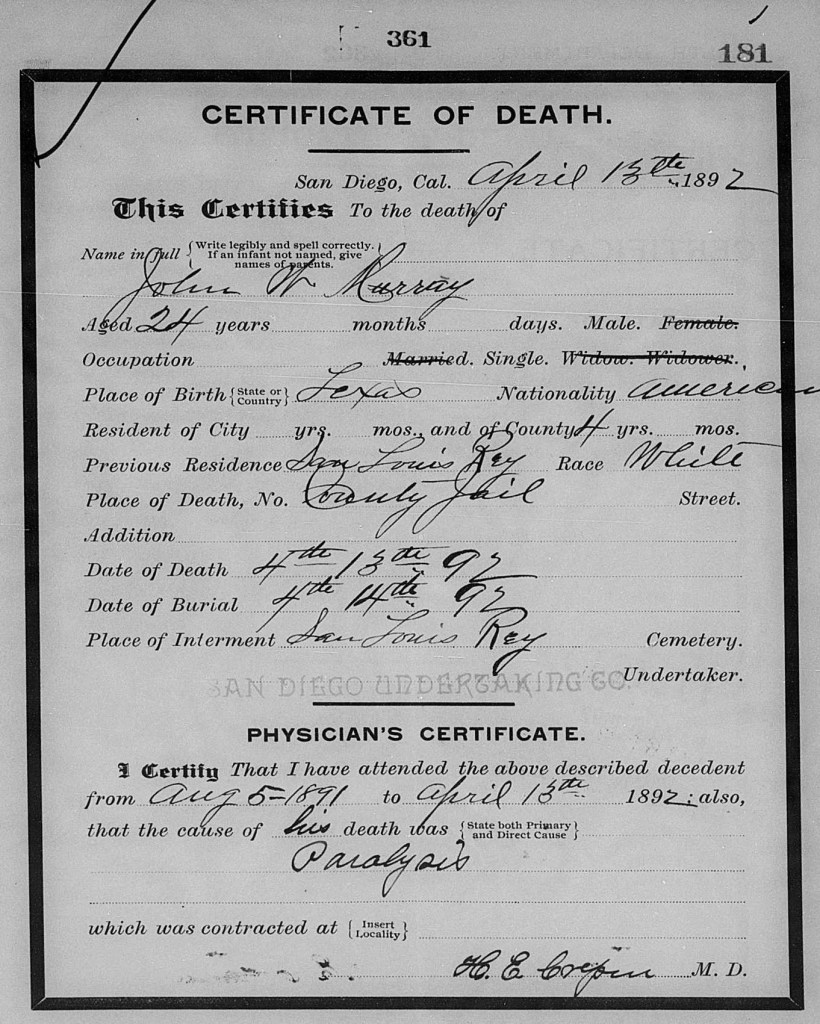
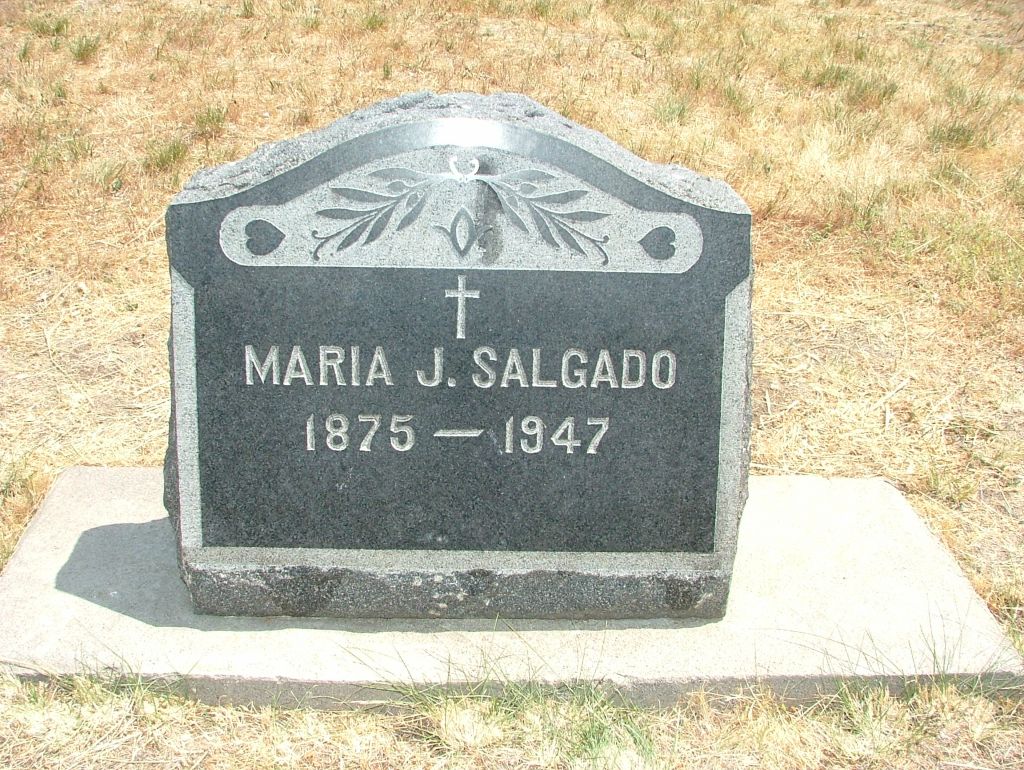



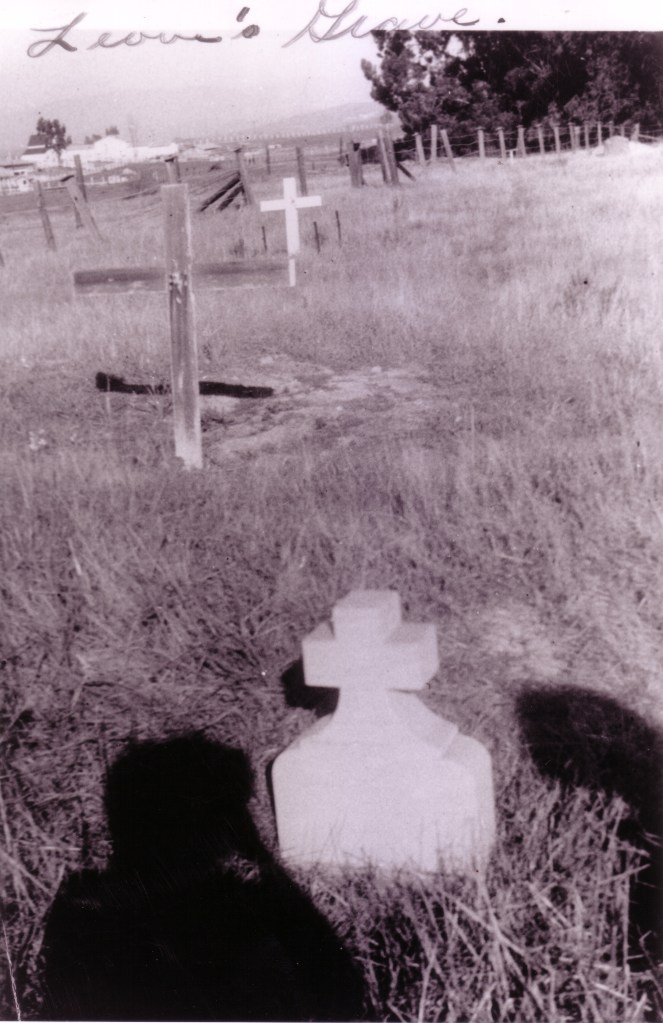


 Histories and Mysteries