The Hill Top Motel at 1607 South Coast Highway in Oceanside, California has been described as an “okay place if you’re running out of options.” It has become sort of a fixture in the South Oceanside neighborhood. Far from a vacation destination resort, the Hill Top Motel is a low budget option for travelers and locals.
The Hill Top Motel, (Google view 2025)
Regardless of its less than stellar reputation, the Hill Top has a history dating back to 1948 and includes two tragic events, a suicide and an unsolved murder.
The first deadly incident was the suicide of Flora Dodson in 1954. She and her husband were the original owners of the motel property.
Forrest Leroy and Flora (Kettering) Dodson were both natives of Illinois, married in 1907. The couple had two daughters, Marie and Edith. In 1948 the Dodsons purchased property on the southwest corner of Morse and Hill Streets (Coast Highway) from Clifford Brodie. In June of that year a permit was issued to build a small motel called Dodson’s Motel at 1607 South Hill Street for a cost of $19,000. A neon sign was erected in December 1948 and the motel was completed and ready for guests.
Flora and Forrest led quiet lives on the busy Highway 101. They lived on the property while managing the auto court and visited often with their children and grandchildren.
Sadly, Forrest Dodson died suddenly on May 29, 1954. After 47 years of marriage, Flora was distraught and despondent with grief. She told her daughter Edith Lipman that she did not care to live any longer and that she had contemplated jumping off the end of the Oceanside pier.
On December 12th, just seven months after the death of her beloved husband, Flora ended her life. She was discovered by her son-in-law Othel Bert, who was visiting from the Midwest. He found her lifeless body lying on the floor in front of the kitchen gas range. Detectives from the Oceanside Police Department responded to the call and as they examined the scene, they noted that Flora had cut her left wrist with a safety razor blade, which was found on the floor near her right hand. A rifle and .22 cartridges were also found but unused. Instead, Flora had turned off the pilot lights in her wall heaters and stove, turned on the gas and positioned herself on a kitchen stool until she was overcome by fumes. The coroner ruled her death a suicide.
The Hill Top Motel, 1607 South Hill Street (Coast Highway) in early 1960s.
After her mother’s death, daughter Edith Lipman acquired the motel property which had since been renamed the Hill Top Motel. It was sold to Leonard and Bessie Robinson in 1957. The Robinsons lived on the property in the “owner apartment” and managed the 8-unit motel, which advertised “all the comforts at home” including carpet, kitchens and free TV.
By the mid 1960s the Hilltop Motel was expanded with a two-story unit on the north end of the property. The Robinsons sold the property to Mr. and Mrs. William and Virginia Giffin who sold it to Dwight M. Pankey in 1970.
The Hill Top Motel in the 1970s.
It was purchased by Larry and Twyla Shaffer in 1974 and by 1976 the Hilltop Motel was offering daily rates of $10 and a weekly rate of $63. In 1976, the property was purchased by Joe C. Iski and John Isky. They sold the property to Yee Chen Yeh of San Diego in 1979.
Aerial view of the Hill Top Motel, corner of Morse and Hill Streets (Coast Highway) upper right in the 1970s.
The clientele in the 1970s and 1980s were much different than the guests who stayed in the Dodson Motel in the 1940s and 1950s. Things were changing in Oceanside with a rising crime rate, even in South Oceanside, which is a vibrant and trendy neighborhood today. In 1988 the crime rate had increased 24 percent and it was reported that Oceanside had the biggest increase in violent crime in the entire state for the first six months of the year.
Violent crime which included Oceanside’s first reported homicide of the year – at the Hilltop Motel. On January 22, 1988 Rocco Anthony William Pittro, Jr. (aka Pietro) was found murdered in Room No. 8. Pittro had been discovered by the motel’s manager. Left in a pool of blood, he had been stabbed seven times.
The manager told police that Pittro and a man by the name of Carl had been seen together, and that Pittro had told him he would have a male friend visiting. Carl was described as a black male 25 to 30 years of age, 160 pounds 5’10“. The manager of the motel had gone to the room to check on him the following day, presumably after Pittro missed check out, entered the room with a pass key and discovered the dead guest. The Oceanside Police Department was notified and Officer P. Coppack arrived at 12:43 PM.
Pittro was born August 7, 1927 in Illinois. He was divorced and living in Mission Viejo. Differing reports list his occupation as an interior decorator to construction.
The coroner’s report stated that he was found in “a prone position on the bed and his body was cold to the touch.” There were three stab wounds to the back of his body and multiple stab wounds to his chest and abdomen, as well as a laceration to his left hand. The bedding under his body was blood soaked, and there was dried blood spattered on the wall opposite the foot of the bed and on the head of the bed. More specifically, Pittro was stabbed in the heart as well as in the lungs and suffered from multiple blunt injuries. The coroner also noted that no drugs were detected.
The murder weapon was not found but Homicide Detective Sheila Hancock reported “I think we’ve got some good physical evidence.” The victim’s 1985 Nissan pickup truck had been stolen and later recovered abandoned in central Los Angeles.
In March of that year, a 16-year-old Oceanside youth was arrested. He was booked into juvenile hall, but his name was withheld because of his age. Three days later, he was released. Detective Hancock said there was insufficient evidence to prosecute the teenager at the time. Police said the teen lived with his parents on nearby Marine Corps Base Camp Pendleton and they continued to look for information linking the teenager to the killing.
In September of 1988 Oceanside detectives released a crude sketch looking for someone by the name of Chris or Carl. But with no suspects in custody, the case eventually went cold and then forgotten.
However, with properly stored evidence, this case could likely be solved today with DNA or even fingerprinting.
The murder of Rocco Pittro is one of several unsolved cases in the files of the Oceanside Police Department, including Zelda Lamore found murdered in a downtown hotel in 1953, the murder of cab driver Ray Davis in 1962, the murder of Charlleen Saunders in 1986, the kidnapping and murder of 7-year-old Leticia Hernandez in 1989, the missing persons case of Mary Rico-Webber in 1992, the murder of retired school teacher Margaret Yossa in 1994, and the murder of Rachel Pauline Rivera found in the alley of the 600 block of South Coast Highway in 2001.
As each year passes these cases only grow colder, including Rocco Pittro’s murder in Room 8 at the Hill Top Motel. Is the DNA evidence just waiting to be tested? Is there anyone who remembers, or has information to help solve this case and others?
South Oceanside’s popular health food store “Cream of the Crop” has been around for nearly 40 years. But the history of the building is a colorful one beginning in the 1940s …. once occupied by a fish grotto, cocktail bar and later a gentlemen’s club called the “Man Trap.”
Built in 1944, the building was owned by Dr. Clifford and Cora Brodie and housed Brodie’s Fish Grotto which opened in the summer of 1945. The Brodies had an auto court-style motel on the southwest corner of Vista Way and Hill Street (Coast Highway) in South Oceanside. They also owned an apartment building at 2012 South Tremont.
The Ellis Motel was built in 1939 as the Brodie O Tel at 2001 South Hill Street (Coast Highway)
Clifford Brodie was married up to five times and Cora may have been wife number two. They were married in about 1930 and had one son, Elwood. The couple divorced and Cora remarried, her new married name was Shuey. Cora received the Tremont Street apartment building where she resided, along with the building located at 2009 South Hill Street a.k.a. Coast Highway, in the divorce settlement.
Dr. Clifford E. Brodie
Cora Shuey opened a new restaurant in her building on Hill Street called “The Port Hole.” It operated from 1947 to 1952. Athur Vitello then opened a restaurant and cocktail bar called Diana’s, in mid-1952, while Cora retained ownership of the building.
Diana’s was a popular hangout for several years along the historic Highway 101, on the outskirts of Oceanside. Clientele came from both Oceanside and Carlsbad and beyond.
In 1955 a shocking incident occurred there when a man shot his wife, killing her instantly, and then turned the gun on himself. James and Joyce Nolan were living in the motel next to Diana’s at 2001 South Hill (Coast Highway). The couple had entered the establishment and had a noticeable disagreement or fight then left. Joyce Nolan returned alone to the cocktail bar and her husband re-entered and asked her to come home. She refused saying she wanted to finish her drink. Soon after James Nolan approached his wife and without a word shot her in the throat with a 38-caliber pistol. He then shot himself in the head.
Detectives enter Diana’s restaurant and bar to investigate the murder-suicide.
Oceanside Police were summoned by shocked bar staff. In his pocket police found a tattered letter written by James Nolan to his parents. It read: “I can’t take it anymore. The only one I ever loved is Joyce and we just can’t seem to get along so I’m ready to call this life to a finish.” They had only been married a few months.
In June 1959, Cora Shuey had the building “completely redecorated” and opened “The Coral Reef, Oceanside’s newest restaurant and supper club.” Cora Shuey died in 1960 and was buried in Eternal Hills.
By 1961 the bar/restaurant was owned by Marvin Burke and for a time it was called “Marv’s Coral Reef.” It remained the Coral Reef through the mid-1960s when it was later renamed by owner Robert F. Blanas as the “Pink Kitten” from 1967 to 1968. The Pink Kitten was no supper club but an establishment known as a “go-go bar” featuring topless dancers.
The name “Pink Kitten” did not last long and the tamer, if not ambiguous name, “Coral Reef” was returned by 1970, but the topless dancers remained. Help wanted ads ran in the local paper offering $3.25 an hour for single or married go-go girls. (The state minimum wage was then just $1.60.) “Earn while you learn” was the headline, but it was unclear what the women would be learning.
But by 1972, the adult venue was renamed “The Man Trap” leaving little to the imagination. Its clientele were often rowdy marines, who would get into fights with each other and or the locals. On one occasion Marine officers were relieved of their commands because of a bar fight at the Man Trap.
In 1974 three Marine officers faced charges after a brawl that left a bouncer injured. Lt. Colonel Robert Hicketheir was charged with felony assault, while Major Patrick Collins and Col. John I. Hopkins were charged with battery and misdemeanor assault. The doorman of the Man Trap, James Weaver, was struck on the head with a drinking glass and suffered cuts and bruises.
Newspaper accounts reported that Hicketheir had taken a doorman’s flashlight and tried to shine it at a dancer. When Weaver attempted to retrieve the flashlight, he was struck in the head. Collins then allegedly struck Weaver continually with this fist “about the head and upper body while suspect number one held him.”
Hopkins was later acquitted by a judge after he determined the Marine officer had simply tried to intervene in the melee. In July 1974, Hicketheir and Collins were declared innocent on all counts by a jury of four women and eight men. Their accounts were vastly different from the original reports, and stated that Weaver was the aggressor.
Their testimony was that Hicketheir had used the flashlight to view a vending machine, when the doorman picked Hicketheir up and shoved him against the wall, which started the physical altercation. Collins testified that he was simply coming to the aid of Hicketheir. The newspaper noted that the prosecution witnesses were “flamboyantly dressed” with “contemporary hairstyles” and were bartenders and topless dancers.
There was considerable controversy of having a topless bar in quiet South Oceanside, and it turned even more controversial when the dancers went from topless to totally nude in 1978. Owners Herbert Lowe and Robert Gautereaux Sr., defied the City and offered total nudity, despite the fact that they were not licensed to do so.
The Man Trap was open 11 AM to 2 AM during the week and Saturday and Sunday from 2 PM to 2 AM. Starting pay for dancers was $5.00 an hour with the promise of “excellent tips and good working conditions.”
An employee of the Man Trop reported that two girls had been hired specifically to dance nude on Thursday nights, because the regular top topless dancers were reluctant to remove their G-strings.
A court case ensued and a hearing was held on October 14, 1978 in Superior Court where Judge Michael Greer ruled that the Man Trap “could continue to feature topless and bottomless female dancers” until December 4th of that year, but “called for changes.”
The bar was ordered to place the stage area 12 feet away from customer seating and to prohibit dancers from socializing with customers or serving them alcoholic beverages. Joshua Kaplan, attorney for the owners declared “we will remain totally nude until December 4 and then after that forever.” Oceanside Deputy City Attorney Warren Diven said that the Man Trap was in violation of a city ordinance that prohibits topless or nude dancing in bars.
Kaplan argued that the Man Trap was a “theater” and therefore exempt from the ordinance. He said owners Lowe and Gautereaux (who also owned the Playgirl Club in downtown Oceanside) had made improvements of more than $60,000 to assure that the established met the “legal definition of a theater.” But City Attorney Divon countered that “the primary purpose of the man trap was to serve alcoholic beverages and not to provide entertainment” and added that the type of entertainment offered by the Man Trap “does not rise to the dignity of a theatrical performance.”
The Playgirl Club on Third Street (now Pier View Way)
Mayor Pro-tem Bill Bell said, “We will pull out all the stops to close both of them, the Man Trap and the Playgirl. Enough is enough.” But both establishments continued operating. In 1979 the Man Trap Theater began to featured ladies’ night, Wednesday night with male dancers. Saturday was couples’ night with male and female dancers.
Skip Arthur, purchased the Man Trap, as well as the Playgirl. But the Man Trap was closed after the Alcohol Beverage Control board pulled its license for having nude dancers.
The 3,300 square foot building at 2009 South Hill Street (South Coast Highway) remained vacant while the owner offered it for rent. In June of 1980 the building was leased to the FVW Post 9747, a largely Black Veterans’ organization of 200 members, who had faced protests when trying to lease a different location on Mission Avenue. (FVW Post 9747 later merged with VFW Post 10577 to become Oceanside Memorial Post 10577.)
In March 1987 the building that had once housed restaurants, served cocktails and offered adult entertainment, became a health and gourmet food store called “Cream of the Crop.” For nearly four decades the health food store has flourished with a faithful clientele of its own, albeit a bit more “wholesome.”
Google Street View of Cream of the Crop at 2009 South Coast Highway in 2021
Many neighbors are lamenting the loss of a historic home on the southwest corner of Eucalyptus and South Ditmar Streets next to the former Ditmar Elementary School, now Surfside Educational Academy. The house was recently demolished to make way for improvements and expansion at the school site.
1111 South Ditmar Street, circa 1990
Before a house was built on the site, the area was one large undeveloped 10 acre tract that was bordered by Eucalyptus to the north, South Ditmar to the east, Short Street (Oceanside Blvd) to the south and Hill Street (Coast Highway) to the west. In the early 1910’s the tract was entirely laid out in carnations and in the 1920s it was used for growing vegetables.
Barnard Home at 1111 South Ditmar, upper left hand corner, 1932
Fred Gardner Barnard, Sr. purchased the property in 1927 from Dr. Robert S. Reid. F. G. Barnard “pioneered the planting of lima beans in San Diego County” and made lima beans a staple crop in Oceanside and surrounding area.
Barnard’s bean thresher on the Rancho Santa Margarita
A native of Ventura, California, born April 5, 1872, Barnard came to Las Flores on the Santa Margarita rancho in 1907. Prior to his arrival, he married Neta Bonita Lamb in 1899 and the couple had three children: Fred Gardner Barnard, Jr., Harriett and Maryline.
Fred Gardner Barnard, Sr.
Barnard was said to be the first farmer to plant a vegetable crop on the Rancho Santa Margarita. His lima bean crops even inspired an Oceanside festival in 1913, Bean Day, which was celebrated at the Oceanside Pier band shell. Barnard is also credited with having “pioneered irrigation” on the Santa Margarita, having drilled many of the first wells on the ranch.
Bean Day at the Oceanside Pier in 1913
According to an interview with a family member, Barnard built the house in 1929. The house was the only structure on the entire ten-acre property for twenty years and the remaining land was farmed. The house was originally a one-story structure with an additional level being added in the 1940s.
The Barnard’s owned the acreage until a large portion of the tract was sold to the school district for Ditmar Elementary School, built in 1949. Fred and his wife, Neta lived at the home until he died in 1953 and she passed 8 years later in 1961.
House at 1111 South Ditmar and Ditmar Elementary School in 1965
After Barnard Sr.’s death his daughters Harriett and Maryline were deeded the property and in 1962 it was sold to J. Maxey Witman and Lillian E. Witman.
Jackson Maxey Witman was the son of Harry Witman and Ruth Maxey. His father Harry Witman was the foreman at the historic Rancho Santa Margarita. After the rancho was purchased by the Navy Department to establish Marine Corps Base Camp Joseph H. Pendleton, Witman received a commission as a captain and served with the Marines throughout World War II. J. Maxey Witman worked in real estate for decades.
In 1964 the property was purchased by H. Glen and Jean Guyer. Glen Guyer worked at US Silica in the early 1960s and later went into partnership with Irby Mandrell in the Oceanside Music Company. Irby Mandrell was the father of Barbara Mandrell who would later become a well-known country western singer. The Mandrell’s performed in Oceanside at the Normandy Bar and the 101 Club and even recorded a single with O-side Records.
Jean Guyer, seated left, along with school board members, 1981
Jean Guyer was a registered dental hygienist and worked part time for well known dentist Dr. Tom Melbourne. Jean Guyer was later elected to the Oceanside School Board where she served several years.
The Guyer’s raised their children at 1111 South Ditmar Street and in an interview Jean remembered some of the unique circumstances of living in a home in close proximity to an elementary school as children would sometimes crawl through the hedge and hide in their backyard.
She noted that there had been no heat in the house except for the gas fireplace and remarked that the second story addition was “poorly planned” but it afforded the family a view of the fireworks on the 4th of July. The original entrance was on the north end at Eucalyptus but had been changed.
In 2001 the house was acquired by the Oceanside Unified School District.
Barnard Drive in Oceanside that leads to the MiraCosta College Campus is named in memory of Fred Gardner Barnard, Jr. Active in the community, Barnard, Jr. was committed to education. He served on the Oceanside-Carlsbad High School board of trustees for 30 years, from 1934 to 1964 and over the years the Barnard family has contributed over $200,000 to the college.
The house was photographed in 2013. Below are some interior scenes after the house had been vacant. The house had been remodeled over the years but there were still original features.
Front room, first floor
Fireplace, first floor
Staircase
First floor bathroom
Portion of second floor bedroom (addition) and view of en suite
Along Oceanside’s Coast Highway you can drive, walk and bike past buildings that are 75 to 100 years old from the north end of town through South Oceanside. Because the façades have changed over the years, it is sometimes hard to distinguish a historic building from a newer one.
A building located at 1821 South Coast Highway is a good example. It is over 75 years old and built in 1948. It was the home of Hampshire House Candies and owned by Glen and Wilma Hampshire. The Hampshires came to Oceanside in 1946 and first opened a candy store at 1811 South Hill Street (now Coast Highway).
Hampshire House Candies at 1821 South Hill Street/Coast Highway in 1948
George “Glenn’ Hampshire was a native of Utah born in 1907. He married Wilma A. Dooley in about 1943 and the couple had two daughters: Glendelin and Charlotte Jane, both born in California.
The Hampshires were so successful with their home-made candies, their chocolates, nuts and peanut brittle were sold in other stores throughout San Diego County including Encinitas, Chula Vista and Fallbrook. The demand necessitated a larger storefront and a move from 1811 to 1821 South Hill Street (Coast Highway) which was built at a cost of $12,000 by local contractor Malcolm Smith.
Its newly built “factory and salesroom” was over four times larger than original store. As reported in the Oceanside Blade Tribune: “The new building which is of a very attractive English style, features in addition to its modern sales room and business office a specially designed kitchen containing over 900 square feet of space. Adjacent to the kitchen is a refrigerated chocolate room in which a constant temperature of 65 degrees is maintained. The firm which makes under the Hampshire House label hand-dipped chocolates, fudges, hard candles, caramels and specialties, does a brisk wholesale and retail business throughout this area.”
Sadly, it seems that the Hampshire marriage was not as successful as their candies. The couple split in the late 1950s. Glen relocated to Los Angeles where he died at the age of 59 in 1966.
Wilma continued operation of the candy store and living in South Oceanside, but then sold the business in October 1960. For a number of years, the former candy store was used as a real estate office, occupied by Century 21 in the 1970s. By 1994 it housed a temp agency.
1821 South Coast Highway, 2020 Google view
The building has been remodeled over the years but still resembles its original design. Although it is one of the oldest buildings of its era still standing along Coast Highway in South O, the Hampshire House Candies shop is only a sweet memory for some.
The Star Theater with its towering marquee captures the feel of the 1950s with its bright neon colors and flashing stars, embodying an era of fun and optimism. The year it opened Elvis Presley had five hit singles, The Platters crooned to young lovers while Fats Domino and Chuck Berry reigned at the sock hops.
In January of 1956 plans for the new theater on the northeast corner of Fourth and Hill Streets (Civic Center Drive and Coast Highway) were announced. It was reported that a hard top theater would be built at a cost of $200,000 (or $193 a seat) by Fred Siegel, owner of the Margo and Palomar Theaters. Fred William Siegel was described by the Oceanside Blade Tribune as a “builder, exploiter, exhibitor and financier” and that his life resembled a Horatio Alger tale, (a rags-to-riches story).
Fred W. Siegel, circa 1956 (Oceanside Blade-Tribune)
Born in Omaha, Nebraska in 1886, Siegel came to Los Angeles at the age of six with his mother and two sisters, Amelia and Anna. To help his family he sold newspapers for five cents at the corner of Second and Springs Streets in downtown LA. By 1910 Fred was working as a bookkeeper for a building and loan company.
The following year Siegel went to work as a general contractor building homes and apartments. In 1914 he married Jeannette Solomon; their engagement made the Los Angeles Times. The couple welcomed their first of three sons, Fred W. Siegel, Jr. born in 1918, followed by John M. in 1920 and Robert C. in 1924.
In late 1923 Fred was the owner and manager of the Hotel Ritz at Flower and Eighth Streets, a 250-room hotel he had built. If the hotel name sounds familiar, as in Ritz-Carlton, it was because Siegel thought nothing of “borrowing” names of popular establishments and attaching them to his projects.
Ad for Siegel’s Hotel Ritz in The Los Angeles Times Tue, Jan 1, 1924, Page 225
Siegel ventured into the movie business when in 1929 he leased San Diego’s Spreckles Theater, converting it to a movie house. The following year he turned the Majestic Theatre in Los Angeles to a “talkie palace” shortly after establishing American Theaters, Ltd., of which he was the president. Months later Siegel leased the Dufwin Theatre in Oakland, California, also converting it and renaming it “The Roxie” after New York’s famous Roxy Theatre.
Siegel then made his way to Oceanside, leasing the Palomar Theater in downtown Oceanside in 1934, which he later purchased in 1952. He also operated the Margo Theater for several years, which was built in 1936 (later known as the Towne and now known as Sunshine Brooks). In 1937 Siegel announced that he had a ten year lease on a new theater under construction in Escondido, the Ritz, on the corner of Juniper and Grand.
The Margo Theater on North Hill Street in 1955. It later became the Towne Theater and is now the Sunshine Brooks, home of the Oceanside Theater Company.
By the mid 1940’s Fred and Jeannette purchased a modest home at 140 South Pacific Street, which was later enlarged with a small apartment and garage.
In 1945 the Siegel’s purchased an empty lot vacated by the First Baptist Church of Oceanside. The small church building was moved one block to the east, its original location, because traffic on the Highway 101 was so noisy that the preacher could not be heard.
The First Baptist Church of Oceanside before it moved in 1945. It would be the site of Siegel’s new theater years later.
In 1952 Siegel acquired the adjacent lot, which contained the Sunshine Hotel, owned by Mr. and Mrs. Charles L. Martin. The small hotel was later moved to Short Street (Oceanside Boulevard) near Cleveland Street. Siegel announced his intention to build a new large theater on the site.
The Sunshine Hotel property on the 400 block of North Hill Street (Coast Highway) was purchased by Siegel in 1952 to make room for the Star Theater.
Fred petitioned the city to waive parking restrictions on a proposed new theater. The city required one parking space for every 10 theater seats. This was a newer requirement placed on new construction and Siegel balked at the idea of having to obtain land for a parking lot for over 100 cars. The process took over a year to resolve and a compromise was offered of one parking space for every five seats but Siegel still insisted the cost was prohibitive. Finally, the city agreed to allow the theater to be built with just 10 off-site parking spaces allocated to the theater that would seat nearly 1,000 people!
Siegel reported that his new theater was “destined to be the finest theater between Los Angeles and San Diego for years to come.” Designed by Los Angeles Architects William Glen Balch, Louis L, Bryan, John Loring Perkins and W. K. Hutchason, the stadium-type theater was built of reinforced concrete block. The contract was awarded to local contractors Richardson Brothers.
Lobby of the Star Theater, Box Office Magazine October 20, 1956
Details of the theaters progress were shared: “No expense has been spared to insure you’re having the most modern equipment, superb acoustics, comfortable seating, and the little conveniences that add to your pleasure. These will be backed by the best pictures that Hollywood produces. So have a little patience; you soon can make the Star Theater headquarters for your entertainment hours.” Siegel’s connections to movie studios facilitated his theaters to show movies the same day they opened in Los Angeles, when smaller markets would have to otherwise wait 2 to 4 weeks.
The Star, called “the theater of tomorrow” by projectionist Ray Dickson opened as one of the largest theaters in San Diego County at a reported total cost of $325,000. When the Star Theater was opened it boasted of the most modern design of its time, featuring “Stereophonic sound” with the system built “in the ceiling, permitting the sound to flow over and around you.” The first movie shown on August 18, 1956 was Moby Dick starring Gregory Peck.
The Blade-Tribune described the theater’s interior: “Audiences will move from the lobby into the theater over two semi-circular ramps leading to the cross-over aisle, which will separate the 440 loge seats in the rear from the rest of the house. The loges will have a rise as high as 15 feet, and will be equipped with the latest design reclining seats.”
The Star Theater seating. Box Office Magazine, October 20, 1956
Jeannette Siegel pointed out, “These aren’t just another section of chairs with higher prices. These are real loges. The manufacturer calls them ‘relax recliners’ because of their comfort, and the fact that the backs recline in response to pressure against them. And you don’t have to draw up in a knot when another patron passes in front of you,” she added. “There’s lots of room between rows. You can smoke there, too.”
In back of the loge seating was “a crying room for youngsters fitted with electric outlets for bottle warmers. Ladies’ powder room and men’s room are off the lobby. A decorative theme based on the star motif adopted from the theater’s name is used throughout. Star patterns in five-colors are depicted in the terrazzo floor of the foyer, while overhead will be installed the largest marquee in the area. Lobby and foyer walls are in natural stone, except the interior walls of the lobby, where wood paneling is used for greater warmth. Auditorium walls and ceiling are of acoustic plaster. Special carpeting was designed by the architects to harmonize with the over-all color motif. An ornate, fully-equipped, refrigerated snack-bar will be installed in the foyer.”
Star Theater, an ad in the 1966 Oceanside High School Yearbook
The Star’s Googie-style marquee, at the time the largest in San Diego County was 65-foot wide, broken into three sections, with 35 feet across the front, 20 feet toward the north and 10 feet looking east. In addition, the marquee was said to have been unusual in that it was “one of very few over the nation with a yellow background, recently discovered by color experts to be superior to conventional white backgrounds since lettering thereon can be read much farther.” The stunning feature of the marquee was its theme, “a field of flashing and twinkling stars” and “an electrical waterfall cascading from 48 feet in the air.”
The Palomar Theater in the forefront, with the Star in the background, 1970
Fred Siegel died just two years later on July 23, 1958 and was buried in Forest Lawn Cemetery in Glendale. Fred Jr. died suddenly on January 12, 1959 and then Jeannette died May 22, 1959. They too are buried in Forest Lawn. Sons John and Robert Siegel took over the theater businesses, which would also came to include the Valley Drive-in.
As multiplexes became popular, older theaters struggled to find an audience. Mann’s Theater built an 8-screen multiplex on Vista Way in 1980. Eventually Oceanside’s downtown movie houses were regulated to playing “B” movies or “reruns” of older popular films.
The Star showing “B” movies in about 1986
The Star was purchased by Walnut Properties in 1982, along with other theaters in downtown Oceanside. Things changed abruptly when in 1987 Walnut changed the movie selection from popular films to adult films all accompanied by the triple X rating. The Palomar followed, then the Crest and for a brief time, the Towne Theater also went in the adult only genre. It did not help Oceanside’s already eroded image, which was once a family-friendly beach town.
The Star showing a double feature in 1979 with the raunchy comedy, “Can I Do Til I Need Glass (1977) and “Happy Hooker (1975)
In 1988 Deputy Mayor Sam Williamson suggested that Star Theater be turned in the city’s first cultural arts center. A new pier, Oceanside’s 6th had been recently completed, and construction for a new Civic Center was about to begin. The city council and residents alike wanted to improve downtown and its reputation.
That year, however, Terry Wiggins purchased the theater business and began needed renovations on the Star. At the time it was considered one of the last big screen movie houses still an operation in Southern California. He had re-carpeted, reupholstered and repainted the theater. Wiggins worked “to erase the negative image” of the once celebrated theater.
“We’re getting the families and couples back to see our movies. This theater is completely safe, there’s no violence of any kind and the on-street parking areas all around the theater are well lighted so people can feel safe coming and going,” Wiggins said. “Most of the movies I run are so-called sub run films, newly released movies that have run at the large chain theaters for nearly 3 or four weeks. I get them after they leave the major chain theaters.” Wiggins added, “We’ve got everything the big guys have got, only it’s better here because you can watch a movie the way it was meant to be watched, in a big theater on a big screen.”
In 1994 the IRS closed the Star because Wiggins owned back taxes of $56,000. While Wiggins owned the theater operation, the building was still owned by Walnut Properties.
The Star sat vacant for two years when Jim Heiser, owner of the Hill Street Blues clothing store at 205 N. Coast Highway, bought the theater building, which included three retail units in 1996 for $225,000 At that time, Heiser said he was considering converting the theater into an upscale billiards club which would include a restaurant and a venue for live entertainment.
The theater had been damaged because of a neglected roof leak. Heiser spent two years renovating and applied for a received $330,000 for exterior improvements from Oceanside’s Redevelopment Agency to restore the iconic marquee which had not been in use for several years. In November 1998 the historic Star Theater received two Orchid Awards, one for historic preservation and one for interior design from the San Diego Architects Association.
The Stars renovated neon lights in 1999
In 1999 the Star welcomed its biggest audience in decades when Star Wars: Episode I – The Phantom Menace was featured on one of the biggest screens in San Diego County, something the newer multiplexes couldn’t offer. The blockbuster hit was sold out for the first showing which began at 12:01 AM.
The renewed interest was short-lived, and the Star once again found itself competing with a multiplex when the Regal was built at 401 Mission Avenue in 2000.
Fred Siegel, who started off by converting stage theatres to movie theaters, might be amused that his beloved movie theater has been converted a popular and successful performing arts theater in 2001.
The Beauty of the Sea Will Always Be with Me mural by Skye Walker on the Star’s east elevation.
The Star’s large south facing wall was the perfect blank canvas for public art and in 2017 a mural entitled “The Beauty of the Sea Will Always Be With Me” was completed by Skye Walker. This mural design was selected by the Oceanside community with over 1,500 votes. “Art That Excites” helped to raise funds for the mural, with MainStreet Oceanside matching funds for the project. Also in 2017, Oceanside Cultural District became one of the first 14 inaugural districts designated by the California Arts Council for the State of California, within which the Star Theater, in all its neon glory, is situated.
The Star still shines brightly in downtown Oceanside …
On the northwest corner of Third and Hill Streets (Pier View Way and North Coast Highway) sits an empty building that has seen better days, with its exterior scraped away, windows broken and metal awning left to rust. No one can remember the building in its glory days but many will remember the H&M Military store owned by Harry and Mary Cathey, a popular destination for Marines needing essential gear. It was the largest of the many military stores that once filled Oceanside’s downtown business district.
Mason building, aka H&M Military Store at 301 North Hill Street/Coast Highway. (Photo taken March 8, 2024)
But the building pre-dates Oceanside’s relationship with Camp Pendleton and its Marines. Nine decades ago this was once a beautiful art deco style building. Modernization may hide its original exterior but perhaps one day it will be restored.
Prior to the present building, Charles D. Merrill and his brother William owned the property. They were the first licensed Ford dealership in Oceanside and in 1920 built a new building on the prominent corner in downtown Oceanside and further expanded it after 1925.
Merrill’s Garage was a Ford dealership, located at Third and Hill Streets in the 1920s. Note the historic Schuyler building to the left. Oceanside Historical Society
Paul Beck, co-owner of the Oceanside Blade Tribune newspaper recalled the Merrill’s dealership when he arrived in Oceanside in 1927: “Across the street to the West was the Merrill Brothers Ford Agency. Having no transportation upon arrival in Oceanside, one of the first deals that the young Becks made was for a Model A Ford. As I recall, the total price was $475, and we talked the Merrill’s into a “due bill”, which meant $400 cash and $75 in advertising.”
The Merrill building included a storefront that was situated on Third Street (Pier View Way). In 1929 Ed Wolmer leased that space, at 410 Third Street, to open a music store.
The February 5, 1929 Oceanside Blade reported: Rebuilding of the lower floor of the building at 410 Third Street to be occupied by the Ed Wolmer Music House is well along and Mr. Wolmer states that he is expecting to be in his store by the last of the month. The front has been modernized and the interior handsomely refinished and when completed the store will be a most attractive salesroom for the display of the extensive line of pianos, radios, panatropes, and musical merchandise which will be carried.
Two years later the Merrill Bros. moved their Ford dealership just to the north, near the center of the block, and sold the property to B. A. and Marian Mason in 1931. Despite the fact that a Depression was gripping the country, the Masons began construction of a two-story brick building on the property.
The November 19, 1931 Oceanside Blade Tribune reported the following: Operations on the new Mason building, being erected at Third and Hill Streets, will be resumed tomorrow, according to a statement from Omer Nelson, superintendent in charge. Delay in the erection of the building was brought about by negotiations regarding the expansion of the building to take in another story. “We are resuming operations,” said Nelson, “while the parties continue their negotiations toward the expansion of the building. We are holding things open so that if necessary, we can make a third story to the build.” Work on the building has been at a standstill for the last few days, with part of the brick walls erected. Nelson is on the job today, preparatory to getting the full construction crew back on the job again tomorrow.
The third story was not added and the building was completed in early 1932. The lessee was Wolmer’s Music House who moved from their former location fronting Third Street into the new Mason building fronting Hill Street.
Ed Wolmer’s Music House on the northwest corner of Third and Hill Streets, 1932. Oceanside Historical Society
Oceanside resident Ernest Carpenter remembered in an interview: “It was a music store, sheet music and all that kind of stuff. They had a big statute and I can’t remember, a dog, a big statue of a Dalmatian in the front. When I was a little kid I didn’t want to walk on that side of the street because I was afraid of that dog!”
Mason building to the right, looking west on Third Street (Pier View Way). Note the dog statute. Oceanside Historical Society
Wolmer’s Music Store, remained at 301 North Hill Street for several years, and also sold appliances. In 1946 Bob Shaffer and Gordon Duff purchased the appliance business and moved it to Third and Freeman Streets.
In 1940, Henry and Lina Howe bought the Mason building at 301 North Hill Street and owned it for several years, later deeding the property to their son and his wife, Tracy and Ethel Howe. The Howe’s owned a hardware store on Mission Avenue in downtown Oceanside.
Motorcycle office Guy Woodward stands on the center line of the 300 block North Hill Street (Coast Highway) in 1949. Mason building is to the center right, with a portion of the original brick exposed. Oceanside Historical Society
Harold C. Cross, attorney rented an office upstairs in the 1940s, along with a variety of other businesses in the 1950s, including the Merchants Credit Association, and attorneys Daubney & Stevens.
View of stairway leading from first floor to the second level (photo taken in 2017)
By the mid to late 1940’s the building was divided into three suites fronting Hill Street or Coast Highway, to include 301, 303 and 305. The Fun Shop, a novelty store occupied one suite at 301 North Hill from 1948 to at least 1963, which was operated by T. L. O’Farrell and L. K. Broadman. Swanson’s Service Studio occupied the storefront at 303 North Hill Street from about 1948 to 1959, which was later occupied by Marine Tailors in the 1970s and 1980s. Artcraft Cleaners occupied the third suite at 305 North Hill from the mid 1940’s to about 1981.
300 block of North Hill Street/Coast Highway circa 1948. To the right is the Mason Building with Swanson’s Studio and Artcraft Cleaners signage. Oceanside Historical Society
Years before Room 204 was used for polygraph exams (curiously), the office suite was used for a tailor’s shop in the mid 1940s, then rented out to Lorraine Nelson, a public stenographer.
One of the upstairs suites used for at one for polygraph exams (photo taken in 2017)
In or about 1965, the owners “modernized” the exterior of the building, placing the metal screening along the upper portion and adding the large awning which changed the whole look of the building. Ceramic tiling was added to the exterior and the beautiful grating above the windows was either removed or covered as well.
Mason Building/H&M Military Store, 1979 Oceanside Historical Society
In 1973 Harry and Mary Cathey purchased the building at 301 North Hill/Coast Highway. Prior to that they had been tenants operating H&M Military Store which became a very successful business for decades. The Cathey’s and their store were fixtures in downtown Oceanside, supporting the military and their community. They sponsoring the local parades for many years.
301 North Hill aka Coast Highway (google view 2017)
Harry Eugene Cathey was born in Arkansas in 1928. He served in the United States Marine Corps and was stationed at Camp Pendleton. After he got out of the service, he and his wife Mary made their home in Oceanside. Harry operated Harry’s Shoe Repair store at 304 Third Street in 1954, and later moved into the Mason Building at 410 Third Street (Pier View Way) opening the Square Deal Shoe Repair store.
John Gomez with patron in the Esquire Barber Shop, 412 Third Street/Pier View Way, circa 1970s. Oceanside Historical Society
In 1954 Jack Noble operated Noble’s Barber Shop at 412 Third Street which later became the Esquire Barber Shop by 1959 and still operates under the same name today and owned by John Gomez.
410 and 412 Pier View Way (photo taken in 2019)
While the barber shop and another storefront continues to operate at 410 and 412 Pier View, the majority of the building sits empty. Its exterior has been marred by the removal of ceramic tiling (not original to the building) with boarded windows.
Damage to exterior with the removal of the ceramic tile. (photo taken March 8, 2024)
There is hope for the building. The large, corrugated metal façade which wraps around the upper portion of the building could be removed and the original exterior on the second story appears largely, if not completely, intact and would reveal its original cement finish in art deco style.
View of metal façade from interior second floor (photo taken in 2017)
Just what will become of the building is unknown but certainly its history is worth knowing and the building worth preserving. The potential for exposing the beautiful Art Deco façade and beautifying this downtown corner is just waiting to happen.
Historic homes and buildings provide character and a sense of place. “How will we know it’s us without our past?” – John Steinbeck, Grapes of Wrath
The large brick building at 1722 South Coast Highway is going over extensive changes and a “new transformation” but here’s a brief history of the building and some of the newspaper’s owners and publishers.
The building was built to house the Oceanside Blade-Tribune newspaper, which originated as the Oceanside Blade in 1892. It was a small but important weekly newspaper which provided world and local news to the residents of Oceanside.
Paul Beck, co-owner of the Oceanside Blade Tribune
Brothers Paul and Harold Beck, brothers who hailed from Iowa arrived in Oceanside in the late 1920s. They purchased the Oceanside Blade along with with another newspaper, the Oceanside News, and created the Oceanside Daily Blade Tribune and the paper went from a weekly publication to a daily one.
The Blade Tribune building at 401 First Street (Seagaze Drive) in 1936
In 1936 the Becks hired architect Irving Gill to design a new building for their growing business. Located at 401 First Street (now Seagaze Drive) it was Gill’s last design, which was restored in 2019.
Tom Braden with wife Joan and their 8 children.
The Becks sold the Blade-Tribune newspaper in 1954, to Thomas W. Braden. Braden was at one time an official at the Central Intelligence Agency, and his wife Joan worked for Nelson Rockefeller. Rockefeller loaned Braden the money to purchase the Oceanside Blade-Tribune.
The Bradens were connected in both political and social circles. Joan was a close friend of Jacqueline Kennedy. Tom Braden was a regular on “Meet the Press” and was appointed president of the California State Board of Education.
In 1975 Braden authored a book about his family which became a popular television series under the same name: “Eight is Enough.” The Braden family lived on South Pacific Street near the gated entrance of St. Malo.
Braden’s book inspired a television series in the 1980s.
Braden sold the newspaper to Robert S. Howard of Naples, Florida in 1967. Howard founded Howard Publications in 1961 which eventually included 19 newspapers from around the country.
Howard was the son of a small weekly newspaper publisher in Wheaton, Minnesota. Born October 23, 1924, he was the third of three children. During World War II Howard left the University of Minnesota to join the military. As a Second Lieutenant in the Army Air Corp he was a navigator and nose gunner in bombers over the South Pacific. He served valiantly, earning a Purple Heart after being shot down in the Battle of Leyte in 1944.
After his return to Wheaton, he took over the family newspaper and over his lifetime amassed 18 newspapers as Howard Publications, with over 2,000 employees and nearly a half million circulation.
The Blade Tribune Building, 1722 South Hill Street (Coast Highway) circa 1980s.
In August of 1967 construction began of 11,500 square foot “modern printing plant” at 1722 South Hill Street (Coast Highway) at an estimated cost of $700,000. That same year, Thomas Missett became the general manager and publisher. The new publishing plant was built by local contractors, Richardson Brothers, and completed in 1968.
Tom Missett, publisher of the Oceanside Blade Tribune
A large two-story addition was made years later. In 1989 the Blade-Tribune was changed to The Blade-Citizen and then again in 1995, renamed the North County Times, which ceased publication by 2013. After 120 years of a hometown newspaper, the Oceanside Blade was no more.
The building has had several tenants over the years, including a vintage market. While Oceanside’s newspaper days may have ended, the two buildings built by the publishers are still standing, one repurposed as a restaurant, the Blade 1936, and the other in South O, in the process of being reinvented.
The worn and weathered motel and adjacent property at 815 North Coast Highway has seen better days, and its remaining days are numbered. There is no arguing that the property is an eyesore but there’s a history behind each building and this one is worth telling.
The cornerstone of the old Mira Mar Restaurant and Motor Inn complex was a house built in 1887, which was once the home of William Bandini Couts. Even after 135+ years, it is still recognizable because of its architectural details and roofline. This residence was originally located on the east side of the 700 block of North Hill Street (North Coast Highway). It was moved to its location at 815 North Hill Street in about 1920 and doubled as a residence and a roadside cafe called the M&M Barbecue.
The home of William B. Couts was built in 1887 and originally located on the 700 block of North Hill Street (North Coast Highway) before it was moved to 815 North Hill Street in 1920.
Prior to its role as a restaurant, after it was moved, the site served as Baker Nursery owned by James Baker who promoted and sold avocado and naval orange trees in 1927 to 1929.
In about 1930 the building became a restaurant called Ray’s Café that did quite well because of the traffic coming through Oceanside on the Highway 101. Ray’s moved one block north and the former Couts’ residence would become the M & M Bar-B-Q operated by a couple named Mac and Mazie.
A parade float sits in front of the M & M Bar-B-Q in the 1930s
“Mack” Roman Evashchuck was born in 1896 in Russia and came to the US in 1916. As a new immigrant, he enlisted in the service in March of 1918 during World War I, assigned to the Medical Attachment of the 137th Aero Squadron. He served a little more than a year and was honorably discharged.
In 1930 Mack was living in Beverly Hills, California and working as a chef. He came to Oceanside in 1932 and along with Mazie S. Eckhart, opened the M&M Barbecue. Their roadside café was an instant success.
Mack’s business partner, Mazie Grace Severt, was born in 1898 in Pike, Oregon. She was married to Clarence Eckhart in 1925 and the couple moved to Los Angeles in 1930. Clarence worked for an ice company while Mazie worked as a waitress. Clarence died in a tragic accident on August 18, 1930 while driving his delivery truck.
It is very likely Mack and Mazie were working together at the same restaurant in Los Angeles when they decided to go into business together in Oceanside.
The M&M Bar-B-Q was the perfect place to stop for hungry motorists coming into Oceanside. It would be one of the first restaurants they would see coming into town. It was also convenient that Harold Fikstad had a service station next door to the south.
The Associated Service Station owned by Harold Fikstad located next door to the M&M Bar-B-Q (the building is just visible between the pumps)
In 1936 Mack, as a representative of the Oceanside Chamber of Commerce, began to promote semi-pro baseball, eventually serving as commissioner. In November of that year Mack and Mazie traveled to Reno, Nevada where they were married.
Their happiness would be short lived, however, as Mack became ill and was hospitalized for over a year. He died May 7, 1939 and was buried at the Los Angeles National Cemetery. Mazie did not stay in Oceanside. The restaurant which bore their initials M&M closed temporarily but would reopen and come back better than ever.
Oliver Morris, owner of the Carlsbad Hotel, purchased the property in 1942 and opened M & M Restaurant, elevating the roadside café to a destination spot. A grand opening was held July 28, 1942.
The new M&M Restaurant owned by Oliver Morris. The Couts house is still visible after the remodel.
It would become one of the most popular restaurants in Oceanside (and perhaps North San Diego County) in its time, frequented by residents and tourists along with Hollywood celebrities and politicians, such Bing Crosby, Bob Hope, Barry Goldwater, Pierre Salinger, and California Governor Ronald Reagan.
The M&M in about 1948 after another remodel of front entrance.
Oliver Miller Morris was born in 1895 in Ohio. He too served in World War I and in 1917 married Gladys Genevieve Goodwin, whose father was an hotelier. In 1919 “Ollie” Morris owned and managed the Hotel Akron in Ohio. He and Gladys were mentioned countless times in the “society” columns of the local newspaper there. They had three daughters, Georgeann, twins Mary and Barbara, and a son Thomas.
Oliver Miller Morris
In 1938 Morris sold his hotel in Akron and the following year it was announced that he had purchased the California-Carlsbad Hotel in Carlsbad, California.
With the opening of his new restaurant in Oceanside, Morris aimed to make the M & M Restaurant memorable, referred to as a swanky place and noted in society and travel columns in Los Angeles and Palm Springs.
In 1942 daughter Georgeann Morris married Nacio Herb Brown, a songwriter who wrote popular songs and Broadway hits such as “Singin’ in the Rain” and “Good Morning”, among others. Brown had a home in Oceanside’s exclusive enclave, St. Malo, and the restaurant benefitted with this “Hollywood” connection.
Morris sold the Carlsbad Hotel in the 1940s and he and Gladys Morris purchased a large ranch on Gopher Canyon Road. Sadly, Gladys Morris died in 1946.
The MiraMar Restaurant in about 1949
Oliver Morris became president of the Ocean-Desert Highway Association in 1949, promoting travel between Oceanside and Palm Springs. He was also elected as president of the Oceanside Chamber of Commerce. He continued to operate his Oceanside restaurant renamed the MiraMar Restaurant in 1949, which was advertised as “one of Southern California showplaces.” Angel Crosthwaite was the head of the MiraMar’s “special entertainment staff” in the Ship Room. Assisting him were Doris Ferris and Thelma Sheets.
The Ship Room at the MiraMar Restaurant
One of the most notable features of the MiraMar was the Rocking Ship that marked its entrance. It was built by B. E. Jones in the late 1940s. In 1952 a wine and food shop was added to the north side of the restaurant.
In the late 1950’s Morris became co-owner of the Bel Air Hotel in Los Angeles. It was frequented by Hollywood stars including Marilyn Monroe, Cary Grant and Audrey Hepburn.
Morris remarried in 1962 to Patti Higgins, public relations director for the Beverly Hilton Hotel where she handled hotel relations with many notables, including Presidents Truman, Eisenhower and Kennedy. The couple honeymooned in Europe, their nuptials featured in society and gossip columns.
Clyde Truss and wife, left, Mrs. and Mike Daugherty, center right, and Ray Feist with wife, at the MiraMar circa 1955
In 1955 the MiraMar Restaurant was sold to Frank Marcom and D. R. “Mike” Daugherty. The pair had managed the restaurant for nearly five years. A corporation, the MiraMar Restaurant, Inc., was formed with Morris as president, Daugherty as vice-president and Marcom as secretary-treasurer.
Coffee Shop Diner at the MiraMar
Mike Daugherty worked for Morris from 1934 to 1939 in the hotel business while living in Ohio. He came to California when Morris purchased the Carlsbad Hotel and then returned to Ohio until 1951 when he again relocated to California, along with his three children, Kathleen, Michael and Sue.
Postcard image of the MiraMar Restaurant and Mira Mar Inn
In January of 1958 Daugherty announced plans for a 25-unit motel and pool next door to the MiraMar Restaurant. The newspaper reported that “Oliver M. Morris, president of the firm, intends to build the first 25 units this year on land immediately” and that “future plans call for the addition of another 25 units.”
The architectural firm of Paderewski, Mitchell and Dean of San Diego, designers of the Mission Valley Country Club, Town and Country, the remodelers of the El Cortez Hotel and other commercial structures were hired to design the new motel.
Bar at the MiraMar Restaurant
Construction began in October of 1958. At that time the project was planned for a two-story, 32-unit building with garage space below. The motel features would include “soundproof walls and floors, tile baths, electric heat, switchboard telephone service, television and a heated swimming pool.” The builder was E. E. Betraun of Vista, who also built the Oceanside Beach Community Center and the local County Health Center at Mission and Barnes. Eventually a glass elevator was added to the structure bringing guests from the motel to the restaurant entrance.
In 1967 the MiraMar Restaurant underwent remodeling, adding a new dining room, named the First Cabin, and a new coffee shop. The dining room offered banquet services for parties up to 120 and was decorated in “dark walnut paneling and heavy beamed ceilings.” A nautical motif continued with “sailing ships, barometers and ship telegraph” and an open flame Franklin fireplace.
Event in the MiraMar Banquet Room, circa 1959
Oliver Miller Morris died in 1983 at the age of 88. He was buried in Ohio. Patti Morris continued to make her home on the Morris Ranch on Gopher Canyon Road until her death in 2009.
Oliver “Ollie” Morris
The MiraMar restaurant was sold to Warner Lusardi in 1976. He partnered with Bobby Astleford and Bert Lawrence. Bert Lawrence, whose family owned Lawrence Canyon, was infamous for riding his horse into the restaurant.
MiraMar Restaurant and Coffee Shop building, circa 1974
But by the 1980s, the restaurant was showing its age and tastes were changing. The MiraMar fell out of favor and was in decline. In 1985 the restaurant reopened as Jerard’s, a restaurant and nightclub advertising itself as “an old landmark with a new dimension” but its success was short-lived. In 1991 the building housed a realty office and eventually sat vacant, stripped of its nautical and antique décor.
The MiraMar Restaurant and Inn in 1979.
The MiraMar Inn’s clientele changed dramatically from the tourists of the 1950s and 1960s. In the 1980s its reputation was less than stellar and frequented by numerous problems and criminal activity. It was a sad fall from grace for a “cornerstone” property that was once so beloved and made popular by “Mack and Mazie” and then made glamorous by Ollie Morris.
Whether a hangout for Marines, Bikers, or thirsty locals in general, the Riverbottom Bar in the San Luis Rey Valley may have dated back to the 1870s. The bar was located in what was once the San Luis Rey Township, a rural but well established community by the 1860s.
Named because of its proximity to the Mission San Luis Rey, the township existed nearly two decades before the city of Oceanside was established in 1883. Residents in the valley came to the small village area because it offered a stage stop, Freeman’s blacksmith shop, Simon Goldbaum’s store, a post office and a school. San Luis Rey was featured in its own column in the San Diego Union newspaper, providing information on weather, crops and local happenings. Frank Whaley of San Diego’s Old Town eventually published a small newspaper called the San Luis Rey Star.
Early Map of the San Luis Rey Township in 1873. (Filed as Map 0076). In 1920 the County would build a road through the north half of Block 2, eliminating lots 1 through 7.
In 1873 E. G. Locke, who had been appointed postmaster in 1870, filed an official map of the township, of which he was listed as the proprietor. The township of San Luis Rey consisted of ten blocks and 7 streets. The street names no longer exist but were as follows: Main Street, San Luis Avenue, Broadway, Spring Avenue, University, Mission Avenue (not to be confused with the present-day road) and Locke Avenue, named after Elbridge G. Locke himself.
Locke partnered with local rancher William Wallace, operating a store as well as a hotel together. Wallace married Locke’s daughter, Alice on July 9, 1874.
In 1876 Locke erected a new hotel at San Luis Rey, which he named the Locke Hotel. After the new town of Oceanside was established, several businesses in San Luis Rey relocated there, including the San Luis Rey Star newspaper which then became the Oceanside Star. The Locke Hotel was to Oceanside and became one of its earliest hotels.
The Tremont Hotel on the 300 block of North Cleveland Street was once the Locke Hotel and located in San Luis Rey.
William Wallace, Locke’s one time partner, died in 1892. His widow Alice Locke Wallace owned a strip of land which is present day North El Camino Real (east of Douglas Drive). She served as postmistress in San Luis Rey from 1893 to 1908 and her son Lee Wallace followed her in the position until 1912.
On January 13, 1912 it was announced that “Lee Wallace has resigned as postmaster at San Luis Rey, and a petition is being circulated for the appointment of John W. Bradley.”
John Bradley then became postmaster, and the new owner of the Mission Store where the post office was located. In 1915 Crutcher Morris purchased the Mission Store and was subsequently appointed postmaster in 1916. William P. Jensen acquired the Mission Store and served as the postmaster of San Luis Rey from 1917 to 1932.
In 1932 Roy and Marian Sager purchased several lots in the township including Lots 8 through 13 in Block 2 from William Jensen. In 1933 Marian Sager was confirmed as postmistress of San Luis Rey. She then applied for a new location for the post office, just across the street.
1937 aerial view of the San Luis Rey Township. The red arrow indicates the Mission Store location owned by Sager and what would become the Riverbottom Bar. The blue arrow is the present day San Luis Rey Bakery; the yellow arrow is the San Luis Rey Schoolhouse built on the grounds of the Mission, and the green arrow indicates the west portion of the Mission itself.
In 1942 Roy and Marion Sager, father and son, announced their intention to sell their interest in their “grocery and meat market business consisting of merchandise and stock in trade known as the Mission store” which was “situated” on Lots 11, 12 and 13 of Block 2. While the Sagers maintained ownership of the real property, they sold the Mission Store business to Phyllis Goggin and C. Shaw.
Phyllis Mary Goggin was the widow of Daryl Henry Goggin, who was killed during the bombing of Pearl Harbor December 7, 1941. His is listed as one of the approximately 390 “unknowns” from the USS Oklahoma at the National Memorial Cemetery of the Pacific. Phyllis Goggin died just two years later at the age of 38 in 1943.
The newly opened San Luis Rey Inn in 1946
By 1946/47 the building owned by the Sagers was leased to Andrew and Marguerite Weir and would become a restaurant called the San Luis Rey Inn.
The San Luis Rey Inn had a flat roof, but the front façade and a portion of the west elevation featured a shed roof covered in clay tile. The front of building included five arched bays that resembled garage doors (an additional “bay” was also on the west end.)
A closer look at the building in several photos reveals a house on the west end, its sunken roof exposed to the elements, which was sometimes obscured from view by the leaves of the large Pepper Tree planted next door. (This structure is also clearly visible in Google Maps View from 2008 to 2019).
The San Luis Rey Inn building is similar in size and length to that of the Goldbaum Store and Hotel, once located in the San Luis Rey Township. A photo of Goldbaum’s store clearly depicts a house behind what is a “western store front”. This storefront could have easily been removed, along with the wooden parapet and then the porch enclosed. Even the name “San Luis Rey Inn” appears to be homage to Goldbaum’s San Luis Rey Hotel. As late as 1919 the building was used as polling place and believed to be used as the post office and store in the township in the 1920s.
Simon Goldbaum’s Hotel and Store in San Luis Rey. Simon is standing on the porch roof.
Simon Goldbaum was born in 1848 in Grabow, Prussia (now Germany). As a young man of about 18 he came to America. By 1868 he was living in San Francisco, but soon after moved to Los Angeles where he clerked at a general store.
Goldbaum became a Naturalized Citizen in 1871 and that year purchased a general store at Monserate (near Fallbrook). By 1873 Goldbaum moved to the San Luis Rey Township where he purchased a store and hotel building.
Ad for the Goldbaum Hotel, 1875
Simon had four brothers, William, Louis, Max and Albert who would all settle in San Diego County, namely San Luis Rey and the new town of Oceanside.
The Goldbaum his hotel and store was a social gathering spot with dances and other events held there. 1878 Simon Goldbaum was appointed postmaster of San Luis Rey and his hotel/general store would have housed the post office as was customary. He was appointed postmaster again in 1883 and 1885. He was so well known and liked, Goldbaum was called the Mayor of San Luis Rey.
He married Margaret Marks in 1886 and they had two daughters, Pearl and Helen. Pearl died in 1904 at the age of 16 due to pneumonia.
In 1901 Goldbaum was granted a license to sell alcohol at this San Luis Rey Store. He sold his business in 1907 and moved to San Diego. However, he still maintained ownership of nearly 1,000 acres of farmland in the San Luis Rey Valley. Simon Goldbaum died in 1915 at the age of 69.
If the Riverbottom Bar building was in fact the Goldbaum building, it certainly followed the historical trend as store, post office, hotel (of sorts) and saloon remodeled and transformed as the San Luis Rey Inn.
In 1947 the San Luis Rey Inn was owned by Andrew Weir and his wife Marguerite, who provided patrons food and drinks along with the opportunity to join in a community dance at what was referred to as a “Hoedown”. An ad from the 1947 Oceanside Blade Tribune read:
“Big Okie Hoedown at the San Luis Rey Inn. Dance to the music of the Okie Hoedown. Hours from six to midnight.”
The San Luis Rey Inn was frequented by both locals and Marines from the nearby military base, Camp Pendleton, established in 1942. Although it was considered “out of the way” for Oceanside residents, it was a popular nightspot beckoning customers with the romance of “Mission Days”….
“Tonight and every night in old Spanish settings, dining and dance at San Luis Rey” … “All lit up in neon and next to the large Texaco station.”
Betty Lanpher Miranda, born and raised in the San Luis Rey Valley, remembers as a child that the owner of the restaurant kept a monkey in the large, old Pepper Tree. It startled her one day as she was standing outside, but she also recalled it was tethered in some manner so as not to run away.
Owner Andrew Weir died suddenly of a heart attack in 1948, however, and wife Marguerite put the establishment up for sale by placing a classified ad in the local newspaper:
“Must be sold San Luis Rey Inn. Beer, Cafe, party or club room. Living quarters, lease and equipment. Best offer takes.” (It is noteworthy that “living quarters” is mentioned in this ad, in what may have been the Goldbaum hotel.)
The following year the San Luis Rey Inn was under new management. New owners “Johnny and Nell” (Doris M. Danforth and Nellie Burdick) offered their clientele “home-cooked foods and Coors beer on tap.”
Richard Miranda, who came to Oceanside at a young age in the 1930s, remembered that he and his friends were sold beers by the bartender when they were still in high school. However, they were not allowed to stay and had to take their beers outside and drink elsewhere as they were underage!
Interior shot of the bar in early 1950s. Helen Burgess to the far left. Owner is on far right (perhaps Nellie Burdick). Photo courtesy Tom Burgess
Helen Burgess worked at the bar/restaurant in the early 1950s. A “Spanish plate” was just 95 cents and chili beans were 35 cents. Her four children attended school at the one-room schoolhouse located nearby on the grounds of the San Luis Ret Mission. Tom Burgess and his siblings remember the establishment as “Mom’s Place.”
The San Luis Rey Inn remained a popular eatery in the 1950s offering customers “specialty steak and one dollar Spanish plates” of “tacos, tamales enchiladas at reasonable prices.”
The small township benefited from increased traffic from the “Camp Pendleton Road” as Marines and farm workers traveled through. Its small business “district” expanded including Webster & Light Radiator Repair, Brandt’s Cut Rate Rocket Station and Rudy’s Auto Wrecking.
The town of San Luis Rey in 1958. (looking east)
In 1958 Nellie Burdick sold the San Luis Rey Inn to Gene and Ethel Weaver. A legal notice read:
“All stock in trade, fixtures, equipment and good will of a certain cafe business known as SAN LUIS REY INN and located at across from the Post Office, Mission Road street, in the City of San Luis Rey, County of San Diego.”
The Weavers also owned the Base Café on North Hill Street (Coast Highway). They renamed their newly acquired establishment “Ethel’s Bar & Grill.” On February 13 1959, Tommy Duncan, a well known Western singer/songwriter performed at Ethel’s.
But the following month, in March 1959, a shooting occurred at Ethel’s and may have been the beginning of the establishment’s “reputation.”
Robert Abilez, a resident of Vista, entered the bar and asked fellow patrons to help him engage in a fight. When they refused Abilez pulled a .38 caliber revolver from his pocket but then dropped it on the floor. After picking up his weapon he sat next to two men, Almarez Vidales and Contreras Sanchez. As they drank their beers, Abilez insisted that the men go with him to fight. When they refused he drew the revolver again and fired. Sanchez stepped back and the bullet grazed his heavy leather jacket, and hit Vidales in the forearm. Lawrence Harris, the bartender, disarmed Abilez and held him while Ethel Weaver called the sheriff’s office.
The San Luis Rey Inn in 1958 before name change to Ethel’s.
Later Ethel’s would move to a location closer to the “back gate” of Camp Pendleton, and what was once known as the San Luis Rey Inn was renamed the Riverbottom Bar.
Even as Oceanside city limits expanded eastward, San Luis Rey remained a separate township, although the city of Oceanside limits surrounded it by the 1960s. It was even given its own zip code – 92068. By the 1970s it was annexed to the City. The Riverbottom Bar was given a new address of 473 North El Camino Real.
1969 Thomas Guide showing that the town of San Luis Rey and the Mission were part of the County and not city limits.
Roy Sager maintained ownership of the land that the Riverbottom and other businesses were located upon, (a total of 3 and half acres). In 1970 he sold Lots 8 through 13 in Block 2 and lots 1 through 7 in Block 3 to Roland House.
Bob Olsen, a resident of San Luis Rey, operated the bar in the early 1970’s, but records are not easy to find or determine.
One of the only pieces of memorabilia – a matchbook from Bob Olsen’s Riverbottom Bar circa 1973
In 1976 William and Donna Justus, owners of Auto Parts and Salvage Inc. purchased the 3.5 acre property but continued to lease the building to various bar owners. In the 1980s Suzanne Ochoa owned the Riverbottom Bar. Her mother Eunice Walker ran the Long Branch Saloon in downtown Oceanside before it was demolished in 1982.
In July 1997 Charles and Patricia Baker became owners of the Riverbottom and ran it for several years.
It was both a favorite “hole in the wall” to some and a dump to others. One loyal customer wrote a review in 2013 and shared its long association with Marines:
“Yes, it’s a dive bar. [It] has been here since roughly 1927. You grunts in Horno, cannon cockers in Las Pulgas, and grunts in San Mateo, ever heard of Iron Mike Hill? Well, he is real and he drinks here STILL! If you want off mainstream to have a blast come here!”
Riverbottom Bar, 473 North El Camino Real (Google view 2011)
Another reviewer in 2014 did their best in describing the Riverbottom Bar, while trying to keep expectations low:
“This place is good. This place is a true dive. Dives aren’t glitzy, cutesy or thematic, despite what hipsters like to think. You don’t hang out there to pick up women; it’s not where the “crowd” hangs out. Your standard clientele are older Marines; you’ll get some Bikers and off duty Law Enforcement on some nights. It’s one of the older buildings in the area; it was built in the 1920s as a post office. It serves beer and bar snacks, nothing too special. I used to drink here with my grandpa (retired Marine). I always had a nice time there. If you behave yourself and keep your standards and expectations low you’ll have a nice time.”
The Riverbottom Bar (Google view 2015)
The Riverbottom Bar with its uneven floors, crumbling walls, aging booths and bar remained “unremarkable” and “unpretentious.” It was described as a hideaway, a low-budget watering hole and a “local artifact.” (Perhaps over 140 years old!)
Eventually the Riverbottom closed its doors. There were plans to reopen but it never happened. One day in 2020, the old building and its Pepper Tree were bulldozed. No one noticed as it happened during the pandemic, but a piece of history, perhaps dating back to the 1870s in the small Township of San Luis Rey, quietly disappeared.
Beach concession stands have been around for 100 years or more, situated near and around Oceanside’s pier. They provided beach goers with many of the same essentials as they do today…food, cold refreshments, beach towels, etc.
One such amenity, however, has disappeared: the dressing room. Today folks come dressed for the beach — flip flops, bathing suit, cover-up or t-shirt and shorts. But oh so many years ago, flip flops and the bikini had yet to be “invented” and folks viewed trips to the beach a more formal affair — they came fully dressed.
In 1885 Founder Andrew Jackson Myers built a bathhouse below the bluff, north of the present day pier. Despite its name, it was not a place one could bathe, but instead change into “bathing attire” suitable for the beach. Dressing rooms remained in demand through the 1950s but as clothing and beach fashions change, they have since disappeared.
Myers’ bath house on the beach, circa 1888. Photo Oceanside Historical Society, Carpenter collection
Today restrooms sometimes double as a changing room, when needed. But in 1927 Ordinance 318 was passed which prohibited the Beach Comfort Station (aka beach restroom) as being used as a dressing room. There were several small dressing rooms operating on the beach (public and private).
In 1931 Archie Freeman built a small dressing room along The Strand, south of the Oceanside Pier and bandshell. The building and surrounding area would soon after be purchased by the City of Oceanside.
Dressing room in background (right) in 1940. Oceanside Historical Society, Marjorie Johnson collection
The dressing room was leased out to various people who operated it during the tourist season and summer months. Marie Jones managed it in 1941 and in 1943 Mary E. Belew was given the lease. In 1944 sister-in-laws Orene and Lora Fay Guest were granted the lease. They operated the dressing rooms for 14 years. In addition to providing changing rooms, the facility also rented out beach equipment such as chairs, towels and flotation devices
Nadine McGill and Nadine Nadon in front of Dressing Rooms at the beach, 1946. Oceanside Historical Society
In 1943 the building was enlarged to serve Oceanside’s expanding population, which was growing at a rapid rate after the establishment of Camp Joseph H. Pendleton in 1942.
View of Oceanside Pier, parking lot and the dressing rooms, circa 1945. Oceanside Historical Society
In about 1950 a small restaurant was built just to the south of the dressing rooms. This beach concession was named “Betty’s” (sometimes referred to “Betty’s on the Beach” and Betty’s Place). The space was leased from the city and operated by Elizabeth B. Smith.
Dressing rooms, beach rentals and Betty’s on The Strand, 1950s. Oceanside Historical Society
Elizabeth Carpenter was born in 1904 in Plymouth, Pennsylvania. She met Charles Mayer Smith in Ohio where they both worked at a restaurant. (Charles had a daughter from a previous marriage named Betty.) Elizabeth and Charles married in 1924 and by 1938 moved to San Diego County, and lived for a time in El Cajon where they operated a restaurant. Their daughter Merry Jacqueline was born in 1939.
Elizabeth “Betty” and Charles Smith in one of their restaurants. Oceanside Historical Society
By 1949 the Smith family had moved to Oceanside where they purchased “Willard’s House of Good Food” located at 309 South Hill Street (Coast Highway). They renamed their establishment Smith’s Dining Room which operated for one year. Charles and Elizabeth Smith then began operating the beach cafe that would become a local fixture and beach hotspot.
Dressing rooms and Betty’s on The Strand, 1950s. Oceanside Historical Society
Betty’s was a popular place for local teens and surfers. The adjacent parking on the Strand became nearly synonymous with the food stand. Betty’s remained on the Strand until the mid to late 1960s. Charles Smith died in 1964, Elizabeth in 1972. Both are buried at Eternal Hills Memorial Park in Oceanside.
Betty’s and the parking lot that “old-timers” still call “Betty’s Lot” 1950s
Betty’s on the beach was so memorable to so many that although the restaurant was torn down decades ago, many locals still refer to the parking lot on The Strand as “Betty’s Lot”.


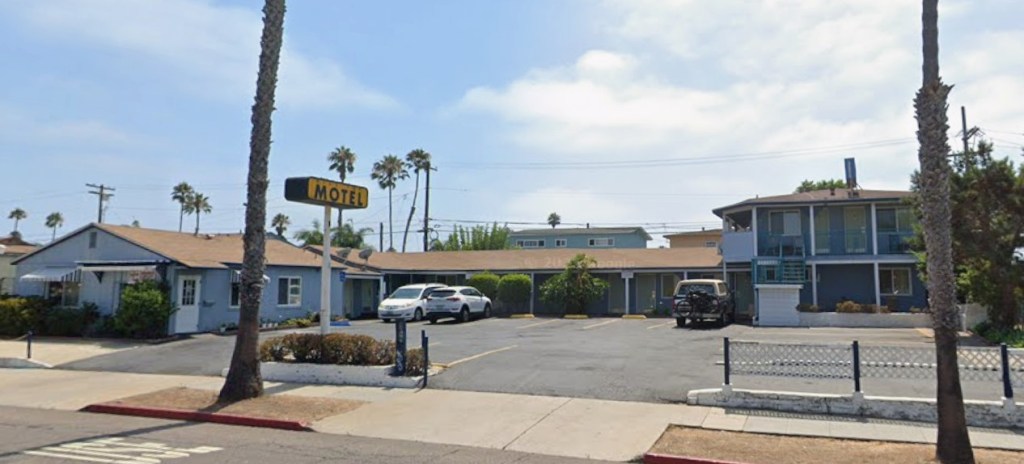
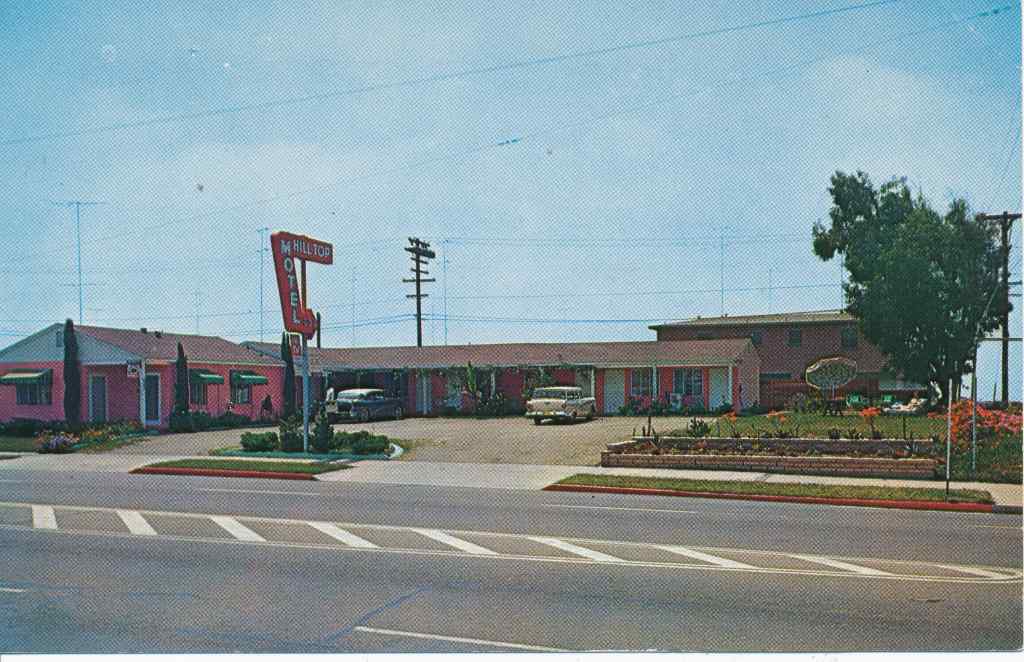
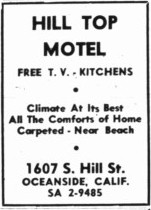


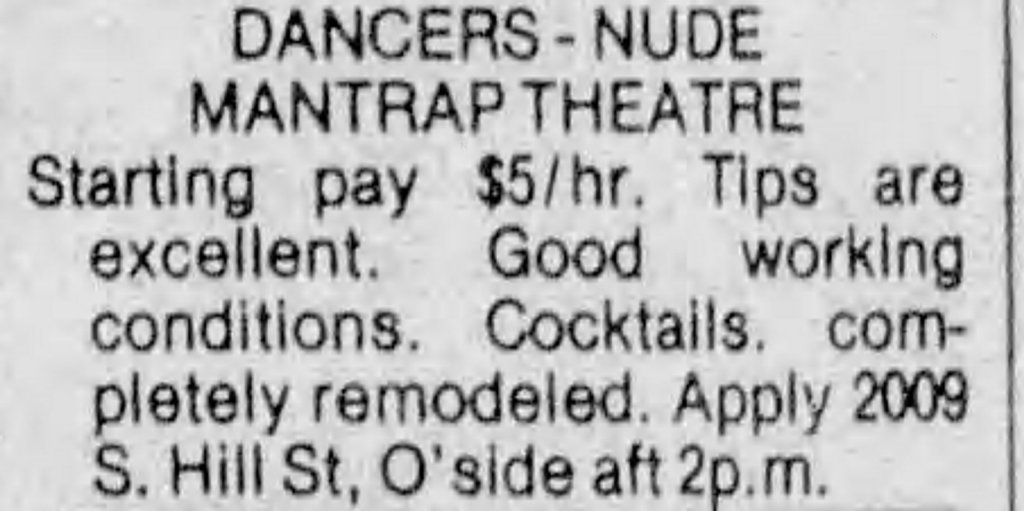
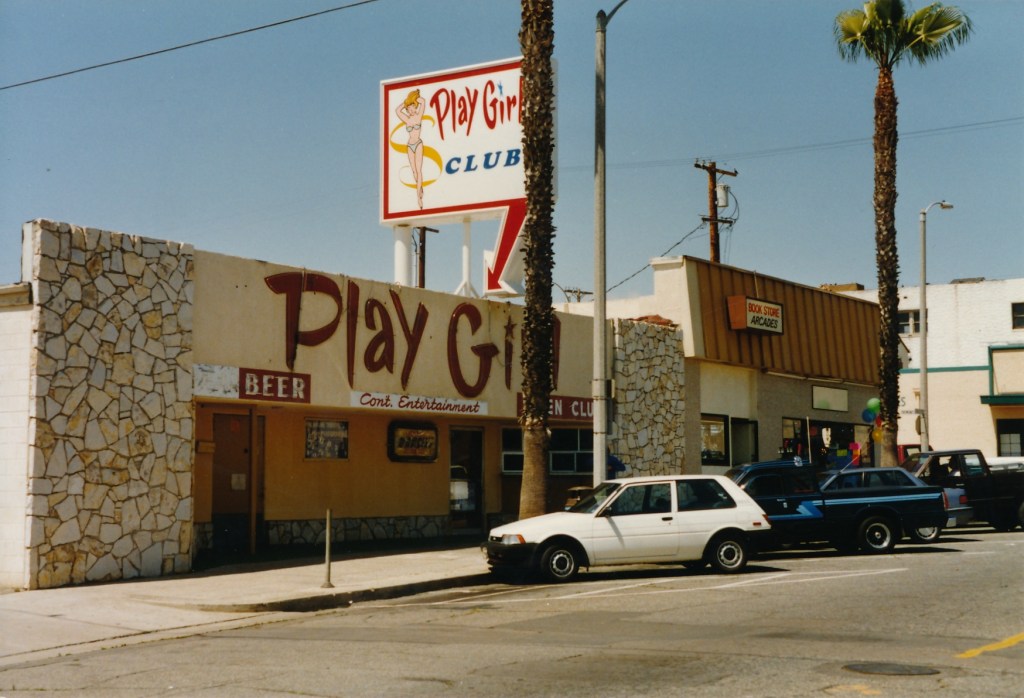


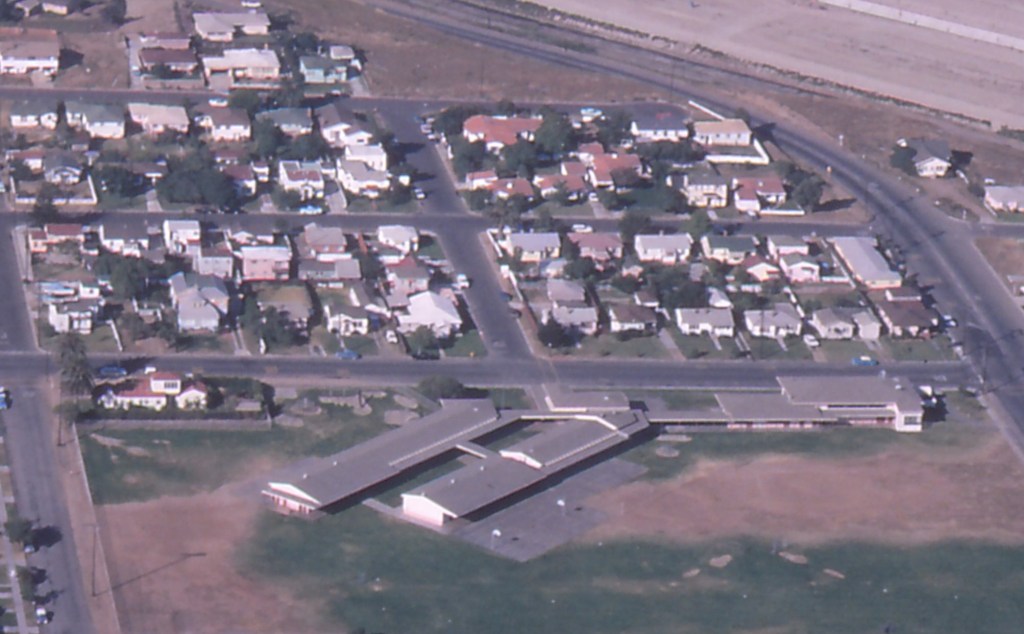


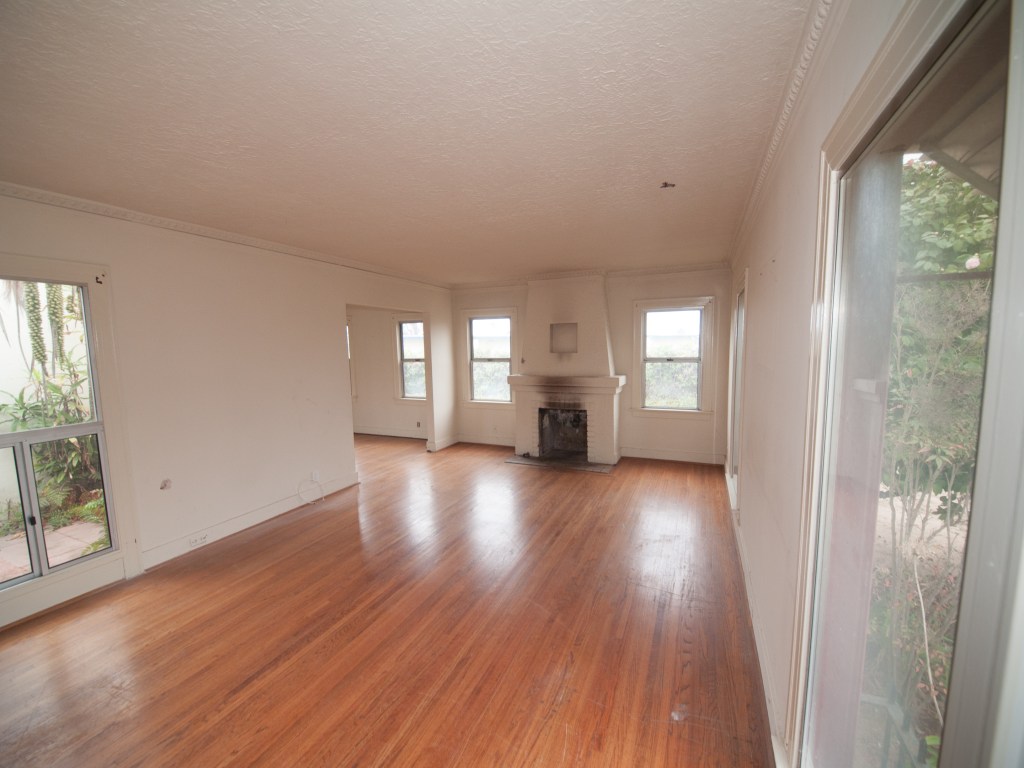


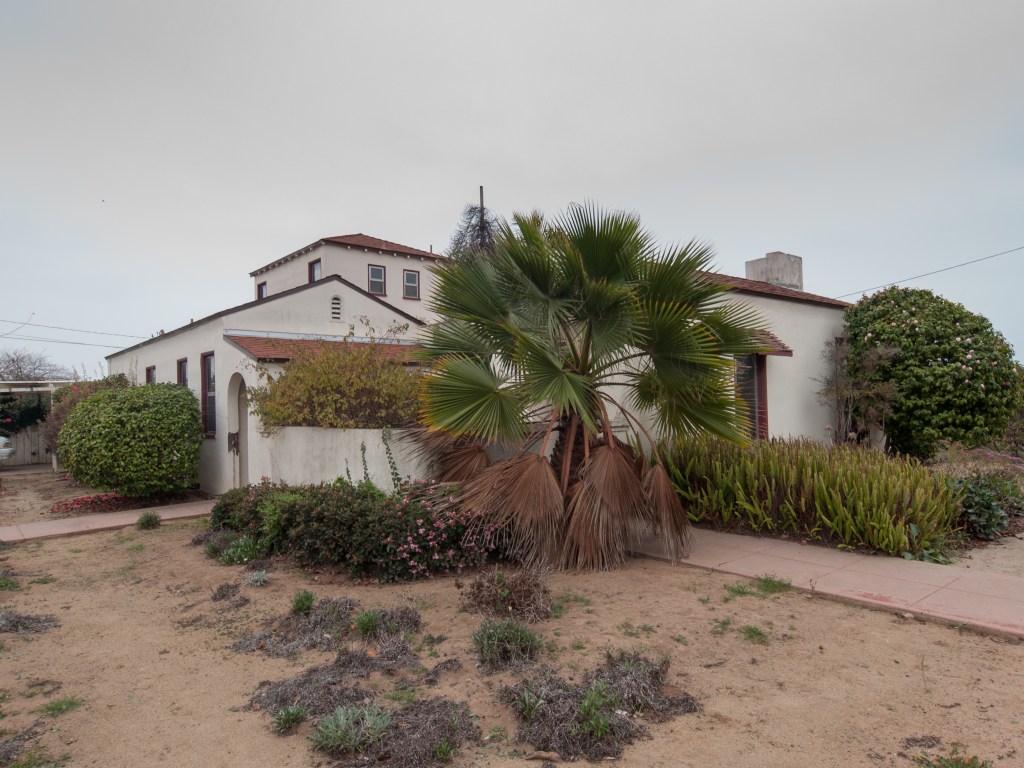


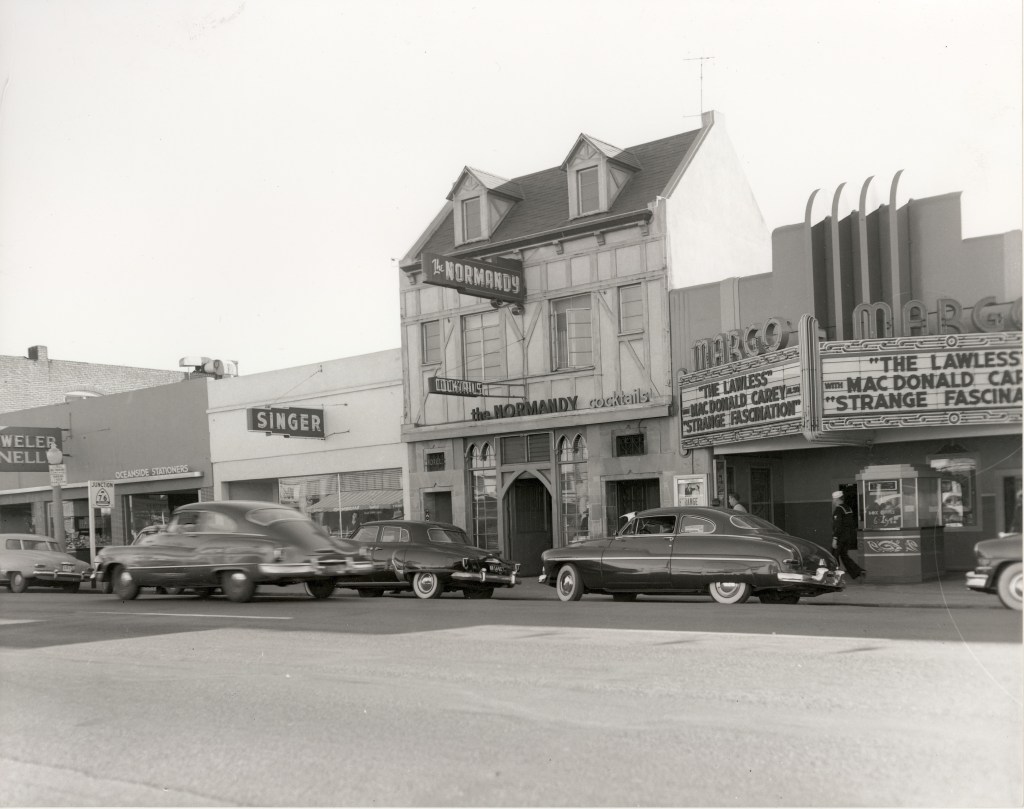


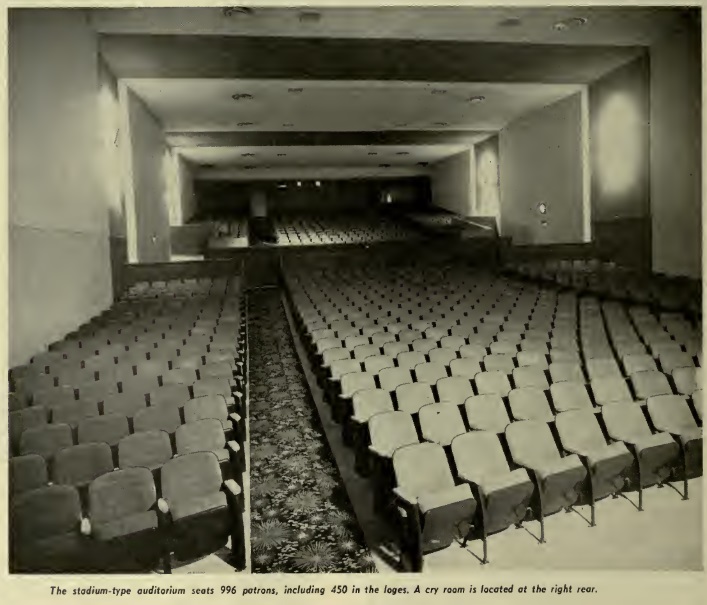

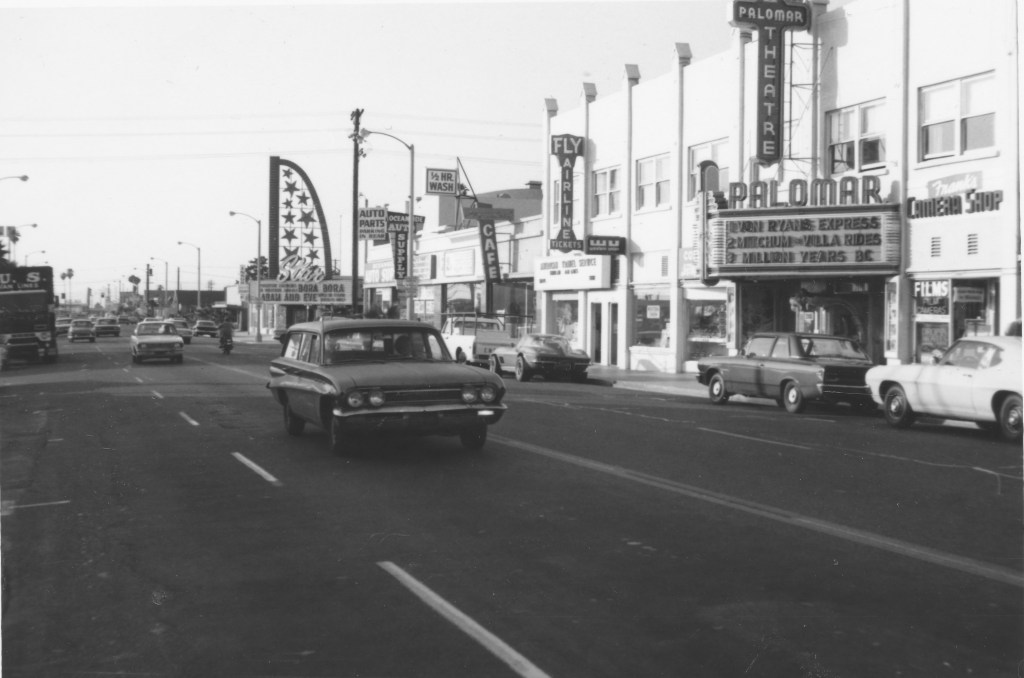





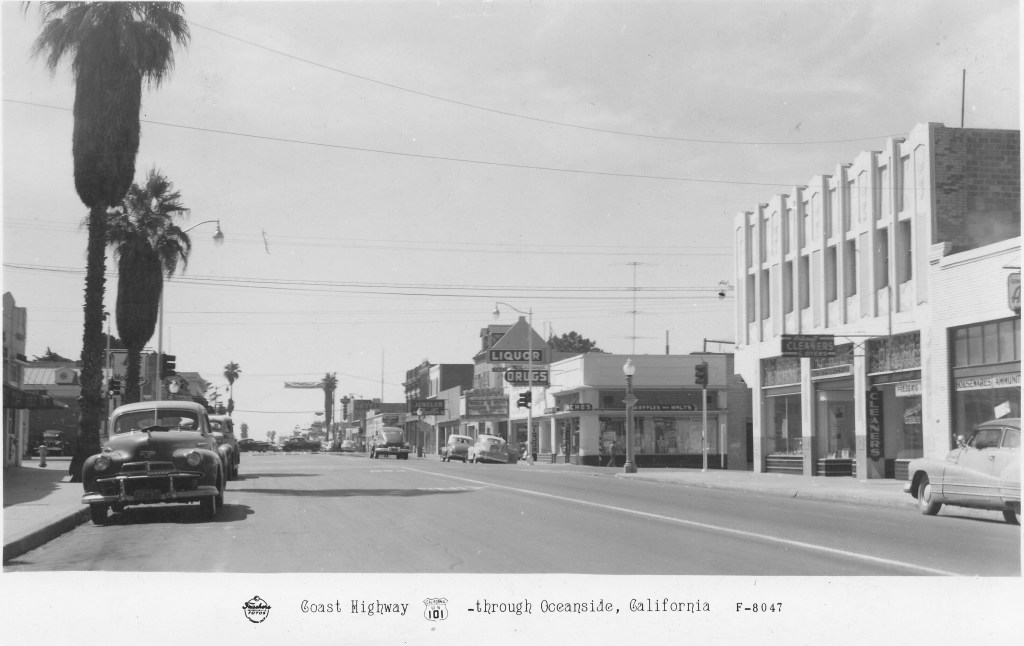

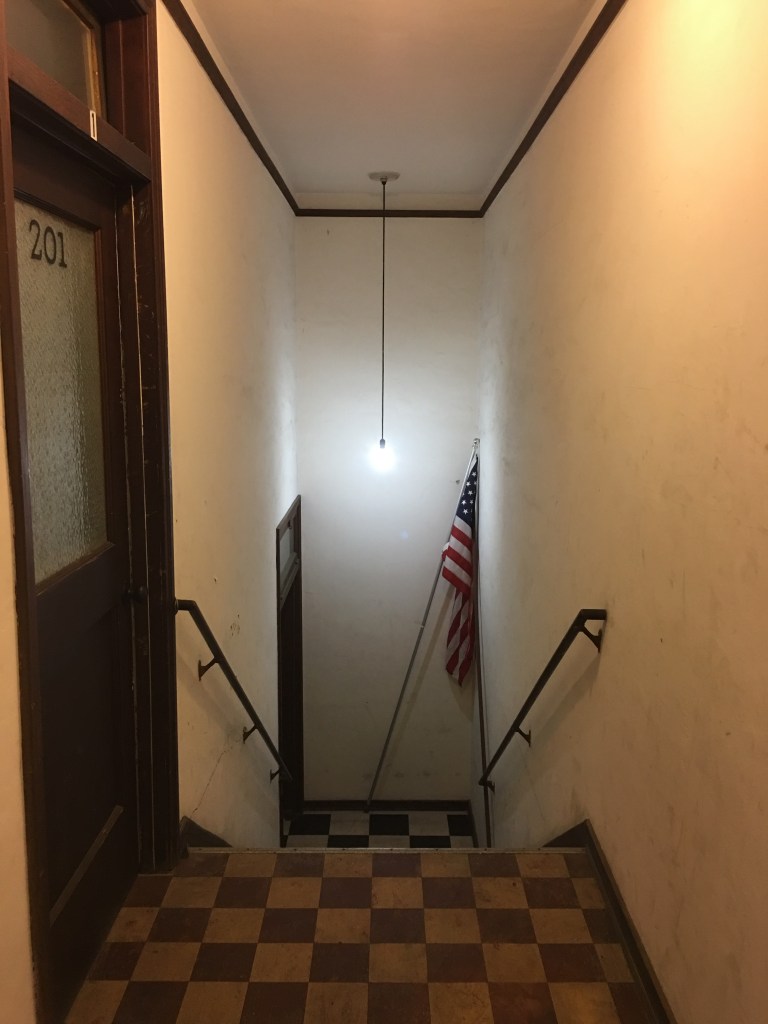


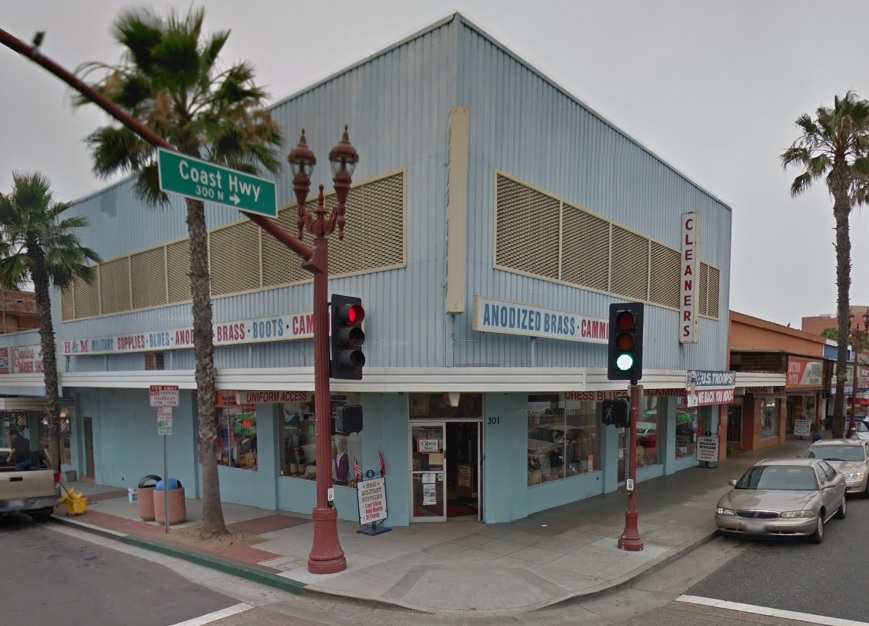


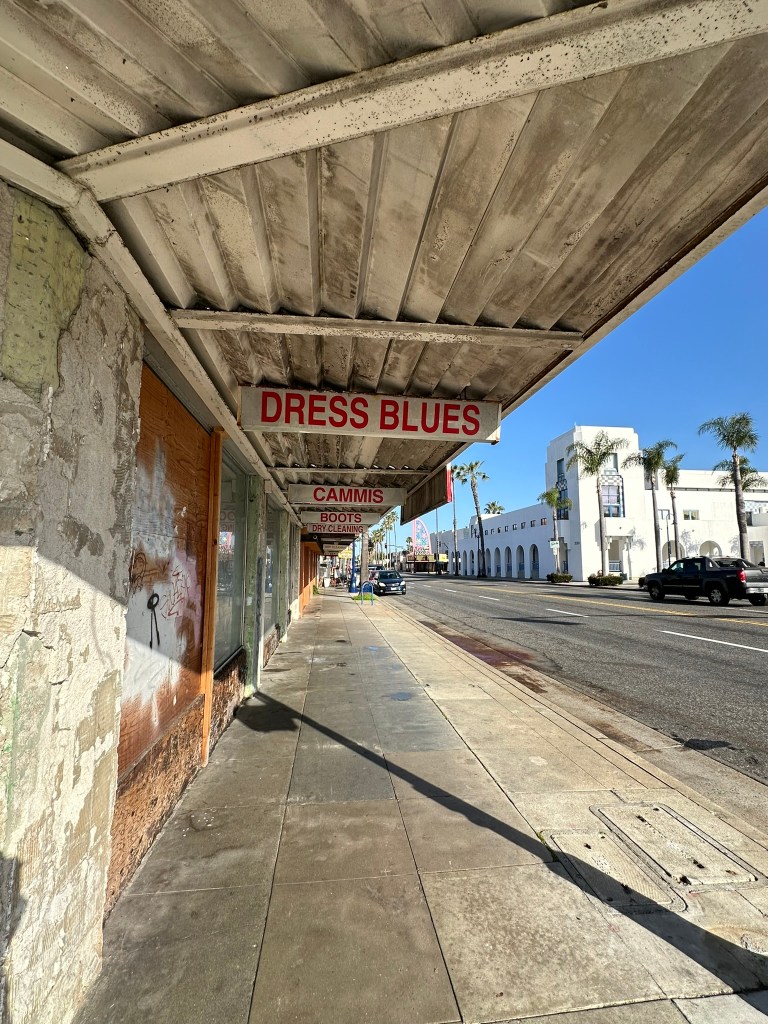
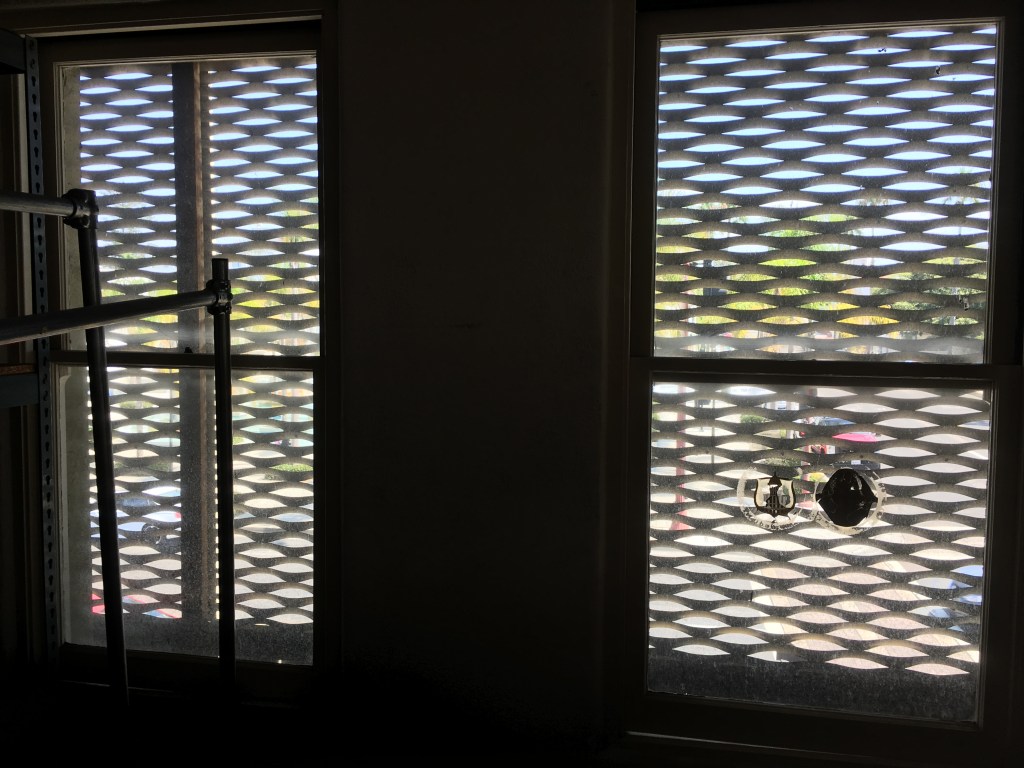


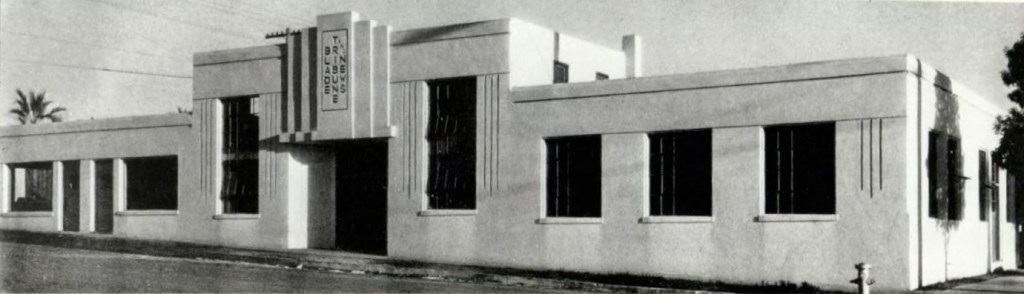
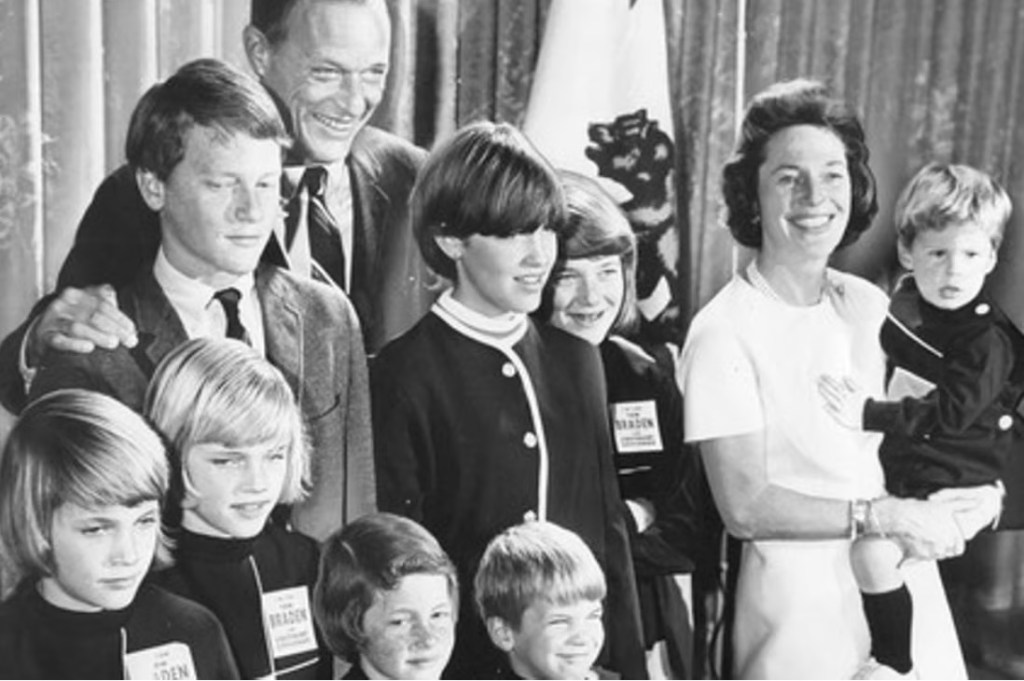


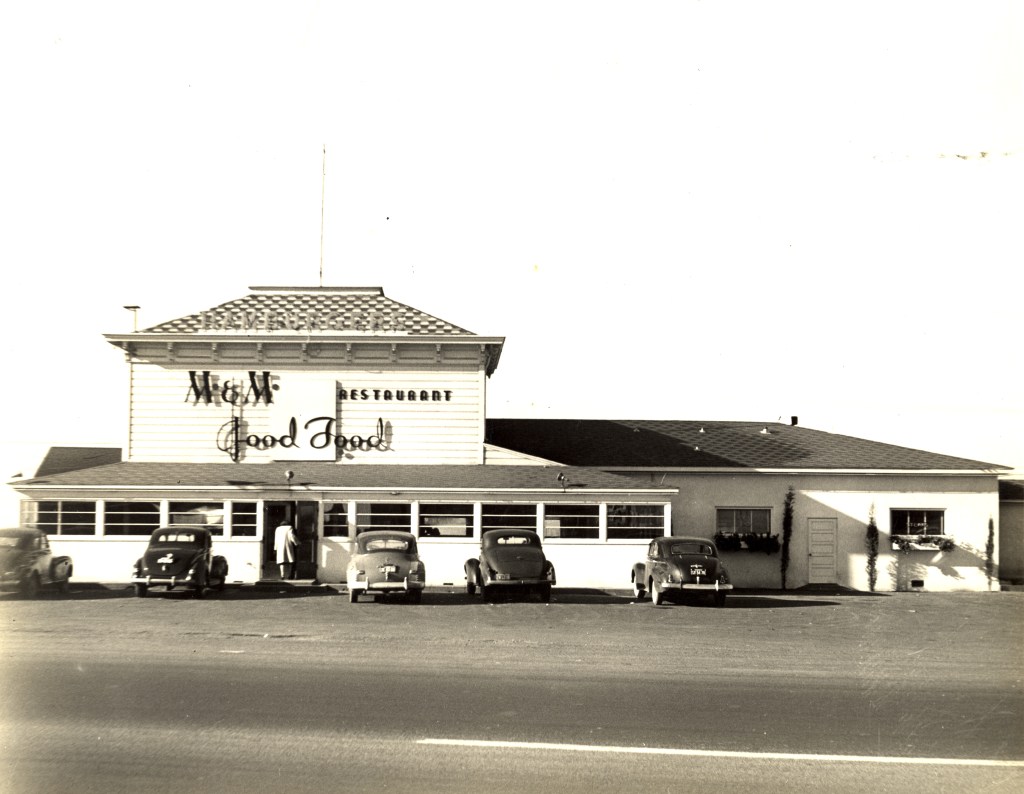


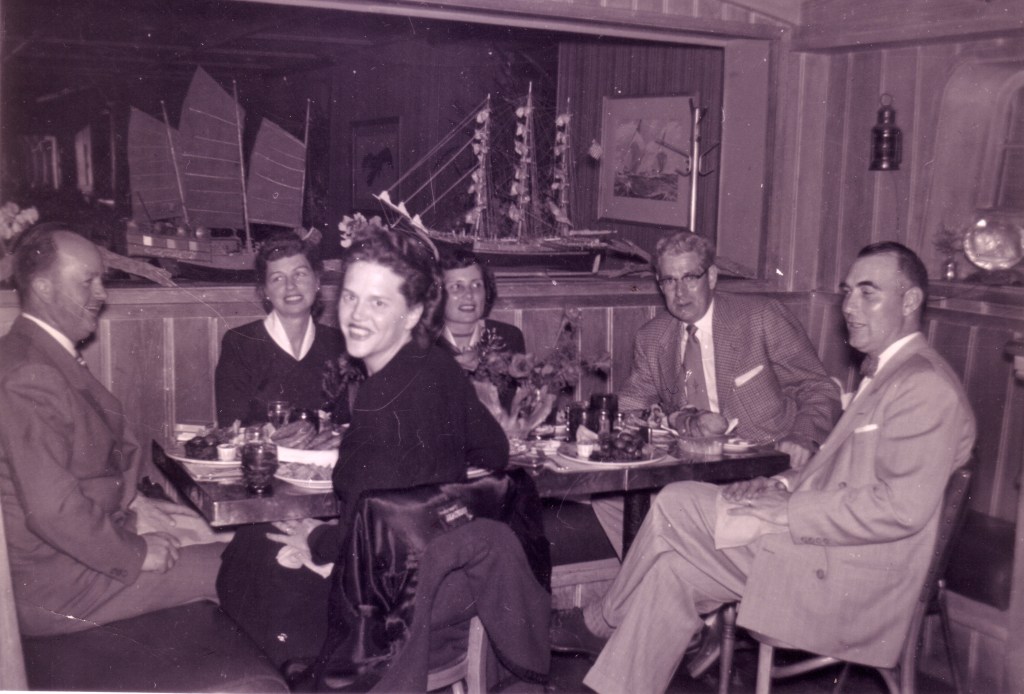
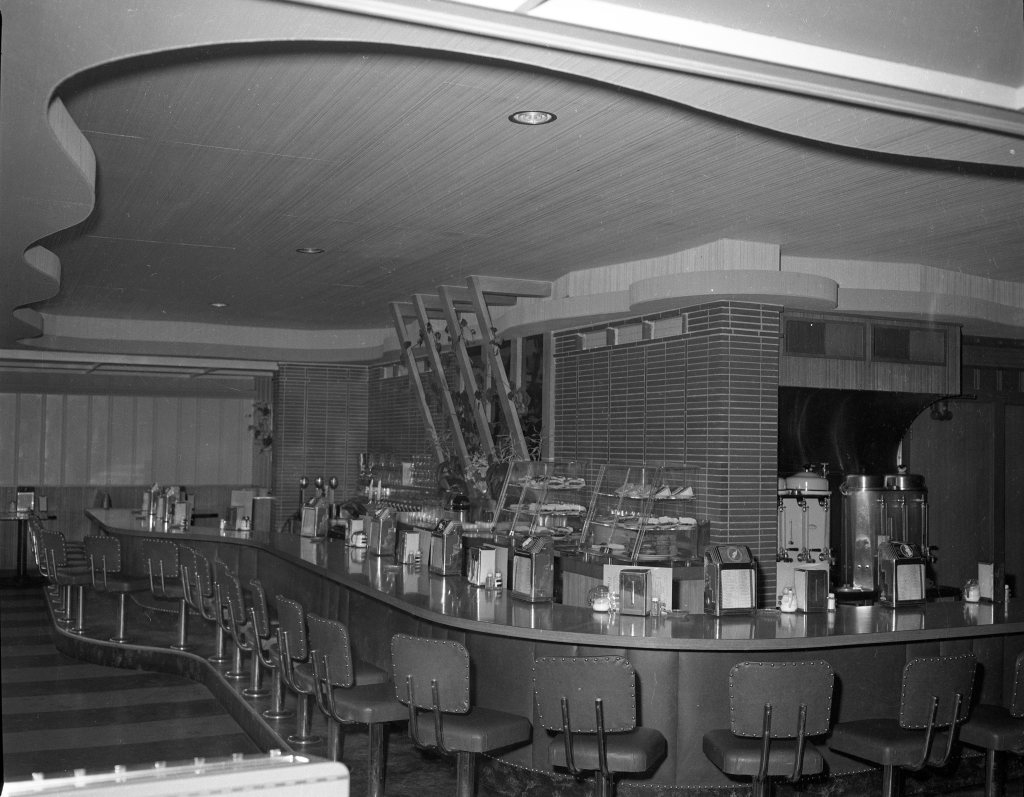


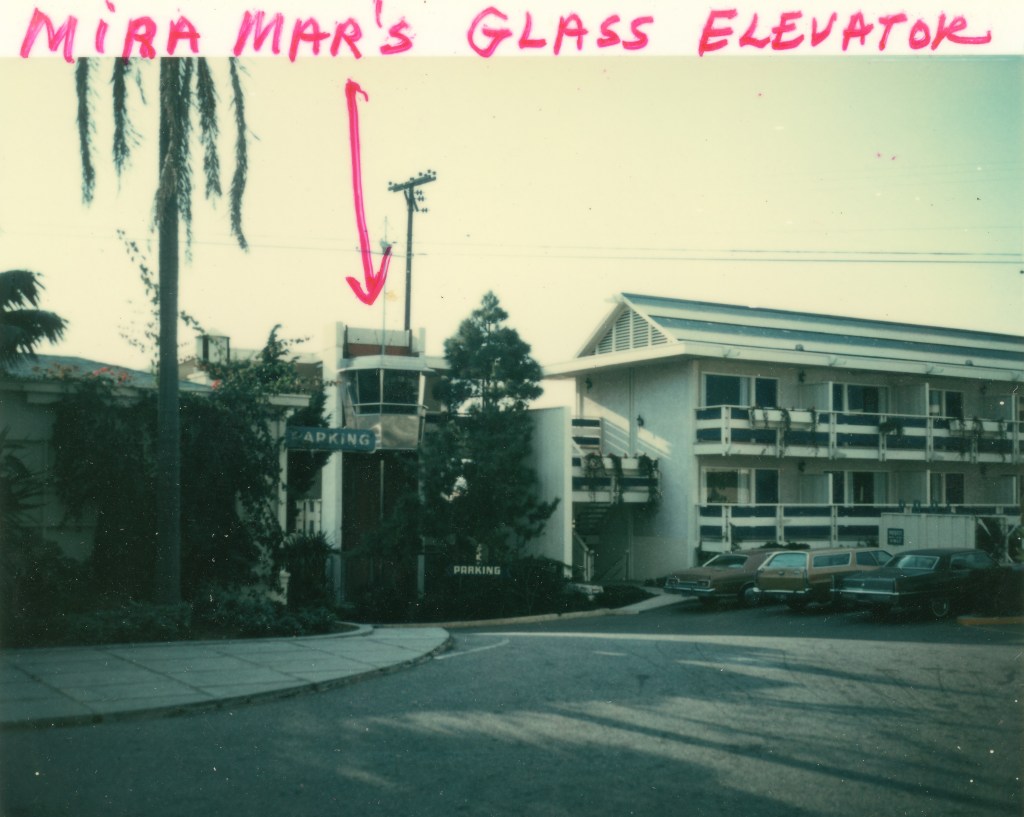

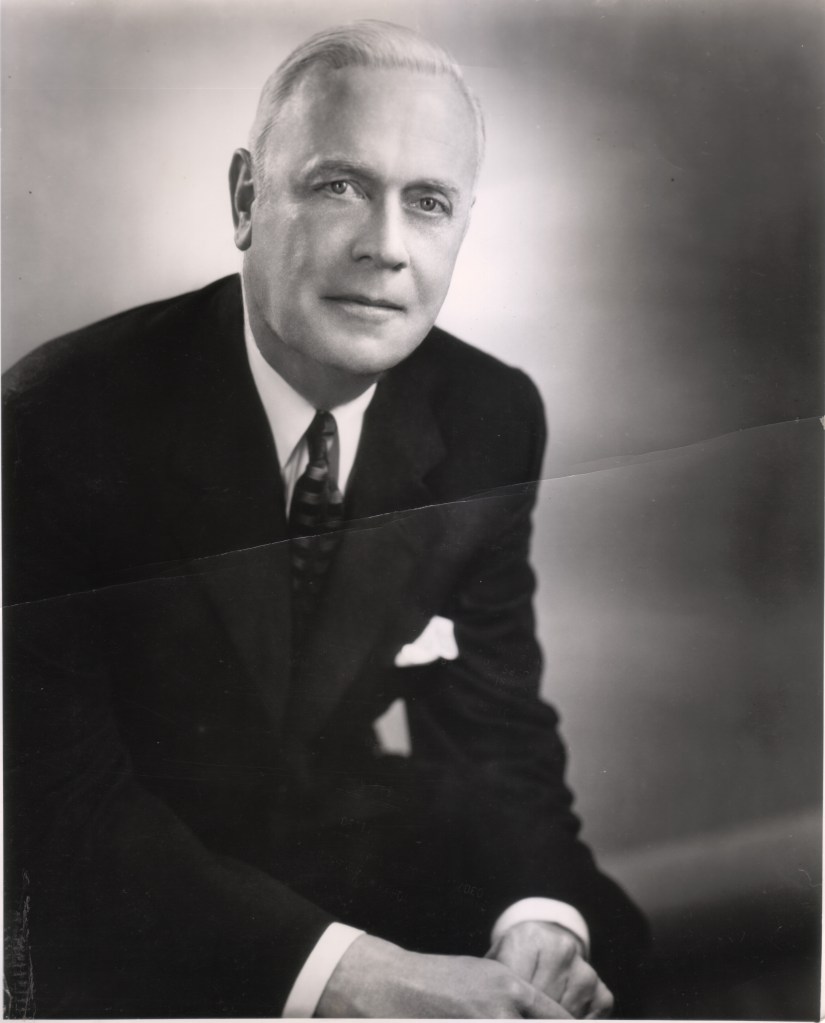


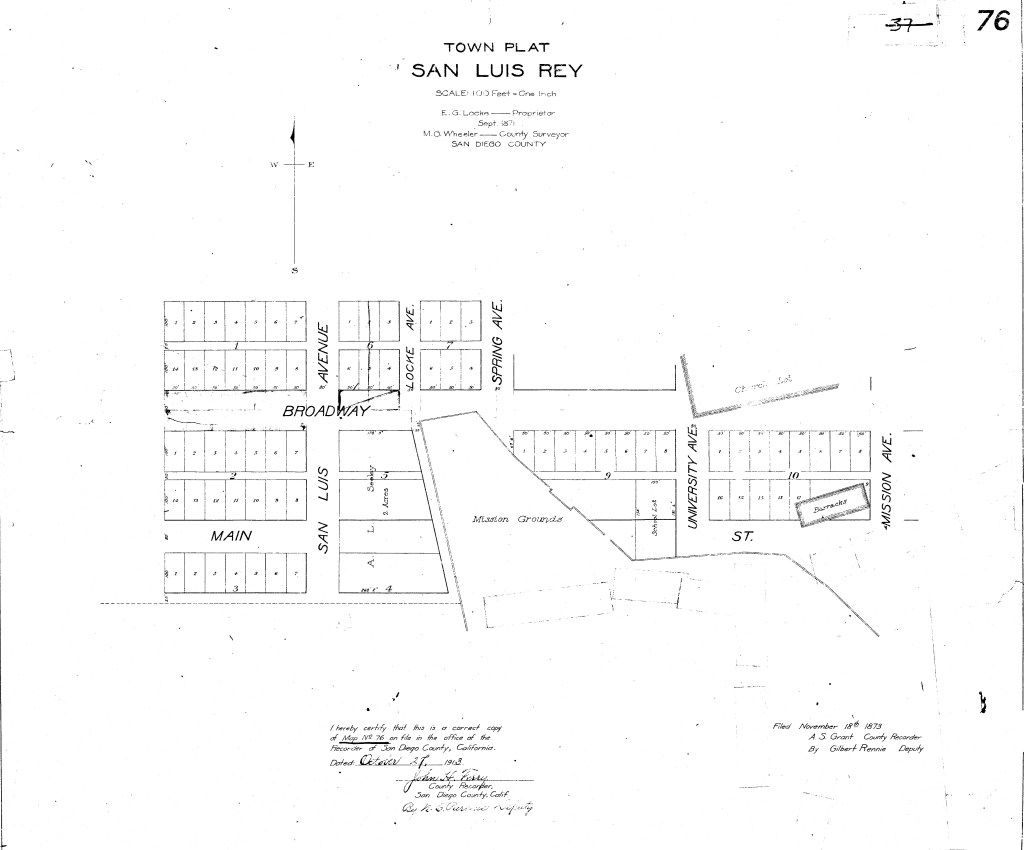
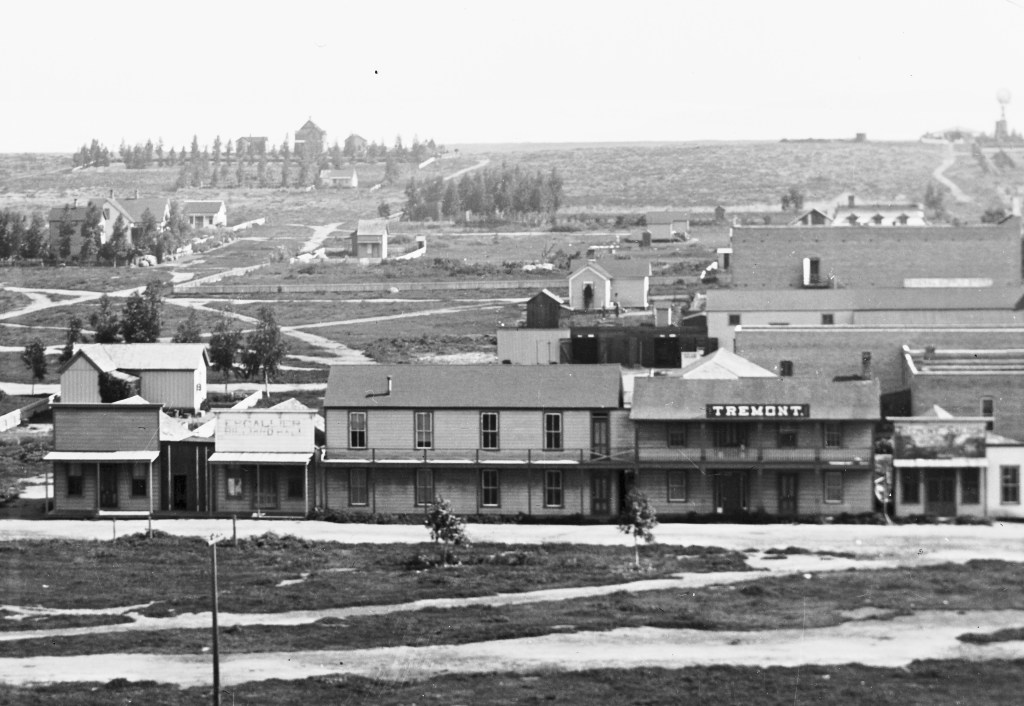
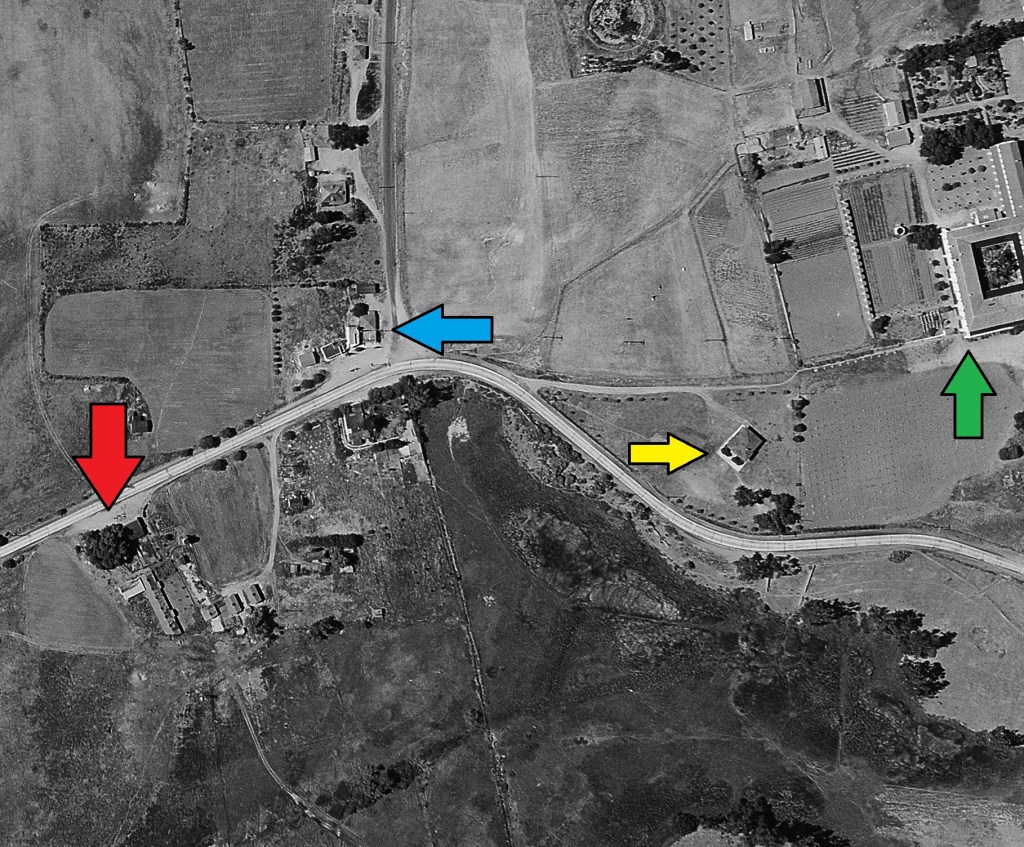


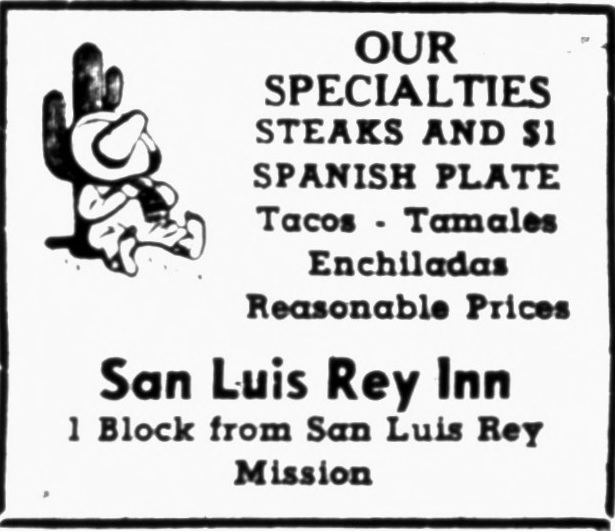


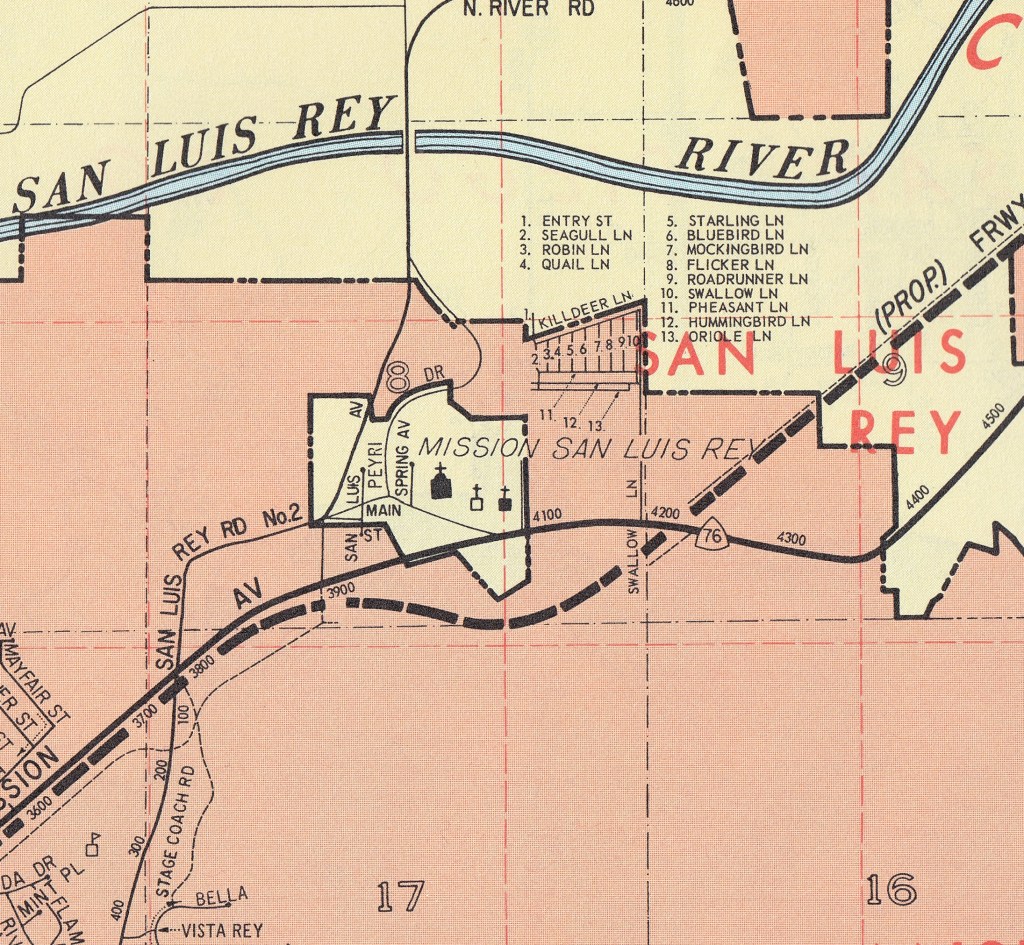


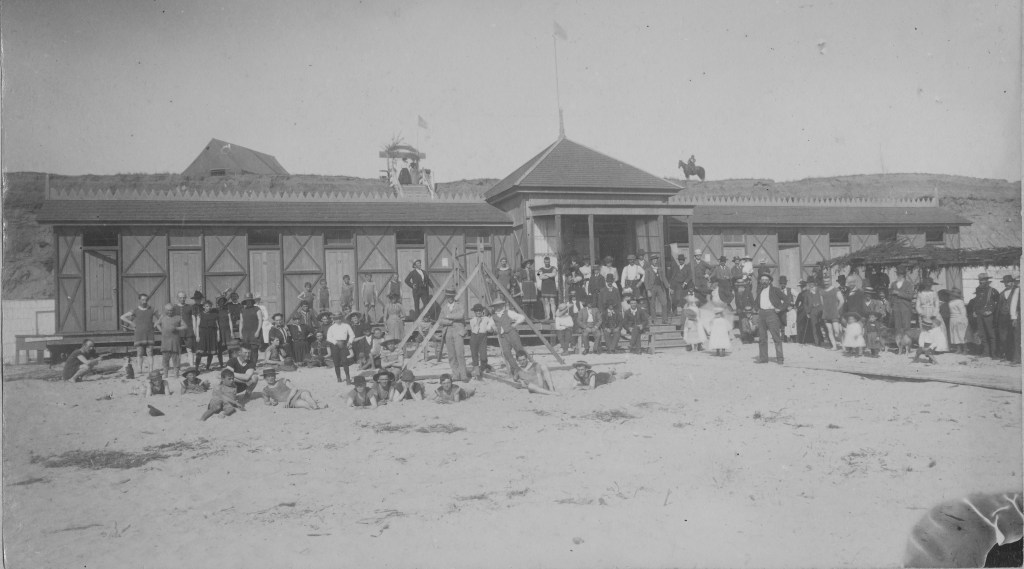

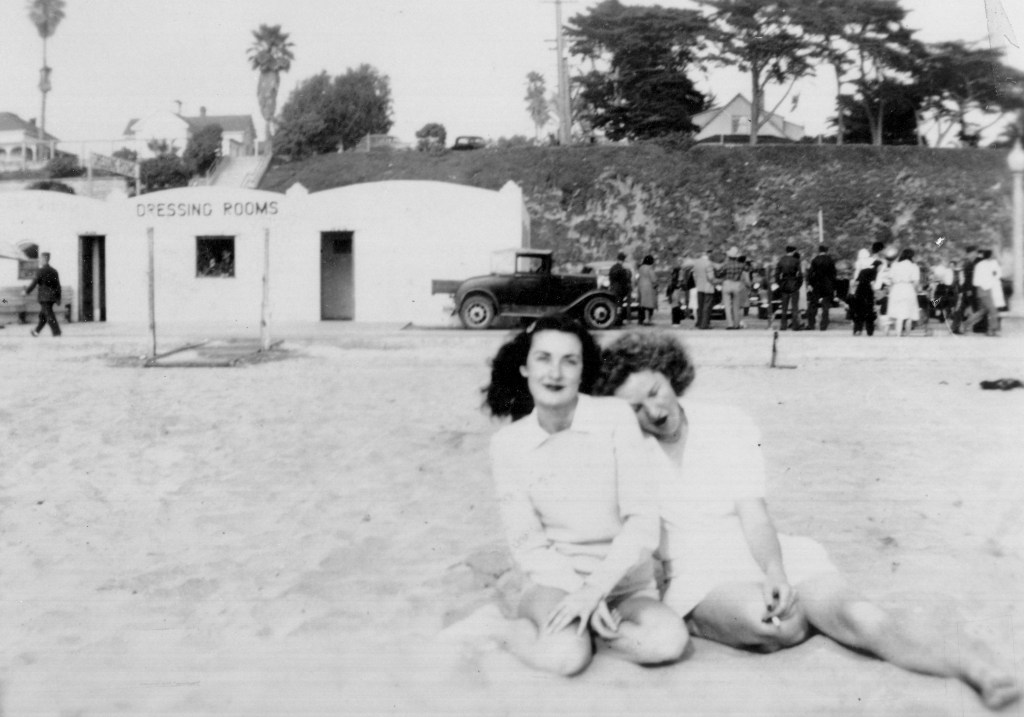


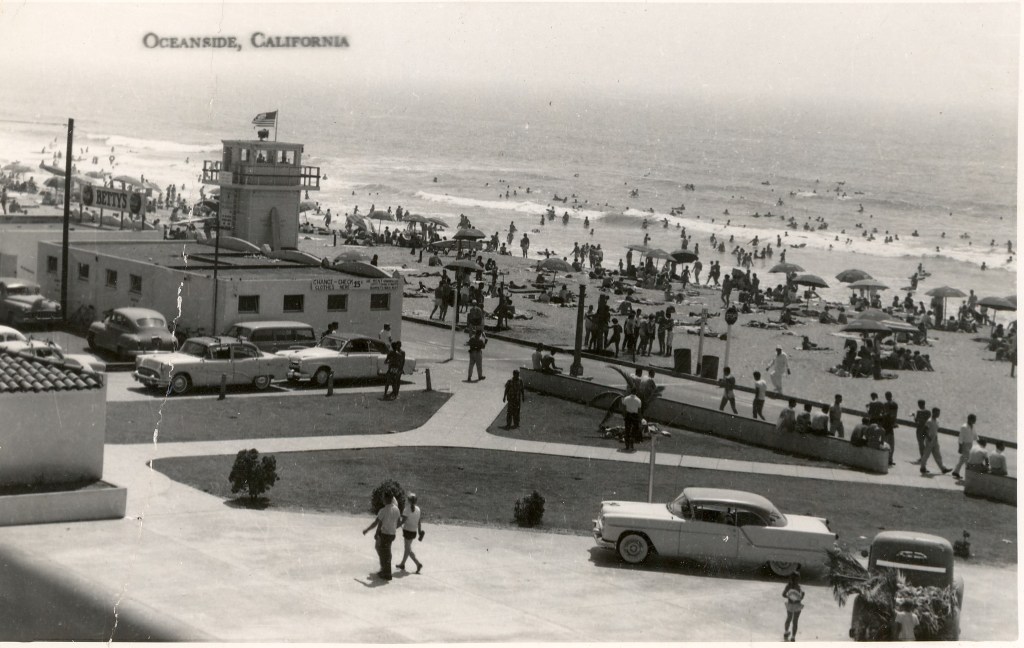
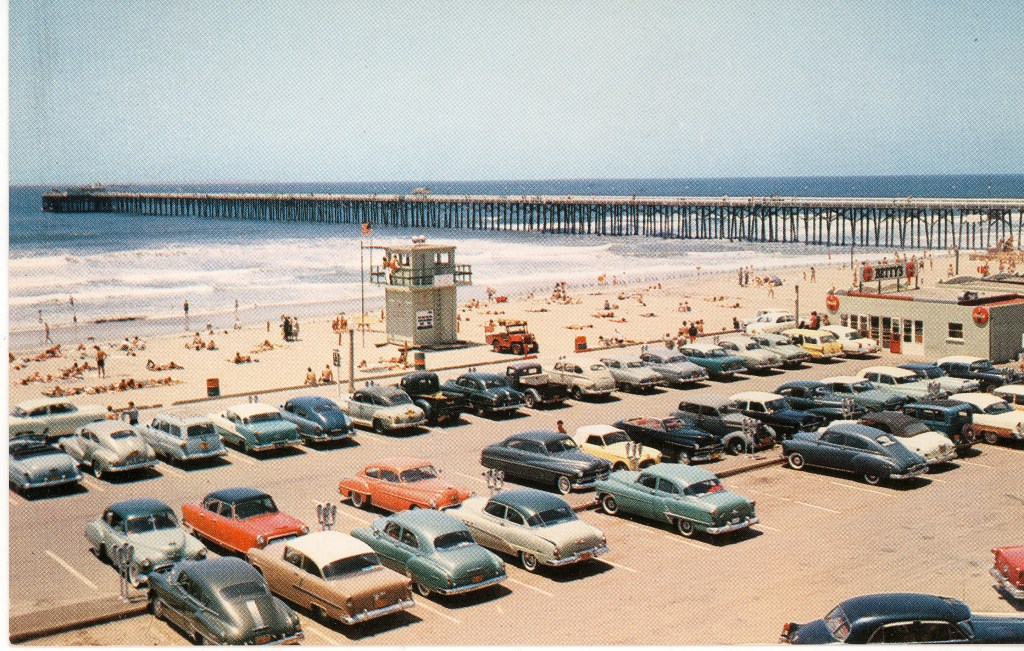
 Histories and Mysteries